Creative Partnerships and Private Capital
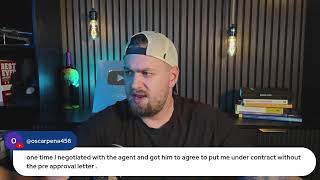
Christian Osgood explains how to buy multifamily properties using creative equity partnerships instead of personal cash. He uses a 50/40/10 capital stack (bank, seller, equity) and bought a 38-unit property by raising $300k from three strangers in 48 hours, then refinanced and doubled investors' money.
Chapters
All right, hello and welcome back to Multifamily Strategy Live. I am back from vacation, so good to be back. Instagram, I got you here. Everyone else, you're on the main camera here, but good to see everyone. I can see both screens this time, so if you guys have questions during this live, I can answer them in the chat on the right-hand side. By the way, if you don't know, I'm Christian Osgood, founder of Multifamily Strategy. We have over 2 1,500 videos on this YouTube channel talking about real estate. I own 400 units, a couple of property management companies, a resort. I am quite busy, but today we're talking about one of my favorite topics of all time. This is more powerful than creative finance by itself. It's the actual creative equity. So we're not just talking about, though we will cover how do you raise capital for any deal, but this is how you move forward quickly on absolutely any piece of real estate in the most sustainable way possible. You can close deals in this model where they're seller financed, where they're bank financed, where there's private capital. There are so many different ways to knock this out of the park. I'm gonna show you guys how to do it on today's live. So welcome. By the way, this is my first time trying to go from the phone, which is over here. Sorry, YouTube, you can't see it. And the, and the main channel. So we're streaming to everything right now. So hopefully you guys can all hear me well. This is working smoothly, but excited to kick this off. Here is our sole goal. I want to be the only place you need to go for real estate information. It's completely free. It's all on this channel. So you never have to buy a course from anyone ever. If you want the information, it's free here. We will never charge for information. If you want a direct mentor, well, talk to my team about mentorship. There's a link in the, in the below there. And if you want to get around other people, join our free school community, link below as well. We talk a lot about this. We've seen over $40 million of deals funded. From our school community. So bunch of free stuff for you. Uh, I know Bill for information, so we're going to share everything here, answer all of your questions here. Welcome to Multifamily Strategy Live. So today, going over the creative equity— what does it actually look like to find partners to raise the capital? More importantly, how do you close every deal regardless of your starting point? Now, for a little bit of context, I started in 9-to-5 land. I started, uh, actually $11.50 screen printing t-shirts. Went to the company that produced those t-shirts, went to the CoStar Group after that. I got a salary up to $250,000, which by the way is like the worst you can get to, because if you're at $250,000, it's enough money where you don't want to quit, and it's little enough money where you still can't get truly, truly wealthy. It's right in that like, hey, I made it in corporate America, but also they're paying me just enough to not pursue my dreams. I got stuck there for 5 years before finally buying a couple duplexes, getting the confidence to get out there and build the business that so many other people have built before. So my encouragement to you, don't take 4 years of college and 8 years of building a career to make it into real estate. Just start by doing the thing that you want to do, period. You'll move much farther, much faster. You'll be glad you did. Um, I actually put together a mini presentation here, so I'll actually be able to show you if you're on YouTube If you're on Instagram, the information is still just fine. I just have a couple of visuals here that I'm sharing, but you're welcome to hop to the YouTube channel, Multifamily Strategy on YouTube. Other than that, I'm watching again both screens so I can see all your questions here on any of the platforms. So let me do the magic here. Let's share screen and let's get going. You're about to see a portal of a whole bunch of screens, then I'll find the correct one. Here we go. All right, we should all be here. So my overall goal, if I go back to the beginning of this bad boy, which is a good place to start, the core principles of multifamily strategy, here is what I'm trying to build. And so if you're getting started, this is what I want to share with you. This is what works. Buy deals that cash flow day one, period. Buy income. If you buy income, you get a raise every time you close a deal. Never sell any of the deals that you buy. So we can't buy deals that we have to sell to make the deal work. So we're buying and then we're holding. Genius, right? If you buy income and hold it forever, your income goes up forever. So if you do 1, 2, 3, 4 deals a year, every single year you get 1, 2, or 3, 4 raises. This is how I actually built a fairly massive passive income. If it doesn't cash flow from the beginning, simply don't buy it. If you don't believe there's enough deals out here to do this, drive 30 minutes in any direction from where you live. There's a lot of buildings, guarantee you not everyone who owns them is losing money. There's a ton of real estate out there, a ton of real estate. All you have to do is find deals where you get a yes once a quarter, twice a year. You move forward faster than you think. From the time people buy their first deal, usually within 5 deals or 5 years, they're financially free. It's crazy how fast it happens. Why listen to me, by the way? If you're brand new to this channel, I'm Christian Osgood. I founded Multifamily Strategy. I've been running this for 5 years. We have a mentorship group that's had over 1,000 students go through. Millions upon millions, tens of millions of dollars per year of apartments are purchased through the mentorship group, and we share all the information for free here on YouTube. I've owned and started 2 property management companies, still hold one of those today. I own over 400 rentals, about to close on another 144-unit, which I'm so excited for. This YouTube channel here has over 112,000 subscribers, which is awesome. And if you haven't subbed yet, please do. Again, the information here is free and it is the greatest privilege of my life to get to share all this with you guys and ride the adventure with you. As a note, before I get into the creative equity, I think this is actually important. I started with the Dave Ramsey method. So when I started, I went to college for a first, second, third, fourth job. I built this career and it got me to two duplexes. I met a young man named Cody Davis who I originally started this channel with, and at the time he had no college degree, he had no job. He had 30 rentals at 20 years old. I was sitting there at 29, having gone to college, worked for 8 years. I had 4 rental units. I realized in that moment from meeting him, there's another way to do this. No one can do anything that you can't do. Everything is possible. He showed me, hey, wait a second, I've been going about this wrong. If the goal is to get rentals to make money, making money to get rentals is probably not the order of operations. So I went from the CoStar Group to owning rentals. That's actually a 44-unit I closed at the very beginning of this year. This is the fun side. Backwards hat Christian, much better than double chin Christian. So again, 44 rentals, over $35 million of real estate, is actually probably a little bit closer to $45 million of total real estate owned. $50,000 per month of free cash flow after expenses. How do you build that? Just buy deals that cash flow and then hold them. It stacks faster than you think. It starts slow, it stacks fast. But how do we close all these deals? How do we pull this off? I share this every video. We're going to talk about the last one here. There's the deal, there's the debt. I'm known for creative finance. My first 17 deals were creative finance, 17 out of the first 20 deals. Creative finance. Where's the rest of the money come from? How do you structure these deals? This is the fun part. So you need to know how to do this with or without bank financing. So the financing doesn't matter. You just need to find the right team. So if you are starting right now and you have less money than you need to buy the amount of real estate that you're after, equity partners, you get to share everything. You can borrow their qualifications, their money, you can borrow their net worth, which banks are going to look for. Seller finance doesn't care. You get to borrow their experience. They can add their actual experience to your team. They can actually help you run these properties and scale your portfolio. More importantly, banks and many lenders want to know, hey, am I lending to— especially this is for bank or seller finance— am I lending to an experienced team of operators who knows what the heck they're doing? What is our risk profile? All of that you can borrow. Credibility, credit score, Experience, cash for the deal, liquidity, all of it you can borrow and add to your team. However, we don't want to hold these people in the portfolio forever. That's why I hate it when YouTube channels push this. Well, just use OPM, other people's money, you'll become rich. Sure, you may need to add other people to your team, but you start with a deal, then you find the debt product, and after you find a deal that already makes money and it's your deal to lose, You come in and you bring in more people for whatever you need and whatever you're missing to close the deal. We're going to pair this with an option to buy them out. The goal here is that the real estate buys the real estate. So if you want to do this unbelievably simple, only look for deals that cash flow day one. And if they don't, then just keep negotiating them. You either bring the price down or you get better terms. That's it. Borrow less money or borrow cheaper money. How you get a deal to cash flow. You get a deal that does cash flow. You found the debt product you want. Most of your money is here. Sometimes all of your money. If you need a partner for any of the previously listed things, experience, capital, liquidity, credit score, you name it, you bring people into the deal and you pair this with what's called the option agreement. It is a simple agreement that allows you to buy them out at a fixed rate at a fixed period of time. You have the exclusive right to own the property. Where does that money come from? Well, how do I buy them out if I don't have money, you may ask? It's the basic BRRRR method. You run the project, you refinance the project, you take the money out of the project, you buy them out. Now you own the property, you have the cash flow, they multiplied their money, and like magic, you've spent no money, you have a rental. It's putting a pin in the map, it's buying you time, if you lack any of the credentials, the cash, the credit score to get into the game or to buy enough real estate to retire. What does this do? Why is this more powerful than creative finance? Why is this more powerful than bank financing? This allows you to close any deal regardless of the financing if you structure the right team and you can leverage other people's desire to make money off of your deal, and then you can use that same deal to buy them out of the deal. You have fit the qualifications that we shared in the first slide. I bought cash flow, the real estate bought them out. I don't have long-term partners. I own the real estate. What this means is that you can buy unlimited opportunities. So now you don't have to slow down and earn more money. You just find opportunities, you close them. And every year, say you only, you only have to succeed like once every quarter. So once every 3, maybe 4 months. You're closing on a new apartment deal because you found a great deal. It's not a high-volume— not a high-volume game at all, but every time you do it, you add a couple thousand dollars a month of cash flow. If you got a $2,000 a month raise every quarter for, I don't know, say the next rest of your life, is that enough to stack a crazy amount of cash flow? What if you find that deal that cash flows $10,000 or $15,000 a month? They're out there. You hit a home run every once in a while. This is how your income starts going. Like, okay, it's $24,000 a year, $48,000 a year. End of year 1, you're sitting like, okay, I stacked up, we'll call it 3 deals, $2,000 a month each. Sitting here, okay, $6,000 a month. I didn't do too bad. Next year, maybe you do a little better. You're sitting at $15,000 a month total cash flow. Now you have a little bit more money. You buy a deal without partners. If you're starting to see how this scales, This is the simplicity of it. Now, if this doesn't work or you need less, a smaller down payment, or you want to play the creative finance game with it, there's one other really popular play that I love. I got this from my buddy Michael Zuber. I've, I've used it before. I have buddies who've used this many times. 50/40/10. Bank comes in with half the money. They love that position. 50% leverage. Bank is super safe. They like to say yes to this. Seller comes in with 40%. Sellers also like this, by the way, because they're like, oh, I don't have to finance the whole thing. You do a little less creative finance, stack it on top of the bank. The last 10% of the money, this much of the money, either you come in with it, or if you're watching this, you're like, wait a second, I don't always have 10% down. Or if you do, I can only do 10% down so many times, and then I have to wait for the money to regenerate. You or one of the previously mentioned equity partners can come in, bring the money, close the deal. It's that simple. Seller finance is 40%. Equity partner or you do the other 10. Done deal. Let me share one example, then we get to the Q&A portion of this. So practical example, 38-unit. I actually have my 44-unit here as the picture, so I apologize, I should have updated that. 33-unit was a little bit dingier looking first property. Uh, if you're watching on Instagram, you're like, wait a second, this makes no sense. Uh, there, there is a screen which happens to be my final slide before Q&A. Um, I'll tell it to you verbally though. 38-unit seller-financed deal, first one we ever did. I share this one frequently, but the way that the money came together is such a great example. We didn't even do it well, but it worked and it made $2 million. $2 million purchase, seller needed $2 million, 15% down. That was the minimum to pay off what the seller already owed. So for them to even be able to finance, we had to find $300,000. They wanted to retire on $10,000 a month. We didn't have enough money in the deal for it to cash flow. Normal person looks at this deal and says, doesn't cash flow, can't lose money, I'm out. I go, how would we make this deal cash flow? I still remember sitting in the office on the staircase with Cody saying, uh-oh, it doesn't cash flow, but it's a great deal. What would it take to make it cash flow? And sitting on the stairs with a 20-year-old, we came up with this genius idea of, well, okay, It should be cash flowing. A lot of tenants aren't paying. There's a lot of vacancies. What if we came in and fixed those first, then started paying $10,000 a month? Went back to the seller and we said, hey, you can have your $2 million, you can have your 15 down, you can have your, your 15% down, which is $300,000, you can have your $10,000 a month. All you have to do is wait another 6 months for the $10,000 a month and we got you. They were totally okay with this. They were able to retire off this. They said yes. Now, in this market, 38 units, average appraisal is about $100,000 a door. So the building, if operating correctly, should be worth $3.8 million. Who here— and actually, feel free to let me know in the chat if you want me to feel like this is a participative event— who here would find $300,000 to make $2 million if you were like, hey, I'm 99% confident, maybe not 100, I'm 99% confident that I can make $2 million. Can I find $300,000? I am going to go get that money. Here's what we found because we did the deal first, then we found the debt product, which in this case was seller financed. When you get to the end, the part that everyone worries about that we didn't have, we didn't have $300,000. In 48 hours, 3 people that I had never met before in my life had invested in the deal. I made 4 phone calls to people I hadn't met ever in my life. Told them what we are doing, why I believe in the deal. Never raised capital, don't know them, had only ever run 2 duplexes. I lack the experience. There's a whole bunch of reasons to bet against me, but what do I control? I can control a legitimately awesome opportunity that I am under contract for. 48 hours, 3 people say yes, we close the deal. 11 and a half months later, we refinance the deal. We pull out about $1 million. We double all the investors' money, which is way too high a return to give them. I realized that after the fact. I was young and dumb, but I doubled their money in less than a year. That is unbelievable, getting 100% returns on investment in less than one year. But we bought them out for $600,000, uh, retained the deal. Perfect example. Then just multiply that by the next 30 deals, very similar structures. The value here— seller financing is cool. It's not that hard to get. I share about it all the time on the channel. Even great seller finance terms, they're not really that magical. I'm known for being the creative finance seller finance investor, one of the people online who do a lot of creative finance. When you get it down, it's not really all that difficult or magical. I think the magic of these deals is being able to package a deal where you have done the basic deal architecture. We have a real opportunity, we have a real business plan, we have a real debt product. Now we're looking for the end. Unbelievably easy to raise, but I learned that a little bit late in the game. I wish I knew that sooner, so I'm passing that to you. It's the most powerful piece. If you're sitting here being like, well, I still don't know how to do the debt, I have a lot of videos on it. Ask any questions on it anytime. But that is how you play the equity side of the game. It's not an OPM, it's not all about other people's money. It's about involving the right people who have the right pieces in your business temporarily so that you can make a return that they're happy with and you can retain the financial freedom of owning the building and the cash flow. That's what I wanted to share today. Let's get into the Q&A part, which is my favorite part of live. And I do see we have a good deal of questions here in the chat, or at least comments. We're going to figure out as we go. First of all, there's a comment and it is a fact. I'm going to put this up on the screen. Jefferson says, you are awesome, Christian. Actually, I'm not awesome. I'm an average person who just realized, wait a second, I can do the same thing that other people are already doing. I saw what a 20-year-old was doing. I have followed that. If you guys have checked out the podcast, the Owner Meeting Podcast, I've had some rockstar guests on there. All I do is interview other owners, get takeaways from what they did right, and learn what the dumbest things they did wrong. And then I don't make those mistakes. And I apply it to my business. You guys want to check that out? It will help you guys move forward faster too. That's the Owner Meeting Podcast. You can check it out on iTunes, Spotify, and wherever. But the fact that I am in fact not awesome, I'm completely average, should encourage you, uh, that you can build a better business than I have, as many of my students have in Multifamily Strategy. Oscar says you've been finding deals through real estate agents. How do I decide to— oh, now I decided to book coffee meetings. Excellent. That's what you wanna do. What do you say at the meeting? Okay, so I actually break this down in the mentorship. There's a section on the education tab that goes through this, but I will lay it out as simply as I can. So when you get to the actual owner meeting, first of all, please don't just dive in and start having a meeting. Like, do the normal human thing, do a little small talk. Then you go to a verbal agenda, which is not verbally saying, hey, for the next 15 minutes, we're going to talk about this, and then I want to move. You're saying, hey, thank you for meeting with me. Uh, what I really wanted to talk to you about today was how you built your business. Uh, here's what I'm trying to do, and tell them this in less than a minute. Trying to build a portfolio to $15,000 a month cash flow. I started with duplexes. I'm only $2,500 into that cash flow. I've noticed you're buying bigger buildings. I figured I can stumble my way there or YouTube my way there, or I can just ask the person who's already done it. I'm not blowing, I'm not blowing smoke up their butt. I'm just, I'm just trying to tell them I do sincerely admire your business. You've done something I haven't done. I want to meet with you because you've already done the steps that I need to do. As long as that comes off authentic, people, it takes the guard down and it sets the tone for, hey, I'm here for information. I'm not here to buy your properties. Uh, so never ask them to buy their buildings. Just talk to them. Hey, how did you structure this? Did you use partners in your business? Ask good open-ended questions. Ask for the stories. When you did this really right, what ends up happening is they end up— it's almost always a truck for some reason. They plop you in their truck, they drive you around their buildings, they tell you all about the portfolio. Happens all the time. This question doesn't quite fit in directly, but I'm going to answer this partially. Can you be my equity partner? I want to buy a game of GameStop. I'm going to ignore the back half of the question. I do get a lot of questions to be an equity partner. I do have some rules for this. I don't invest with first-time investors. I do teach first-time investors and I'll never use my own community as my own pipeline. For deals. So I have partnered with people in the community. I've been an equity partner with multiple people after they've done their first several deals. If you're another operator in the space, and I'm happy to help you get there, but if you're a legitimate other operator and I like the way you operate and you're in the markets that I'm in, I, I am always open to that. I know this question's not a serious question, but the, uh, the first half of it actually is an applicable question we get quite often. Uh, from my good friend Mark, speaking to people that I work with. Uh, all right, creatively financed deals instead of just using my existing resources. Two decent-sized deals in 2026 with seller financing. I'm working on, uh, I haven't done a creative finance deal. Incredibly, this year we've done some very creative deal structures. Uh, we've been very, very creative at deal structure, but, uh, all my deals this year were conventional. I am looking like next year, probably Q1, I'm looking about 150-unit seller finance deal. Amazing interest rate, amazing price. I am pretty excited about it. So, uh, Mark, they are definitely out there in all deal sizes— 5 units, 20 units, 150 units. I'm seeing a lot of stuff continue to hit the market. This one, uh, from Jefferson: Do you light up the equity partners before or after going under contract? I like to have the deal already scheduled, done, ready to go. Now, you usually in multifamily, you have like 60 to 90 days to close a lot of these. I do not raise capital for a deal I'm not under contract for. There's a lot of steps going under contract is when I believe that it's a good deal based on what has been presented. You still have due diligence, so you have a period of time where you're going in, you're running your inspections, you're doing finance, you're going through the financials. You have time to make a decision on a deal once you're under contract. I would not raise capital for a deal that's not mine yet because by the time you start raising, someone else is just going to come in and buy the good deal. Your mission is to find the deal and lock up the deal, line up the debt product, which is usually simultaneous to writing the purchase and sale agreement. Finding the right debt product takes days, not weeks. You choose a debt product, and now that you're under contract, you start your capital raise. Excellent question from Oscar. Notice when raising capital Going right into the sale or, uh, the raising part. I get some yes, but I get more nos. Owner meetings over coffee without asking for money works a lot better. It absolutely does. It's never about getting a deal, it's never about getting money. It's about building connections. Those connections are going to come up throughout your portfolio. It could just be a reference to the best property manager in town. It could be they have someone who wants to fund your deal. Occasionally they'll partner with you. Sometimes they'll sell you a deal, but But it's about growing your network and getting connections with people who've already built the business. I have built my entire business on that. My only pipelines are meeting with owners over coffee and talking to brokers about existing deals on market. I've bought a lot of real estate that way, and I'm not the most aggressive buyer of all time. I'm really not. A few people answer this. I hope this would be the answer for everyone, by the way. If you should be able to find $300K to make a couple million, it is amazing when you find a good deal. I get this question actually pretty frequently. People are like, how do you get the confidence that the money is going to come in? Or how do I know or have faith that we're going to come in, find a deal, negotiate it, and then the money will come in? What happens if I do all this work and it doesn't come in? And while, yeah, sure, it takes a little bit of faith, that's like, oh, well, I promise it always works. It does in fact always happen. When you come in and you have an excellent opportunity, if you have a deal where you're like, hey, I am really, really, really truly sincerely confident that we're going to make significantly over a million dollars raising a few hundred thousand dollars ends up not being all that hard. My first deal, I shows you didn't even cash flow. I think what this tries to say is on my first deal, it wasn't cash flowing. Hoping to rectify myself. That is— it's a hard position to be in. I've seen this done before, especially in the beginning. You have to build as much cash flow as possible. I set the simplest rule possible. This is my complete financial thesis: if you buy income, you will have more income. If you only buy income, you're left with more income. So if it makes more than it costs to own— and that's all of your expenses including the debt— and you hold it for a long period of time, Inflation happens, incomes goes up unless apparently you're in New York and apparently New York is now talking about wanting to try to freeze rents while continuing to raise expenses. Let's see how that works out for 'em. But okay, so let's exclude New York City if our good friend Mondame gets his way. Outside of that very isolated government situation, if you can come in on these deals, You're— the easiest way to rectify doing a deal that did not cash flow is one, absolutely work on the deal, come up with strategy for the deal, push that deal as hard as you can. But two, buy more deals that cash flow, increase your net cash flow. It makes the whole position easier. The easiest way out of a real estate mistake is to scale up, not to curl up in a ball and hide, which I've actually seen a lot of people do. Like, oh no, I'm out on a duplex. It's just as easy to go bankrupt on a duplex as it is 150-unit. Might as well scale, do a bigger deal so that your current problem is now a small problem. Back to Mark. How do you get a free and clear seller, uh, past their preference to not leave seller finance debt in place? Chase a few brokers, they don't want to sell. Okay, so essentially If someone could seller finance but they don't feel like seller financing, my short answer is if they don't want to seller finance, they're not going to seller finance. There's— I, I don't sell people on seller financing. What I do exclusively is I talk deal. So I want to talk what is the actual deal, what's the optimal way to put this together. So if I'm coming in and I call someone, if I asked about the financing early and they're like, hey, seller doesn't want to finance, I'm like, okay, well then seller doesn't want to finance, cross off the list. It's— we're not getting creative finance on it. That's totally fine. But I would usually approach these as they're all bank financed. And I'll look at it and say, okay, I did my analysis on this. I think the bank's gonna come out around here. I don't actually have a problem with your price. I think the bank is going to analyze it around here. So I would have to offer less if we want to get the deal done. Since I don't have a problem with your price, is the seller open to any creativity to help us get to that number? I've now framed it as a, it's a bank and financing problem. It's not an I need seller financing problem. Uh, Mark's actually a very good negotiator. Mark, Mark is a good real estate investor and he knows what he's doing. I actually know Mark pretty well. But in general, I found you'll— you're never going to sell someone on doing owner finance because there's all these benefits, but their tax benefits, that's up to them and their CPA. You can't really counsel on that. You're not going to sell them on it. The fact that it's easy to pass to your heirs as an inheritance, it can make deals that aren't bankable suddenly work. There's— the list goes on and on and on. There's a ton of reasons why people will seller finance, but at the end of the day, they— the most important thing you can do is make sure that they know, like, and trust you as a buyer. And if you bring up seller financing, it's because it makes sense to the deal, not just because you want to create a finance. That's where I feel most people get stuck there. Ah, and Remy, who I believe I'll see at our upcoming, uh, Robinhood event, uh, December 5th. I'm going to be at my resort working on a project, invited a few people over. If you, uh, if you find that on Eventbrite, you can always book a cabin and hang out with us there. I think I'll be seeing Remy, uh, at that event if I recall correctly. Uh, but having, uh, such bad analysis paralysis. Oh, okay. This is, this is like the most important thing to get through. So numbers confuse me unless I straight up have it laid out in front of me. I, I confused on a deal, feel like I'm gonna miss something. So the main thing to work on, like the number one thing that you have to get to that point of, hey, I am like 99% confident in this deal. So if you're lacking that in your analysis, makes sense, that's something where you really do want to push. Like, okay, if you're feeling confused on a deal, you're having analysis paralysis, ask the questions, get around other people. What I did in the beginning is I found other people who knew how to underwrite, people who— those owners that we talked about earlier. I find those people, I get together with them, and I'm like, hey, I've run my analysis, would you mind taking a look at my numbers? I sharpened that skill, and then I got to the point where I'm like, okay, I'm like 95% confident that I did this right. I'm gonna offer, and we're gonna continue to prove this through due diligence. In doing that, I built confidence, and then I went from duplex, duplex, to all of a sudden 38-plex, 12, 7, $44,000, $76,000, $144,000. You know, like, it, it scaled really quickly. The confidence on your numbers, if you sat down and really just worked on that, analyzed a few deals, and then asked someone to review your numbers, that's the easiest way that you can speedrun it. One more for Mark, then I also see some questions over here on Instagram that I will get to. Is there a more efficient, uh, or is it more efficient to focus on listings that offer seller finance or focus on— no. Um, so I only look for deals. Um, I don't care what the deal is, I don't care what the price is, I don't care what the terms are. I look for real estate where I— this is at least looking at on-market listings. I am looking for listings that look like what I want to buy, and then I'm calling on those and I'm learning what the deal is. Sometimes you can negotiate the price right way down. Not often, sometimes happens. Many times there are deals that have been around on market for 150 days. They might be open to creative finance when they weren't earlier. I'm still going to work the deals if it wasn't creatively financeable, but all I'm doing is I'm looking at the deals, I'm saying, hey, what would make this a good deal? And then I'm offering that. I want to find buildings that I would like to own, and if I know they're willing to sell, that's enough of a lead for me. Let me answer a couple questions here from Instagram. There's a few here on my screen here. I'll read them off since they don't show on the screen for YouTube. So when do you do creative finance? Uh, when do you do creative finance out these deals off market or on? Okay. So I think what they're trying to ask is, oh yeah, it says, uh, sorry, typo. Um, uh, these deals generate off market or on. So basically, am I finding creative finance on market or on market is what the question is. I have found about an even mix of the two. I've had many brokers bring me seller finance deals. It happens more frequently than you think. However, when you're doing a seller finance transaction, you get the best terms when they know, like, and trust you already. So if I've done those owner meetings and I've talked to an owner, okay, I like you, I have an idea of how this could work for your portfolio, I'm ready to sell a building, those are typically the one where it's 5 to 10% down, the terms are super favorable. Because they would rather sell it to me than list it with another broker. So I would say off-market, your relationships will get you lower down payments, better prices. Your best deals, or at least your odds for the best deal, are going to be through relationships. I still do a little over half my deals on market. There's just a lot of opportunity there. So a lot of both. You'll stack the deck in your favor if you're doing both activities. You'll hit more home runs when you're in the direct-to-owner field. But base hits still get you on base, they still get you to score points. When do you use the 50/40/10 pitch? That is a great question. So 50/40/10 is if, uh, one, the seller only has 50% equity in the property or something like that, where that's like they could not do a full seller finance note anyway, but there's enough equity for them to hold some of it. Um, also, if the property is not bankable but the bank's at least interested, I can get a bank in at 50% loan to value, and I can get really creative on the seller terms. So if market rates today are like 6.5%, if the seller is willing to hold a 3% note, I can actually give him his price. If I get 40% of the deal at 3% and 50% of the deal at 6.5%, I get this blended rate that could make my deal cash flow. That's another good time to pitch it. Uh, it's another big one is if I needed to put like 30% down to get seller financing, I'll blend in the bank. I'm like, hey, I'll get you 50% of the cash up front. I'll be from the bank, you're going to hold 40, uh, then 10 is going to be a down payment, which is another 10%. The bank now knows I have skin in the game. The seller's got 60% of the money in cash out of the deal. They've lowered their risk on the property and they've got liquidity. So it's one— it's usually when the deal needs a little tweak. If I can buy it in bank finance, I'll usually keep it simple and do that. If they can seller finance the whole thing, I'll usually have them do that. But if we have to come somewhere in the middle, this is a really great way to blend it or to bring your down payment to 10%. Uh, Ethan and Eddie from the mentorship group, uh, they just closed one 100% financed. It was 40% bank, 60% seller. So you can do this without even getting to the 10. It's a way to get to zero down or near zero down on deals. From, from ChristCrazy33, I came across a deal on the MLS for 13 units and the broker mentioned that the seller is willing to keep some of the equity in the deal. In your opinion, is this an opportunity for seller finance? It could be. If the seller wants to keep equity, I usually say no to that. I don't want to have a new partner that I don't know, especially if the prior owner has not got the property in the condition that I want to run it in. So I find typically someone who already owns it is going to have a lot of opinions. I think the risk of having an owner as an equity partner is really scary. This could be a good time to pivot to, hey, maybe not equity, but would you finance that equity and come in as a seller finance? I actually think it is a very easy and very natural lead-in for seller finance. All right. Hey Christian, everything I'm finding on market is not cash flowing. How often is there a doable deal on market? This is the beauty with on-market deals. I don't care if they're cash flowing or not for how they're listed, because I'm not trying to buy whatever's listed. I'm looking at the properties that are listed there and what they actually are. If you are going to, in Stephenville, Texas, list a 25-unit deal, for $3 million and it's built in, let's call it 2005. It's a newer build. It's a nice building. It's in great condition. I want to own that building. I don't want to own that building for $3 million. That is too much for a 25-unit right now in Stephenville. Now maybe it's not a terrible deal, but there's no, there's no upside on it. Now I buy a 25-unit in Stephenville, 1980s build, for $2 million. $3 million, or 3— maybe it's $3.2. I'm not interested in the price. What I'm going to do, though, I'm going to call on that property. I'm going to ask questions about it. Hey, look, interested in the deal. First thing I'm going to do when I call, being interested in that property, I'm building a relationship with a broker who lists the type of properties that I want to buy. That's the first thing that I'm knocking out. The second thing that I'm doing when I do this is I am building an ongoing relationship with— they are understanding how I operate. Now I'm going to offer on this property what I think is a good offer. So if we find in this that, hey, it looks like it's probably going to be bankable or bank financed, but the price is too high, I'm going to come in and I'm going to offer what it's worth. I'll come in, hey, um, I think the bank's going to lend up to— I think they'll agree with a price of about $2.5 million. That's the most I can do because that's where we're going to find financing. I can have that conversation. And now I've moved not just from someone that the broker knows, I'm now someone who calls, analyzes deals, and quickly gets back to them with a price that works. Sometimes people say yes, but more importantly, you're setting a precedent for how you operate, that you're a ready, willing, able buyer. Brokers remember that and they start bringing you even better deals. So that's what I'm looking for, for what's listed. I don't care what it's listed for. There's no such thing as a good or bad deal on the MLS. All the MLS is telling me, all a listed property tells me, is that A seller is willing to sell this building. That's all I need to know. Now I'm going to dig into it and I will determine what is a good deal. But every building has a good deal out there. That deal listed for $3 million, if I bought it for $2 million, it's a phenomenal deal. Doesn't mean they're going to say yes, but I don't know what the deal is because I don't know what they're going to accept based on what they listed, if that makes sense. Biggest mistake people make: missing deals. Is they look at deals, they don't call on them, or they don't make an offer. It is not about what they're saying they want. That is their anchor. Just like your offer is going to be what you want. It's about negotiating a deal. They have simply opened the door for, hello, I am selling. My dream would be to get this price for this property. Awesome. I would also like that property. And now you've, now you've opened the negotiations. It might not work at your price, it might not work at their terms, so it might not be listed as a good deal. It doesn't mean there's not a good deal available there on that deal. What do you do if the broker wants pre-approval before going under contract? First of all, brokers usually don't get stuck on pre-approval unless you have not already established yourself as a ready, willing, able buyer. So usually when they start asking that, it means they're suspicious that you're not able to close the deal. Some brokers just do this as policy, in which case you let them confidently and directly know, hey, I will be using capital partners on this deal. When I close this deal, there will be more people on my team. That works half the time. They're like, oh, okay, understood. A lot of people raise capital, a lot of people syndicate, a lot of people do JVs. There's very, very, very, very, very common to negotiate a deal and then close the deal. You're working on getting their confidence that you are going to be the buyer. So if you don't qualify, your, your goal is to get them to communicate to the seller, hey, we think this is the person that you want to sell to. Here's why. That's all you're trying to push is I'm going to buy the deal, I'm going to close the deal, this is my business plan for the property, this is how this is going to work. If you can get them to do it, they'll do it. So take control of the deal as the buyer of the deal is the main thing. The other way to get around it is to simply find people who are interested in investing in the deal and then have them submit their proof of funds or get pre-approval. That's pretty easy to do too. Um, most good agents aren't going to worry as much about the pre-approval as who they're selling to in the deal. So I'm going to get in, I'm going to negotiate the deal. I don't usually— when I was less confident, I would get asked more often, hey, can you get pre-approved, or can I see your funds? If you can actually project confidence, and you can come in and say, hey, I'm ready to write this up. This is what I'm looking at doing. Can we get that offer in? I, I'm controlling the deal. They're like, hey, can I see proof of funds? I'm like, well, let's get the offer in. I'm going to close this either way. Here's my structure. I'm going to bring on a couple of capital partners. I'm not new to this. This is how we're going to do this. This is the deal structure that worked for me on this deal. I am going to close the deal. If they're still stuck on it, there's not a good broker. I usually don't waste my time with them. If a broker does not know how to put together a deal with a ready, able, and willing buyer, they're not really a very good broker. I close deals. Before I closed deals, I was confident that I closed deals. I can communicate that to people. If you lack that confidence, that is one that you should absolutely drill. Have confident conversations with people. Practice eye contact. Practice tonality. Know when to end on a down note or an up note. A down note is final. An up note invites more conversation. I'm negotiating, I'm ending on an uptone. What do we think about this? If I'm negotiating, I'm going to buy the deal. Downtone. End of statement. I'm your buyer. Let's roll. If we're stuck on something like finding proof of funds, I'm like, uh, the proof of funds are going to come as we're going through the deal. I have multiple people who are going to be considering this. If you would like me to gather their credentials, I can, but they're not going to want to submit anything until we are under contract buy a deal. The deal is not real until it's under contract. I am your buyer for this. Let's go. Oscar, one time I negotiated with the agent and got him to agree to put me under contract without pre-approval letter. It's, it's usually not as hard as it sounds. You just have to— like, brokers want, especially a good broker, they want to work with a real buyer. Their goal is to get the property sold. They don't want to go under contract to someone who's not going to close. You just have to be confident that you know how to close and communicate that with your broker. Well done, Oscar. And that's what I have for questions here on today's fantastic Q&A day. Really good to be back, by the way. I haven't taken a vacation in a long time. It's crazy getting a little bit of context taking an actual few days off. I had 3 days where I actually shut off my phone. Phone. I have not— I've only worked on building this community, on multifamily strategy, on building this portfolio for years. I've been pushing this and pushing this and pushing this. It was really weird taking a few days off, very refreshing. I am now back. I'm going to give you guys a couple of announcements that I'm very excited about. This is for everyone in and out of my mentorship group. Just— this is for the community at large. One, if you haven't yet, join the school community. It's completely free, uh, tons of resources there, free calculators, Massive. There's like 2,500 people on there. That's a— that's Multifamily Strategy Community on Skool. It's completely free. Join that. If you haven't followed this YouTube channel, join the YouTube channel. Give it a like and subscribe. I think we get more people out here and get more comments. I really appreciate getting to share this. It's a huge privilege. If you guys have questions, the goal of this channel is to make all information on real estate free. You have questions, they will be answered here every single Wednesday. This is how this works. So bring your questions, we will run them here. If you're looking for a direct mentor and you want to look into that, there is a link below in the live. You can book a call with my team and talk about it. Here's my one promise to everyone, everyone who joins the mentorship I work with until you find a deal, period, guaranteed. There are no subscriptions, there are no upsells, I have nothing else to sell you. If you want a mentor, I would love to look at being your mentor if it is a good fit for you. If you just want information don't buy a mentorship. Ask your questions here on the YouTube channel. I'll put everything here that you request. I'll make a video for anyone, anywhere. Join that school community. The information is free. I want to kill every other online course, all the other gurus. Information is out there. We're in the internet era. Just ask your question. If you want a coach, I'll do it, but the information is here. So excited to be back, excited to be, uh, able to share with everyone here. If you guys have questions Let me know, ask in the comments. I'll see you guys all on YouTube Live next week, same time every week. See y'all later.
More from Christian



Speak with authority to turn broker rejections into deals - boost your confidence #RealEstate

Turn Broker Objections into Closed Deals - CRE Negotiation Tactics #RealEstate #Negotiation

How to Get Multifamily Deals Under Contract Without Having All the Cash | Objection Series Ep. 1

How I Scaled 500 Apartments in One Texas Market in 12 Months #RealEstate #Multifamily


Turning a $12.2M, 200-unit mess into profit - live multifamily turnaround update #Investing

Day 10 Update: Turning a $12.2M, 200-Unit Apartment Complex Around in 80 Days #RealEstate

Day 10: Before Time Runs Out | Saving a Failing 200 Unit Apartment in 90 Days (Ep. 3)

How 2 Direct Deposits Generate $70K/Month from 224 Section 8 Units @ 99.4% Occupancy#RealEstate