Fixing a Resort - And other awesome projects - Christian osgood Multifamily Strategy Live
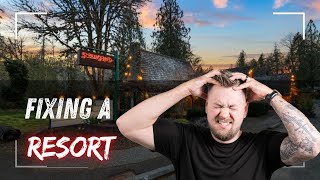
Christian Osgood owns Robin Hood Village Resort, a $4.5 million seller-financed property, and made an early mistake hiring multifamily managers instead of hospitality experts. He's adding A-frame cabins and hot tubs to potentially double the asset's value, and emphasizes that resort success depends on marketing and branding, not market-driven rents.
Chapters
All right, here we are. We are back. Welcome to another episode of Multifamily Strategy Live. I'm Christian Osgood, your channel host. Coming live to you from Dallas today. We're going to be talking about one of my favorite properties and at the same time, one of my least favorite properties, the Robin Hood Village Resort. If you guys are unfamiliar with this, this is one of the earlier deals that I purchased, $4.5 million seller financed at 4.5% interest, which is a great rate. We may have overpaid a little bit. We also got excellent terms. How do you manage a resort when everything doesn't go exactly to plan? There's some very unique things about a resort. There are some things that we've done right, some things we've done wrong. I want to share what it looks like to be a multifamily guy in hospitality, what I think about hospitality, and some of the unique pieces. One of them, and my favorite piece, I'll open up with right here. With hospitality, you actually can outperform your competition by being a better marketer. In multifamily, market rent is more or less market rent. People are going to rent the least expensive place. It's a long-term decision. When you are marketing for a resort. A whole different ball game, and the best marketer can win. So you actually can brand and outcompete other people in a way that you can't in other asset classes. It is my favorite thing about hospitality and part of our vision of what we want to do here. So what did we do wrong? I think it's more important to talk about the things that you mess up when you're going through business and real estate, because those are really the expensive things. And if someone else can learn anything from this. That is where we save people the most money. Like, how to make money? Not that hard in real estate. It's fairly apparent. You buy things that make money with money, typically with leverage. Then you go build your portfolio, do your thing. On the resort, the first, first thing we did, I took a team of multifamily people. Every single person on the staff was amazing at running multifamily, and we bought a hospitality project. That is not a great idea ever. If you have a business that is working and it is growing and is scaling, you can Add in other businesses and other features that help grow that core business. Example, I own hundreds of multifamily properties. I own a property management company. Not only does this help me buy more properties, this has also helped me get debt products that other people can't because I have the management team. When I come to a presentation, I have the capital, I have the experience, I have the team, I have the companies. Property management has also allowed me to build an amazing team and have a larger team on my properties because I build this A-team. And we subsidize some of the cost by managing other people's rentals with a skill set that we already developed to manage our own. That is called vertical integration. That is a company where you can bolt on to your existing company and make a bigger, better engine. What you do not want to do is have vehicle A over here, multifamily, and then all of a sudden get vehicle B rolling when you're starting your career. That is what we did. I put the wrong people in the wrong— it wasn't even the wrong people in the wrong seats. I put the wrong people on the bus for the project. Now, Robinhood Builders, or I can actually show this to you guys. Uh, let me go ahead and see if I can't share my screen here. Give me just a second. I don't often do this on a live, uh, but let's see if we can't, uh, if we can't make the magic happen here. Share screen. Let's go. Entire screen. All right. In theory, yes, there's a million of me. You guys should be able to see this. Robin Hood Village Resort. Look at this thing. These are adorable cabin resort. We got 18 cabins, each one has individual hot tubs. You got kayaks, you got a river running through the resort, 13.5 acres in the mountain, across the street from one of the best wine locations in Washington State, and fact, the best pizza in Washington State. It's called Canale, literally across the street from our property, 35-second walk. Amazing location on the Hood Canal. You can go fishing out here. People bring boats, jet skis, the whole nine yards. Beautiful, beautiful location. We host events. We have a huge event space. We host weddings all the time. Our weddings do amazing. Beautiful location, fantastic resort, love the property. What I like about it is this is a one-of-one asset. It's also why we are able to outperform if we are good at marketing. Here's the problem: not every partner I have has the same money in their business that Christian has, which means if I pay for marketing and my partners cannot, I overpay for the amount of value I receive. The lesson that I learned on this deal isn't just, you know, stay in your lane. This is a really cool project and I do have the wherewithal to make this property what it needs to be. Let me go ahead and end my screen share here. There we are. The problem is I have to reorganize the team. There's a lot of hurdles to get through to go from A to B. If I could go back in time, I would not have done this project because we weren't ready to take on this size project. We weren't ready for this asset class. I have to do a lot of restructuring, but because this is a one-of-one property, and this is where this is really what I want to share today, your ability to brand a unique asset determines how well it does. One day in the fairly near future, I am going to have an allocated ad budget and a renovation budget. We're going to take this and make it something else. We have the event space, we have the location, and location is everything in real estate. We have the historic building. What we're going to do is take some of the older cabins or the cheaper cabins. There's some historic ones that are gorgeous that will never, never do anything other than update. We want to add A-frames to it. We want to add built-in hot tubs. We found that it is astronomically less expensive than replacing the temporary hot tubs, having actual hard surface built-in hot tubs for each and every cabin. Even when they fail, they last astronomically longer. The pieces last longer. It is a better deal altogether. Every cabin should have its own fire pit, its own hot tub, be a little A-frame with a loft. We can make a really cool, completely unique campus. We already have the concerts, we already have the weddings, we already have the business conferences. Build on what is working, but make a one-of-one experience in a one-of-one location. That is what I love about this property. There is a possibility that we buy this for $4.5 million and it becomes a property that is worth $9 million. You can double the value here. We are currently not in that position. We're in the position of things are a little bit old and things need to be updated, and we are behind on getting ahead of the resort. If you're going to buy anything like this, my absolute, absolute 100% advice, uh, you can make a ton in multifamily, can make a ton in hospitality, you can make a ton of money doing a lot of things. One, keep the main thing the main thing. If you're going to go into hospitality or any other business, bring people on the team who have direct experience doing exactly the thing that you're doing. I did that in multifamily. I did not have anyone who has bought a resort before consult me on buying this resort. We figured, hey, we've done well in creative finance, we've done well in real estate. This is a real estate thing. We have the books, we know how this is going to work. We're good marketers. Away we go, off to the races. That is not how real estate is done. That's not how business is done. Work with the people who've done the thing that you want to do to the highest possible level, as high as your network will go. Have them overview your deal. And if you can, bring people onto your team of the experience to make sure that you are successful until you yourself have the experience to be successful. That was the lesson from the Robinhood seller finance. We still have several years. We still have almost 6 years on our seller finance note. This will be one of the best projects we've ever done, but it will take some time. That's the Robinhood update. Haven't done one in a while. Lessons learned. Stay in your lane. Bring on the right people for the right team. And at the end of the day, if you have a business that is not performing exactly as you expected it to when you purchased it, figure out what the problem is and fix it immediately. In this case, we're doing it live. Now, on every episode of Multifamily Strategy, we open up the comment section. So if anyone who is currently in attendance has any questions, which I post this live fairly late— we go live at the same time every day, by the way— but If you're watching right now for the first time and you're hopping in, you have a question, feel free to post in the chat. Otherwise, well, we can wrap early and it'll be a short lesson live on YouTube. I'll give it a few appropriate seconds and other than that, we'll get off the races. By the way, quick updates from the field as we always do. The 76-unit is chugging along. We are 50% done with our capital raise. If you want to know more about the 76-unit deal, join our free school community, Multifamily Strategy on School. You can join there. We're going to be hosting an event this Saturday talking about the deal, the structure, the returns. Guys, this is one of the juiciest returns, and it's the first time that we have opened this— like, we're opening up a deal specifically for other people to get the experience of investing alongside us. So if you guys want to participate in the deal, you want to learn how we're structuring these, you want to see just what opportunities are out there in today's market, on market. Check it out, 76 units, uh, 50% done with our raise, uh, but we will keep on, uh, we'll keep on keeping on as we approach our final, uh, 45 days to close. From Oscar: So we use the dead hammer to pay off the properties, uh, we use cash-out refis to pay off the partners, slash the hard money. Yes, that is most commonly how you would do it. Again, you pay off your debts or any expense with money. So it could be earned income, it could be out of cash flow, it could be out of the sale of property, it could be out of the finance, a refinance of another property, it could be out of the refinance of this property. But the most common structure for the deal to buy the deal is you refinance the actual subject property to get the money to do your deal. That is the most common structure. I highly recommend So we use interest-only notes and the debt hammer to use money that we would have spent towards principal pay down. Yes, I've covered this a few times, but essentially I like interest only because if you have 5 deals, you can save all that principal and focus fire on one note and pay it all the way down. I love paying down debt. I think you should pay off all your debt. The easiest way to do this in my mind is to use debt to create an income stream that is significantly greater than the debt, then use that income stream to to pay off all the debt one property at a time instead of trying to pay off every single property on an amortized schedule very, very slowly over time. If you math this out over time, one, you will be way more successful when you're actually paying off one property at a time. Two, you get more pieces on the table with paid-off properties. Three, while you're saving up to pay them off one at a time, you end up with a huge side account that has a ton of liquidity, which, oh, uh, super helps you if anything comes up unexpected or you're trying to qualify for loans. Sitting on a ton of cash is not a bad thing. If you're not starting there, build an income stream and then save that income stream. You save more on an interest-only note. You do not save more if you spend all the money on something stupid like a car. Is a T12/T3 a standard format or just a P&L on the spreadsheet? Uh, T12 and T3, they're very similar to a P&L. It's basically going to say, hey, here's the income and expenses over a set period of time. Uh, there's a couple of differences from a P&L, like a literal profit and loss and what you would see on a T12 and T3, but for the most part You're 99% accurate to say, hey, this is a trailing 12-month profit and loss statement and a trailing 3-month profit and loss statement. This is how the property is currently doing, all incomes, all expenses. Um, 99.99% accurate is just a P&L, uh, not done on an annual basis, done on the trailing however many months. That's all it is. Short and sweet for the questions today, which is just fine. Guys, this has been another episode of Multifamily Strategy Live. Awesome seeing you, by the way. Uh, I I am running a webinar tonight. The link is in the description below. So if you guys want to do that and you're available in the next 40 minutes and having me watching live, that is available. How we are finding deals, what changed from going from a couple duplexes to hundreds of units, find deals for free, fund deals, maybe even get paid on your deals. I just have a friend who just got paid $94,000 to buy a very large building. You can do the same thing. Without syndicating or doing any other crazy structures. Very, very simple methods. Uh, we're going to be sharing all of it on this webinar— how you buy deals with or without money, how you get paid to buy a deal that continues to pay you forever. Uh, check it out, link is in the bio. Appreciate you guys. See you on the next episode.
More from Christian



Speak with authority to turn broker rejections into deals - boost your confidence #RealEstate

Turn Broker Objections into Closed Deals - CRE Negotiation Tactics #RealEstate #Negotiation

How to Get Multifamily Deals Under Contract Without Having All the Cash | Objection Series Ep. 1

How I Scaled 500 Apartments in One Texas Market in 12 Months #RealEstate #Multifamily


Turning a $12.2M, 200-unit mess into profit - live multifamily turnaround update #Investing

Day 10 Update: Turning a $12.2M, 200-Unit Apartment Complex Around in 80 Days #RealEstate

Day 10: Before Time Runs Out | Saving a Failing 200 Unit Apartment in 90 Days (Ep. 3)

How 2 Direct Deposits Generate $70K/Month from 224 Section 8 Units @ 99.4% Occupancy#RealEstate