Having Multiple Businesses with Michael Cobb
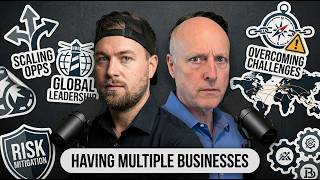
Michael Cobb runs three businesses across Central America: mortgage banking in Belize, resort development for expats, and a teak plantation in Panama. He built each by spotting market gaps, then hiring strong leaders and giving them ownership stakes. He warns that skipping due diligence cost him dearly in one failed partnership.
Chapters
Hello and welcome to the Owner Meeting Podcast hosted by Multifamily Strategy. I'm Christian Osgood, your channel host today, joined by Michael Cobb. I'm super excited for today's episode. So he has multiple businesses, unless you tell— I'm going to let him tell you about all of them, but managing 3 businesses, they're international. This is going to be a cool episode. The point of the Owner Meeting Podcast is learning the things that you want to do from the people who are actually doing them. Michael's doing some very interesting things. So Michael, welcome to the channel.
Christian Osgood. Thanks for having me. This is great. I'm excited to be here.
As a triple business owner, what are the 3 primary companies that you are running? I'm going to have a bunch of questions on how you actually do this and do it effectively.
Okay.
But just for context, what industries and businesses are you in?
No, good. Great question. You know, so we originally started about 34 years ago, a small mortgage company in Belize. We ran because there was no mortgage money. Like if someone from Washington State was headed down to Belize to buy a condo or a house, like no bank in Washington State would lend them the money and no bank in Belize would lend a foreigner money. So this big hole in the marketplace. So basically developers were financing buyers, which, you know, really sucked for the developer, right? Or, or the client had to pay 100% upfront, right? Full payment. And so it was really constricting the marketplace. So we started a mortgage company. 10 years into that, we turned it into a bank and we're a bank in Belize, but we're really a mortgage bank. We still, our primary business is mortgages for North Americans, Canadians buying property in Belize. So that was our first business. Second business was a development company, resort development, resort communities really. So we build resort communities for expats, digital nomads, baby boomers, right? People getting out of the cold a lot of times, but also, the affordability of living in a developing country. We work in Belize, Nicaragua, Costa Rica, and Panama for our development company. And then we also have a timber business that we started in 1998 centered in Panama, and we recently completed a sawmill late last year at this point, and we're now in production of lumber and finished product there. So, so 3 very different businesses, but somewhat complementary as well.
I like that. I have— so this relates to me a lot. So I have a real estate acquisition business, which I consider one of my main things, Multifamily Strategy, which I have over 1,000 students who go through coursework mentorship. People are buying all over the country. And then I run my property management company, which is Texas-based. It is very easy when you're running 3 projects, even when they interlock pretty well, it's really easy to lose focus on one at the expense of another. And that was one of the big things I met last year, met briefly with Alex Hormozi and his overall advice, which I ended up actually not taking. I would shut down two of your businesses and focus on one. You'll do better. Uh, it's a common, it's a common difficulty of how do you do a good job managing three things that may complement, but they're not directly the same business.
Sure.
How do you decide which businesses make sense for you to be in? Question one. And my follow-up to that is going to be, how do you decide which business gets which attention when? Because that is the hardest piece of running multiple divisions or multiple companies. How do you decide what businesses you want to be in in the first place?
Well, I think that's a really simple answer, right? Many of your folks probably heard of Zig Ziglar, right? Great sales trainer, motivational speaker. If you help enough other people get what they want, you can have what you want. Right. And so it's this idea of being a servant, right? To say, hey, what need needs to be fulfilled in the marketplace? Can I serve it and can I make them— can I make a profit doing it? Right. And that was with the mortgage company. We saw there was no mortgages. So we said, well, there's a problem. Let's see if we can solve it. We set up a company to do that. The development business, kind of the same thing. There was a lot of really, really good product for North Americans, but it didn't meet North American expectations. Lights in the bathroom would be back here and your face would be in a shadow, or the door handles were all at different heights, or there'd be one outlet in the living room and people would have to run extension cords and outlet strips to plug stuff in, right? And we just looked at that. And we said, we can fix all of that stuff for free, right? Or almost free, right? And we're just like, then we will be able to deliver a product that a North American consumer expects. And then the bigger piece was the community aspect. And I don't have time to go into that today, but community is critically important because when people leave their homes and jobs in the north, retirees, and they move somewhere new, making new friends is of paramount importance. And so we figured out how to do that, but we hired a company. Look, I'm going to answer part of your question. The second question, when you don't know how to do it, or when you, well, when you don't know how to do it, you got to hire other people who know how to do it, right? Yes. And then the third business was the teak timber business in Panama because there's a shortage of teak. The gap in production and supply and demand is growing. They are cutting teak down 8 to 10 times faster than anybody is replanting it around the world. And so, you've got the supply-demand imbalance that's happening. And then, the big hurdle, the mental hurdle that people have is, "Oh, I got to wait 25 years," right? I know you're in the real estate business, so you can get a rent check once a month or a lot of people have stocks, pay a dividend once a year. 25 years is a tough hurdle for people to get over. I love it, by the way, because I'm already over the hurdle. I now have about 700 acres of teak. Growing in Panama and like, I'm over the hurdle. And if lots of people stay out of the business because of 25 years, that just means my 700 acres of teak's going to be worth a lot more money. Right? So, those are our 3 businesses, but finding opportunity, 2 that were truly service-oriented, finding a need that wasn't being met. And then the 3rd one was just classic opportunity, a huge scale opportunity to say, wow, I mean, this is insane. Teak price has been going up on average 5.5% a year for the last 54 years. Right? So when you can see a price increase in something over 50 years at 5.5% a year, that's not the growth of the tree. That's not the growth of the asset. That's just the growth of the wholesale price. You're right. And so you see that kind of stuff and you see this supply demand imbalance and that imbalance continues to get wider. You're just like, okay, like I, I can see how this will be highly lucrative. So that was more of an investment-only oriented as opposed to a service, right? But the, the first two businesses and, and and by far our biggest businesses came out of service. The second question you asked is, how do you manage, right? How do you manage 3 businesses?
And where I found where you give the most attention, you make the most money. It's a super— I hate corny sayings, even though I also like Zig Ziglar, who was fantastic at corny sayings. Yeah. Where attention goes, money flows. And I've seen that to be true in every single business. If a business is struggling and all of a sudden everyone gives attention to it, it stops struggling and it makes more money than any other business.
Sure.
How do you manage that? Because if your focus is on, for example, let's say you're solving a problem with the teak business and your attention's there, it's really hard to be all your brainpower on teak and then also be like, wow, am I solving the major problems in the mortgage side? And vice versa. How do you manage that? Is that just a people thing or what does that actually look like?
I'm going to pick one word that you said because I think it's the pivotal word: manage. I don't manage any of my businesses. I am a leader, right? I'm a leader, and leaders don't manage. Leaders lead, managers manage. And so what we've done in each of our businesses is we've found incredibly competent managers and leaders. I mean, they're leaders in their own right. They have to lead their organization, right? And maybe they're just a leader in their organization. And I think in a couple of cases, that's what we have. We have a leader, like our banking group. We have a leader in our banking group. Horrible man. Not horrible manager, but not a great manager. Right. But he's hired a chief operating officer to run that business. Right. And they are empowered to do so. They are financial. They have financial motivation to be successful in their business. And so the key is to not try to manage multiple businesses. The key is to lead those businesses and hire very competent leaders in each of those businesses, managers in each of those businesses to actually run the business and give them a stake in it, right? I mean, give them a stake in the business so that if it is successful, it's a direct correlation, right? I mean, how much money you make and you get a piece of it, right? And so, I think those are the methodologies that we've used to really create businesses that are, they're not self-sustaining in the sense of like my leadership is important. And maybe even more so, you talked earlier, maybe before we get on, I don't remember, but like, so the lateral integration, vertical integration, right? I think the role of someone like me, like you, right, is to figure out how we tie those businesses together for the most optimal utilization of the resources that are in those businesses. Where's the synergy? Right? And I think as a leader, that's my role, but I don't manage any of those businesses and nor should I, because I'm not a particularly good manager.
You've done something that I'm really excited about, and I think this is where I would say a vast majority of entrepreneurial people get stuck. They're like, hey, I love business. I have all these ideas. I don't know which ones to implement or how to find the problem that I want to solve. Each of your businesses solves a very specific problem, right? It's not just, hey, I want to be in the mortgage business and start company. It's, there is a lack of products specifically in Belize for people in the US and Canada to be able to build here. How did you identify, I just want to go by these one at a time. How did you identify that problem? Were you personally working on building something there? Where did you find that problem where you said, yes, this is the problem that I want to solve?
It's a great story. So, my business partner and I, we bought a couple condos in Belize. He's a lawyer. He does asset protection trust mostly for physicians. And Belize is a great jurisdiction for trust, right?
For a lot of reasons.
Anyway, so he was doing a lot of work in Belize. One day, I was in the computer business for about 13 years after college, and we were roommates in college. That's how we knew each other. Anyway, he calls me up one, I think it was a Tuesday, and he said, hey, Cobster, what are you doing on Thursday for the weekend? I said, I don't know, why? And he goes, Do you want to go to Belize? And I'm like, absolutely. But then I'm scratching my head and there's no Google back in 1993. And I'm just like, Belize, where's Belize? I finally had to fess up, Christian. I had to go, okay, dude, where are we going? Where's Belize? I had no idea anyway. But Thursday, got on an airplane, went to Belize, had a great time. I said, Joel, I said, next time you come back, give me a little more heads up. Come with you again. Next trip down. Like we started looking for real estate. We found a couple condos and we, over the next few months after that, we bought 'em, right? We're laying, and now in this condo complex, there's 11 buildings, there's a pool, they all face the ocean. The next U-shape, 11 buildings was under construction. And over the course of many months, you know, 6, 8 months, nothing happened in the 3 buildings next to us that were in construction. So, Joe and I are laying by the pool one day, just hanging out, whatever. And the developer comes by, we're like, hey Jim, how you doing? And I'm like, Jim, why aren't you building the rest of those? I never see anybody working. And he tells us the story about no mortgage money. And he tells us that he has been financing like 3/4 or more of his buyers, right? And so, we're sitting there and we're like, well, okay, Jim, so you're collecting as much money. Yeah, I usually get, you know, at least 25% down, sometimes 50% down. What kind of interest rate you charging? 12% to 14%. 12% to 14%, right? And we're like, and when we bought the condos, Joel's lawyer negotiator, Jim gave us a 20% discount for making full payment. Like that was the deal. Well, we'll pay full payment. Give us your best price. It was 20% off the asking price. Yeah. You know, Joel said to Jim, he goes, hey Jim, would you sell us your paper for that same 20% discount? And I'll never forget Jim's face. He kind of goes, yes. I mean, it was just like he cocked his head and he said yes. It's like there was no processing time. Yes.
Yeah.
So Joel and I, whatever, he leaves and Joel and I sit there for a while and we think, okay, we can buy 12, 12+ percent paper for 80 cents on the dollar. Like, mm, yeah, this is a good business, you know? So he went out, he went out and raised a bunch of money with some doctor clients. I went out to my buddies in the computer industry. We put together a few million bucks, went to Belize and started buying mortgages from developers. So that was the genesis. It was seeing something kind of odd. You're not finishing your buildings, that's your business. Right? Talk to the developer. Why aren't you hearing the answer? And then realizing kind of almost immediately like, wow, that's a real business. There's real money there. We just need to figure out how to do it. And then the next piece of it is then not so much with the mortgage company, that was just me and him and whatever we just did. But when we decided to become a bank, right? We went out and hired professional bankers. We hired banking consultants. To help us find banking professionals, right? Started a bank from scratch, right? We knew nothing. And I'll give you another example. When I went to Panama in 1998 to buy my first 100-acre cattle pasture to plant teak on, I knew, I knew nothing about teak. So I spent a couple days at the Library of Congress. Again, pre-Google, right? It was 1997, '98. I went to the Library of Congress, 2 days, read everything I could read on teak. Not because I thought I would actually know very much about teak, but because I was going to Panama the week later or something. I wanted to interview 3 forestry companies and I wanted to have really good questions, right? And so I used my research to come up with intelligent, you know, perceptive questions to interview forestry companies. And we ended up hiring one called Heyo Forestal in 1998. And they planted our plantation. They've maintained our plantations now, plural, for 27 years. So again, by finding the right people who know their business, right? That's the key. It's always about people. It's always about people. Yeah.
Well, and there, there's two ways to be, generally speaking, there's two primary ways to be successful in business. One is you have specific specialized knowledge and it's a service that you can offer and you can build, right? Off of your own knowledge base, or two, you identify the opportunity, you don't have the knowledge base yet, and you need to immediately recruit the people and build the business. Those are the two ways to do it, is either your specialized knowledge or you have to lever the specialized knowledge of others. Everything out there, besides that, like you, you identified the fundamentals of teak, right? You have a commodity where you're like, hey, I like the fundamentals on this.
Yep.
How did you land on teak? It's a very specific thing. To find. So what about that? Was that a material that you were using in your hospitality building? Was that something where I'm just curious on, that's such a unique piece of your business. It doesn't really relate directly to mortgage. How did that fit in and why that business?
So when we looked at it, we did some initial research to just see, because Panama passed a reforestation law, basically that's why we even heard about it, right? So they pass a law that says, hey, if you plant a bunch of teak trees, we'll give you tax incentives. You know, you don't have to pay income tax, Panamanian income tax on your first harvest. US citizens do, but whatever. Anyway, but it's a really good incentive law. And they featured several species. I can't remember what the— there was a faster growing species and I can't remember what it was. There was teak at 25 years and there was mahogany at 35 years. And when we started talking to the forestry company, because what do I know about any of these? Nothing. Right? Jacobo is the guy that we were working with then, who's, by the way, he was a little, I'd say a little, he was a forestry engineer, a junior forestry engineer. Today he's general manager of the company, right? So it's just great to grow with people over, you know, a couple decades or 3 decades, right? Anyway, so we ask Obo what, like really what's the best time value of money on things? And he said teak. So that's why we went with teak. Again, that wasn't our decision. We could have gone with mahogany or the other species. Just as readily, but, but what's the best time value of money? And Teak was the answer. Yeah.
Very interesting. Very interesting. Okay. So you settle on Teak, that business gets launched. When you were launching these companies, what was there? I'm trying to word this, this question correctly. Was there a specific hardest part of business? It could be on the first business, the second business. Was there a certain struggle in getting one company started where you're like, wow, we didn't anticipate this. And it was just not at all what we expected. I feel like every time you start a business, you have unexpecteds. Was there one that stood out where you're like, I had no idea that we're going to come up against this?
We had no idea how hard it was to do business in Central America.
I have heard this many times. Yes.
Yes.
Is it resistance specifically to Americans or is it just resistance to, is it just the way they do business is just not the way we do business?
Time, time does not have the same meaning to them. Right. It, and sometimes people throw around the word lazy. I've really not found lazy to be an issue. It's not a lazy issue. Right. It's a time issue. Right. It's, we value time and punctuality, like so intensely as a North American culture, but in Central America, it's a little more fluid. It's a little more loose. Right. I mean, you got very hardworking people, but they might show up, you know, late right now. They might work late, too. But if you've got a crew of— if you've got a cement crew coming in, you got a rebar crew, like, hello, everybody got to arrive at the same time, right? I mean, like, you can't have, you know, and so you get these inefficiencies that happen because you, you know, and, and, and, and I would just say there's— I mean, there are other things, too. Bureaucracies are different. Bureaucracy. Here's the thing. Bureaucracy is the same around the world. Lots of paper, lots of people wanting to put their approvals on stuff. In the United States, Canada, we're so fortunate to have most of this stuff fully automated at this point, right? It's still a pain in the ass to go to the DMV. I get it, right? We all dread going to the DMV right now. We don't have to. Now we can do it online. That's my point. Now you can do it online. 20 years ago, going to the DMV was, oh, it was ugh, right? You want to go to the DMV in Panama? I mean, just get ready to wait hours and hours and hours. Again, it's not because the person behind the counter's not working hard. They are working hard. It's just everything's paper. It's in file cabinets, right? You just run up against these kinds of things 15 different ways all the time. And so what I've found, and this is a saying I came up with, right? You have to learn acceptance without acquiescence. It's hard. I mean, that is a razor-thin thing to balance on, right? Acceptance. Okay. I get this. But without acquiescence of, or I'm going to give up, right? Because it's tough. I mean, it, and so, two things. One, finding people to lead your businesses and teams to work. And most of our businesses, really, we utilize locals, whatever country we're in, whether it's Belize or Costa Rica or Nicaragua or Panama, whatever, right? We're using really recruiting and having local. But there are some expats in the mix because our customer base is expat, right? If our, I always, you know, if our customer base was, you know, Panamanian, I would have Pan— this whole stack would be Panamanian, right? But it's not, right? Because, and so what you have to find if you have expats in the mix, and we do have expats in the mix because of our client interface, that's a real special breed of person that you have to identify. And that's been challenging too, Christian. Right. The, the, the, the identification of somebody and then retention of that person. Uh, uh, if you, if you misidentify, there's no way you can retain, like, you know what I'm saying? We, we tried for a while and it just was, yeah, it just, you can't make it work. Um, so the identification of the qualification characteristics of that person that make them a good fit for that environment, that's tough. That, that's tough.
How do you find good people? You had mentioned you're a leader, not a manager, so you have to find the right people, not, not just the qualified people. You have to find the right people that are gonna work. With you correctly, someone who you can lead in the right direction. How do you find these people?
You know, I put myself out there. So, for example, I've done a ton of work with the National Association of Realtors. I served on the board of directors of the National Association for a year. I've been in many of their, you know, global committee and some of the other global alliances committee. And so I've engaged, I attend their annual conference every year. I attend their mid-year conferences. I speak at a ton of local and state association meetings on the real estate side. On the banking side, my business partner does that because he's the lawyer and that kind of drops into his turf, right? So, he circulates in a lot of banking and finance kinds of meetings on that side. And then on the timber business, I really didn't have to deal very much with it until very recently. I joined the International Wood Processing Association and attended their convention in Colorado Springs a couple of weeks ago. Again, I believe in belly-to-belly, Christian. I think you can see a resume and that tells you if they're qualified, right? You can have a couple of phone calls and a Zoom call. You know, I think to really know someone, you have to spend time with them. And my experience has been conferences and events are great because, yeah, there's the formal part, but there's the going out for dinner and, you know, and do they chip in the right amount? That's a huge one for me. Like, okay, the bill's $200, we're all in for $50. Well, did they put in their $50? Or they didn't put in the tax and tip and they're in for $40 and all of us are chunking in more. I look for those kinds of character issues in social settings that really tell me the measure of the man and those higher character. The bottom line, I've always said, I mean, if you need an accountant, find some accountants, right? But higher character. And so I use these social settings in physical in-person events. It doesn't have to be conference. So I speak at a lot of conferences too. So I use those networking, but in-person networking, Christian Osgood. I think that's been our true key to finding the right people in leadership and managers too. It doesn't have to be a leader. It can be a manager that will be of the right character, first of all, but also of the right temperament and personality to work well in that environment.
Now, one of the most expensive decisions you can make is giving equity in a project to the right person, which is why character's so important. When you, you earlier you had mentioned rewarding people out of the success of the business. What does that typically look like for you in these roles? Is that actual ownership in the company? Is that profit share? What is you, what have you found has been the right incentive to match the incentives to the objectives?
Kind of a mix of all of them in the bank, because ownership in the bank is very onerous in terms of know your client and just all kinds of due diligence that the Central Bank of Belize requires. And so they do it in the form of bonuses that are, that are driven, you know, tied to profit. Right. So, so people in the organization who are not shareholders can, can benefit from the success that they drive for the bank. You know, in our development company, because we are a share company, we're a private share company, but we have shares. And so we've rewarded many of our people over the years with stock in the company so that they benefit directly from that. Our salespeople, obviously the direct correlation there is commission, right? Sell, get commission, whatever. And then in our TIC business, our Panama business, We actually found our lead guy. He moved himself and his family down there and we cut him in on 10% of the business so that like there's a big success kind of quotient in there. Like he generates a million dollars of profit for the business. He's keeping a hundred grand and he gets a salary too. Like he's salaried, right? He is salaried.
Yes.
Because he has a family and all kinds of stuff and he was building a sawmill for 2.5 years to get our stuff. So it was no, No, no, no. Plus side, right? But now that we're operational and our first container of lumber's headed out later this month and our finished products are coming out of the gate, yeah, that 10% will be a meaningful number to him going forward.
And that's such a genius thing. I think a lot of people when they first think about like, oh, I'm bringing on people, I'm rewarding with the company, they immediately think equity. And that's not always the right answer. Equity can be, If it's someone who's really a key member and they understand what it is to be an owner, but I've seen so many people give equity when they should have given a bonus structure, or they give equity when someone's doing a recurring task that really deserves and should be rewarded with more salary. Having that right balance of bonus incentives, profit share incentives, uh, what tasks are salary versus ownership and what's the risk reward of each of those. It sounds like you've used each of those completely differently in every business and appropriately in every business, but it's such an important consideration. When I ask people, what's the highest stupid tax you've paid? 90% of them say, hey, it's been a partnership mistake. I let the wrong person into my business. And oftentimes it's their fault for, they gave someone who didn't need to have equity, equity that they weren't ready for. And I see that happen again and again and again in business. Being an owner isn't the right answer for a lot of people to be involved in the company. That it takes a very specific person. It sounds like you have the exact right person in Panama. They're moving down there, they're on a salary. This is their, they're tying most of their life to the company. That's the one time where you go, absolutely ownership's appropriate.
Right. I think when the tasking is entrepreneurial, right? And you find an entrepreneurial person, 'cause you have to, then I think equity is probably most times, maybe not all times, but most times a good piece, right? Because then it's, yeah, because you are building something from the ground up and that is entrepreneurial. And then ownership of a piece of that I think is relevant. But you're right, different circumstances and different strategies and different parts of the business require different compensation structures. Absolutely.
And if you're going to do this, that's one of the early things to make sure you learn. Just spend a week learning compensation models and what works when, then you'll apply it for the rest of your career. Count the five.
Yeah.
It's one of the things I see missed most frequently by newer entrepreneurs. So the way you were saying that, I'm like, yep, this is 101. This is how you set up a business and compensate correctly. Speaking of large mistakes, we talk about the stupid tax all the time on this channel. We ask every single guest. It doesn't mean you're stupid. I mean, the dumbest you'll ever be is when you start and you're going to learn a heck of a lot along the way. What is the most expensive mistake? And this could be personally expensive, it could be monetary to you. What is the most expensive lesson that you learned that we can learn because you made the mistake for us?
You know, and this was a big one. This was an expensive one. It was monetarily significantly expensive. It was reputationally largely expensive. We were approached by a— this is our real estate development business. We were approached by a developer, we have a huge piece of property. Our Grand Pacific property is 3.5 miles of Pacific beachfront, right? The property's 3.5 miles by a mile deep, 2,500 acres, right? And literally we're building a small town and we've built a village at this point. We're not a small town yet, but we are a village, a couple hundred addresses and people and all kind of golf courses and stuff going on. So we were approached by a guy who said, hey, I'd like to build a condo building and some residences around the condo building. On part of your property. And we said, fine. So we worked out a deal with him and we basically put the land, we put the land in the deal for a piece of the sales price, right? Because we said like, he's going to invest a lot of money building the building. We'll put our land in, he invests the money to build the building. Well, the mistake was we did not do enough due diligence and truly like the character issue. And part of the reason I'm so character-driven these days is like, I mean, he built a third of a building, never, I mean, concrete and rebar ran off with people's money and kind of left a whole bunch of us in the bag. And that was huge. That was back in 2008, 9, something like that. I don't know, whatever, 8, 9, 10. Yeah. Anyway, but it was, I mean, it was a massive fail at so many levels, but the fact that he ran off with a bunch of people's money, never delivered their products. That was a big problem that we had to sort out over the next 5 to 7 years. And I mean, we did, we did, but boy, it was painful. Yeah, it was painful.
That is almost always the answer on this channel. It's not one mistake that you made. It's not one like, oh, well, we made this business. It's almost always, it's the people. It's always the people. It's the most expensive lesson every single time. I, I, you can probably go back through the last 100 episodes of this podcast and maybe pick out a small handful where it was like, hey, I made a misstep and I should have done this. Almost every time it's the one person and it, it comes down to character and who are you working with? It is, people are the biggest variable in your business. People think your biggest risk is corporate policy, interest rates that happens in real estate all the time. People are going to be a million times more variable than interest rates could ever be. Interest rates can double, people can tank your business instantly. It is a crazy expensive lesson. One, that sounds like that was a pretty large-scale project to make that decision on. That didn't, that doesn't sound like a small project to have them in on.
Oh, it was a doozy. Okay. It was a doozy.
Ultimately, what is the solution? You mentioned over the next 5 to 7 years, you guys, you know, you make it right, you work through it, but ultimately what was the work through to correct that?
So ultimately there was, he had a couple partners who ended up cleaning up the financial side. The problem for us was, is that, you know, we had people screaming and yelling and it really kind of put a hurt on our project from a PR standpoint for a number of years. You can't believe the, you know, and they, the word they ripped me off. It's like, whoa, whoa, whoa, whoa. Like we did, all we did was put the land in the deal. Like we, We didn't sell it. We didn't write contract. We didn't do anything. We just put the land in the deal and said, hey, pay us, you know, I can't remember, $50 grand a condo or something, whatever it was. I don't remember anyway. But, but I, and we didn't get paid. We didn't get paid either. So it wasn't like, you know, we made a bunch of money. Like we never got paid. Right. So like, but the problem was, is people would generally say, oh, they ripped me off and they was grandpas. Yeah. But it wasn't.
Isn't it the worst feeling too? We recently had, it was a viral post. I have a resort, Robin Hood Builder Resort, and we had a wedding couple there who they asked us to clean cabins. We don't allow mid-stay cabin swaps, but there's a miscommunication. We allowed them this one time to do it. They had some deli rolls that got thrown out in the fridge they wanted for their wedding. What they posted online, because again, this is a staff member, was a whole bunch of lies about us politically, about a political affiliation that I don't have. So they got the post to go viral. And they said that we, our staff knowingly stole $2,000 of charcuterie. It was some Costco deli rolls in a mini fridge.
Yeah.
But the reputation, it got a million views. I got hundreds of negative reviews on my, of course Google fixes this, but I had days of hundreds of negative reviews. You get death threats over charcuterie boards. It's part of business. It doesn't have to be true, but That was something that a, a junior staff member did on a summer, an 18-cabin resort in Hood Canal, Washington. I mean, this is like a population of 1,000 people. You would never think that you would get reputational damage from this. Obviously yours is a larger scale, but the reputation stuff as an owner, it does not matter what level it happens on. You take the full blame no matter what. It's part of business.
That's right. Absolutely. And you have to make right, whatever it is you have to make right.
Exactly. Exactly. You have to do the best you can and at the end of the day, have to move forward, but you have to handle it as directly as you can. And the ownership is that comes with the term owner. You own all of it, the good, the bad. And when it goes well, do your best to give that credit to your staff and your partners. And when it goes terribly, You, you're the one who owns it. And that's part of what it takes to lead.
Christian, can I tell you, that's my gem to hear you say that, because I say that all the time. If we talk about stuff, I'm like, if it goes well, it's all you. If it goes bad, it's all me. Right? And you know what? As a leader and as a manager, you are a phenomenal leader. And I don't know if a manager or not, but you're a phenomenal leader because great leaders give all the credit of good stuff to other people because that's what empowers them and encourages them. And really allows them to be what they need to be for the organization, right? But when stuff goes bad, yeah, you own it, you eat it because you know what, that's your job. So right on, man. Right on.
And it feels good when you do that. It feels good for you as a leader. But if I can take it back even to just being selfish, you get the best outcomes for your business if you do that. There is no actual monetary benefit to you. Stroking your ego and taking credit. That is capital for you to give to other people. Correct. And it will pay dividends. The same as the blame, blaming your junior staff member for a horrible thing that didn't need to happen. You have no benefit monetarily. Like it makes no business sense. And Zig Ziglar, you mentioned him earlier, he's fantastic at talking about ego. Ego does not help you in business. Uh, but that is all stuff that you can spend. If you take the blame for things, you get credit for that. You're like, you're, you will build loyalty. And if there's positive news coming in and you can give that to other people, that's compensation that you can give. You will build a better company, but there is zero benefit, uh, to ego as an owner and as a leader. Uh, that was the biggest lesson for me early on, especially because I started young. Which means inherently I had too much ego when I started my businesses. It only hurts you.
But I have to say, Christian, I think ego is what lets us step out, right? I mean, confidence, right? I mean, maybe there's, you know, bad ego and good ego, but I'm just saying like ego's important because ego's what lets us step out of the norm, out of the comfort zone to do something that most folks won't do. And so I think ego's probably a good thing. Until it's a bad thing.
Yes.
I don't know.
I agree with that too. Confidence is everything. When you feel that you need the credit for everything good or you don't take responsibility for the bad, that's where it gets, it only hurts you. It doesn't help. Correct. Michael, where do people find more about you? Your business insights are fantastic. I know you're a public speaker. Where's the easiest place for people to connect with you, to learn from you, to hear all the insights that you have on business, what's the easiest way for people to find you online?
Well, you know what, our ECI website, but I'll tell you what I'd like to do, Christian. I would like to give every single person listening here a free gift. This is my book, How to Buy Your Home Overseas and Get It Right the First Time. Right now, it's not just buy your home, how to invest overseas. It doesn't have to be a home. It can be an investment, right? How to Invest Outside Your Home Country and Get It Right the First Time. It's on sale at Amazon, but if people simply email book@ecidevelopment.com, book@ecidevelopment.com, I'll send them a coupon. They can go to Amazon, they can download the Kindle version of my book for free. This book is all— you talked about lessons and mistakes. This book is a compendium of every mistake, maybe not every, most of the mistakes I've made, many of the mistakes other people have made, and how to avoid them going forward. This book is really a goldmine in that. And you know what? And folks will learn a lot about me and our businesses just by seeing how we address those things. There's no call to action. There's no selling in this book at all. This is a due diligence handbook. And, you know, I just read some interesting— Gallup just did a bunch of studies recently at the end of last year. Apparently 40% of women would move overseas right now given the ages 18 to 44. 40% would move overseas given the opportunity right now. Irie's are now at about a third of retirees are considering a lifestyle overseas. So the number of people looking at going overseas is dramatically larger than it was a decade ago. And, and, you know, we don't know what we don't know. And when we go overseas, we're playing on a different rule game. We're playing on a whole different field. It's not, I mean, we're, we're playing American football here and we go play football down there. I mean, like, it's not even the same game. Right. And so the, the rules of the game are really important and, and this book really highlights how we can do it well. By the way, I'll, I'll give the, I'll give the cheat answer. The answer is ultimate humility. It's the opposite of ego. Ultimate humility. If I had to sum up my book in one word, it would be— well, that's two words— ultimate humility. Humility.
I love that. And I also love book titles that are exactly on point. Get It Right the First Time. That is everyone's goal and a fantastic book title. Everyone, you can check that out. The link is also below in the show notes, or if you're watching on YouTube, it'll be in the description below. But check that book out and completely free. So thank you so much for offering that. That is phenomenal. And a ton of people are looking to do this, and I know a ton of people who've done it wrong. So you solve a, like everything you do, you've identified a core problem and you have a solution. I've done it wrong too.
That's that, you know, we all do it wrong. Right. But, but I think when we can put that stuff down in writing to help other folks, folks do it better, that's a huge win for everybody. You know? Yeah.
I love that. Well, guys, check out that free link. Thank you so much for listening. The whole point of this podcast is bringing you people who have done the thing that you want to do. If you don't have time to do that owner meeting, the owner meeting is how I built every single piece of my business. I met with the people who've already built the business, learned from them, and made less mistakes than the people who came before me. If you want to do the same thing, download the podcast, leave us a like, follow the pod. We'll see you guys on the next episode.
More from Christian



Speak with authority to turn broker rejections into deals - boost your confidence #RealEstate

Turn Broker Objections into Closed Deals - CRE Negotiation Tactics #RealEstate #Negotiation

How to Get Multifamily Deals Under Contract Without Having All the Cash | Objection Series Ep. 1

How I Scaled 500 Apartments in One Texas Market in 12 Months #RealEstate #Multifamily


Turning a $12.2M, 200-unit mess into profit - live multifamily turnaround update #Investing

Day 10 Update: Turning a $12.2M, 200-Unit Apartment Complex Around in 80 Days #RealEstate

Day 10: Before Time Runs Out | Saving a Failing 200 Unit Apartment in 90 Days (Ep. 3)

How 2 Direct Deposits Generate $70K/Month from 224 Section 8 Units @ 99.4% Occupancy#RealEstate