How to Fix a Real Estate Deal When You Run Out of Money
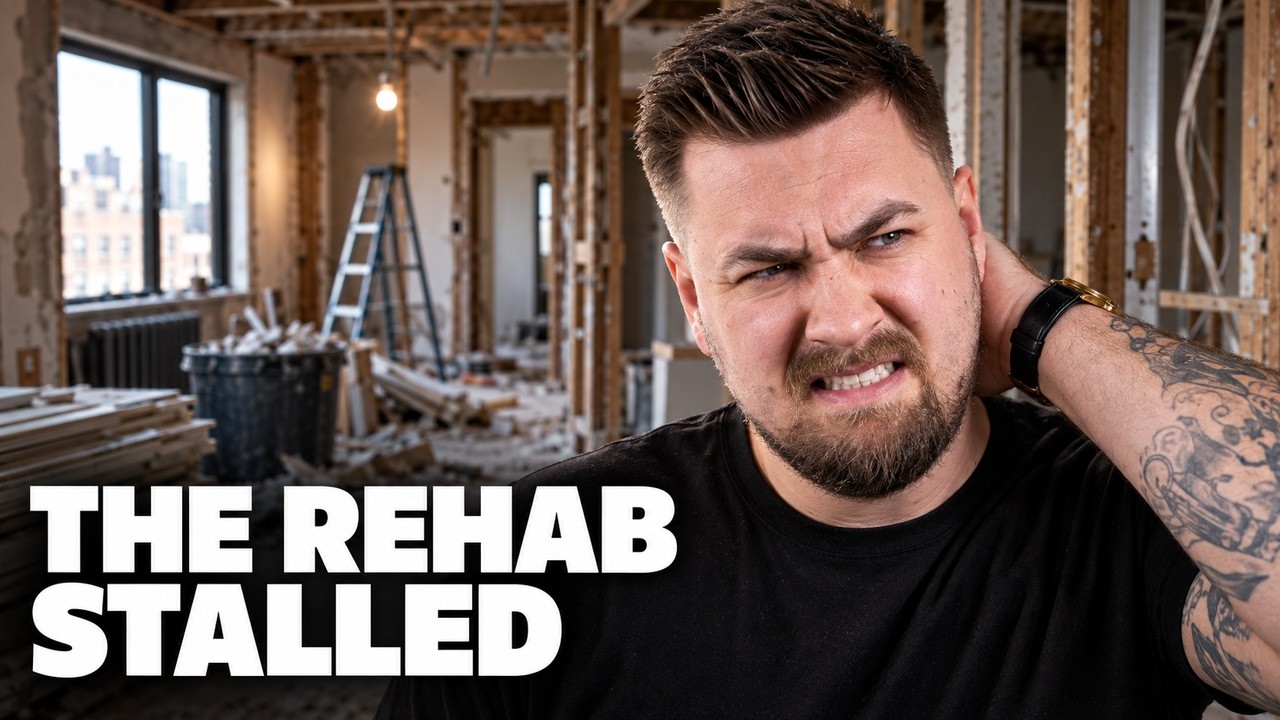
Christian Osgood shows a 26-unit Texas property that ran out of renovation money mid-project. The deal cost $1.6M, is worth $2.2-2.6M now, but needs $40k more to finish. He walks through five ways to plug the cash gap: equity contributions from owners, second-position debt, membership pledges, buy-ins, or LLC restructuring.
Chapters
Today you're going to join me in the field in Stephenville, Texas at a 26-unit where we ran out of money. And this is a super common issue that happens. What happens when you have a great project, you buy a deal, you absolutely love it, and you spend more than all of your money available finishing the project? This is an LLC where the bank account actually went to zero, actually technically a little bit beyond. And how do you actually fix it when you're still mid-project? I'll go through multiple different ways where you can organize the capital. And meanwhile, I'll walk you through the grossest units in my portfolio as we are finishing them out now. Now, in 3 weeks, these are all going to be finished and they're already pre-leased. But they are some heavy turns. I'll see you there. All right. This is my first time in these units, so we'll see how it goes. This one is already underway, but you can probably see just how nasty those walls are. The smell is hard to describe, so we'll just say very bad. Overall, though, we're already working on this unit, so this will not be the nastiest unit on the tour. But this is the type of stuff you deal with as a landlord. If you're looking behind me here, there's holes in the walls. It's not painted well. There's dirt everywhere. And by holes in the walls, I mean there's like a lot of holes in the wall. We're going to need to re-drywall a ton of this. This isn't just slap mud on it. We're going to need to do some cosmetic fixes. The toilet itself is absolutely annihilated and you probably can't see them. There's a good deal of bugs in here, so I'm keeping my feet moving because I don't want to take those all home with me. This unit's pretty gross. Apparently it's gonna get worse from here, but yuck. The problem with the campus is we had a bunch of tenants like this, so the unit turns cost more and there were more overall turnovers. So we blew through the budget. We originally allocated $75,000 to do unit turns. As the campus only had 2 vacancies when we started, we figured we'll probably keep most people as we started greasing rents. Rents today around $750. So going $550 to $750, you know you're gonna lose a few, but Uh, man, the pipe that we ended up with was a little bit rougher. It took us, instead of 1 year, 2 years to get the campus where we want it. Uh, by the way, every unit's leased, so there's move-ins happening in 3 weeks. This entire campus will be turned and beautiful by that time. All right, this one was a bed bug unit. Check this out, there was so much tobacco smoke in here, it's literally oozing out of the walls. This one's going to be one of our heaviest turns. We're going to be ripping out drywall and just redoing it. It's not worth Killsing over it when it's this bad. If you get any humidity, it'll bleed right back through. Just absolutely disgusting. Uh, we did remediate the bed bugs, but I am still stepping gingerly as I see a couple still on the wall. If you guys want to see what a bed bug looks like, that there, that little guy is Mr. Nasty. We do not want those, and that is still alive. Now I'm going to run out of this unit before I take any home with me. So we purchased this property for $1.6 million, fully stabilized and optimized. It's worth about $2.6, about $100,000 per door of value right now. It's probably worth $2.2 with how far we are in our leasing. When you run out of money on this, you wanna make sure that you didn't overpay and run outta money 'cause then you're really limited on moves. For a campus like this, you actually have quite a few options available if you still have a fundamentally good deal, just not enough cash, which fortunately is where we're at for this property here. I promised you super nasty, so welcome to super nasty. I'm actually gonna flip the camera around and I'm gonna do a speed run of this 'cause I really don't want to go in. So here are your floors. Laminate absolutely chewed up, just moisture, mold, dog piss. I had bugs everywhere. This is actually a unit that had carpet. The carpet was so moldy with so much pee in it. Uh, we just had to pay someone to pull it out and, uh, run. Everything needs to be pulled in here. We're gonna replace the cabinets, walls, floors. This is just uber nasty and uber stinky. But this is what we deal with that we weren't anticipating when we bought this building. We actually did a walk through this unit. It was actually not bad. This is a tenant who destroyed it very rapidly, very badly. So now that total renovation is going to cost probably over $10,000, possibly significantly more than $10,000. And again, on this particular property, we ran out of money. So it comes back to what do we actually do, which I will share exactly how we solve these problems and other plays that we could have used after we do one more unit. Oh, shit. This one's really gross and also smells terrible. This actually probably is not as bad as the last one. This is supposed to be our worst one. So sorry, anticlimactic, but still super nasty. No bedbugs, but I see dead cockroaches. We did exterminate those, but have yet to do the part where we remediate and clean out the actual unit. So this again will be made beautiful. But yeah, I see roaches on the walls that are still not fully dead. So this is also nasty. Every single one of these units though, look at those smoke marks. I mean, this is just like the grossest of gross. We've already ripped out the entire bathroom. There was so much mold in here, it was unbelievable. Worst I've seen in my entire portfolio. Uh, every other unit's completely renovated and they actually look really nice. In fact, if they weren't already occupied, I'd try to show you through this. I actually do have a nice one, so I want to show you what these will look like when we're actually done because it's way nicer when we do this right. They look like when they're turned— this one's almost done. We still to swap appliances and fixtures, but this is what they look like almost finished. You have nice flooring, simple gray walls, clean cabinets. Again, we're swapping out the appliances, so ignore that. And the light fixtures will be brand new. We just pulled those out of the ceiling today as we just finished painting. But these are actually super cute efficiency units. Again, the rent is only $750. This is not a crazy high rent place. We just want to provide nice places for people to live. So really simple. We're 90% done with the reno of this one, but this is what all those units will look like. It'll take us about 2 to 3 weeks to get all of them looking exactly like the one behind me. What do you do when you actually run out of money? So I'll tell you what we did on this project specifically, and then I'll tell you what the other options would be. Uh, we did the super boring one on this one, is we were done. We did the leasing first. We got all the leases signed, so I have a final budget and a finished project ready. We did the final math. There was about $40,000 additional that were needed to to completely turn all the units, get everything ready, and to fully lease the building. Now with that, we'll get the value of the building to about $2.6 million, which is awesome. We all contributed in proportion to our equity. Caleb and I own 40% of the building. The investor owns 60%. Now there's a path for that to change after refinance where we actually get the majority share, but for right now, we all contribute in proportion to our equity. So we got together and we all agreed, hey, let's just write the final check and finish the project. However, If we didn't have the money or we had an investor who's not willing to, that's a pretty common thing. You have a couple of options. One, you can take on additional debt and pledge it against the equity of the LLC. So instead of getting a second position note, so like you have your bank note, then behind the bank note you put another note. You can't always do that, but sometimes you can. Easier, without doing a further encumbrance on the property, you do a membership interest pledge agreement. This is a simple agreement that simply says that in the event that we don't pay you, the collateral is the actual entity itself and my equity in this. So we could have raised some money and I could have pledged, let's say, 50% of my 20% equity of the LLC, or Caleb could have done the same, or a combination of these. Now, in the event that we sell the LLC, you put a bunch of clauses in there that says, hey, we can't add or dilute this LLC without this person signing off. So when you sign these, you're pretty much locking the entity in its current status. I cannot add or remove buildings from that portfolio because I would either increase or decrease the actual value of the backing of the note. However, the company itself, the LLC that owns the property, can pledge its interest as a note. Very common way for people to knock these out. Another thing you can do is a partnership buy-in or buyout. Let's say the 60% partner did not want to write his 60% check. I could offer him, hey, if this project is no longer what we originally planned and not what you want to do, could someone else buy in? We're a lot farther than we were, the income's higher, the value's up, there's actual value in your current position. Would you allow someone to buy in? That individual buying in could come in with X amount of capital to help renovate the building and buy that individual out. In fact, I did that on a project in Houston and I've done that on a project in Laredo, Texas, where there was a material change to the project. It was still a fundamentally good deal, but it was gonna take more cash from get to A to B. We brought on investors and built the team that was more appropriate for that. So you can reorganize your LLC, you can take on additional debt, or you can do the boring thing that we all did. You, we just wrote the final check and now the project is almost done. We'll be back in the field when it's completed. But sometimes major things happen. Sometimes you have more than the predicted amount of move out. Sometimes right after closing a building, you have more ACs fail and a roof fail. There's things that can happen that are beyond what you would normally account for. You just have to be able to pivot. This is only possible when you have a good deal. Fundamentally, buying 26 units in Stephenville, Texas for $1.6 million with the income it was bringing in is a technically very good deal. So we run outta renovation money, we have all sorts of options to restructure because the equity is there in the project to play with. If you do a deal where you overpay for the deal and run out of money, there is virtually no option. People can't sell their equity, there's no ability to take on additional debt. Who wants to lend to a failing project? If you do your deal right and it materially changes partway through, like our project did here, the pieces are always solvable.
More from Christian



Speak with authority to turn broker rejections into deals - boost your confidence #RealEstate

Turn Broker Objections into Closed Deals - CRE Negotiation Tactics #RealEstate #Negotiation

How to Get Multifamily Deals Under Contract Without Having All the Cash | Objection Series Ep. 1

How I Scaled 500 Apartments in One Texas Market in 12 Months #RealEstate #Multifamily


Turning a $12.2M, 200-unit mess into profit - live multifamily turnaround update #Investing

Day 10 Update: Turning a $12.2M, 200-Unit Apartment Complex Around in 80 Days #RealEstate

Day 10: Before Time Runs Out | Saving a Failing 200 Unit Apartment in 90 Days (Ep. 3)

How 2 Direct Deposits Generate $70K/Month from 224 Section 8 Units @ 99.4% Occupancy#RealEstate