How To Make MILLIONS in Your 20s with Arek Boynerian
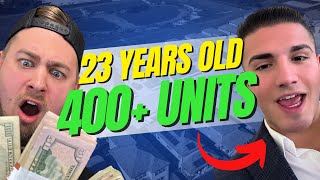
Arek Boynerian, 23, owns 438 multifamily units after starting with a single-family home at 5% down. He uses seller-carry and zero-down deals to scale, targets 16+ unit complexes under $70k per door in Central Arkansas, and aims for 1,000 units soon and $1 billion in 10 years.
Chapters
Amazingly, about 50% of people who we had on this podcast have either first or second generation immigrants from another country, and they come into America. And one of the things they find is there is amazing opportunities to buy real estate here with or without money. You can build your business.
Don't, don't, don't tell anybody.
They're going to find out because it seems to, it seems to be almost everyone's backstory. It's like, hey, my family moved here and I moved here. Hello and welcome to another episode of Multifamily Strategy. I'm your host, Christian Osgood. Today joined by Arik, and I am so freaking excited for this episode. Not only has he done a ton of creative finance, he's done some creative structures that I have not had a chance to execute on yet. Yet another person who started with no money, no friends and family in the business, figured out some creative finance, bought real estate, has scaled a, in my opinion, massive portfolio. I am very excited to bring you guys this episode. Arik, welcome to the channel.
Thank you, Christian. It's an honor. Excited to be here. Uh, can't wait to get into it, dude.
Me too. Me too. Well, for those who have not seen you yet, you recently did a podcast with my original business partner, Cody Davis. Um, super cool episode. I had to reach out to you almost immediately after. I'm like, dude, I have to get you on Multifamily Strategy. The goal of this channel is to connect people with other owners, uh, because that's how we built our whole portfolios. You just network with people who've done the thing you want to do. Uh, you have a sizable portfolio. You built it relatively fast. How old are you today, by the way?
23.
Jeez, started at 28, man. You young guys are slaying it. You're 23 years old. How many, how many units do you have? How many multifamily units do you have today?
438.
That is so much. Where was the starting point? What was the, what was the first deal? How old were you and what did it look like?
I was 20 years old, 19, 20 years old, freshman year in college. I bought a single family house. I showed up to the house on my bike and the realtor thought I was a joke because I didn't have a car. I'm so lucky she took me seriously. And I was shopping for houses because, you know, I didn't want to pay rent. And I knew I needed to get the most amount of bedrooms as possible because that's how students pay. And so we finally found this house. It was 5 bedrooms and it had a garage. And I was like, I can turn this garage into like 2 bedrooms. So we got the deal under contract, $500,000 house. I needed 5% down for a conventional loan. I gave my money to this individual for a diamond investment. And it was supposed to pay out on time for me to buy the house. I gave him $15,000 to get $25,000 back in 6 months. I didn't see the money for 3 years. So when it came down to closing, I had to borrow the money from my friends. I was like, give me $5,000. I went to like 5 different friends of mine and like asked them each for money. Luckily, I got the money for the down payment and we closed on the house. That was the first deal.
All right. And so the house that was— and that was seller financed?
No, 5% down.
Oh, because you're doing the primary residence loan, right?
Primary residence.
There we go. So that's deal number 1. You buy a primary residence, 5% down. You had the money, but you couldn't touch it. So you had to raise the money for your first ever deal and you were 19, 20 years old. Mm-hmm. That's wild.
March 2020. March 2020. So I was 19.
There we go. So you are at the back end of your teenage years. You bike to the property. What made that agent take you seriously? You pull up on your bike. Just graduated high school.
I really don't know. I was just so lucky.
How did the deal go? So you close on that deal.
I don't even know how the deal went. Literally, I don't even know what was going on half the time. I was like, the agent did all the work. Literally, there wasn't really much work to do. You do the inspection, you do the appraisal, the bank approves it, and you go to closing. But compared to what I do now, oh my goodness, I don't even know how it closed.
I have How did it perform after you purchased it? Was it like bedroom rentals? You're near a university.
Great. It was vacant, completely vacant. I rented it to all my buddies.
Oh, that's perfect.
All my buddies. I literally made money day one because it was rent ready. Didn't need any renovations.
Okay. So that makes that one a very good first deal. Now you go from—
I spent like $5,000 or something for those 2 bedrooms. To turn the garage into 2 more bedrooms. But besides that, I didn't really spend any money on the house.
See, that's what I love about this deal, because I talk so much about multifamily on this channel. But no matter where you start, it's making the most of the pieces you have. You found a deal, extremely little down. You were able to play the game conventionally. You have friends, you fill the thing. Okay, I can turn the garage into a couple more rooms. That wasn't that expensive to do. And you're off to the races. Now, it's a long journey from 1 unit to over 400 units. You started at 19, you're 23 today. What did the next few deals look like for Arik? What was the next few steps in the journey?
So next year, one year from when I purchased that one, I was like, I tried to buy a 3-unit and I don't know, got it under contract, months went by and then I didn't get approved for the loan. And I was crying. I was down on myself. I was like, it was terrible. And I was like, I thought it was the end of the world. Thought I wasn't going to get my earnest deposit back of like $5,000. I got it back. Months went by and I was like, let me sell my house. And I could sell it for like $200,000 profit. I listed it myself for sale by owner. And I got under contract with like all cash deal in 3 days.
Wow.
And I sold that house in like 30 days. And at 10:30, went into a 16-unit apartment complex. In Little Rock, Arkansas, and that was a million-dollar deal. I profited $200,000. I put 20% down and bought that 16-unit apartment complex because I went from bringing in like $5,000 a month to like $12,000 a month. And I was like, it's a no-brainer. So that was deal number 2.
For people who are trying to scale up, this is a question that I see a lot. What was the functional difference to you? Like, how much harder was it to run a 16-unit than it was a single-family property?
No, that's why I tell everybody too, like, that it's the same work, so you might as well get paid for your time. So you gotta do big deals.
Yep.
16 units, 2 mistakes people are doing. There's 2 mistakes. They're not doing deals, and the deals they're doing are too small.
Yep. If you're trying to stack it one— so, so you started actually fairly similar than to how I did. I did it younger. Or sorry, let me try that again. Editor, fix that. You did it younger. You started at 19, I started at 28, but it was the same concept. I was buying duplexes. I did this, this condo that I renovated, lived in, rented with a roommate, then went out, bought a couple of duplexes. Then I was out of money. I played the conventional game. Next deal I did, 38 units. What do you learn? More units make more money. You can't have bottom line without top line revenue, right? 16-unit, that's quite a roll-up. So you go straight from 1 into 16 units. Were there any major changes to your strategy on how you ran those that made it so simple to go from 1 to 16? Like, how did you run that building that young?
I started, I started, I started like using AppFolio. Yeah, you got it. You got to use like— I didn't use AppFolio when I had that single-family house. I was collecting rent on like Venmo or like Zelle. Yeah.
So you started, you start building out systems, you close the 16 unit.
I was still managing myself. So I was like flying back and forth from Arizona to manage a thing. It was like hilarious.
Is that where you live now? Do you live in Arizona? Where are you based now?
I split time between Dallas and Little Rock.
Oh, very nice. I'm moving to Dallas myself here in a couple of months. So I'll be joining you down there.
Dallas is the best city in America.
I absolutely 100% agree. I've lived in Washington my entire life, which is awful. And I am— yeah, I've been all over the country. Every time I'm in Dallas, I'm like, this place feels like home. Dallas is freaking fantastic. For those who haven't seen it, book a flight. So you get to 16 units and I want to— and we're going to get into some of your cool deal structures here because you've structured these— some of these deals absolutely incredibly. What did that actual deal look like? Was that just a straight conventional purchase of the 16 or how did you knock out the financing for that piece?
Yeah, it was just normal financing from like a local bank, small bank. First Community Bank was the bank on it. And yeah, 20% down. I think I had like a $50,000 seller credit in there, which was nice. Ooh. Just for renovations.
Yeah.
But yeah, regular loan, 5% interest, good old days.
Before we get into some of your creative strategies, take me back to the very beginning here. So, When you were getting started, what is your actual origin story? What is ground zero for Ark before you bought the first property? Let's learn a little bit about you.
I am a Syrian immigrant. My family came to America in 2003. I was 3 years old and my dad got a job as a pastor here in America. We're super grateful to come to America because if I was in Syria right now, I would not be owning real estate and not being successful. I'd be starving for food. So grew up in Boston and went to school in Tucson, Arizona, University of Arizona. It's the Harvard of the West if you didn't know. And I had a snow and landscaping company in high school and I was always very entrepreneurial, very hungry, very resilient, lots of energy and always wanted to do well because my family didn't have money growing up. We never ate at nice restaurants. I never got the new pair of shoes and that like fueled a fire in me and it's still going today. So always really want to do well, always want to provide for my family. So like that's where I got my business side from. So I started that small business that made some money, you know, didn't make a killing, but, you know, had some like pocket cash and I still run that business today with a couple of partners, more focused on real estate, but that's a little bit of my background. And then went to college and bought my first house.
So, one of the things that's really consistent, so on this podcast, we get a ton of people in who've bought a lot of real estate. Some people are specifically business owners, but majority of this podcast is people who bought quite a bit of real estate. Common thread between almost all of them. Barely any of us started with money. Almost all of us have some chip on our shoulder or a thing that we're like, hey, I didn't grow up with money. I am pursuing real estate because there's something that I didn't have that I want to obtain. It could either be for your family members, it could be from yourself. It's so important, I think, as an entrepreneur, to have something that you're clearly fighting for. And I have found that people who've actually gone through some struggle or had some adversity they're almost impossible to compete with if you haven't had that happen to you. It's like I wouldn't want to be up against Aarek. That's a hard backstory, right? If you grew up rich, you don't have the same respect.
I hate those kids. I hate those kids. And I meet somebody that like, like comes from money and they're like eating at these fancy places and they drive these nice cars. And I'm like, you didn't even— I asked them what they do. I asked them like, how did you become successful? And they give me some stupid answer. I had like, they're like, I have a couple Airbnbs. I'm like, yeah, that's, that's, that's how it all came out. Okay.
Yeah. It turns out having a super small business or having a couple rental properties does in fact not make you rich.
No way. You need lots of it.
Do you get a lot of people online being like, okay, so you started at 19. Yeah, you must have had rich parents or this is, this is daddy's money.
Everyone thinks it's daddy's money. It's hilarious.
It almost never is. I found amazingly about 50% of people who we had on this podcast have either first or second generation immigrants from another country and they come into America and one of the things they find is there is amazing opportunities to buy real estate here with or without money. You can build your business.
Don't, don't tell anybody.
They're going to find out because it seems to, it seems to be almost everyone's backstory. It's like, hey, my family moved here.
I moved here. It's crazy. And then our country today, like, everyone is trying to beat the, like, victim drum. Everyone wants to be a victim. Everyone wants to, like, tell their sorry story. And the fact is, nobody cares.
You know what? If they want to play the victim card, which is absolutely what we are culturally doing right now, I am all for it because I— guys like, guys like you and me, we're just steamrolling those people in business. Everyone's here waiting for a handout. It's like, you know what?
There's really no competition. When I'm buying deals right now, I'm the only buyer.
That's how it feels for me too.
I'm literally the only buyer. It's really fun.
What is a deal today? So you start with single family, you move to a 16-unit. What is the type of deal that you look for today? What moves the needle for ARK?
Yeah, that's what Cody was encouraging me on, honestly. I bought a 12-unit a couple months ago and Cody was like, what are you doing? He was like challenging me. He was like, dude, I didn't move the needle, but I'll look at anything in Central Arkansas that's over like 16 units. I'll buy it. Like, I'm not too good for a 16-unit. I'll take that on. 16-unit, it's got to be under $70 grand a door. It's got to have strong occupancy. It's— what else has got to have? It's got to be multifamily. I'm not buying like anything else. I'll buy mobile home parks. I love those. Those are my favorite. But yeah, 16+ units, sub-$70,000 a door in Central Arkansas, I'm probably your buyer.
That's fantastic. Largest deal that you've done so far?
72 units, $5 million.
Ooh, that's a good size. That's a good size property. Is that multifamily or is that mobile home park?
I wish it was mobile home park. It's multifamily though. It's an apartment complex. Pretty nice property built in '08. It's a light tech.
Oh, there we go. For those who aren't familiar with LIHTC, I'm looking at a LIHTC deal right now. Smaller than yours, 44 units. But LIHTC deal, how does that work? What do you need to take out a LIHTC?
I don't like it. It's terrible.
Really? Okay, let's talk about that.
You got all this regulation paperwork to move somebody in. It takes like 2 weeks.
Oh, that is a pain.
Not even like inspection. Like, forget about the housing inspection. This is just like your back-end paperwork. That's take 2 weeks. You got to like There's a stack about this thick, and you got to keep all the paperwork in the office. You're like required to have an office. It's terrible. I'm trying to get out of it. I don't like it at all.
There we go.
So have fun with all the paperwork.
How do you operate those systems, by the way? You're 23 years old, you have a ton of units. You started self-managing, I assume, at some point. You would either have to start your own management company or you'd have to be really good at third party.
When I got— no, I hate third party. I've tried that both times, two different companies. They both sucked. It's no one like— you got to— if you want to like— if you're not rich, if you're not super wealthy, third party is not going to work for you. Like if you really want to do well, if like you're a winner and you really want to succeed well, you got to do it in-house. I have 5 full-time managers that work directly for me, nobody else. And then we have like several maintenance guys, none of them are on payroll, it's all paid by the job. Systems in place, we use Appfolio. Every check gets approved through me. I do the accounting, it takes me about 90 minutes a month, super easy. And yeah, what else do we do? What other systems do we have? That's pretty— AppFolio does a lot of it.
AppFolio is an incredible piece of software. So you get great business model. I ended up starting a PM company both in Washington, then I have one Apex Asset Management in Texas. It's the same thing. It's like we tried all these different managers. No one runs your property like you do. And it's not that it's easy. It is a little bit difficult to be—
No, it's very hard and it's a pain in the butt. It's not fun, it's not glamorous.
No. And it's low margin.
But, but it's like without it you will literally fail. Yeah, you will fail.
I'm a huge fan of owning your universe. There is a deal structure that you've done on a few deals. You talk about this with Cody where— let's get to the creative finance, a blend of bank and seller where it is literally no down. We do a lot of deals that are no down with, you know, it's 100% debt, but, you know, you're using private capital. We've done equity partners where we will do a JV.
Yeah, I hate those.
I have never got— I love and hate them. It depends on the partnership. I like a lack of variables. I want as few partners.
I don't want— I don't want any. I don't want any partners.
See, and that's what I like about this. I want as few partners and the longest-term fixed-rate debt possible. Variables kill you.
I want my wife and I just owning everything one day. That's it.
And I think that's everyone's— that's everyone's goal.
So you have to call nobody. I don't want to— I don't want an hour phone call with an investor. I'm all set.
And you've come up with a method that's worked repeatedly for you again and again that you can do this. So tell us a little bit about how you're doing this with no partners, like true zero-down deals. How would one—
this is the secret sauce. This is the Mr. LLC special right here.
I love this.
You ask the seller to carry the down payment pretty much at the end of the day. You bring 80% from the bank and you ask the seller to carry 20%. Simple as it gets. Bank's happy to do 80%. Not every bank will do this. You will get several banks to tell you no, because they're like, "Where's your skin in the game?" And then you got to sell yourself. That you're putting the skin in the game with all your hard work remodeling these units, turning these units. You could even tell 'em that your money down isn't a write-off and the money that you put into the deal is a write-off. So that's a good selling point. But yeah, it's pretty simple, but that's how it works.
What type of banks are people looking at if they're trying to stack the deck in their favor? Are they looking at the large national banks, small local banks? Yep.
Super small.
So you're looking at a bank that lends in the area that the property is, something regional, like a credit union or—
they won't do it out of market, in market, under a billion dollar bank. It's going to be under a billion dollar bank.
There we go. And so 80%, the seller carries back the other 20%.
They can even— like, you got to get creative. This thing about people is they'll hear this and that's, that's all they'll do. Like, you got to get creative with it. Like on one deal, I asked the seller, I asked the seller, you got to ask the seller how much are they willing to carry? And I was like, how about 30? They're like, okay. I was like, how about 50? And he said, okay. So one of the deals I had the seller carry 50% and the bank carried the other 50. And I got the seller at like 4.5% interest and the bank was at 8.5%. So.
And that's one of the great things about this market. If you can get a good chunk for this with seller financing, you take your average cost of debt and you can tailor it down even with a bank involved. You lower the cost of capital and you make a deal work. Are you seeing this year in particular, are you, are you getting more wins on price than you did the last couple of years? Oh yeah, I've noticed that too. I think people are finally starting to back off the price. There was, there was a long—
there's no, there's no buyer. It's a buyer's market. There's no buyers, which is fantastic.
Previously, yeah, it was like the last couple of years people were still stuck on the Yeah, 2 years ago, those are bidding wars. Exactly. And then there's this weird transition where people still thought they can get a high price even though debt was twice as expensive. And then this is the year for me where I'm starting to see like left and right cleaning out. Yep, it's a good time to clean up if you're getting in the game. This is a good time to do that. And what tends to happen is as we're seeing some of the larger deals with syndicators start to fail because they bought variable rate debt and their balloons are coming due, as we see those fail, banks do tighten up. So it gets harder.
Things have totally tightened up. Yeah, it's been much harder to get debt this year than—
and I think it's going to continue too for the next year or so.
I've been, I've been really like having to sell myself to the banks, um, which has been like tough. It's hard to sell a bank when you're 23. So like, they're like, who is this guy? They're like, yeah, we're all set, we're passing on, we'll bow, we'll bow out, out of this one. Is what they say.
Yep. I've seen that a lot. We'll see that on Cody and I doing hotel conversions, take hotels to multifamily. You get this amazing—
That's nuts, dude.
Those are fun. But there's some banks that lend on those all the time that are now like, oh, how much work does it cost?
What's the cost per unit to turn one of those?
Cost per unit to turn those? It cost me roughly— it depends. Oh, it depends on if you're adding kitchenettes or if they came with kitchenettes, because some, some hotels will have those. If you're adding kitchenettes, it's probably going to cost you like $12,000 in my market to renovate those because they'll need new floors, paint, walls, vanities, and then—
Yeah, that's, that's a, that's a tight budget. Wow.
But you'll pick these up in a market like—
And how quick do you do that? How fast can you turn a unit?
I mean, units, we can, we can turn— takes a couple of weeks full cycle though on like a large one. So a good, a good example, 31-unit hotel conversion. We're almost done with it. It's about 6 months full cycle to turn the tenant base because it had somewhere long-term rentals, somewhere hotels to— Yeah, to turn the tenant base, floors, electric, new roof, exterior paint, fix the concrete, new lights.
What's the price per unit on the acquisition?
Price per unit on acquisition came in at about 50, just under 50 per door in a market. Yes. Where your average cost per door on studios like that, entry-level properties, you're looking at like $100,000 market value. So you're coming in at half price. Rent is coming in, when we're placing new tenants, is coming in at around $900 a month for a studio.
See, those are my kind of deals. I buy my deals $50,000, $60,000, and I rent them for about $1,000 a month.
There we go.
$900 for a 1-bed, $1,100 for a 2-bed.
Yep. We're sitting right around the same place. Central Washington.
Cody was telling me he pays like $80,000 to $90,000 a door.
We will on stabilized multifamily. So on the hotel conversions, because those need more margin because it's a heavier lift. So you buy them for less a door. We're happy to buy at 90. If you're talking like 2 beds, things appraise closer to 130 on nicer.
I don't do appraisers. It's a joke. The appraisal business is a joke.
It is a joke. It is a joke.
Tell me it appraised for this. I can get an appraiser to do it.
Yeah, but you need to hit it where they're— because if you go— this is what I see a lot of people do. They look at everything on a price per unit and they go like, oh, well, I just think I can get the value here because something else traded there. I want to see consistently—
it's based off the rents. Yeah. And the expense load you use, that's where the value comes from.
Oh, yeah.
And ultimately it's all on paper anyway. The buyer's determined value. Like, I can— like, you can move the numbers however you want. You can move the cap rate, the expense load, you'll get a completely different number. Astronomically different.
Well, and different lenders are going to look at it differently. So I'm looking at— when I'm looking in a general market, though, I want to have for my 30-second math, I want to know what these units are trading for on average so that when I'm looking at it and I see, okay, the last 5 deals of similar buildings went at $130 a door and I'm picking this up for $60 a door, I'm now interested in doing the math on this. I'm like, what is wrong with this building where we're getting it for half what other people are being able to refinance for? And then you come in, you play the bank game, and you've hit it on the head. Appraisals, when it comes to actually doing your refinance, more than half the time, because you're the same way as us, we're the main buyer in our market for the types of things we buy. Appraiser calls us, they're like, hey, our comp set is the last 3 deals that you bought. Like, what are you renting them for? As the buyer, if you're playing a region, like if you're playing I will use a football term here. If you're, if you're playing zone where you're just coming in and you're buying everything in one area and you're narrowing down on specific asset classes, you do get to control the market without that much effort. You can influence appraisal, you can drive these. At the end of the day, you want to make more money, outperform, which goes right back to what you said earlier. You got to handle your property management, handle your systems. If you can outperform and then you can sell—
hardest part.
Yeah, it is.
Management's the hardest part. Like, if I— like, buying these deals is easy. Like, I could— like, I have so much bandwidth. Like, I barely even spend time on acquisitions. Like, I could buy so many more deals. It's just a matter of being able to manage it.
Yep. Oh, and that's the biggest bottleneck for us too. It's like, how fast can we expand without blowing up our team? And how big do we have to make our team to expand? Balancing the systems is huge. You said something that I think more people need to hear though. Buying the deal is easy. It's not—
People think that's a hard part. That's the easiest part. Another problem I have, another challenge of mine is literally just getting the banks to approve the deals and fast enough. They take 2 months. I don't know. I can get them in 30 days, but by the time you close, I'm working on 4 deals right now and it feels like it's taking forever. Oh my goodness. That's another problem. Someone told me they're buying deals with all private money. And I thought that was really interesting. Like, they're just getting private money for the whole thing. And I was like, wow, you can close pretty quickly if you do that.
You can close. So that's a majority of what Cody and I do.
The whole deal?
We'll do— so that motel conversion was 127% financed, all hard money.
How much? What interest rate?
13.5%.
Oh God, dude. What?
And you run through the project and you pull it right into perm debt. So, you have to buy them where the cash flow— the rules of the game.
And who financed it?
That was Flynn Family Lending for that particular one. That's a local family office.
Wow. That's pretty cool. So, you can close pretty quickly that way.
We reached out to them, capital raise. It took about a week. As soon as we got through due diligence, we closed.
Dude, what?
Because you write it up and you're like, "Okay. It's a cash offer, right?" It's like, "Yeah. We're cashes in." Takes them a few days to do their underwriting. You go through DD and you're done.
I like that. I honestly hate dealing with the banks.
You have to be able to support the debt though. So, you either have to have— there's two ways to do it.
Yeah. My cash flow is strong. All my deals, I'm just buying stable deals that has room to improve on the rents. I'm not doing any major rehabs. I'm doing stable deals, like 80, 90% occupancy with a little bit lower rent that I can improve the rents on a little bit and And that's, that's it.
So rules for the game for private money, and you're actually in the perfect position for this. Rules of the game, you cannot go negative cash flow portfolio wide. So if you have enough cash flowing rentals, which you do, you go, how much expendable capital do I have above and beyond what I need to live the lifestyle that I have? That is money that I can go ahead and service private money debt and do projects that have a lot of upside. And if you're a good manager, you look at those deals like the motel conversions or entry-level apartments where it's like, okay, all we have to do here is light reno and better management than the last person. And if you've seen what I've seen in your market, being a better manager than the last owner is not a hard game to play. If you are good at your job, raise rents, stabilize a building, eliminate a lot of your vacancy. If it's just a stabilization play, those are awesome because they're short-term deals. As far as like your value add, it's done pretty quick. Which means you can do expensive debt because we hold that debt for way less than a year. We're refinancing right now. We're about 6 months into the project. We'll hold that expensive debt for maybe 8 months, bring it into perm financing. We just got an awesome price. No partners, all debt, no banks. Great deal. Love them. What you did is interesting though, and I want to go back to this. You do still have to exit the private money debt, right? It's an easy way to get in, but you have to be able to exit it, which means you will still do the bank process. It's just you have 6 to 12 months to go through that process. You can slow play it, talk to the bank about the project, communicate with a few banks throughout. It gives you time to play the bank game where it's not as much of a burden. To your advantage though, you get through all the headache on the front end, you get it into bank financing.
Yeah, it's already— it's already per— it's already per finance.
You get through the headache on the front end and you're done. Yeah, this one, it's easy to close. You have time on the bank, but you have more steps, right? You have expensive money and you do have to cycle out of it. There is always the risk of what if the banks tighten up even more and you don't get your refi? Well, then you're stuck with a project at a great price, but it's super expensive debt, which is not an ideal stack. When you have been so, so at hundreds of units, there's a lot of learning, especially when you start, you know, on your bicycle with a house.
Yeah.
What's the highest stupid tax you paid?
The highest price of learning where you're like, oh, I've done, I've done, I've done several stupid things. I bought a 24-unit and I was going to do a condo conversion.
Yeah, condos.
So the clientele is completely different. So I was like, I got to kick everybody out and renovate this thing. So I lost all my tenants. I kicked everybody out and I renovated this thing way too much. I put $30,000 a door into it, $35,000 maybe. And I had no income coming in and I had a $6,000 mortgage payment every month for, I don't know, 18 months I wasn't making money. This is absolutely stupid. Don't kick your tenants out. You're going to renovate the property, do 5 at a time, do 2 at a time. Okay, like don't kick people out. You need the money. Like leave people in. Huge tax. I paid $6,000 a month loss for 18 months probably. So that's a pretty big tax. Moral of the story, don't kick your tenants out. Keep them and you can renovate as you turn the units, as the leases expire. Okay, that's the first one.
Especially if you're a newer investor, right? What we always say on this channel.
And I was a new investor too.
Yeah.
That was terrible.
Don't rock the boat if you can't afford to get wet. That's the— I think that's what—
that's what's crazy about it is like, to— like, I wasn't even doing that well and I still made it back then. That's what I've been thinking about lately is I was like just starting out, didn't have like much reserves or nothing, and I made it through that mess. And today I'm like, I don't have a mess like that. And I'm like, wow, I should— I gotta really crank these gears up because like You know, like, oh man, I just think about that sometimes because I made it through that. Like, I can make it through. Yeah, that's why I want to really push right now.
What's different about you from all the other investors out there? People have had varying levels of success, but what is unique about Arik that has grown your business as fast as it grew?
I'm not— I'm not scared to do the dirty work. Like, I used to talk to the tenants. I used to manage it myself. Like, I'll do anything. I'm not too good for anything. I go to the properties all the time. I walk my vacant units all the time. I talk to my managers several times a day. I'm extremely resilient. I'm extremely hardworking. Like seriously, people say that, but are they really? Like, I don't think so. I wake up super early. I do the hard things. I'm not scared to do hard things. I'm very disciplined when I buy. I have a formula. Like some people, like they'll buy like any price of real estate. It doesn't matter for them. They'll buy a million-dollar house, they'll buy a $100,000 house, they'll flip this house, they'll buy this apartment complex over here, they'll use third-party management. This is risky stuff. I pay between $50,000 and $65,000 a door on all my apartments. They're all located in Central Arkansas. I know my market, I have my resources there, I have my team. It's very strict buying. It's not emotional. So, I think that all makes me different. And the fact that I'm an immigrant also helps.
He said a few things in there that I really want to isolate. Number one, the resilience, the fact that you can just handle the stress and just do the things, that is a difference between a lot of investors. I've seen people go absolutely insane over trying to buy a house because there's a dispute on whether or not the washer and dryer works. It's like a $1,000 problem. And they're like, my world's over. This deal doesn't work anymore. I'm out. I had somebody who saw like a little tiny, tiny crack in the side of the building. They're like, I think the foundation's ruined. I'm out. It's like buildings do in fact settle. It's like a 1970s building they're owning. I'm like, guys, some people cannot handle the pressure. And if that's you, that's fine., but you probably are not going to buy hundreds of multifamily units. Just realistically, not everyone needs to be everything. But if you want to be successful in this game, there's going to be stress and unemotionally handling things is really hard for some people. If that's you, probably not the business that you're going to thrive in. If you're someone like, all right, I'll get it.
I'll get it. I'll get a text message once a day, probably with a problem. Every day.
You have less than me.
At least one stupid thing will happen. And I'm just like, I tell my manager, like, you know who to call? And they'll be like, yes. And I'll be like, there you go. I'll be like, let me know how much it is.
In terms of management, how do you train the people around you to handle your business? One big thing for me is like, I don't even need people to make the right decision. I want everyone who works for me to be capable of making a decision and defending their decision. That is important to me. I want them to bring me stuff and be like, well, I have an idea.
Every minute, every manager besides one of them had no experience when they came to work for me. But I hire on attitude. I hire on energy. You have to have a great attitude. You have to have great energy. You got to believe you're lucky. You got to like believe in yourself. Like, you know what I mean? Like when you talk to some people, when I talk to some people, I don't even want to talk to them anymore because they're so down. Like, they're not up on life. They got a bad outlook on life. And literally you're gonna have a bad life just because of that. And the guys that are on my team, they all have great attitudes. They all smile. Like that's what it's about. And if you have a great attitude, like you can solve any problem, you know, like that's how I see it. And these guys came to work for me, all super hungry guys, and they're all doing great. None of them had any experience. They're literally all learning on the job. They come to me with a problem, I tell them the solution, and then they learn from it. You know, if you come to me with the same problem twice, we got a problem. But like, I have no problem with them asking me questions and they learn from their mistakes and we grow.
That is so important. I don't even look at people's resume. Like when people apply for any job with me, I'm like, I don't care. I mean, maybe there's like one word on there where I'm like, okay, they might have some experience. But I mean, when we're going through stuff, I'm like, I want to meet with people who want to move forward, who are aggressive. I think when you're building a team, if you want an A-team, you have to be really selective on what players you allow on your team. And a lot of that does come down to attitude and drive, I think way more than experience, because there's a ton of really experienced idiots who are not great at anything. You do not want them working in your org. They will drag everyone else down. I've had employees quit just because there's someone in a management position who is just not fun to work with. And you can ruin an entire team with one wrong hire. Yeah, I absolutely love that. It's a fantastic place, actually. That's a great note to end on here. My takeaways from this podcast: one, as we already know, age does not matter. Experience does not matter. Your drive does. You started at 19 years old on a bike. I love that visual. You bike to the property, you close the deal. You've kept that mentality through your entire portfolio, like your entire investing journey. You show up, you get it done, on to the next deal. I love that. Build a team of people who want to be there, who are excited, and to the extent that you can, control your universe. Like, take your management in-house, control the people around you, outwork everyone. And you're going to make it really far. 400 units is a huge deal and you're just getting warmed up, dude. I mean, you're 23.
What's the next goal? I'm in the first innings of my game. I'm not— I'm still in layup lines.
What is your, what's your overall vision? Where do you want to be?
My next goal is 1,000 units, 30. Yeah. I'll just be shy of my 10-year goal. In 5 years from now, I want 5,000 units. Okay. In 10 years from now, I want 10,000 units. I want $1 billion in real estate by then. 30, hopefully I'm married. I want to be married when I'm 30.
Highly recommend marriage is fantastic. I just had my—
Are you married?
Just passed the 7th anniversary.
Yeah.
Congratulations. Oh, thank you so much. We're having our first kid too in like 4 months. So it's— Yeah, life gets crazy. But that is, yeah, marriage is one of the coolest things you can do. And especially if you marry someone who's on your team, like my wife runs a majority of our contractors. She's such a huge part of the business. Wow. It, it can be amazing. I hope that happens for you, man.
Marriage is fun. I got, I got some questions for you, dude. Let's do it. What's your daily routine?
What's your day look like, dude? I— so one, one, one of my biggest stupid taxes, I started too many companies. So I have, I have, I'm pulled in too many directions. I'm trying to downsize that. I wake up in the morning, I have 6 core businesses. I have Multifamily Strategy, which is my— like, that is where I coach people and that is a huge focus for me. So we have a lot of media that goes out for that. This podcast, the YouTube channel, the whole thing. That's a large production. I wake up, I check with my marketing team in the UK. I love that they work like they work when their day's ending when I wake up. So connect with the marketing team. I have all of my division heads call me. I have 2 property management companies, division heads. Yeah. So I have Apex Asset Management in Dallas, Kensho Property Management in Central Washington, and I have—
you own in Dallas?
I do. Well, near Dallas. I own in Stephenville, Texas. And then I'm working on a couple of deals in the Fort Worth area.
Wow. You give them a pencil with the taxes and interest.
Oh, dude, they are fantastic. I got it. I bought a 26-unit building built in 2004. For $1.6 million. It cash flows like $7,000 a month. We raised the $400,000 down, so bought that, bought that zero down bank finance.
26 units for $1.6 million.
Yeah, not bad.
Wow. $61,000 a door.
That's insane. Really good. That's Stephenville, Texas. So that's like an hour and a half out of Dallas. But I thrive in tertiary markets. Uh, but I have those heads. I have my hospitality heads because I bought that stupid resort that takes all the time. Uh, that one is business that I could do without, but we won on terms, not on price. So lesson for everyone, if you do that, makes it very hard to sell. You do in fact have to, uh, if all your values in your terms, you have to live out the terms. So I have amazing 4.5% debt on that and it cash flows and I hate running it, but It's a big time suck and I have to get through it. Uh, but I touch base with my team all day. Uh, first thing I do in the morning though is I touch base with a majority of my leads and I go, okay, uh, what are the challenges? What are our bottlenecks? Let's list them out. Is anyone stuck on anything? Cause I wanna make sure that no one is stuck spinning their wheels on one part of the business. That is a daily piece. Um, we, I coach every afternoon, so I have mornings work with my team afternoons. I'm on podcast, I'm talking to people in our mentorship program, I'm underwriting people.
How many people are in your mentorship program?
We have had— so we just passed our 1,000th member through the course mentorship. We've had a few hundred. We keep actively— it's like a 6-month program. We usually actively per call of about 40 people. Uh, but it's super fun.
Like that, that's the most rewarding thing. How much, how much it costs to join?
$5,000. People jump in.
You have 1,000 people? You have 1,000 people?
Uh, the course is $2,000. So that, that's had 1,000 people through any of the products. I have a $2,000 course. Mentorship is the main thing that people do though. And, uh, yeah, we've had hundreds of people through that. It is so freaking rewarding though. We have a, a deal in Far, Texas. Where they found it, they brought it up on the mentorship calls, they helped negotiate it, they got it under contract, and then people on the mentorship group got together and funded it. So they started a small little joint venture. It's fun watching deals go full cycle on there. Like, that's the only goal we have is I coach it. I will never outsource the coaching. I don't believe in that. A lot of people do that. I'm like, I'm an operator. You learn with me every week and then That's the only goal is people go buy multifamily properties. So it's just fun to watch them get like found, negotiated, funded, structured, and closed on the calls in the community group. But it takes a lot of time. I don't think people realize how intense it is to build a, you know, a 1,000-person community. It's a crapload. That's just a crapload.
You have 1,000, you have, you have 1,000 people in this community and the minimum ticket to, to join is $2,000. Yep. Jesus, man, that's insane. That's a whole business on its own.
You should see the cost to market that.
1,000 people, it's expensive. What's the— what's that cost to market?
It costs, in just marketing, it's about $20,000 depending on the month and what projects we're doing, $25,000 to $40,000 a month of marketing. And then you have employee overhead. It costs to run that company, it costs like $60,000 a month. To like that. That's like break even for that company. Wow. So that's a large piece. And that's outside of the fact that we're doing acquisitions in two states. So I'm buying in Washington, I'm buying in Texas. I fly back and forth between them frequently and I walk all of my properties. I do occasionally I'll do on-site projects. Cody and I ran a little tight on our budget on our hotel conversion. I could raise more capital, but instead we spent this last weekend Cody and I painted a bunch of the units ourselves because I'm like, you know what, it's actually worth our time to pop over there and just knock this stuff out faster, get the units up for lease. So we brought units on market personally this week. But yeah, every day looks unique. But overall, I have 6 like core businesses.
How many, how many units do you own?
I am— I have to go ahead and count them again. It's been a second, but I'm somewhere in the ballpark of 225. So I'm like half the size you are in unit count. I shot myself in the foot with that resort.
You also, you also manage other people, don't you?
I do third party.
Yeah. How many, how many you manage?
I manage about the same size, including it's about another 225 that I manage. So I manage about 500 units. Half of them are mine.
And do you just charge a fee, like a fee management, or do you charge like for the the people on labor, you make them pay for their like health insurance, all that stuff, and then you charge a fee on top.
So I charge, depending on the project, it's either $75 a door to manage, or it's 8%. It will be less on a larger project. But generally, I push closer to a percentage model. So we charge owners, you know, a percentage of rents collected.
Which is it? Is it 8% including the labor of the people and accounting and all that stuff?
Or 8% just to be an 8% fee? Lease up, flat fee, $500. Lease renewals, $200. Those are the only fees we charge.
You need to charge more, dude. I was getting— dude, I was hired. I had this management company that I was using. They were charging me like I got them down to 4%. Yeah, but I paid for a full-time manager. It's like $40-something grand. I pay for her health insurance, I pay for payroll tax, I pay for accounting, I pay for this. It comes out to like 20%. Oh, it was terrible. I'm getting out of it.
I, I manage, I manage profitably. And what I found in my market, because I'm so local to where I invest, when I manage everyone else's properties around mine, we make some money. I'm on salary, my wife's on salary, and I have my, like, my director and my porter. And Moses Lake, for example, are all on salary. I can cover all that and remain slightly profitable, but I control rents around every single building I own. I can undercut all the other owners there, profitably run my universe, keep the lights on, keep everyone paid. I will do that all day long because I'm after market control more than I am trying to make money in PM. I'm okay with low margin because like when we started investing in Moses Lake, average rent was like $600 a door for studios, maybe $550.
Yeah, mine was like $1,000. Yeah, same here. Same thing happened in Little Rock. It was like $600 for a one bed. Now it's like $950 for a one bed.
So it depends on your strategy. If you can scale and you're an owner, this is why I always tell someone if you use third party, which I agree with you, I would try to avoid it. But if you use third-party management, it needs to be someone else who owns in your market who can treat your business like an owner because it does make a huge difference. As a service provider, just doesn't think like you and I. They just don't. But yeah, that's too many businesses. If I didn't buy hospitality, I would have so much more multifamily. That was such a time suck for me that, that resort itself has 9 employees. It is a pain to keep it staffed, to keep it running, to run the events. Way distracting. If you can have less businesses and be better at each of your individual businesses, that is where you make money. And that's where someone like you did it right, where you have 400-something units. You did it fairly fast. You vertically integrated with your property management. That is keeping the eye on the ball. That's the biggest single mistake I made in business was I have 6 silos and each of them have staff and each of them need my attention to live. My personal goal, by the way, my like 1, 3, 5-year goals, my businesses don't count as businesses because if I'm not in them, they don't run by themselves. They all need to be able to stand on their own. Some of them are really close. But they all need my input. So my goal for my day is to be able to manage my managers and to be able to step out of my business and have it continue to grow without my direct input. We're not there yet. Give me another year and we're going to be there on every single company. That's awesome. Yeah, but lessons, everyone, do what ARK did, not what I did. You don't need more streams of income. You need to be better at the thing that you're best at.
I always, I always hear the big time guys like Patrick McDavid and Ken McElroy, they say specialize, specialize, specialize. Yeah, they always say that.
And that, that is the way to play the game. I absolutely believe that if you want to compete, like if you're competitive, you want to be in the best in the world, double, triple, quadruple down on the thing that you're best at. You don't see NBA players trying to also make it in soccer. It's like, it doesn't, doesn't happen. Yeah, they're sure they're great athletes. Sure, they could be good at good like 2 sports, but just be the best in your arena. If you do that and you emulate what Arik did, you will surpass me and you can do it at 23 years old. Like I'm 32, I'm, I'm a decade older than you. Crazy, crazy how far you are, dude. Absolutely insane. And the fact that you're doing it without partners, that, that's powerful.
Yeah, I, I had partners in the beginning. I was taking on partners last year and the year before. 5 out of my 16 deals are with partners, probably 70% of the portfolio I own myself. But now on, I have 4 deals right now, 152 units I'm trying to close in July, all myself. And that's how I want to do it moving forward.
So this was an interesting episode because you interviewed me. I haven't filmed in a while. We got a huge backlog. So I'm like, you know what? We're just going to freeform this. We usually shoot for 30 minutes. We're at 51. We got some bonus content for you guys.
I still got more questions for you. Okay. We keep talking.
So I can't— Let's make this an hour episode, everyone. This is a special edition. I'm going to market the bejesus out of this. Okay, your question.
You get one, I get one. Okay. What's your biggest challenge right now? What's your hardest thing that's like bottlenecking you?
Biggest thing that's bottlenecking me is still my resort. I had to fire about 50% of my staff because we had that, that toxicity I was talking about. We had someone in leadership got fed up, stopped doing their job, and it bled through every single employee. So I ended up getting rid of a lot of people. We restaffed and we're in the busy season. It starts when the school year ends. And so we are now in a, a summertown with brand new staff, brand new systems. It is ludicrously difficult and time inefficient. That is taking way too much of my time. Next year we will have these systems better documented, but it took us a long time to learn this business because I want to do multifamily. My eye is not on the ball all the time with hospitality.
Who's on your team? Break down your companies. How many people on each in each company that work for you directly?
Apex Asset Management has 4 people. Some of them are owners, some of them are employees. Kensho Property Management has 5 people: designated broker, director, their porter, which is the person who like runs around with, you know, maintenance, like basic maintenance stuff. Unlocks units, does showings, a director of like the actual renovation director, my wife, and then me who does all the accounting distributions. Resort, you need to run that type of resort cabins in the woods on 12.5 acres. You need 4 cleaners, 2 maintenance people in the off-season, and you basically double those in the summer. The, uh, I have a sales and marketing company that has 3 employees and we're gonna scale that to 10 this year. They, they help push a lot of, so, so for all my products, for, for expanding PM, for expanding my, uh, like my, uh, course, for example. Um, and then they also will like all third party, all work with other people on moving their online products. So if anyone has like courses, mentorships, events, We're awesome at hopping into DMs and in like any of your existing audience, we can convert into paid clients. So all the systems I had to build to launch my course, I was like, this is a great business by itself. Like those systems standalone, that's a packageable thing. That was actually the right move. That was good vertical integration is we built a team who's really good at doing that.
You're gonna sell that to other people?
Yep. I don't take any clients that directly compete, but that's my one limiting factor is I don't, I don't, if like, if I have somebody who's like, I specialize in VA loans, I'm like, awesome. You are my only client. And that's the only one who we're going to promote for that. But yeah, that one, that one, we, I had such a hard time hiring that out, kind of like PM. That was so hard to hire out. We'd bring on sales teams and they suck. So making my own sales team with our own sales process, that was something— taking that in-house was really good. Being able to replicate that for other people, uh, I, I found that that one's quite easy to do when you already have the system. You can replicate it for other people again and again. That's— it's low bandwidth to replicate. Uh, when we learned like, oh, just out of Instagram with my teeny following, I'm like, we can— we made a million dollar pipeline out of that. Like, we had a lot of money move through per year, move through, which allowed us to market, expand, reach more people, get the podcast live, grow the YouTube channel to 100,000 followers. All of that are subscribers, I guess, for YouTube. All of that build out started with good sales and good marketing. Bringing that in-house, like property management, was one of the, I think, one of the better things that I did. And I have a great partner with that. That company is starting to take off.
I, I need to do that. I need to get like a YouTube channel. I need to like do better on social media.
I found that the ability, especially someone like you has a really powerful story, the better you are at telling the story, the easier it is to scale. It is. I have found like I've never gotten a deal from YouTube, but it is that much easier when someone hasn't heard of you. Like, I, I can talk to a bank and be like, Google me, and they're like, oh crap, you're everywhere online. It is easier to build credibility when your lenders become your fans. I have found that there has been some efficiencies to that. But more important than that, building community is huge, and that's the thing that I care about the most, is being connected with people who love playing the game. All those pieces interconnect. The only piece that like does not fit my universe is having a resort. There's no reason for it. It was just— I thought it was cool because it was seller financed. Cody and I were like, this is a great idea.
It's got to be more than that though. I walked away from a deal last month because like it was like one of my special deals. Yeah, no money down. And I was thinking about it. I'm like, it's got to be. And then I went to the property and the property wasn't nice. It was like, you know, not well built, all this stuff in a bad part of town. And I was saying to myself, the only reason I'm buying this is because there's no money down. I'm like, it's got to be more than that. It can't just be that.
Yeah. And I wish that I had that discipline. How did you learn to have that discipline at the age that you are? You're way too mature for 23. Like as a business person, how did you get there?
I don't— I made the mistake. I bought a 30-unit in a bad part of town. I had to sell it because I'd get so many crappy phone calls all the time and I couldn't take it anymore. I profited good money on the sale, but I was just lucky to get out of it. And I was like, I'm never doing that again. I learned that mistake in buying in a bad part of town and I don't do it again.
That is something that everyone needs, by the way. I see a lot of people who do not, I don't know why they don't learn from their mistakes. It's fine to make mistakes and you're going to make them in business. Just period. Just don't make the same mistake twice.
Yeah. Just don't do it twice.
Yeah.
That's, that's, that's, that's, I tell my manager the same thing. I'm happy to teach them. It's okay to make mistakes. We just, we can't make them twice.
Yep. That's, that goes to every single employee that I have. Yeah. Everyone, every level. You need to be competent enough to make a decision. Even if it's the wrong one, you need to be able to make a decision. And don't make the same wrong decision twice. If you do that, we're going to move forward super fast. People are going to learn, people are going to work well together, and you're going to have less headaches because people learn to come to you with solutions instead of just the problem.
Yes, that's what I tell them. I'm like, I'm like, don't bring me problems, bring me the problem and the solution and let me know how much.
Yeah. And the solution can be— it doesn't have to be the right solution. It has to be a solution. Like, I'm happy. I'm happy with a starting point of like, well, I thought this. I'm like, okay. We have, we have something to work with. I hate getting texts of like, this cabin, the sink's not working here. I'm like, oh, okay. That's, that's wonderful. As my onsite director, what have you done about that? I don't know. I've texted you. I'm like, that is, that is not good. That is not the employee that you want to have.
Uh-uh. What's one question you wish people would ask you more?
I wish people would ask me— I wish people would ask more questions on mindset. I get so many technical questions, which is fine. Like, that's like the main— like, that's the main—
amen to that. It's a mental game.
Yeah. People don't understand. Okay, so I'll give an example. No one's ever asked me this question, by the way. So this is off the cuff. I've had people come to me and they start talking about how they feel about stuff. Like it could be anything business, like, hey, I'm gonna have a really hard time with this, or this is really stressful. And it's like, I— it's not that I don't have any empathy, because that's not true. I do care. But there is no point in business where I am ever actively thinking about how you feel. It has nothing to do with my business. And I've noticed there's a lot of people in business like, oh, I just— I really want all my employees to be very, very happy. And my— I don't want to bring up this conflict because I might hurt my partner's feelings. And I'm like, guys, That, that is going to kill your business. Your job as a business owner is to make sure that everyone gets paid. I don't care, or I don't actively think about what you're feeling at any time. Here's what I'm thinking as a CEO, and this is what I want everyone else to be able to think. Are we making money? What are the biggest bottlenecks in our business and how do we improve them? What are our goals, and is everyone's compensation in alignment with those goals? I'm thinking those things all the time. Any other thought that I have is probably something that I can delegate to someone else. It's not that people's emotions don't matter. It is just like, it's not that significant to business. Your stress level, not significant unless you're gonna have a heart attack. Like, you do need to stay healthy. But the mindset behind being an entrepreneur is what is the next step and how do we take it efficiently? Are there excess steps that we're taking that we can eliminate? Like, let's not skip steps, but let's definitely not add steps. And every freaking person, I mean, I would say, I would say 100% of people who go through our mentorship program are adding steps somewhere, which is the problem why they're not scaling. They're stuck on one strategy. They're stuck on, One deal thing, they're worried about LLC structure. All of it can be boiled down to don't add steps. How about you? What question should I be asking you?
What question I wish people would ask me more? People don't even ask you about deals. I wish people would bring me deals and ask me, what do you think about this deal? That's fun. I don't get those questions. I don't get people bringing me a deal. I get brokers that bring me deals and I end up buying them or not buying them, I don't get like people like me or like an investor like me ask me questions about their deal. That'd be fun. I'd enjoy that. But I don't get any of that.
That's so funny. I get the exact opposite. All I get is deals all day and I could talk deals all day, but I'm like, okay.
I get lots of deals for me to buy, which is cool. I like that. But I don't get like people being like, hey, I'm about to buy this deal. Like, what do you think about it?
That's funny. Yeah. Huh. I'll tell you what will happen if you actually start the YouTube channel and you start talking about your deal structures. All of the questions that people give you are going to all of a sudden be like, what are your thoughts on this deal? How would you structure this? If you want to get those questions, start talking online about your deal structures.
Maybe it's a mistake. I'll get too much of it. I'll become like a time suck.
It's, uh, it depends on what you want to do.
I really, I really, I really enjoy how I have a lot of free time. I have lots of, like, I call it free time, like me being in my business, texting my managers. Yeah. Um, I feel like I have lots of free time. I really, really enjoy it.
It depends. Yeah, it really depends on what you want to do. If you value the free time, don't do what I do. Like, I work all day every day and I have to work, like, I, to maintain and grow my favorite thing that I do. Is watch— like, I love being part of other people's success. Growing Multifamily Strategy, hands down my favorite thing. That being said, the time suck, extremely intense. That will always be like, I don't have free time. I trade freedom for getting to be a part of that. That's a straight up— that is a job that I choose to do. If you do a lot of the like, hey, I want to help you with your deals, it will take a lot of time. You'll lose time I have found that the trade is worth it. I think it's super fun. I love working with other deals and I love getting through problems because if you can explain to someone how something works, you get so much freaking better at it in your own business. If you have to explain it every day, here's how this works, this is how I were analyzing a deal, articulate what you've done right and wrong, be able to put that into words. The way you think about that teaching someone else makes you a million times better as an operator. Which has been a huge value for me.
Yeah, I've heard about that. It's like teaching is like the highest level of understanding.
Yeah. And I found that to be true. I found that to be true.
What do you think about this? You know, you know, Beardy Brandon? Yes. Brandon Turner. Yeah. He has like a group, a real estate group, like several of them. But there's like one, like, tight one. Have you heard about the 50?
I have. I have heard about it. I haven't looked into it, but I've heard about it.
It's $50 grand to join. They meet 4 times a year. They do 4 events and then they meet on Zoom. Them like twice a month for an hour. And it's like all like these big, big time guys, like thousands of units, hundreds of units, crazy. And they got like 30 people in it right now and they'll close it at 50. I'm thinking about joining, but I don't know. That's like, I value every dollar. $50,000 is a lot of money. But people always talk about, people talk about getting in rooms that like you're the smallest guy. And I'd be like probably one of the smallest guys in that group. I'm wondering to join or not.
Would you? I have— I've seen tremendous value in some paid— in a lot of paid rooms to spend. For me to spend $50,000 to be in the room with other people, I have found that I've built my entire business, all of it. I've never paid for a lead. I've never done cold calling, email outreach, door knocking, none of that. Me neither. I found that the owners that I want to meet with are the people who own in the markets that I own in. I found that it's free to get into that type of community for the people that I want to network with.
Yeah, this isn't like you're buying deals to people. This is like a mastermind really. This is like you talking with other people about your business and you're getting motivated. You know what I mean? Brandon Turner is in this group. You're talking to him. Like that's who you're talking to.
Yeah, I've, I've found that in those groups with, with the skill set that I have personally cultivated, I like being the one who sets up all those people. I'm usually the one who goes out and gets all the connections, sets up the room. I like being the one who's the actual networker in Brandon's group or any of the paid ones. And again, this goes back to like, what are you best in the world at? I like rounding up those investors and building teams. So that's super fun. Would I pay to join someone else's? I probably wouldn't because I have fun actually building that team and putting together people. I like being in Brandon's position in that group more than I like being in the paid groups. That being said, I have no interest in passivity at all. I like building everything and I like the challenge. Is it worth it to be in that group? I would almost 100% guarantee you. It's worth $50,000 to be in the room with some of those people.
Like for me right now, think about it. Like I do $1 to $5 million deals. Yeah. The only reason I'm not doing $100 million deals is because like my brain isn't there. It's a mental game. Like I don't know how to do a $100 million deal. You know, maybe in that group I'm challenged and I learn how to do a $100 million deal. Like, you know what I mean? Like if I could do $100 million deal right now, I would. I just don't know how. You know, that's like getting to the next level. You know what I mean?
You know how I look at it though? You're in Dallas. Dallas has a lot of money. There's a lot of people in Dallas who've done $100 million deals. I would find the people who own those and I would just go meet with them.
You're going to find them. They're not just like sitting on the side of the road. They're not just at Starbucks. They're like, what am I going to start shaking hands with people?
Dude, they are absolutely in Starbucks. They're everywhere. That's okay. I have a great example. Uh, Caleb lives in— so he's one of my original mentees. He has 80 doors, he's 21 years old.
He's—
he just went under contract for 176. He decided it was not the deal for him. Um, 176, and he, he had the discipline to back out.
Like, how was he— how was he gonna do that deal?
Uh, that would be a, uh, it'd be a bank deal. Uh, we're buying at 40 a unit. So I was going to partner with him on that. We did the due diligence.
Where's the down payment coming from?
Down payment would come from an investor. We were looking at someone out of Florida, but down payment for that, you're looking at like a couple million dollar raise for that deal. We're talking Waco, Texas at like $40 a door. So I mean, it's ridiculous pricing.
I think I saw that deal. It's possible. It's doing— it was doing terrible, right?
It was doing terrible. They said—
The bank was— it's like all red brick.
No, that one's not. Well, actually, half of it's red brick. There's two different—
the multifamily group had the deal. Yes. Yeah, I saw that deal.
The bank was like foreclosing on it. They're, they're not in foreclosure on that one. But multifamily group does have a lot of deals down there. That particular deal, the only thing that in due diligence, they couldn't provide any bank information whatsoever. And that was the thing. I'm like, we couldn't underwrite it. And then when we got there, they said occupancy was 90%. And just being in the parking lot, I was like, there's— we were there at 8 AM on a Saturday. I'm like, there is no possible way there are enough cars here for this to be 90% occupied. Like, I just don't believe it. We can't prove the books. We backed out on that deal. But to my point, he lives in a building in downtown Dallas. He met someone in the elevator just after pickleball. He was like, oh yeah, I own 3,000 units. He's like, oh, no way, he lives in my building. The guy does a couple hundred unit transactions all the time. He just passed us a $17 million deal in Fort Worth where I was like, it's a really interesting deal. We're underwriting it right now and I'm looking at possibly putting it together. But like those people, you find them on the pickleball court, you find them in the elevator in your building, you find them in your local Starbucks. I have found that is where I find most people. The other place you find them—
we gotta, we gotta hang out when you get down here, dude.
I'm, I'm in Dallas. Uh, I move end of next month. We'll hang out as soon as I get down. Where in Dallas are you? Uh, White Rock. Oh, nice. Okay.
Yeah, yeah, not far.
No, downtown. Not, not far at all. I'm in, uh, I'm over— my house is over in Flower Mound, but I'm in Dallas all the time. Caleb's in the heart of downtown.. So I'm down there all the time.
You're next to, you're next to the airport.
Yeah. Like 20 minutes away. Yeah. Super easy. Super easy. Well, we've gone about as long as this podcast is allowed to go by too. Uh, so this will be a fun episode. We're going to, we're going to air the whole thing, by the way.
I think this is important.
Let's go. So what we're doing right here is what I do with owners of every size. This is the owner meeting. This is why I personally wouldn't pay $50,000 to be part of a group because I found you on Cody Davis's tiny little few hundred person YouTube channel or a few thousand person YouTube channel. Yeah, I loved the episode. And now here we are. And I've gotten some fantastic takeaways from you. And I hope everyone else has too. Like, favorite thing you said, less partners equals better. I have a boatload of partners. You have less variables and more units. What for? What? Exactly.
Exactly. It's just a headache. You just don't need it. My next goal is I want to learn how to buy a $100 million deal. And if it's got to be with partners, I'm not interested. But maybe I want to even learn how to buy a $20 million deal without partners. That's my next goal. That's my next thing I want to take down because that's when you start moving the needle. Yeah. You know what I mean? That's my next challenge I want to overcome. Maybe not $100 million deal, that's a little more down the line, but how about a $10 million deal or a $20 million deal? That'd be cool to take down.
Yeah, someone who I'm working on booking on the podcast, I've had him on my channel a couple times. Like a good example, Terrence Doyle. I met him, I met him from BiggerPockets. We did a podcast with him for BiggerPockets. And then I've had him on my channel several times. He does huge deals. He is a syndicator, which isn't my favorite model. But he does a ton of creative finance with the syndications. He's a fantastic operator. He's vertically integrated. Guys like that, I just look for connections like that where I'm like, he's done the deal. He's super interesting. Sometimes it just cost me, it cost me like an hour of, it's like, hey, let's go film a podcast together. To meet him, I flew out to Denver, but I learned his structures for how he's putting together creative finance for super low-down massive deals where they get crazy returns because they have crazy—
If he's so low-down, why is he doing partners?
He— because his deals are huge. So even like a low percentage down is still tons of money.
He's buying— how big, how big of deals is he doing?
When I was down there, I walked one of his like 350-unit complexes. So he's buying like— he's buying big real estate. Yeah, he owns the renovation company, so he owns the construction company, owns the property management. But he's buying like— he's taken out institutional-size assets.. So even if you negotiate, you know, 10% down, you're still raising millions of dollars to close those. But he has a structure that works for him. Is it my model? No. But I have so much fun learning. I'm like, okay, this is a way that one would use creative finance to get crazy leverage points on multi-hundred-unit buildings. That's competing with institutions and winning. That's pretty cool. And those people like he's a great example. You can find those people online, shoot them a text, meet for coffee, or you just DM them.
Who's the biggest guy you ever had on this channel?
Biggest guy we've ever had on this channel— Terrence is actually up there for, for owners. Uh, Terrence Doyle. Uh, Henry Washington has been super fun to have on, and he's, he's out of, uh, he's Arkansas. He invests in Arkansas. He's in the market.
He buys a lot of smaller— 100. He buys 100. He says 130 units. Yeah.
So many followers. He has. Yeah, he has a huge following. He's, he's a blend of— he does a lot of smaller deals and then he does a lot of social media. So he has, he has kind of those two silos, right? He has the BiggerPockets thing and then he has his investing and he does well in both. He's a good example. We've had a lot of fun people on the podcast. We've recorded with Ryan Pineda's partner. That one hasn't come out yet, but his real estate partner Brian is going to be on here. Michael Zuber, who has a larger YouTube channel.
I hit up Brian Pineda to get on his podcast and he wanted $25,000.
That sounds about right. He has a huge pod. That's nuts. He has a huge pod.
The most I've ever seen is a podcast of 6. What I'm tired of It's like these Instagram guys who have like so many followers and not even like I'm bigger than them in the real estate game. Like Ryan Pineda has like 500 rentals. He's got crazy marketing and stuff and all that. Like there's so many other people I met. I saw this other guy, he had like 400,000 followers and he only owns like 100 units.
I'm like, what's going on there? This is— so this is one of the things that I found, and this is, this is on this podcast. There are people who are better marketers than they are real estate people. And the hard thing is when I'm booking people for the podcast, some of the people with the largest followings are the least involved in real estate. A lot of your online real estate people who have hundreds and hundreds of units like Henry Washington legitimately has rentals. He legitimately does. He's a player in the space. He's in the field. I love that guy. He's super fun. There are a lot of people, though, who have hundreds or millions of followers where it's like I talk about their day to day and they're like, oh, I've never been to any of my properties. My film crew, like my media director, calls me and tells me when we need more footage and what property to go to. And I get there and they tell me what to say.
That's got those guys.
What? And that's a lot of— that's a lot of the people you see online. That's why I started Multifamily Strategy, dude. Like, we have all these online gurus who are like, they don't actually do the thing. They show up where their marketing team tells them to. There's some, there's some real players out there, but there's a lot of people who all they do is market. It's lame. You're bigger than most people. That's why I want to see more of you. That's why you're on the podcast today. I want to see, I want to see more guys like you, young, early 20s, hundreds of units. And it's real. Yeah. And it's real. You have it. It's yours. You built it. It doesn't rely on a media budget or an ad spend. You're, you're not you because you're the best marketer of all time. You're you because you go out and you find deals and you close and you operate. Absolutely. That is, that is, that is some sexy entrepreneurialism. Okay everyone, that's a podcast. Uh, Eric, where do we follow your journey? Where do people find you online? Uh, Eric Real Estate. Eric Real Estate. All right. Everyone give him a follow on Instagram. You have questions about a deal, apparently he wants more of those. So everyone bombard him. You're about to get flooded. Uh, guys, this has been one of my favorite episodes. We let him go longer because you know what? We need operators. We need operators. This guy's playing the game at a high level. He lives in Dallas. I'm gonna be living in Dallas. This is, uh, Arik's my, my new friend now. We're gonna start playing pickleball together. He's committed. And, uh, let's go. We'll see you guys on the next episode.
More from Christian



Speak with authority to turn broker rejections into deals - boost your confidence #RealEstate

Turn Broker Objections into Closed Deals - CRE Negotiation Tactics #RealEstate #Negotiation

How to Get Multifamily Deals Under Contract Without Having All the Cash | Objection Series Ep. 1

How I Scaled 500 Apartments in One Texas Market in 12 Months #RealEstate #Multifamily


Turning a $12.2M, 200-unit mess into profit - live multifamily turnaround update #Investing

Day 10 Update: Turning a $12.2M, 200-Unit Apartment Complex Around in 80 Days #RealEstate

Day 10: Before Time Runs Out | Saving a Failing 200 Unit Apartment in 90 Days (Ep. 3)

How 2 Direct Deposits Generate $70K/Month from 224 Section 8 Units @ 99.4% Occupancy#RealEstate