How to Quit Your 9-5 with Real Estate Investing – Mike Curadossi Podcast Interview
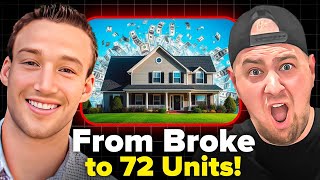
Mike Curadossi scaled to multifamily properties and Section 8 housing to build wealth faster. A tax mistake early on pushed him toward the BRRRR method and better planning. He hired a former housing-authority manager to run operations and built the "Section 8 Done Right" course to teach other investors his system.
Chapters
Like if you don't have to work and you can make money when you sleep, that's the ultimate goal. And then if you need more stuff, you go buy more assets, right? Or you go buy more things. You go do the BRRRR method more. Like if you want a bigger house, go do the BRRRR method 10 more times, then use that money to go buy a bigger house.
Welcome back to The Owner Meeting. I'm Christian Osgood, your channel host, hosted by Multifamily Strategy. We are bringing in Mike Curridossi. I am super excited for this episode. This guy has 71 rentals. He has retired his wife. They've moved to Florida. They have 3 kids. They are living the dream. The goal of The Owner Meetings is to bring you people who have done the thing you want to do. Mike, I would say you are probably the definition of what every investor strives for: financial freedom, a healthy portfolio, stable cash flow. I got to hang out with him just for a few minutes before this episode. I am so excited. I think for the average person, This is what everyone aspires to. The 1% get here. Mike's going to teach you exactly what worked, what didn't. I'm super excited to dive in. So Mike, thank you for joining us.
Yeah, yeah, no problem. It's 72 units, not 71, but that's what's one unit, right? So.
Oh, there we go. There we go. 73 if you count his house. Uh, I am super excited to have him on. This is, uh, this is going to be a fantastic episode. Um, Starting out, what was the starting point for you? So we know you ended on financial freedom. We know you have a stable portfolio. How old were you and what did that first deal look like?
Yeah, so I had always wanted to get into real estate. I grew up watching like Flip That House, Flip This House, like on TV, and I'd watch them over and over and over again. Right. And I was just like obsessed with those shows. And once I got into real estate, I started screaming at the TV because they left out so many expenses. But that's a separate side story. But yeah, like I always wanted to be in real estate and have rentals kind of support my family and be able to work when I want. And I had a landscape design business I started out of college and that always kind of funded my family. And then I knew I wanted to get into real estate. I was probably 25, 26 at the time. And I started reading a ton of books. I remember staying up all night reading books, highlighting them, taking notes, I'd make an Excel spreadsheet, I'd read another book, I'd fix the Excel spreadsheet, I'd read another book, I'd alter it and kind of come up with a spreadsheet that I liked. And at that point in time, I felt confident to start going to like real estate meetups because in my head, I don't know why you think this, right? But it's like in your head you're like, I'm going to go there and, you know, no one's going to want to talk to me. I don't know anything. Like, who am I? Why am I going to go? And it's the complete opposite. Like, I run a real estate meetup. I actually had my meetup this morning and I love it when new people show up and I love talking to them and helping them and answering their questions. So If you are new, don't be afraid to go. But so I went to that meetup, I ended up meeting a realtor there who's actually doing flips and stuff as well, and also a hard money lender. So I feel like the, your two biggest drawbacks is like, how am I getting the money and how am I finding deals? Right? And my first meetup I went to, I put myself out there and I met this guy Jim. And after talking to him, I was like, I need to latch onto him in any way I possibly can. So when I got back, I still remember in like the 2-bedroom apartment or house my wife and I were, well, my girlfriend at the time, my wife now, we're renting. I remember sitting down and writing him an email, like vividly being like, hey Jim, anything I can help you with, let me know. I'll meet contractors, I'll meet subs. Like, I just want to like learn as much as I can for you. I don't want to get paid. Like, I just want to learn. And he responded almost immediately to that and he's like, what are you doing at noon today? And I was like, you tell me what I'm doing at noon, right? So he, I drove out there, I met with him, he walked me through some units that he was renovating and kind of helped me and explained like how much things cost and what his business model was. And he was flipping them and selling them. And I was like, oh, this is great. Like I'm looking for small multifamily. I want to get in or whatever. And he said, oh, well I have a perfect flip down the street if you're interested. I'm the agent. I can't buy it myself, but I'd sell it to you. I said, all right, great. So I ended up getting into my first flip and, you know, I borrowed hard money and I did it and I jacked up my credit cards. I'd gotten new credit cards and maxed them all out, right? I did a lot of the work myself. And it was probably the most stressful 6 months of my life, but that was my first deal. I ended up, my wife, well, girlfriend and wife now, we moved into it because I couldn't afford to pay rent anymore at the house we were living at. So I was broke. I had no money, started with nothing. So we moved into the flip and it sold the first 2 weeks. So we lived there for like 60 days. Then we moved in with her brother after that while we found a another apartment. But yeah, that was my first deal. I made $60 grand and thought I was on top of the world.
There we go.
$60 grand.
I believe we went somewhere for a while, right?
Yeah. You're like, hey, it works. Sorry. Yeah. But my issue, he got into this at the end, but like I took 100% of that $60 grand. I went and bought 2 condos with it to rent. So I went from having $60 to having nothing again. So So yeah, I was broke pretty quickly, but they ended up being good deals that I bought. And you know, owning real estate over time, you're always going to be in a good deal if you don't ever have to sell.
So two major things there. First of all, this is the common thread of every single person we've ever interviewed. Almost everyone started by finding someone who did the thing that you want to do and you met them and someone dealt you in. That is the number one thing. Like if you are lacking resources, you have three financial resources. You got cash flow, liquidity, And you have equity. If you're starting with none of them, you need to network with people who have them. Uh, they can help deal you in. They have access to deals. Uh, deals will unlock a lot of these things. But if you have, if you're starting from zero, that is the step. Find someone. And you know what? You probably don't have anything to offer them. Like realistically, you might be able to help them, but like, look what you did. You reached out and you said, hey, I'll, I'll do anything. I, I can work for free. I can do all this. What did he do? His response was, here, let me deal you in. Here's a property. They don't usually ask for anything. People actually care about real estate. Generally speaking, people in real estate love real estate and their family and friends don't care that they love real estate. You come in willing to learn. There's a lot of people who will just welcome you to the table and you get that one person, they introduce you to someone else, they introduce you to someone else, you get some experience and now you're off to the races. I love the origin story. The other thing that you did that I absolutely love, you're all in for real estate. You came in, you had a vision. What did it look like with the girlfriend having the conversation of like, hey, I have this house and I'm going to roll zero. We're going to move into a rental. We're going to move back out. Like, how did that conversation go? Because you have to have, if you're dating someone or you're married to someone, that's not necessarily a one-person decision. You guys have to be sold on the vision. How did that conversation go?
Well, luckily we were still young and dumb, right? Like we didn't know what we didn't know at the time and we were both broke. So I was at the time, yeah, we don't have a choice. Like this is what we're doing. Right. So, uh, but so she was in school to be a nurse and she was actually in school to become a nurse practitioner at the time. So she didn't really have income or much income and she was paying off her student loans and stuff. So. She was in school, she was working, so she didn't mind that I worked every night and every weekend until the job was done. And she'd come over when she couldn't help out and stuff, but she kind of, she saw me staying up all night reading books and looking at deals and going out and trying. And I think she supported me because she noticed that I was taking all the correct steps to make sure you're going to mess up. Right. But I think she liked the fact that I was doing something else and going all in and, you know, trying to set us up for the future. 'Cause looking back now, like it, that was like 11 years ago. Now we're married, we have 3 kids, we're in Jupiter, Florida. Like this was always the goal, right? And we did it. And time goes by pretty fast. And you know, if you just keep taking one step in front of the other, keep your eye on the light at the end of the tunnel and just bust your ass, eventually 10 years later, you're going to be able to sit back and be like, Holy crap. Right? Like I remember driving from Massachusetts to Jupiter, Florida. It was me and my dog in the car. My wife flew down with the kids when we bought a house and we were actually doing it. I was crying and I was like, I cannot believe that I'm in my car right now driving to Florida because we just bought a house and we're moving. And like, I live off my rental properties. Like, this is crazy. Like that kid that was, I'm like tearing up now. Like that kid that was like 25 or 26 who like didn't know what the hell he was doing. Like reading books, going to a meetup. Like, I did it, you know? And I'm like, I'm, I was like a BC student. I just work hard, right? And like, I can set my mind to something and accomplish it, and that's it. Like, I have my 5-year goals like right above my computer, right? I write them out, I have pictures there, and I look at them every single day. And like, I had that when I first started. And the crazy thing, like, you can, you can accomplish it, and it's wild. It's just one foot in front of the other and focus and take small baby steps every single day. So those baby steps add up to something amazing 10 years from now.
When you were getting started, how did you, like, how did you even know? Well, you said you'd always, you were always interested in real estate, like that was kind of always the plan. When did you, when did you know that you were going to do this? Like, it feels like you got out of school and you were just like, all right, let's, let's party. Let's go get a rental. When did that first decision get made?
So I always like, so I took landscape architecture in college because I hated reading. I hated writing. I hated like trying to like memorize history and stuff. So like for me, I was always very visual and I loved landscape architecture because I could design something and then watch it get built and then sit back and be like, wow, like I designed and created that. And I think it's the same thing with real estate. Like when you're buying value-add deals and you're buying properties and you go in there and you put money into something and you can see like the before and the after, that was always like very gratifying, if that's the correct word, to me, right? Like, like that to me, it was like, I just put my time into something and I can see what I did. Like, this is, this is great. So like, I was always very visual like that. So, so real estate to me, I think watching those like Flip That House shows, I was always just like amazed. Like, wow, like that place looked like crap. Now it looks amazing. That's like fantastic. And they're making money. Like, that's great. Like, I'm really into that. So I always knew like the transformation part of it. Was always big for me, but I just— I, I read this book, like, like obviously Rich Dad Poor Dad, right? Like I read that when I got out of college, and for me it's just you need assets to pay for your liabilities, and that's how rich people live, like the period, right? Like if you don't have to work and you can make money when you sleep, that's the ultimate goal. And then if you need more stuff, you go buy more assets, right? Or you go buy more things, you go do the Burr method more, like If you want a bigger house, go buy 10 more, go do the BRRRR method 10 more times and use that money to go buy a bigger house. Right? Like it's very simple in my head how to achieve things. It's not go get a job that pays more because you can get fired, right? The economy could turn. So, and this is why I got into Section 8. It's like during COVID I was paid 100%. Like there's all these organizations that came out that pay people's back rent. And I mean, I'm getting free windows installed. I'm getting 6 brand new heating systems installed for free. Because I rent to tenants that are under 60% of the area median income. And that's not available to people who rent to market tenants. It's only available to me because I rent to voucher tenants. So it's like, why, you know, you're covered. Like, what's your worst case scenario? Like, I live off my rental income. I've always been very safe. What's your worst case scenario? It's your tenants don't pay your rent. Your tenant loses their job, they can't pay you rent. Now you have a mortgage and all these other expenses to operate your business and you can't Hey, that's your worst case scenario. How do you mitigate against that? You get voucher tenants. I do a very good job screening them. I have great systems in place. I've made a ton of mistakes. And according to HUD, an average Section 8 tenant stays an average of 8.75 years in their rental. According to a market tenant, it's between 2 and 3. So right there alone, like tenant turnover is your biggest cost as a landlord. And you could basically delete that, right? Like if you treat them good, like You know, so, and if you think of a market landlord, they'll have to turn that unit 3 times before I turn mine once. And that's a landlord's largest expense, period. I'll argue to the end of time that that is the worst thing that can happen as a landlord once you renovate your property is vacancies, right? Like it takes time, it takes money, it takes effort, you know? And if you don't have that ever, like that's why cash flow's so high. That's why I'm living in Florida. Like it's, it's, it makes your life so much simpler when you can do it correctly.
What percent of your portfolio is Section 8 currently, roughly?
I would say 75% of it is Section 8. And then any other that's not, when my tenants turn, I reach out to the housing authorities, tell them what's coming up, and my phone rings. So, you know, I still list everything and, you know, I'll put it on Zillow. And I always have active listings too, because I have so many units in my work. Like I'm just finishing 8 right now. So I'll always have something listed and I build a database of people of what they're looking for, where they're looking for it, when their lease is up, how many vouchers, how many bedroom vouchers they have. And then when I have something come up, the first place I go is that spreadsheet and I'll reach out to them and see if they're interested. So these are things that obviously I learned over time, but, and I don't have a ton of vacancies. I do a really good job through my application process upfront.
See, there's, there's so many misconceptions about Section 8 and there's a bunch of crappy marketers with Section 8 too. So there's a lot of people out there being like, buy the, the crappiest house in the middle of nowhere in No Appreciationville and rents to crappy people. That is not how the game—
yeah.
I only have 25% of my portfolio is Section 8, but it is the, it comes in on one check. You get to do the same screening. You have such a huge portion of your portfolio Section 8. When you do great screening, which you are going to do on every tenant, right? Market rate or Section 8, you can screen them all you want. When you do good screening, do you see any notable difference between a Section 8 tenant and a market rate tenant when you're talking entry-level housing?
The biggest thing's credit report from what I've seen. Right. And so if you, I don't care about credit, period. I, I, I don't care. I'll, I still pull credit and I look if they have 20 credit cards and they're all maxed out, like you just can't, like you're not going to pay your rent, right? But my standard tenant across my portfolio is a single mom with 1 to 3 kids, right? Like that's my standard tenant. Maybe they have a boyfriend, maybe they're still married, like maybe they're still together or whatever. But like across my portfolio, single mom, 1 to 3 kids, right? The biggest mistake I think they made in their life was having children with the wrong man, right? Who like doesn't support them. They don't get child support, like, you know, so like they go from, okay, I went to college, I have student loan debt. I fell in love. I had children. Now the guy's a loser. He moved out. I'm stuck and I need help. And they go get a voucher and, you know, there's a huge waitlist. Like that's, so when I go in, a lot of times I'll see like they're not paying their student loans and it's like, Whatever. Like, I don't care if you're not paying your student loans, to be completely honest, right? Or maybe they went through a divorce or like they had a big life thing happen and they fell back on their payments. That's fine. Like, I don't care. How long have you been in your existing rental? How are your landlord references? I do in-person inspections at their unit right now where they currently live. Be like, I need to see a video from either my property manager or my brother who's my maintenance manager now of their unit before they're moving into my unit. Period. Because that's crazy.
That's a high level of due diligence. I like that.
Yeah. So, and then I also ask for a copy of their most recent utility bill. Now, why do I need their utility bill? Because if somebody's living on a minimal income, right? And right now too, with inflation and everything, like they're getting absolutely crushed like everybody else. But if groceries double, gas doubles, your car insurance doubles, And you're living off of fixed income like that, that hurts, right? But what are you going to pay? You're going to pay your rent so you don't get evicted. You're going to pay, if you have a car payment and car insurance, you're going to pay that. And you're going to pay your utility bill because you can't get your heat or electric turned off, right? So those are the really the 3 things you're going to pay. So if I can confirm from the existing landlord, and I do a full interview of the existing landlord, I look up property records, I basically screen them before I even ask them a question about the tenant. Just to verify they're actually landlords. I've talked to brothers, sisters, cousins, aunts, friends on Facebook, like everybody pretending to be the existing landlord. So I verify that. I ask some questions like, when'd you buy the property? You're an LLC, a trust, you know, stuff like that that a brother or sister wouldn't know. I get a copy of the most recent utility bill and I do an in-unit inspection because the thing that people lie about on applications, right, is there's a boyfriend living with them or someone that they didn't put on the application. I tell them straight up, If you have somebody living with you or girlfriend, boyfriend, girlfriend, whatever, who's not on your voucher, tell me. I don't care. I just want them. I want to do a background check on them to make sure I know who's living at my property. And I hope you can respect that, but I just need to know who's living at my property. And they said, okay, yeah, that's fine. Also pets, right? Oh yeah, I have a mixed breed dog. Okay, cool. When I go do an in-unit inspection, I can like, and this has happened before, and they have like 3 fullbred pit bulls in a kennel outside, like, okay, like You lied, right? Like, I'm not renting to you. Or, you know, I go in there and there's men's work boots on the ground and there's men's clothes in the closet. It's like, well, you lied. Like, there's someone living here. Don't lie to me. And I tell people straight up on their, like, do not lie about anything on your application. If you lie, I will not rent to you, period. I trust you till you give me a reason not to trust you. Once that trust is broken, we don't have a relationship here anymore. And like, that's how it is. So very straightforward. If someone has a 300 credit score, I don't even know if that's possible, but their unit looks amazing. You can eat off the floors. They didn't lie on their application. Their existing landlord gave, you know, rave reviews and they're only moving 'cause he's selling or something. Like, I don't care about your credit.
So, and sorry, I went on a rant there, but no, that's, that's what matters though. You want to rent to great people. One of the most, one of the most painful things you have to do is evicting someone. It takes time, it costs money. Now different markets cost different things. I had started my portfolio in Washington State, so I had about 150 rentals up there, a lot of Section 8. When you go through an eviction in Washington State, you're talking 60 to 90 days. You're talking $5,000, $3,000 to $5,000. It's expensive. It's really expensive. It's time-consuming. You're not allowed to collect rent from them during that time, so you have to rent to them for free the entire quarter of the year that you're trying to evict them. Awful. Texas, not nearly as bad. It's like a, you can get it knocked out in a month and cost you like $150 to if you want to drive down to the county yourself, it's, it's very easy to do, but it is a pain. Like you place a tenant, you spend all the time leasing the unit, renovating the unit, and what happens? You have to get it back on market. You now have vacancy again. You had a non-pay, people are behind. You have to clean up the unit again. 'Cause the people who don't pay tend to be disorganized in every other aspect of your life. So like you mentioned, the people with clean floors who have a really nice organized unit, much more likely to be organized in other areas of their life. Your non-paying tenants usually cause the most damage. Your tenant screening and tenant retention, those make you— I don't think people include that in their math often enough. If you can keep a tenant longer who is a fantastic tenant who puts less wear and tear on your property, you actually make an astronomically higher amount of money, especially over a 72-unit portfolio. Roll that 72 times, you're saving thousands and thousands of dollars. You're saving 6 figures on the leasing every year by not having the same maintenance costs, by not having the same placement costs. Dude, that, I mean, that is a big deal and a great piece of advice.
Yeah. I mean, 'cause if you think about it, right, like each unit or single family house, multifamily, whatever, it's a business, right? You're, you're operating this as a business. You're pulling income out of that business. But so many people will go through like, how I gotta get a great deal. I gotta renovate it beautifully. Right. And get it rented and refinance it. It's like, no, you have to take a lot of time making sure you get the right tenant in there. Because if you're buying, like if you're a newbie and you're going to go buy your first property, yeah. And you go in and you put a bad tenant in place and you're broke like I was when I started and you put a bad tenant in and you have to go through an eviction, a turn. I'm in Massachusetts. It takes like 6 to 12 months to evict someone here. Right. If that happens to you, like you're screwed, right? Like, like there, so you need to put so much time and effort and honestly, like I'm talking extra time and effort. My application process, talking to the existing landlord, I, it takes me maybe a minute to pull property records to see who owns it. If it's owned an LLC, I go to the state LLC lookup and I see who owns it. Like it's super simple. It's super easy. Right. I actually call them. I ask some questions to verify it's them. The in-unit inspections takes the most amount of time. And like, honestly, now, like I don't do them anymore, so I could, You know, tell, but if that takes an hour, right? Like, yeah. How much, what's an hour when someone stays there according to HUD, 8.75 years and I don't have to turn it 2 to 3 years from now. I don't have to renovate it, paint it, clean the carpets, replace the carpets, relist it, deal with people calling, emailing, trying to find the right person. And then doing that whole screening process again, just do it right the first time, right? Have your systems in place, take the, I would, I would bet that like less than 1% of landlords do in-unit inspections of where somebody lives currently. Right. So I'm in the top 1%. Annually, twice a year.
How, how often?
I just do that before I lease to them. Perfect. So just once. So before they move into my unit and with Section 8, the housing authority's going to go in and do their inspections every year, depending on what type of voucher they have. There's some vouchers that they don't, they just require a board of health inspection, but So once a year I have them go in there and if I have to go in for like minor maintenance stuff, like I hired my brother and he works for me full-time now to go in and do that stuff. So he deals with all that and it's really like the inspections can kind of be hard to deal with, but at the end of the day, if I have to go in, like there was a railing that came loose going up the stairs and like my brother went there and put a new and moved the railing bracket down to actually go into a stud. So it wasn't put into a stud and then patched the hole. I'm like that, okay, cool. Like what's the big— I want to be maintaining my units. I don't want the railing to fall off, right? If there's a water leak, I want to know there's a water leak. If they're stacking a ton of stuff up right next to the heating system, I want, you know what I mean? So they're like, they're keeping an eye on the property. Then it gives me an excuse to go by if it fails or something, or my brother to go by, check on the property, see how things are doing. And like I tell my tenants upfront, if something breaks, tell me, I want to fix it like immediately. I don't want you not to call me. I don't want something to turn into this massive problem because a lot of the tenants that come live with me, they're like, oh, my, my prior landlord wouldn't fix anything. They didn't want to fix anything. I'd, I'd call them and say, oh, this broke. And they would, they don't care. So it's like, I need to let them know, I need to like retrain their brain that like, no, like Mike wants you to have a nice place to live. And in return, he expects me to pay rent on time. Like it's a very simple, easy transactional relationship, right? Like you pay rent on time. I fix things when they break. Like, that's it. You know? And like, I have tenants that send me Christmas cards like, oh, you're the best. It's like, I literally fix things when they break because you tell me they break and I go in and I fix it. Like, that's it. You know what I mean? So it's, it's pretty easy being a landlord once you do it right. Yeah.
So you want tenant retention, don't be a, don't you want good retention? Don't be a slumlord. Like that's, that's the secret there. We fixed, we had a building. First building I bought was Class F. It was 38 units on market for 13 years at $2 million in Washington State. So the price was amazing. Problem is it was bringing in like $6,000, $7,000 a month. Like no one was paying. They had a ton of people there. No one was paying. I think they had, if I remember correctly, 14 vacancies, but you still have 60 whatever percent occupancy and you have like no money coming in. The first thing we did was we sent out a whole bunch of notices like, Let us know your immediate maintenance things. We want to get started. No one reached out, but maybe 3 or 4 people. We did in-unit inspections. We found a bunch of broken fridges and ranges. We delivered 'em all on the same day. So the contractors came and I instructed 'em to do this. Everyone bring these in and like put it in the main parking lot and pull them out so that everyone sees that we are replacing the appliances. And all of a sudden, all these other maintenance requests come in and we fix those. And guess what happened? Without posting notices, without pay or vacates, without— we did one eviction in the entire complex. People started paying because now you have a landlord who cares and they go, oh, wait a sec. Not every tenant is super smart, realistically, but most of your tenants can see, wait a second, appliances are coming in. Appliances probably cost money. We're probably not going to continue to have appliances if we don't start paying our rent. They appreciate it when you invest into the property. It makes a difference. It's one of the great things about being a good landlord. You make more money when you run a property well. When you do the maintenance, you have less things break. You don't have leaks all the time. You don't have destroyed units. Your costs go down. Tenant retention goes up. I love this. I mean, this is like a master— like it was just a 101 masterclass. Like this is how you make money in real estate. You fix the stuff, you incentivize your tenants to tell you what's wrong, and then you end up with a portfolio that has no deferred maintenance.
Yeah. And I, and my units too, like I have tenants all the, like my existing tenants all the time referring me to their friends that are looking for something, right? Oh, what are you looking for? I'm looking for this, that, this location. Okay, I have this, or I have this coming up so I can pre-lease all my units generally. Like I have an 8-unit and I already pre-leased the whole building and it's going to be fully occupied in March. So If you just do things correctly and, and especially too, when you, when you work with housing authorities, they know, and especially the housing authority inspectors, they know who are the bad landlords and they know who are the good landlords. And when someone just gets a voucher lease, so they know someone who's looking, who do you think they're going to refer the person to? The good landlords, not the bad landlords, right? The landlords that actually respond to them and handle the paperwork quickly and fix things when they break that they don't have to chase to do things right. Like, Those are the people they want to work with. I cater a lunch at the two major housing authorities I work with every single year. Like I'll go in there, I'll ask, okay, how many people are, how many people there? Where you guys like to eat? And I'll go bring food. I did it from Panera and I got pizza for another one, pizza and salads. And I'd bring it in and I say, thank you. And they tell me I'm the only person that ever said, like, that's ever said thank you to them since they've been working at the housing authority. And it's like just little things like that. Like what'd that cost me? $300 for housing authority to cater a lunch and go in and say thank you. And like, And now they, I mean, they know me anyways, have a lot of units with them, but when I first started and I was doing it, it's like, oh, who is this kid who owns property? And like, and then they know who I am and it's like, oh wow, like Mike has units. And now they start, and then they start sending, and now like, and I know who, now I know who's everyone's bosses are. Right. So if one of the caseworkers aren't responding to me fast enough, I send an email and CC the boss on it and then I get a response. Right. So like you start to know who everyone is at the housing authorities and who you need to talk to to get stuff done. And it just makes your life so much easier by just saying thank you and showing them that you appreciate what they do.
And there's not— you're, you're absolutely right. There's not enough landlords who do that. One, two, you do get preferential treatment when you're easy to work with and you have units. There's a certain amount of, you know, you have 72 units, 75% of them are on Section 8. The housing authorities, they know, they're like, hey, we, We want to place people in good locations. We can no longer afford to not provide excellent service to Mike. And I found that in some of my markets. So when you, when you're smaller, you know, you have your first duplex. Yeah, you can work with housing authority and they're not going to ignore you, but there is a different level of treatment you get when you decide to scale. When you buy an apartment complex that needs housing authority, where you're like, hey, you know, I got, I brought on 16 units, now I'm at 32 units. You have some unit count, you're a recurring source of housing for them. You're a major player. Have you noticed the notable shift as you've scaled to the effectiveness of housing authority and the response times?
Yeah, I mean, I think it kind of goes hand in hand with just you're communicating with them so much more, right? Because if it's like, if I buy an 8-unit building and 4 of them have vouchered tenants all with the same housing authority. I'm reaching out about all these tenants and they know me from the prior building I bought. Right. And you know, so it's just, it kind of goes along like, yeah, the higher volume you do is because you're really communicating with them more and they're paying you a lot more money, right? Because they're direct depositing to Mike's account or whatever account. Like, you know, you'll probably have separate LLCs, but they still know who's operating that building. And if you're bad, they're going to know you're bad. And if you're good, they're going to know you're good. So you definitely don't want to be on the bad side because I mean, they can withhold payments if you're not fixing things properly. And it's really important too to get on the inspector's good side so that when things break, they can text you pictures. You can go in there, fix it, send them a, you know, text them a picture back and okay, cool, you're approved. Because they can hold that, like especially with new lease-ups, they're going to fail you. I still, I've done this a long time and they still fail me almost every single first inspection they do in my unit. They find something stupid to fail me for, which I swear they get like bonuses. Right, for like the amount of fails they give, they get a bonus, but they'll fail me for something stupid and then I'll literally fix it the same day, if not the next day. And then I'll send them pictures or have them come out and reinspect and they'll come quickly because I do a lot of volume with them. Right. But if they— if I wasn't a good landlord, they didn't like work with me. They say, oh, the next appointment we have is 3 months from now. Right. And like they can't move in until they pass the inspection. So, you know, you're kind of at their will. So it's really important to just work with them. Like, what do you guys want to see? And the next unit, like, and the more times you do this, my brother's my maintenance manager, so he's kind of meeting with them and going through the units prior to inspection. So he's learning too. So hopefully, like, I'll get to a point one day where we're not failing for like a cover on an electrical outlet in the basement that's hidden behind something that we didn't see or like something that they found that we didn't. Right. But I would love to think about it.
You know, I got that all the time. I bought a bunch of 1950s and '60s buildings. They just didn't put a lot of exterior lighting on there. So I always got like, it's not lit well enough. I was like, aw, come on guys. There's always something small. They, they are very strict and I, I like it. That's something if you're doing Section 8 as a big part of your strategy, easiest thing you can do, get a copy of their inspection guide and just be like, okay, since we're doing Section 8, all units are renovated to this standard all the time and you get really good at it. And now you just have overly nice units that are all correct and all roughly to code and Easy. And, and inspectors do get easier real quick.
Yeah. And if you're getting like, you can get that list from them. If you're getting like 99% of the things correct, like all the big items and you fail because of like something dumb, it takes 2 seconds and it costs you like $10. Like just go get a, you know, a new light and screw it in or go put new higher strength light bulbs or it's, it, it gets easier and easier as you get good at it to actually to meet their requirements and to fix whatever failure report you get. It's like, oh, that's stupid. Like, yeah, just go do it., right? And it's not, it's not like something crazy that you have to like rebuild the house for, or, you know, it's not like you have to rewire the whole house with smoke detectors because you already know what their requirements are. So you make sure there's smoke detectors, right? So, you know, you learn as you go and the more you do, the better you'll get at it.
I love that. And that, that again, just a testimony to why you, why you really do need to scale your portfolio. I think doing the one rental at a time thing doesn't work for most people. You know, the, the, the slow burn of I'm going to do a duplex and another duplex And one day I'll buy a fourplex. I'm just going to house hack. I think the people who get married to one strategy and that's all they do, those are the people who don't get a whole lot of scale until they're much older. You might get to 72 units by the time you're 72 years old on the one rental at a time method for a lot of people. What changed for you scaling? So going back to the beginning of this, you had a flip, you did a flip, you started buying more multifamily. You're doing the BRRRR method often, so you put money in, pull money out. So that does scale over time. What other techniques have you used to scale? 'Cause I'm assuming you're not doing, you're not moving into every property today. Not every property typically is a perfect BRRRR right off the bat. So like money has to go out and stay out for a certain amount of time. What are some of the strategies that you've employed to acquire some of your deals?
Yeah, so I mean, I think kind of like the natural progression of like a real estate investor, right, is you buy a single family, you keep buying single families, then you start buying small multifamilies, then you start buying larger multifamilies because you realize that like that's how you scale, right? And then kind of the limiting mindset I had, and that's how I did it too, like I started with single families and then I started getting into more multifamilies, but at the same time I was almost forced to do it because the single families in my market were going up and up and up and up in value and you couldn't afford, like, it doesn't make sense. I can't buy a single family house where I invest in Massachusetts and have it make any sense, right? Like just the number, the prices are too high. So I was like, well, how do I get my cost per unit down? And that's buying multifamily, right? So what I started doing and seeing was, and I started networking more and having those relationships, so I started seeing more 5+ unit buildings come my way and I was like, okay, well let's look at this. I'm like, oh, it's valued by a cap rate now. And What I realized, and when I really started scaling, was that if I can buy properties that have existing voucher tenants in place, and those, and the voucher size of the tenant equals the bedroom count, right? Because if what happens a lot too is, so if someone's lived there for 10 years, right? And they had a 3-bedroom voucher and then it went down to a 2-bedroom voucher because one of their kids moved out and they're in a 3-bedroom. If you buy that unit, you can't increase rent to the 3-bedroom payment standard. You can only do it to the 2-bedroom payment standard because that's what the tenant has as a voucher. So it's very important, like a due diligence period, to make sure that you have a column in your spreadsheet that says voucher size of the existing tenant and make sure it lines up. So if it doesn't, if you want to max out rents, you're going to have to turn that unit. So, so what I found was that a lot of these landlords, for whatever reason, just aren't increasing rents. Right. And they'll have Section 8 tenants in place. They just don't increase rents because they don't have a mortgage. It's easy. So I go in and I'm able to go up like $1,000 a month in rent on these tenants within 60 days. And it doesn't affect their tenant portion of rent, right? So tenants pay their rent if they have a voucher based off of their income, not the rent that's being charged in the unit. So if I look and it's $2,000 the existing landlord's getting for rent and the payment standard, the housing authorities I work with, it's $3,487. That's the rent I'm getting right now. If I realize that it's like, okay, I can take rent as long as there hasn't been a rent increase in the past 12 months, I can take rent from $2,000 a month to $3,487 without doing a damn thing. Like literally just sending in a change of ownership form once I buy it, sending in a rent increase letter, communicating with the tenant that, look, your tenant portion of rent's not going to go up. I'm going up to the current payment standard, so do not worry. I see it's a big increase in rent, but your tenant portion of rent's not going to be affected.
Okay?
They don't care that I'm going up on their rent. Because their tenant portion is not changing.
They're not paying it.
Yeah. And what's going to happen is that so once you do all these rent increases, especially when you buy a new building, the inspections department's going to— okay, as a new landlord, they're probably going to hit you with a ton of deferred maintenance stuff, which you should calculate anyways when you walk through the property. So you're going to go in, there's going to be some growing pains. You're going to be putting in some money in maintenance and expenses right before you get that rent increase. But as soon as you pass that inspection, you get a rent increase in like 60 to 90 days generally. And I mean, you have the same tenant, you didn't have turnover, you didn't have vacancy, right? It's the same tenant in place. You just went up and you're $1,047. Yeah. And you can go up across. And when you're buying 5+ unit buildings, what's that do to your NOI? Like your operating expenses aren't going up the same rate that your rent just went up because it's the same operating expenses. You just went way up on your rents, right? Yep. So you can still— so like your NOI explodes, the value of the building explodes. And then you can refinance and pull it. So basically you're just doing the BRRRR method with multifamily properties by finding properties that have voucher tenants in place already, communicating with the housing authorities, verifying there's demand for multifamily within that market with the housing authority first, right? So you're not buying a multifamily and thinking you're going to lease the whole thing up with Section 8 tenants and then, but there's a ton of single-family properties all around there that rent for the same money and no one's going to want to live in your apartment complex when you go rent a single-family house., right? Because think of your tenant base. It's most likely if they're all 3 bedrooms or even 2 bedrooms, it's probably moms with a couple kids and they're going to want a yard. They're going to want a driveway. They're not going to want to live in an apartment complex. So like you have to do that market research before you get into multifamily with Section 8. But if you can find a building, like a 5+ unit building that has 5 voucher tenants in place that are all way under market rent and their voucher size equals a bedroom count, you can talk with the housing authority. Like that is a home run deal and you can buy based off of existing income and in 60 to 90 days you can go in there and increase rents and double the income or whatever it is, right? And go up on, like, it's just insane how easy it is to add value to buildings and do the BRRRR method with multifamily than it is with like single family right now.
Yeah. And well, this is why when you see all these Section 8 courses out there that are like, hey, buy these single family houses in the middle of nowhere, this is exactly why I hate that method. Because sure, maybe you can bring in more money on a single unit, but going one rental at a time, one unit at a time, like buying crappy cheap houses in the middle of nowhere is not a great strategy because you have a crappy asset that no one wanted. That's why you got the price you did. You increase the revenue, which I mean, that's the best thing about Section 8, right? Is it's very easy to buy these deals and often they're underrented and you can get the government to increase the revenue. That's the value add. It doesn't change your value at all on 1 through 4 units. It's worth the exact same as your neighbor last sold their building for, which in a crappy area is not a lot of money. Now look at multifamily, 5 units and up. You increase the revenue value as your NOI divided by the cap rate. So whatever the going cap rate is in your market and you're like, okay, I made like, I invested in a lot of, when I was like, when I got started my first 2 years, markets I was invested in were all roughly a 6 cap market. So every time they pay an extra $100, I make $20,000 in new net worth. I bought 100 studios the next year. It went up $91 for studios. I got almost a $100 increase, almost $20,000 of new net worth per unit that we just increased over a hundred. I made almost $2 million from the housing authority. That is insane. You can't do that in single family. You can't do it in small things. You're like, the message here, I think you did a great job of this. You don't add steps. Like, sure, I, I started with duplexes. I did a flip, I did renovations, I did a condo. I did the same thing a lot of people do. A common thread here though, you get into larger buildings earlier. You don't need to get stuck in the small things scaling forever. Buy a larger deal, go 5 units and up, and you're playing a totally different game where you can get totally different numbers. Know what your goals are. You said at the beginning of this call, you have your, you have your goals right next to you. If you know where you're headed, buy deals that actually get you there. I think for a lot of people, they keep buying the single family and the little stuff for a long time because they haven't written out, this is where I'm going and what is the most effective vehicle to get there? I would argue, especially if you're going to use Section 8, like the rule that you should set for yourself is my next deal's going to be 5 units or more. If you do that, you're going to make more money on this strategy, 100%. I love that.
I just love talking to people. The biggest thing, yeah, I mean the, the biggest thing with multifamily too is you really just need to understand your market, right? Because the one thing you don't want to do if you're buying 5+ unit buildings is buy in a market where there's not demand for apartments for Section 8, right? And how do you under— how can you understand that? You need to look at the building you're buying and look immediately around you. And if there's a ton of single families for like, if you're buying a multi, a 5-unit building with all 3-bed, 1-baths and they're 800, 900 square feet, but all around you there's 1,200, 1,500 square foot, 3-bedroom, 1-bath rentals and there's a ton of them and they're all at or below the payment standard and all those other landlords are going to accept Section 8. You can find, you can just call them and say, hi, I have a voucher. Do you accept Section 8? And they'll say yes or no. And then you'd be like, oh, okay. Yeah, I'd love to see the building. Can I call you back once I talk to my husband? And then you, okay, they accept, you can find out pretty fast if the market, if all the people around you accept Section 8 or not. And if they do, like I said it earlier, no one's going to rent your apartment, a 3-bedroom, 1-bath apartment when they go and rent the house down the street, right? In the same area. If you have a multifamily downtown that's more desirable to live in, better school systems, or if you can't rent the single-family house for that, like, yes, like multifamily works fantastic. Buy multifamily all day long. You can do this. What we're talking about, perfect. Right. But do not buy multifamily because I've looked at deals with people and it's like, I don't understand why my multifamily, I can't get Section 8 tenants for. I reached out to the housing authorities. Oh yeah. And they already own the buildings. And I was like, well, well dude, like there's a 3-bed, 1-bath house. It's way nicer. Like literally next door for like, like, yeah, but I'm, you know, the payment standard's $1,500. I'm only charging $800. It's like, dude, they don't care. They don't care that you're coming to make our box. Yeah. Yeah. Like, like it doesn't, it's like if I said, hey, I'm going to pay you $1,000 a month to go get a car, to go like lease a car. Right. But if you rent something for $500, I'm not giving you that $500. So you're just going to get $500. You'd go lease a car for $1,000 a month. Right. Like you're not going to go lease a $200 a month car. Like, yeah. Like why would you, wouldn't do that? Why would they? So it's the same principle. So you need to make sure you verify in your market that multifamily has a demand, and if it does, it's the best strategy you can possibly invest in because you can add value so quickly.
It's insane. If you're listening to this and you're like, okay, is there like a fast way to quickly evaluate the market? The first thing that I do is I call the housing authority. I let 'em know who I am, what I'm looking to buy, and I'm like, hey, you know, looking at the 16-unit here. I love working with housing authorities. Couple questions for you. How many vouchers are out right now for this type of unit? So say you have a mix of like 1 and 2 beds. How many vouchers do you guys have outstanding right now? And then follow-up question, how many vouchers do you have that expired last year? I've had a bunch of conversations with housing authorities where it's like, hey guys, we really do want to fight homelessness in this county. Like we, we love renovating units. We do entry-level housing. This is, this is what we are passionate about. We want to work with you guys on the homeless problem for getting people into houses. How many people did we fail to place last year? If you're talking to someone, they're like, oh, we placed basically everyone. It's like, okay, there's probably not a ton of demand. But if you're in an area where they're like, yeah, super frustrating, we got vouchers out, people were approved and we don't have enough owners on the program to place them. Very high odds you're in a good market. And then step 2, you do exactly what you said. Where are they getting placed? Are they getting placed in houses? Are they getting placed? I have a friend who, I always say don't buy the single family stuff for Section 8. I have a friend who does this in Memphis, Tennessee. This would be the wrong strategy there because there's a ton of Section 8 available in Memphis, Tennessee that's in a 3-bed, 2-bath house. If you tried to do the multifamily thing there, you would probably get slaughtered. They're doing the right thing in that market and they're doing it at scale. They have hundreds of these houses, but you need to come up with a business model that makes sense. That's, I think that's the easiest two-step way to do it though. Do they have vouchers that expire? Do they have existing people who need to be placed for the bed bath count that you need? Step two, are you competing with nicer units? If you can create the best unit in that area, look at what everyone else is doing. Your renovation standard is now one step above that. It's not 10 steps above it. If the neighbors all have nice floors, nice cabinets, nice countertops, and old windows, guess what you need to do? You're the one that has the replaced windows. You're now nicer than all of the available options. Be a little bit better than what else is available. If the best available thing is 600 square feet, create the same product, but find a building where you have 800 square foot units. You're going to have more tenants. If you go the opposite direction, like he said, if there's a house or if I'm the one with the 400 square foot beautiful unit and someone has an 800 square foot unit, Guess where they're going to move? They're going to go to the nicer thing that's available on the same voucher because their pricing is the same. It's supply and demand and their cost is fixed. You have to have a slightly better product than the other people competing for the same tenant pool. If you could do that, you get to do all the things that Mike does. You get to tailor your tenants, you get to screen really aggressively. What happens if you don't do this is you're forced in a position where you have to adjust your rental standards. You have to, Well, this person's not a perfect candidate, but I also can't have 5 vacancies in a 15-unit building, so we have to get a body in there. And then it becomes, well, do you have a pulse? I've seen it happen.
I sell this building.
Yeah.
What moron can I find to buy this building from me? 'Cause I'm drowning and I hate it and I never want to do real estate ever again.
Yeah, exactly.
Oh, exactly.
It's a fucking line. It's not actually a huge difference. You can be really close to the same building, but if your market's just a little bit different and the inventory that you're competing with is a little bit nicer, you go from, I'm 100% leased with perfect tenants to, oh my God, I can't find anyone. It's actually, it's more nuanced than people think. I think some people get in thinking, oh, there's demand in this market, it's definitely going to work. And then they cannot figure out why their building doesn't fill. It's like, you do have to do that market analysis.
And the biggest thing too I'll add is that, yeah, I've had people come into my units before and cry because they saw that I had a dishwasher, right? And it says, I've never lived in a place with a dishwasher before. And it's like, well, I have. Like, who's your tenant base? Like, if you learn nothing else from this today, just learn who is your tenant base that you're trying to rent to, right? And tailor your rental to them. If you have a 3-bed, 1-bath, even a 2-bed, whatever it is, if you have a studio apartment, you have a dishwasher in it, like, you're probably renting to a single person. Not the end of the world, right? But if you have a 2 or 3-bedroom house, like I have 3 kids, like we use our dishwasher all the time. I couldn't imagine me and my wife staying up all night doing dishes once we put the kids to sleep, especially if it was a single mom and she had to do the laundry and then wash, hand wash all the dishes. Like it's just like extra work. So if you can put in a dishwasher, right, and a tenant goes through there, like they're going to notice that and they're going to love it. If you have in-unit washer dryer hookups, they don't have to go to a laundromat. Like that's huge too. And again, going back to what you said, like what is your competition doing? I've seen some people that do Section 8 that don't include refrigerators in their units. So the tenant has to go get a refrigerator. Like think about who your tenant base is. They don't have a lot of extra money. They're going to go buy a refrigerator and then somehow move it. They're probably buying on Craigslist and somehow move it into your unit when they most likely drive a car. Like how are they going to get the fridge there? Like just think logistically how that's going to happen. So if you're in a market where there's not washer dryer hookups, people aren't doing dishwashers and they don't include fridges, like literally just include those things. Have it right in your listing. Beautifully renovated, whatever, Section 8 welcome. So right off the bat, okay, they take Section 8, fantastic. And then the first line of the heading or the first line of your listing, dish, um, we include a dishwasher, a fridge, washer dryer hookups right in unit. Like boom, now you're stand— like now somebody looks at the first two lines of your listing and they see that you're different and they call you and you get a unit leased up, right? It's like a very simple thing. And again, just go back to who your tenant base is and offer them the things that you would want in your house. And yeah, putting in, could a dishwasher break? Yeah, it's probably going to break at some point, but you know what? Your unit's leased up, your tenants are happy, you never have vacancy and they're a great tenant, right? So, you know, don't be, I guess shortsighted because real estate's a long game.
So for sure. That it is. That it is. Okay. So we've talked about how you guys started. We talked about how to scale the portfolio. We talked a ton about Section 8, which I'm so passionate about. I'm so grateful to have you on. If someone was trying to get started today, like if you can go back in time, say you're buying your first or second deal, what would you have done differently? Knowing what you know today?
I would honestly start with 5+ unit buildings in a good market just because of how easy it is to scale. I mean, the other part of that, right, is if you don't have any money, it's a lot harder to get. Generally with a 5+ unit building, your cost to purchase is going to be higher, right? Finding a hard money loan, like my hard money lender, do single families all day long. He financed 100% of the deals for me. Like we had a great relationship, like lower numbers, he'd finance them all day long. Like very simple to take a deal down. I think this is the one thing that people have to figure out, but, and when you're buying 5+ unit buildings, the down payment money's going to be higher and it's going to be a lot harder to find a hard money lender to go lend you a million or 2 million or 3, whatever that number is. It gets harder to find. Someone that's going to lend you 100% financing on that, right? So you're going to have to come up with a down payment to purchase these deals, whether or not— I know you're great at like seller financing, right? So how do you structure seller financing? How do you make money? Like, that's great. Like, you're going to have to be really good at that if you're going to buy 5+ unit buildings. Or the other option is to partner with people, right? Find people that have money that don't have the time, and then you go out, you do the deals, you structure whatever partnership you want with people, and then you go take them down. And then as you're building your network, net worth and your income and everything, maybe a few years from now you start taking down every other deal yourself. Right. But having those systems in place and being able to prove the concept and, and in all honesty, like having a partner that would fund the money would be a much easier way to get things done and less stressful. Cause I mean, I've lost so much sleep in my life. Like, how am I going to pay people back? Like I went over budget, you know, I think that I, you know, doing the BRRRR method, you're always broke. Like you're never, cause you're going in there. Especially with single family, you're going in, you go over budget, you go to refinance, you have closing costs to sneak up on you. All of a sudden you have $10,000 left in the deal. And if you don't have money, you go, shit, I don't have $10,000. So like you're trying to figure it out. Eventually, you know, you find, you pull money from your accounts and you, you're even. And then all of a sudden your electrician sends you a bill for $5,000. You're like, oh crap. Like, how am I going to pay this? I don't have $5,000. Like that was my life for so long in the single family game. And it just kind of happens. And with the multifamily stuff, like if you can find a partner that, that can fund the money and you don't have to deal with that and you can just focus on finding good deals and operating them and not like, how am I going to pay people? It's a much easier way of life. And then like, I got a buddy of mine who, who bought, he ended up buying 20 units with a partner and they were 50/50. The partnership didn't work out, but then they just each took 10 properties and like, see you later. And it was like a very simple, easy way to kind of break apart. And now he's done a lot more since then, but it was a great way to get started for him. So he didn't have any money and they did, and you know, they didn't have the time and he did. So it was like a great partnership and it didn't work out, but now it did work out. So each have 10 units. So, um, see, I don't, did I answer your question? I think I did.
Yeah, I think you very much did. And that, that is the, that is the main thing. Like if you're gonna do something different, I would do the same thing. I would've just bought bigger cuz there your resistance is, I found it's actually easier to find capital for a larger opportunity. A smaller opportunity, you have either people who have less money who wanna invest in those, and so it's like, oh, you're borrowing someone's last dollar. Or it's just not exciting enough. They're like, you know, for a small building, they're like, oh, I could just buy it myself. But you have a unique opportunity. You have, you know, a multifamily commercial multifamily building. You're going to be involved in the operations. Not everyone feels like they can do that. That's easier to get capital for. So your money's going to be easier. You're going to scale faster. I completely agree with that advice. Now I know we're a little bit over time too, from where we usually go, but I'm enjoying this so much. I have two final questions. Question number 1, most expensive mistake that you have made thus far. Could be monetary, could be personal. We call this the stupid tax. When you're new at anything, it's the dumbest you'll ever be at that thing. We've all learned something. The goal of this podcast, you learn from the people who've done the thing you want to do. Where can people save money or save pain on their multifamily adventure?
Well, so for me it was my first deal I ever did because I forgot who my business partner was, and that is the federal government. So I sold a flip for that 60 grand. I took that 60 grand and I put it directly into two condos and I had no money. And then I filed my taxes and I owed $20,000 roughly to the government. I was like, well, I don't have any money. I went out, I took 60 grand, I bought 60 grand, and my accountant's like, yeah, that's not how it works. And I was like, oh, like that sucks. So I spent the next year making payments at a high interest rate to the government to get out of Debt with the government from unpaid tax bills. So if you are in the flip, which is why, like, and then I taught myself the bursar. I was like, I don't want to pay tax anymore. This is terrible. Like I should have just refinanced and kept that house and rented it and I would've made money. And yeah, you don't make the $60 grand paycheck, but over time you, you still have the, the $60 grand in equity and now you're making money and you just keep doing that over and over and over again. So it was an expensive thing to happen to me, but it also completely shifted the way my brain thought and made me like, teach myself the BRRRR method 10 years ago before you could just go on YouTube and listen to you talk about it or something. You know what I mean? So, you know, so it, it was an expensive mistake, but I think it really helped my real estate investing journey by teaching me not to do that again. So, or at least if I did do a flip to factor in that, hey, you're going to have, you know, expenses, you have to pay tax on it.
So yeah. And later as you get more rentals, you know, you can start getting into cost seg strategy and get stuff. I think the most important thing is that you still get pieces on the forward, like move forward, buy the properties. And if you have a, if you create a tax problem for yourself, that's a problem you wouldn't have had if you didn't actually own the property. So don't let that keep you from buying a rental property. But if you factor for it before you buy the property, you're going to be a lot happier. It's going to be easier to run your business and you're not going to get surprised by the IRS, which is very important. Last question. You've attained financial freedom. You have 72 units and growing. You're gonna be, I, I'm assuming you're probably gonna be over 100 units this year. Uh, you're scaling, you run your business, you moved the family to Florida, you're living the dream. You also teach how to do this. You, you have a, you have a coaching component to what you do.
Why do that? So it's funny, like when I, I've always been very, very motivated. When I moved from Massachusetts to Jupiter, I had my other business that I no longer operate anymore, right? So I went from working a lot to working very little. When I moved down here, like, I suck at golf. I'm not good at golf. I'm like, oh, like, I'm gonna take golf lessons and I'll just like go golfing more and like do stuff. And I had never been more unhappy in my life golfing and like using things to fill my time so that I felt like I was accomplishing something. So I joined a mastermind group and I was talking to the guys in there and they were like, dude, you need to start some sort of like course or coaching program? Like no one else, like I've never heard of any of this stuff before and you're doing great. And like, we like listening to you like talk about it. And I was like, yeah, maybe I will. I felt so uncomfortable because I personally don't really like social media. I don't like putting myself out there. I don't, you know, so like I had to get very uncomfortable doing things that like going on this podcast with you, like I would never have thought I'd be going on a podcast, like talking about Section 8 and like, but it was like, you know what? I love this, right? Like I love doing this. Like I'm very passionate about it. Hopefully that comes across like talking. And if I'm going to put my time towards something, I want to put it towards something I'm passionate. Like I have my brother, I have Wendy, that my property manager now who actually worked for a housing authority, who managed 1,000 Section 8 tenants for the housing authority. So like she's managing my units now. So like for me, I can buy units and that takes me, like, I think I talked to that, I talked to them each daily while we're like turning units. But as soon as they're turned and someone's in place, like it doesn't take me time, right? Like So I'm spending like an hour a day actually working on and scaling my existing portfolio. I have systems in place, like what's going to fill the rest of my time? And I decided like, if you're not putting yourself in uncomfortable situations every single day, then you're not growing. So I was like, screw it. I'm going to go all in. I'm going to put together a course strictly on Section 8. And then once I got going, it was like, okay, how to finance deals, how to structure deals. Like I just kept going and put everything I've ever learned into it. And I had a lot of fun doing it. At first it was very uncomfortable, like recording myself, but, you know, and then I did it like, you know what, I'll do it. And you know, if it works, it works. If it doesn't, it doesn't, but I'm going to have fun doing it, enjoy it. And I mean, it's, we've been doing great. I'm helping people. We have a, you know, the course and then we have the community, which people can ask me questions. And like, I got a guy analyzing a deal right now. It's like 30 units and half of them are all with Section 8 tenants and he's reaching out to housing authorities and finding information. He just got like great information. He emailed me right before this. So he's submitting an offer. I'm helping with that. So it's like, it's cool helping people about something that you're so passionate about, I guess. Long story short, to answer your question.
So, I know, I love that. And that's, that, that is where you see good mentors. There's people who, uh, you really see two, two different avatars for courses of mentorship. You see people who are like, hey, uh, I'm a good marketer and I'm a good speaker and I'm, I found a thing that people will buy. And they typically have massive ad spend, huge following, massive, massive social media, and their material usually pretty much sucks. That typically you see, or you see an operator who's passionate about what they've done and they learn how to get not uncomfortable with marketing and being in front of the camera. And those are typically the highest value things. Like if you've listened to this hour-long podcast, you can tell like Mike knows what he's doing. He's built a portfolio. He didn't start out being like, Boy, I gotta do something so people will buy my course, right? You've actually come out and you've built a business. You've done the thing that people want to do, and afterwards you made the decision like, okay, I have an abundance of time and I have a unique tailored set of knowledge. We can put these together, which you've probably learned by now, Mike. Uh, it's expensive to market a course. It's expensive on your time and it costs money. It's a business on all on its own and you've packaged it in a way where people can do the thing that you have done. And you can hear how passionate you are about this. The, I love having people on the podcast exactly like you. This is, this is what we try to do. Get in front of owners who've done something incredible, who've done something fairly unique, and then can share that knowledge with other people. It's a huge privilege to have you on. If people wanted to check out your course, your programs, follow you on social media, uh, how would they find you?
So it's called Section 8 Done Right. And I mean, I, I named it Section 8 Done Right and my social media and everything because there's so many people doing Section 8 wrong and so many people teaching you how to do Section 8 wrong.
Yes.
That what, before I started my course, I looked at like who I was seeing on my social media every single day pushing Section 8 down my throat and I was like, dude, I would never buy anything from them. Like they're not me. They're not who I want to be.
Right?
So I was like, there's a market here for people that want to be like me and want to live a life that I had. And I'm nothing special and I'm just going to come forward with honest integrity and just be myself. And you know, hopefully I'll resonate with some people and I can help some people out. So yeah, Section 8 Done Right on Instagram, Facebook, and section8doneright.com if you want to check out the course.
There we go. Well guys, the links are in the description. If you've got all the way through this, which has just been a fantastic episode and you haven't subscribed yet, uh, do that. So we appreciate you guys listening. If you have questions, absolutely reach out to Mike. Uh, this guy is a wealth of knowledge on this. We appreciate you, and we'll see you all on the next episode.
More from Christian



Speak with authority to turn broker rejections into deals - boost your confidence #RealEstate

Turn Broker Objections into Closed Deals - CRE Negotiation Tactics #RealEstate #Negotiation

How to Get Multifamily Deals Under Contract Without Having All the Cash | Objection Series Ep. 1

How I Scaled 500 Apartments in One Texas Market in 12 Months #RealEstate #Multifamily


Turning a $12.2M, 200-unit mess into profit - live multifamily turnaround update #Investing

Day 10 Update: Turning a $12.2M, 200-Unit Apartment Complex Around in 80 Days #RealEstate

Day 10: Before Time Runs Out | Saving a Failing 200 Unit Apartment in 90 Days (Ep. 3)

How 2 Direct Deposits Generate $70K/Month from 224 Section 8 Units @ 99.4% Occupancy#RealEstate