Leo Young's Guide to RV and Mobile Home Park Investing
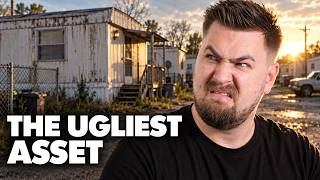
Leo Young, founder of Cornell Communities, explains why mobile home and RV parks are entry-level multifamily investments. He targets 20-200 pad properties in the Southeast and Midwest that cash flow immediately, scaled his portfolio from 70 units to 500-600 pads in four years, and warns against over-leveraging.
Chapters
Hello and welcome back to The Owner Meeting Podcast. I'm Christian Osgood, your channel host. Today, joined with Leo Young, we're talking about one of my favorite categories of multifamily, which is mobile homes and RV. And yes, it's a type of multifamily. However, it plays adjacent to the traditional multifamily space. There's a few little caveats, but what I love about it so much is that it's perfect for entry-level housing. It's flexible in how you run them. So you have both multifamily or hospitality application. Depending on the model. I'm really excited to hear how Leo's model plays out. And Leo, welcome to the channel.
Thanks for having me on.
Absolutely. Absolutely. Tell us, tell us a little bit about you today and then I'm going to get into your backstory here. But tell me about your business today.
Yeah. So I'm the founder of Cornell Communities. We're an owner-operator of mobile home parks and RV parks. So we're in a few different markets, mostly in the Southeast and the Midwest.
Awesome. Awesome. So Southeast, Midwest traditionally. Higher cash flow markets, which typically plays pretty heavily into these models. How did you settle on RVs and mobile homes specifically?
So it was kind of just pure luck. So I was working at another real estate fund at the time and I had a friend approach me. He was trying to start this investment firm and he wanted to look for a co-founder. So he kind of walked me through the investment thesis of mobile home parks specifically, of how it's a great time in this market cycle. You know, there's a lot of volatility and there's always a need for affordable housing. And I thought it was a really great concept. And also you get to actually provide affordable housing and kind of dictate how that's provided. So yeah, that's something that meant a lot to me.
That's always been something that I really enjoy too. Even in the multifamily space, I typically do entry-level housing. It's something that the community needs. It's much more recession resistant. So you get some market proofing built in. You don't typically move down from an RV or a mobile. It's very hard. Yes, it's very, very hard. There's not like a next level, but you can still have really nice RV parks and really nice mobiles. Yeah. You don't have to sacrifice quality, but there isn't a cheaper option for people to move to, which means you really have optimized for stability when you go this route. What have you found are the key differences just for people who might be, you know, Channel's called Multifamily Strategy, my main YouTube channel. A lot of people following this podcast are multifamily people as opposed to your traditional stick-built multifamily. What are you finding are the main differences in how you would operate an RV or mobile?
So between an RV park and a mobile home park, I think they're similar in the sense that you are managing multiple units. And for us, we like the long-term RV model instead of the campground or seasonal model. So they're very similar in that regard. What's different just, you know, the actual homes on top of it. You know, some are RV vehicles that you can actually drive on and off, and then the other ones are mobile homes, which it sounds like it should be mobile, but it's not, right? Because once you set it down, it's very hard to actually move. Yes. It costs like $7,000 or $8,000 to actually move it. So the main difference between them, it's just the level of service that you're providing these people. You know, sometimes the RV folks care more about amenities. They want a pool, they want a common area versus like a mobile home park. They're like, Just leave me alone. Just gimme, you know, good clean landscaping, you know, utilities and I'm good.
Yes. Well, and that's the thing that I really love about the RV and mobile space is typically your tenants want minimal involvement. They typically actually require less management. Now they don't require any management. I've seen mismanaged RV parks, they, they get rough quick, but they typically require less management. At least that's been my experience. Is that, have you seen that throughout your portfolio?
So I, I, I can't compare it to other asset classes. I mean, I'm mostly experienced with this, so is my team. Yeah. But you know, compared to just from a theoretical standpoint, it sounds like a less complex business. Like for example, if you're like industrial, there's like a lot of the ins and outs that you have to dig into, like, you know, what the door size is or, you know, what the credit of the tenant is, et cetera. Where like multifamily, it's like, okay, you have to manage a leasing staff, a maintenance staff, like a, a live-in super on-site. Yeah. Roofs, elevators, stuff like that. Versus like for us it's like, okay, we maintain the infrastructure, maintain the grounds, and that's, that's about it. So it's operationally more simple, you know, the operating expenses are also lower because of that.
When you are looking at deals, speaking of operations, operations in these look different. And this is, this is unique to, to the, the mobiles and RVs, tenant-owned versus park-owned. How do you buy them? Do you try to convert one into the other? I would love to just hear your take on them and the management differences between the two, if it plays into your business.
Yeah. Oh, absolutely. So for us, we prefer the residents to own their own homes for a number of reasons. One, you know, from the business perspective, it makes a lot more sense. It's less maintenance hassle. Less overhead for us to manage. Like we don't have to repair these things all the time. Also reduces our insurance cost and, you know, for commercial real estate, it's like the higher your net operating income, the higher the subsequent valuation of the property. So, you know, it helps us in an order of magnitude there. And for the residents, the benefit for them is that it's their own home. They could do whatever they want with it, right? They can make it their own and they can actually build equity over time. So, you know, it's a very low-cost way to own their own home. You know, these are, typically like less than $100,000 as opposed to, you know, $450,000. That's like the average home in the US. So they get to make payments and like get into a home they wouldn't otherwise qualify for and build that equity as we kind of put in the CapEx dollars to improve the community and make it a more desirable place to live.
That's a fantastic way to go about it. And so you're buying these, you're getting them, when you pick them up, are they often, starting out park-owned and you're shifting them to tenant-owned? Are you only buying things that are already all tenant-owned? How do you end up with a portfolio of tenant-owned parks?
Yeah, so we prefer to have most of it as tenant-owned homes because actually a lot of the banks, they don't prefer to lend on the park-owned home or the park-owned home income.
Yes.
That's a mistake a lot of people make. You know, I'll see like deals being out there pitched as like, you know, X amount of cap rate, but it's like, well, you're factoring in park-owned home income. That's not, like financeable. So for us, like we like to convert them wherever we can, you know, through selling it off. There's like third-party lenders that can, you know, cash you out or, you know, you can do a rent-to-own kind of like a seller finance with these folks.
And that's the preferred model. When I first started in multifamily, the first, one of the first books that me and my friend read was Deals on Wheels by Ronnie Scruggs, which is now out of, it's now out of print. So it's now like a super expensive book. When I started, it was a book you could pick up at like a normal price. Now it's, if you're looking for it today, it's like $500. But you could find an e-version of it somewhere, I'm sure. But the entire premise when I got into creative finance started with the concept of mobiles. As you purchase them, you have the option to sell or finance them back to tenants. If you have to take them back, you sell 'em again. You hope you don't have to do that. But it's a really simple way to introduce a lot of creative finance. Speedo, when you, when you find these deals, how often are you seeing creative finance as an option in the mobile and RV space?
It used to be a lot more. Mm-hmm. You know, I would say in the past 10 years there's been a lot of, call it institutionalization in the industry. It's just become a lot more financeable of an asset. Banks are taking much more interest into it. Mm-hmm. Before it was exclusively seller finance, creative finance deals because like banks didn't want to touch it. Yeah. As opposed to now they're, they're like warming up to the idea. And I would say that number is kind of dwindling. There's certainly like the right people with the right kind of goals. I mean, that's sort of creative financing. It's like, okay, you are getting together with the other party and trying to figure out how do we make the pie bigger? How do we solve your problem in a better way? Right?
Yeah.
Because like the bank can hand you money, but like paying taxes on it, you have to like redeploy it, all that stuff.
So, well, the last few I've seen, and I agree with that assessment, it's, it used to be very popular. Like I would say most of them went seller financed. The last few that I've seen, they've all had a small bit of creative attached to 'em. I've seen a lot of them trade with like 60% bank financing and 20% seller, like small creative pieces to get deals across the finish line. Yeah. I'm not seeing a lot of deals that are coming in like you used to see back in the day, 80, 90, 95% seller financed. I'm not seeing a lot of those. Maybe a few every year within my group. Occasionally.
Yeah.
They're not, it's not a main strategy. If you're looking at them and you're looking at them creatively, assume that you're probably going to blend in a majority of bank debt if you use creative at all.
Yeah. Yeah. And I will say too, if the seller is open to being creative, that might be a flag to look deeper too, because typically when a bank, when a seller knows that his deal is not financeable, he's like, all right, fine. Let's, let's do it.
Yeah.
And you have to kind of figure out what the skeletons in the closet are before you close.
I did an RV park in, it's a, it's on the Hood Canal in Washington. So it's foothills of the Olympic Mountains on the saltwater canal. So a really cool location, but really low population area. So it's, it's like a remote, beautiful area of Washington State. I grabbed this thing as 25 units. We picked it up for $300,000. The septic didn't work and there was a huge question mark on like, how much surgery do we need to do to fix this thing? So that was one where we picked it up. The sellers couldn't finance it, but we picked it up with like a hard money loan for $300,000. We picked it up for nothing knowing that we had like a $400,000, like $100,000 to $400,000. It's going to cost somewhere between here and we won't know until we get into the ground and find out. And it ended up costing like $350,000. So it was the high end of that. Ultimately, it's one of the only deals I've sold. We sold it for $1,100,000. So like a great deal to be in and out of. Yeah. But again, like that, that was when you see these like, hey, you can get a crazy price or you can get crazy terms. That's the first thing you look at is like, okay, what's, what's wrong with it? And in this case, yeah, laundry machines didn't work. Septic didn't work. There's a lot, there's a lot of things where you're like, well, you're renting pads. Septic is a large part of what you're renting.
Yeah. Yeah. And when it comes to infrastructure, like it, it's no fun. I mean, you know it to like switch these, these things. There's like compliance things to jump through and it's always like, more expensive, takes longer, et cetera. So yeah, I mean, I get it and congrats on the sale.
Oh yeah, thank you. Thank you. That's, I would've held it forever, but I moved from Washington to Texas. I'm like, you know what? A remote, nice remote RV park of 25 units does not make sense to someone who lives in Dallas. It's not the most sensible holding.
It's harder to manage.
Yeah. Now you mentioned you had Midwest and it was Southeast geography.
Southeast. Yep.
How many, I guess you'd call them pads, not units, but how many pads do you have in this portfolio today? Roughly?
Right around 500 to 600.
Oh, that's awesome. That's awesome scale.
Yeah.
How long did it take you from when you started to where you're at today?
So within this niche, I believe this is around 4 years into just focusing on mobile home parks and RV parks.
That's fantastic. The speed is really fantastic. So roughly 4 years ago, what did the first deal look like?
First deal, it was a distressed property. It was like 70, 75 units, more or less. I mean, 75, 80 units. It was like part public, it was like public water, private septic. Wow. You know, it was just a great basis, you know, like you said, it was like I think it was like a third occupied and you know, the seller was just wanting out. You know, there's like some, you know, issue with the previous owners. There's like disagreements and stuff, so they just want it out. We took it over, turned out to not be that much work than we underwrote to. Because like when you underwrite initially, like you are underwriting doomsday. You're like, okay, you want to be padding everything and like sandbagging your underwriting, but You know, it turned out to be great. You know, we infilled the property, you know, we brought in 8 units, sold off like a handyman special. So that's great.
Oh, nice.
You know, got up the occupancy a lot more.
Nice. So you do the first deal. How long was it between deal 1 and deals 2, 3, 4, et cetera? What was the lag between, hey, we did this once and we discovered we can do it multiple times?
Yeah. You know, I think a lot of it was building the foundation because, you know, I think it was close to 2 years for me starting to like learn about the industry and all the ins and outs before the first deal. And then like that first year, I think we did 6 deals. So it was like, all right, it's about time. Like you learn all the processes, you learn how to underwrite things, you make all the connections, like, all right, boom, boom, boom, boom, boom.
And that's so true. I think for so many people, like there's a lot of people who get really frustrated. They're like, I can't do the first deal. And it's so true. The first deal really is the hardest. You have the least connections, you have the least credit. Just the credibility that goes up when you can call and talk to a broker or an owner and tell 'em a story from the park you already own or the building you already own. It orders of magnitude different working with someone who wants to be an investor or someone who has invested. And just that one step, it gets so much easier. That's such a common story. I bought one and then magically I had 6. I remember I closed a 38-unit. When I was 29. Yeah. And 2 weeks later, closed on 3 side-by-side duplexes. 2 weeks later, closed on a 7-plex by the end of the year. And I closed the first one in October. By the end of the year, I'd also closed on a 12-plex. It took me 8 years of studying the industry to buy that deal. And then once you get the momentum, it's amazing how fast it scales.
Yeah. I will say 2 things, Christian, is one, an analogy is like, you know, when you're a seed, right? You don't really see the progress of a seed until it sprouts and it just pokes out of nowhere and it just goes straight up, right? Yeah. But when you're at that seed level, it takes a long time. And when you're going through that yourself, it's painful, man. You question, like, oh, am I doing the right thing? What's going wrong? And all the questions come. But as long as you push through, you will eventually succeed. And the second thing is, yeah, I mean, like when you talk to people, like, and you actually know what it takes to operate, then you become a better kind of investor because you know what you're walking into. These numbers are no longer just numbers on a screen. You're like, ah, we got to replace that septic. I don't know. Do I have enough bandwidth for that? Do I want that brain damage? Okay, fine. Here's a price that makes sense.
Yeah. What was the, What was the turning point for you between the, like the, those 2 years and then, hey, this first deal is the first deal. Like how, I feel like that's a sticking point for most people getting into the game is pulling the trigger on the first deal. How did you know that deal was the deal?
You know, it was, it wasn't like, okay, this was it. It was more so like the whole time, like we were submitting LOIs and like we were underwriting and like just throwing out stupid numbers. Like looking back, we were like, wow. Like, we totally should have been more aggressive on our numbers because like there is more, more spread there. But you know, we got that one just super luckily, you know, through like some real motivation from the seller and, you know, we're able to give them a solution, close quickly, you know, pay cash and stuff. So that was great. But yeah, I mean, you just have to get the reps in, you know, I think people when they, well, when you first go to the gym, like I remember I started when I was in high school. Yeah. And I thought like after working out for a year, I'd be like Arnold Schwarzenegger. And I'm like, that's not the case. I mean, look, I'm, I'm nowhere near that. And I've been working out for like 15+ years now.
Yeah. No, it, it, it is, it's funny how you, how things de— develop and evolve. And it is really similar to, I mean, those are great analogies, bodybuilding or, or ha— or sprouting from a seed. Like there's, there's a certain amount of growth and then there's also, you're building a business to where you actually want to be. And I think a lot of people, the Schwarzenegger example's fantastic, especially when I work with younger investors. You'd ask them, where do you want to go with your portfolio? I want to do $100 million. I want to be my least favorite goal that people have, especially young people. I just want to be the best in this space. I'm like, that is, You're not going to hit whatever that is. I don't, you don't even know what that means. Okay. Ask questions. But you end up with a portfolio that ends up looking like what your business model looks like and where you want your life to be.
Yeah.
And so for you, a 600-unit portfolio in 4 years is awesome. Do you look like Sam Zell today? No. Do you need to? Also, no, you don't need to be the Schwarzenegger of real estate. 600 units. Yeah. You're doing fantastic. Assuming that you're buying based on cash flow, you're doing fantastic.
Yeah. Yeah. I mean, they're cash flowing from day one. That's like kind of how we like it. But, but yeah, you know, I think with the setting goals too, I mean, I was there at one point in time. I was like, okay, hey, like, this is the nice, you know, big, hairy, audacious goal and stuff. But, you know, you kind of learn more about the industry and more about like, okay, what kind of deals make sense? Like, okay, maybe what is my true goal if I want to hit $100 million? Is it like a certain cash flow, a certain net worth to me personally, then okay, in that case, you know, maybe you don't need to hit that amount. Maybe you can just do more better deals. Higher quality deals move your financial needle forward more. So then, you know, you become more selective on the deals that you take on. You're like, I only have so many hours in the day and like, yeah, I, I gotta train people, build out processes so that like they're running with it and it, you know, your, your perspective changes as you go through this path.
What was your original goal? Like when you got started, and I'm guessing at 600 units, you've probably surpassed it. Um, probably, probably multiple times, but did you have a specific target when you started? I know a lot of people will set, at least the most successful people tend to have a specific goal that they've quantified and set a specific timeline to, and all of a sudden it becomes attainable.
Yeah.
Was that true for you or did you just kind of go like, hey, I want to do this and it just kept happening?
Well, you know, I think I was one of those guys that was like, hey, look, we want $100 million. I mean, that is still the goal.
Yeah.
And like, you know, we are still building towards it. But I think for me, I was one of those people that, I mean, I learned how to dream. I mean, before, like my first job outta college was at Tesla. Tesla taught me how to dream and be audacious and like, do things that haven't been done before and kind of like help me in my entrepreneurial journey. And like, for me, just like I learned that, okay, the goal setting is one thing, but doing the action and being persistent enough so that you actually achieve results, that's another. So, um, now I'm better at setting goals and like now I know like, okay, inputs matter more than outputs, like A number stays a number until you have a plan. So just changing your approaches there, goals still stays the same.
Oh, that's awesome. That's awesome. I know for the thing that changed for me is my wife got injured at work and so I had this, the reason it took me 8 years to buy like 2 duplexes and it took me a year to get to like 100 units. The difference for me was she injured her back. I'm like, I need to retire her from teaching now. I was planning on doing this in like 10 years. So a 10-year plan became a 1-year plan and then suddenly you do it. It's amazing. Yeah. And you have actually quantified, I'm like, I need to get to like $15,000 a month as efficiently as possible. Also, yeah, one duplex at a time is not going to do this. So I need to buy bigger, I need to close more often, and I need deals that cash flow day one because I need to have cash flow now. That's right. And I, that was my favorite thing that you said there. I think that the biggest mistake that people make in our industry. And I blame almost exclusively the old school 2015 through 2020 online gurus for this. They pitched everyone on appreciation. Just buy anything. It can even be a little bit negative. Just buy it and hold it. And if you hold it long enough, you'll be rich. And a lot of people couldn't hold it long enough because it loses money. If you buy a deal that loses money and you keep buying 'em, you just have less income to support the rest. It's a losing strategy. So you said cash flow, which is my favorite word in all of real estate. What does high level the buy box look like for you looking at a mobile or RV park?
So I will say it depends on who is involved. So, you know, we have some deals that we syndicate, you know, we get together a group of investors, you know, they're passive and we basically make their money grow for them. Yeah. Those, you know, it would have to be bigger versus like if it's just like, me and a couple partners, then like we could take on smaller deals. So, you know, there's almost like a bifurcation, like two kind of buy boxes that merge into one. So, you know, really like anything between 200, uh, 20 and 200 units are kind of our sweet spot in terms of the, the unit count. Because any, any smaller, it's like you don't have enough of a payroll kind of to, to run your, your processes. Because like we have employees, staff members, like subscription system, all that stuff. And then if it's too big, then like, you know, larger players, they have cheaper cost of debt and or like cost of capital, I should say, because like their investors don't even want more. Like if you look at some of the larger investment firms, like their returns are like much lower. And because of that, they can be more aggressive with their bidding. So it's just a matter of like being smart with your time, knowing what you and your team can operationally handle as well.
I think that is huge. Biggest mistake I made in my career, and I will ask you yours in a bit here, but biggest mistake I made is we bought a resort. It was actually right next to that RV park. I bought it with a full team that had no experience running resorts. We had collectively no experience. It was seller financed. I had done almost all of my deals seller financed. I've done a ton of creative finance. And so we made the mistake of identifying ourselves as creative real estate people. Does not translate one-to-one from multifamily to hospitality at all. I actually had to buy out every single partner over 3 years. It cost me like a million dollars to survive that. When you first make a million dollars, giving it to other people to get rid of that partnership, not how you want to start your business. So I really like that, defining that. Now you mentioned, so 20 to 200, which is awesome. And different partnership structures. Are you using joint venture, syndication, a blend of the two? I'm just kind of curious which models most frequently are used.
You know, I think at this point default is syndication because, you know, a lot of folks just kind of learn about our investment thesis. They're like, okay, we like your track record. Like you guys have been exceeding your business plan for a long time. Like we want in, like, let me know when I could put my money to work. And like, we just have to tell 'em like, hey, sorry, We don't have anything for you, which is unfortunate. Like, you know, like right now we're, it's almost May, like we don't have a deal for our investor group yet, which like kind of sucks. But you know, we're not willing to bend on our underwriting. Yeah. You know, we, we want to, we're the ones operating it, so like we kind of pay the piper if we like buy into a bad, bad deal just to buy it. So, you know, we, we just keep on like sending out deals. But yeah, most often syndication, sometimes we'll do JVs. Okay.
Awesome. Awesome. I think the discipline of knowing when to use which model. I think all deals can be broken down into, you have the actual deal, which is where you thrive. You don't depend on your underwriting. You know when a deal's a deal, most important thing. You find the debt product that is appropriate for the property. And so that'll go into your underwriting. And now you just pick which equity model closes this deal. If you can close it with a few friends, with very few people, I love that model. I love a great simple JV. I still think to this day, I look at my syndicated deals, I look at my JVs, I'm like, why don't I just do more of the JVs? They're so simple. They're so simple. They're so easy. If you have, if you can close it with less than 5 people in your crew, I'm all for the JV. What happens when you're an experienced operator though, when you have a surplus like you do of people who want to invest with you, the syndication becomes such a simple way to do everything in volume. So I like the way that you're doing it. What today would you just do everything in a syndication or is there a deal structure like, hey, I would rather JV if the deal looked like X or Y?
It would really depend. And part of which is how much cash to close is required and what kind of property it is. So if it's like super, super hands-on and it's a heavy value add, that kind of deal, we're like, well, So if we syndicated, like these are probably the terms that the investors would accept. And it's like, okay, does that, is that not worth us to chase? And you know, just like truthfully speaking, like we know how hard it is to operate properties and sometimes it's no. And like sometimes we want to find out ways to take it down in a different way. You know, maybe they're coming in as like private investors making like a great percentage for their interest. But you know, we would own the pie ourselves because like, Hey man, like some just require overtime of work versus others. It's like, okay, we can run our model, we could put our team on it. He does this, who does that? And then, you know, it just makes sense that way.
Yeah, that's, I love the discipline behind this, which leads me perfectly to the next question because the dumbest that we're ever going to be is when we start and we learn a lot along the way. The point of this podcast, The Undermain Podcast, is for other people to listen and to learn from people who are doing the things that they want to do. What is the most expensive lesson you learned, your stupid tax of not knowing what you didn't know when you started the business between then and now? And granted, most of it's been a 4-year period for you, so you may not have made your biggest mistake yet. We don't know. We'll find out. But what is the biggest one you've made so far?
Okay. So I will stretch this to how long I've been in real estate, which is, you know, closing onto a decade now. So You know, back when I was working at Tesla, I started investing as a limited partner because I was just getting burnt out. You know, I also had kind of a moment of realization when a colleague's father suddenly died. I was like, oh man, like, all right, I need to build some cash flow that doesn't depend on me clocking in and out. So, you know, that's how I got into investing, real estate, et cetera. And like, I went like feet first because I just fell in love with the real estate and like, I felt really passionate. So, you know, I quit my job. And went all in on real estate in brokerage. And like, I think going back and like now various iterations is like, keep your daytime job as long as you can. Because like people don't, like people gloss over the kind of feeling of financial scarcity. Like when you're paying bills and like you're like, okay, you're an entrepreneur. Congratulations. You made that post on LinkedIn. It's great. You know, you have your little website and stuff, but like, hey, You gotta find a deal, you gotta make it work. And like, okay, if you syndicated, guess what? Like you're not getting paid, you're barely getting paid because like if you, if you have investors that kind of know what's going on, like they want them to get paid first before you. That's how you align your interest. So it's like, when do you get paid? So I think having that job for as long as you can, that was something that I would do differently. And also like just working with more experienced people, maybe like going under the wing of like more experienced operators, like helping them at, you know, operate the asset and then going off on my own. But, you know, that would just make the timeline to me being here longer, but less painful. So you, you make that choice.
I agree. I did the hard mode where my wife got injured and this was right, this is like right in that like 2020, 2021 zone. And so at the time I'm in Seattle. Everything is still shut down because it stayed shut down there forever. And I'm an outside sales rep for the CoStar Group. So it's like LoopNet, Apartments.com, and outside sales in a state where you're not allowed to go outside for 2 years was pretty awful. So I just went, ah, screw it. I was going to buy real estate. It was difficult and there were many times where I'm like, wow, I am really close to my last dollar. And then a large liquidity event would happen. I'm like, okay, good. I'm good for another year. The most stable way to do it is just have a job and build the portfolio and keep that active income going. I'm such a huge fan of that. And to supplement the real estate, I ended up starting a property management company and I actually scaled that and eventually sold out of that. But like I built jobs within my company to stabilize while buying. In your first, I don't know, I want to call it 3 to 5 years, Very rarely, like 1 in 1,000 people have the money to be like, oh yeah, I can just leave my job in less than 3 years. Like it does happen and I've seen it happen a few times, but almost everyone that first 3 years, you don't have enough stable, consistent recurring cash flow to leave. It almost never happens.
Yep. Yep. And I think people should not underestimate that when you act from a position of abundance of like, okay, your financial being is not a going uncertainty. It's just different. Like the quality of your decisions are different. And like, you know, in the world of entrepreneurship broadly, like you are paid for your judgment and the quality of decisions that you make, how well of a leader that you show up for your team. So now, you know, I kind of realize that more and more.
Yeah. Oh, I love the takeaways there. If someone wants to learn from you, someone has additional questions, someone wants to invest in that next deal that you haven't found yet but are about to, How do they reach out to you and how do they find the Cornell Communities?
Yeah. Yeah. So there, there's two ways. You know, one, if you want to learn more about our team, our asset class, join our investor waitlist, you can reach us at cornellcommunities.com. That's C-O-R-N-E-L-L-C-O-M-M-U-N-I-T-I-E-S.com. Or you can reach out to me on LinkedIn or Instagram. LinkedIn is Leo Young, L-E-O-Y-O-U-N-G, or Instagram, it's Leo Young Real Estate. Perfect.
Leo, thank you so much for joining us. This was awesome having you on the podcast. I love the strategy. I love the discipline. I love the cash flow. This gets an A+ rating if I was giving ratings for business. You said everything that I would want to hear. As an investor, I'm like, yeah, that would be the group I'd want to invest in. So dude, awesome having you on the podcast. Appreciate it. If you guys have questions, again, I linked those in the description below, or if you're on YouTube, it's wherever you're listening to it. So it's all over the place. Uh, if you don't yet follow the channel, please do so. Like, subscribe, and we'll see you on the next episode.
More from Christian



Speak with authority to turn broker rejections into deals - boost your confidence #RealEstate

Turn Broker Objections into Closed Deals - CRE Negotiation Tactics #RealEstate #Negotiation

How to Get Multifamily Deals Under Contract Without Having All the Cash | Objection Series Ep. 1

How I Scaled 500 Apartments in One Texas Market in 12 Months #RealEstate #Multifamily


Turning a $12.2M, 200-unit mess into profit - live multifamily turnaround update #Investing

Day 10 Update: Turning a $12.2M, 200-Unit Apartment Complex Around in 80 Days #RealEstate

Day 10: Before Time Runs Out | Saving a Failing 200 Unit Apartment in 90 Days (Ep. 3)

How 2 Direct Deposits Generate $70K/Month from 224 Section 8 Units @ 99.4% Occupancy#RealEstate