Mastering Cash Flow: Ian Noble's Real Estate Strategies
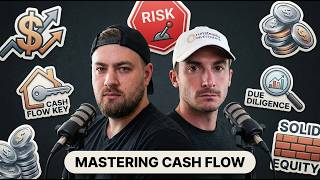
Ian Noble, a real-estate investor, explains his cash-flow-first philosophy across single-family homes, storage, and mobile-home parks. He emphasizes vetting passive sponsors carefully, avoiding optimistic pro-formas, and keeping a day job while building. Depreciation and transparent reporting matter more than chasing home runs.
Chapters
Welcome back to The Owner Meeting Podcast. I'm Christian Osgood, your channel host today, joined with Ian Noble. Ian, welcome to the pod.
Thanks for having me, Christian.
I am excited about this. We're going to talk about real estate. We're going to talk about business. He's done multiple areas of business and real estate. So this will be really fun. And honestly, one of my favorite types of guests to have on the podcast, a versatile investor, lots of experience. And I'm excited to learn from all the things that you have learned, bringing The Owner Meeting to you, which by the way is the point of the podcast. We meet with the owners who have done the thing that you want to do so you can learn from them, do all the right things and make less mistakes doing them. So Ian, welcome on the pod.
Yeah, thank you. Great introduction too. You're right about that. I've gone through the trenches on this stuff. I call myself an entrepreneur who loves real estate and somehow they end up blending together all the time. So happy to talk about what that looks like and share, you have a good conversation.
Well, it is one of the fun things about real estate, right? Real estate's a business like any other business. And ultimately, all of your business principles will overlap directly into real estate. The only people I see consistently lose money in real estate are people who don't treat it like a business. So I, I'm excited for this episode. For people who don't know your backstory, give us the quick overview of where you started and where your business is at today.
Based in Austin, Texas. I got involved with a family business. It was a dry cleaning company. So in my early 20s, started working that, bought that out from my dad. And went 7 figures into debt. So took life very seriously at a young age and had to learn how to run a business. Along the way, lots of lessons that I'm happy to share, but was able to grow that business and turn it around pretty significantly. But along the way, I was investing into real estate. So I talked earlier about being an entrepreneur, but real estate finds its way in. Despite me having that long run of a dry clean owner and operator, I was a real estate guy. Everything, every penny went back into buying rentals. I'm a buy and hold guy. And that's how I've operated for the last 15 years. That was the MO for several years. Run that business, work your tail off, make your money in what I'm good at. And at that point, the money was coming from the business and start building some stuff on the back end so that someday you can step away and hopefully kick back and take it easy.
What sort of real estate deals were you doing in the beginning when you were transitioning from like, hey, I'm a dry cleaner to I'm buying real estate? What did buying real estate and buy and hold look for you?
It started single-family homes, so I had rentals in my local market. I think that's a good place where a lot of people can start. It's funny looking back today, I love single-family homes and rental investing in that aspect, although I don't focus on it anymore, but it did get me involved in the game. Then I kind of went into triple-net retail space. I'd buy small little shopping centers and have hopefully long-term tenants there. And then the evolution occurred after selling the business. I went more into a passive route to where I was trying to figure out a good space for me to play. This was a really difficult transition though, because when you're a business owner and you run a business on a profit and loss statement and thin margins, which is what I did in the dry cleaning industry, migrating into passive investing was very difficult because, you know, you're, you're in the space, a lot of it comes down to trust and the people that are running these deals. And so that was a very difficult step for me as an entrepreneur to, number one, have that trust into people to get involved in that space. But since doing so, really opened my eyes up to partnerships, the ability to scale, grow, and I, I'm pretty passionate about that style of investing now. But I come at it from an angle of both sides to where I'm still an active investor in real estate. I'm still a landlord that self-manages properties, but I get to see the other side as well where other people do it. So it's fun having a combination and, and a background of both.
What does the portfolio look like today? Just overall, because you've done a good mix of things and before we hopped on, you'd mentioned also, you know, there's RV, there's triple net, there's single family. What does the portfolio look like today?
I'm spread out through, because I mentioned buy and hold earlier. I've only sold one property in my life. So this is funny. Oh, very good. We talk about real estate all the time. Everyone's tossing out strategies and I'm like, look, I don't sell anything. So, But along the way, so I'm single-family homes. Again, those commercial— when I say commercial properties, I'm talking retail, triple-net spaces. I own some land, I'm involved in a number of, um, and this is passively, uh, mobile home parks, self-storage facilities, and I do a lot of private lending. So private lending, I'm now— there's a focus on that. I think a lot of people in the space have gravitated towards it as cash flow diminished. That's been a good alternative lately. I do that both actively and passively, meaning through my business and through individual investments. I like that channel because it brings usually higher rates. But again, I'm a low-risk guy, so I'm looking for, I'll call it, I use this baseball analogy of looking to hit a single. I want to hit singles all day long and get on base. I'm not interested in projects that have a lot of risk that will bring me a high return. Much more focused on the low-end stable side of real estate, whatever asset class that may be. That's where I focus my time and energy on now.
Yeah. Oh, I did. That's where I've built most of my career as well. It is, it's the low risk, moderately high returns. It is the perfect risk reward profile. I want as little risk as possible. I don't need a grand slam on every single deal.
Yeah.
My economic theory is if you always buy cash flow, your income will always go up. And so I've kept all my deals that simple. It's like, hey, do we have day one cash flow? Do we have the upside we need? Let's find the deal. Let's line up the debt. And if needed, Let's find the remaining capital and line up the equity and close deals that increase your income. And, you know, do that 10, 20, 30 times. That's the story.
Yeah, that's the best approach. It's interesting, you see all these deals come across your table and being in real estate, so much of what I look at now is these large projections, and you've seen this as well. A lot of the day-to-day comes at tearing apart underwriting and pro formas and looking at like, hey, let's normalize this a little bit because Last couple years have been a bumpy road. You want to make sure more than anything that you're making safe, sound investments. So I like your strategy, cash flow from day one, no speculation. And if you can just focus on cash flowing being enough for you, you're right, the good stuff will come. It will, you know, hopefully appreciate. You'll have opportunity down the road, but you need to be focusing on that cash flow. It's the most important piece.
Yes, it is. There's a lot of strategies out there that have various risk profiles, but I have found— I've done 2 deals. That were cash flow negative because they had massive upside. Both of them did make money. Both of them took more than twice as long as I thought that they would to make money. Both of them absolutely were a pain in the butt to hold until the project was done. The easiest way to lose real estate is to pay to hold the real estate while you're waiting to hit the upside. If you can avoid that completely, I just set that as a rule. Only buy cash flow. Your income only goes up. It's very easy to operate if all you do is buy income.
That's, you bring up an interesting point because I hear a lot of people when I talk about returns for stuff I do, I'll say, yeah, I'm shooting for 8% and they'll laugh and say, I got 25% on my last development deal. And the argument always is exactly what you said. It takes longer than what you anticipate. There is no cash flow along the way. And a lot of that's based on speculation. Things can change overnight. But if you know that you're going into a deal that will bring you money in the first week, then it's a little bit, it's more comforting and not having to be in a position to say, what's going to happen with that market? Are we oversaturated? Is there a war that's going to happen? You know, whatever comes up in live, it's take away all those components because you're right, you just sit on it and hold it hoping you're going to get a high return and it usually doesn't pan out that way.
Yeah. Oh, and that's where, especially if you're using outside capital, that's where you have to make those awkward calls to investors like, hey guys, things are still going pretty well, but we're not going to hit projections. We have to like, this is where, Investors get frustrated, lawsuits happen. Like it's more than just negative cash flow. That's most of your pain in real estate will also be from relying on projections or the markets to hit the projected return. Even if your returns may be higher, I very much doubt that your returns are going to be more stable than mine are. If you are a developer or a, like, hey, we're doing these massive upside high-risk, high-reward projects, what you sacrifice is consistency. With lack of consistency, a lot more risk. So just doing stable deals consistently, that's a great way to do it. And you said my favorite thing, you've only sold one building. I'm curious, which building was the one that you sold?
It was my first single-family rental. I had a tenant that was in there for 12 years and she paid off that house. So she actually moved in the day after I closed. She paid off the home. It appreciated. This was in Austin, Texas. So we had, there was a good surge from COVID and it normalized a little bit, but still turned out okay on that one. And that got me involved in the space. This was dating back to 2012, 2014 era when I was listening to BiggerPockets and just trying to figure out how can I cash flow $200 a month. I wouldn't have sold that had she stayed, but I got a text one day saying, thank you, but moving on. Next month is my last month. It just happened to be the right time to sell that one off. But that's it, man. It's, I don't have a lot of experience. I got a lot of experience buying, but not selling, which I'm I'm perfectly happy with. I like being in that position.
It's a good position to be in. And if you keep buying right, then that's how you make money. I've never in my career heard anyone say, I regret holding a building. I've seen a lot of people say, oh my gosh, if I didn't sell this, you can always look back and be like, wow, I just held this, would've been amazing. And I've heard that regret story a hundred times. Yeah. I had one investor, one of my first mentors, and this was back in when I lived in Washington, which I'm, I'm recording from, from my parents-in-law's right now, but in Central Washington State, he owned this like 50-unit building and he had no partners and he was like, hey, I can cash out and make a couple hundred grand. Had he held that building, it appreciated like $3 million from the time that he owned it to, to now. And all he had, it was cash flowing. He could have got paid to just sit and make $3 million. which by the way, in Grant County, Washington is an especially large amount of money. That's a very low cost of living area, Washington State. He would've hit the jackpot, sold it, took the quick win. Almost everyone regrets that you hold your properties forever, or almost all of them forever. I love the strategy. I've also sold very, very, very few properties, and the only times I did is when I was adjusting or when I moved to Texas, I reduced my Washington State portfolio just a little bit. If it was small, it was hard for me to self-manage and do well. So I lost a lot of my little duplexes here and there. But yeah, same exact strategy. So I really love this in the business side. So you started in business and you're treating your real estate as a business. What is the difference to you between treating real estate as a hobby and treating your investment as a business?
Real estate's a people business. I'll start there. I think that a lot of people will, from the outside looking in, can say, oh, that place is going to rent for X and then your payments are Y. That's a good start, but so much of running it like a business would be how are you going to position yourself to where you have a safe, stable asset that's going to give you cash flow? That's the reason I think that most people get into it. You mentioned earlier about people selling. A lot of people, this comes up in, you know, my personal business as well. You get to a crossroad where you understand, okay, this property's bringing me in this much in cash flow a year, and I can see people's you know, want or need to sell at some point if there's, you know, there's an upswing, or let's say they just had a rent increase that makes that property more valuable depending on what kind of property is, if it's, you know, valued on cap rate or all these variables that go out there to where yes, people see that shiny number and go for it. Whereas if they could just hold on, they might be in a better position years down the road. I'd say running a business is looking at it to where you are keeping close tabs on your properties. You're visiting these properties, making sure they have good quality tenants. And at the end of the day, I probably, I'll call on my active portfolio, I'm a pretty soft landlord. I've dealt with some other people that are real strict on their tenants and, you know, they're cutthroat shrewd business operators. I think there's a place for that. But at the end of the day, the success of, you know, my business relies on those renters being happy, being able to afford what they're paying for. Because at the end of the day, you need to keep your tenants happy. They're paying off your property, they're paying down the equity, and they're allowing this lifestyle that everybody wishes they can have when they get into real estate. It's just being in the business for a while, you start to see how people approach it. And there's a difference between being walked on, but then also being courteous and generous at times with tenants. Because if they don't succeed, neither will you. A perfect example, some of my commercial property, these are some smaller ones in Austin, they're triple net leases. So tenant pays for everything. But it doesn't mean, so I've heard people, I've talked about expenses going up and they're like, what's the big deal? The tenant's paying it. I'm like, yes, exactly. They run a business and their business operates on whatever margin that they can pull in. So me going and blindly getting a new insurance policy where I'm not as cautious on how much that premium's costing, it's going to hurt the tenant because I need them to be successful and want them to be right. I'm, I have a small business background ownership. I, very pro-small business. So when they're renting spaces, it's important that they can make it and that there'll be some longevity there. So that's just one example of a misconception from people outside the industry that are like, if it's really hands-off and the tenant's really paying everything, what's so hard about it? Well, I'm actively working to make sure that my costs are as low as possible for that tenant because I want long-term success. I want them signing at renewals and sticking around for the long haul. So just one example of what we run into in the day-to-day that maybe somebody on the outside wouldn't see. It's important to take care of your people and they'll take care of you in turn.
I found a balance in this, in my portfolio. So I, I, I went the route of starting my own property management company. I sold mine successfully in Washington State and we started one in Texas. So I do third party in Washington and I it's not really self-management, but it's a full management company in Texas. A policy that I have there is always kind, never nice. If you are kind, you do the right thing by tenants. You work with tenants when people need help, you work with them. 'Cause I've seen a lot of owners that are just terrible to their tenants. It's not about beating your tenants down. You want to have people who want to renew, who love where they live and who they feel like their voice is heard. At the same time, if you build a large portfolio, as soon as you start being nice, people start taking advantage of you. And you can, you very quickly as a landlord, you can identify, are we being kind or are we being nice? When you start being nice, that's where you get one tenant doesn't pay. You keep working with them, you keep working with 'em, you keep working with them. All of a sudden their neighbors stop paying. Now you have cascading issues where people aren't taking you seriously. And I've seen people's entire properties have massive financial problems because the owner was nice. Kindness, fantastic. When it becomes, hey, we're just being nice to everyone, there's a limit there. And so I do think there's a fantastic balance and I think you hit the nail on the head. It's so important. Like renewals are one of your most important things. Vacancy and lease-up are two of your biggest expenses. To the extent you can limit that, your business is going to do way better.
Yeah, you said that perfectly. I haven't heard that expression before about kindness but not nice. Because you're right, that's that whole expression, you give them an inch and you know how people will, can take advantage of the situation. So definitely a fine balance to try to achieve. I have found that on the units that are managed by property managers, they're probably better at saying no. You know, a lot of, again, you gotta, it's a delicate situation and despite, being real estate, it is a people business and you gotta keep everyone happy and do good by others. So yeah, definitely a challenge for anyone in the industry.
It absolutely is. And you've already mentioned this before, but I really wanted to draw the line between this. So you still actively invest, you help people passively invest, and you mentioned that you've gotten heavy and heavier into passive investment. Just for context, what is the definitional difference between active investing and passive investing?
Yeah, for everyone listening, active investing's going to be you're buying these properties, maybe you or a partner or two, and you guys are running it, you have your hand in a lot of the day-to-day operation of it. To where on the passive side, you are actively placing your money in exchange for being 100% passive and hands-off. So there's appeal to both sides, frankly. But if you lean towards passive investing, you're often gaining access to deals that you couldn't tackle yourself. It's, you're a smaller piece of the pie for bigger projects. And, but you still get the benefits of ownership through tax benefits, profit splits, things that are important, but you don't have to deal with the day-to-day headaches. And it's interesting because you think that by sometimes passing the torch to somebody else that you are going to earn less. But I do have properties, if I stack this against my active portfolio versus my business on the passive side, I have properties that are out there to where, yeah, I'm the only owner and I make less money being the only owner and running that deal myself than Some of the others that I'm a small minority in that I'm passive. It just depends on, you know, the asset itself and what you're investing into. And we talked about before, I like mobile home parks and private lending. That is where my passive business is focused to help people get involved with that. Not because those are the best two that are out there, it's just they generally align with my risk profile. I think that there's opportunity everywhere, but that's kind of the that's the market that I chose to focus on.
Yes. And bam, mobile home parks and RV parks, both of those are such awesome income generators and I'm seeing a ton of opportunity in those right now. So it makes a lot of sense to me that that's an area that you're finding a lot of success in with the passive investing. If someone's looking at like, hey, do I get active or do I get passive? How do you make the decision of where to focus first?
I'd look at I'd ask them the question of, you know, what do you do for income right now? So I think it's important if you have a dentist and they run a successful dentist office, real estate's a full-time job. And so to be successful at that, I don't believe you can be great at both. So that is a good example of when I'd probably push someone to be passive. When you have a really flexible job or maybe it doesn't require a lot of your hours, then maybe you should approach it. But it comes down to what people want to, what sort of life that they're looking for. Because as you begin to scale, I ran into this personally. I was— my, my process when I had my small business, this is the dry cleaning life before me, the last 14 years before I do what I do now. Yeah, it was buy one property a year. If I can do one and just add to it and then, you know, try to get two in there and then you start to add these properties up and you run into an issue where you don't have any more time or you start to neglect something. So I didn't want to neglect things any further. And this season of my life, I had young children. I have 3 young children under 5. So for me, I don't want to be out there, you know, knocking on a door, collecting rent and doing any of that stuff that comes with some of these. Not to say that that's how these properties are run, but I want to be in a position to where I've got some more time freedom because these years go fast. So the question for if you want to be active or if you want to be passive, can you handle not having direct control? Because when you're of investor, you don't. And are you willing to place your money in advance in hopes for being fully passive? So it just depends on everyone's circumstances. I also think that there's a lot more opportunity on the passive side because there's deals everywhere, right? And there are operators and people raising money everywhere. Investors, specifically the passive ones or the limited partners, the LPs, they can be really selective on who they go with. It's the best position in the world to be. I had a discussion with someone at a real estate conference recently and I told them, I'm a fund manager, you know, I raise passively and our group goes in and invests into these deals. And they said, oh, that's cool, but don't you want to go the next level up and be the operator and own these assets and get a bigger piece of the pie? And my answer was no. I think that being a passive investor is the ultimate position if you are aligning with the right partnerships and if you can leverage those teams that are doing a good job at running these properties. Property, that's half the battle, right? Finding the right people to run these deals. People don't get into real estate to be an operator. They can say that they're good at it, but it's not a true passion. It's not the destination that we're looking for when we choose real estate. We want the benefits that we hear, you know, wow, that, that guy doesn't go to work that much. How does he do it? Well, he has a lot of real estate. That's what people want. For the passive investor, it's their pick of the litter, and I think that's a really good opportunity for them. But you gotta be smart because getting into this business, that's the first thing I learned. There's a lot of riffraff out there and a lot of speculation and hype and it is, it is, it is.
Especially, especially in the online era. This is what I hear the most consistently because I'll have people invest in some of my deals and it's the person that they saw online who they're super excited to invest with, who ends up being a terrible operator and a wonderful marketer. And that is just rampant in the space and there's a ton of it. And we saw, A lot of this come crashing down in the backend of the syndication heyday where everyone and their sister was a syndicator because rates were 3% and then rates doubled and then rates pretty much tripled. And a lot of those lost all their money. And I've had a lot of friends and a lot of people who've invested with me who they're still recovering from multi-hundred thousand dollar losses on deals where they invested in because the person they saw online wasn't really an operator.
Yeah.
They were a marketer. How do you actually find the right team to trust? Because that's the risk with passive, right? That's what everyone is worried about. It is not even making money. It's how do I feel confident I'm investing my money with someone who's not going to lose money? So how do people find this? What principles have you found that consistently have worked for you?
I think the biggest value from somebody that's raising money is number one, to figure out what motivates that person. So I have people in this industry ask me, Even investors, what is your endgame? Why do you do this? There's two reasons. The first one is I feel there's an obligation to be a good steward of people's money. You hear that, that's cliché, but it's true. The way that you get there is by, A, you may have a mistake that you've learned. I personally have a learning mistake where I've lost money. It sucks. These are expensive lessons. And then you kind of vowed, I don't ever want to be in that position again. But what I'm looking for first is, because I'm a full-time investor and I'm an investor in every one of my deals, I'm looking for, does it suit me? Do I like it? So that's step one. Is this a low-risk investment that fits my risk profile? Once I go beyond that, then I'm looking really at the people, and I spend a lot of time here because this is the hardest part. You're right about there are people that are very good marketers that aren't good operators. And that's the challenge that, you know, everybody's trying to dissect because yes, that's how people lost money. There were bad actors in the space. Part of what I do is I generally will invest money into a group first as an individual. So if I'm getting to know you and you've got a deal coming up, I'll say, hey, that sounds good. You probably have a minimum. Let's say that's $50,000 into a deal. Yeah. If it's a good investment for me, I'll put money in it first. This is a very slow process, by the way, in how I vet. I gotta put money into your deal. Then I'm waiting and I'm seeing if, are you communicating with me? Are you making the returns that you said you would? What does reporting look like? All of the things that are my expectations moving forward. If it goes to my network, then if all of those boxes are checked, it becomes background check, flying out to the site. And this is before raising money for a particular deal. It's a lengthy process. I had someone the other day say, your business is going to grow very, very slowly. You're going to die a painful death because it's so slow. I'm like, well, look, I'm a real estate investor first. My cash flow comes from my own properties and other projects that I have. So I get to be very selective on how we are investing into it. And if it's one deal a year that comes up as a result, so be it. Because my concern is I don't wanna lose my own money. I don't lose, definitely don't wanna lose anybody else's money. So we're, we're looking at capital preservation first. People is the next thing I'd bring up. Can I sit down next to this guy or gal and enjoy a conversation with them for a couple of hours? Will we be good partners long-term? Because even if we're passive, that's still a partnership. They owe you the respect of communicating along the way and vice versa. And so, so much of it comes down to the people. I sound like a broken record saying this over and over again, but it is the hardest part of the job is making sure that you're aligning yourself. And then when you find those good groups, then yeah, in the future maybe you can raise for 'em and you can bring people in with you along for the ride.
Yeah, I think that's a great way to do it is you slow play. And that's the biggest thing for me that I've seen in successful groups. The communication's fantastic. The reporting's fantastic. The groups that I've enjoyed participating with the most, and we work so hard in my companies to do the same thing, clear, concise newsletter where like just the basics. I know on a monthly basis what's going on with property. I have clear views of the financials. We're hitting our targets and The biggest thing for me, they share early and upfront when things don't go to plan. I don't need everything to work every single time we invest. There's risk, but if they're really fast on communicating, hey, we ran into a problem, these are our proposed solutions and we're open to feedback. That's really, as an investor, that's really all I need. I am happy as long as I know that my money's safe and the people who are managing it are doing the best that they can with where it's placed. And if I don't feel that, I'm not going to invest with them again. That's a fantastic principle though. Invest the minimum, work with them over time, have them prove that it's a good partnership, and then continue to grow that relationship in things that you already know works. I think something that people try to do too much is over-diversify and invest with everyone, and that seems like a good way to lose a good chunk of money because some of them will work and some of them won't. I like that slow, steady, measured vetting process. I think that's fantastic. How are you on the active side? How are you actually finding deals? You mentioned that you do mobile home parks. Been a huge thing for you. How are you finding these deals and how are you creating opportunities for others to invest in?
On the active side, again, my business is set up to where the passive and active, I'm not running the day-to-day of these mobile home parks. So that becomes more of a passive role for me. I may have certain roles in it, but I'm not the key player. And that's by intent. So I do love that asset class. That remains though the focus of the passive bucket. On the active side, it's a variety of what I know is private lending, the retail spaces that I'm buying. And look, the interesting thing now with today's interest rates, overall they're fair, right? I'm not complaining about where interest rates are. Everyone looks back a couple of years.
Oh, not at all. They're great. Very moderate.
Yeah. And so I think it's a good time to get involved with those. But that all comes down to what the expectation of the investor is. I looked at something this morning and talked to a broker There were 3 tenets, long-term, good stable names, and in the local community. The problem is when you do the math on these deals, some of them return like 4% your cash return. This is on retail triple net spaces. I diversify personally outside the business to figure out where's the best blend for what I like, because yes, you can focus 100% on one thing and a lot of people are incredibly successful that way. I do think real estate allows you to be a little bit more open. That's how I dissect it from two ways on the business passive investors. I only do two things, private lending and mobile home parks. I do believe that there are other ways that fuel people's active income that they should be making sure they concentrate on. The number one thing though, for anyone getting involved is don't quit your day job too soon. I see this mistake. People think that they can get a rental house or two, like getting into the game and quit their job. It's not the case. They're not going to make that much money. You can look in the rearview mirror in 10 years and you're going to be in a really nice position. If you just hung in there. But if you're getting into safe investments, pretty often, more than not, they are, you know, lower returns. They are not, you know, if somebody is comparing what a stock market return has been in the last year relative to real estate, two completely different things. You can't compare a 15% here to a 15% there because they each have their perks. I just like things that are tangible that I can control, and that's why I focus more of my energy on real estate. People should spread it out though. Just safe stuff.
People get sold on the idea of buying one rental at a time and eventually you're going to retire there. And that was the big learning thing for me is I bought a couple duplexes and I got my total cash flow between two duplexes was $2,000 a month. So per unit, decent cash flow if you're doing the BiggerPockets method.
Yeah.
I'm cash flowing $500 per door net cash flow. My mortgage on my house at the time was $2,000 a month. So I'm like, cool, my real estate pays for my real estate. I own my house and my duplexes pay for it. But it took me like 8 years of working to find those 2 duplexes and this one rental at a time model. Well, the goal wasn't to create $2,000 a month every 8 years. It was to retire. It took me, I was right around 75 rentals is where I'm like, I have enough income to retire myself and retire my wife. That's where it was for me. And I, yeah, so I jumped to multifamily, started buying bigger deals. I didn't really feel like I had a lot of excess until we, we hit around 150 units. So I'm like, hey, I'm, it's about twice that where I was like, this is actually really good. But I think a lot of people go into this with that BiggerPockets mindset of, hey, I'm going to do this a single family or a duplex at a time. They're not really high margin. They take a lot of time to actually make that money unless you're doing it again, as you said at the beginning, unless you're treating this like a business and you're scaling. But I, for most people, I like to shift that perspective of, you might actually be closer to 50 units if you're trying to do this, retire and have stability and have this dream of, you know, people are like, oh, mailbox money. It's like you're going to work your butt off for that because everyone wants to do it. It's like any business, you're competing with everyone else trying to do the same thing. If it was easy, everyone would've retired with 3 houses in 5 years, right? Like everyone would do that. It doesn't look that way in reality. I have one student out of 1,000 who did 2 transactions and was able to do both of them did a million-dollar cash-out refinance. That's 1 out of 1,000. Now it's awesome because he blew me out of the water. You might do it in 2 transactions, but less than a 1% chance that's going to be you. You can win the real estate lottery. Doesn't usually happen.
And most people aren't utilizing all the ways that you can make income from real estate. So they might be focusing on cash flow. You know, they could get introduced to depreciation or cost segregation studies and then that really opens the box of, wow, what was I missing here? One of the best things, and it's talked about so much in real estate, is the ability to have tax write-offs or depreciate some of these properties that you buy.
That's amazing.
Or every property. But a lot of people don't know about it. And so it becomes an important thing to say, look, if you're comparing this style of investing to the stock market and you can say, well, there's 18% there, I might make 7% here. You gotta look at a couple things in the ways you can make money. It's like you get depreciation in year 1, which could be a huge tax benefit for you. You get cash flow, you have equity pay down, you have appreciation, all of these things. Just, just 4 ways right there that I just listed. And you've got control. That's a big one. So why I love it is because if there's a down cycle and you've got, you've got a lease, don't sell that property. You're going to have to stomach it somehow. All these things, it gives people a lot of options. But to your point, The BiggerPockets method, and I don't knock it whatsoever because I love what they've done a really good job at is getting people to get their feet wet. And that's what everybody wants. Oh yeah.
Brandon Turner era. That's how I got into those first 2 duplexes that taught me what I needed to know to buy my 38-plex that got me started. Yeah. That's— BiggerPockets is a fantastic jumping on point. Love them.
It's, yeah. And it's amazing. So those groups are very important. I think that if you don't have any real estate and you're listening to this, find a way to dive in and then just figure out what's the best route for you. You might hate being a landlord. I've had awful stories and you have too. I know Christian, we haven't even discussed this, but I know you have awful stories of being a landlord.
So yeah, I think we house 1,381 people today, like total humans who live in my buildings. Yeah, you will have problems with that amount of people. If you weren't aware, 100% of domestic violence happens That's your domicile.
So in a house.
Yeah. If you're living there, there, there's, you will have all sorts of problems when you house a lot of people. It is, it's part of the business. Absolutely.
Yeah. Pro tip, if you're buying anything beyond even a single family house, but if you're buying bigger deals in a market, just call the local police department, give them the address and ask them what they know. I love it. I did, I looked at a property. I didn't fly out there because I found out everything I needed to know upfront. It was in Memphis. And it was a mobile home park. I called—
I know enough by that.
Yeah.
Yeah.
What'd you say?
Memphis?
No way. But people do own property in Memphis and they are successful there. So it just has to fit your appetite. So I called the police and they're like, man, oh, I think they name people on a first name basis there. Like we're at that place every day. Get away. At that point, diligence is done. I, for me, I'm not trying to overcome these big obstacles. I'm not a turnaround guy. I want to make sure that something's pretty stable when I'm getting into it. It's just not for me. The turnaround people that exist out there, I commend them and they take on the risk and I want them to get rewarded for it. But it's a lot of work and a lot of risk and you just have to figure out where you fall on that scale if you're willing to do that.
This is a perfect segue to our favorite question, the one that everyone's here for, the stupid tax. There's a lot of mistakes that get made and the dumbest you're ever going to be. Is when you start. So the main goal of this podcast is for people to learn from people who've done the thing that they want to do. The most valuable advice we can give them is avoid the super expensive mistakes. For you in building any of this business, what was the most expensive mistake that you made?
Before I began raising capital, I invested into a deal as a passive investor, and I fell victim to what you discussed earlier of a very good marketer and a very bad operator. The thing that they leave out when they send you these deals and show you their pro formas is it doesn't seem that people will list fraud or Ponzi scheme when they are giving you their pro forma.
I didn't call for that.
Yeah, it wasn't on the document, sir. So yeah, it was myself and a ton of other people that fell victim to this. And it was a very expensive learning lesson for me. I'm very fortunate. I see the silver lining in everything, and I'm so happy that it happened to me, A, when I first started, and B, when I wasn't raising money from other people because that was a part of this same group. So big learning lesson for me, a couple to, when you first look at it, if you're passive investing, yes, definitely type in that operator's name or their business. You can look at property ownership filings, make sure they actually own those properties that you're being pitched on. You can do the deep, dark Google search and type in their name and type in fraud, Ponzi scam. If they've done it to date, it will be on the internet. So start there. You can use programs like LexisNexis or background checks. Just go with your gut and make sure that you really feel safe about doing it. Now, if you want to invest with someone and they're like, this is a hell of a way to start a partnership, then don't go that way. Because if you are going to give somebody your hard-earned money, let's pretend it's $100,000. If someone's doing that to me and they said, Ian, can I background check you before we do this? Like, I trust you, but just to make sure. The answer is absolutely. Like, what do you want? Because if they're like, listen, that's not a way we should really start this partnership, walk away. There's other people that are out there that will do this for you. And you need to have confidence and peace of mind when you get into something that they are going to be the right people to partner with.
Yeah. And I have worked with people who have made mistakes in their background and they're transparent about it. And they can, if someone can give me a very clear, like, you know, granted if they've done a Ponzi scheme. Yeah.
Yeah.
But if I've had people who have had deals that have failed and lost money and that didn't hit projections, and I actually prefer when I'm investing with someone when they've done enough business, when they have had a failure and they can really break down This is what we did wrong. This is how we've learned from it, and this is how we're transparent when these issues come up. I love that in a deal. The one thing that always makes me the most hesitant is the person who's like, hey, every deal I've done has always gone fantastic. Everyone loves it. There's never any problems. I just don't believe that. Yeah. So you don't have to have a perfect track record, and I certainly don't claim to have a perfect track record. I had a hotel conversion that it took me an extra 2 years to get through the project. Absolute pain. We didn't lose money, but it cost us a lot more money to get from A to B than we originally thought. It just, it was not the deal that we expected it to be. I'm always transparent about that and I'll share numbers. That's what I want to see from someone, is I want to see honesty. I want to see transparency. I don't need to see a perfect track record. I need to see someone who I sincerely want to invest with and am comfortable with investing. There's always going to be some risk. If people wanted to invest with you, learn from you, work with you, what is the easiest way for people to find you online?
For everyone listening to the show, we can include it in the show notes. I made a passive investing cheat sheet that I wish I would've had when I got started. It just goes over the right questions to ask and kind of identifying what happens when you get on someone's mailing list and every step along the way. So it's helpful. Check it out if you're curious about passive investing. We're talking about transparency. I think it's a great segue to get into that. But yes, we'll, we'll leave that link in the show notes or you can find me, my website is runsteadyinvestments.com.
Perfect. And those will be below in the show notes, or if you're watching on YouTube, it'll be in the description linked below. Ian, thank you so much for joining us. This was super fun. I love just talking to other investors and operators. I love the way that you're running your business and you said all of my favorite points. Just go buy and hold real estate. The fact that you don't have a lot of experience selling, I think that should be the story of every single investor. That means you're doing something right. Yeah. Because you don't have to sell the deals to make them work. Uh, so guys, copy, copy his model. If you want to learn more, click the link below, and we'll see you guys on the next episode.
Thanks for having me.
Absolutely.
More from Christian



Speak with authority to turn broker rejections into deals - boost your confidence #RealEstate

Turn Broker Objections into Closed Deals - CRE Negotiation Tactics #RealEstate #Negotiation

How to Get Multifamily Deals Under Contract Without Having All the Cash | Objection Series Ep. 1

How I Scaled 500 Apartments in One Texas Market in 12 Months #RealEstate #Multifamily


Turning a $12.2M, 200-unit mess into profit - live multifamily turnaround update #Investing

Day 10 Update: Turning a $12.2M, 200-Unit Apartment Complex Around in 80 Days #RealEstate

Day 10: Before Time Runs Out | Saving a Failing 200 Unit Apartment in 90 Days (Ep. 3)

How 2 Direct Deposits Generate $70K/Month from 224 Section 8 Units @ 99.4% Occupancy#RealEstate