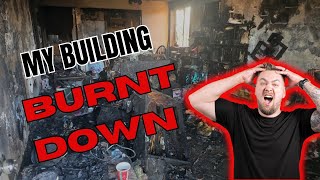
My Building BURNT Down - And We Bought 144 MORE!!!
Christian Osgood's duplex burned down, but insurance covered the loss. He then closed an $8.5M, 144-unit apartment deal in Abilene, Texas using LIHTC financing and a $3.5M syndication raise. He answers questions on LLC structuring, insurance, and his plan to expand property management across 6-10 markets by 2026.
Chapters
All right, and we are back to Multifamily Strategy Live. Hello, hello, hello. A big end to the year. Uh, yesterday I was supposed to go up by 144 rental units, and on my way to drive out to the new 144-unit, which we did in fact close, $8.5 million deal— I'm going to tell you all about that and how you can do the same thing in 2026— I got a call saying that my building had burned down. Now, I've had one fire in my entire real estate investing career, and that was In Stephenville, we had a garage catch fire. It was isolated to the garage. We had it fixed and the power back onto the unit the same day. We lost a unit, like it burned down. Now here are the details. It looked like it was a pretty hoardery situation. I posted a few photos on Instagram and Facebook. You guys can check that out at Christian Osgood on Instagram. But it burned down. If you look at the amount of junk in that unit, I can kind of see how. It looks like it was an extension cord fire. From an extension cord that they had left plugged in. The cord itself caught fire, started the rest of the fire. That's what the fire report has indicated. This can occasionally happen. First of all, and most importantly, when this stuff happens, no one was hurt. This was actually a unit that had a pregnant mother, so we really, really, really wanted to make sure that we had tenant safety covered. Everyone is okay. No one is harmed. We've already found new housing for them, conveniently still in our portfolio. Now we are going to keep an eye on the horridness of the situation and of the flames, but, um, the good news is that everyone is safe and that everyone is housed, which is the most important piece of being a landlord, is that you're actually a good human and you provide great housing for great people. We have done that. The unit itself is charred to a husk. I mean, it is completely, completely burnt down, and anything that wasn't burnt down is, uh, water damage from fire department, which is them doing their job. We're extremely grateful for it, but we have sustained, uh, full and total property damage. So when this happens, the city will shut down your water to the entire building. This was a duplex, one of my first ones I'd ever purchased. They shut down the water and power to the building. Why do they do this? Because if there's an electrical problem or anything else going on, uh, you burnt down a unit, you have major structural damage. If electricity gets in a water line and it affects the other unit, someone gets electrocuted and killed because There was damage to their unit. You don't want to risk it, so the city will shut it down. The building's red tagged. Uh, what does this mean for you as a landlord when you have a deal and you have debt on it? Well, this is what insurance is for. First of all, we have rental loss insurance. So for the roughly year it will take us to rebuild this, we are covered for loss of income. So we'll continue to receive rents, which means we'll continue to pay our mortgage out of the property exactly as planned. Conveniently, we had set leases and term leases in that building, so we have exactly what the income was last year and what it was scheduled for this year. That'll be covered by insurance. In addition, the building's insured for more than I think it would actually cost to rebuild it, but we have a rebuild value of $550,000. I bought the building 4 years ago for— let me think about it— uh, exactly $300,000. I bought 3 side-by-side duplexes. Now I have 2. Bit of a stressful drive though when you're driving to a 144-unit to onboard. I then make it to Abilene, Texas. Absolutely amazing. We've closed. We do the awkward thing where you go through the office and all the employees who like aren't going to have a job in 3 hours are all kind of wrapping things up. Uh, super kind people though. They helped us a lot with the transition. They walked me through our final inventory, where leases are at. And get this, we're at basically 100% occupancy. There's 2 vacancies. We have 142 units leased of 144 units in the building. That is much better than our underwriting starting. It looks like we may be a little farther behind in collections on a few of those units, but overall pretty darn good. Um, I learned that we have a really cool golf cart that comes to the building. Always love bonus stuff. But going around, uh, transition is happening this week. We did have one crazy thing happen though. Our on-site staff all quit before they started, so I had to rapid hire. We have an awesome employee who starts officially Friday, but we have this weird in-between where we closed, we have no one to run the office for the first 3 days. So, uh, my poor team out of Stephenville is gonna have the phones ringing non-stop, but it's gonna be part of the program and just what it is. This deal was really exciting, and I'm going to share with how we found it, how it came together. And, uh, yeah, closing out the year, I am now at 550 rental properties, 5 years into buying multifamily. If you had asked me when we started this YouTube channel before I had any rentals, it is me and Cody Davis in a basement with horrible lighting, uh, me wearing a cheap suit. I don't even know what Cody was wearing at the time. And we're sitting down there talking about like, hey, we're going to take over the world, we're going to buy all these apartments, we're going to get to 100 rentals one day. Uh, I would have never guessed in a million years, 5 years later, this is where we're going to be. My good friend Caleb found the deal. We closed a 44-unit deal very similar to this. Uh, this is called LIHTC, Low Income Housing Tax Credit. So there are rental limits, and we need to lease to people who make less than 6% of market area income. I've sneezed on a live video. I always try not to do that, but, um, that's now happened. This is, this is how you know we're actually live and not pre-recorded. We fire from the hip and we— it happens as it happens. But, um, we are on the LIHTC program, so we have rental caps of how much we're allowed to charge, and we have to lease to people who make 60% or less of the area median income. All this simply means that is low-income housing and we need to buy at a price where it cash flows. Now for 144 units, we picked it up for $8.5 million, roughly $60,000 a door. And this thing is immaculate— 18 8-plexes, basketball courts, pools, in-office gym, though it's a really small one, in-office computer lab. We are reopening the 4,500-square-foot daycare center. Contractors start on the 5th. I'm super excited for this renovation. It's going to look absolutely amazing and have phenomenal return on investment. But we have actually closed on the biggest deal that I have ever done. 144 units is a big building. To date, earlier this year, the largest transaction I've done has been for 76 units. 76 apartments felt pretty big. You do this thing, it's almost 24 acres of real estate. It is huge. Also exciting, in January we're going to be closing on an 81-unit that is 4 blocks away on the same old Anson Road in Abilene, Texas. It was found by Caleb. They called us, uh, we'd closed a 44-unit in Stephenville that was also light tech. That led to us closing a 76-unit light tech deal. The broker who brought us the 44 units said, hey, I got one more I want you guys to knock out this year. They bring it in, and this was the hardest battle through financing I've ever seen. Now, our interest rate is 5.38%, which is excellent. We went direct to Fannie. So Fannie Mae loan, the process to get this done was insane. It was so much work to get from A to B. We had to find just every piece of paperwork, get through the state compliance, every document for Fannie. She wanted to see, basically Fannie wanted to see that the GPs, the general partners, had 2 times the total net worth of the value of the loan. So we had to prove that cumulatively, between the lot of us— me, Caleb, and my legal counsel Todd Robinson— uh, we're worth about $16.5 million to even qualify to get the loan, which was a pain. It took us roughly 4 months of being under contract to bring this bad boy to the finish line. The important thing was a lot of our capital were people who wanted to place capital this year. We closed on the 30th of December. We cut it that close. We did not get our official state compliance. We didn't get that until we hit— I'm trying to remember exactly what it was. It was the day before Christmas Eve, the 23rd. We got the permission to close. We were that close to not making it into this year. A whole bunch of people were already off work, and if we didn't get it done on that day the rest of the office, TDHCA, Texas Department of Housing and Community Affairs, would have been off for the year. The deal would have happened. We literally brought it down to the last half of the last day of the year that we could have got our approvals to get this thing closed. We brought it across the finish line. We're now closed. We're doing the onboarding that's going actually shockingly smoothly thus far, moving everyone in the portal, making sure everyone knows how to pay. Uh, but this piece of real estate, we now enter the actual hard part. We're taking over a property that while well-managed, needs some sharpening on the management team, needs some more resources. And so we are now putting together the team to knock this thing all the way out of the park, which is a very, very exciting adventure for us. But deals like this, choosing the right debt product and getting through all of the hoops to close these— this is why I love things seller-financed. This was a bit complicated. Our deal right up the street, 81 units, that one is going to be a seller-financed, closed way less hoops, much, much, much easier. Uh, by the way, got a question here, uh, on the channel. Feel free to ask any questions here on the channel. I started here about your rental cases like this. Where do tenants go? Also just closed my second rental, uh, that I'm doing a house hack. How should I structure LLCs for rentals? Okay, I'll answer both questions in order. Uh, so the— and you know what, it happens. Uh, you have 550 or so rentals A duplex will at some point flood or catch fire. I've, I've lost a 20-unit building before due to flooding, and it was catastrophic. Uh, this is what you have insurance for. So, uh, excellent question. Where did the tenants go? We were fortunate on this one. The tenants, uh, for the unit that burnt down— I have a unit available that's actually a fantastic newly renovated unit. Do I want to rent it to someone who just caused a fire or not? As much, but they've been great tenants. I've actually had them for a long time. Things happen. Uh, we moved them to Ephrata, Washington from Moses Lake, so we moved them about 20 minutes outside of, uh, town. Seemed like a really good fit for what they want to do. Um, so fortunately I had the availability and a freshly renovated unit to move them into, uh, so we had the housing. If not, in Washington state— this will change by state to state— so if you're in California, I believe it is actually a landlord problem. Same with New York. Someone can verify, fact-check me on that, but most states, including Washington, if the tenant is required to have tenant, uh, renters insurance, it is on the tenant's insurance to ensure their stuff and their new housing in the event of disasters. And that is fire, flood, vandalism, other loss of the unit. So in this case, it is actually a tenant liability in Washington State by Washington State law that they— and it is a requirement of our lease that they must have renters insurance at all times. So I should pay this. Now unfortunately for this particular tenant, uh, it looks like they had their required insurance and canceled it. So they actually might have been in a lot of financial trouble if we didn't have a unit to move them into. So they landed pretty well. Uh, the bigger bummer is the next door unit, since they shut off the water, the one that didn't have the fire, the city still came and removed them from the building. Less than ideal. They have yet to reach out to us, uh, so I don't know exactly what their game plan is, but it is a tenant responsibility. As landlords, we'll do everything in our power to help them out. This is, uh, you know, the fire is not our fault. It's also not completely their fault. You don't expect an extension cord to magically catch fire and burn down your unit. Like, it's not. Now, there were some other mitigating circumstances, but overall We don't point fingers, we don't— we just want to solve the problem and make sure that the people who need housing have housing. So as a landlord, we have a strong policy of always be kind, never be nice. Nice lets people walk all over you and will disservice you and your tenants and your buildings, and if you have investors, them too. But kindness is always rewarded, or at least usually, and it's the right thing to do. So we made sure that they're taken care of. If our other tenant reaches out and needs assistance, we'll also offer as much as we possibly can with the pieces that we have. And, uh, closing a house hack. How should I structure LLCs for rentals? So this is actually— this ties right into our, uh, our topic for today. So closed a, uh, so we lost the 2-unit and we closed on 144-unit. Deal structure is going to determine a lot of what you want to do for LLCs. If you're buying in your own name, it is almost sort of like for a house hack, it is almost always better to put in your own name and not worry about the LLC structure. It does not give you the amount of protections that you think as a sole property. Easy to pierce the corporate veil, and it doesn't do anything for you functionally. Now, if you have any partners, you're going to have an LLC per partner, uh, per partnership. If you have multiple partnerships, you may want to create a holding company LLC to put them in. And if you have 5 or less partners, you should do a joint venture. If you have 5 or more partners, you're looking at doing a syndication. Or if you bring on truly passive investors, you're looking at doing a syndicated structure. That's pretty much all you're looking at for LLCs. They're very, very easy to structure. It will be more deal dependent, but the basic rule of thumb: if it's you solo, put it in your own name. If it is with partners, one LLC per partner. I prefer joint ventures unless you have a deal that just requires syndication as the correct model, which usually again means more partners, so a larger capital raise, or if you have an investor who truly just wants to be passive but can fund your whole deal. I'd still do this syndicated structure. That's pretty much the way to do it for every single deal. I hope that helps. If you have any other questions, feel free to ask here as well, which goes for anyone else. If you have any other questions, uh, Instagram, uh, YouTube, Kick, Facebook, all you people we stream to, uh, feel free to ask questions. We'll answer here. Also check the, uh, Instagram chat here really quick to make sure none of you guys have asked any questions that I can answer. And we have none yet, so we'll hop back over here. But yeah, that's the general structure. This deal itself, the 144, was syndicated. It was a $3.5 million raise. This is the most important thing when you are raising capital for a deal. If you raise just enough to close, you are hosed. You're going to be working on that deal and chasing the money for that deal for years to come. Never renovate your property out of cash flow if you know you have renovations like we're doing on our daycare. All of that money is in your bank account before you close. You need the funds for that. You also need a reserve in case things happen. What if your building burns down and it takes insurance a long time to write the check? I don't know specifically when we're getting a check on this. We still have to get an insurance adjuster out there. There's a lot of steps to this. You need to have a reserve in hand. It should be enough to pay 100% expenses for the property for 3 months or more. Though as you get into larger buildings, your odds— when I have 18 8-plexes that are brick buildings, of all of them going vacant at the same time when they're 100% occupied is almost zero. So we're going to have a lower reserve than 3 months of expenses on that size building. But as a general rule of thumb, for medium to small size multifamily, 2 to 3 months full expenses to maintain the property and pay your mortgage. Excellent place to be. You need to have these funds at close. So if you're doing a deal and you're like, hey, this is an amazing deal, it works really well, and you have not factored in your renovation cost or your reserve account into your capital, you need to make sure your deal still works if you bring more money to the table. This will change your cash-on-cash return because now there's more cash in the deal. You're changing the denominator you're dividing by for cash-on-cash return. It is going to affect your numbers. And if it suddenly makes it not a good deal, that means that you never had a good deal to begin with. I promise you, the difference between renovating out of cash flow and having the money up front is years of time. And if you can cut out years of time, you'll make much, much, much more money, spend much less time on the project, and you'll get 5 deals done in the time it would have taken you to do 1. It's better to do 5 good deals than try to just knock out 1 home run deal and fund it out of cash flow. Every single time. Uh, but projects like this are really fun. This will open up Abilene, uh, which gets me to the last part of what I have planned for today's live. And then again, feel free to ask any questions in the chat on whatever platform you're at. They all show on the side of my screen, as we can do here with, uh, Smokey's here. Which, by the way, I appreciate the, uh, the apology about the rental. It's, uh, it is okay. Things do happen, and that's part of real estate. That is why we always have cash flow and margin. Last thing I want to talk about is the goals going into 2024. What's going to be new in multifamily strategy? What's happening with this channel? What's happening in the portfolio as a whole? For everyone, I hope that you have set goals for 2026. This is a great time, beginning of the year. You should always have goals and plans, but this is the best time absolutely just to reset, go, hey, what are we going to do within the next calendar year? For me, I have a goal, it's a competitive one, but I want to buy a deal that comes with an office in central DFW. Why is this? I have too many companies and I want to start hanging out with some of my employees and the leaders of my businesses. We've added extra layers of leadership in property management, in multifamily strategy. I want to have a central hub so we can actually go into the darn office. Plus, almost all of my leaders have young kids in my entire company. If we can all just bring kids in and just nanny share and have a daycare set up at the office, we solve like 80% of our daytime time constraints and still get to spend time with our kids. So when I got together with leadership, what's the number one thing we want? We want an office in a central place where we can actually see each other during the workday and physically interact. So that is Christian's big goal, is to centralize my business and have more direct control over the people that I work with. And by control, I mean more influence and ability to collaborate with. I don't— I'm not a micromanager, but I want to have my creative directors and my get-things-done people, my less creative doers. I want to have them all in the same room, able to collaborate, and I want to cut down that time of communication. Work from home was a great model when we had less than 500 units. Now that we're doing the next phase, we're a mid-sized company. We have to go do midsize things. We're really excited for that. Outside of that, property management, it is pretty much this last year and a half served as a management company for Christian, Caleb, and friends. We're now expanding and doing the big third party. We have accounting on lockdown. We have the vendors on lockdown. We have our open new markets SOPs. We're 3 markets in Texas, Abilene, Waco, and Stephenville. And the next year we're going to be a 6 to 10 market company. And we're going to be astronomically bigger. We're opening up more third parties. So if you happen to see this and you are a Texan and you're within a 2.5-hour radius of DFW, we would love to talk to you about managing your property. Extremely competitive. We are extremely skilled. We have an amazing team. Would love to have that discussion with you. But these are my main goals outside of acquisition. I'm going to be more focused on building core operations and setting ourselves up for the next phase so we can go into 2027. Fully built out office, teams, people, all levels of leadership. It'll be a much bigger company. For this channel, what you can expect: I will continue to launch 3 videos a week. We're still doing the Owner Meeting Podcast every single Friday. Monday will always be a lesson from me from the portfolio, something directly applicable and educational. Our lives will always be Wednesday at the same time. What I'm going to change next year and what I want to deliver— we had Phil on last week. And I noticed that that was a much more fun thing. And when we started this channel, Cody and I came on live often. There are 4 regional directors, so soon to be 5, of Multifamily Strategy. They're going to join me more often on the channel. You'll see more of Phil. You're going to see Cody Davis rejoining the channel again. You're going to see him often on Wednesdays live with me and in other videos. So you're going to see more content again from the classic Caleb and Christian or Cody and Christian. You'll see stuff with Caleb, but you'll see a lot more collaboration and guest speakers on the live. So if you have questions, we'll bring Todd Robinson, one of the best lawyers— I mean, seriously, he's a major lawyer, one of the best syndication lawyers in the country. Uh, we'll have him on the podcast more. We'll have Cody and his, you know, he's the most watched episode of BiggerPockets of all time. We'll bring him back to the channel more often. Uh, but you'll see more on the live, you're going to see more on the Owner Meeting Podcast than we've ever seen in any other year. So A lot to look forward to, and I'm really grateful to get to share the adventure with you guys. Also, I'll go back upstairs to my cool studio. I've just been building out my office, and since I was working down here today, I figured we'll, we'll go from the lower office rig. But, uh, I'll do the whole production and make my background all interesting for all of you people who need to be stimulated by the flashing lights and fun books. Uh, if we have any other questions, I will answer them now. I'm more than happy to weigh in on anyone's portfolio. Other than that, I'm gonna leave you one piece of advice. When you're looking for deals on market in 2026, write an offer on every deal. There is no such thing as a good deal or bad deal. When you're looking at a listed property, you are only looking at an owner who's willing to sell. You don't know their motivation, you don't know their bottom line price, you don't know anything about anything. Underwrite the deal to a point where you know it would work for you. Reach out to the broker, and instead of saying, hey, the deal doesn't work, say, hey, I would love to buy this property. This is where it works for me and where I think the bank's going to land. What you're going to do here is you're training brokers that, hey, when you send me a deal, I write you an offer. You're also showing them that you'll write offers on this type of deal. So when they have a deal that works for you, you're likely going to be their first call. I highly recommend doing this every single time. What's going to happen is brokers in your markets are going to start sending you deals that look like what you want to see. And on occasion, you're going to offer something that actually just gets accepted. Just ask respectfully. If I'm going to— if I end up lowballing, which I don't always do, but if you have a deal where the price doesn't work, I call the broker. Hey, they want $1 million. The bank's looking at this, they're thinking it's going to be $750,000 is where they're going to want to lend. I don't want to do more than 25% down, so that's where I'm stuck. Is it worth getting it in front of the owner or Do we just need to go look at— look for another deal? Either way, I wanted to make sure I got back to you, and if they're willing to accept that, I'm your buyer. It's a very, very simple way to establish yourself as a ready, willing, and able buyer, to teach them how you underwrite, and also just to not be a tire kicker. You will find the brokers in your area will respect this, and over time they end up being the easiest pipeline in the world for you. There's a bunch of other ways that I'm going to share on this channel, and I share all the time in our mentorship. How to find deals, but on a basic level, if you're not doing that, you're get— you're missing out on deals that are literally listed online that are completely doable. We have one more question from Smokey here, uh, also for room rentals. I have thoughts on these. Uh, what type of insurance do you recommend? Would I carry a specific landlord liability policy? Is there anything I should do to protect myself legally? Now I have some difficulty with, with the room rentals. There's nothing wrong with them. It is absolutely a way to push the margin. So for those listening, if you're not familiar, instead of renting by the unit, you rent by the bedroom. It's also called a co-living model. So you have, say, a 3-bedroom unit, a single shared kitchen, but each unit ideally has its own bathroom. Uh, so if you have a 3-bed, 3-bathroom unit and a kitchen, you're renting out by the bedroom. Uh, you can push the margin on these to a ridiculous level. Cash flow per dollar invested can be ludicrous. The only thing that I don't like about it is that it's for smaller properties. It was very hard to scale, and it's gonna be management intensive. You have fewer managers who want to manage that model, and it's going to be a lot more involved, which typically means it's more expensive, uh, for you to pull off. But other than that, um, great way to push the margin. Insurance— you're still looking at pretty much standard insurance. You're going to have general liability, you're going to have loss of rent insurance, you're going to have, uh, always, always do full replacement value Uh, so you're not insuring for just what you pay, you're insuring for the amount that it would be to rebuild the building, uh, which is what saved us on this fire thing. I bought for $300,000, our maximum insurance, our replacement value of the building is $550,000. At the end of the day, I'm going to end up with a newer duplex. You don't want to do a bunch of insurance claims, but this is literally what they're for. If you have general liability, if you have loss of rent insurance and you have your full replacement value, even for room rentals, you're going to be just fine. One thing that I do on top of that is I do an umbrella policy for a couple million dollars. It costs almost nothing, and it's basically anything that falls outside of your policy, the umbrella policy kind of picks up and protects you from lawsuit. From Paulina Cohen, how do you know the bank— what the bank will accept if you're not under contract yet? That's an excellent question. So generally speaking, A bank wants to see a debt service coverage ratio, or DSCR, of 1.25 or higher. What does this mean? If I have a mortgage of $1,000 a month, I don't know where you'd have that, but for easy math, I have a $1,000 a month mortgage. A 1.25 means that I am bringing on income, net operating income after my expenses are paid. There's enough cash flow to pay my debts and pay me of $1,250 a month. I make the mortgage plus a quarter of the mortgage, 1.25 debt service coverage ratio. That's where most banks want to lend. So if you want a quick way to benchmark where the bank's going to look at it, simply go into ChatGPT or any other AI and basically plug in your inputs and just ask it, hey, at what price do I need to purchase this to have a DSCR at 1.25 or higher? And it will spit out the number that a bank will really want to look at lending on it. That's the quick and easy way to do it. You can push that margin however you want if you want to underwrite it at a 1.3 DSCR, but that's a quick way to do it. There's a free calculator on our school community, so if you're on YouTube, there's actually a link to our school community in the description, and it's completely free. So if you're watching a free YouTube video, might as well join it. Uh, tons of people finding funding, negotiating deals. I post fun real estate facts and ideas on there all the time, so if you want to learn and just be part of a community absolutely join that. Uh, but I have a free calculator you can download in the classroom room section of that. You can use that to underwrite, or like I do, just use ChatGPT. We have a custom one, but you can go to general chat. That's what you're looking for. At what price would I need to purchase this deal based on the given financials to buy at a 1.25 or higher debt service coverage ratio? That's where you can go back to the broker and say, hey, banks are looking at it at around— insert here. Checking the Instagram here for any other questions. None yet. Well, if we have any other questions, we'll absolutely answer them. If not, hope everyone enjoyed this, and I hope you guys get a ton of value out of this. We go live at the same time every single week, so mark your calendars, ask questions. Oh, I got one more here. Sweet. Do you have any insurance agents to refer? Oh, Caleb has a great one. So I just switched, uh, what I used for most of my career has actually been American Family Insurance. I have a guy named Brett Turner out of Washington State. He's placed a lot of my Texas stuff, he's placed all of my Washington stuff. He's been phenomenal to work with. Uh, there's a lot of different brokers in different states. Um, if you're in Texas, we've bounced around every year. But, uh, here's the piece of advice that I think is actually better than a direct answer to the question. But I got this from Matthew Hawkins. One thing that I do every single year, and it's a pain, but we do it every year, we shop the rates every single year with a couple of different vendors. And what I find is the one who currently has the insurance almost never wins the bid. So almost every year we go with a different policy. Uh, what happened with this? We had the best available policy that we could find on our 25-unit and our 44-unit. Both of them decreased by— I'm not kidding— $10,000 a year, which means we increased our cash flow $850-ish, $833.33 a month, every month, instantly, the millisecond we signed that contract. That also increases our NOI and increases our value, increases how much we could borrow or cash out against the property. It increases what we have to pay ourselves every single month. Um, shopping those rates is really, really important. We do it every single year, and so it will rotate through different insurance agents. In Washington State, again, Brad Turner has been my favorite, uh, but we just swapped, uh, and Caleb actually ran it for me this year, uh, who's my partner in Texas. Uh, he ran through all sorts of insurance brokers and found one who's underwriting the whole portfolio, same coverage, like identical coverage, much less expensive. Aha, located in Mesquite. All right, uh, if you want, uh, I can follow up with you if you, uh, message me on our school community. So if you haven't yet just join the, uh, the FreeSchool community. Shoot me a message there. I will talk to Caleb and I'll get a name for our, uh, insurance broker for the greater DFW area. All my stuff in Stephenville, Abilene, Waco, we all use the same two main companies, and one of them just keeps winning our business again and again. Again, I'll get you that, uh, that content— or content— contact. Words. Also fun to have another DFW investor. I'm going to leave with one more announcement. Um, I used to do some owner meeting events. Uh, the owner meeting event in, uh, we hosted at Manhattan Project in Dallas. Our events are going to reopen throughout the country this year for multifamily strategy. We're going to have regional meetings, but I'll be hosting the Dallas one specifically. Right now my plan is for it to be quarterly. Unless we have a huge turnout, I'll make it monthly. I've done like 5 of them, and then we slowed it down, uh, because I had a kid and we bought a ton of real estate. I focused on the PM company and on being a dad this year. For next year, we're focused on events again. We're bringing back the community. So, um, keep an eye out on the Instagram and the school community. I'll be posting each of the events on there, but we'll meet at Manhattan Project as soon as we start this in the new year. I'll likely do an event late January, maybe early February, and we'll get started from there. Everyone else, have a fantastic start to the year. This is the last day of December. I'll read this here. Are y'all in beer? Big box coffee? Yes. Help me get to property. Oh, that's so fun. This is why I do the whole thing, by the way. This is, uh, spooky. This makes me very happy. Makes me very, very happy. Uh, if there's anything that I share online that helps anyone buy anything ever Very, very helpful. Multifamily Strategy, our mentorship, saw $100 million of transactions. But just seeing this right here absolutely makes my day. Absolutely. This is why we do what we do. Whether you're in North Carolina, you're DFW, we even— one of the last deals Multifamily Strategy did, uh, Mark Hobshied, or Hobshied, uh, he did a 28-unit deal in San Diego, which is an unbelievably competitive market, very, very hard to break into. Cash flow looked amazing, uh, no matter where you are in the country. Um, yeah, we're going to keep ripping this as much as we can. So you guys have questions, bring them here every single week. I'm going to be here and, uh, we will go until the questions stop. So I appreciate this a ton and hope to see everyone, uh, both in our school community and, uh, at the Multifamily Strategy events around the country. So stay tuned, uh, let's get this community rolling, and I will talk to y'all next week.
More from Christian



Speak with authority to turn broker rejections into deals - boost your confidence #RealEstate

Turn Broker Objections into Closed Deals - CRE Negotiation Tactics #RealEstate #Negotiation

How to Get Multifamily Deals Under Contract Without Having All the Cash | Objection Series Ep. 1

How I Scaled 500 Apartments in One Texas Market in 12 Months #RealEstate #Multifamily


Turning a $12.2M, 200-unit mess into profit - live multifamily turnaround update #Investing

Day 10 Update: Turning a $12.2M, 200-Unit Apartment Complex Around in 80 Days #RealEstate

Day 10: Before Time Runs Out | Saving a Failing 200 Unit Apartment in 90 Days (Ep. 3)

How 2 Direct Deposits Generate $70K/Month from 224 Section 8 Units @ 99.4% Occupancy#RealEstate