People Pay This Man to Live in a Prison Cell - Lumberjack Landlord Take over
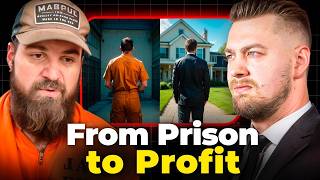
Matt Hawkins bought an abandoned jail in New Hampshire for $200k, converted it into luxury apartments and veteran housing, and now manages 160 units with minimal staff using cheap automation. He finances 93% of his portfolio with 30-year fixed debt at 4% interest and saved $192k through opportunity-zone tax breaks.
Chapters
Well, if you can see him, you can be him too. Like, it really comes down to watching somebody that's doing what you want to do and then, you know, get as much as you can from videos or talks that they do or podcasts, get as much as you can for free and then see where that leaves you. And if you want to accelerate that, then you start engaging on higher levels.
Everyone, welcome back to The Owner Meeting. I'm Christian, your channel host and founder and operator of Multifamily Strategy. We are here with my favorite investor of all time. That's not an exaggeration. You know this if you followed my channel for any time at all. This is the guy I go to when I'm stuck on anything real estate. He knows more. He's forgotten more than I'll ever probably learn in real estate. He has the beard everyone wants. This is my favorite human being in real estate. And I mean it. Matt Hawkins, if you don't listen to this whole podcast today, if you guys skip this video, you're fired. Just unsubscribe. This is the best guy in real estate. He has written bank programs that, like, he's written loan products that didn't exist to expand his portfolio. He's renovated everything. He's dealt with everything for the most part that a landlord can deal with, all while staying employed at a high-paid job. Like, he did this as a side project at the highest possible level. Recently retired over the last year or so.
Yeah. Yeah.
5 kids.
Yeah. 4 kids. Yeah. 4, 4 kids.
Oh, 4.
We're done at 4. We're done at 4. But I consider yours one of ours, so that's okay.
Okay. There we go. Yes. Yes. Uh, this now officially the godfather of my child. This, this guy's amazing. Amazing father. Amazing husband. He, this guy is the gold standard.
Uh, I appreciate that.
Without blowing any more smoke at Matt.
Yeah, exactly.
Guys, we're gonna talk about a few things on today's episode. I wanna talk to him about, uh, about some business strategy. We're gonna talk about a prison that that he converted. There are some cool conversions. I've done hotels, never a prison. I want to hear about this and how you, and you're not turning it into like a slummy property either. Like you're taking a prison and making it upscale living. That is a cool idea. You know what? You're supposed to bury the fun part to the end of the podcast so people actually listen. I'm going to trust everyone's going to listen to this whole thing. Let's just open on this prison conversion. How did this deal even come into your universe where you looked at an abandoned prison and went like, that's the project, this is the one?
I think I had flipped pretty much everything else. I think I'd done kind of every other project. So for us, one of the challenging things in our area, so I'm in New England, I'm in, I'm actually in New Hampshire. Everyone thinks that that's inexpensive real estate. We have 17 miles of coastline, so it's some of the most expensive real estate in the country. So a lot of our stuff to get on the water or even near the water is millions of dollars. So it's not an inexpensive market by any stretch. But one of the things I looked at was large multifamily, like what you really specialize in and what you're amazing at doing. Like I've had deal structure questions. I go to Christian because I'm just like, this is the way I'm thinking about this deal. Is this the way that I should structure this? Just because it's great to have another set of eyes. And I've been doing this for a long time, almost as long as he's been alive.
But media team, snip that. That's testimonial. Put that on the website. Best investor in the country has said he goes to me for deal structure.
That is absolutely, yeah. With like, honestly, like we, I've called you 2 or 3 times on something. I'm just like, hey, what do you think about this structure? And you're like, holy crap, I love that structure. That structure's awesome. And what's really funny is, is one of them kind of bit me in the back, but it, but it ended up with a good story. But about the jail, what was really interesting was everybody was looking in the market and they're looking for deals and they're looking for things that most of the time, if you're buying turnkey, you're paying full boat retail. If you're buying something that needs some work, needs some vision, needs some love, then the more love and vision that it needs, the more money you have to sink in, but the more return you're largely going to get. And so I'm always looking for something weird, something interesting. Sadly, there's a developer around us who just has pockets deeper than I could ever possibly fathom. And so he does a lot of mill building projects. But they take years. They take years to develop those projects. So I was like, well, I need to find this individual who's like 6'4". What's that?
Does he happen to be a giant individual?
No. So that's actually— so he— what's really funny about that individual, I won't use his name, but what's really funny about that individual is he got into the market at the perfect timing where he was telling everybody, you only need to make $50 a door. That was his— that was his capital number. He said $50 a door is all you have to make. Well, he quickly amassed a bunch of assets doing seller financing, but then had to sell a bunch of those assets. And he got lucky with COVID He's, you know, I think he's generally, I think he's an okay investor, but I'd like to see what he's doing now where he is buying something that operates on $50 a door, 'cause that doesn't really work anymore. And so this is actually a different investor, an older guy with tons of just deep, deep pockets, but he does the mills. So I was looking for something that we could kind of really unearth value. And that was the biggest challenge because we're always trying to unearth value. So I started looking at abandoned buildings, found this abandoned building, and I was like, oh, this is interesting. And then I found it on the— literally every town has to post it. I found them posted on their town website, town website, town of a little over 10,000 people, town website. I find this thing and I'm like, I don't have enough time to do my due diligence. I had to let it expire and hope that they put it back up. The downside was, is they did put it back up, but they decided to place it with a realtor at that point. I'm like, that's kind of a bummer. This building is a— it's a jail, police station. It was both. And so what's most interesting about this building is that it still has jail cells in it, and that's pretty awesome. And the big thing for me was the price per square footage. So this is an 8,000-square-foot building. Usually the price per square foot where we are is $250 to $300 a square foot completed. This building was completely gutted, but they had done all the environmental on it because most towns, when they— yeah, most towns, when they go to sell these assets, they have to have the environmental done to make sure it's safe. Here's the cool thing. They actually get funded by the federal government to do those environmentals. So they applied for 2 grants over a 3-year period. They got those 2 grants, they did all the work. It was $150,000. They needed 2 different approvals, $150,000 in approvals. But when they go to sell the asset, they get all the money because they got granted that money from the federal government. I was able to buy the building for $200,000.
Are the units or cells? How many, how many cells is your building?
Yeah, so it's, uh, how many cells are left? 5. There's 5 jail cells left and we're going to use those off of like a little kids indoor playground. We want—
I think there's a lot of parents who would appreciate being able to lock up their kid for—
Exactly. And just lock them. But they can— and food is optional. You know, they can choose whether or not to give them food in the cell. There is a table in there with chairs that the kids can sit down and eat on, but that's what's designed. But yeah, we wanted it to be something that was going to impact the community in a positive way. And so we did an indoor playground. We did something called a cold kitchen. Which is basically just no heating anything up. And that means that we can deliver it for a lot less money. And we did disabled veterans housing, which vets are near and dear to my heart. I've got a lot of friends that are vets. And so I'm kind of tired of all the lip service of, you know what we gotta do. Yeah, let's see how much you do. So we are doers. We are not cross, we are not, we're not watchers. We are actual doers. And so while we're doing 2 ADA units for disabled vets, that are fully handicap accessible. And if you, uh, quad or paraplegic, either, uh, you can actually utilize these units.
Is that such a cool project?
It's fun. It's a lot of fun.
Do you have any good pictures of that, by the way? I'll, I'll try to get those posted in this spot if you have.
Yeah, sure. Yeah, I can send you some. I can send you some pictures. We're in the— we're still in what I call the ugly duckling phase now, which is, uh, rough plumbing just got signed off on, rough electrical just got signed off on, and so we're finishing finishing the fire alarm and the fire suppression system. But this was an 8,000-square-foot property, and we're turning it into 4 luxury, luxury 2-bedroom units that I fully designed myself, and then 2 disabled veterans units, fully ADA compliant, an indoor playground, and a cold kitchen. And so we are completely revitalizing— this was, this was a police station jail, so it's right downtown. And so we're completely revitalizing the area with this type of a project that we know will mean a lot to the city. And we're just excited about being a part of that.
One of the things that I have always told people to do for a long time, and this is a model I've tried to live by, is I always lead with cash flow. It is technically impossible to cash flow a vacant building. Some of these projects are just like, they're so ludicrously fun. You can do these projects, in my opinion, the time to do these projects is when you're established enough where you can easily float the negative out of the existing cash flow. You look at global cash flow and go, can I afford to do a fun project? I'm doing a little 9-unit, it's a retail store downtown Ephrata, Washington. It's mixed use, 3 retail spaces, 6 multifamily. The real thing I want though is they own the parking lot to my other mixed use building. They share a parking lot and they mismanage it. So I'm like, how do I get, I called them and asked them how to manage the parking lot and they're like, I hate this building. I'm a hospitality guy. This isn't hospitality. I will, I will seller finance the building to you. 100% seller finance. No zero down. I'm like, yes, done. So that was my solution to a parking problem. 9-unit building, $600,000 seller finance, 5% interest. It's like, okay, we can do that. It will not cash flow as it is completely vacant and about $200,000 of reno. It is a project, but when you finish these in downtown core, it is so fun to be a part of a downtown. Like, it's like this building needed something done. Reimagining a space I think is a million times more fun than ground up. Like just looking at a piece of ground and being like, oh, this could be this. Finding something that exists and finding the highest and best use for it as a creative, it is so rewarding. I wanted to do this podcast specifically as like, A jail. And the fact that you kept some of the cells, that's crazy. What a fun piece of personality.
It's just, it's, it's just, it's beyond cool. Um, a lot of the contractors, not a lot, a number of contractors that have walked through that, I was like, uh, so ever been in those cells? And a couple of them finally, and she go, yeah, but it was a long time ago. I was like, that's fine. I don't care. It's all good. Come in, hang out. So yeah, a couple of the contractors that are doing work there have actually been in those cells on the other side of the cell when it was locked and the door.
That's so funny. So it's kinda funny. You invest without partners?
Yes.
For the most part. This one is also just a, this is a lumberjack only project.
Yep. Yep.
How does this work between you and your wife when you're buying this? Is this like, hey, Matt's out there just doing stuff. Do you guys walk to prison together? How does pitching her on keeping cells in the building? Like, I'm just curious on how this works on a, On a marriage standpoint?
She has no input. She has no input. Last time she had input, she cost me like $1.3 million in a deal. So yeah, so I was just like, we're buying this place. She goes, babe, I don't want to buy that house. And I was like, we're buying it. And she's like, nope. And I was like, all right, we can talk about it. Well, I get my way almost all the time on the assets, but I told her, I tell her all the time, I was like, but report card's kind of there. Scoreboard. It's kind of there. And so this particular time she just goes, I don't, I don't, can't. And I was like, okay, I'll respect that. I see the path for this, but I'll respect that. We did that. I negotiated the deal down to $226,000. That property just traded for over $1 million just 4 years later with minimal reno. And it was because of its zoning and the fact that 4 more units can be put up there, which will add another $1 million to $1.2 million to that deal. But in this particular case, she's been inside the jail maybe 2 or 3 times, but it was much more like, hey honey, let's go to the jail together so you can kind of see what I'm doing. I'm not doing any of the work, but I'm doing all the design— was me, all the design decisions, the business decisions, what we end up doing with the space, you know, how we break up the space. All of that was me. That's what I've done consistently. So my wife is amazing. She trusts me implicitly. I mean, I would hope so after 37 deals together. That she trusts it at least a little bit. But yeah, so not, not a ton of involvement, honestly. Like, no real, no real— she doesn't really do any design. She doesn't really do— she really focuses on making sure that, hey, you're up to date and this is the number where we're at. I always know the ballpark, but she always makes sure that we know the hard number. So yeah, she's great.
My wife is very involved in the business, but Danny does— that is, Danny does the same thing. It's like, hey, If I need to know how a building is operating, I can always go to Danny and Danny's like, hey, this is your exact mortgage you're paying on every single building. Here's our expenses. If you do this, you're going to be making this much. I'm like, perfect. And she struggled with math. That's how easy real estate math is. She really has a lot of difficulty with math, but she can tell you every single property to the cent. This is what we are cash flowing today on every single deal, which is so helpful.
That's why we have amazing wives. Like they've, they've not dedicated themselves to something that they love other than us. Like, it's just us. It's just us and our families. That's what they love. And my wife is willing to do whatever it takes. And that's, that's the thing that's, that I admire most in my wife is that I know she doesn't want to be in accounting. I know that she doesn't want to go to the post office and pick up mail. I know that she doesn't want to go and do all the deposit slips and do all that work. You know, for the stuff that we still have that doesn't come in through our portal or through Venmo. I know she doesn't want to do that stuff, but she does it because she loves our family and because it's where she's needed if we're going to trust the growth process. And so my goal over the next year is to kind of get her out of the business so she can, you know, so she doesn't have to do any of that. And then we can just have a once, once a week meeting where we just talk about it. But yeah, our wives, our wives doing that for us in turn for themselves, but then for our families. Like, that's one of the most amazing qualities of our lives.
And in return, all we do is provide a big-ass house. I think Matt's house can eat my house and the other one.
Yeah, it's really funny because, as you know, the only thing when we talk about that stuff, I'm like, the only thing kind of ostentatious about me, it's certainly not my clothes, my wardrobe, or my facial hair. It's really only my house. And I just bought and it was the same thing. I bought it from somebody that overdid it, got in trouble, and I was there and able to execute on the opportunity. So I wrote—
beard is comparable to that.
Yeah, it's close. Yeah, it's close. It's— I think the house takes a lot more work than the beard, which is nice.
But it would take me a lot more work to grow that beard than it would to buy the house. Oh, dude, it's so— it does. It matters so much. Choosing the right partner in business matters. You've been able to bypass most of that. However, your spouse is going to be be your business partner in every venture, and you did a fantastic job navigating that. Yeah. Now you have 4 awesome kids. I'm trying hard to keep catch up with you. 4 is the goal.
You got a lot, you got a lot of years. The good news is you got a lot of years left to be able to catch me. You know, that's the good news. I'm already really old. Most people don't know, but I'm already really old. I'll be, I'm knocking on 50's door a couple years. So, Yeah, but blessed, blessed to have the opportunity that I did. And you know, you'll, you've done an amazing job in a very short period of time. So with your trajectory, there's no doubt that you're, uh, you're a huge success, but there's no doubt that you'll get the size that comes with that soon.
There's something that you did uniquely well though. Like I, I would argue on a lot of, on a lot of fronts, I think anyone can do what I did, but I did it on hard mode. Like I, I work every hour. I have no free time. I won't have, I think I'm about 2 years from having time freedom if I choose it. But like I've been working for 5 years with zero time freedom. I have financial freedom and I actually have, honestly, I have financial excess, but holy Lord, I don't have any time. Like I traded 100% of my time. My goal is by the time my kid is 2 and can actually start like remembering things that dad is available. Like right now is kind of grind time. Cause I'm like, okay, I spend time with him. I get to work from home, so he gets more dad time than most kids do. But I don't want him remembering like, hey, every waking second of the day my dad was around and he, you know, he'd pick me up and then he'd start working. Like, I, I don't want that for my kid. So time freedom's my next goal. You were able to build a business. You had a full-time career in tech. And you did very well there. Very, very well in your career. You have invested in your spare time and you've built how many units is your portfolio?
Not that unit count is everything, but no, we're still, we're coming up on 160, I think.
That is huge. And you did it without partners. As I mentioned in every episode, unit count's easy to flash. The fact that I have twice the units and a quarter of the equity. Matt is orders of magnitude larger than me and he has 30-year fixed rate debt on basically the entire thing.
That's true.
At what average, average interest rate?
4. 4.
I'm hanging up.
This isn't— I mean, let's say, you know, it was like having been around long enough and seen the cycles when we saw that massive dip, I literally, just like you guys did, tried to pull on everything I possibly could. And so I pulled on every bank and I talked to all of them and One bank was, you know, really open to doing something outside the box. It was because we had personal relationship. It was a— we always preach, you know, $2 billion assets under management or smaller, and we were able to put together a product. And so, you know, 93% of my portfolio right now, 93% of it is 30-year fixed rate debt. And that's where we want to be. So 30-year fixed rate debt. And the cool thing is, is that it's at 4%. That's our average is 4%. So we have some that's a bit under, we have a lot that's just under 4%. We have some at 4%, and then we have a few assets that are above 4%. So yeah, we carry about a 4% interest rate average. And that obviously creates a lot of cash flow that allows us to do a lot of these projects in cash and out of cash where we don't actually have to borrow debt. But I like to borrow debt too. I like to borrow debt. We on this jail now because you asked, we took— we did financing, but I'm a big fan of the construction loan. I get to lock in my rate in the beginning and then I get 0%. I get interest only for the first 18 months. And what was really cool is because we were going down this path, I actually was able to go to the town and we actually— it was in an opportunity zone. And so I went and found out what all that meant and then went to the town and I got my tax bill stayed for 7 years, which saves me $192,000 in taxes. And that's on— that's the current tax bill, not what the future tax would have been.
This is the stuff that Matt is a freak of nature at. You write your own loan products, you know, like you can get into the details. I'm a board game guy. I wouldn't want to play a board game against you.
I love board games.
I could tell because You're gonna be like, oh, well, if I, I don't know anything about this, but oh, can I exploit this? Imagine for you nerds out there, imagine playing Magic: The Gathering against this guy, like the combos that this guy would think of is they, oh yeah, we're gonna get tax abated here and we're gonna get this type of loan over here. Oh, the product I need doesn't exist. I'll go ahead and write it.
Yep.
I think you're the most qualified person I've ever met to answer this question.
Sure.
Qualifications to be successful. I get one of the most common things that I get is feedback from my channel, from my mentorship, from anything that we do. People go, hey, I don't think I'm ready yet, or I'm feeling I'm overwhelmed, or hey, it worked for these people. I don't think it's going to work for me. You've been successful in your career. You've been successful in your marriage. You've been successful, which is, by the way, my favorite of all the things that you've done. That's a big deal. And that's a hard thing for most people. That's, it's a big deal. You're solid in your faith. You have a huge portfolio. You've been a very successful investor. What were your qualifications going into all of these things? Like your, your starting point, like the fancy degree, rich parent, like what is the baseline that qualified you for all of this success?
9th grade dropout.
That's what I'm talking about, baby.
High school dropout.
That was it. How does that work on a resume applying for like tech, tech jobs? You obviously have to just earn it by being good.
Yeah. You just have to be the best. If you're the best, they, so as you get later in your career, so in the very beginning, um, when I would interview, they would say, you know, so, um, so I don't see your education on here. I said, yeah, that's correct. And they would say, well, they would say, so where, where did you go? I said, I didn't go anywhere. I actually was a high school dropout. I started working really young and, and learning, uh, just how to earn a living and how to, how to make money. I said, that's what I was really focused on. And they go, oh. And I said, oh, I'm sorry. What I meant to— what I want to add to that is, is I don't hold it against anybody that went to college. Like, I understand that they all kind of learn the same stuff and all do the same kind of thing. I don't hold it against them because usually once I start working with them, they'll get a whole lot better because they recognize what's actually important, which is not the piece of paper on the wall. So and you know, we turn it around into a strength and they kind of, usually I get a chuckle out of that. And so it's really funny 'cause I've gotten every job I've ever interviewed for. And that was with not hitting any of the gates when it came to education or career or, you know, where I was from or who I knew. I always would just get the job.
The barriers to entry for almost everyone that you, by the way, we didn't prescript this. You said literally exactly what I was hoping you would say. The barriers to entry are in your head. Uh, for the most part, you get to do— it took me longer than Matt to figure this out. It took me an 8-year career to figure out I didn't need the career and nothing I had ever done in my entire career did anything to prepare me to be an investor. Working at the CoStar Group. Cool. I was around other owners and other banks. You know how many of them have lent on my deal or I've called? Zero. None. Different, different skillset. You want to be an entrepreneur or you want to be successful in a career. The sales skills and the negotiation skills, which anyone can learn without going to school, uh, that gets you everything. If you can present to other people and you can convince other people that your good ideas are good ideas, you can do everything. The amount of money you can touch is basically unlimited. Uh, the jobs that you can get are unlimited. Matt has no qualifications. For everyone who ever calls either of us and goes like, oh, I don't know if I can do this. Shut up. Yes, you can.
You absolutely can. I think what's really interesting about kind of the whole perception of things is I'm not really a mindset guy. I'm just like, I have to do it. So I do it. Like, I just, like, I don't have my only other option. My option is to sit there and do nothing or to do something. And if I do it, I need to do it to my best ability and ask questions and try and figure it out. You know, ask people that have done like one of my favorite ads slash one of my least favorite ads is if you can see her, you can be her. Well, if you can see him, you can be him too. Like, it really comes down to watching somebody that's doing what you want to do and then, you know, get as much as you can from videos or talks that they do or podcasts, get as much as you can for free and then see where that leaves you. And if you want to accelerate that, then you start engaging on higher levels, you know, whether it's a you know, Gary Vaynerchuk, I like him. I hate hustle porn, but I like Gary. I think, I think he's awesome, but I hate hustle porn. But you spend $15,000 a month to have, or $15,000 to have lunch with him. And if you watch all those recorded lunches, you get about 80%, 85% of what you probably need as an individual. The other 15%, fine, go contract to get the other 15%, but 85 to 90% of it, you can get it all there. And then it's, you know, when you really come in contact and really try and go through like a mentoring process, well, that just helps speed things up for you. That's what the focus is there. That's just really to speed things up and get better focus and then create a personal relationship with the person who's actually done this thing. That's what I like so much about your course. That's what I like so much about mine is they're very hands-off and hands-on. And then people get in there and they got to do the work. They're listening to the work. They're talking about the work every single week. Because we wanna see you succeed. We wanna see you get better. We wanna see a difference in you. And for us, it's 12 weeks. It's a set period of time, but we have people purchase through the process and that's, we love watching, we love helping them get that thing going.
Well, and that's the thing with, with the, because this is such a huge problem that we see just in like media today is like everyone's trying to make a buck off of other people. So you have all these like stupid courses and the, the, the number, there's really two things that you look for, I think. When you're looking for a mentor, one, and most importantly, is it someone who actually has done what you want to do? Not someone who's teaching it, not someone who is flashing a sports car or a boat or a like whatever. Because notice, well, yes, Matt and I both do have big houses. We're not flashy people. Matt's not sitting here rocking this diamond-studded watch. Yeah, not wearing jewelry. They're wearing flannel, black t-shirts, hats. We are not flashy people. You're looking for the people who said exactly what Matt said. My options are to get it done or to not get it done. They're not mindset people. They're not motivational speakers. It's people who do. That's number one. Number two, you're looking for a mentorship where you just get what you pay for. There are, this is the trap that I'm seeing online right now for almost every major, like these multimillion dollar courses and mentorships. What they're doing is they intentionally don't teach you enough, but they have a big upsell. It's like, oh, get my community for $5,000. They don't teach you enough. You go, oh, you know what you're really looking for is my $25,000 program. And you get into their $25,000 program. They're like, oh, you know what? You, you're in my high ticket thing. You need a little bit more support. I have some software for you. You need to join my subscription community so you can access the, and what you end up doing Is you pay them endlessly and the whole goal is to not teach you everything. So you need them to do the thing, even if their thing technically works, they build it so you need them. This is something I like, I will, I do not endorse other people's stuff directly on podcast ever. I have taken Matt's course. I will directly endorse it. You get exactly what you pay for and Matt has nothing else to sell you. There is no bullshit. There is no upsell. It's really simple. It's not a huge, long course or mentorship. It is a simple product that works, where you get access to the person who is teaching what you wanted to learn. That's why it works. The fact that it's not that expensive, and it's— there's not a 50-step process and an app that you buy. That's not a downside. That's why the thing works, because you don't need it. Real estate is simple. Anyone who's selling you a complicated method to get into real estate doesn't understand real estate.
Like, no, it's crazy. Some of the stuff that we see is just absolutely nuts. And so, yeah, I appreciate you saying that about my course. I mean, I've taken yours. And again, the idea is you want to learn these really important life lesson, life block, you know, blocking and tackling concepts. And then you go a mile deep in those areas where you're just like, wow, that's the part that really gets me going about it. It's acquisition or it's self-management or it's, you know, buying big stuff or it's buying a bunch of small stuff or whatever the, whatever you want it to be is what you think and then kind of make it. But the idea is in all of these processes, you learn very, very honestly, you learn that the, usually the teachers in these two classes, i.e., us, we're still doing deals every single day. I just, my most recent deal I signed last Monday, like we're still doing deals every single month. We're still making offers. We're still trying to close on deals.
I will stop coaching if I ever make more in coaching than do in real estate. The main business is the main business, right? We are experts in our field. I still, I've used your, some of your like decentralized management strategies for how you use, like how you've used brokers to like do showings. I have my own teams for these, but sometimes like people are like, there's too many showings. I'm like, perfect. I have an actual text group called the Minions internally. But I have my chief of the minions who like, when we have, I'm like, a minion could do that. We have a bunch of tasks where I'm like, what are you blowing your time on? You are more valuable than that. Send it to the minions. And they send it out to the minions. And for $10 or $20, all these little tasks can get done for PM from the army of people out there who would love to make $10 or $20. I invest in a college town. Do you know how easy it is to get college students to do your notice postings instead of drive out there? It costs nothing. It's basically free and you free up your team's time for your people who are worth $50 an hour. They can offload to the minion squad. I took that idea from how Matt was running his unit showings. I'm like, we can do this for everything. Um, yeah, yeah. I got my contractor minions. First come, first serve. Text goes out to the group. Hey guys, this is the project. This is the pay. Uh, who's available? Everyone subscribed to this group and they're like, hey, I want to be in this pool. I understand how this works. If I'm available, we get out there. I can get unit turns in Stephenville, Texas done in 24 hours. I have a move out, goes to the squad. Who's available today to get in here? I think it's a light turn. Here's pictures of the unit. Send me pictures when you're done. 24 hours later, it's on the market and it's getting leased. That is a Matt Hawkins special. I've commandeered that from him. It's, I've named it the Minion Squad, but yeah, it, the types of stuff that you can do as a manager, that's what it looks like when you're a get it done sort of person. There's no super cool method. There's not like, oh yeah, I developed this amazing app that you need to buy. It's, um, here, build this network and then send a text to a bunch of people and have them basically bid against each other to get in, get it done, get it done right. And then tailor that team over time. Until you get people who are like, hey, this person's always consistent. And now you end up with this elite team and you can run your business cheaper. You can run your business faster. You become unbelievably efficient, which affects net operating income on every property, which makes you millions on your millions. And it's the easy stuff that makes all the money. There are big things, but it's the big money I found is made in the little efficiencies.
Yeah, it's this, it's this, it's the death by a thousand cuts. This is the opposite of that. Yeah. You know, it's the opposite of that. We don't have death by a thousand cuts.
We run by a thousand band-aids.
Exactly. We have, we have, you know, about 160 units and we have one employee and everything is automated. Everything is automated through our, our property management system and our answering system. Um, and that cost to us a month is about $237 for both of them. So we are fully automated for $237 a month because I wanted to be completely automated. And that way my guys and everything that happens or whatever comes up, like I'm not getting awakened at 2 o'clock in the morning. So we're, yeah, we're 100% automated for less than $300 a month. Um, and that's one of the things that we teach people how to do so they don't have to necessarily take that phone call. Most importantly is if it's an emergency, why do I need to be the guy that calls the guy? Like, let's just let you call them directly. So yeah, there's a lot of ways that you can do it. But yeah, we— I coming from a background of artificial intelligence and RPA, I was able to figure out how to better manage the business this way. And so that's what we have kind of set up. And like I said, less than $300 a month, you're good.
It's amazing.
It's awesome.
Matt, it's been awesome having you on the pod again. We will definitely bring you back again. This is like That is legitimately my favorite investor. The hands down, no competition. This is the guy. You need life advice, Matt probably has it. You need parenting advice, Matt probably has it. You need real estate advice, Matt definitely has it. No, I appreciate having you on, man. Awesome having you again. We'll bring you back soon. Everyone, if you do not follow him on YouTube, he is Lumberjack Landlord on YouTube. Amazing channel. You go live every, is it Sunday? Thursday.
So we changed from Sundays just recently. So we went to Thursday nights, 9:00 PM Eastern time because we wanted to make sure that the West Coast got a chance to get involved. So 6:00 PM Pacific time and 8:00 PM Central time and 9:00 PM Eastern time on Thursday nights, we go live for 90 minutes and I just answer your questions free of charge. Just come hang out.
Awesome. Awesome. Well, join that. You guys are also welcome to Multifamily Strategy Lives, which are Wednesday nights at 5 Central. I had to think about that. 5 Central. So, um, not as kind to the West Coast, uh, middle of your workday, but all you 9-to-5ers don't work anyway. So tune in. We'll see you guys on both the lives. Matt, awesome seeing you. We'll see everyone on the next episode.
More from Christian



Speak with authority to turn broker rejections into deals - boost your confidence #RealEstate

Turn Broker Objections into Closed Deals - CRE Negotiation Tactics #RealEstate #Negotiation

How to Get Multifamily Deals Under Contract Without Having All the Cash | Objection Series Ep. 1

How I Scaled 500 Apartments in One Texas Market in 12 Months #RealEstate #Multifamily


Turning a $12.2M, 200-unit mess into profit - live multifamily turnaround update #Investing

Day 10 Update: Turning a $12.2M, 200-Unit Apartment Complex Around in 80 Days #RealEstate

Day 10: Before Time Runs Out | Saving a Failing 200 Unit Apartment in 90 Days (Ep. 3)

How 2 Direct Deposits Generate $70K/Month from 224 Section 8 Units @ 99.4% Occupancy#RealEstate