Property management mastery - Multifamily live
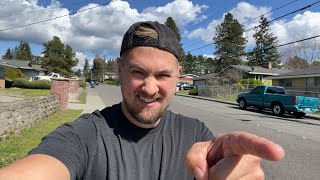
Christian Osgood and Cody break down multifamily property management, from hiring managers who can turn units fast to why phone calls beat emails with brokers. They explain the blended debt-equity approach to financing and which metrics actually matter: debt-coverage ratio and debt yield, not IRR for holds.
Chapters
We seem to have something every week. This time it's not my fault. We, we actually did just lose power. So I have no internet and my phone didn't want to power the Zoom. So it's a beautiful day in Seattle for once. I'm going to go ahead and walk down, meet up with Cody here because Cody and I live about 2 minutes away from each other and we will rock from there. But welcome. Today's topic is going to be focused on multifamily property management. Our last one, we mentioned that we had split a lot of the tasks, but we built everything that we did up to this point together. So good. I'm gonna do that now since I didn't get to do all the marketing and normal stuff I get to do on a live because again, no internet. I didn't have all my superpowers ready to rock. Um, I'm guessing we're gonna be a little bit slower on people coming into the chat, so we'll do a little bit more talking on the way there. However, uh, hopefully I run into Cody. It's a big park I'm trying to meet him in. And we will just roll with the punches. As questions come in, I'll answer them, and then we'll have a Cody appear and we'll go from there. So first thing on property— hell, hey, All Nighter, way to be one of the first ones in here, it's appreciated. I lost internet at my house, so thanks for joining the, uh, the phone version of the live. Going mobile a lot and, uh, trying to get this a little bit more structured for y'all, but that's okay. Property management. So With property management, there are a bunch of things that we run into all the time that are absolutely terrible. Like, they've either bad managers, bad operators, bad bookkeepers. There's a few things that will really get you, uh, really gets you turned around. And the biggest one that I've seen consistently is the bookkeeping. So the first thing, and I'll tell you a couple stories here, so when we started company we worked for absolutely messed up the books to the point where they actually were just lending money to themselves out of accounts that you can't lend money from and then disappeared and tanked the whole company. There were a lot of lawsuits out of that. That's the worst thing that can happen is your PM can't handle money. So the first thing we did is we got the best possible software we could find to track the money. Cody actually spent a bunch of time today auditing everything And it turns out it is just about perfect as it always is. But we still do this as a group, whether I have PM or not. We get together, we look through every single property, every expense, every bank transaction. They're going to be logged in the system. First question I always ask any property manager is, how do you do the books? What are our processes? Who's on staff? Is it in-house, out-of-house? We had, uh, I think it was our third transaction we ever went mutual on together. It was an 8-plex, one of the only transactions we ever offered on that we didn't close. And the, uh, Cody's making fun of me in the chat. I'm almost at the park, Cody, you'll see me in a minute. But we're, uh, we get through the transaction, seller financed, beautiful units, at least I thought they were big units. And we get in and As we go to finance, this is actually going to be a— I think we're actually using a bank loan on this one now that I remember it. But we go in and there were absolutely no books that were in any way reconcilable. They didn't match bank statements. They weren't even close. The leases were a mess. The entire transaction fell apart because we couldn't prove any of the income. There is no way a lender would look at that and allow us to purchase it. So killed the entire transaction. Huge bummer. First thing I ask, Next thing you want to really make sure is that they have teams in place. One of the things that will kill you is vacancy loss, and we've run into this before many times. If it takes you a long time to turn units and you don't have the team of contractors or in-house team to actually just get units ready to rent— someone moves out, sometimes it's just paint, sometimes it's heavier, sometimes it's countertops and cabinets— but whatever it is, the ability to fill your vacancies, not only just fill them but turn the units over so they're ready to rent, that time is worth a lot. If you assume, you know, let's say you're in a market where average rent's like $1,500 a month. If it takes you a month or more just to prep the unit, right there you are losing money. That is a bummer. Uh, you're at $1,500. That's painful. You don't want that to happen. Then you still have to do the actual leasing. If they're slow at that, then you're really hosed. This happened to Caleb and Chuck on one of their 3 deals. Their property manager seemed great, had great teams, they have fantastic units. Turns out, unable to actually lease the units because they don't really have a good leasing strategy and they're terrible at marketing. If you're not able to do that, again, it comes back and bites you in the butt. Not what you want to happen at all for any reason. Now, Cody— I'm now in the park, by the way, guys. If anyone spots a Cody before me in the background, let me know. I don't see him yet, but he'll be here. He'll be here somewhere. But that's one of the main things that I am looking at is can they— any property manager Can they run great books? And that's the first thing. Do they know how to track our expenses? Do they know what they're doing? Do they have a basic idea of how it operates? And can they put this together in a way that I can show a bank and a bank's going to lend to me? That's number one. Number two, my most expensive things— you get killed by vacancy loss, absolutely killed. Don't want that to happen. So can they turn a unit so it's available? And then can they lease a unit? When we go and interview people, I like to work with property managers who treat properties like owners. That's why I run up my property management company the exact same way for all of my clients that we would an owner, because I run them the same way I run them for myself. That is one of the first things that I look for. I also look for experience in the market, but you're going to just do a basic interview with any property manager as you're expanding, and the actual methodology every time is going to be, hey, Here's my property. This is what I am trying to accomplish. Talk to me about your company and tell me how you would manage this property. And the actual interview is just learning what are their ideas, would they run it the way you want it run, and then go with the group that you feel best about. At the end of the day, gut instinct is also a huge piece of it. I wish I knew that earlier because there's a few decisions we made around property management, either employees or managers, uh, where if we had just gone with our gut, we wouldn't have done that project and we'd be a lot farther than we are today. So still not seeing a Cody, but we are able to hop into the questions. So I'll start taking a look, and as you guys ask questions, we'll answer them. At some point I will find a Cody. I'm wondering if he went to the other park instead of the one next to the elementary school. We'll find out. Cody, let me know in the chat. And then I will locate you. This will be a Where's Waldo version of real estate. First and only question in the chat thus far. That was from Christian Osgood of the Prophets, right? Ah, I see. Well, we did split up just the PM company. I'm running the ops on that. However, YouTube still falls under, uh, our core brand, Multifamily Strategy. So for the $2 that we receive in the YouTube chat— thank you, Cody— uh, yeah, I guess that'll just go right back into the company. We never pay ourselves in that company, so I guess it just stays in the company and will go towards more marketing for the YouTube channel. Anyone who does put anything in the Super Chat, you're always eligible for, uh, some sort of raffle or prize that we do. But the main thing it does is it helps our, our chat, so feel free to leave a like, a comment, a Super Chat, and we'll get to those questions first and foremost. Back to PM, I think the number one thing that I have found with PM— oh, I found the Cody! I heard him coming up. Welcome.
Hello.
Let's find a sunnier spot.
I vote yes.
Yeah, the number one thing I think for me with a PM is you just have people who are hardworking who have great business ethics. You usually know in the first 2 seconds of meeting a property manager if that's the type of person you want running your property. We meet a lot of them as we close deals, and I can— I usually know within the first unit we walk into the state of their property management.
Absolutely.
Hey, I got a call here. All right, call a message here. Let's see, do you prefer calling a broker or email a broker?
Call.
Always call.
Brokers can script out beyond their stupidity in an email. They can't do that on a call.
Yeah, there's a lot of things you can't fake in real time. The hierarchy of communication, I would say, would go: email's the least valuable, text is a little bit more personal. I actually like text more than emails.
Text is better.
Yep, because you have an obligation to respond closer to real time. Yep. Phone call is better than a text. Zoom call is better than a phone call, and an in-person meeting is better than all of them.
Facts.
And I always go for the best one I'm capable of getting. So typically the relationships start with picking up the phone and calling. Your basic script on there is just going to confidently answer the phone, start talking about the deal with a broker. It's opposite of what we always say to do with owners. With a broker— warm right here. It is warm right here. Gotta find this pole here to rest my arm against, then we're ready to go.
Phone up there because it's magnetic.
Oh, magnetic phone.
Ta-da!
Ding! Wow, technology. Technology. Okay, um, yeah, but the first thing that I would do is I would look at what are we doing. I should probably put this in the, like, the beautiful park background, but, uh, you want to look at a crappy building that the government owns? No, I don't think crappy government buildings are gonna work. But first thing you're going to typically do is you're going to call with a broker. You're talking about the transaction because that's what they're comfortable with. Their job and their income is tied to the transaction. So show an actual interest in the deal that you would like to one day own. And you can navigate that script on whether you want them to show you new deals in the market, you actually want to buy that specific deal, but however you want to nuance that, it always starts with, I would like this deal. I'm going to pick up the phone, I'm going to ring the broker, I'm going to ask if the property is available, and we roll from there.
We got a question in the chat. What deals are you looking at closing on soon? Where do you want to be at the end of the year? Well, realistically, at the end of the year, we should be somewhere between 200 and 300 apartments in Washington State. And we're working on closing on a 5-plex right now. It's just a good deal. I'm working on trying to line up a 15, a 14, a 5, in addition to what we're doing. And then a couple duplexes. So we'll see.
But we're only under contract on the one 5-plex, and that closes in like a week, right?
2 weeks.
2 weeks, close. And then, yeah, I'm working on, uh, for a buddy, I'm working on a 95 right now. We'll see if that pans out. But there's always a good one. Yeah, that would be a really fun one. I hope that works. We'll see, fingers crossed.
How many brokers do you call after choosing a market? Well, you can play it a couple different ways. Caleb and Chuck called every broker in Texas. I'm not really that big of a fan of doing that, so I'm going to look at the ones transacting, getting stuff done, and I'm going to call them because odds are if they're transacting that they can help me transact. But I like the owner route more. But you call until you get your deal done. That is how you make it happen.
Yeah, long-term strategy, I would like to choose one or two brokers who are going to be the people that I work with because when you call every single broker— brokers meet, brokers talk, brokers transact together— they're going to know that you're the guy who has absolutely no loyalty to them. So why would they show any to you? So as you're transacting, you're getting your first few deals done, you're just going to call until you get it done. But as you start expanding your portfolio, expanding your experience, really, I'm a huge fan of showing dedication to the brokers who get things done consistently for you, which we're, I think, fantastic at doing.
Yep, we get our brokers paid.
That is, uh, yeah, if you build a brand around getting your brokers paid and getting them paid consistently, they're gonna work for you harder than anyone else.
Rob said that we're having a live stream at the same time as Dion.
False.
He is having a live stream at the same time as us. We are at this time every week.
Also, Dion's a Tuesday live streamer. That cheater.
Wednesday.
I haven't taken his course yet though, but I just heard that he's launching a course, and if there's any course recording boarded by any person, Dion has the voice for it and the experience. Different strategy than us. So if you guys are into the one rental at a time, uh, niche, he did a fantastic job of taking a W-2, building a portfolio. I haven't audited his course. This isn't an endorsement, but announcement: it is out. It does exist.
Now Dylan said, does your guys' course cover all the math equations for commercial multifamily? Not all of them, because most of them are junk. Most people clutter this game with stupid equations that don't matter. And there's a lot of those out there. We cover what actually matters. You need to know your debt coverage ratio. You should know what debt yield is. You should know how to calculate what your mortgage and your actual true cost of capital is with the mortgage factor rate. But all the stuff that actually matters, yeah, it's in the course.
I have found that a lot of the courses course people because there's, there's too many of them. To be fair, there's, there's way too much out there. A lot of them are not the experts in the space. They're expert at content creation. That was not us. We started and have documented our whole journey. But this— I'm really passionate about this. I've seen a lot of people who are the course gurus who are losing all their real estate right now because the market's turned and they're not being bailed out by bonus, just magical appreciation.
Yeah, you could be a a content person, or you can be a real estate person or a business person. Christian's a business guy, I'm a real estate guy. Neither of us are content people, but we're trying. But where people get stuck is they get stuck in that space, and then they think irrelevant metrics matter when they really don't. That's how we can keep stuff so simple. We just forget about the stuff that really doesn't matter. Your IRR is an irrelevant metric if you want to learn how to hold real estate.
That's what IRR stands for—
irrelevant.
I'm gonna switch to this side so I get the sun on my face, but we'll get more park.
More park. All right.
Aha.
When coming up with a down payment from an investor, is it in the form of debt or equity? Well, it could be. Those are in fact the options. You can do a loan or you can do an equity partner. That is up to you and what the deal merits because you cannot borrow more money successfully for for a long extended period of time if you're cash flow negative. So if you don't have enough cash flow to service it as debt, it probably has to be equity or you have to plan to fix the cash flow so that you can actually get in and hold the real estate forever.
And you're also allowed to blend the two, which we call dequity.
Dequity.
It's not actually a word, but we've done that on plenty of deals where we use a little bit of debt, a little bit of equity, mix them together, and that's how we close it.
What does your step-by-step process look like when searching and interviewing a property manager?
Ah, okay. So first thing I do is I call them, I introduce myself, and I just give them the very quick, this is who I am, this is what I have, and I am looking for the right property manager for my portfolio. So give them context. I've seen people just dive into that call and go, hello, I'd like to interview you. It's like, okay, well, give them something to go off of, right?
Yeah.
So first, practice and have down that 10 to 15 second intro. This is who I am, why I'm calling. Your actual interview for them, first thing I ask, I like to know what their plan is for my property. So I go, hey, I want to work with the right group and I want to work with somebody who treats my property like I would treat my property. Here are my pieces and here's what we're working on right now. And I usually just quiz them on, here are my immediate problems, what are your thoughts? And that open-ended question will tell me a lot about how fast they think on their feet, their general systems and processes. For example, if you were taking on our portfolio right now, we just did a bunch of renovations, we're leasing up very quickly. It's very important to me that the property manager can do two things. One, they can help me coordinate the turning of the units so that the units are freshened up, ready as someone moves out, they're prepared, renovated, done. And then once they're prepared, they actually lease the unit. So I want to know, what does your maintenance coordination look like? And how fast are you seeing turns happen in the market where you actually get a tenant out and a new tenant in. That is where we make a lot of money right now in our business phase. Their ability to present a compelling argument of this is what I would do and why I would do it, that is going to be probably 90% of my decision of who I want to go with.
And a lot of the competent property managers own real estate, and they actually own a lot of real estate. The, the one-off companies that are okay but not great typically don't own a lot of their own stuff, and you can see that when they're managing your stuff.
And I see that very, very, very, very consistently, every market, every state. Um, actually, a relatable story, it's, it's like that with all the service providers. I used to be a data salesperson for real estate. You work in that long enough and you just see like, okay, the owners are the ones making all the money and the owners are the ones paying me all these bills. At some point, pretty much every property manager and every real estate service provider wants to own real estate themselves. Those who know how to execute on that are typically better business executors than those who don't own anything.
When raising funds, do you share ownership with investors? Okay, that's kind of similar to the last question.
Equity.
The equity— it depends.
It'll be—
when it's debt or equity, I mean, equity might have cash flow, you might not. If it's a loan, you have to pay your mortgage either way. So it really depends how you slice it up. Starting out, would you call the broker on the listing or find someone to rep you? I'd find someone to go get you deals. But what I did in the very beginning is I just started calling the listing agents of deals that were listed. And like, that was my first deal that I bought. I called the listing agent up, asked them how they want it written, And I wrote it up. But you go either way, but just don't add steps. If you see a number, call it. It's just that simple.
I can say, as having a fairly long sales career, that works in and out of real estate. If you see a number and you have a reason to call, the more you think about it— I've had courses on pre-call planning.
Don't do it.
Yeah, the people who do a lot of pre-call planning are wrong and they are always inferior sales reps. They are also inferior real estate investors. If you can pick up the phone and have an intelligent conversation, the only skill you need is the ability to open your mouth for the next sentence and have something semi-intelligent come out. The only people I see consistently get stuck on the phone are when they really have no idea what they're going to say next and it has a lot of, "Um, I am not calling to sell you anything." I'm like, "Cool." I don't care why you're not calling. Exactly. Open your mouth and go, "Hey, I have no idea what I'm saying next, but I'm just going to say it confidently, say it directly." You can navigate a phone call. Pick it up, dial them, get your point across, get off the phone.
All right, from Owen, "Having trouble finding MLS deals and seller finance MLS deals, and the one I did find just slipped away because the owner didn't want to accept terms. How do you keep yourself motivated to keep looking for the first deal?" need to figure out how to get a quick win. I mean, really, that's it. Like, in our business, we sometimes get frustrated even though we've done a bunch of acquisitions. It's like, why aren't we rich yet? Like, we've been pushing so hard, and I've been pushing for about 4 and a half years now just trying to make this thing work. And while we have real estate, we have some equity, and we have some cash flow, we don't feel like we've made it. All the little quick wins along the way, even if it's not an acquisition, maybe it's just getting a system built out for us. That little stuff gets us excited because that pushes us closer to the end goal. If you get a solid relationship and they're willing to fund a deal when you find it, phenomenal. Well, you got a quick win. Little things like that can help keep you motivated, but if your goal is big enough, you're not going to lose the motivation.
Wow, I think you nailed it on the head. That's the biggest thing for me me is the goal and the reason behind that goal has to be big enough for you. For me, I had this goal for a long time of like, hey, in 5, 10 years I want to retire my wife. And that's where I was buying 1 or 2 duplexes at a time. I was doing the 1 rental at a time gig of like, okay, I'm gonna buy this and then save up, buy the next one. It was when the whole planet shut down for the pandemic and everyone went, hey, um, schools got really weird and politics got really weird I went, hey, the goal now went from a, hey, I would like to retire my wife 5, 10 years, to, hey, she's gonna quit at the end of this year and I need to have a financial plan for my family so she can figure out what she wants to do. The urgency and importance and significance behind accomplishing that goal all went way up, and all of a sudden Cody and I are slinging out hundreds of units, or at least our first 100.
Yeah, we're gonna pick up another couple hundred this year. Yep, it'll happen.
Fact.
All right. What does each of your circle drills look like right now? Well, I'll share with you the first piece. Relatability doesn't really change, it expands as you go further. But if you watch any of our videos, which you have because you're here, we appreciate you following. But the expansion of that is as we buy more and we, we build new partnerships. Like now I have successfully exited a company that It's part of my past that I can relate with people. One of my good friends and one of the people that I met 3 years ago just sold off their property management company and they have more rentals than I do. I have a new relatable point. As far as the goals and objectives though, our big goal for this year is to optimize the real estate, optimize the debt. It's not just, oh, we have to grow. The 200 units we may buy this year, that'd be awesome, but that is not the focus because we're not in build phase. So now our aligned goals are we need to optimize the real estate. And what changes when you get there, that third piece that creates buy-in? Well, we're done. I mean, we're not done, but we could be.
Yep. And that's the fun piece with the circle drill, is it just— is anything from your past. It could be literally anything. I've seen people have it be like, hey, I, I dropped out of high school sports. I thought I was going to go the sports route. I had an injury and it changed the trajectory of my life. Like, Awesome, uh, relatable points. Why is it important that you have real estate? And they can communicate like, look, I— that's not what I'm doing now. I'm trying to build financial freedom, and I'm trying to— and they'll have their reason behind it. I see that happen all the time. Like, for me, it used to be I want to retire my wife, and I'm trying to get to 30 units. That was my big thing.
Crushed that one.
Crushed that one. Now it's— I start the story often with, hey, I had this dream and I retired my wife. Like, that's really cool. I just talked to someone in Texas today who has 100 units. They're syndicators, so they own a piece of 100 units, and they have a property management company, and they're talking about the sale of their company. Well, talk about relatable points. I have just over 100 units in Washington and a PM company now. He has a PM company, and he's trying to buy his partner out because his partner wants to go into development.
Just did that.
Yeah, now Cody's not hyper-focused on development right now. We're doing a little bit, but Very similar stories. Oh my goodness, we have the same size portfolio, the same pieces.
We own more of our portfolio.
They're, they're a little underwater, but yeah, yeah, I looked at their structure and it's not ideal. We're gonna do— but when you're talking about building that circle drill, whatever you've done before is not usually what's going to get you to the next step. But you do new things between point A and point B. Since I set my first circle drill, I went from 4 units— I don't know how many units I have anymore. We traded stuff around. I'm gonna say like 115-ish. You have— yeah, resort.
I don't know, you're somewhere.
More from Christian



Speak with authority to turn broker rejections into deals - boost your confidence #RealEstate

Turn Broker Objections into Closed Deals - CRE Negotiation Tactics #RealEstate #Negotiation

How to Get Multifamily Deals Under Contract Without Having All the Cash | Objection Series Ep. 1

How I Scaled 500 Apartments in One Texas Market in 12 Months #RealEstate #Multifamily


Turning a $12.2M, 200-unit mess into profit - live multifamily turnaround update #Investing

Day 10 Update: Turning a $12.2M, 200-Unit Apartment Complex Around in 80 Days #RealEstate

Day 10: Before Time Runs Out | Saving a Failing 200 Unit Apartment in 90 Days (Ep. 3)

How 2 Direct Deposits Generate $70K/Month from 224 Section 8 Units @ 99.4% Occupancy#RealEstate