Step by Step Interview, Your First Real Estate Million
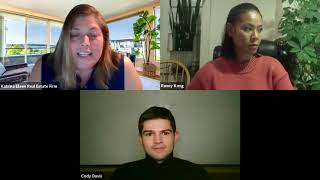
Cody Davis built a 24-unit apartment portfolio before turning 21, starting with a 12-plex in October 2019 using seller financing and $112k down. He scaled by mastering one market, making hundreds of personalized calls and video messages to find off-market deals, and raising $400k from investors at 8-12% returns. He works 80+ hours weekly and documents his process on YouTube.
Chapters
Hey, what's up guys? This is Cody, and today's video is from a podcast that I took part of just this past week. It's all about how I went from 0 to 24 apartments, and I created a step-by-step with the host on how you guys can do the same thing. Now, this is much more in-depth than any of my videos have been in the past. It's a little over an hour long, and it really goes from even before I got started as a real estate agent what I was doing to get in the real estate space, and then as I got licensed, what I started looking at and looking for in the real estate business to start getting my own apartments, the people that I needed to get help from to make it happen. And hopefully that can help you do the same thing. So with that, enjoy the video. Let me know if you have any questions in the comments below.
Says we are live. All right. Hello. Welcome to For Profit, For Purpose. The show where we believe smart real estate investing is for everyone. Today we're talking to a true go-getter. Imagine owning more rentals than you are years old. And that's the game this guy is up to. So Cody Davis, we are thrilled to meet you. And why don't you tell us a little bit about yourself and how you got involved in real estate? And you know what, let's start with Can you tell us how old you are?
Yeah, 20 years old.
I love it. Okay, so you're a baby.
Something like that. A little bit about me. 20-year-old real estate agent based out of Tacoma, Washington. I got licensed as a real estate agent at 19 years old. Started out my career, I was a gymnastics coach for 4 years at the local YMCA. And then I knew I wanted to get into real estate. And so I started doing some yard work for a couple family friends. And from there I got an offer to join an online real estate group, had some mentors reach out to me, and I got my license just a few weeks after that.
So when was that? How long ago was that that you reached out on the Facebook group? And found your mentors?
I first reached out on Facebook about 2 years ago now. Actually, probably within the next couple weeks or so, it will have been 2 years. And I got licensed as a real estate agent about 18 months ago, January 2019. And the rest has been history.
That's fantastic. So from gymnastics to real estate. And real estate done right.
Something like that, trying my best.
So how did you— so you were 16 when you started taking care of the neighbor's lawns?
So I was 16 when I started coaching gymnastics.
Okay.
And then 17, 18, I started doing more yard work. As soon as I turned 19 years old, I got licensed. It was within a week. Of being 19.
And so, uh, what was it that intrigued you about real estate at that age? I know, I know my teenagers weren't thinking about real estate.
I got handed the Rich Dad Poor Dad book at a very young age, and so that got me super excited about real estate. Started studying, and then when I actually got through it all, I got through the book, I was super hyped about real estate, want to get into it. Realized I was only 14 years old put the book back down because I couldn't buy anything. And I ended up just getting back into it in high school.
So that's fantastic. Did— and, you know, one of the things it sounds like you did right was surround yourself with people who— well, one, you're willing to do whatever it took, right? So you're reading the book Rich Dad Poor Dad, and you hear the big story, but you were willing to do yard work.
Yeah, whatever it takes to get involved with folks that are in that space.
That's fantastic. And are you still, are you still doing things with those, those, those people who were so part of your early efforts?
Some of them, I've actually helped them place some of their money into investments. So it's came full circle. So someone I was helping paint houses with, and he actually ended up putting some money into an investment. With Blackwell, the company I'm working with. So it's just come full circle.
That's fantastic. And, you know, when you talk about a go-getter, that's, that's really quintessentially what a go-getter is. They're the ones that are willing to do the things other people aren't. But also, it's being able to see opportunity, right, and connect those dots from things that other people might think are meaningless, but actually, they mean everything.
Little things add up.
Yeah. Yeah. So, okay. Well, tell us, what's your next goal?
Right now I'm trying to stabilize what I've got, but I have this goal of getting to 50 apartments before I turn 22 years old. So I've got, I've got roughly like 18 months or 15 months left. Yeah. 15 months left until I turn 22. So just working hard towards that goal.
Okay. Well, and tell us where you're at right now at the ripe old age of 20.
Right now I've got 24 apartments. Those are in my home state, so I can drive and see them in a day.
And, uh, okay. And so tell us, give us, give us the, give us the, uh, the play-by-play or the blow-by-blow. Uh, tell us what the, what the, um, buildings you have are and, um, how you acquired them.
Sure. So I started out, my very first deal was in October of 2019. So it was actually, we're like 2 weeks short of a year. And that was a 12-plex. Now, at the time, I still don't qualify for bank financing. I can't go to the bank, even if I had the money, I can't go to them and say, hey, I want to get this loan on this property. I don't qualify. I don't have the track record. And so I had to approach the sellers a little bit differently. And ask for what's called seller financing, where they acted as my bank. And I had to come up with the down payment. Now, 19 years old, granted, I have no family connections in real estate. I've got no friends in real estate. And so I couldn't just bank on their credibility. So I had to go to the seller and say, hey, I love your deal. I've got the money. I'd love to do this. And then I negotiated they are going to finance 90% of it. So I had to come up with about $112,000.
So that's what gave you that. Yeah. And so what gave you the confidence when you wrote that, when you wrote that offer that you could, uh, that you could do that, that you could bridge that gap?
I would not have been able to do that deal. And I fully admit this. I couldn't have done it by myself. I had to have a mentor. And for me, my mentor was actually the owner of the firm Blackwell. Blackwell Real Estate's really focused on investment properties, raising capital, property management, asset management, and investment planning for the long term. And so I really just banked on using my resources here, and I did not raise that money by myself. I used the help of folks in the office. And because of that, I got my first deal. I got the confidence to then go do a second deal, another 12-plex, 9 months later, and then start raising money for myself.
So it's 2 projects under your belt, 2 properties.
Yeah.
And, and it sounds like one of the most important— so I, what I really would love to hear is your advice to people in your shoes, right? Or actually 18 months, 12 months behind you, like, or actually if you were looking back to when you first started, what's the best advice your current self would give, give that guy?
Sure. So I think of everything as like I'm working towards a destination. We've got the journey and it's a lot quicker for me to hop in someone else's car and drive there than it is for me to build a car and try and drive there or walk there. And so I found a mentor who already had the vehicle, had the model, the mindset, and the wherewithal to put it all together. And I essentially— metaphor— I got in his car and made sure that I wasn't getting kicked out. I had to stay in that car until I got my first deal. And then until I got my second deal, and it just keeps on expanding. But find someone who's already done it and then do whatever it takes to, to show enough value to where they want to help you succeed.
I think that's really key because a lot of people will have questions and say they want something, and they'll seek out mentors and ask for help. But where where I know mentors really— people can really take time is when they see someone actually taking action and demonstrating they're willing to do whatever it takes. They're willing to pay that price. So what kinds of things did you do to get the attention of your mentors so that they knew that when they spend time with you, it's time well spent?
I just studied really hard and I didn't give up. Like, if I don't quit, I can't fail. So I just kept on studying at Blackwell. They provide, it's called Cardone University for all the brokers in the office. It's an online training platform they can use 24/7. It was a 3-year program. I finished it in like 4 months, 4 and a half months. Wow. So I showed that level of commitment. Granted, I, I didn't have the most sales in the office. I didn't have any sales in the office at that time, but I wasn't about to quit. Because I knew I was— I could make it happen. And I still don't have the most sales in the office, but regardless, I'm sticking to what I know and I'm learning what I don't know, and I'm continually growing every day. And I believe that at the highest level, that's what any mentor is looking for. It's just continual growth over a long period of time. And for folks that are in my shoes, or 12 months or 18 months behind where I'm at now, got time for continual growth. You can get massive just by growing a little bit every day.
Yeah, that's, that's, that's really great advice. Talk a little bit about the— I'm interested in the people who were in your life that you saw that they were in real estate, and you, you just took whatever you— whatever place you could in their world, and that was cutting the grass. And how did you go from cutting their grass to having them be your investors?
Well, it was just letting them know what I was doing. At 19 years old, I was 18 when I first— I was 17, 18, I was doing those projects. And I told them about my goals, how I wanted to get duplex, get a fourplex, get an 8, 12, get up to 100 units someday. And they're like, yeah, me too, kid. And so it's, if it's not applicable, like people kind of just brush it off, but continually letting them know and staying in touch, like, hey, this is what I'm doing. I just learned how to do this. I want to share it with you. The ability to share something that I've learned with someone, it shows that I genuinely care. And I really let them know that I appreciate everything they let me do and all little projects because that got me to where I'm at now. I wouldn't have been here without them because I wouldn't have been in that group. And so I just make it known that I really appreciate what they did. And that, that's what scaled to today.
So there's something very distinctly different between what you did and what a lot of people do and are doing in today's world, right? They're using technology and they're, they're, you know, putting people on drip campaigns and thinking that, you know, if they, they have drip campaigns and, you know, these things set up and automatic this and automatic that, that, that's keeping in touch. And what you just described is something that very few people do, which is to actually keep in touch with a personal connection and and coming from a place of gratitude and growth.
Yeah, we've got, I mean, we've got folks in the office who do drip campaigns. We have all that provided for us to be able to just make contact. It takes 5 to 12 contacts to close a deal on average. And like knowing the numbers is also super important too. But beyond just the numbers, I, At my age, I don't have the credibility just on my, my own to do a drip campaign. It has to be very personalized. I have to actually be there to make that impact because I have to make a much bigger impact. I have to seem super sharp, on the ball, for people to want to work with me at this age. But the more I do this, the easier it gets at the same time. Yeah.
And tell us a little bit about your— tell us a little bit about your purpose and your drive behind what you're doing. Why is it that you want to own 50 properties by the time you're 21 or 22? Excuse me. What difference would that make?
So the 50 properties, the 50 apartments, I kind of reworked the numbers. Based on what I've currently got. So it's about a double on what I have. And at 50 apartments, I would be able to retire if I wanted to. It is financial freedom. I would make more than enough to cover my monthly bills. And it would allow me just to expand like crazy, start utilizing all my extra dollars. And then at that point, every commission I bring in for helping people do what I believe in and what they believe in is expanding their net worth and their portfolio. All that just gets reinvested into the business. And at that point, I can really start to branch out and scale and travel and meet new folks that I can help out. And so the 50 apartments is just the financial freedom number for me. Granted, if it was in a different state, that number would be different because the cash flow is different. But for Washington, it's 50.
And excuse me, so why, why is it important? So one, why do you believe in real estate so much?
It pays me every month. I, I realized in college like I was smart enough to get by but not smart enough to, to like get the best grades for the best high-paying job and I knew it was going to take a long time to get there. Like, I want to be a chiropractor. That was one of my goals. I got accepted to the University of Puget Sound. I was going to go there for a 7-year program. And I made my deposit, decided after I made the deposit that I wasn't going to go there because I didn't want to commit the time. And I just thought about real estate again. It's like, what can pay me while I do something I love? And I love to coach gymnastics. I love working with kids. And one day I will do that. Like, I still coach. It's hard with COVID but before COVID happened, I was still coaching gymnastics. And so when I get to that financial freedom number, I'm still going to be helping folks in real estate, but I do want to coach because that's significant to me because my coaches when I was a kid were always there for me. That's kind of passing on the torch. Right.
That brings back— so when I got into real estate 22 years ago, all I wanted to do was make $20,000 a year so that I could send my kids to private school because where we're at, the schools didn't have a good reputation and weren't performing very well. And so that was my only goal. It's all I wanted to do. Nothing else, but just have the ability to send my kids to school. And boy, once you realize what you can do with real estate, it sure does change your— it changed my vision of the world and what's possible.
Yeah, the more I do, the more I can do. So it's the same with everybody else, starts to scale.
And so you talked about travel. So retirement to you doesn't look like It doesn't look like just, you know, sitting on the porch in a rocking chair. But retirement to you, it sounds like really actually means traveling. And you mentioned teaching others.
Well, it's, it wouldn't just be travel to travel. I get time off and I go out and explore and I end up doing business. I work out. I never actually take days off. And I don't see that changing. Like, one year, even if I could retire at 22, I wouldn't. I think that would be super silly. It'd be silly. It's an obligation to help others do well. Like, I'm doing this for myself in the beginning. I have to be very disciplined to get ahead, but after I get that financial freedom, I I'm just going to use that money to amp up my business so I can scale it to more folks and help more people get the message that I'm trying to share.
And how would, what would you say that message is?
That age doesn't affect you the way you think it does. That money is not the way folks teach. It is. I used to be afraid to talk about money. I'd be sitting in this office. I'm sitting in the conference room right now at Blackwell. And I would be uncomfortable talking about money. And now if a million dollars comes in, $500,000, $300,000, whatever the number is, it's, I'm pretty comfortable with that. It's just another number, but that's taken time. And I want to share with folks that it's not impossible to get there. It took me almost 2 years to do it because I was in that environment. But I'm trying to prove a point first is that it's possible because I'm not there yet. I'm not at a point where I could retire, but I want to prove that it is possible within just a few years if you're in the right environment. And then I want to help more people do it.
And what difference do you think that would make for other people to have that kind of freedom around the conversation of money?
If they were free without the money, I feel like there'd be a lot more charitable giving. All right, I'd hope so.
A lot more what? Say that again.
Charitable giving. It's one of the reasons I'm doing this beyond helping my family. I want to be able to donate $5 million a year at age 40. I have a couple different associations that I resonate with just because of issues like health issues with the family. And so there's some groups I want to donate to because I really care about them and it's an important cause. Man, I figured $1 million to each organization because that'd be somewhat significant, but maybe that changes. It's all just a round number.
And so really your driver is— so there's so many different conversations around money, right? And around what we're capable of and what we can actually do and that self-talk where, you know, the why can't I do something overshadows why I can. And you've really turned that on its head.
Yeah, the main driver for me, number one, is family. That's like end all be all. I take care of my family, we're good. But beyond that, when that's handled, how do I help other people so they can take care of theirs? And that's the exact order. I'm not buying a fancy car. I'm buying assets that cash flow so I can help other people buy assets that cash flow so they can feed their families, I can feed mine. And when all that's handled, then I will splurge and buy a nice car. I'm a car guy, so I love cars, but I'm disciplined in the beginning.
And so, you know, that sounds— so where my mind goes when I hear you say that is a particular vision, but Let me ask you, when you say, you know, when you're able to take care of your family, and other people are taking care of their family, and they have ease around finances, what do you think that will create?
A sense of community. Yeah. Above all else, like, it's gonna create a more open community, folks who, like, I I can't speak to this because I've never been married, but I've heard and I've been informed that one of the biggest reasons for divorce is financial issues, hardships. And so I think beyond just the sense of community, it's going to create a better life balance for folks who are trying to build their lives together so they don't grow apart. And so it's a much more meaningful impact at that point. I mean, that goes pretty deep, but it's just next level.
That's what a great vision and what a great purpose. And when you say family, you're looking at a much larger picture. You're looking at actually the community and your impact in the community and that you'll create to have your family be a part of.
And I'm not there yet. I won't be there for a while. I understand this does take time. Nothing is get rich overnight. That's the one thing everyone in the office is like, you're not gonna get rich overnight.
Wow, you say all the right things, man.
I'm not gonna get rich fast. I mean, it's just not gonna happen.
That's right, and you're willing to put in the work. What kind of effort, so what kind of effort would you say you've had to put in to this point? And do you know anyone else, and who's been an example of putting in that kind of effort in anything in your life?
Uh, so to answer your first question, it's been a lot of work. It's not easy. Um, an example of a lot of work, I had two of my apartments flood this past weekend out of nowhere. I finally thought I was on autopilot. I hadn't had to go out there for months other than just to check it out. And then it happened. And, but the, the newer property I just got, it's, it's been a lot of work. I'm working every single weekend. I'm actually going to work on it tomorrow. It, it's not free. Like, there's a price to getting in, which for me was zero down, but then there's a cost of owning it. And that's the piece that a lot of people don't think about, like, what's the long-term play? And for me, it's going to be super time-intensive now. It costs a lot of time, but it's going to give back a lot in the future. So it I work very hard and I don't collect any of it. I don't touch the cash flow, I don't touch the principal. It's just for a future date. And to answer your second question about who I looked up to to get that drive, it would be Grant Cardone. He hustles a lot. I mean, he's— I don't know how he does that. That's next level. But I look up to him as a real estate guy, as an inspirational guy. He, what he's done over the last 30+ years is phenomenal, going from drug addiction to multiple billions in real estate holdings. So I look up to him for my long-term targets.
And then who, so where did, where do you think that work ethic came from? And I mean, is that something that you saw growing up and that was demonstrated for you, or is that something that's just intrinsic in who you are, or perhaps that came from your athletics?
My work ethic came from one guy. His name is Mike Rivers. He was my soccer coach when I was— I don't even remember what age— was it 8, 9, 10? He coached me for quite a few years. And if there's anything, any one place I got it from, it was from him. He was a very disciplined guy. He had his head on straight, and he taught me everything I need to know about pursuing and sticking with the task.
What are the top 3 things that you learned from him?
Keep composure. That was the number one thing. We had some hotheads on the team and he said, you're never going to be like this. And granted, he was talking to me when I was just like, I was half my age now, so I was, I was a lot younger. But so he had to word it differently than he would if he was saying it to me now, but The number one thing was keep your composure. There's a lot of situations in life, and he was referring more to soccer, but it's gonna be a lot of situations where you want to push back, punch, and get aggressive, and it doesn't help whatsoever. So just to stay calm in all situations, and I've used that for business a lot too. Getting older now, I've been in situations where People make me so frustrated. There was a party to my first deal I bought that was making me very frustrated. Had to hang up the call. We ended up speaking a week later and we closed the deal. But if I wasn't able to keep my composure, I wouldn't have gotten the deal. So it's definitely carried on from soccer into business. Other things that I learned from him, just finish, finish what you started. Just finish it. Yeah.
Yeah. Like, sounds so simple.
And this is a line from Grant Cardone, but if you keep singing the ABCs, you'll get to Z. So just finish. Real estate's a game. So play the game. You're going to win some, you're going to lose some, but You can't pause the game of life.
Mm-hmm, mm-hmm, you can't pause the game of life. Awesome. Okay, so keep your composure, just finish. What's the third thing that you, when you think of Mike Rivers, that you take away as a life lesson?
You know, I'd have to think about that. Yeah, I mean, those are, those are the two, those are the two main ones. Stay composed. That was the biggest takeaway I ever got from Mike. And then finish what you started. I'd say those are the two main things that I can relate to business that I learned at a young age. When it comes to work ethic, I think those are the two real things. Get super laser-focused on the target, finish what you're doing, and stay composed the whole while you're doing it.
Then also, one thing I would say I am hearing, though, is giving back. So, he was coaching an 8-year-old and for years, you said, several years he coached you. So, just his example was an example that it seems you have carried forward in your life, and that is coaching children.
Yeah, I like to be able to give back, and not having a bunch of money, you got to find creative ways to give back in the end. It's not all monetary. And so a lot of it is time, which is why I'm working so hard now, giving up my time now so that I'll have it in the future so that I can give back more, both with a monetary value, with money, and with my time.
So I want to get to a couple more. I want to get to some nuts and bolts and nitty-gritty, right? And how you find off-market properties, how you raise capital and those kinds of things. But before we do, You mentioned valuing time and actually giving time, and I honestly believe time is the most precious resource we have, and far more than anything else. And so talk a little bit about valuing your time. And also, what I think I've heard is there's no job you wouldn't do. Like, you'll scrub toilets, you'll go trash out a place, you'll do the work, right, that nobody else wants to touch. And so, Is that right? I mean, did I get that right about you?
I'm not above anything.
So what's that? What's the grossest job you've done so far? Or what's the hardest job? Whatever. Hardest, grossest, whatever.
The grossest job was dealing with bed bugs. Oh, that was terrible. I mean, it was awful. So that's been fun. Getting that taken care of. The hardest job was— behind you— yeah, was loosening up some old galvanized pipes. They were in the most awkward spot in a wall behind cabinets, and so I knocked out the wall and these pipes were just stuck. I mean, it was terrible. Uh, I've set in a tub before, so that was fun. I had to dig up underneath the cement, get the pipes out, replace the pipes, set the tub in by myself.
So where did you learn how to do this stuff? Where did you learn what pipes to cut out, how to demo a place, how to not knock out your plumbing and your, your electrical when you're demoing? I mean, like the wall, how do you set a tub? Right? How do you learn all this?
Yeah, I have a good friend called Siri. So I just, I asked Siri, how do I do this? And then she pulls up a magical video on my magical candy bar and they, they show me what to do.
Wow. So, so renovating demo, renovating via Siri. I love it. I love it. And boy, you just don't get that education anywhere else. Hands-on learning for real.
Yeah, YouTube's been very helpful.
So, so talk a little bit about how you value your time and how you choose where to spend it.
I put zero value on my time right now. That's been important for me. There— it's been massive in the matters of getting ahead. Like, I do a lot of cold calls and I stay very late studying, finding opportunities, thinking about new ways to, to raise capital for deals, how to make a deal make sense, and then uncovering contact information for folks. And I put zero value on my time right now because it's the only way that I'm going to get ahead. Like, I can't— like, if I put a value on my time and I don't achieve that value, let's say I value my time at $100 an hour or $20 an hour.
Oh, I get you. I was going to— I was actually going to say I, uh, I would highly disagree that you don't value your time. Somebody who doesn't value their time would not be doing the activities and the things that you do with, with the minutes that you have.
So I can't put a value on it.
I would be doing all the things that we can fill our time with that are meaningless. And it sounds like you fill every minute with something, something productive.
Yeah, I guess I might have the wrong perspective. I don't know. But I don't put any dollar value on my time because I don't get paid for the amount of hours I put in. Like, that's just not my job. And I don't have a salary, it's only commission. So if I value my time at $30 an hour, $50, $100, and I don't make anything, all of a sudden it's gonna demotivate me. Like, it puts me down. So I just make it, like, I just say, okay, it's worth zero. How do I work for zero and eventually get a big payday? I'll put in any amount of hours it takes. I've put in 100 hours on a deal before for it to fail. I put in 10 hours on a deal and it went through. So I just, I don't price my time. I just work towards my potential. I work towards the possibility of what could be, so I don't get consumed up by liabilities like wasting my time on silly things. I'm just, I don't work towards like a dollar amount. It's really just It's really just a potential thing. What could I get to?
Okay, so what would you consider a waste of your time?
For me, I don't really, I don't really know because I don't watch TV.
So would that be a waste of time?
That would definitely be a waste of time. That's not getting me anywhere, but everything that I'm doing is always just purpose-driven. And, and so it's either meeting new individuals, getting in front of the next client, or trying to— I don't have a huge client base at 20 years old. It's just the reality of the situation. That's something that has to grow over time from building my credibility, from doing things like this and buying more deals and helping more people buy more deals. And that'll happen. But a waste of time right now is watching TV because that doesn't get me closer to my potential. It's like you're either growing towards it or you're growing away from it. And I just want to make sure I minimize the amount of time I spend growing away from my targets in life.
Well, let's talk a little bit about your targets. So how are you finding— I'm imagining the properties that you're finding to be able to have the conversations you do, they're off market. Is that right?
Yeah. 100% of the deals other than my first deal, the very first deal I bought was on the market. Uh, all the deals that I'm looking at, the majority of the deals I've sold for clients are off market.
So talk a little bit about how you find off market properties and how you connect, uh, seller or buyers to those.
Sure. So the first thing is I find an area. That I want to focus on. For me, it's Grant County. I look in Central Washington. I picked one market and I became a master at it. I know what the rents are, I know the neighborhoods, I know the owners, I know all my property neighbors. So I made sure I found one market and then I mastered it. Number 2, I put out a little spreadsheet and I said, okay, these are the deals that I absolutely love. If I call these guys up, I I could be genuine about this and say, hey, I own in the area and I absolutely love your property. And even if I don't own in the area, like my first, I didn't own it in that area yet. It was my very first deal. So I just called them up and said, hey, I was working on a deal in your area. It fell apart. I absolutely love your property. When can we meet? And it just lets them know that I really want their deal. I love it. That's a strong word. It's a commitment. I let them know I'm the only decision maker. I'm the only guy that you need to sell. When can we chat about this? And so it's just the introduction and it's a numbers game. There's a lot of sellers, a lot of folks will say, hey, I don't want to sell. Of course you don't want to sell, otherwise you would have listed it, right? So it's like, it's all a sales cycle, but it's about making the contacts, letting them know that, hey, I'm interested in your deal. I absolutely love it. I know you don't want to sell, but the day that you do, I'm your guy. And that's worked out for me because I had a deal that got put on pause for 9 months and then we ended up closing it. And now, now I can say it's mine. So it's, it's about follow-up, but just, it's all comes down to the first contact. And my biggest advice for folks is that most people quit after 1 or 2 contacts. And some of mine have been hundreds of contacts. To close the deal over the course of 9 months.
Hundreds of contacts over 9 months. So that, that's a lot.
How many? Oh, it's a lot. Yeah. And it's different ways. It's not, I'm not calling them that many times. Like that would be terrible. But some of those contacts are in-person meetings, phone calls, video chats. My biggest success, like my biggest claim to fame for getting in contact with these guys is something I learned from Grant. It's a video message. You just have your phone, you take a message in front of a blank wall, say, hey, this is Cody, or this is so-and-so. We talked a little bit about your deal, absolutely love it. Just wanted to reach out and say, can't wait to chat with you more on this in the future. You wanna grab coffee sometime? Let's make it happen. And that was as simple as it was. Shooting cool little videos. Hey, I thought about you, and then send them a quick picture. I, like, the guy that I was working on, I was working on my first 12-plex. He owned a 12-plex. So I was working on my building and I sent him a quick picture. Hey, just thought about you. I was working on this and wanted to reach out, see how you're doing. And so things like that, staying in touch, being creative, and just being genuine.
So how many people are in your Rolodex? And I just found out from some of the younger people in my company, they don't know what a Rolodex is. Is? Have you heard that before?
Yeah, I work with a bunch of older guys. So I've heard those terms.
It's a little— okay. I'm glad I'm— yeah, I'm glad I'm amongst the older guys now.
So, gals, no.
So how many do you have in your Rolodex that you are keeping in touch with on a regular basis that are— have properties that are targets that you'd like to acquire?
Right now, 3.
Okay, so it's manageable then?
Oh, it's, it's really manageable. And it's all about the number. I'm not targeting 3 single-family homes. I'm targeting 3 12-plexes, right?
Which would put you right at your goal.
Yeah, I'm right at my goal. I'm 2 buildings away from hitting that goal. So it's super meaningful for me. I keep it manageable.
It's phone calls, or how many, how many, yeah, I guess you, that's how you're connecting with them initially is calling them, right? So yeah, how many phone calls did you have to make to have enough meetings that you actually have 3 that you're in communication to that level with?
I didn't track them, you didn't, to be honest. I'm not going to focus my time on counting.
If you had to guess, is it 10? Is it—
no, no.
Okay, so it's more than 10?
A lot more than 10. It's hundreds.
Hundreds? Okay.
I mean, I've spent so many hours pulling contact information, uh, trying to find folks. Like, there has to be a certain demographic for these owners. Like, they've had to hold it for a certain amount of time. In order to be able to even seller finance because I don't qualify with the bank yet. So, it has to be seller financeable, meaning they can't have debt or they have to have very little debt for my situation. And they've got to be open to selling, meaning they're probably not some 30-year-old who made it rich and just bought up a bunch of deals cash. I've met a guy like that. He won a multiple $100 million lottery out of Salt Lake, out of all places, like this 1,600-person town. And so there are folks like that, they're just like, shoot, go away, I don't need the money. And so I have to set in my criteria, I got to target folks that are likely in their 40s and 50s, they own it outright, they love the income, they don't want to manage it, and they don't want to manage their managers, they just want to be able to travel and get income. And so that's been My target demographic, people in their 40s or 50s, folks that have owned their assets for over 10 years, and they're just open to getting income and a little bit of cash up front. And that's what I've been rolling with. And that takes a lot of time to find those when it's just a one-man show, when it's just me, because that's all it is. I find deals. It takes a lot of time.
So how many hours would you say you've put into researching properties to find the owners and reaching out to owners of properties that are potentials?
I mean, I probably work 80 hours a week or more.
8-0?
8-0.
Yeah.
It's not easy, but my hours are also all over the place. Like there are days where I can't sleep on a Saturday and I work. I end up working Saturday and then I work Saturday night into Sunday and it's like my body doesn't have a calendar. It doesn't have a clock.
Just do it. My body doesn't have a calendar. That's fantastic. That's great.
I just got to do what I got to do to get to the next level. Mm-hmm. Okay. That's it.
So, so that's how you find your properties. Tell us how you— tell us how you raise your private capital, or how you're raising the down payments. The sellers, obviously, there you have the conversations, and they're willing to— they believe in you. They're willing to sell to you and provide the financing. But you still have to come up with a down payment. So right, making that happen.
Yeah. So to be honest, my first 2 deals, I just had help from folks in the office. I got the conversation started, found the deal, shared the deal with the office, with folks in the office, and they helped me come up with it. At 19 years old, I'm not going to lie, I wasn't able to do it myself. Since then, since learning those skills from them, I have been able to raise about $400,000 personally outside of those deals. But for my first 2 deals, I, I used help. I asked for help, and with that help, I raised a quarter million dollars. Now, that was solely because of the folks I had in the office on that, that quarter million. The first quarter million I couldn't have done without folks in the office. I— and then I The biggest thing for me is I just want to learn the skill.
Did they actually have the conversations for you? Did they go out and raise it for you, or were you part of— were you, were you a part of those conversations?
So this is a whiteboard right behind me. I actually pitched an investor that they brought in from this whiteboard. So I— at Blackwell, I had one-on-one training to make this pitch. Hours were invested into me to be able to make it And the owner of the firm sat just to my left here. The investor sat to my right and I was up here and I had to go through the numbers, how the deal made sense. And I botched that conversation. And then the owner of the firm took over and he got the money. But for me, I'm not going to sugarcoat it because there are folks listening in on the call that it's use help. Because it's the quickest way to do it. Get someone's help. Use someone who's already got the legal structures in place to actually raise the money. I didn't have to go to some attorney and draft up all the private placements and all the docs to back it with the real estate. And I actually got to use a contact that I made through the office to do what I wanted to do. They already had it all set up. They did it the right way. So I got to piggyback off that. Now, on past deals, yeah, I've been able to raise some money, which has been great, and I made those pitches by myself. And that's where it starts to pick off. But for me, it's just learn the skill and then figure out how to multiply that into bigger efforts.
You know, and of course, I know that it wouldn't surprise anyone, right, that you used your resources and you had great support and you were still the one at the blackboard, at the dry erase board and making that presentation and willing to botch something. And so talk a little bit about that. Like, did you have to overcome any fear or was it pretty easy for you?
Oh, I was super scared. The investor came in and the best part about this is I forgot to even tell them the price. I was so concerned. And then the head of the firm was sitting there and he's like, all right, so share us a little bit about the deal. And then I finally got my terms out, but there's a first for everything. And the fact that I'm going to mess up or that someone else is going to mess up isn't a reason not to do it. Because you got to make those mistakes to get past it. But now looking back on it, I'm like, that's awesome. It's a fun memory because it made me much more comfortable. I was uncomfortable talking about money. That was my problem. I wasn't comfortable. But now that I've done the deal a couple of times, it's just like, oh, it's $125,000, or, oh, it's $250,000. Oh, we need $400,000. How do we do that? And I start thinking in different ways to make it happen. I'm not so focused on, oh, am I going to forget the deal? It's like driving a car. The first time you drive a car, you're focused on every little thing. You're not listening to music. And then you do it enough and now you're listening to music super loud, louder than you should be. And you don't have to just focus straight where you're going. You can look to the sides. You're like, oh, that's a cool sign. I want to go to Disneyland or whatever's out there. It's the same with the business side of things. I can finally take a clear view of what I'm looking at.
So what kind of terms or what do your investors expect?
Sure. So it depends on how much they're investing. It depends on the deal. There have been deals where investors make 12%, 10%, 8%. Depends on the opportunity. If it's a riskier opportunity, they're going to make a higher percentage return and it's all backed by the real estate. But it really just depends on the opportunity. Right now, to get into my first deal, I paid 12% a year, paid 1% a month. And I'm okay with that because my tenants pay for it. But it, It is an added expense.
And is that— so that obviously isn't long-term debt, that's something that you're working to pay off?
Yeah, I should have that paid off within the next couple months.
And does the asset pay that off? Does the asset solely pay that off, or are you paying that off through other earnings?
Both. Both. Yeah, most of it's going to be through commissions and deals that I've had to put together. It's not free money. If you're not planning on making any money, you shouldn't go borrow $1 million at 12%. That would not be very intelligent. There has to be an exit plan for it. So, on one of my deals, it's just to pay it off. The second deal, the plan is to refinance into bank debt and cash out the investors. But there has to be multiple plans because I don't want to get locked up into super expensive money. For long periods of time because 12% on a credit card on $100 isn't a lot of money, but 12% on a quarter million starts to add up for someone in my position.
So it adds up for anyone.
It's a bunch of money.
It is a pile of cash.
Yeah. So you got to have exit strategies. It all comes down to your deal. You got to love your deal. You got to know your deal.
Yep. And so then your investors who will invest with you and give you the capital for your down payment, how long do they anticipate staying in the deal? How quickly will you return their money to them?
It was structured as a 1-year note. So they get 12%, they get cashed out. I extended one note. This is all by investor preference. So we reached out and said, hey, would you be open? And we, being the head of Blackwell and myself, because he helped me raise this initial money, so we reached out and said, hey, would you be open to extending? And they're like, yeah, I like the income. So there are options. If I couldn't have paid it off at that point, we got the extension. If we couldn't have gotten the extension, I would have had to refinance, and I would have had to call up folks that I've met over the the past year and a half to say, hey, I need $125,000, or I need $65,000, or $70,000, or whatever the number is at that point. And I'd have to refinance into new debt, and then I'm just playing with debt to take out debt, and it starts to spiral out of there. So I'd like to be able to pay it off.
Right, right. That ends up eating up all your return.
Yeah.
All right. So what else should we know about you, Cody?
Oh, I'm not going to quit. I'm going to keep on going.
Just finish, right?
Yeah. I created a YouTube channel that's going to track everything I'm doing from start to finish as I go from zero— well, 24 now— to 1,000 apartments by age 30. And so that's been a little fun side project. I'm just— everything that I'm doing every week, just so that when someone gets— like, someone will see this in the future, and if they want to repeat it, I want to make sure everything is documented so they can go do it themselves.
I love that. I love that. That's your obligation, right? Like, do well and help others do well. So, man, that's just such a beautiful philosophy to have in life. Um, so tell us about the YouTube channel.
YouTube channel.
You're an investor and a YouTuber?
Well, the YouTube is more so just to create a step-by-step for everything I'm doing. Because there will be a point where I'm so busy I can't— I imagine, I don't like to say the word can't. I can always figure a way to do it. But there will likely be a point where I'm so busy I won't be able to do as many calls to help coach folks until I get to a point of being super stable and making that the sole focus of what I do. And so I want to just document everything. Like, I've made a video about raising money, some of the key questions I've asked investors for raising money, and talking about deals, underwriting deals, the 4 key metrics of real estate. And some of the other aspects. I made an intro video and I was looking back at my first videos. I'm like, wow, I was super blocky and I was a little less blocky. And so excuse the first few videos being very subpar and probably all of them right now, but they're getting a little better.
I think that's fantastic. You're willing to share and put that, put your experience out there. Because people will definitely benefit from it. And you know what, you wipe away everyone's excuses. So I had to tell you, when we talked to you, what was it, like 3 weeks ago, I said, hey, you know, I saw your deal on Facebook. I want to, I want to find out, I want you to talk to some of the people in my office and find out how you're doing this. I, total honesty, people said, how did he get into real estate in the first place? Did he, is his family in real estate? You know, they, people will automatically think, oh, someone had a leg up, right? When, when they see somebody do something they don't think is possible. And, uh, and the truth of the matter is you didn't, you started out cutting grass, right? Like you knew you wanted to be in the game and you just, you just got in any place that you could.
Yeah. I didn't, I didn't have family. I didn't have friends who were doing this. I'm the first guy in my family tree. That I know of anyway who have apartments. Either my parents have houses, but nobody has rentals. And so I'm, I'm really the first one. They were really worried about it in the beginning, like, oh, well, you're taking out a lot of debt. Like, I got a bunch of debt, not, not gonna lie on that. But they were worried about that in the beginning, but now they're like, oh, you got it. You're good. They were really worried about me dropping college to do that because nobody has done it in our family. So they don't, they don't know what they don't know.
Just like, talk a little bit about how you got to the place you made the decision to drop college. That's not easy to do. And how did you, how did your family react? And then I guess what I have— yeah, talk about that.
It was easy for me to do. I didn't like school. But I was the first guy in my family to to not do college all the way through, to not see it through. My grandparents, my uncles, my aunts, my parents, sisters going to college, my cousins. And so it was a big deal because I was the first guy not doing it. But I didn't see how a degree was going to pay me. It was a piece of paper.
How a degree was going to pay me.
So it's a piece of paper, just like money. I'm trading money for assets. I can't trade my diploma for an asset. I mean, I can't trade that diploma for my apartment buildings. Granted, it might have gotten me in a position to make more money, but it would have cost me something more important, which is 7 years of my time. Now, looking at it from this perspective, now that I've got a little, little experience, is 7 years from now, I should be at a couple hundred apartments. That's a big opportunity cost that I didn't know about. So it meant everything to drop, but I was in a position of not liking it. And my parents— it was a 3— it was a sales cycle. I was already taking part on you. I was already at Blackwell when I was going to college. And so I was still going to college. Folks in the office said, yeah, you should consider just going going. And so I chatted with them about it for a while. And then I brought it to my parents who were like, no, you're going. It's like, all right. So it was, it was a sales cycle. I had been going through Cardone University. I brought it up a couple of weeks later. I structured my pitch a little bit different. They said, well, let's get through the end of the quarter or semester, whatever the terms are. And, um, then we'll reevaluate. And then a week late. And I said, fine, I'll do that. And then I said, a week later, I want to meet with them again, talk about it. And I just said, this isn't for me. I'm done. All right, you can be done, but you need to finish the quarter. And I was like, deal. So I finished the quarter and I was done. And, but it was a sales cycle. I had to get them comfortable with the fact, like, I wasn't making any money yet. I dropped out of college and I still didn't make any money for 3 months. And now I was thinking in my head, uh-oh, this is not good. But I got a, it was a text message. It was like 10:30 at night from a buddy that I used to coach with at the local YMCA. He said, hey, can you help us buy something out in Bremerton? And I was like, yes, I can. I responded one minute after, and then I sold him a duplex a month later. From there, it started to transition into other deals. But looking back on it, my first deal was from a lead that I had cultivated. Granted, he reached out to me, but it's someone that thought about me. And then we did a duplex, we did an investment property for the first one. So I thought that was pretty cool. But that's what— that's how it played out leaving college. Now, college is for a lot of folks. The biggest thing for me being able to make this work, like I was talking with some folks in the office, And they, they, I asked them, why didn't you kick me out? Why didn't you make me leave? Because I didn't make any money for 6 months. And I probably still don't make as much money as I could be. I'm working on that, scaling that up. It's above average. But the point of it, I didn't make any money for quite a long time. And I asked them, why didn't you kick me out? And they said, well, I was waiting for you to wash out. It came back. I was listening to Grant Cardone every day. It was like, if you don't quit, You can't fail. All right, I am not going to quit. I didn't get kicked out luckily because it turned into something much greater.
Like you said, do whatever you can to stay in the car.
Yeah. Do whatever you can to stay in the car. Get a couple seat belts. I don't care.
So, one of the things you said there was you had a friend text you at 10 o'clock at night. So, what that tells me is you were talking to people and you were letting people know what you are up to and what you are doing.
Yeah. People knew what I was doing and what I wanted to accomplish. And they knew I wanted to get a duplex in there. And they were actually originally asking about a house, but they knew we had talked about duplexes. And I said, well, what if you did this? You'd live for free. And they're like, oh, we can live for free. Let's do it. So we found them a duplex for $300,000. The sellers put on a brand new roof over the past year. Their duplex has gone up about 25% in value.
I was just gonna say, man, over in Bremerton, that's gotta be good numbers.
It went from $300,000, now it's worth like $420,000, $430,000. So they've gained $130,000 on a $60,000 investment. So they tripled their money. Huh?
Were they your age? Were they young? Or—
they are a little bit older. Okay, like 8, 9 years older than me. Okay, so there's— yeah, so they're still young.
They're like 25?
No, but, uh, yeah, so we took their $60,000, we got them into a deal that paid for their living. They've since moved out. They're cash flow positive, like $1,000 a month. So they're making 20% on their money, which is phenomenal. And in addition to that, if they were to sell, they would have tripled their money because they got the $130,000 and they sell, they get the $60,000. So that's $190,000, right?
So they can now sell and get that tax-free over the course of a year.
They, they have to live there for 2 years, but they would 1031 into a larger asset. And they'd increase their cash flow. They're not going to do that because they might move back. They really like the area, but it's a good opportunity. And that's what it's really all about. That's why I love apartments, because it's not about adding. Like, I don't like to add, I like to multiply. It's a lot faster, and I like to take time out of the equation. So we didn't add $60,000, we multiplied it. By 3. For my, for my deals, I borrowed, I raised $125,000, and I multiply the equity by 3 to 4. So when I pay folks back, I still get 2 to 3x on their money, and they got a phenomenal return. I mean, 12% is, for a passive investment by real estate, it's pretty good. It's pretty good. So it's making it a win-win for everybody. I'm taking—
I'm sure those people are asking you, hey, you know what, put it back to work, right? Yeah. What's— find something else they can invest in.
Yeah. What's the next deal? And I'm putting in a lot of work and I'm taking on the liability of the deal and they get a passive return of 12%. It's a win-win. Granted, I have to put in a lot more time. Which is why I get the equity multiples, get the couple hundred thousand in equity doing the deals. But it also just takes time because I don't get to go spend that on a car. I don't get to touch the principal ever. I just get to reinvest it and reinvest it and reinvest it.
So Cody, tell us how we'd get in touch with you and what we'd find on your YouTube channel and what's it called?
It's complicated. My YouTube channel is called Cody Davis.
Okay.
And to find an actual video, it's actually a really blocky video. It's probably the worst video I've got up there, but it's buying 24 apartments at age 20. Pretty simple. But that's the way to find it. What you're going to find on there, I'm just going to keep on posting tips and tricks that I've learned. I got, I I don't know if you resonate with the term getting roasted, but I've been roasted in the office before on deals. And so I'm going to share some of the tricks and potholes to avoid. If you don't want to get put on the burner, like you don't want to get burned in the office. Cause I've been put on blast for certain things that I've done. And it's, it's all out of—
okay. Give us, give us one, give us one.
So I've completely dropped the ball on it. On a couple deals in the past, uh, getting docs in when I should have. Trying to think of how to best explain it. So there was a document for a recent transaction that we did a couple months ago. I was supposed to have one form signed, verified, filled out by X date, and I forgot. And I just got put on blast because it's something I had to do for my two apartments, so I should have known I should have done it, but sometimes you just forget. I didn't get it done and I put it off and I was like, oh, that was due last week. And I just got sat down and we had the honest conversation and it's all about learning. That's the best part about being in an environment like this. It's never, there's never a negative connotation with any conversation or any, yeah, conversation that we have in the office. It's always a positive. It's always from a learning perspective, a coaching perspective, because everyone in my environment is on my side. And the folks that aren't, I don't keep around. Now, I can't keep a lot of the office, but I don't associate my— everyone in the office here is awesome. But there are folks in my sphere that they're always negative, and I just don't associate with that because it brings me down. But back to your point, it's like I dropped the ball. I didn't get something signed that I need to get signed, and I got coached on it, and then I never made the mistake again. So it's, it's always really positive.
Sounds like fun. So talk a little bit— so Blackwell Real Estate, they have great leadership, they've got a great name in the industry, and they have It sounds as if, and I believe this to be true, that you really can credit them with where you are at right now.
100%.
So, talk a little bit about, like you said, everyone in my environment is on my side. I think that is so key to succeed at anything and have satisfaction, right, in what we are doing. But talk a little bit more about that philosophy and what does that mean to you?
Yeah, so getting everybody on my side, it's like playing a game, tug of rope. It's easier to win if there's no one pulling against you. So in the office, everybody wants to help everyone get ahead. And it's not just one-sided either. It's not like everyone wants to help the young guy. I'm the one finding the off-market deals. So what I offer to them, they've got clients I got a text this morning. It's like, hey, I need deals in these counties. What you got? And then I send them over 3 that I had off market that they didn't know about. And so I add value to them. I make their situation easier. I'm always on their side. And there are folks in the office who make mistakes. I make a lot more of them because I'm earlier on in my career, but it's all about— it's all a coaching perspective. Like I've dug into my thing, which is the numbers, the pitch, what to say when somebody gives an objection. Like I've, I've made that my thing. And so when I hear folks in the office having trouble with it, then I exchange my ideas. And when I have troubles with my transactions, they exchange their ideas. And so it's making sure everybody's on my side. I'm on their side. Everyone's on their side because it's easier to win the war when you're not fighting anybody.
Right, right. So what are, what are your most common objections and how do you overcome them?
The, so to that point, when folks have objections, I make sure I tell them what they are before they tell me. So I structure, so I structure the pitch, I show them the opportunity, and this is something I strictly got from Grant Cardone. I show them the opportunity and then I loop in and say, and by the way, there's only 3 reasons you wouldn't do this. May I share them with you? And then I list the most common objections for that one situation. So the biggest objections, number 1, I don't have the money. And I don't structure that as you don't have the money. I say the 3— the number 1 reason you won't do this right now is You're not liquid. Number 2, you don't think it's gonna work. And number 3, you don't like what I picked out for you. Let me ask, have you seen enough to make a decision? And so I structured that way and make sure if it's overpriced, if folks think the deals are overpriced, I say, then number 3, you think the deal is overpriced. So have you seen enough to make a decision? And I just, I memorized all of the objections I'm going to get. Some objections are, I don't know, when I'm talking with sellers, sometimes they'll say I'm not interested. I have to tell them they're not interested before they tell me they're not interested. I just have to give them an exit. I have to give them the exit to keep rapport so I don't break that and I have a future common ground. And so the objection is like, I don't know. Like, a quick way to overcome that is, but if you did know, what would it be? Every time, it's amazing. If I, if I'm going and talking with someone, it's like, what's your favorite food? Oh, I don't know. But if you didn't know, what would it be? Oh, it's tacos. What do you think about the deal? I don't know. But if you did know, what would it be? Oh, it's a pretty good location. The cash flow makes sense. I like it. And so just making sure that I understand all the objections someone could throw at me. I don't have the time for this right now, or I don't have the money for this right now.
So I'm not interested.
Of course you're not interested. You haven't seen enough information to be interested. That's as simple as it is. And then I go back into my pitch. It's like Jordan Belfort. It's the looping patterns. You haven't seen enough to be interested. And then I loop back and I go back into the straight line selling. Say, if you haven't seen information, there's no way to be interested. You don't even know what you're getting. That's why we're chatting right now. And so it's about being able to handle those. And you always got to smile. I mean, I smile a lot on these videos, but it's like, that's, that's been drilled into me. I have to smile after everything I say, otherwise it's not gonna work. So I was building these little habits.
I bet that didn't come naturally, that's actually a habit.
Oh, it's definitely a habit. You gotta smile. It's something I got drilled into me from Cardone U, and it's just, it puts a little uptone on the situation.
You know, cheerleaders, they put something on their teeth so that it's uncomfortable not to smile, like Vaseline, I think they put like Vaseline.
Yeah, yeah. So it's— I guess it's just really understanding what's gonna happen. I don't like to give up control, and I give up control when I don't know or I can't predict what's gonna happen. And so the best way to predict what somebody's gonna say is know the only options they have to say to a situation. There's only so many objections, and that must come—
and that also has to come from experience, right?
Yeah, I need to get more experience. That's on me. I need to spend more time on this. And taking full responsibility for situations has also been helpful for my growth and for learning and understanding that no matter whose fault it is, it's my fault. And when I, when I did that, I I started learning a lot quicker. Because if I take responsibility for someone else's actions, I put myself in an uncomfortable situation that I have to learn from that I wouldn't have learned from otherwise.
Wow, that's a great perspective. So can you think of an example when you did that?
Yeah, a good example. I had a broker pitch me on his deal. It was an off-market opportunity. He said $600,000. Now, I knew originally the client that he had one at $650,000. He said, you can pick this up for $600,000. And I shared it with the client in the office. I said, hey, we've got this awesome opportunity. You're going to make 10.5% cash on cash. The opportunity we were picking up for $600,000, and this is what we're gonna do. This is how we're gonna— I laid out all the contract terms. They said, all right, let's, let's do it. We signed the deal, we got mutual. Uh, well, we didn't get mutual. We sent it back over. My buyers signed it at $600,000. We sent it over. They countered at $650,000. The broker told me $600,000 even though we originally knew it was going to be $650,000. I said, all right, that's a good deal. We signed it, and then my buyer looks at me and said, you told me we could do this. You said we were going to do $600,000. And granted, that wasn't— sure, I took it as my responsibility, but I was going off of the information that I was given from the seller's rep. So I immediately turned around, it's like, all right, well, I should have prefaced the conversation as look, we've got this opportunity, it makes sense at $650,000. I've talked with the seller's rep, they said we might be able to get it for $600,000. Let's write it up here and see what they say. And so I had to change my frame of mind, change my point of view, and learn from it. But like, I shouldn't have pitched it the way I did because I didn't know 100% certain that it was going to go through, because the seller's rep told me one thing, but that's not the seller. And at the end of the day, it's the seller's decision. So I had to kind of take that, understand I need to frame my pitches a little bit different in the future. And since then, I've never done that again. I've never been put in that situation.
Yeah. And boy, what a different perspective that benefits you so much, having the ability to put yourself in their shoes. It takes a lot of, it takes a lot of, um, listening to your intuition and being open to suspend your perspective. And that's going to make a big difference for you. That's a very, very incredible skill to have.
It takes a lot of discipline. It's very hard to take responsibility when you know it's not your fault.
But responsibility doesn't equal fault, right?
Right, right. And so it's not my fault, but I'm going to take fault for it so that I can learn from the situation. And that's something huge. If there are folks listening to this, it's like that, that in itself will accelerate you to where you want to go a lot faster.
Yeah, yeah, words of wisdom. Okay, Cody, anything else that you Yvette, you, any other words of wisdom or sage advice?
I saw Curtis posted, where should I start, get a real estate license or find a mentor?
Oh good, I'm glad that you— I love it. There we go, question. See, good thing you know about these things.
I like Zoom, Zoom works well. So where should you start? It depends on where you're at. I mean, you should start where you're at. Um, if you want to get a license, if you want to be a broker, you should get your license and become a broker. There's nothing stopping you. If you want to become an investor, uh, I'll share with you right now. If you want to become a full-time broker, it's going to take at least 2 years to be able to get a bank loan. So you're going to have to take the path I did and go seller finance, or you're going to have to partner with someone who is already financeable. So you're gonna have to find an amazing deal and give up a lot of the ownership. Um, so if you got a stable job, I'd say establish what your target is. It doesn't need to be some obscene target. If you want to get a fourplex or duplex, it's going to be both the same down payment. Start learning the numbers. Understand that you can do 3.5% down on a fourplex, just like you can on a single family, and start looking at the numbers. What do you qualify for? The first thing is getting your— like, Total Money Makeover by Dave Ramsey is an amazing book. If you haven't read it, get your personal finances straight first. Protect your four walls. Make sure that you are good at your home or wherever you rent, your home life situation is stable. And then once you're there, pay off your credit card debt, pay off your consumer debt. If you got car debt, car loans, pay it all off. And now start putting money away to start investing. And if you've got the money to start investing, then make sure you're chatting with folks about, like, multiple people about the best way to achieve your target. Because there are going to be individuals— and I've seen this firsthand— I have clients now that had another agent in a different state say, hey, you should buy these deals, they're going to cash flow. Two single-family houses, they weren't very expensive, they were like $50,000 houses, but they bought these two houses on a real estate agent's recommendation, said it was gonna cash flow. Very best response, they broke even. They didn't take anyone's advice. They didn't even bring it to me. They didn't bring it to any other friends or family. They just said, I'm going in, I'm gonna be a real estate investor. And now they're wishing they hadn't, because best case scenario, they break even in a non-appreciating market. So they're just getting debt reduction. And so I would say First of all, get your four walls taken care of. Start putting money away. Make sure your liabilities are paid off. And then in the meantime, while you're doing all that, start chatting with folks who are doing what you want to do. If you have a target to get to 10 apartments by the next 5 years, regardless of where you're at in your life, then write that down every morning, every single day. Write it down. I own 10 apartments. Not I will own, just I own 10 apartments. Get it into your head that you own them and then build a target or build a model to get to 10 apartments and stick to it. Don't quit. You might get it in the last 2 of the 5 years. It might take 3 years to get started, but if you don't quit, you can't fail. Keep singing the ABCs and find a mentor in the meantime. That would, that would be huge. I mean, that's, I wouldn't be able to do any of this without my mentor. And I'm going to say that for the rest of my life, I wouldn't have got started without my mentor, Robert Slattery, the owner of Blackwell. Without him, I would not own anything at this age. It just wouldn't happen. It couldn't have happened with my knowledge set. And I never say can't unless I have to. And I could not have done my deals without him with what I knew. So get a mentor. Find someone who's in the space that you can trust and that has your best interests in mind for the long term.
And, and so to the question of get— should I get a real estate license? Would you recommend doing— if he's already taking care of his four walls and has his W-2 income, just doing that in conjunction with moving into the real estate space? Or do you think a license makes a difference.
If that's what you want. I look at like the, the big players. For me, I look at what are the folks doing that I want to be like. And I keep going back to Grant Cardone. That's the guy I've studied. He doesn't have a license. He doesn't have a real estate license. And so you don't need it to get ahead. And there are going to be folks listening to this like, oh, he's biased, he wants to sell you something. Yeah, that's to sell you something. Properties, I couldn't sell them all if I tried. So if you want to get your license, you should 100%, and then find a brokerage who resonates with what you want to do. If you want to do single-family rentals in the Midwest, find a brokerage who specializes in that. You want to do multi-family properties and assets that appreciate and cash flow. I mean, the 4 key metrics of real estate— you get cash flow, appreciation, depreciation, and debt reduction. Those are 4 key metrics that we analyze at Blackwell. And if you want to follow that model, then you find a brokerage that follows that model. If you want to do the traditional selling of single-family houses, you go to Windermere or Coldwell Banker Bain, and you find your niche, and then you maximize productivity out of that. And then you take all the cash and you throw it into the assets that will get you to 10 apartments. Awesome.
Any other questions you see there?
I'm glad you— all right, took an hour to get to your question. Yeah, I think, I think that were all the questions. Those were all the questions.
All right. Hey, Rani, do we have any here in the webinar, the Zoom? I think she's on mute. I don't have any other questions. Sorry, I was, I'm actually talking to Tiffany. Awesome. OK, well, Cody, I just want to tell you thank you. And it's an honor to be talking with someone who has the vision that you do and the philosophy and the message that you do, especially at the age that you're at. You have wisdom beyond your years. You're an old soul, and I bet a lot of people— I'm sure you've heard that before. Yeah, I have to tell you, the thing that, um, the thing that has me be on your side is your philosophy of, you know, I need to do well so that I can help other people do well. And I think that's really what it's all about. So thrilled to meet you, and we'll be in touch further, and we're going to be keeping an eye on your career. And the deals you put together. And hopefully we'll be helping you bring some, bring some across the finish line to reach your goals.
Awesome.
All right.
Thanks so much.
Okay. Thank you, Code.
Oh, wait, wait.
How do people get in touch with you?
So, oh, all right. So how do you— how do you want me to do this? I've got—
tell them and then we'll log in and then we'll type it in and they'll do what they do to put put your contact information there.
Like my number?
Yeah, so what's your email address? You're with Blackwell Real Estate, where are they located? What's your website?
Yeah, so Blackwell is 401 Broadway in Tacoma, Washington, 98402. Way to get in contact with me, I use Instagram, that's the easiest way to find me. Cody D 2020. Imagine that, Frank. First name, my last initial, and then the year. It's easy enough. And yeah, if you want to reach out on that, then we can get in touch.
All right. And how would, how would somebody know that they have something you want to hear about? What are you looking for?
If they have something I want to hear about?
Yeah. Yeah. What are you looking for? What can, what would somebody be bringing to you?
If someone has a goal in mind or a target to get from where they are to where they want to be with real estate, and I'm looking at multifamily, I don't believe in single-family rentals. I just think there's too much liability. But if someone has a legit goal that they want to strive for, I'm working with a 16-year-old right now that found me on YouTube. But it's like I'm trying to help mold him towards his target. So I'd love to do the same with anybody else who has a target in mind they want to strive for. They don't quite know the path. As long as they're committed to that and they're not going to quit on that goal, like I didn't quit on mine, then I'd love to help them out.
All right. And, uh, what counties are you buying apartments in? Are you still looking at Grant County or are you looking and putting deals together in other places?
Yeah. So the reason I zeroed in on Grant County, I have a little rule, buy 50 apartments in one area and then move on and then start to diversify. And so I'm throwing all my eggs into one basket. It's the quickest way for me to scale. I have to be all in on one. This is essentially a startup, putting all my money into one basket.. And once I get that basket to be spitting out cash, I'm going to move on. So I'm in Grant County right now in Washington. Then I'm going to be moving likely to Pierce or Kitsap. Blackwell is branching out into different states right now. So with that going forward, we'll start having property management in different states, and I will start investing into states where the cash flow might be a little bit higher to start to scale because my— the cash flow is going to be the holy grail of my finances. So I start taking bigger chunks of real estate, bigger risks as I start to grow and let those pay off. And eventually have a portfolio with no debt. So eventually I will scale out, but the 50 apartments by the end of next year when I turn 22, the one of the other reasons behind that is so I can start moving into other markets.
All right. Okay. Well, Cody, thank you for your time and sharing so freely with your experience and what you've learned so far. And we wish you the best.
Thank you. We should do this every year. We should check in.
I like it. Let's do it. Let's do it. So you started in October 2019 with your first deal. This is October 2020. Okay, so I think we're going to do October. Alrighty, sounds great.
Check in.
All right, I look forward to watching you grow.
Thanks, Katrina.
Take care, Cody.
Bye.
More from Christian



Speak with authority to turn broker rejections into deals - boost your confidence #RealEstate

Turn Broker Objections into Closed Deals - CRE Negotiation Tactics #RealEstate #Negotiation

How to Get Multifamily Deals Under Contract Without Having All the Cash | Objection Series Ep. 1

How I Scaled 500 Apartments in One Texas Market in 12 Months #RealEstate #Multifamily


Turning a $12.2M, 200-unit mess into profit - live multifamily turnaround update #Investing

Day 10 Update: Turning a $12.2M, 200-Unit Apartment Complex Around in 80 Days #RealEstate

Day 10: Before Time Runs Out | Saving a Failing 200 Unit Apartment in 90 Days (Ep. 3)

How 2 Direct Deposits Generate $70K/Month from 224 Section 8 Units @ 99.4% Occupancy#RealEstate