The Multifamily Crash is Just Starting - How Michael Zuber and Christian Osgood are Buying the Dip
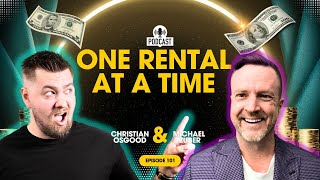
Michael Zuber and Christian Osgood discuss buying multifamily properties during the market crash. Zuber has acquired 200+ units using BRRRR, seller financing, and creative loan structures. Class A assets are already down 20-25%, while Class B/C properties are just starting to drop in price.
Chapters
All right, guys, I am excited for this one. One of my favorite channel guests. He's only been on once or twice, but I have spoken on stage with this guy multiple times before. One of my good friends, Michael Zuber. I watch this guy for all of my economic news can come from him and Ken McElroy. Michael is plugged in, ready to go. I have agreed with everything he has ever said about economic takes. In fact, I set all of my debt timelines based on everything he said about multifamily. We're going to talk economy. We're going to be talking community building, some of the stuff that Michael has done is just phenomenal. And I think that you scaled your portfolio in arguably one of the most sustainable, repeatable ways to end up with a truly massive portfolio. It's not a just— I'll let you talk about it, but my highlight from this is it's so simple and repeatable. Anyone could do this and build beyond significant wealth. I mean, people can build multigenerational wealth doing exactly what you tell them to. And it is simpler than what I do. And I think what I do is frigging simple. So Michael, I am so excited to have you on the channel. What is new with you? I think last time you were on, you were living in California. You're still the king of Fresno. You're in Vegas now, right?
Yeah, we did buy a primary residence in Vegas. I got tired of all the taxes in California and Gavin Newsom is an evil human being. And I decided that I was done giving him 12% of my money. Yeah, we've been in Vegas or technically Henderson just about almost 2 years to the day, right? I think July 20th or whatnot will be 2 years to the day. So yeah, we, we now reside in Nevada.
I have so many friends and investors and actually one of my companies in Henderson, Nevada. Henderson is awesome. I am there all the time. If there was anywhere that I lived that was not Dallas, I'd probably move to Henderson.
Yeah.
Awesome market. Awesome place. Perfect weather. Yeah.
I mean, it gets a little hot in August, so we still got our spot in California. We'll still spend 6, 8, 10 weeks here when it's 120 degrees. So we are lucky in that respect. But yeah, I mean, 10 months out of the year, Henderson's amazing. The scene in Vegas is awesome. We're foodies and there's literally 5-star restaurants everywhere. Not on the Strip, right? The thing about Vegas or Henderson is if you live there, you never go to the Strip. Never.
You avoid it like the plague. I've, I've, I'm in Vegas maybe once a quarter. You get done with the Strip after like trip 2.
Yeah, exactly, exactly, exactly. Unless there's some big performer. Yeah, right. Unless there's a huge performer like Jerry Seinfeld or something, we're not on the Strip.
So that's, no, no, that, that makes perfect sense. Well, that is, that is really fun. For, for those who haven't seen your last few episodes, let's, let's go back in time just a little bit. What was, what was your original starting point and the why that got you to where you are today? Give us the, give us the 30, foot view of the Michael Zuber we have now?
Yeah, so the Michael Zuber we have now is somebody who believed in probably what Gen X and millennials were told, which was go to school, get a good job, make a lot of money, climb the corporate ladder, retire at 65, right? That's who I am. I'm not an entrepreneur like Christian. I'm a wired employee. I'm a beaten employee. And I originally thought my wealth was going to come via the stock market. I successfully turned $7,000 into nearly $200,000. During the dot-com craze. That's a cool visual. And I remember saying I'm smarter than Warren Buffett. And almost to the day of saying that, I got spanked and lost 80% of that.
Warren heard you.
Yeah, Warren heard me and the market heard me for sure. And I lost it all and lost it all very quickly. That led to a depression, a failure, right? $200,000 in my family is more money than we'd ever seen ever combined, right? I don't come from money. I, you know, I was housing insecure. I got a job at 12 under the table to put food in the fridge. So, you know, $200 grand may not be a lot for some of you, but it was everything to me at 30 years old. And to lose that or lose 80% of it was a huge wake-up call. And then I found that purple book that a lot of, you know, my generation found Rich Dad Poor Dad, and it was eye-opening. And again, that is shocking to say because I have a 4-year degree in economics. I went back and got an MBA in the evenings. I was an accountant as my first job, and this freaking purple book changed my life. I'm like, whoa, whoa. There's like, what? You can get, build wealth this way? But nobody told me. And you know, that started a journey. And, and you know, some folks come to this like yourself, Christian, you wanted to build a big portfolio. You know, my big audacious goal was 4 single-family homes. That's all I wanted. 4. I thought if I had 4 homes, because again, my mindset didn't change. My mindset was work till I'm 65, have these 4 homes that will then be paid off, and my retirement will be better than anybody I know. That was my big audacious goal.
Now, which by the way, still put you ahead of most people by a lot.
Oh, by a lot. It's, and again, great goal. I would've had the best retirement of anybody I knew at that time, just with that simple goal. But the thing happens is once you get in and you start learning your market, you get a buy box, you start understanding that this game we play is nothing more complicated than Monopoly. But Monopoly is a real game. That's what I played for 20 years. And we went very quickly, got past 4, and then we got to 10. And then because you kept learning, I went to a Bruce Norris event and Bruce Norris said California crash. And I'm like, well, you know what? I got a lot of eggs in California. What is this guy talking about? And oh, by the way, I've already lost. I was already a millionaire once and I lost it all. What, what, you know, what's this all about? And sure enough, he made me believe that California is going to have a crash in single-family. And I went on a selling spree. So we sold all of our houses, which was 8, not 10, 8 houses. And we went to 80 units. Why? Because multifamily at that time was underpriced by a lot. So we sold overpriced single-family homes, moved all of the equity into 80 units, and then the housing crash happened. And guess what? Housing prices collapsed. That first house, which I tell people to go look up on Zillow, it's 1818 Norris Drive East, 93703. We bought for $107,000. Less than 3 years later, we sold for $264,000. Quite a bit of appreciation. And we moved all of that equity into units that we still own today. And then, oh, by the way, rents went up because everybody was losing their homes. So, you know, again, this is just plain Monopoly. It was 4 greenhouses, 1 red hotel. We just went from 8 houses to 80 units. And then, oh, by the way, because we were doc— at the time we were documenting all of this in a blog that was called Wealth Building Pro. I no longer own the website. People have found the copies or whatever out there, but you can go find it, wealthbuildingpro.com.. And then I started raising money. I didn't even know that was a thing, Christian. I raised like 4 or 5 million bucks from friends and family to go out and buy foreclosed homes. So we were doing BRRRR, and at the time I was actually writing on BiggerPockets. I was a featured blog post on BiggerPockets before Brandon. And I would write about doing what's now called a BRRRR. We would buy a house for 50. I would borrow all the money. I would then repair it with our money. Then we flipped the financing and we would pay the investor back. And you know, we bought, I don't know, I never bothered counting, but it's gotta be 40 to 50 different properties, houses, duplexes, quads, small apartment buildings during that time. The portfolio went from, I don't know, 80 to 150, 160. And then outta nowhere the market changed. 'Cause I was there when Wall Street showed up. Right. I remember the day, 'cause it became a process. On Monday there was a batch, like they would load a batch of foreclosures. And then I learned that I think banks would accept 11% off. They wouldn't take 12% off, but they'd take 11. So I would just write a bunch of, you know, like I'd see the list Monday, I'd have my offers Tuesday, I'd buy something Friday. That's just the process for years because I had all this private money. And then one day the batch didn't show up. I'm like, what, what happened? Sure enough, next week, nothing. So then I start calling around and I, I learned, cuz again, you, you, you buy a house every week or every other week for years, you get known. And the guys are telling me that this fund from Wall Street is buying all of the properties sight unseen for list price. I'm like, they don't know you could buy for 11% off. What are they doing? But they changed the market overnight. They bought everything, like everything. I was like, well, that game's over. Yeah, we were building and then we went off and did some distressed multifamily and ultimately got up to 200 units. So that's the story.
Isn't that funny too, how BiggerPockets and Brandon Turner was a big piece of this, of just branding the daylights out of the BRRRR method. Even when I started researching real estate, it was like, that's just real estate. Like that's what you do. Values go up and if you raise money, arguably you should probably pay those people a return. So where does the return come from? It's from increasing the value of the property, right? The real estate has to buy the real estate. And it just became like everyone and their sister's like, oh, it's the BRRRR method. I'm like, no, he, he is, but it's also just like, you know, yeah, just propaganda.
I had beef with Brandon for years. Really? Oh yeah. And it was a one-sided beef. I, he didn't even know who I was, but again, I was a featured blog writer. For BiggerPockets. He comes in as an intern, right? His story is, I was there. His story is legit. He comes as an intern for Josh Dorkin. And the first project he's given is the blogs, which I'm a member of. And you know, and actually I interviewed him on my channel. I think the video's called I Hate Brandon Turner. So we actually went through the beef, him and I live on the show. It was kind of fun. And basically what happened is he came in and instituted all of these new rules and standards, which was his right. And he probably should have done, But I didn't like the way it was communicated because again, what was happening? I had a full-time job. I was building a portfolio. I was raising my daughter. I was trying to keep my wife happy. And this freaking intern is making my life difficult. And I felt like he was picking on me and I'm like, I'm out. I've been writing for BiggerPockets for 2 years now. This new freaking intern is, it's no fun anymore. I'm out. So I held that grudge for a decade. It was Ryan Panetta. That finally stepped in and said, Zuber, you're being a child. Let me introduce you to him. And yeah, we had it out. So I no longer have an issue. But yeah, I held that grief for a long time.
That's funny. I didn't know that. Yeah, yeah, yeah.
But back to the point of Brandon Turner, his unique gift is branding, right? You know, you think about BRRRR or any of the things that he did at BiggerPockets, he just makes it— he makes a story and it's sexy and it's easy. That's the magic of Brandon Turner, right? It takes something that has lots of steps. He gets a, he gets a little hook like burr, and then he just repeats it and it becomes like a verb, like, you know, Xerox or Google or, you know, something like that. So, you know, he's, he is truly gifted at that.
Yeah. Great, great storytellers are, if you're just organically good at telling story, that is a beautiful gift. Brandon Joyner has it. Yep. Creative finance space, Pace Morby's.
Yeah, no doubt.
If you look at all the things that he does, 'cause he's a huge name in the industry, Pace is, in my opinion, by far his best gifting. He does a lot of stuff pretty cool, but his best thing is he can tell a story about anything with a relatable analogy, and it is unbelievably applicable and palatable. Like, no, he's, I don't know if it just flows from him or if he spends a bunch of time just writing and thinking about these things. 'Cause he'll, he'll pull stuff out. I'm like, I'm like, that was a better analogy than I could have come up with. And it feels like it's always just a tip of his tongue.
No, he, he is, he's a unique gift. I, I'm lucky enough to know him pretty well. And that's just who he is. He has, that's a God-given talent. Some, sometimes you are gifted some things and, and that is his and it's so relatable and it's real and it doesn't feel, it's just Pace has got a unique gift and, and Lucky enough that he's agreed to come out and talk at our Vegas event next year. So he is going to be a, a featured speaker.
Oh, that'll be a fun one. Yeah, that'll be a fun one. Yeah. Great, great speaker. Great speaker. Very fun. I remember I had, I saw he just spoke at a, I saw he just spoke at like an Airbnb event. I'm like, how desperate are you guys if you pre— he's pretty outspoken on hating Airbnb.
Yeah. Didn't he just leave the business or something?
Yeah.
I thought he didn't have short-term anymore.
Just the anti-Airbnb thing as your keynote. That's, that's when you know you've made it. Yeah. Or when, and that's when you know it's an event, you're struggling to get attendees. It's like, we're gonna bring our, we're gonna bring our rivals in. There you go. Very funny. Very funny. One of the things that I have always appreciated about you is that you just post crazy consistently. Yeah. And you always have a strong opinion of what's going on. When I think Michael Zuber's channel, I'm like, this is where I'm going to get great real estate news all the time. There's always going to be a thought on the economy and what is happening now, which is really helpful. So that is my use case for your channels. I'm like, what is going on? For the last couple years, you've been talking about a significant bloodbath in multifamily. I think a lot of it's already arrived. I'm seeing it in some of my deals where I'm getting the first few like, wow, these feel heavily discounted and people are in a position where they have held off and extended with the bank as long as they can. When you see interest rates double or triple like they did, there's this few years of play where you really can limp along and negotiate and trade pieces. So you think it's a lot of people go like, oh, it's about to hit. And it's like there's a lag. From when the pain happens, from when it really, you really see it. I'm starting to see it today. Is it going to keep getting worse? What have you been seeing? I want your economic take on multifamily. What is happening and what is going to happen?
Yeah. So let's be very clear. Let's, what you and I care about is commercial multifamily, right? So this is not office, industrial, storage, just commercial multifamily. And I think there's two answers. The first answer is Class A. This is where Ken McElroy, Grant Cardone, and Jonathan Gray, the real estate guy at Blackstone, right? I put Jonathan Gray as one of my top 4 real estate guys in the country. Jonathan Gray correctly called about 9 months ago now that it's time to get active. Now, of course, unless you know who he is, you don't know what that means. That means Class A stuff, right? And then if you talk to Ken McElroy, which I'm lucky enough to do a bunch, and we'll talk to him again on Monday, Class A is already trading at roughly a 20 to 25% discount. So if you're playing in that space, if you have the systems, that stuff is already discounted and there's not much left, right? 25% in most markets will be the, the max discount.
It's amazing how fast that moves too. Yeah. When it, when it's time, the guys in that space, it is a sub-1-year all trades.
And again, that stuff trades not, that stuff never makes it to the MLS, never makes it to CREXi or LoopNet. Class A is the brokers have their Rolodex. And they just call down the list and it typically doesn't go past person 5. Somebody will say yes. So that, that's why that stuff's already trading and the discounts are already in there. I believe where most people play, and I think you and I play, Class B and Class C has just started. So if you, if you use a baseball analogy and let's just assume it's a 9-inning game, we might be out of the second inning starting the third. So what does that mean? I would agree with that.
Yeah.
So you're starting to see. Some pain. There are some transactions going, but in most markets, in most assets, there's no price discovery. All right. What does that mean in commercial speak? At least in my market. So my market of Fresno, California should be trading at an 8 or an 8.5 cap. It got down to something in the high 4s, which is absurd. Today they're being listed at like a 5.5. They're not going to sell at a 5.5. This is just some owner who's upside down, who's in a world of pain telling their lender, I've listed the property. That's all they're doing is they're buying time. There's no chance these sell. And again, I say this as a guy who did this before, right? There was a building back in the day that was listed for $1.44 million. It was 18 units. Why was it listed at 1.4? Because that's what the owner paid for it 5 years ago. And then the bank just gave him another year, gave him another year. But guess what happened? That building got zero love because the owner at the time knew he was going to lose it. So he was bleeding it and he became a slumlord. Ultimately, the bank went and investigated their asset, realized what they had after 2 years, and then foreclosed. They called me because they knew I was interested in it and owned other stuff around it. And I ended up buying it for $700 grand. Oh, that stuff's coming. It's coming. And oh, by the way, I got it 100% financed from the lender. I'll say that again. I got it for 50% off, 100% financed with the lender. The only thing I had to do, Christian, was put $50,000 in their bank, which I would've had to do anyway. And in escrow, they just wanted the deposit. They want the deposits because they wanted to make sure I had skin in the game. 'Cause I was going to use that for repairs. And again, I was taking over a building that we had to probably spend $8,000 to $12,000 a unit just to turn them because they were disgusting. I'm not going to own a slumlord building, so I would've had that money anyway. But that's the stuff that's coming. I know there are deals being done today. You've done a couple. I would tell you better deals are coming. More hair on them.
Are coming. Absolutely believe that. The fun thing that I have found is the deals that we have chose to purchase are all, they're class B and I put 'em in the B+ range. They're very nice, but they're built in the 2000s.
They're, yeah, that's not bad.
That's probably, if you look at a class A builder, you look a lot, I think a lot of investors look at this and be like, that's class A. I'm like, it's not. No. If you look at class A, class A is a different thing. Look at the amenities and yeah, it's not, but, but you know, stuff that has pools, clubhouses, onsite gyms, like solid, solid assets. Sure. Very significant discount from, from where it was trading years ago in a different rate environment. It's worth a heck of a lot more right now. Is an awesome time to load up.
I think over the next few years, as long as you can put in long-term debt, that's the wrinkle. Why are all these people in pain? Is because the idiots got 1, 2, and 3-year bridge debt. It's always the people don't really, I've been doing this 30 years now. It's always the debt that gets you.
I'm doing 7 and 10-year fixed-rate loans with 4 to 5-year yield maintenance. So we can refi these around year 4 or 5. So if rates do end up dropping, which I think they will in a 5-year period, awesome. We can refi. If I'm wrong, which is also fine, I have more time on a loan where the deals work just fine. They cash flow just fine. We're getting paid to wait. Yep. Michael, is 7 years long enough? Is 7 years long enough for fixed-rate debt or do we have to push longer?
You know, I don't accept anything less than 10, honestly. I would, so let me say this, I will never do a 5-year. I prefer 10, 7 probably is long enough. Yeah.
Yeah. Is that considered in commercial, is that long-term or is that the lengthy side of midterm?
Well, again, most people don't get 30-year debt unless you're doing some Fannie Freddie stuff. 10 years is considered long-term in commercial speak. 'Cause that's typically, I would estimate that probably certainly more than 50% of, you know, multifamily loans are 10 years. And I would say that 80%, maybe even 85% are 10 years or less.
See that if you're doing 5-year debt, fixed rate, if I'm fixed rate is fantastic and you need it, but 5 years, dude, I don't think a lot of investors, especially new investors, realize how fast 5 years actually goes.
If you have a 50-unit building, you probably don't even turn all of those in 5 years. That's, I mean, that's what you just gotta realize unless you're taking over a vacant building, which is a whole different bag of worms.
Those are hard.
Yeah, those are, oh, shush.
Those are hard. I'll do those not on 50 units and only one at a time in my portfolio. I will not.
Yeah.
I love doing those. They're fun, but I'll do that on like a 9-unit building downtown.
Yeah, we did, we did it on a 10-unit building and it was, that was a heavy lift.
And it is a passion project. The risk profile on that unbelievably different than buying stabilized or near stabilized multifamily. Just unbelievably different project. Amen. Totally. I mean, I would, I'd go as far to say it's a different business. There's almost completely unrelated skill sets, metrics. Yeah.
Get ready to crawl in glass. For a couple of years, but then, then it gets really good.
Yeah. Whatever you think you need to raise to get through your project, double it, multiply it by 3.
Yeah. Or 3.
Yeah.
That's been my, uh, 2 or 3.
Yeah. My learning. And then, and then realize that the first 2 contractors you get, even if you've worked with them successfully before, you're still probably gonna fire halfway through the project. It is just, yeah. You are signing up for pain. If you love the projects, I will never, this is one business I'll never get into. I'll never do ground up.
No, it's not my thing.
Developers are the richest people on planet Earth until they are not.
Yeah, they, they, they only have one avenue to generate money and this real estate's cyclical. And you know, I've, I've seen plenty of people worth $10 to $20 million when the cycle turns, they, their, their one, their one trick doesn't work and they're busted.
Yeah, it, that's scary. Now redevelopment's fun cuz it's a little different time, time, you know, I have a building, I have some history on what it has done. I have a vision for what it can be. That's fun as a creative person where you come into a little building, you're like, I have a vision for what it can be. But even that, if you deliver what it can be and you bought it when rates were 4% and now rates are 8.5%, you're in the same place as the developer. You're like, oh, wait a second. Whoops. Who would've anticipated that big of a swing that quickly?
Yeah, I think it was the quickly that got most people.
Yeah. Because rates had to go up. I don't think you or I thought they would stay low as long as they did.
That was insane. No, that, I actually was on record. You can go back and find these videos saying the Fed broke the housing market. And again, it's still broken and it will be broken for another 5 years, right? Everybody wants a spectacular crash, which isn't coming in single family. The only way out of this unfortunately is a slow increase in wages. We have been here before. That's the beauty of studying real estate back to the '70s. From 1978 to '81, we saw transactions crash by 50%. So what happened when Fed rose rates in 2022? I said, whoop, we're starting our 4-year cycle and get ready for a transaction crash. Boy, the world did not like that. I got shit on by all the crash bros and price this and price that. And meet Kevin is saying every 1% rise in housing means housing has to fall 10%. I'm like, dude, you're a moron. That's not how it works.
Forgot about me, Kevin. Man, he was everywhere for a little while.
Yeah, yeah, he said that. And, uh, of course it didn't work out, right? Rates went up, you know, 500 basis points, and prices went up, and it just blew everybody out of the water. So another, another right call I made. But here's the beauty of this call is I'm now telling people that August, which is 2 months— we got July and August to get through— August will be the low, and then we slowly build out of this. But people don't understand how slow Right from 1981 to 1994, it took 13 years, almost 14 years to get back to 1978 numbers. So we're going to be on a slow transaction increase going forward and it's going to blow people away.
There's the thing that I love as an investor, and I think all high volatility in the markets is generally not fantastic. Slow growth is the best possible thing as an investor that you can possibly have. It stays relatively predictable, tends to move forward. Yeah, sure. You'll have your ups and downs and cycles within that.
Well, I actually love a buyer's market. I'll be very clear. I think I called a buyer's market earlier this year, which is now everybody's calling. But why? Very simple. I want less competition. I want more supply and I want my odds of finding a motivated seller to go up. 'Cause they're always out there. They're just hard to find. And we are in a buyer's market. I'm particularly, again, I live by what I'm doing. I'm writing lots of disrespectful offers July and August in Henderson. 'Cause I'm trying to find that motivated seller and by disrespectful, just to put some words on it, I don't think I'll write an offer any less than 25% below list. And most of them will be worse than that. Because I don't need every deal, Christian. I just want one. And if it takes 100 offers, it takes 100 offers. It's, I don't mind. It's okay. I love buyers markets, which is what we're in.
I feel the exact same way, especially because I'm a creative finance guy. The ability to spin the Rubik's cube when someone has a little extra motivation, you just gotta map what do they want? What do I need? You call it the buy box. I love that. My box is long-term cash flowing, fixed rate debt in a market that I have systems and people in. That's beautiful. That's what I need. All I have to do is just figure out what they want. Is it a certain price? Do we have a path to get there on long-term fixed rate debt?
No. And that, you know what, I'm glad you brought this up because most people hear me say this and they don't understand what I'm trying to do. I'm not expecting any of my offers to get a yes answer. If they get a yes answer the first time, I didn't, it wasn't cheap, it wasn't disrespectful enough. What I'm doing with all of these offers is testing for motivation because my answer coming out of this, in most cases, I hope Christian, is not a cash offer. Now I'm willing to pay cash. Every offer I write will start as cash. But my answer is, you know, like there's a house I'm tracking right now. We'll just use a real example.
$399,000.
I'm going to write it at $300,000. Once days on market hit 75, which is next week. My hope is They say no to $300,000, but they go, you know what? This seller's got motivation. They'll come back at, I don't know, let's call it $380,000. But then I'm going to start saying, because now we have a counter, I'm going to go, you know what? I might be able to do $350,000. However, Mr. and Mrs. Seller, you got to carry back $100,000 second. And oh, by the way, that $100,000 second's got to be at 2%. And oh, by the way, I want no payments for the first year. Right? I'm just going to get crazy. Because what I've seen over the time is a lot of people get fixated on the number. I give a shit about the number, Christian. I care about the payment and cash flow. I am just coming into this with a really low number to test for motivation. So that's how I play this game.
If you guys are wondering why I'm such a big fan of Zuber, we are so aligned on so much of the strategy. It is about increasing your income. And keeping the income increased forever. Yes. Underwriting is— we do buy and hold. Underwriting can be summarized as this: how do you own it and how do you never lose it? That is now buying it and holding it. If it cash flows and every time you close a deal, without exception, your income goes up and stays up, you will not lose real estate. Amen. Money is not everything, but it is the lifeblood of your business. If you want your business to grow, you need more blood. You have a bigger body now. Yep. Add blood with the acquisition. That is it. That is all of real estate.
Yep.
It is not about the price. It is not about, I mean, price is obviously a huge factor in what those terms are gonna look like, but it's about getting long-term cash flowing fixed rate debt. That is what the game is about. Amen. And stacking it indefinitely, which is why Michael has hundreds of units. And you've been able to do this. You write your off. How, how much time do you realistically spend per day on acquisition?
It's not a day. I would call it a month. I might spend, and this includes looking and buy box search and learning markets. I might spend 10 hours a month, maybe, maybe 8, 8 to 10.
I would say that's probably about where I, I set on my whole thing. I buy about 3, maybe 4 deals a year.
Exactly. You don't need a lot as long as, you know, I, what I tell people to do is get a buy box, which is just a set of criteria you look at every day so you don't get confused and you learn, you get scale. Repeatability. Then you figure out what an average deal is like, okay, an average deal is a 7% yield or cap, whatever you call it, right? Rate of return. And then all I want to do is good or great deals. I will never do an average deal, Christian. If my buy box spits out 7, why would I be interested in 7? I want to do 9s, 11s, 13s. And usually that's done via creativity. Sometimes with cash. I mean, I'll be clear. Sometimes I pay cash. If somebody's that desperate enough or the deal makes that sense, I'll pay cash because I can go get my money back. I'm not, confused. But yeah, dude, it's all about doing great deals. And I'm telling people in this buyer's market, go do a deal of a decade or even a deal of a lifetime. That's what I want people to think about. Because you don't do every deal. These people that are doing 50 deals a month, that's not most people. Most people are one deal a year if they're lucky. So you might as well make it an amazing deal.
I don't want the pain of doing the 23. 2 deals a day. Do you know what that sounds like to me? A lot of paperwork. You know what I, you know what I left behind for? I don't want to do that much paperwork. That there's been, I would opt to just not scale my business before I did a deal.
I don't want to do that either.
To excellently manage. So I bought a 44, I'm buying a 76 right now. It's just the biggest deal I've done. But I buy a lot of things in the 25-unit range. I just happen to have found a couple that are a little bigger than I usually do. If you do 4 times a year, you get 100 units a year. That is more than most people will ever buy in their lifetime. And you can do it once a year for, I break it down to the daily. I spend like 5 to 10 minutes a day on acquisition. That is my, my acquire things job is a, that's what I tell people to give it 20 minutes a day.
That's what I tell 'em, 20 minutes a day, every day. And again, I, I preach what I talk about. I, I had a buy box in 2001 that I looked at for 3 years before I changed it.
So half of one Netflix show.
Yeah.
Per day. That's it. To buy very significant amounts of real estate.
Yeah. Yeah.
That's, it's such a simple model. There's one thing you said on creativity I need to hit on, and then I want to close on the way that you were doing community is one of the coolest things I've ever seen. I want to talk about what you were doing there and how people can get plugged in. This is not just an ad for Michael's Awesome. I actually legitimately love the model. And so I want to share that. You said something that I learned in my, one of my mentees came up with this clause for me. So I call it the Hommel hack in my group. My buddy Caleb Hommel did this on 5 deals. I was buying a bunch of deals where I needed more cash flow day 1 and there was a ton of upside. So we're doing the BRRRR strategy. There's future upside. I was doing a stair-step method of it starts on low interest and then the next year it goes up a point, the next year it goes up. So we start like 2, 3, 4, 5. They wanted 6% interest. I said, yes. I just gave them a path to get there. What we call the Hommel hack, you just casually mentioned is like, oh, of course I do this. No payments for a year. Yeah. His solution was, I have a value-add project. I'm giving you a down payment. So while I'm doing the pro— that's where I find that, that offer gets accepted the most often is when you're like, hey, I'm investing money back into this project. Exactly. Why am I paying you and paying the project? It's a pitch that makes sense. And what are you doing? You're improving their collateral. So exactly, I give you a big, big old chunk of money. And while I do the value add here, I don't pay you. And here's my business plan. They're so easy to get accepted for sure. What does it let you do? It allows you to cash flow a deal that otherwise wasn't going to cash flow for that first year.
Yeah, the longest I've gotten is 2 years. I had 2 years, no payments on a second.
Imagine buying a deal. Especially if you go super low down, if you've got creative on the down payment, you put a little bit of money in the kitty and then you don't pay anything but your taxes and insurance and utilities. You just have your OpEx for 2 years. That is an unbelievable, and it took a mentee of mine to actually come through and be like, so you do low interest day one. What if you just didn't pay them? I'm like, well, you can't not pay your mortgage. And then As Michael shares with his, with decades of experience, he just dropped a huge bomb in passing of like, he alluded to a whole bunch of things that are simple and repeatable.
Oh yeah.
You carry a low interest in second. That means there's a bank in first. You're doing somewhere between 0 and 10% down on that transaction. Yeah.
There's, there's rarely banks let you do 100%, but yeah, there's a lender I have, Velocity Mortgage, that has, that, that will loan what's called 90% CLTV. It's called combined loan to value. So, you know, I routinely offer what's called 50/40/10. So 50% to Velocity in this case, 40% seller carry, and 10% down. I'm convinced there will be people that buy 100-unit apartment buildings with that structure. And you know why that structure is awesome? Because if you do the math and you do it right, you can get a below-market interest rate. So let's just say Velocity is 8% first. And then you go get a 2% interest on a second, but you've got the first 8 at 50% and you got the second 40% at 2%. That debt, you know, it's called combined loan to value, is probably an interest rate of something like 4.5 or 4.8. Where can you borrow 90% leverage and get sub-5% debt?
And oh, by the way, beautiful thing.
Yeah. And oh, by the way, you could make that a 10-year balloon. I even did one where they were 30-year fully AM second. And again, the 8% is fixed. So I have 30-year money, sub-5% in an 8% world. Who wins?
I win. Some of these are just amazing because the one thing the bank doesn't care about, the, the look of the combined loan to value, they don't care what interest rate you negotiated as long as you can afford the debt service coverage. Yeah, they don't care if you got a 1% interest. They, they, they don't care. You can make your own debt product even with bank financing. Correct. I've seen some banks let you go 100% loan to value as long as you do like a couple hundred thousand dollars of deposits with them. There, there's other ways to— sure, other banks will do other things, but you can get into deals low to no money down. I just love that. That was like, it's just a casual thing that you just glossed over. And here's the beauty. The reason that Michael's able to gloss over these things is because you need to know how to play the game. You, if you don't know what the plays are, you can't use them. Yeah. But the simplicity of it, how simple is it to be like, oh, I don't have payments for a few years because I just gave you a down payment. I'm reinvesting in the property. Simple, dumb, 2 or 3 sentences in a clause on a contract. Easy, easy, easy. Combined loan to value. Everyone who passed 3rd grade can wrap their head around, oh, well, there's 2 loans. And when you add them together, that's the loan-to-value. And now we can push from 75 or 80 to 90% leverage on a lower interest rate than the bank. There is not rocket science here. Michael's not a genius. He may be, but not the way that he's writing his deals.
They're simple. Simple.
I can tell you for a fact, I'm not a genius. I'm relatively dumb. I'm a sales and marketing guy who was like, you know, I got out of selling for CoStar. I just got just smart enough to be sitting across the table being like, The guy I'm selling to is richer than me. I mean, what is he doing? That's, that's, that's the, that's my level of intelligence. Be like, he has more money, should do that. This, anyone can do this game. These things are so simple. Michael, you're, you're doing a community that is actually scaled to be quite large. Interestingly, unlike 99% of the people online, and by 99, I mean 99.999% of people online. Unbelievably affordably creating a huge community that is all about building wealth. Tell me a little bit about what you're doing, because I think the strategy, honestly, I think this is the future of education moving forward. I think Michael's way on the front end of this.
Yeah. So one of the things that I'm particularly proud of, and I did not get a lot right, but one thing I did get right was the brand One Rental at a Time. That's what we did. I wrote a book, course, YouTube, Instagram, everything I do is One Rental at a Time. So it's very easy to find. But as I was building out this community, like probably like a lot of people, I went to Facebook first, right? I went to Facebook, I created a private community. You can only be in the community if you bought my, you know, $400 course. And you know, that scaled to well over 2,000 people. However, as Facebook was evolving and changing it as a creator, it made it hard for me to communicate with people. Like when I had a message, that I wanted everybody to see, it didn't work on Facebook. And I got frankly pissed off. And then Alex—
you get like 50 views on a critical post to your own community that has 2,000 people in it.
Yeah, I could, it just, it was, it just didn't work. And then Alex Mosey buys Skool, I check out what he is doing and I'm like, aha, that's what I want to do. Because again, I, with one checkbox, I can make sure everybody gets a communication. So now I have a school community called One Rental at a Time. Shocking. But unlike a lot, and I've paid for mentorship, right? I've paid for mentorship with big guys, guys that you would know, Sean Cannell and Pace Morby, and I've talked and all these other folks, Ryan Panetta, and all of them tell me I need to create a, you know, a value stack and, you know, a 10,000 this and blah, blah, blah. And I'm like, guys, you don't, you don't understand my mission from video number 1. And let's not get it twisted. I've done 16,000 videos. So video number 1 was a long time ago, has been to create something that outlived me by 50 years, right? I'm already money good. My, my real estate portfolio's 5 or 6x my monthly expenses. So it does, it just doesn't matter. And so I was lucky enough to have that coming here. So I put out a school community for only $20 a month. And like you said earlier, most people are $99 or some are $199. And the reason I did that is, at least in my world, I've tried free before. I tried a free book. I, my bestselling book, One Rental at a Time, was free. It was supposed to be free, but nobody read it, right? I sent it to 100 people and 2 people read it. One of them happened to be Millennial Mike. So that's why a book. And then I had a course, it was $99 and then $199 and now $399, because if you pay, you pay attention. And so that's why school's $20 and Um, and that's, that's, I think that's going to be what I'm known for. And the beauty of school is I'm now getting comfortable because I'm not an entrepreneur, right? Christian, as much as I want to be you, I'm just not wired to be an entrepreneur who, who sees opportunity and creates business and creates systems and funnels. Just like, dude, not me, right? This is not where I live. But, you know, it's now over 420 people and, um, We're just wealth builders. That's the thing I've figured out about school is it's the community. We have 420 people going the same direction and there's magic in that. And the biggest thing about a school community for me anyway, is I am not the most active person. I was the most active person until we got over 100. And then my time in the, in the school community is way down. So, you know, we have 7, 7. Accountability groups. I attend zero of them. I'll say that again. We have 7 people have picked up topics like out-of-state investing, ladies, ladies of ORAT, which is really cool, different accountability groups, real estate agents, brokers, and I don't attend any of them. It's so awesome to see other good people, other go-givers want to help and move people forward. So I think I'm going to be known even above a YouTube channel, even above a bestselling book. I think by next year, maybe the year after, most people know me because of the school community. It's 67 pennies a day, 67 pennies a day to get in a room with 400, now 420 people going the same direction. I have thousands of dollars in free education. For example, I did a $1,000 10-week bootcamp once. I'll never do it again, but I give it away in the community. If you get to level 3, which means you're active, Mm-hmm. Other people have given stuff like Ty, uh, a guy I talked to on Friday, T-Y-L-G, Ty, uh, he did a $1,000 creative financing course. He gave it to me for free so I can give it to the community. So it's, it is fun to create something that is just a good community with people going the right direction. And it's so active. There's, you put a post, it's, it's crazy.
There's 3 directions that a good educator can go and, and all the best, 100% of the best specialize in one of these 3 lanes. You have coursework, so you can be really, really, really good at putting out good educational content in an organized manner. You have direct mentorship, which is the most expensive on time. They also tend to cost the most. Sure. That is where I focus the most as an entrepreneur. I am in the field, hands-on operator. For me, it's like instead of pawning you off on some other past student, I will actually give my literal time and mentorship. It's the most personally expensive way to do it.
And it's a unique offer and it's a finite number.
And that's where we focus.
Yeah.
And then you have community and community done right is open to the massive and you know it works and you just said it. I'd love that you did this cause I was gonna make this point. You know, a community works when the community carries beyond its creator.
Absolutely. And it's funny you brought that up.
It is not the main driver. You have 7 accountability groups, you have subgroups. People understand what it is that you built. You've built something that is simple, repeatable, scalable, and it is now taken off beyond you. That is a community thing. And to do it right, I think is harder than any of the other two. And when you get it right, you get it right. Yeah. What you've built there is really truly something special. At events where Michael speaks and I speak, there's always like a section of ORAT people and they are the, they are the ORAT people. One rental at a time. It is fine there. They're connected. Michael's not spending all of his hours there. You pour time and energy in because you're passionate about it, but that is not where you spend all of your time.
No, what I do now is I do 1 hour on Sunday, 1 hour on Sunday, 8:00 AM. I usually bring in friends, so I'll be asking you offline to come on to one of our Sunday sessions.
I'll be accepting that offline.
There you go. And it's a lot of fun, man. All I have to do is I give 1 hour a week, Sunday, 8:00 AM, usually with a friend. Sometimes I go solo, but usually with a friend. And I monitor the network for bad actors. I, I kick 2 people out a month, you know, who are selling deals or being scammy or whatever, which happens, right? You have a course at $20. Yeah. You have a course at $20. You're going to get some people that come in and try to fish. So I kick them out. I mean, $20 means nothing to me, so I kick them out and that's all I got to do. I got to get rid of the bad actors and give an hour a week. And the community just continues to grow, but I want to go back to the 3 avenues because you're absolutely right. I, and I didn't know this. I'm not an entrepreneur like you. So I created an online course on Teachable, just like you, or I don't know where you did it, but you know, some people do Christian Osgood.
I'm moving, I'm moving it to Skool because I love the community features. Yeah. Just like you.
Yes.
Community took off on Skool. I was like, uh, let's go there. Messaging more important. Yes. Platform that is, everyone will move to Skool.
Yeah, I agree.
From Teachable, from Mighty Networks, everyone will migrate to Skool in the next 2 years.
I agree. So I did the online thing and, and was quite successful. Did, you know, over $600,000. On that. And, and again, at a price point that was no, no, never greater than $399. That, that was what I did. Never. And usually it was, you know, I think the average was $199 if you, if you look at the history. So clearly very well received to do $600 grand. But that was just paint by numbers. All I had to do was document how we did it. And, and people always ask, how, how long did it take you to create a $600,000 revenue stream? And I'm like, I think I spent less than 40 hours. Because that, it's just what I did. It's not like I had to get creative, right? I talked on a whiteboard or a Flipnote, and those are the videos. And then I tried to do the mentoring thing because everybody was asking this, this, this. But I'm lucky enough to be at a point where my life is, my time is my time. No matter what price I put on it, I just didn't want to do it, right? I'm just like, I don't want to be that available. I don't want to go look at properties and, and do all of that. So I did a couple of those and I'm like, this is not me. I'm out. I mean, I don't, I don't give a rat's ass if you pay me 10 grand or 20 grand or 30, you're not getting, I don't like anybody good enough other than Olivia and my daughter to spend that much time with you. It's like I'm an introvert. And then we found school and school is where my time and focus is now.
That is per— that is the thing that, that I really appreciate about you as an entrepreneur, even though you say you're not an entrepreneur. Understanding who you are as an operator is one of the most important things in all of business and slotting appropriately. I am an introvert, but I like speaking to groups. To me, an audience of 10,000 people, very comfortable that I could be an introvert and talk to a mass of people. Yeah. So comfortable. Sure. One-on-one, never going to be my thing. I don't like it. I'm a little socially awkward. I only care about real estate. So if you're like, Hey, let's, you got one lane. Yeah. They'd be like, oh yeah, let's go connect on stuff on a personal level. I'm like, you don't understand. I don't care about anything else. Yeah. Maybe, maybe guitar a little bit, but like I don't have hobbies other than real estate, so I'm pretty boring. In a group, coaching, super fun. Community, Michael has built this just ridiculous community. You've identified like, I'm passionate about this. I love this. You're someone who cares about, you do care about legacy. Like, that's all I'm doing. That's all I'm doing.
Yep.
That's it.
It's the only game I'm playing.
And it's so funny how different people are, cuz it's one of the things, right? Personally, I'm like, when I'm dead, I'll be very dead. I don't care. I don't care about the legacy. I do like seeing, I like being a part of that deal that someone does right now. Like the, the next, the most exciting deal in the world to me is the next deal that someone does in my mentorship. I like it. Like that is exciting. That's what, but you've understood where you're gifted. You've understood what's important to you. And you built a community with people who are like-minded and it's incredible. Other thing, and this is the last thing I'm going to plug for Michael, because this is awesome. There are zero people who are going to buy a real estate deal who do not have a nice crisp $20 in their wallet. There you go. You have access to $20 no matter who you are. You can do any course, any community, any mentorship, and Be part of One Rental at a Time. It is not price exclusive. So that means every single person who wants to build a portfolio, who watched this video or listened to this podcast, wherever you listen to podcasts, can be a part of this community without taking away from anything else that you are doing.
Yep.
Which I think is absolutely—
Kept it at that price point on purpose.
Yeah, it is, it is 100%. $20 is the same thing as free except That you spent $20 and now you're paying attention.
Yeah.
Because you want your darn $20 worth out of this thing. And what's going to happen? You're going to learn one thing and it's going to save you $200,000 on a deal you do in 5 years.
Well, the other, the thing that will really happen for people is you will find 400 other people going the same direction. There's power in that. That's the thing. That's, it's the community. It's not access to Zooper. Yeah. You get Zooper 1 hour a week on Sunday. It's the access to the other 400 people. That's the magic.
So I, I don't endorse other things on this channel. I will endorse spending $20 with, uh, Michael Zuber.
Thank you.
I like him. I, I said I won't push him farther. I'm gonna say, I'm gonna say one more thing. Michael did something that I have more respect for than any other thing with any other person. Michael married up. That is a true skill. I like Michael a lot. My wife is more of an introvert than I am. She has no friends. She hung out with Michael's wife for 2 hours and she spoke for 2 weeks about how awesome your wife is.
Olivia is amazing.
Thank you for that. Someone who can be married to an amazing person, to have a family and to, and to actually have the core principles of family, which I think is lost in a lot of society right now. I will say this about Michael that passes my good person test. He is a good guy who understands what is important in life. So if you want to be in a community, he's grounded, he's rational, he understands you 9-to-5ers. And even though I was in that world, I never fit in there. He understands you on a level that I don't. Be a part of the community. If you have $20, spend it. You won't miss it. Yeah. But you can get in community with people who are going in the same direction. Michael, thank you so much for joining me. Everyone, thank you for listening. We'll see y'all on the next episode.
More from Christian



Speak with authority to turn broker rejections into deals - boost your confidence #RealEstate

Turn Broker Objections into Closed Deals - CRE Negotiation Tactics #RealEstate #Negotiation

How to Get Multifamily Deals Under Contract Without Having All the Cash | Objection Series Ep. 1

How I Scaled 500 Apartments in One Texas Market in 12 Months #RealEstate #Multifamily


Turning a $12.2M, 200-unit mess into profit - live multifamily turnaround update #Investing

Day 10 Update: Turning a $12.2M, 200-Unit Apartment Complex Around in 80 Days #RealEstate

Day 10: Before Time Runs Out | Saving a Failing 200 Unit Apartment in 90 Days (Ep. 3)

How 2 Direct Deposits Generate $70K/Month from 224 Section 8 Units @ 99.4% Occupancy#RealEstate