The Truth About In State Vs Out Of State Investing
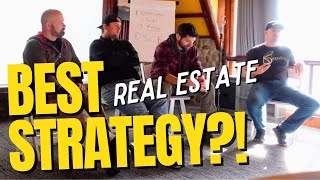
Christian Osgood hosts four investors debating in-state versus out-of-state real estate investing. Dion uses a "binder strategy" to raise tenant rents and keeps a small, high-yield portfolio. Mike scales out-of-state in cheap markets like Indiana through seller financing and virtual networking. Caleb warns that projects typically cost three times more and take three times longer than expected.
Chapters
For all who are worried about that, yes, real estate is expensive. And if you run it right and you have reserves, it does not affect your cash flow.
So anybody here who hasn't heard of the binder strategy? Okay, so it's a lot easier to invest in real estate if you can get your tenants to ask you to raise the rent. That's what the binder strategy is in like a nutshell. And so the reason I'm going to talk first, I'm going to try to keep it brief, is because I'm the lazy investor. I totally respect Cody, Christian Osgood, Caleb Mike, and all the people who want and have hundreds of units. My goal was the right amount of cash flow from the least amount of units. So I'm kind of the black sheep. I don't even know if I want the 18 units that I have now. I might sell a couple to kill some debt. Improve the cash flow, have less tenants to deal with. So when it comes to asset management, to me, the idea is it starts before you buy the property. I was working full-time. I was a single parent with 3 kids, and I didn't want to invest to create a job. So asset management for me was, how do I find properties where the tenants basically want to stay there until they die? I don't want tenants moving. So the average tenant stays in an apartment for 2 years. The average tenant stays in a house about 7 years. On average, my tenants are in the place 15+ years. They were there when I bought 'em. I think I've had 5 tenant turnovers total in 10 years. So I look for properties that help specifically side-by-side small multifamily so that you don't have tenants living above or below. There's no noise complaints. A water issue like Christian just had impacts one unit instead of one and then falls down into the other. I want fenced yards that allow pets 'cause people don't like to move their pets. I want washer dryer hookups in the unit. 'Cause somebody using shared laundry or laundromat is waiting for a place to open to move to. I want 2 bedrooms and a garage because more space equals more stuff, less likely to move. I target the properties that are gonna make my job easier in the future because the tenants don't move. And then the binder strategy is I don't wanna do rehabs. I'm doing my first BRRRR after I retired in 2022. I'm doing my first BRRRR now. And I'm calling it my last BRRRR. I don't ever want to do another rehab ever. I don't like it. I like to buy a property that has a tenant living in it. I fix a few— not me, I'm too lazy. I send a handyman to fix a few things. I put in coded locks, motion sensor LED lights. I ask the tenant if there's anything they would like fixed, 'cause they usually have something that's bothering them, like a cabinet door or a screen door or something. And then I have the tenant ask me to raise the rent a couple hundred, $300, $400, $500 sometimes every month. When I say yes, they're happy. Happy tenants don't leave. Happy tenants don't trash your property. So the asset management for me, all of that happens in the beginning so that I don't have to have a contractor. I don't, I don't have a team. I'm the anti-team guy. I want my realtors to hate me. I want my lenders to hate me. And I want my contractors to be frustrated when I call them. Because when I talk to my agents, I say, hey, you're going to set up my auto searches. I have at least 3 agents doing that. Whoever sends me the deal I like most gets the work. I've never had one say no, but I know they don't like it. I go to my lenders and I say, I want, what am I qualified for? When I go under contract for the property, I will then go and talk to 3 other lenders and show them your offer and see if they can give me a better interest rate or a better price on a buy down the interest rate. And I'm gonna do that every single time. Now if they beat you, I'll show you what they're beating you with and give you a chance to match it. So I know that's frustrating to them because it's a little bit of extra work. And then my contractors, I just— if we're doing an open house showing for a rental, you have tenants coming to look at your rental, so you just say, hey, between these times you can all show up and look at it. That's what I do with my contractors.
Cool.
We're going to show up, I'm going to have insulation and drywall done, I'll be there at noon, you guys show up, you don't have to give me your estimates there in front of each other, but I'm going to share the emails when you're done. I just had contractors go from $13,000 and $14,000 for a project down to 4 because they— it's not so much about making the money, it's they want to take the job away from the other guy. And I don't want a contractor that's going to give me a good price because that's not how contracting works. Before joining the Marine Corps, my family owns, um, tree services. My dad owns one, my brother— and my one brother retired, my other brother still running a tree service. I joined the Marines because that was easier. And here's what my job was outside of being manual labor I'd be the estimator, go and look at the tree and say, okay, whatever you want done, here's your price, right? Here's how contractors do their, their pricing. So I would never work with one contractor. I don't want a team. As a tree guy, if we had 2 months worth of work lined up and you had a job you needed done now, that means somebody's working on the weekend, so up the price. Where I have to postpone a standard customer that we work with all the time later, so up the price. Versus if I show up to do your job and we don't have any work next week and we're hungry, you're gonna get that like, what will pay our bills price. Every contractor does that. When they have months booked out, your prices go up. When they don't have a lot lined up, their prices come down. So every time I do a job, I'm gonna talk to at least 3 contractors and I tell my contractors that. So that makes me kind of the black sheep with not wanting a team, not wanting an agent on my side because Financial freedom for me happened with the least amount of units and the right amount of cash flow. Choosing properties that limited tenant turnover made it easier. Going with properties that didn't need a rehab— 10 years in, been retired for 2 years doing my first rehab. So a lot of people say, I want to buy a property and do the BRRRR project. The money is not the problem. How much time do you have to manage the contractors, to wait for materials, to go to the municipality? And I hate saying this, but beg your government for permission to improve your property. I don't want to do any of that. Um, I like to invest locally, and one of the big differences between Mike and myself is Mike likes to invest at distance, and I think it's kind of an age thing. You're a millennial, literally, Millennial Mike on YouTube. You should check him out. If you buy $60,000 properties or $90,000 properties— $29,000, I think, was your lowest.
Yeah, I think that was my lowest.
You could buy a lot of them. Get that dopamine hit, right? I want to save for 2 years and buy one that creates $2,000 in cash flow without having to do anything to it. So I invested locally here in the Tacoma area, in a high cost of living area, 8 properties. So 7 when I retired, 7 properties with 16 units that produced $204,000 in pure cash flow after all expenses, after setting aside for repairs, maintenance, and vacancy. And I would say after taxes, but we don't pay taxes. Our tenants pay property taxes, but we don't pay rental income tax because of depreciation and write-offs. So I'm going to hang out while Mike goes over his story. Actually, I'm going to sit over there, and I'll be here for questions if you have any questions on investing, being lazy, and the binder strategy. What I'll do is at lunch— I actually, somebody asked me for this last time— I brought a binder that me and Chesla just did this week. And this is weird, somebody Matt picked on me about this, the lumberjack landlord. Just before Christmas, we did the binder strategy 3 times with tenants, increased our rents by over $1,000. And then about 2 weeks ago, we did it with 4 tenants, and then this week we did it with 1, and I have 1 scheduled for tomorrow. This is the binder we're using tomorrow where a tenant will probably ask me for a $400 rent increase and then thank me if I agree to it. So I'll go over this so I don't take up all the time on this. Awesome.
Mike, hop on up, share your story really quick, then I'll bring Caleb up, we'll share his story really quick, and then I'm going to panel all of you guys. We're going to talk about in or out of state, which, which do we prefer, why do you guys use strategies, and we'll go from there. So Mike, tell us a little bit about what you have done in your portfolio, why you invest where you do, and, uh, why out— yeah, why out of state.
Yeah, you're saying, and more specifically, why in a state like Indiana, Gary, Indiana? Gary, Indiana, which Cody loves to tell me all the time is the hood and that you have to wear body armor if you go to Gary, Indiana. And how if I just took the money he puts into one of his deals here, we could buy the entire city of Gary, Indiana because properties are $29,000 like we talked about. And I am addicted to buying cheap real estate.
It's true. My name is Mike.
Not looking to recover in any way. And maybe it is an age thing because as a millennial, I'm buying out of state and this Gen Z over here is buying out of state. Then he just moved to properties, but he started out of state. Uh, my name is Mike. I've been investing in real estate for over 5 years. I started with a house hack here in Washington, Bonney Lake area, and I moved into one side, you know, rented out the other side, paid for most of the mortgage, and I was like, cool, now I'm gonna buy another property here in Washington. Except other duplexes were $600,000, $700,000, $800,000. I was like, saving a 20% down payment for another duplex here, it's a lot of money. And I was like, well, I kinda wanna invest a little quicker than saving $200,000 for another down payment. And so I started networking with people, and one of the main things I talk to people about is virtual networking. I just started talking to people online like I used to when I was a kid that played video games online. I had all my World of Warcraft friends. I started making friends with people online about real estate. And somebody said, hey, you should look at the market of Indiana. So I did, and the first thing I did was Google Gary, Indiana, 3 times the national crime rate, 3 times the national poverty rate, 13,000 abandoned buildings. I said, hell no, who would invest here? This is a terrible city. There's no way this could ever work. You just look, like you watch a YouTube video of somebody driving through that city and you're like, is that post-Civil War Syria in the Middle East? Or is that actually here in the United States? It's actually here in the US. And what I came to realize was after networking and talking with more and more people is that in every single market in the country, There's people who are investing successfully. There's people who aren't investing successfully. So whether it's very, very liberal, expensive Washington State, there's people doing it right, like Dion, like Cody and Christian. Or if you go to Texas, you got Caleb. If you go to Indiana, you got me, you got other people there. So all you need to do is you need to find the people in the market you want to invest in that are doing it right, then copy and paste their strategies. I don't try to reinvent the wheel. I don't try to do anything fancy. I just figure out who's doing it right, what do you buy, where do you buy, how do you buy. Oh, sounds cool, man, I'm gonna plagiarize. Screw what the school taught me, I can cheat for success. So that's what I do. And so I have managed to build 15 rental units, or I didn't build them, excuse me. I built a portfolio of 15 rental units. I got a whole bunch of different very cheap properties ranging between $29,000 and $80,000. They rent for between $1,000 to $1,200 a month. My payments are $350 to $400 a month. You know, 20% cash-on-cash return. I buy them at $20,000. They're already worth $80,000 when I buy them. I put a little bit of work into it. I take it over $100,000. So it's a very good equity play. Done the BRRRR strategy a number of times. I don't want to sit up here and pretend that I'm like the expert, have 200+ units or 12+ years of experience, but I have experience doing what I've been doing. And a lot of people are interested in investing at a distance. Because they live in an anti-landlord, overpriced market. Evictions can take 2 years. They'll have an eviction moratorium, good luck. And people say, I don't want to invest where I live. I would rather invest somewhere else. And then they say, well, Mike, how did you get comfortable buying at a distance, vetting properties, getting good numbers, building a team? And that's kind of where my story and expertise kicks off. But that's me.
I want to hear from you. Phil, hop on up here. The kid who does both strategies.
Yeah, I do a little bit of both.
So, I mean, Caleb Hall, I was born and raised San Diego, California.
Now I live in Texas, actually house hacking my own 25-plex. Uh, don't think anybody else has done that before. So Mike's touched on— I'll start off with the networking, like networking in your area where you're looking. I didn't have the money to go to Texas. I had $300 in my bank account, and I was looking around. I was going to meetups in San Diego. Then I hear these guys who are buying seller finance real estate in Washington, one of them's 21, and I'm like, oh, who are these guys? Before the BiggerPockets, before all that stuff. Start hitting them up, blah, blah, blah. I think I sent Cody 20 texts in like 2 days. He's like, you should come join my program. I was like, okay, I'm in. Hit the red every month. I mean, you can attest to that. Payment bounced every single month. I was doing DoorDash to try to skate by. And then pretty much just started calling and texting. I lived in San Diego, California, most expensive place to live in the US currently. Incredibly liberal. They hate landlords. Super hard to get anything passed, all that stuff. Like Dion said, you're basically begging to upgrade buildings. Nobody wants to do that. So I came down, I was like, hey, I'm going to buy somewhere where I can call a bunch of on-market deals. And that came out of two places. It was Florida or Texas. And the whole logic was if anything happens, it's going to cost half— not really logic, but it's going to be half cheaper to get to Texas than it is to Florida. I don't know if it's true, but decided to go with Texas for that reason. So started calling brokers in Texas, ended up picking up my first 10-unit in McAllen, Texas, very south border Texas, growing like crazy. And then decided to pick up another 8-unit in Laredo, Texas, another 10-unit in Houston, Texas. And that was all broker relationships. And these guys would keep telling me, oh, you're beating your head against the wall, calling 1,000 brokers, yada yada yada. Yeah, cool, I still made it happen. And then eventually I kind of— they were right, and I realized I probably just need to go hyper-local. So start calling owners in a place, little place called Stephenville, Texas, about an hour west, southwest of Fort Worth. I got pretty lucky. First owner call I made, guy decides he's open to sell. That doesn't usually happen. It's not going to happen for everybody. I haven't had it happen since. I was like, oh, what would that look like? And ended up buying my 25-unit down there. And there's some stuff on raising my down payment, 'cause I still use my own money to this day. Basically fell apart 3 days before closing. So yeah, a guy, there's some other stuff happened with him, we could talk about that at lunch, but allegedly was gonna file bankruptcy. And I was like, okay, well I have $300 grand to get in 3 days, how do I do this? Would not recommend that for your mental health or your sanity or your sleep schedule. It didn't help any of those things. I was making calls, ended up landing in DFW Airport at like midnight, was getting in my car at 1 AM, and got— was raising the money, got the okay. As they're hanging up the phone, hey, we'd like Caleb to move down there. And I was like, oh, I guess I'm moving to Texas. So I drove down the next morning, confirmed, hey, we're good to go, we'll fund it. And so then 2 months later, I start living in Texas. And now I self-manage a 25-plex living on site, dealing with a bunch of wonderful old tenants who hate anything changing, don't know how to pay their rent online, get mad when they lose a money order and blow up my phone. But yeah, I started— I have 28 units still under professional property management, third party throughout the state of Texas, have another 25 personally self-managing, picking up another 26 that I'm gonna self-manage again. So it's kind of right in the middle of Dion and Mike. I'm not the expert with 12 years experience. I've been buying deals for less than 2 years, kind of just trying to figure out how to make it work.
All right, so let's, uh, I'm gonna start with Dion. Dion, going in-state, having a smaller but a higher yield per property portfolio, what do you think has been the greatest benefit in your strategy versus building the 200-unit portfolio, buying out of state? Uh, what is it about your strategy that worked for you?
Do.
It's fire and forget. Buy property, 30-year debt, uh, no adjustable rate mortgages, no loan reevaluation periods, no balloon payments in 5 or 10 years. I literally get the mortgage, go to sleep, sleep like a baby, and never think of it again. And, uh, the, the strategy— biggest difference to me is you have two choices. You can either recycle capital— home equity line of credit, cash-out refinance, sell for 1031— Or you can do recycle cash flow. Recycling cash flow is slow, it's boring, it's not sexy, but it's, it's not get rich quick, it's get wealthy for sure. Takes 10 years. It was 2 years to the first duplex, 2 years to the next one, then a year and a half, then 4-plex, then triplex, right? It speeds up in the last 5 years. So simpler, slower for 10 years, and then never have to work again in your life. Or think about her day, which is fantastic.
I will say from experience, uh, we, we work a lot, like all the time. It is very hard to go fast. You can accelerate, but it does come at a cost. You got to do— when I first met you, you were working at the trucking school. You love your job, or at least you seem to. You've got a great setup. Uh, you got to do what you loved during the day You didn't have to worry about a whole lot. You have limited maintenance issues because there's only so many things that can go wrong in a smaller portfolio. 200 units, we've talked about this a little bit throughout the day. If you guys have seen Danny running in and out, last night we had a flood in a second story of our hotel conversion. So it went down through, the floor fell in and there's a river flowing up lower 2 units. We learned a few minutes ago it's because someone else's contractor unplugged the heater. And so the pipes froze. We actually accounted for everything, it was all set up. The unit that we didn't want someone working in, they decided to work in and unplug the heater and caused a ton of damage, which is my partner's contractor. Those are all things you do not have to worry about. Like literally every single one of those, a large building with a second-story flood, someone else's contractor, partner, those are all things that you do not have to work on, on beyond strategy.
Now, Chesla and I had to deal with 3 issues so far this year, 3 issues. And I looked at the books, that's the equivalent of the last 6 months of last year. So 3 issues in those 6 months versus the 3 issues so far this year. So this year started off super busy, but it was frozen busted pipe, which took 2 techs. And it was a tree that was falling over, which took a contact out to get 3 contractor bids. And the other one, the tenant was able to solve the issue. So 3 issues. That's more communication than we've had with our tenants in months. So that's the benefit of the super small portfolio.
This January's been rough. I bet you everyone, probably everybody's pipes are burst. Yeah, Caleb, you had any burst pipes?
It's not me.
Did your neighboring building though flooded onto your property, didn't it?
Yeah, after the day I was heading up here, I head outside, I'm like, oh gosh, it was a freeze and there's frozen water and ice everywhere. I'm like, oh gosh, what happened? I start walking like backtracking to like where it came from and I thought it was right on our property line and I was like, how do I discern who this is? I literally know you need a survey out here and decide who this is. And I'm like, wait a minute. Saw the trail coming out like right under his building, right off the property line. And it was the guy who sold my building to me. And I was like, I called him like kind of a courtesy call.
I'm like, hey, how are you doing?
Like, so good to hear from you.
How was your new year?
I'm like, it was great, huh? Sorry to be the bearer of bad news.
You have a massive water leak.
We call that the getter's luck. Your building did not leak. Way to survive the, uh, the first round. Uh, Mike, how about you? You're all— your out-of-state strategy— I mean, you, you started in-state with the house hack, but I mean, going from in-state to out-of-state, what has been your favorite piece of investing far away as opposed to, you know, in your backyard?
That's an interesting question. What's my favorite thing about investing at a distance? I mean, I really like the cash flow that I get. I mean, when I compare the ability to buy single-family houses or 4-unit buildings in Indiana versus what I could do here, not using the house hack to house hack to house hack strategy. If you just try to put 20% down, things are going to cash flow here. So I like that. But honestly, I would probably say the relationships, and that sounds a little cliché, oh, it's the people you meet along the way, not the destination. That's a little true. There's a lot of cool people that you meet, you know. You, uh, you start moving into a new market, you call and speak with a lot of real estate agents, and you speak with a lot of wholesalers, you You speak with a lot of contractors and you meet some pretty cool, some pretty interesting people. And there's opportunities, especially when you start working with wholesalers, to buy properties from people who have unique problems. You know, these people are trying to sell the property and they have a reason to sell it at such a steep discount. Usually it's because they're trying to solve a problem. They don't have money to repair it. They just need to get money and they need to go. They're trying to do something. And you can step in, take advantage of a great situation for you, but also provide them with much-needed money to helped on the way. I mean, I got a guy right now who I bought his house from him and he still calls me. I just want to know how the remodel is going. He knows it's mine, he just wants pictures of it because he lived there for 50 years. His family owned that house since like the '50s or something, so he just wants to know what it's like. And some people might find that annoying, but to me he's just a, you know, charming old man who wants to see some pictures of what his house looks like with the money he never had to invest to remodel it. So there's, you know, cool stories like that that you get along the way.
That's awesome. And that's— that is the piece. I must be 3 hours away. It's like there is something about having some separation from your market but still getting to have an impact on an area, which is kind of fun. Like, you find an area where, like, hey, my money actually makes a difference here. I think there's a lot of areas in the greater Seattle area where it's like, uh, you can spend $10 million and it really doesn't do anything. Like, who cares? Yeah, uh, you can spend on, like, a few properties. Yeah, um, because honestly But I imagine it is pretty rewarding here in Indiana where you can come in and be like, hey, you know, $100,000 does a lot of change in a community. That's got to be really fun. Caleb, hopping back to you. So you started— so you lived in San Diego, uh, your deal had you move to Texas. You own in McAllen, Laredo, Houston, and Stephenville. You own another deal in Stephenville?
Yeah.
So you're concentrating now on the area that you live?
Yeah, better late than never. At first, I don't know if it was just being— I am still young, I'm gonna say when I was young. But it was kind of when I first got started, I was looking at deals and Christian Osgood was like, hyper-locality, buy in one spot, buy in one market, all this. I'm like, yada yada yada, shut up, be quiet. I'm gonna do whatever I want. And then 2 years later, it's like, oh, I guess I can kind of say you guys are right. You guys kind of said, hey, I told you so, but yeah, now it's going hyper-local. And piggybacking off your last point, it was really nice being to have some distance from your tenants.
Right, right.
And now I live on the same campus, which kind of sucks.
Oops.
Do your tenants know you own the building?
They know I'm the manager, so it's like, some of them, like, they're sweet old people, I understand, but it's like, I don't have time to sit here and talk to you about like, like one lady, I had a pipe burst actually a few weeks ago, not from freeze, and it was like 9 feet down, so it's a huge excavator project. They're doing it in front of this lady's unit. I get a text from the property manager, "Why is my water off?" And I'm like, "Have you gone outside?" "No." And then she says, "Okay, never mind." I'm like, "Do we think about the problems here?" She's like, "I heard something, but I didn't know it was happening." I'm like, "Let's—" So that's always a joy.
Oh, that's fun. Oh, that's fun. So 9 feet down. Okay, that's another thing about out-of-state versus in-state. If you're in a state like Washington, How much did it cost you to dig, to excavate 9 feet down and replace a pipe in Texas?
So they were out there for a good solid handful hours. They had 3 excavators out there and fixing the pipe. It's like $2,900 for the whole project.
Wow, that's cheap. Yeah, 3 excavators.
That's better than here.
What does it cost to do that stuff in Gary?
So I had in my— I had my packet of rice.
It's just a bartering system. We'll trade you some 9mm bullets for some soft body armor. Thank you. Uh, for me, I had a very similar project. We had a, uh, a pipe that went from the house to the street. It was the, the main pipe, and that one had to be totally replaced. It was $4,500, but it was like 20 feet worth of all the way out there. Same thing, big project, but $4,500, $2,900.
Yeah, I was, I was stressing. I was like, oh my gosh, I can get $7,000.
I get the bill and I'm like, wait, That's it. Yeah, I mean, we can charge you more if you want.
Absolutely not.
That is perfectly fine. Yeah. How do the expenses look on your water projects this year?
Uh, so the pipe replacement was like $400, but it was above ground freeze.
Okay.
I had a septic drain field replaced. It was $24,000. And it was $17,000, but then you have to beg your city for permission to be able to work on your property. Yeah, I took it up to $24,000.
That is the thing with septics is the permitting is so heavy and you're just like, we just want people to be able to poop. The fact that you need as much permitting as you do for it is, I mean, I understand, you know, you don't want to be dumping waste in the ground, but the amount of money it costs to do already expensive fixes is ridiculous.
And so sometimes you'll hear people say, well, when you have a big expense like that, doesn't that kill your cash flow? And there's a sense I really want everybody to understand: expenses do not impact cash flow. In the first 6 months of buying a property, it's going to feel like it because you're going into your pocket, your reserves, your bank account to pay for something. But when we run the numbers on that property, whether it's my 4-unit property or a 200-unit property, to run the cash flow, we go, how much did it cost to acquire the property? So Cost to acquire. And then what is my annual profit? Annual profit is you take out the mortgage, principal, interest, taxes, insurance, and setting aside for repairs, maintenance, and vacancy. So you pick a percentage that makes sense for your property. I chose 15%. So if rent was $1,000, I'm setting aside $150 a month. Most of my rents are $2,000, so there's $300 a month from each rental sitting in an account that builds up to $50,000, $70,000, $100,000 in a couple of years.. And then when a $24,000 septic thing comes up, I'm excited. My cash flow doesn't change, but I go to the money that the tenants have been paying me and I put a 20 or 30-year fix on my property that I won't have to think of again. So when I replace a roof, I go to the tenant's money that's been being set aside and protect my asset. So when you hear those big expenses, yeah, when you're starting out those first 6 months, it sucks. But if you're consistently disciplined to set aside money I look forward to expenses.
And for those who are playing the game starting without money, you, you need reserves in real estate, just period. Like, you can— stuff comes up, you know. Like, a great example, it's like I was up super late last night. If I look tired, I was figuring out— I was like, uh, my contractors are all asleep, how do I do this? I figured out there's actually an emergency line for this, which is great. Uh, but like, I'm up late at night trying to solve a major problem for my property management company. The things as they come up, it's like, okay, if you start with no reserves, uh, it does hit your cash flow because you live on cash flow. You need to build a business that stacks away money. That is why that margin is so important. We talked about debt service coverage ratio. That's why we want a large portion of that mortgage going back into your pocket. And on a larger portfolio, you should have a global fund that is enough to solve most of the problems in your portfolio. I think where a lot of people get stuck is they worry so much about that that they don't get started. Still get started, still buy that deal even if you don't have enough reserves. But the first thing that you do when you get started in real estate is you start stacking that reserve account as fast as you possibly can. Because you're now— now you're building a business where your tenants are stacking your reserve. Uh, for all who are worried about that, yes, real estate is expensive, and if you run it right and you have reserves, it does not affect your cash flow. If you start with $0, Uh, it can kill your cash flow. That is, uh, it can kill your business. So keep that in mind as you're starting. That is the fastest thing you need to build is how are we setting aside capital for the problems. I've seen a lot of people, especially the younger crowd, come in, they're in real estate for a year and a half, and the first thing they do is they buy the lime green Audi R8. They're like, yes, I made it! And then the roof falls in, they're like, oh, I need to sell the car. You need to stack that reserve account, and then you get a little like, deal, and go, okay, well, we have a plan for this. This money is here, it's earmarked, it's in the account, it's doing what it's supposed to do. So I love that, that's great advice.
Yeah, so the rents are high here, so if you set aside— so do you— so in Gary, the rents probably aren't $2,000.
So how much do you set aside? Great question. And to Christian's point earlier, And deals. They said expenses don't affect your bottom line profit because it comes out of the money you set aside. So it's if you run your numbers correctly. So I tell people, you know, when I was doing more single-family houses a few years ago before interest rates just had a big screw us all over, and I would say, you know, I'm looking to make $250 a month in straight profit. People, well, one water heater wipes out your year. Well, no, because I already set aside 20% of gross rents for vacancies and maintenance. So that 20% for gross rents ended up being $250 to $300 a month times 12 months in the year. If you have a repair, well, that easily covers it. So it never— as Dion said earlier, it doesn't actually ever impact my actual cash flow unless it's right after you buy it, you haven't had a year to set aside stuff yet. So that—
yeah, then you get in trouble.
I mean, personally, for me, tagging on to that, this last rental I just picked up, like on some of— most of them, it's The agreements with partners, it's like, hey, for X amount of time, we're just leaving all money in the operating account no matter how much profit we make. Like, my rental, um, the 25-unit I bought out of Chris Fletcher, $3,000 in September. It's like, that's not coming to me, that's not going to anybody, that's staying in the operating account just in case of rainy day. Get a certain amount, and then we can talk about other distributions, taking some money out. But the whole thing on their point is like, you got to keep money in there for the expenses. It's like, if I would have taken everything out of the account and that $3,000 for the pipe came up, I'd be like Oh, hey guys, uh, you gotta put the money back. So that's not something I wanted to do. So just keep the money in there.
I'm starting especially and just let that cover the repairs. Who here's, uh, heard of MrBeast? He's the largest YouTuber of all time. He's ridiculously huge. My 7-year-old knows MrBeast. Yeah, he has built his channel by reinvesting 100% of his proceeds back into his channel for year after year after year after year after year. He's still— I mean, he's— he has a lot of money, but he pays himself a ludicrously low portion of the revenue of that channel. Everything goes back into the next video, the next edit, the next project. Reinvest, reinvest, reinvest. I love the strategy, especially when you start with nothing. It's like, okay, um, what is the goal? And until we hit that goal, just put everything back into the company. That's a model I really like. You start with nothing, it's like, well, how much should we save? Everything, until you have a reserve, because then your CapEx doesn't affect your cash flow, and then you get to stabilize. But some people think you get to year 2 and you have a stabilized portfolio and you've made it, and it's amazing. It's like, no, it's, it, it's hard for years until it starts rolling and you stack some money. And you can have a 200-unit portfolio, you have a 5-unit portfolio, um, it takes time for it to season and have appropriate metrics if you don't have a full-time job or a high income. And if you have big goals, I mean, say you make $1 million a year, but you start by buying $30 million of real estate, you're back to the same problem. Proportion to your real estate, you don't have any money. Which I wish someone told Cody and I. We have $1 million a year, I was like, we could do everything. And then yeah, it turns out $30 million of real estate eats your $1 million really fast if you have some CapEx in there. So just keep those things in mind. The question I wanted to ask each of you guys individually I've been talking about this a lot recently in our portfolio, the stupid tax. When you're new at anything, it costs more. The first time you do your first rental, your first maintenance, you don't budget for the time it takes, the money it takes to do your renovation. Throughout your careers, the largest stupid tax that you have paid while learning the game.
Dion, I'm going to start with you. So the stupid tax for me would have been time more than money. I think in the beginning to manage one tenant, it felt like it took 20 hours a week. And now to manage 16 rental units, it takes 2 hours a month. If it goes over those 2 hours, something's wrong that month. And in the beginning I thought, okay, I'm going to start investing in real estate. I want to replace my income, have a better retirement. And without any education whatsoever, I moved from my house into an apartment and rented the house out. And because of the stupid tax, I, without education, no podcasts, no audiobooks, nothing. I thought, I can't trust a stranger, so I'll rent to a friend. If you rent to a friend, who needs a lease? It's a handshake. And then, oh, he's a single parent, I'm a single parent. So when rent was late, it's like, I understand. So late became never. So all of the mistakes I made in the beginning was the stupid tax, me learning. It's a business. Start from day one, educate yourself, get strong leases, develop a backbone. And if you don't have the backbone, if you wear your emotions on your sleeve and you know tenants are gonna walk all over you, that— so even if you invested locally, that's the time I would go with a property manager, right? At a distance, I would recommend property manager all the time. Locally, I self-manage. But that stupid tax in the beginning was the amount of time it took to manage one rental. 10 times more than what it takes to manage 16 because of the education. And it was then going and finding BiggerPockets, YouTube channels, and, and, you know, somebody's done this before, right? We're not the first person to own a rental. Maybe there's a, there's a system out there that we can use. And, uh, it's gotten so much easier once I made that correction.
I love that. Caleb, I know you're 21, so you never make mistakes, but, um, as you've been doing this, uh, you're, you're what, uh, are you a 2-year gen or a year and a half? I'm a little past Okay, a little less than 2 years into the— Wait, no, I'm like a year and a half. Okay, yeah, a little under 2 years.
Yeah, well, since I started, yeah, yeah, yeah.
Since you bought your first property, a year and a half. Thus far in the game, what is the highest stupid tax that you've had to pay? Yeah, there's a few.
The 2 big ones are like how long renovations actually take. I had no idea. I'm like, oh, we'll just get into this. They're saying it's going to take that long? Cool.
And then like a month later, I'm like, what?
Like, what's going on? 2 weeks.
Yeah, yeah, it's supposed to be done super quick.
I'm like, uh, what's going on here? They're like, oh, uh, yeah.
Okay, I'm never using you again.
Uh, how do you get a new contractor in there? And then the other one, piggybacking off Dion's point, um, I think the biggest, um, issue called stupid tax I've paid is with rent. Um, getting into business with friends and family is not something I'd recommend. Like Dion said, like, like leasing out to a friend, like for me it's like being very strategic moving forward with partnerships, introducing money into a relationship that didn't have money prior. Um, kind of derailed it, to say the very least. So yeah, that's kind of the biggest stupid tax I can pay, is like learning like not to partner with people who don't have money in your relationship when you start, and introducing it to people.
Get really weird about money really fast. Yep.
Mike? Friends and family will always extract the friends and family discount.
They'll find a way. Oh, that's the worst.
Um, when I just closed on my first rental property, the first duplex that I purchased, I I had my first ever interview with Michael Zuber from OneRental at the time. Some of you guys might know his book or his YouTube channel. This is before he published the book and before he had blown up on YouTube. He gave me two pieces of advice. He said, you need to learn seller financing and you need to network more. And I'm like, okay, yeah, sure, I've read about seller financing, I've read about networking. And I didn't take it as seriously as I should have. Where I'm at now, the deals that I get brought to me today, these unbelievably phenomenal, you know, buying in, 20 cents on the dollar that barely needs any work, that's gonna 5x in value when it's done 3 months ago. Like, these crazy deals that I can do always come to me from my network. And I didn't take his advice seriously enough early on. And so now I tell everybody that they need to make their own YouTube channel, not because you're going to become a successful YouTube star like MrBeast, but because if you can be the the one investor who makes videos in Gary, Indiana or Grand Forks, North Dakota or Union, Washington, you may only have 1,000 or 2,000 people that watch your channel. If those 1,000 people are all players in that one city and when they have a problem, you're the only guy who owns the search term, or girl, who owns the search terms for house hacking in Gary, Indiana, the BRRRR strategy in Gary, Indiana, how to use a HELOC, how to seller finance, and everybody comes to me and I get all these deals, and I don't have a huge YouTube presence, but random Instagram followers with no profile picture will send me a message and be like, are you interested in this deal? And I look at it, I'm like, yeah, what's your name? Because I'm sure it's not, you know, like, uh, what would you— Dragon Ball Z Lover 69. I'm like, that's not your real name, bro. That's not what your mom named you. Like, what? I gotta like write you here, I'm gonna write you a thank you card to something other than that. But So I didn't take the networking aspect seriously enough, and I wish I had, because going to the MLS or realtor.com and just looking at what's on the market, bro, all of the best stuff is out there with people that you haven't met yet. You just need to talk to those people. And that comes from making, like you said, like 500 phone calls before you got your first possible deal. Yeah, it's all about numbers, just like dating.
No, I— so what I'm hearing consistently from pretty much everyone is, is it's a, um, a lot of it seems to be more of the time piece than being literally expensive. They say you spend more time networking, uh, more time creating videos, uh, less time with rental. It's using time efficiently. I remember on, uh, you mentioned renovations. Later in the day when the catering team is in here setting this up for dinner, we'll head over to the White House where a few people are staying. We'll use the common space over there just to hang out, chat, to see a renovation that we've done where we took that house and turned it into a really cool Airbnb space. Cody and I posted online, we're like, this thing is almost ready to go. We think we can get it ready in 4 days. It took about 4 months. There was just little stuff, but it's like, then we got in, it was like they had green carpets and pink walls. And, uh, every time we would do something, something else would come up. And so by the end of it, like, we had to do countertops, so we had to do plumbing, and I got electrocuted twice trying to get this stupid fan in. Turns out the breaker shut off one line to the fan but not the other. There's two wires that went in, and some genius who wired this thing had the fan and the light— were wires attached to separate breakers. So I found that out by grabbing the wire. So the stupid tax, I think for all of us, is related— I mean, more than money, is related to the cost of time to get things done. And when you're getting started, that ends up actually being monetarily very expensive. Time value of money is extreme. And on projects, especially if you're using debt, I'd imagine for your first few— Caleb has a maneuver called the coddle hack. Where you buy a property when you have no money. You buy a property, you raise the down payment, and you just don't pay the mortgage for 6 months.
It's in the contract. Yeah, that has to be in the contract.
Yeah, that does have to be in the contract. Otherwise it doesn't go, it doesn't work the same. You agree that I'm gonna pay you a lump sum right now, and in 6 months payments are gonna kick in. So your original plan was renovate the units, get the rent up. Did you get that done in the first 6 months that you budgeted? No. Okay. Did you get any of the rents up or any of the renovations done? Yeah, I got—
How far did you get? I got a lot of the renovations done. There were still, it was a lot of like,. So in that property, in that 10— my first 10 years, there's a lot of little stuff, like, and then stuff that you don't expect. It's like, oh, 3 ACs go out in the first month. You're like, okay. Then it's like, oh, 2 tenants leave.
It's like, okay.
And then you have like a roof. Like, I had, um, actually huge insurance— like, not huge insurance, like big insurance thing. Huge hailstorm comes through, kills 3 of my roofs.
I'm like, okay.
Finally was able to breathe after about a year of just like constant, like, okay, one thing after another after another. The property is okay, we need to fix this, this, and that. I'm like Okay, the order of operations here—
what's urgent, what's not.
Like, let me build some more cash flow, let me get through the problems. But yeah, it took like 8 months to really get through that, and I thought it was a day, 2 or 3.
Yep, that's, that's consistent. I think a general rule— you guys can weigh in on this if you disagree— but I think in general, when you're starting, everything will take a minimum of 3 times as long as you think it will. It will cost at least twice as much. I'd say 3 times as much. Okay, we can go 3 and 3. I'm okay with that too. Every time I did a project, even when I was doing my first condo that I ever did the work on, everything took 3 times the time. I was like, we're gonna get the floors done today. 3 days later, I'm like, oh my god, we're almost done. We're gonna do this lighting project. You get in the ceiling and you find like, oh geez, there's this metal beam that's exactly in the way of where I'm trying to put this light. What do I do now? Like, there's always stuff that happens in real estate. Nothing takes as short as you think. I think it will. So yeah, across the board, 3 times as long probably costs 3 times as much. Even when you get good at estimating these things, there's always an unexpected thing. So I, I would agree. I think all of my stupid taxes have been— this is longer, harder, more work.
Um, well, this is one of the biggest problems I have with BiggerPockets. I'm a teaching assistant for the BiggerPockets boot camps, so I don't not like BiggerPockets. This is the problem I have with They pushed the BRRRR method for the last 5 years on everybody.
About 3 videos a day with the BRRRR method.
Right, because it trended. I get it. They got a lot of views. The BRRRR method is great year 5 when interest rates double on you in the middle of it, or year 10 when you're retired and time doesn't matter and you're not using hard money. But if you're using hard money and then you go, hey, this is going to take 3 months and you're a year in and it's going to go, it's halfway done, your hard money's hit, your interest rate's gone up. So while the BRRRR method is great, I don't think it's a starting method for most people unless you have your own money, you fund the deal and you don't have a timeline, you don't have the hard money and now the time, you're just like, yeah, this sucks. It's a couple years later and it's not even done. But it was just sold in an uptrending price market with a downtrending interest rate that we had from 2010 to 2020. It worked great. You could screw up, wait 3 months because you messed up and you're like, wow, that the market saved me.
That's not happening now. No, no, it is not. That's why we fix all the variables we can.
Johnny left, but Johnny had the same problem he was talking about last night. He was stuck in, um, the house he had to move into and pay the hard money loan every month.
Same thing. Yep, yep. To make his deal work, he had a— he had to move out of his house and move into a project house to get it done. Yeah, $4,600 mortgage. That happens. Fun conversation with your wife. Yeah. Hey, good news, we're moving. Last thing I'll say on that, actually, funny enough, for those who are married, which is like no one on this panel, getting alignment with your spouse is a huge thing. One of the rules that I have, if you're new, and I think this is just good to communicate, is don't risk things that you're not willing to lose. So if you have your house and you love your house and that is like your dream was that house, Don't take the HELOC on that house to go buy a rental. Why would you add any risk if you've already hit your goal? For my wife and I, I leveraged my house to buy the 38. One of our investors didn't realize the timeline they were supposed to be liquid, and they're like, oh, I can get the money together in 2 months. I was like, okay, well, we need like $100,000. So I spotted it. They did pay it back later, and they bought in at price. But to close it, I leveraged the house. And our conversation was, I'm like, do you care if we lose the house to build the portfolio? She's like, well, uh, building the portfolio is the goal. I don't care, we can lose the house. So then you can use the HELOC. But a good rule of thumb, if you've hit some benchmark or you have some life goal that you hit— is one of the questions I get a lot, like, should I take the HELOC? I'm like, do you need to have the house? The answer, if you and your significant other and other people live there Uh, if the answer is, uh, no, this is, this is our dream home, or this is where we want to be, like, we care about this, it's like, okay, I would not. But that is a mistake I've seen some investors make, and that is where you can get pinched on a deal. Like, oh no, something went sideways and I leveraged my house against it. What do I do? That is, uh, risky business. Have any of you guys taken HELOC on a primary to buy something?
Yeah.
Okay.
What's an apartment HELOC?
What does that look like for you, Mike?
So my duplex that I house hack, uh, I have a home equity line of credit out on. It's really tough to get a home equity line of credit on a rental property unless you house hack it. So, and so for anybody who is maybe considering moving around, house hacks like Dion, my advice would be get your HELOC before you move, because once you've moved, it's really tough to get one on it after you've moved. Pro note right there, but once that line of credit is there, they usually won't touch it or mess with it. Um, I used that HELOC to do the BRRRR strategy twice in 2022. I ran the HELOC all the way up and then BRRRR strategy did all the way back down to zero. And right, and then in 2023, I bought some more projects and I've run the HELOC almost all the way up, and I'll look to cash out refinance the next few months here when those wrap up and I'll pay it all the way back down. So I think a home equity line of credit is an incredibly powerful tool that can help you kind of streamline your real estate investing process. But like Dion said earlier, there's a big difference between me doing it in year 5 and somebody doing that in month 1. Because if you have not gone through the difficulty of learning that it's going to take 3 times longer and cost 3 times more, you may think that you plan the money out in the time frame now, and then when it comes to find out, whoops, I gotta double it and pass it to the next guy, and it's actually triple it. You're gonna say you're gonna run out of money, or it's gonna take way longer than you thought. You're gonna leave, you're gonna lose your house. As you, as you mentioned earlier, you have to be able to make those payments, or the deal doesn't work anymore. So HELOC is great, I just wouldn't start with it. Yep.
Oh, I agree with that too, because you don't know the stupid tax is going to be along the way. And so it'll be there though, it will be there. There will be a price. Yeah. How do you start if you don't have—
you don't want to use the HELOC?
How do you start?
And you don't have mine. So I've never used a HELOC, and I'm going to give an answer that you might not like.
Okay, then I'll give one that you probably do. Time.
This is the biggest difference between me and the way that Christian and Cody invest. I saved for 2 years. I worked overtime. And so this is where a lot of people get confused when you start watching like content on how to invest. Here's somebody bought their first rental. Buying a rental for me starts 2 years before. You need a job so that you're lendable, right? So I'm not talking seller financing, owner financing, DSCR. I'm talking if you're going to buy with a mortgage, house hacking helps because it takes your down payment from 20 or 25% down to 3% with a conventional loan for your first one. But for 2 years, can you save 3%? So on $1 million, that's $30,000. But for those 2 years, you're also getting consistent work in one field. I worked overtime, so it was consistently on my tax returns. I had a side hustle. I played World of Warcraft and sold things online to save money, right? I was a single parent with 3 kids, so it wasn't like stacking up super fast. I was making $17 an hour when I started saving, and it took 2 years to save enough to buy one duplex, and then 2 years to save for a duplex, and then a year and a half. So it's boring, it's not sexy, right? It's slower. It's the one no one wants to hear, because if you start investing now, that means you're buying a property in 2020. 6, right? It's not you found the content, you buy one now. So that's what makes me the black sheep. If you go with Cody and Christian— the first time I interviewed Cody, he was 20 and he had 30 rentals. And you know what he said? I wish you started sooner. Wish I started sooner. Like, everyone says that at any age, but when you're 20 and you say, I wish I'd started sooner, you probably feel the same. Uh, yeah, I do feel the same, right? So That's my answer, the one people don't like.
Yeah, time to the mix. It's the safest way to play. I don't have a better one, I have a different answer. Um, it's like, okay, so if you're not pulling from there, all you're doing is you just take the pieces that you have. So if you start with a deal, and I, I think most people in the room, like our 38-plex, uh, we bought for $2 million and last appraisal was at $4.1 million. That's before we did a boatload of leasing, so it's arguably worth more now. Um, but we took a $2 million property and brought it to 4. I think if anyone looked at that and said, I love this deal, I believe that there's $2 million of upside here, I think most people are going to find a way to find the $300,000 to close that. If it's not— if you take HELOC off the table, you go, I'm not willing to risk my house, it's not one of the pieces you're playing with. So when— I'm sure it's obnoxious because I think I say in every single YouTube video the deal debt equity thing, that's like half of my Instagram. Deal first, then you figure out what is the debt product that we need, because I don't know how much of my money I need until I know what it is. It could be seller financing, it could be bank finance. You can still do this with bank financing. It could be a hard money loan. Those are going to have to be a really high cash flow deal if you're going to pull that off. We're doing one of those right now, 100% financed at 13.5%. It cash flows. That's why we're allowed to do that. So you're going to find the opportunity that allows you to pick it up You're going to figure out the debt. In the case of the 33-unit we're buying right now, that's it. There's no other capital raise. The lender is just giving us 100% of the money. It's done. Deal, debt, done. That's one way. Another way, if you need an equity partner, if this is a project with a bunch of upside but it might not have the cash flow they want to sustain expensive debt, well, what you do is you go, okay, I found the deal. I find the debt. How much money do I need to raise? Let's find someone who can ride this project with me, preferably who has some experience along with their money, and let's make this successful together. If there's the million, $2 million of upside, you're going to be giving away a lot of that to the person who has the money and the experience. But you can bring an opportunity, and seller finance, you can go, look, I have the deal, I've already got 90% of the money seller financed, I brought the deal and the debt, I need the last 10%, and I need your experience. And for that 10% of the money, you might be giving away 50% of your deal or 70% of the upside, whatever it is. But you can put together a deal without risking your pieces if you find someone else whose pieces fits well with what you're trying to do. And that's the order every time. You start with the deal and then you work your way backwards to debt and equity. Where I think it gets a little scary is if you try to do this on single family because the margins are so it's just low dollars. It's hard to find an investor for a small project. It actually gets a lot easier when you get to the 10-plexes, the 25-plexes. A lot of people go like, I don't know how to find these opportunities. You're bringing something unique with a unique debt product. That capital raise, it is so much easier to raise $1 million than it is to raise $50,000 by a landslide.
Okay, you find the property, let's say you find the property for $2 million, right? Yep. You go to the bank, bank says, uh, we'll give you, uh, like 75%, like $1.5 million. Where do you get the $500,000?
So with the bank, the bank is going to want to see skin in the game from your, your group. So that is where the equity partner is going to have to come into play. You're going to need someone who can qualify for that debt. When Cody and I started, I had very low liquidity. Cody had no liquidity. But Cody had enough real estate and I had enough real estate to where we were both worth a little under half a million dollars. Bank wants to see your net worth at least the loan amount that they're giving you. So we would not have qualified for a bank loan if the property was bankable. That just wouldn't have happened. So if we went through a bank, we would have had to have brought on a partner who was financeable. Typically they need to own at least 20% of the deal. And they would have needed to write that deal as, hey, they're bringing in the 25% capital and they are on the loan with us for qualification. And for that, that would be very expensive. We'd be giving a loss to that investor because they're taking on risk. They are bringing in money. They have the most skin in the game. I have all the skin in the game for the deal. Their return has to be proportional to the risk they're taking on. So you're getting a smaller piece of that deal for putting it together. But that's how that would work with the bank deals. You need a player who can qualify for that debt on the team.
Okay, let's say you find a partner, an investor, right? Yep. And then what terms you should negotiate with the investor, how to pay him back, or what's the basic terms?
Yeah, I was going to jump in there. I think it's all like Christian taught me this, it's, um, that's what you're stupid saying, it's not about what you want, so you're not about to need what's you want or something.
Uh, ask for— ask for what you want, not what you need. That's— that's something we've messed up a bunch. Yeah, we need this much money, but like, really, for a project, we want 50% more than that. Yeah, exactly.
Like, bank rates recently were above 8%. Like, my private money, I got on my first deals at 8%, like, just from a regular, like, Joe Schmo investor. Like, so when you're getting returns on the investor, it does depend on the deal too. If you're going big equity play, if you're like, this thing has no cash flow, like, that's already— like, one of the deals you guys are buying is like lower cash flow day one, but like you're gonna double the value, it's like, okay, you're probably gonna give them a piece of the upside. Where it's less upside, there's more cash flow day one, like Gary, Indiana, you give them more of a piece of the pie up front.
So we make monthly payments to them too?
Well, all depends. It's gonna be negotiable. I'll set up some basic goalposts. The real answer is it depends on your deal. The deal dictates everything about the money. That's why I don't raise money before you have a deal. If I raise money under— over certain terms, there's only going to be so many deals that fit that criteria. But if I have an opportunity, now I can tailor the money to the deal. That's why you always start with the deal. General goalposts: if I'm going to do 100%, hey, you're being bought out with equity, double their money every 5 years. Most people like that. If I'm doing 100%, we are— you're getting a piece of the cash flow, a 12% return is about where people get excited. Some get excited for 10. Caleb has money at 8, but 12 seems to be the number where it's like if someone can get a 12% return on investment, I'm looking for a deal that cash flows 18% cash on cash day one. They bring the money in, they get 12%, I get 6%. That makes sense to me. Like, that is— I can pitch that. If you're sharing some cash flow and some buyout, it's going to fall somewhere between those two goalposts. That's the general thing. So if they're cash flowing 6%, their buyout's probably going to be somewhere in the ballpark of a 1.5 to 1 on the future buyout. So they're getting paid some throughout the deal but not an amazing return, and they have a pretty darn good buyout in the future. But that's where I set the goalpost as like a— it's a rule of thumb. It will depend very much on the deal. On a deal that's going to make $2 million, um, you're probably going to be giving a good amount of upside to someone investing in that deal. Because they're going to look at the same numbers you are and go like, you are going to make a killing on this. Yes, and so are you. And it's all going to be on the back end. So the deal will dictate how you need to raise the money, but that's the general rule of thumb. Lower cash flow, you're going to have a bigger equity buyout. Higher cash flow, you can afford to pay more. And the best structure, by the way, if you can do it with debt and no equity partners, you are eliminating one of the biggest variables that you you have in real estate, which is people. Do debt when you can over equity. So you, you say that you get the deal first, and then like if you need someone to invest, how are you pitching them your deal? Like, are you putting like a whole presentation together?
Like, how do you do that?
So like As you can probably tell from this, I'm not a big like put-together presentation guy. I have a whiteboard that I wrote some scribbles on. Cody's more. No, no, no, no, no, no, I'm better than Cody at that. Neither of us are presentation people. In fact, I've written every single one of Cody's presentations. He goes on stage and he's like, there's no chance he knows what the next slide is. So I'm not a big like put-together pitch deck thing, nor is my business partner. What we do, um, is I always focus first on like, well, let's identify the problem. What are they going to object to? Because in real estate, you make money when you solve problems. So on our 38, the pitch was like, hey, we found this building, it's been on market for 13 years, no one else has wanted to touch it. It's like, well, that's a red flag. Um, it's $2 million, it's not bank financable because one of the four roofs is bad, but we think there's a problem with the septic drain field. There's definitely a homeless camp on it. And there's a chicken infestation. Like, they were just— I mean, they're everywhere. Uh, 2 different units had them in the units, and then they let them out. Very bad. Um, also, 38 units, collections are $5,000. Like, there's a lot of problems. So, like, here's the opportunity found. Here's why no one's buying it. All the experienced investors see this as too big of a project, and all of the mom-and-pop investors are buying 4-plexes. This is too big of a project for newbies and it is too— this is too involved of a project for already affluent investors. This is a deal that can make millions of dollars and we are the exact group to do it because we have the ambition. Cody manages 30 units. I have run multiple companies and I have 4 units. He has 30 units. We're already invested in this market. We're going from 34 to 38. New units. We know how to do this. We are the only logical buyer for this deal. That's how we pitched it though, is I pitched like, here's the— the location's fantastic, it's just, it's a crappy property in a great location. But like, we pitch on the problems, and I do that verbally over coffee. I just, I sit down with someone, I go, hey, this is, this is what we're doing, this is why I love the deal. We don't talk about any numbers. You go, I love the deal, Fantastic location. Someone's going to make a bunch of money on this. Here is what we're up against. This problem, this problem, this problem, this problem. This is why we're going to fix it, and this is our payout when we get there. At that point, you're bought into a story. It's like, hey, I want to be a part of this project. This is really cool. Then you share the numbers of, okay, now tech— on the technical side, this is why this works. And I usually have a one-pager that says basically lays out income, expenses. Here's cash on cash return, here's the cap rate. This is like, this is how the deal is going to work. And I bring two pages. I bring— we've mentioned this on the first, uh, first thing— day one numbers, when we exit the debt numbers. And those are the only two numbers we look at. Here's where it's going, or here's where it is, here's where it's going, here's how the money's coming back, this is why you're getting your return. And if an investor understands what the project is where their money's going, how their money's secured, and how they're making a profit. That's all you have to cover. And I have found that I'm really turned off when someone comes in and drops a packet on me and says, here, read this, look at these numbers, this is fantastic. I'm like, uh, I don't like this. Even a nicely prepared document, I just, I don't like, I feel like I'm getting pitched as soon as paperwork comes out. Like, I thought we're meeting for coffee, what is this, a discussion? I have found that's the best way to close deal, or at least they get to raise capital. I've never seen that in anyone else's course, so maybe that's just unique to us, but that has been my experience.
Um, Dion, you use your own money, so I use my own money, but people invest with who they know, like, and trust. So how do you get somebody to know you? How do you become likable? And how do you keep their trust? Because this is a finite group of real estate. Every— almost everyone in this room is probably in 5 different real estate groups, either on Facebook Instagram, the forums on BiggerPockets, you only interact with the same few thousand people, your reputation is easily destroyed, hard to keep, and probably if you're going to do anything with partners, the most important part.
Yep. You guys raising capital, are there any best tips?
Mike, I've raised money from a bunch of different people, a bunch of different private lenders, and I've done like 10%, paid 12%, I paid 10%. Number 1, you need to tell your story. So what I talked about earlier about posting on Instagram, posting on YouTube. Now it helps if you've bought a rental property or 2, but you tell your story. That starts to build credibility. Nobody calls, nobody uses email anymore, everybody goes to Instagram. And the number of professional athletes, World Cup soccer players, and celebrities that have reached out to me on Instagram because for whatever reason they went down a BiggerPockets rabbit hole and somehow landed on Indiana and then landed on Gary Indiana on one of my YouTube videos and then now they're in my inbox. Tell your story. Number 2, go to real estate meetups like this. And I don't go because I'm looking for money. I show up and I take the time to answer the one-on-one questions of every single person there, and I spend the time talking to people. I never ask them for money. And when they ask me for advice and they ask me for help, and I connect them with my real estate agent, my property manager, my contractors, and I do everything I can to help them, and some of them buy rental properties, and I applaud them, I interview them, I have them on my channel, great. And some of them never ever get the confidence or get out of analysis paralysis to do a deal on their own. And at some point, I've noticed over the years, they say, well, can I just invest with you? And when somebody says that, don't turn away free money. It's very dumb. And so at that point, if you're actually doing the work of networking with them, you should be able to tell them what their goals are. I know that Crystal from our local real estate meetup is really trying to exit the workforce because she wants to spend more time with her 5 kids because she's divorced from her husband who lives in Colorado and she got this property that in the divorce and she got a big pile of money and she's trying to deploy some of the money. And because I know Crystal's story and I tried to help her do seller financing and I gave her my seller finance contract and I edited out her email back and forth to multiple people that she was trying to sell her finance to, we built a relationship and a friendship to the point where when she finally threw her hands up in frustration and said, well, can I invest with you, Mike? I said, well, Let me figure out a way to make this work to meet your goals, but I know what your goals are and she trusts me. And then I say, here's a property that I could borrow $60,000 of your $400,000. $60,000 and I could pay you 10% out of the cash flow and it still works for me and it still works for you. Do you like it, yes or no? I didn't ask her for it, I'm not pitching her anything. I just know what she wants and she's asked me for help. Now when it comes to the actual presentation, your first question, I sit down and I pull the property up. It's a Zoom call, or if she was there in person, we could do it over my shoulder. But I just sit down, okay, well, here's the property at realtor.com. Here's how many units it has. I know what these units are going to rent for because I have all of these other properties within a mile that rent for these numbers. I know what the numbers are going to be. Here's what the cash flow is going to be. Put it into the Excel spreadsheet, and after all expenses, blah blah blah, here's our cash on cash return. You're getting your 10% out of that. You can see how much money I'm still making. I don't hide anything from anybody, not trying to be dishonest in any way. And then, back to telling the story, I then go on YouTube and say, I did my first private money deal with Crystal. Boom, 50 people in my inbox, I wanna lend you money. Well, cool, I gotta find more deals now, I guess. And that's how you start to escalate up on an exponential growth curve. I like, as Dion said, who do you like, who do you know, who do you trust? And then, I don't even have to ask people for money, I just try to help them and eventually, Some of them ask me. That's how it worked for me. Or you make 500 calls.
Yeah, and the big thing, harping on that, there's more money out there than there are good deals. I mean, if that wasn't the case, you wouldn't be able to raise private money. There's just not that many good deals out there. If you're an expert at finding good deals, you're never gonna have a shortage of money.
It's just that simple. Yeah, I find that consistently true. And Mike, I love what you said. That is the last and most important piece, actually. When you're pitching, if you have a relationship you're just solving their problem. And so I always start any presentation like, well, say, say I've met with someone and they said, hey, I— my goal is I'm trying to set up a— one of my clients, they're high income earners, he's like, I want to set up a $50,000 a month income that I can pass to my kids by the end of my investing career. That's what he's trying to build. And so when we had an opportunity come up, I was like, look, This deal is going to cash flow when we're done stabilizing. It's going to be a 2-year project. The nice thing is he had some patient money to do longer projects. I was like, you can place money in this right now, and in about 2 years we're going to get the cash flow to around $10,000. You're going to own 50% of this deal with us, and you can go ahead and stay on the deal until we hit the $100,000 income in this portfolio where you make your 50 and we make our 50 a month. That is what we're going to build here. This gets you 10% of the way here. This is one-tenth of the deals we need to do over the next decade. If we get this and we stabilize it, that is what we're trying to solve here. And then we go into, here are the problems with the building, here's what we're fixing, um, and so on. But Mike, thank you for mentioning that. That is the most important piece. When you have a relationship with someone, that is actually the real starting point, is what problem of theirs are we directly fixing, and how does doing this deal get them closer to their goals. If you understand their goals and you present a clear path to get there, you get a yes every single time. There's, there's no reason someone would say no if it works and they believe in you and it solves a legitimate problem.
More from Christian



Speak with authority to turn broker rejections into deals - boost your confidence #RealEstate

Turn Broker Objections into Closed Deals - CRE Negotiation Tactics #RealEstate #Negotiation

How to Get Multifamily Deals Under Contract Without Having All the Cash | Objection Series Ep. 1

How I Scaled 500 Apartments in One Texas Market in 12 Months #RealEstate #Multifamily


Turning a $12.2M, 200-unit mess into profit - live multifamily turnaround update #Investing

Day 10 Update: Turning a $12.2M, 200-Unit Apartment Complex Around in 80 Days #RealEstate

Day 10: Before Time Runs Out | Saving a Failing 200 Unit Apartment in 90 Days (Ep. 3)

How 2 Direct Deposits Generate $70K/Month from 224 Section 8 Units @ 99.4% Occupancy#RealEstate