Turning $0 into 170 Units in one year - Getting Creative on the 76 Unit
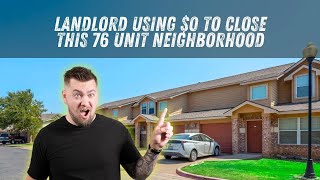
Christian Osgood acquired a 76-unit rent-restricted apartment complex in Stephenville, Texas, bringing his total portfolio to 170 units in one year. He shares how owning 95 units in the same market lets him cut costs through shared maintenance and leasing staff, and explains the mechanics of LIHTC subsidized housing and the multi-million-dollar upside when exiting the program.
Chapters
Hello, friends. I'm at the 76-unit. We are under contract and getting close to close on this bad boy. This is the largest deal I've done. It's also the most exciting deal. These are 3, 4 beds, paved parking, relatively new build. There's a clubhouse and pool right behind me. When people call me a slumlord online, this is what I'm actually buying. These are super nice, lovely places to live. And yes, they are subsidized rents. We're under contract right now. I can't disclose the price, unfortunately, but there's a heck of a lot I can tell you about this deal. I want to share what we're looking at, what our game plan is, and how we're taking this out on today's video. Stay tuned. I'll see you back at the office.
Unfortunately, on this deal, I'm not allowed to disclose price. However, I can tell you every other thing about this deal. I think there's going to be a ton of takeaways. If you're a new investor trying to build your portfolio, you're a seasoned investor who wants to buy larger deals or nicer buildings, this one checks all the boxes. Now, the only thing I'm not allowed to talk about on this video is the price. The seller asked until we close not to disclose the price, which is fine. I can share the rest of the financial data in that this cash flows day one quite well, even on their numbers. Now, we're going to be able to really push the day one profits from what their books look like because I have 95 other units in this town. I have a maintenance crew who needs more work. I already have leasing staff. They have a lot of on-site payroll. This is an out-of-state owner. This is one of the efficiencies and why I encourage people to try to invest in their backyard when they can. And when you do, stack as many units in the same market as possible. You get efficiencies between units. This deal is better for me than it would be for anyone else in any other town because I already operate there, because I already have staff there. The payroll drops dramatically for us to run the building the same way the prior owners were, which is a huge piece of the opportunity. Portion number 2. This is subsidized housing. Actually, it's rent-restricted housing. It's called Section 42 or LIHTC. When you build a property, the builder can get huge tax credits to build a property and sign it. It's like a 30-year agreement to keep the property rent-restricted. There's a 15-year compliance period and then a 15-year extension period. We're in the extension period. This was built in the early 2000s. All this means is there are a few different ways that we could exit these rent restrictions. Prior to the end of the LIHTC contract. Now, I won't go too deep into the weeds on that, but it is part of the massive upside we have here. That being said, every deal must hold its own without having any extra bonus things or things that might happen. Day one, we need cash flow. We have it. The way we're going to operate it, that cash flow is going to get pushed massively right out of the blocks. And then in the future, when we do exit the program, this building is worth astronomically more. By astronomically more, I mean millions and millions and millions more than we're purchasing it. So that's what the deal is and the opportunity. 76 units, they're 3 and 4-bed units. When I started buying properties, I bought a lot of 1-beds and studios. We did a good deal of renovation. When you're jumping into a new market, you're going to have to work with the deals that are available. Make sure they always cash flow. But whether it's nice properties or properties that need some value add, the important part is getting your foot in the door and getting started. Because we bought a 19-ease building for $2 million, 25 units, it opened up the door for us to buy a 26-unit right down the street. For $1.6 million, $400,000 less. Both projects do very, very well. We then bought a light tech property, 44 units, absolutely beautiful building right down the street. And that's how the 76 came up. When we closed on the 44, these are harder to close on. There's a lot of government qualifications that you need. There's a lot of application process. When we closed on one, a broker reached out and said, hey, there's another light tech property here and they would like to sell. They want to work with someone who's already been through this process. We gotta go from one to the other. This is how you get to hundreds of units in any market. This will put me at about 170 units in Stephenville, Texas. It's not because we're amazing or we're doing anything super secret, right? We're just meeting with the players in the market. We're closing the deals that we can close and we're expanding in that area, creating efficiencies in our business. I'm super excited about this property. I think this will likely be the best deal that I've done dollar for dollar of all time. It's certainly the nicest building. Not that the 44 isn't very nice, but this building is insane. 13.5 acres. We're buying one whole neighborhood. Now, if you want to take out buildings like this, what is a good starting point? I think this is really important for a lot of people who are trying to scale. I don't recommend starting with 76 units. If it's in your market and it's a fantastic deal and you love the deal, absolutely go for it. But it's a $2 million raise upfront to close this property. That's a big chunk of cash if you haven't done this before. Here's where I'd recommend starting. Find the market that you want to invest in, like I did in Stephenville, Texas. Make sure population growth is going up over time. Check out the graph here for Stephenville, Texas's population. You see a market like this, your product is housing for humans. You want to provide excellent housing for excellent people. If more people are moving in, they will need more and more housing. Now, there's not a whole lot of new building starts in Stephenville, Texas right now, and it is expanding pretty rapidly. This is really, really good in basic economics, supply and demand. Demand is going up, supply is relatively static. So if we can take out a lot of the housing here and do a really good job managing it, we're in a very good place. If you are starting, and you find a 5 to 25-unit building in your market, excellent place to start. One of my first deals was a 38-plex. It was hard, it was challenging, it pushed me, but absolutely doable. My recommendation, stay at 50 units or below, but definitely above 5 units if you can find it. Now, I'm not saying if there's an amazing duplex in your market, don't buy it. If it moves you forward, do it. But the way that commercial real estate's valued and the control you have over being a good operator and improving your values, That is what you are after. So 5 to 50 units, you can absolutely take those out and you don't need any money in your bank account to do this. Look for the opportunity first. We cover this in a ton of videos, but the order is always deal, debt, equity. So you're going to find the property, you're going to line up the appropriate debt product, and there are many, and you then find the remaining capital after you have those first two steps done. So your next step, if you want to buy deals exactly like this, is one, meet someone who's already doing deals like that, network with them, and perhaps do a deal with them. That's a great way to get in or do what I did. Find your own deal, 5 to 50 units in a market, meet the people who own those buildings, network with them. When the opportunity comes up, select what debt product is available for it. And if the deal is going to cash flow day one when you close, that's a deal that makes money out of the blocks. It's not gonna be hard to raise money for. Make sure you buy the deal so that the real estate can buy the real estate regardless of how much money you have. I got caught up on that money thing forever. I don't want that to happen to you. Find the opportunity. The money will work itself out. If you need help on that, follow this channel. Seriously, just give it a like, give it a subscribe. You're now part of the club. We talk about a lot of different debt structures. And once you get the hang of this, once you learn how to get creative, most people I see start playing this game, get in a rhythm where they're closing about an apartment complex a quarter, which on 25 or so unit buildings, about 100 units per year. And it's not that hard to do, which brings me to my final point. If you're an investor who's focused on just the BRRRR method or the house hack, or I want to get into single-family or wholesaling. Throw out those strategies now. Look for the opportunities. If you run into a duplex, it's a great deal, buy it. But look at all of the opportunities and figure out how to put them together. It's not, hey, I want the one strategy I saw online, or hey, I want to start small and scale up. What opportunities are available, and are you equipped or willing to learn how to solve the problems that need to be solved to make that project work? This 76-unit will be a new adventure for me. It's the largest deal I've ever purchased. The largest property I purchased to date was 44 units, but in a town where I have 95, I'm comfortable doing these deals because I took the leap and closed on a 38-plex. And 2 weeks later, I closed on 3 side-by-side duplexes. And 2 weeks after that, a 7-unit building. This works. It is consistent. It's not that hard. But really, this deal came up because we were already doing deals on the same method I'm sharing with you here. Choose a market where the population's going up, meet the players, find and coordinate the deals. Get them under contract, find the money, close indefinitely. It took me about 3 years to reach complete financial freedom through my portfolio alone. You can absolutely do the same. And if you want to fast-track it, again, follow this channel. If you have any questions, DM me on Instagram @ChristianOsgood. You guys are always invited to follow me there. Love interacting with you. I do answer every message personally. That's the 76-unit. That's how you can do the exact same thing we are. I am so excited about this deal, and I will see you on the next episode.
More from Christian



Speak with authority to turn broker rejections into deals - boost your confidence #RealEstate

Turn Broker Objections into Closed Deals - CRE Negotiation Tactics #RealEstate #Negotiation

How to Get Multifamily Deals Under Contract Without Having All the Cash | Objection Series Ep. 1

How I Scaled 500 Apartments in One Texas Market in 12 Months #RealEstate #Multifamily


Turning a $12.2M, 200-unit mess into profit - live multifamily turnaround update #Investing

Day 10 Update: Turning a $12.2M, 200-Unit Apartment Complex Around in 80 Days #RealEstate

Day 10: Before Time Runs Out | Saving a Failing 200 Unit Apartment in 90 Days (Ep. 3)

How 2 Direct Deposits Generate $70K/Month from 224 Section 8 Units @ 99.4% Occupancy#RealEstate