We bought a Office!!! ( and more multifamily) multifamily live
Christian Osgood bought an office building in Ephrata, Washington with five multifamily units and two retail spaces. He walks through the deal structure, renovation plans, and why a physical address matters for his property-management brand, then answers rapid questions on hiring, financing tactics like 101% financing, and his three-phase portfolio growth model.
Chapters
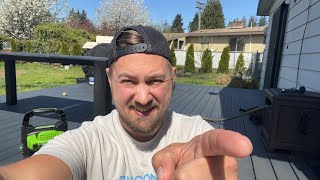
Welcome back. I'm in my backyard. Cody's in Moses Lake. I'll give you guys some updates on that throughout this video, but extremely excited for today. I wanted to share a little bit about the deal that we just signed for yesterday. It officially closes on Friday. However, the money's in, the papers are signed, and the deal is more or less completely done. So welcome to my backyard. It's one of the first sunny days we've had in, uh, in Washington. In just a second So I figured this would be a good time to sit in the backyard and say what's up to everyone here on YouTube. So as everyone starts to enter the chat, starting with Dividend Dave apparently, um, yeah, wanted to say hello and, and get us rolling. Dividend Dave, hello and welcome to the call. Thank you for joining. And, uh, I guess not call, but the, the live. I just got off Zooms. Look at me go. And yeah, excited to get rolling. So the big news for us on updates is we got an office. I needed a PM office in Central Washington as we do a lot of property management in Central Washington. My web design team said, hey, you need to have a physical address. It'll be good for the YouTube, or not YouTube, the Google algorithm. So I tasked our resident super buyer Cody I said, hey, buy me an office building that has multifamily. And Cody found one within a few days. We just closed the details on the deal. It is in Ephrata, Washington, Grant County. That's the capital of Grant County. It is 5 units, 2 retail spaces on the lower floor. One side is a barber and the other side is vacant, which is now going to be my team. Top unit has 2 huge units. They're really, really big 2-bed units. Multifamily, and then there is a lower unit that needs a little bit of reno that is also multifamily. So 3 multifamily units, 2 residential. Small purchase for us, but it gives us an office in Central Washington. And shameless plug, uh, if you guys have any properties in Central Washington, um, Grant County specifically, or over here on the west side, we manage in Grant County, Pierce, very selective parts of King. I don't like Seattle, so if it's Seattle, sorry, I'm not your guy. But King, Kitsap, Mason, Thurston County, we are in all of them and expanding rapidly. So shameless plug, I want the business. We are really good at bookkeeping. That is my main thing. We have great maintenance teams, but at the end of the day, your property is worth what it brings in. So getting great tenants, great leases, and fantastic bookkeeping is what we're all about. We want to treat it like an owner, and those are the things that matter to an owner— happy tenants, well-maintained building and a clean set of books, uh, for tax season. But yeah, huge deal for Cody and I. Very, very excited. I'm going to do my very best to read all the questions. Update on Cody: Cody is in Central Washington right now. We are working on— oh my goodness, there's so many opportunities. We have a 15-plex, a 10-plex, that same seller, so 25 units over there. And then working on closing out the housing authority. They're trying to sell us, I think it's 74 total units over a few transactions. So working on those. In addition to all those things, we are renovating a 12-plex, everything interior, interior, and doing a new paint job on the outside of the new Ephrata 12-plex and Cascade Valley, which is our 38-unit now has new siding on all the back buildings, new windows, new doors, uh, all master-keyed. And so Cody's making sure that project looks good as we finish up the interiors of those buildings. But, um, rolling 12 months, we have spent about $1 million in renovation on the portfolio, and it is really, really fun seeing a majority of the projects hitting completion right now. So that's what we're up to. As always, this is a live and we go through the, uh, the live chat as much as possible. So I'm going to open it up right here and see what we have going on. Dividend Dave, I see here in the comments that you're going to be in Washington next week. I have a few people want to meet me next week. This is going to be great. Uh, next week I'm in town for once. I— this month Cody and I were speaking in Vegas, Tennessee, and Texas. Well, actually, Texas was personal. I was looking at some real estate down there and seeing my sister, but we were all over the place. Just got back from Walla Walla, Washington, looking at a deal down there that I'm highly confident that we'll be doing. More details on that. But, um, yeah, next week I'm in town for once, which is going to be fantastic. So Dividend Dave would love to see you. As always, if you guys have any questions, drop them in the chat. It can be about deal structure, creative finance, opinions on your deal, you name it, uh, wants to have the discussion. So we'll open it up, uh, open it right here. Dividend Dave's here for a month, so lots of time to meet, uh, which is good. I think I'm speaking in Portland, Oregon on the 19th, and other than that, um, Cody and I have done too much speaking, so I'm taking a slow month on speaking engagements and working on the business because July is gonna be wild. Um, I'm speaking in everywhere and I don't want to do that. So we'll see with all 12 people in here if you guys have any questions for me. And if you don't, I'll just continue to talk for a little while and then we'll just call it a Wednesday afternoon. Edmund has our first one though. I see a question mark, so there's gonna be promising. Let's see here. Edmund, what would be the rule of thumb when it comes to— oh, sorry about that. This is the, the The poor part of running these on a phone while I have a dead laptop and I have to do a little management. What would be the rule of thumb when it comes to deciding on needing an assistant or manager/leasing consultant for your portfolio? Ah, rule of thumb. So I think everyone benefits, unless you're just hyper busy, everyone benefits from having a property manager after you're over, say, 10 units. When you're first starting though, those first 10 units really should be you, or if you're doing a partner, you and your partner. The owners should know how to manage their property, because what happens when you're between property management, a property manager quits, your PM— I've had someone's property manager die spontaneously where they really relied on the person. That's always sad. Um, so first rule of thumb is know how to do the job, because if you're gonna own properties, you should know how to run properties. Learn that on your first 10 or so units. Cody, you've self-managed up to 30. Um, and then, um, once you're out of time or you just have too many units, that is the time to go out and say, hey, it is time to get a property manager, a dedicated PM. I need an assistant. For Cody and I, that was at 55 units. We hired Hannah Caldwell, who is to this day my director of property management. She is fantastic. And couldn't do this without her. My next hire was my wife when Hannah was too busy. My wife left teaching, joined us. I'm not trying to make this a family company, but my mom informed my father that he needs to find a job or get back to work because he's been retired for 3 years and she wants him doing something. So I hired him on. He's helping audit my bookkeeping team and keeping them all honest. And then Robinhood has 9 employees, but You pick up employees when you max. My rule of thumb is I max all the existing employees with as much as they can possibly do. I push a little bit past that to verify that we're really maxed, and I go, okay, it's time to add more people. But, um, I don't like a lot of slack. I run things pretty lean intentionally. So that is my rule of thumb there for assistants and employees, any part of your business— bookkeeping, legal, acquisitions, property management. You need to add people when you or your team are at their max, push a little past that, and when you're like, I can't finish all the things, like I cannot do all the tasks, not possible, that is when you have to find new people. Going to the next question, is the amount of units the reach where you decide to expand your team? I wouldn't go by unit count, I'd go by capacity. How much can you handle? If you can handle a ton— I work all the time and I love what I do. Some people get weird about like hobbies and work-life balance. That is not me. I am singularly focused. I love real estate. I love the game. I love managing the people and all the aspects that go into business. Not saying it's always sunshine and rainbows, but that is, um, that is my favorite. So for me, um, If I have more than 16 hours of work to do in a day consistently, that's just not sustainable. I have a few days where I only work 8 hours, but generally it's going to be 12 to 16. I can do that happily. If that's not you and you're like, hey, I, I'm not someone who wants to spend more than an hour a day on my real estate, it's like, okay, well, it's, uh, when it's consistently taking you 2 hours a day and your time's otherwise full, that's the, the right time for you. Got another question here in the chat. Uh, 500 square foot bank branch with a vault, built 1999. What would be a good alternate use? The bank is closed. Well, it actually really depends on the building because some banks are in like a small retail space. Um, so if it's in like a— it's like a small bank branch Um, pretty much any other retail can go there. The vault could be removed, could be used, uh, obvious uses, you know, another bank. Uh, there's some bank buildings that— oh yeah, that's right, he said 5,000 square foot. Of course. Um, alternate use for that, that's a good question. I've only seen one, and this is probably not the highest and best use. I have seen a barber shop that just kept the, um, it actually was a converted bank. They just kept the safe and a bunch of stuff stored there. It's just like a cool feature in their shop. You can use it for pretty much anything that's retail. Um, that's— it could be a talking piece. If you're looking for actual like bank vaults though, it's pretty much going to be a bank's going to use it or it's going to be a talking piece. Um, oh, you know, I have seen one other one. Uh, it was— I want to say it was like 7,500 square feet, but it was a really small brewery and it was called the something vault. And they, um, they put some of the brewing, like the actual like display brewing pieces. I'm not— I've brewed beer before, but I'm not, uh, that is not my niche. But I've seen that done where they had the, um, like the huge metal containers. A couple of them were in the vault and then, you know, things came out of that, but Not an expert in that, but I've seen them used creatively. There are other uses. Um, from Ryan Mitchell, on the deal that you sell or financed 101%, why 101%? Um, that just happened to be the math, uh, when I went through the financing process with, I believe it was Merchant's Mortgage. They were my hard money lender on that. Uh, that, by the way, for those who don't know, um Duplex, my second ever multifamily deal, is in, of course, Moses Lake, Washington. That one was, um, I was doing— I was supporting reno cost, and when they gave me the acquisition budget, I got their budget for my reno and the acquisition in one lump sum, which happened to just equal 101% of the purchase price. I got that all up front. I funded all the reno, but their combined budget for me on that project was a little bit more than the purchase price. That's why 101%. That deal ended up— I bought it for $212,000, spent $50,000 in reno, planned to keep it forever, but Cody needed some money to get out of a partnership, so I actually bought into one of his 12-plexes. And sold my duplex to do that. Sold it for $375,000 if I recall correctly. So it was just barely squeaked by as a 6-figure flip. Wasn't designed to be that, but ended up being a very good, very profitable project. As far as a newbie investor, that deal went really well. And I did do a lot of that work myself, which helped cut down costs. I do not recommend that. Because I have a habit of electrocuting myself all the time whenever I do my projects. Dividend Dave, do you have others that bring you deals? And if so— the chat disappeared— if so, how do you arrange that? Yes, brokers. Brokers bring me deals. Dion's brought me a deal too. I'll talk about that, but, um, Eric Bubel Foundation Group. Been the best broker I've ever worked with. You guys can use him too in Washington State, but don't blow him up because Derek is— Eric is mine. I get, I get first, first, first view on those. Cody and I use him for a lot. He actually reached out to us first, um, is after I bought a triplex. We got a cold call from him and he said, hey, I have this off-market 10-plex. And saw you guys recently purchased. And it's really funny because that little teeny, uh, that little teeny property, uh, the triplex is our smallest building and, um, not the one I would have called on. That's— he just saw that we had a transaction recently and reached out to build the relationship. Turns out that 10-plex— Cody and I already owned the 12-plex right down the street, built the same year by the same builder. He didn't know it when he called us, but we were the perfect buyer for that, uh, 10-plex. We wrote it up the same day. I believe it was a couple hours after he got the paperwork to us, we signed it, we closed the transaction early. It was— and we bought it in the same LLC that had the 12-plex. It was the easiest transaction I've ever done. The deal was absolutely ridiculous, cash flowed several thousand dollars day one. And, um, yeah, Moses Lake, Washington, fantastic deal. And he was really happy with us because he's like, do you guys have the money to take this out? Which of course the answer is, I never have any money, Eric. That's not a— that is not an objection. We will buy it. And then we did. And that builds a lot of confidence when you can look at a deal and say, I am the buyer, I will close it, don't worry about it. We got to inspection, he's like, is there anything else you guys want to change? Nope, I'm okay with everything. Let's close this. That is one of my favorite deals, one of my favorite brokers, and absolutely love it.. So that's a fantastic transaction. Worked with him there. He is working with us on a bunch of units in Walla Walla. I'm not going to over-talk about that deal until it comes together, but I was just down there with him. He also brought us— he is the one who brought us the 12-plex in Ephrata, Washington. So he does that. Then Dion McNeely is a great friend of ours. He has the YouTube channel Dion Talk Financial Freedom and just launched a course. Feel free to check that out. But Dion, um, called us and said we need to check out the Robin Hood Village Resort, and we did that, and that was a fantastic transaction that does really, really well. It's also a ton of work, which Dion knew. There's more work than he wanted to do, and he was right. It is really hard. Uh, great, great project. We've grown a lot, but, um, would have been the wrong project for him, was definitely the right project for us. So it can come from YouTube, it can come from brokers, and come from other owners. But, um, other people bring me most of the deals now because some things just need to be taken out creatively, and Cody and I are very good at doing exactly that. Sorry for covering the camera here. Back to the chat from Sanoy. When you renovate, how much do you expect rents to increase on average every 10G you reno in your market? Um, that one is a hard, hard question to answer. I like to get a return on my renovation, but Cody and I are way more concerned with just making the buildings nice. Doing things right and optimizing is more important to me than the specific return that I'm spending on my buildings. I want to have decked out buildings, and when it's done, it is done. So I mean, it just totally depends on the project. Like, if, if your project is, hey, I'm renovating kitchens— kitchens and bedrooms— you're gonna get the highest return on investment, period. Like they, they increase rent if you add a bedroom or you make your kitchen nicer. Stainless steel appliances don't cost a whole lot and add a whole bunch to the value of the property for what you can get in rent. There's some things right now, like with— I'm doing a huge siding project where we're— we just completed siding on 3 buildings. We're reciting because the siding is ugly. It is going to help us lease the buildings extremely quickly. And it's giving a new look to a building that has a stigma around it because a lot of problems have happened at the 38 Plex over the last, you know, 60 years. That used to be the biggest trouble property. It had the biggest SWAT raid in Grant County history. It's had a lot of big problems. As part of the rebrand, having it look better is great for leasing and great for future rents, but very hard to say how much spending $125K in siding will have direct impact on rents. I can say it will reduce leasing time a lot and makes the city happy for other projects. So return can go beyond the money, but, you know, I'm not about just decorating things to decorate them. There should be some return. This is very much a personal decision for you on what return you want to see for that. And You know, what quality— did I get the 10-plex rent-to-lease with no money? That's a, uh, we already owned the 12. We got a second loan on our 12-plex that had a fantastic equity position and then bought the 10-plex, um, 90% seller financed at 5% on a 15— 5% interest only on a 15-year note. Thank you, Eric. But that deal, yeah, the, um, the goal for all real estate is your real estate buys your real estate. At some point you have to figure out how you buy your first deal, but that is the goal. So when I expand an LLC, this is a perfect example, uh, we buy an LLC. That is how we do it. The, um, we got a big equity position in 12-plex. The partners of that stayed the same. All of us wanted to buy it and we did that. Later, that same LLC bought a duplex. $40,000, uh, dollars out of pocket. That was it for the down payment on a ridiculously nice duplex, about $400,000. It was worth $500,000, and, um, 10% down. So that one, we bought it out of the cash flow of the 10-plex and the 12-plex. But that's how you start to scale this. When the assets buy them all, uh, it is actually free real estate. I hate using that word because people think that it's super easy or get-rich-quick. It is none of those things. It is a ton of work and it does take some time. Uh, that being said, um, you do get rich, which is nice. This is a nice bonus. I do appreciate it. Um, let's see here. From Dylan, how far would you travel to self-manage a property before sourcing out to a PM company? Would 3 hours be too far? Uh, no, Moses Lake is 2.5 hours from me, so that's basically 3 hours. And when we hit traffic, it's more than 3 hours. We, we self-manage that forever. And I, I mean, I own the property management company, so I still technically self-manage. I just have a lot of help. Um, As you scale a portfolio, um, I would say anywhere that you're willing to drive. 3 hours works for me. Caleb and Chuck have always had property managers. They live in San Diego and invest in Texas. I would recommend doing that, but I know people who self-manage from halfway across the country and they have had absolutely no issues. To each their own. You can do it your own way, but for me, 3 hours seems to be pretty standard. The Robin Hood's an hour and a half south. Um, our Walla Walla deal had to be big enough to justify flying to it, and it is if that comes together. Uh, that'd be a 5-hour drive, which is more than I want to do, but a 55-minute flight, which I'm totally willing to do. So, um, the bigger the deal, the longer the commute can be, because if I'm— for pretty much anyone, if you buy 100 units, you can probably afford to fly to see that 100 units. And manage if that's what you want to do. Uh, Edmund, what hiccups have you faced with your portfolio so far? Um, we did not need to buy the house next to the Robin Hood. We did that because we wanted to and it would be cool to do. Um, too early in our career to buy cool things. I wish I didn't do that because it's just another project and we didn't give it as as much time as it needed. So instead of taking a few weeks to renovate, it took 4 months. And it's beautiful. It makes money. It will be a good deal. But it was a distraction from everything else that we work on. While we can do multimillion-dollar transactions in multifamily and renovate, and I have the teams and systems for it, flipping a house as a short-term rental— or sorry, a triplex into a short-term rental and expanding the Robinhood made no waterfront 4,000-square-foot building that is decked out. However, I didn't need to do that total distraction, and distractions are the last thing you want. From Ryan: If I know my next seller finance deal require 100% financing using debt for the down payment, what type of property should I be looking for outside of being sure the cash flow can cover the additional debt. So what type of property? Um, well, a multi-family, so, you know, duplex to 100 units. There's a few things that I look for. I look for owners who have low debt, so that's usually owners that have been playing the game for a while. I'm going after the property, I'm going after the relationship with them, and they will help move you to the next level and tend to be the ones who eventually do sell or finance with you because they like you. So that is a huge thing you're looking for. Another thing you can do— I'm not about targeting distressed properties, but distressed, because that's what people look at for off-market stuff, and there's a bunch of content online, and I think it's stupid because, um, buying from people who are in financial trouble or broke people is not a great way to learn how to master the game. That's, you know, buy from the people who are losing. I like to buy from masters, so look for the masters. However, um, Properties that do have deferred maintenance or bad books that have been on market for a long time, if a bank won't lend on them, the only options are hard money or seller financing. Realistically, it's going to be private capital and seller financing. The seller is a form of private capital. That could be a really good reason of why someone would seller finance to you is the building is otherwise not bankable. So you can look for those projects if you want to take them on. The 38-plex is one of those, and that was a 7-figure profit deal, and we have another few 7 figures to pull out of it because it is a, um, seller opportunity that's very hard that we were the ones who were willing to take on. So that's an option for you. Other than that, it is just looking for the properties in your market that you want to one day own and meet with those owners and figure out what makes it work when someone presents you with a deal. I wouldn't overcomplicate it or add more metrics to that because every deal is unique. And if you have a big open thing instead of having what people call the buy box where it's, I want this, this, this, and this, it's, does it cash flow, is it in my market, and do I understand what I need to do to understand the deal and put together the debt and equity? And then you are there. Keep it that simple and you'll buy more stuff. I said no to deals because they didn't fit my criteria, and I wish I bought them now. So should figure out how to buy them. From Sonoya, how do you play the equity part of creative financing? I'm having trouble with the math on my end, uh, cashing out the deal, uh, doubling. I only have $30,000 in cash flow for a $260,000 down. Confused with the numbers. Well, the equity part You have to— the property has to buy the property. So you either have to be able to refinance the property so you increase the value enough where you can pull the money out to pay them out, you have enough cash flow where the cash flow pays them out, or you have enough upside in the property where you can sell the property profitably. I'm not about flipping. That is not a model that I recommend, but it is a legitimate exit strategy where it's like, hey, if we fail to hit a metric, then we can still sell the property and get their money back with whatever profit. So if you're trying to multiply someone's money, uh, that's what you have to look at is how will we do this and then make it happen. Um, but that's the equity piece. Uh, if you're buying them out, that's how you do it. You do it with your earned income, the property's earned income, uh, refinance or sale. Those are the only ways to do it. Uh, looking through. Dividend Dave, if you bought a property in Washington— if I bought a property in Washington, would you manage my property? If it's multifamily and it's in one of the markets that I am operating in, uh, yes, yes, I absolutely would. Uh, and again, for people on the call, it is, uh, Grant specifically, like Renton or Auburn in King County. I, I don't do a lot of King County because it's a pain to manage here. Um, so Pierce, Thurston, Kitsap, Mason County, we will manage in any of those. Grant County, and if I buy in Walla Walla, whatever the heck county that's in, I think it's Clark, um, I will open up shop in there because the building I'm looking at buying comes with an actual leasing office, and I will instantly hire employees. So short answer is yes, within reason, Dave. You just can't buy in Spokane because I don't manage— I manage two properties in Spokane and I wish I didn't do that, and I don't want more infrastructure over there yet. I will eventually. Edmund, have you ever bought a property with overwhelming invoices? Also, does a bank look at invoices if a property cash flows beautifully. So by invoices, I assume you just mean operating expenses, because— oh, there's two ways I guess I can read that. If you mean like invoices, like maintenance items that need to be taken care of immediately, yes, they look at that, and yes, you have to do that. If you're talking about invoices, just general operating expenses, They look at all of those, and those are extremely important because that all dictates the cash flow. But that's what they're looking at ultimately, is what are your expenses and what is the income? If it has a ton of income and a ton of expenses and the income is way higher, higher— I read Walla Walla and said higher, higher. That's funny. If it's way higher— oh, I'm an idiot. With the— oh my goodness, that made me lose my entire train of thought. Uh, sincere apologies, this is the downside of, uh, of doing a live. But if the, uh, if the income is, uh, higher in relation to the expenses, that is ultimately what they're going to be looking at— debt service coverage ratio. From Snowy, how do you find a property, uh, that has a loan on it from tax records? Uh, oh, that's— that one's simple. Uh, you usually can see, um, what the financing is. You can also just, uh, work with any broker on the MLS. You can see what loans were originally put on it. And if you have data like CoStar, or, um, there's a whole bunch of very inexpensive softwares you can do to check the CMBS data, uh, you just can see the last time they financed it and you can figure out, okay, well, if they had a $700,000 loan and the loan was placed last year, they probably still have debt. You can back into those numbers pretty easy. Um, but a lot of those debt things are disclosed in a lot of states, not every state. Will be public record. Ah, turns out Walla Walla is in Walla Walla County. That is convenient. Thank you, Nick. Nick lives out in that neck of the woods. And, um, oh my goodness, I— okay, so first time ever visiting that market. I love Tri-Cities area. I had never been to Walla Walla. That is my favorite city in Washington state. There is absolutely no competition. I don't even drink, but I love wine country. Very cool seeing the little tasting rooms everywhere. Got nice schools, but really cool architecture and really clean city. So that ticks all of my boxes. Um, yeah, Walla Walla is awesome. So how much do you take personally from the 10-unit, uh, if it cash flows $833 a month? I've shared this a few times, but Cody and I don't pay ourselves. I reinvest 100% in the portfolio because then I just have nicer buildings and more cash flow. I don't need it, and so I don't really care. At some point you flip that switch and you go, I'm ready to pay myself. Um, I'm not there yet. So when Cody and I run out of money, I usually get a text from Cody saying, hey, I'm not going to be able to pay my rent this month because I am out of money. We look at all the LLCs and all the portfolios, and whichever one is just overly liquid, uh, we do an owner distribution from. I'm not saying that is a right or wrong way to do it, but, um, that is the only way I know to reinvest a million dollars into the portfolio is if all the cash flows and all the cash-out refinances and all the new debt just rolls straight in to property renovations. You get nicer and nicer buildings with higher and higher rent, and all of a sudden you have no deferred maintenance maximum rent, 100% occupancy, beautiful properties, almost no turnover. And that is why we have the 3 phases. Build is where you acquire. Stabilize is where you get everything leased up and make the best of what you have. That allows you to refinance, get new capital, and optimize, which is what we're doing. Once we're done with optimization, the portfolio will pay Cody and I about— I think right now, if we just turned on we leased up the last couple units and just turned on the, uh, the cash flow switch, we're going to be at about $25,000 a month each in cash flow from the portfolio. That is before the profitability of the PM company. So that, uh, that 10-plex, if I was to pay myself cash flow, it's owned by 3 people, cash flow is $3,000, um, so we'd each make $1,000 a month cash flow, um, on that one, uh, after all the operating expenses. Though I would opt to make sure that you have enough fund in your operating account, which, which I would call 3 to 6 months, um, operating cost. Oh, and I think I answered the next few questions. How do you eat if no salary? I'm confused. Um, yeah, uh, when I'm out of money, I pay myself. And that is the only time I ever pay myself, uh, is when we are out, because cash does not do much for me, especially while we're devaluing it. Real estate does. Generates new cash. Income matters. I am not huge on carrying a lot of liquidity. There will be a point when I move to Texas where I will pull $1 million out of the portfolio and buy a house in cash in Texas and then have land and do that. I want— that's, that's a dream of mine, but we are not there today, so I don't care right now. It's building up to the point that I can do that. Uh, looking through a couple of these. Ryan, when you bring on an equity partner, is it customary that the terms include monthly payments as well, or does that just depend on what's agreed upon? Totally what's agreed upon. My favorite ones are, um, so most equity partners, you usually do distributions monthly with real estate. So if you guys are sharing the income of the property It's just going to be done out of the income of the property. Um, super easy. We have some where we have capital partners that have a buyout and no share of the cash flow, so I never write them anything monthly ever until I buy them out at a multiple of what they put in. Totally negotiable, totally whatever you want to do with the equity partners. Um, I use the example a lot, but we have a 6-unit building, well, it's 3 duplexes side by side. The investor wanted to double his money every 5 years. So the note is written that in 5 years, I— he gave $90,000 to buy the deal. I pay him $180,000 in 5 years. I get all the cash flow and I have no money in the deal. Fantastic deal for both parties. And the rents alone from that property pay the investor out. So the property will buy the property and I will never invest a dollar of my own in that property. One of my favorite deals because it's such an easy one to explain. Simple structure, uh, did not cash flow a lot day one, but a ton of rental upside and no deferred maintenance. So that was a deal where it's like, okay, it holds its own day one, we're gonna do some, uh, mild improvements, but over the 5-year period continue to raise the rents appropriately to get to market. And once it's there, we can pay them out either out of a refi or out of the saved up cash flow. So two different ways the property buys the property, and everyone wins. And the owners got the price they wanted and the interest rate they wanted. So everyone literally just— that is a perfect example of a win-win-win. I get to own properties at a stellar price with no money in the deal of my own at all. My investor got to take his own money and double it, and the sellers got to convert their property into a note that hit every single one of their objectives. That is what I call a perfect deal and no monthly payments to the investors on that particular one. What are your first steps to negotiate a property to make the deal work, uh, where seller financing is already being offered on a 25-year AMM? First steps to negotiate it, uh, if it's being offered on 25-year AMM, I, I I'm gonna look at what price do they want, 'cause most people wanna get their price. That tends to be important. It's not always the big thing. We've negotiated off of price before, but for the most part, people usually have a price in mind. So 25-year AMM, I'm like, cool, I know the AMM schedule. So now all it is is income less expenses. At the price they want, what interest rate do I need to borrow at on a 25-year AMM? To cash flow day one on long-term fixed rate debt. If they have an interest rate in mind, well, if it's already a 25-year AMM and they don't want to change that and they have an interest rate in mind, then the price is the part that you're going to negotiate. You're going to go, at what price does the interest they want at that amortization cash flow? And you can do that by plugging it right into an amortization calculator online. You can be Cody and do it all in your head, which is awesome that he can do that. However, there's a million and one calculators online that can do it in about 30 seconds. So plug it in, figure out what your expenses are, and that is how I would do the deal. Uh, scrolling in. First stuff to negotiate— there we are. What interest do you have to pay for PMI? Seller financing doesn't have PMI. I don't have PMI on anything. Um, So I don't really deal with that. PMI is a silly mortgage insurance that basically banks lent terrible stuff. Oh, I see Cody Davis is here too. Hello Cody, welcome to the chat. I am not going to answer the text that I just saw from Cody because I think I'll kill the live since I'm on my phone. So sorry about that, Cody. Um, but yeah, for, for PMI, um, it's basically a mortgage insurance where banks are like, well, if we lend in a risky position where it's not a ton down, we're gonna have to have you pay us a fee, uh, in case the property goes down in value for any reason. We want to be covered. It is silly and unnecessary, and it counts as a fee fee, and we don't put those in any of our contracts because that would be very silly. Ryan's originally from Texas and is excited for me. I am excited for me too. I am looking at going west of Fort Worth. I want to have— I have always wanted to have land. My wife is from a ranching family that had a huge ranch in Wyoming. Her dad grew up on a small little 5-acre farm in Issaquah, Washington. And so we are not just real estate investors who dream of having a farm. That we actually like. That is, that is the family heritage, and we like doing that stuff. So excited to be from— excited to be from Texas. Cody, welcome to the call. And here we go. So, no, what interest do you have to pay for your investors? Totally custom. There is no good way to answer that question. I can be doubling their money if they're having a payment. I have investors who are getting a 12% return on their money monthly. And they get bought out at principal, uh, and everything in between. Uh, what you have to pay your investors is based on what their goals are and what your deal can offer. And those are the only two things that matter. What do they want to do, and, um, what can the deal actually support? Those are two very, very important things. Actually, the only two important things for that. Topic. Dividend Dave touching down in Washington this Saturday. Woo! Excited. Um, yeah, keep in touch. I think you have our phone number, but if you don't, um, ping me after this. You know how to— you know how to contact me. We've talked on Instagram several times. A family in Midland. Awesome, awesome. Uh, Leonard, I have a neighbor selling his house, $155,000, 3-bedroom, small single family. How would you— sorry, the chat has moved past what I was reading, hopping back over. How would you recommend working that? I would meet with your neighbor and figure out what they want to accomplish. That is all that really matters there. If you talk to them and they're able to sell or finance, and that's a property that you want to own, I can see that being easy to manage because that's your neighboring property. Deal, then debt, then equity. And the deal is what do all parties need to put together a deal? Not enough inputs for me to advise anything past that, but if they're selling it, I would let them know, hey, I'm looking at picking up investment properties and was curious on what you're trying to do with selling your house. What are the objectives and is there anything I can help with? I'd keep it extremely simple though. Sanoi, what are your average rental costs in your area to make new baths and beds? Oh, it varies a ton, and I know a lot of my answers to you this week have been, uh, uh, varies. However, um, when we're doing renovations where we're pretty much just like redoing the whole thing— cabinets, floors, walls— we paid anywhere from 15,000 to 25,000 a unit. If we're just repairing a unit and making it nicer, where maybe redoing floors, paint, and a new countertop, we're not necessarily replacing all the cabinetry and appliances. Depends on the level of it, but we're doing a lot of them for like $7,000 where we're new coat of paint, a new choice of countertop, maybe replace the toilet and flooring. Replace any damaged doors, that sort of stuff, we're coming out closer to $7,000 on a lot of projects. Uh, it really does depend on the building, but we've done up to— I think the most we've ever spent on a unit was $30,000 or $35,000. Dividend Dave: Cody got custody of you in the divorce. That is wrong. No, I'm kidding. You can text either one of us. I just run property management, and once I manage Dave's properties up here, I'll have Dave and the company break up. But, uh, but seriously, Cody and I partnered on literally everything. We just separated out one building, and, uh, I run PM. So that is that. Cody and I are partners, and we share our equal dividends of Dave. What renovation per unit upgrades, uh, increase rent? For you, say kitchen and bath. Okay, um, when we're doing, uh, so what upgrades, if I'm reading that correctly, like which ones have the highest yield? Um, the aesthetic ones help rent a lot. So kitchens, like kitchens are usually a big open space. You spend a lot of time in the kitchen. Kitchen is the most important. Hands down. Um, if you can add square footage to a bedroom or add square footage to a bedroom closet, people love that. Uh, next is bathrooms. Having a nice bathroom is a big deal. Like, like bedrooms help. If you can add a bedroom, that's huge. If you can expand a bedroom, that's huge. The biggest value-add you're going to do are beds and bathrooms. A nice bathroom makes the whole place feel nice, and you spend a lot of time there. Kitchen, spend a lot of time there. And they have the most like fixtures, appliances, textures, because bathrooms are going to have— you're gonna have a sink. If you have a junky sink and a beat-up toilet and a dirty shower, place is gross. You have a really nice shower, stone countertops in the bathroom, and a brand new toilet, feels like a whole different space, way nicer. A lot of the maintenance goes into bathrooms, and so that tells you everything about a property. When you walk in there and you go, hey, this is really nice, the rest of the property is probably really nice. Those are the things that add the most value. Exterior— new windows go a long way towards making the place look nicer. Fresh paint is the highest value add for an exterior, hands down. A junky property can all of a sudden look nice, and paint does not cost a whole lot compared to anything else. Dollar per dollar, exterior paint and then interior bathrooms and kitchens are the highest value thing that you can And then if you're Cody and I, eliminating carpet is going to set— that is going to save you a ton of money because you're not gonna have to clean them. And if someone gets your apartment, or at least it doesn't cost much to clean floors that are hardwood or laminate. And carpets get gross really quick and you have to replace them all the time, and I hate them. So, um, yeah, if you want to make money on like ongoing, uh, replacing any carpets with hard flooring is a good idea. So tenants will pay more for cleaner spaces, for nicer spaces, for bigger spaces. Those are all the things that go in there. Nice lawn definitely helps. Um, we have a few properties now that have professional landscaping, and it does make a difference. That helps. I find the nice lawn, the landscaping, more than leasing or finding, uh, higher rents. It really helps with retention of good tenants. When they, when they're there, they already like the property, and then you take good care of stuff like the lawn and the trees, they stay there longer. And that's worth a lot of money because vacancy is one of your biggest expenses. Do we have a minimum population in an area where we consider— for example, Union, Washington has a population of 600 people. That's super small. However, uh, Union is absolutely packed with people all summer long because it is a massive vacation area and it makes sense to own a resort there. So that could make sense. Uh, Moses Lake has 30,000 people and there's no lack of people to rent to and not enough buildings. So that one is fantastic. But you really just want to look at like the rental stats. Is there a demand for rent? Is rent increasing over time? And is population going up over over time. The direction of population growth matters to me a lot more than the actual amount of population there. From Jasper: When you look at getting a new building, would you consider acceptable, required, or what would you consider acceptable required maintenance? Totally depends on the project. Uh, required maintenance for our 38-plex was everything needs to be be changed. Needs, uh, new roofs, new electric, new plumbing, uh, new siding, new windows, new doors, new tenants. There's a few great tenants that came with that building. If, uh, if any of them see this, uh, it's not everyone, but a lot of people who were, uh, problems. I'll leave it there. So that was acceptable because the deal is going to make 7 figures and has made 7 figures and will make more 7 figures as we finish out our projects. When you can make millions of dollars, if those problems are worth millions to you, then that is how much maintenance is acceptable. If this was a duplex, I wouldn't buy a duplex like that because there's not enough money in it to make sense for me. So it depends on the project, your financial position, and what you want to— what you're willing to put up with. But it does need to be budgeted for. Dave's doing LVP in his tenants' bathrooms, bedrooms, etc. That is my recommendation. It is a fantastic, fantastic thing when floors look really nice, are easy to clean, and cheap to replace. And if you get extra flooring, I do that for pretty much every building. If you're storing extra flooring, if it gets damaged, you can replace like individual boards. It's phenomenal. If you can use like a uniform few, few products through your whole portfolio Makes it really, really, really easy. You don't have to change all the flooring every single time you have damage, because damage will happen. And that is it for the comments. We have run out of comments and I have run out of time, so this is perfect. But everyone join— oh well, we have one more. I'll answer one more and then we're gonna call it. I do have a website. Um, do I have a website? Oh shoot, I'm getting a whole bunch of questions. Fine, we'll go a little bit longer and then once these questions are out, I'm actually ending. This is our traditional false ending. But Jasper, do you have a website that looks at stats for rental occupancy? I look it up in CoStar. That is expensive software though. Um, you should be able to find any of that from a local property management company. That is a pretty easy conversation to have, and they are usually more than happy to help you out with that info. Um, how much would it cost to build a unit ground up? For rents for $2,050? I don't know, I've never built a unit ground up. And that is, uh, I'm not a developer, I am a multi-family owner and operator. I do a lot of reno, but, um, I would not be the one to ask that. And Dave, tenants also have their own big shed on the property, so they are staying. Wow. Yeah, those little amenities help with retention. Sheds, laundry machines, all those things, um, they're not going to push your rents, but man, they they make for happy tenants. So I'm gonna go for real this time. Everyone, thank you so much for your questions. Tune in again next week at 3. Like, subscribe, and if you want to learn more about how to do this yourself, you can check out our mentorship program and course on multifamilystrategy.com. See you guys next Wednesday at 3.
More from Christian



Speak with authority to turn broker rejections into deals - boost your confidence #RealEstate

Turn Broker Objections into Closed Deals - CRE Negotiation Tactics #RealEstate #Negotiation

How to Get Multifamily Deals Under Contract Without Having All the Cash | Objection Series Ep. 1

How I Scaled 500 Apartments in One Texas Market in 12 Months #RealEstate #Multifamily


Turning a $12.2M, 200-unit mess into profit - live multifamily turnaround update #Investing

Day 10 Update: Turning a $12.2M, 200-Unit Apartment Complex Around in 80 Days #RealEstate

Day 10: Before Time Runs Out | Saving a Failing 200 Unit Apartment in 90 Days (Ep. 3)

How 2 Direct Deposits Generate $70K/Month from 224 Section 8 Units @ 99.4% Occupancy#RealEstate