MEET JESSICA ROSE!
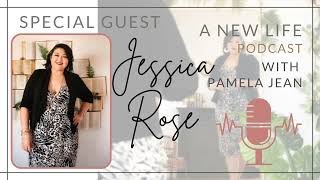
Podcast episode (YouTube) of A New Life with host Pamela Jean interviewing Jessica Rose, a Tulsa radio DJ and former admissions rep. The conversation covers Jessica’s upbringing (Mexican family, mother as a formative leader who broke generational patterns), career path into radio (inspired by LA radio personalities, attended an academy in Huntington Beach after an Intro to Broadcasting class), an intentional break from radio and a 2017 return shaped by social media’s demands, and her purpose: connecting people to resources. Themes include motherhood, confidence, breaking family cycles, the value of trade schools, mentoring/encouragement, and Jessica’s goal to become an entrepreneur. Episode ends with rapid-fire questions and practical advice to bet on yourself and take incremental steps toward goals.
Chapters
Welcome to A New Life podcast with Pamela Jean, where it's all about empowering women to empower more women. Get ready, friends, to create a new life. And here is your host, Pamela Jean. Hello, my friends, and welcome to this week's episode of A New Life podcast. I'm Pamela Jean, your host. Thank you so much for being here today, you guys. I am so excited for the guest that I have on today. When I'm looking for people to interview, to bring to this community, I look for people that I find strong, confident, interesting. Someone that I feel this community can benefit from, whether it be from their story, their careers, just their mindset. And the person I'm bringing you today, I am just so thrilled with. And I know you're going to love her. So today, friends, I am welcoming Jessica Rose to the podcast. If you are in Tulsa, you will probably know her name. She is a radio DJ here in Tulsa. She has some news to share with us today, but she is a DJ here in Tulsa. I met Jessica for the first time at a mixer that was held through the radio station. And I admired her from afar. She has a quiet confidence about her that I just adore and I can't wait for you to get to know her. So, Jessica, welcome to the podcast.
Thank you. You're so sweet.
I am here for you.
I find it interesting sometimes I don't know if anybody else feels this way, but when people talk about you, I don't know why it is. Sometimes it's hard for us to believe. Like, wow, I really am all those things ever. Does that ever happen to you? Like, I don't. It's not that I don't want to believe all those wonderful things you said about me, but, you know, we just go on. We move, we move. We're going, we're going, we're going. And. And I don't do things in order for other people to notice, you know, does that make sense?
That makes total sense, Jessica. And I think that's why I gravitated towards you in the first place. Place is I just noticed you were not a attention seeker at these events. And some of these events, people definitely are attention seeking. And I noticed that you were not. You just like I said, you had a quiet confidence about you that I just admired from afar. And I know we chit chatted a little bit. You know, there's so many people there and it's a very high decibel. It's hard to get a chance to really have a good conversation. But I think, you know, women Are. Are ra for some reason to be humble to a fault, like, too humble, that. Oh, that's embarrassing. Don't say those things about me that you just can't take a compliment. And you know what I learned through coaching and therapy and all the work that I've done on myself, Jessica, is when you learn to take a compliment, it is one little step towards loving yourself and loving you exactly the way you are. And when you can learn to give an authenticity, honest, pure compliment to someone else, that is another just direction of how confident you are as a person, that you're able to see the beauty in other people all day long. And that I agree, sometimes it feels embarrassing. It's like, oh, my gosh, stop already.
Yes, it does.
Well, tell us, who are you, Jessica? Where did you grow up, share about your family and just dive on into whatever you feel comfortable sharing with us today?
Well, I would describe myself as someone that's a child at heart. I am very playful, silly, loving. All of that tends to really happen, kind of like in the inside of my home, amongst my family. As far as being very playful and silly and around my friends, I'd also say I'm a solid friend. I'm a daughter that rarely lets her mother worry less. I'm a loyal cousin. I'm a top producer. I have a hustler's mentality, and I'm a really, really good mom. And I will not let anyone take that away from me. It won't even matter if my kid later on says, oh, I need to see a therapist because of you, or this has happened, because that's fine. I am still going to look at myself as a really, really good mom.
Oh, I. I love that you said that. Because that is the job that mothers have, that is. Has the most pressure. And you feel like, I don't want to screw my kid up. If I make a mistake, I'm going to mess them up forever. But you know what, Jessica? Here is reality. Chances of your child needing therapy like my children needing therapy at some point is very likely. That has nothing to do with the kind of mother you were or are and the kind of mother that I am. That is just kind of a passage of life is going through those struggles and knowing that, you know, your son has a solid foundation and a solid supporter on his side, and that is really all he needs. But thank you for saying that because I think mothers of all ages are so hard on themselves of if you're a young mom, it's, am I doing it right? I don't want to screw up my kid. And I know your son is in his teenage years, and the teenage years are hard. They're just really, really hard. You know, I'm on the other end of it. My kids are all grown and relatively independent, mostly independent. And I'm thinking, geez, you know, do I have any regrets? Did I do it all? Did I do it right? Did I do what I needed to do when I had the opportunity to do it? So I think every stage of motherh brings you into a conversation of questioning yourself and your abilities. But I'm so glad to hear you say that. I'm a good mom, darn it.
Yes, I am. I really am. And I'm. I know for a fact I've made mistakes, or whether they're mistakes or maybe you just didn't, you know, tried something and it just didn't work, whatever it may be. But I know that the steps I've taken and the decisions I've made have truly been to benefit my kid. And we have a really good relationship. So, yeah, I'm never gonna let anybody take that from me. I'm. I'm a great mother because I was raised by a really good mom as well.
Oh, I love to hear that. So, Jessica, what led you to a career in radio? Because, you know, that's. It's. I would think it's a primarily male dominant profession. How did you land there and how long have you been a dj?
So how I. How I landed there, I. Radio was. Was probably a calling for me. It really. Our relationship started in la. Traffic in my mom's car. My mom worked for a company called World Savings and Loan for quite a long time. She climbed the ladder. She ended up being like a district manager at some point. So we were always driving from here to there, going to go see my family in Highland Park. My mom really worked very smart to raise me in the suburbs. So we spent about an hour in traffic to Highland park to go be with family on the weekends and stuff. So during that time, we're stuck in traffic. And that was 80s 90s, so it was clearly the radio then. Eventually, you know, you have your tape cassettes and your CDs, but mainly my mom always had it on the radio. So listening to music, listening to even the commercials. And I loved the radio personalities as well. I didn't know it at the time that I was going to be in it, that I was going to be on it, but I found myself kind of mimicking the commercials. I found myself feeling like the radio Personalities were an extension of my family. So there were certain personalities like Casey Kasem, Big Boy, Kool Aid, Baker Boys, Delilah. These are all at that time, LA radio personalities. Because back then we didn't, we. Syndication kind of came around, but you didn't have social media, you didn't have streaming services. So that's kind of, you know, where, where I, I guess got the, what is it? Got the bug, the bite, however they phrase that.
Yeah, that's good.
Yeah. And then it was, I went to. So after high school, my mom, she's so terrific. She really is great and very patient. Her plan for me was to attend a four year university after high school. Even with all the grades and the report cards that I followed, she still.
She was holding out hope.
She really was. She had the savings for it and everything.
Oh my goodness, yes.
And it just, it just wasn't for me. But she did advise me at least go to the community college, take some prerequisites. But what I want you to really take is a bunch of different classes to see what you might be interested in. So if you're interested in photography, psychology, whatever it is, take an intro class to that field. So I took her advice, but in the beginning I was really just taking the prerequisites and I kept avoiding the Intro to broadcasting class. I kept avoiding it. Something I just, I didn't have the confidence back then, I guess you can say it was probably two semesters probably passed and I finally took it. And on the first day it was a woman who was teaching the course and she said that she worked for news talk radio in la. And I found that very fascinating that I was being taught by someone who actually does the job. That was probably my biggest frustration in school is. And granted elementary and middle school and high school is going to be very different than college. Those teachers are teaching various different subjects from elementary, middle and high school. So there's no, some of them didn't have specialties. So that was my frustration with my education early on is like, no, I want to be taught by somebody who actually does it or who lives it or, you know, who's in it. So when I finally got that in that Intro to broadcasting, I was hooked. And on that first day of class, she asked everybody, introduce yourself, let me know where you see yourself in radio, whether it's in, in front of the mic or behind the mic. And I had, it was my turn and I said, I would love to be behind the mic, you know, helping in the background, yada yada, and after class, she asked me to stay and she said, I don't think you need to be behind the mic. I think you need to be up in, on, on the mic. And I'd like to have a conversation with your parents if they're available. And that really threw me off because it's college, you know, I'm thinking, what do you, I'm over 18. What is she talking about? What does she need to talk to my parents about? But I told my mom, hey, the intro to broadcasting lady, Tammy Trujillo, she wants to talk to you. So she did. She talked to my parents and suggested that, that I attend radio. It's an academy of radio and TV broadcasting and it was in Huntington Beach, California. So my mom and I, we went to go look at the school and she signed me up that day and neither one of us regretted it since.
What a great story. And I think, you know, Jessica, for you to be so in tune with yourself, to know that four year college is not for you, and that's okay. I think sometimes there's a stigma with, oh, you didn't go to college and you don't have that four year degree, you just went to a trade school. I think there's a little bit of an unnecessary stigma there. But I think when you know, you know, you just know, you know. And I didn't go to a four year college either because I knew that was not for me. Yeah, that was not for me. And I don't regret that. I, I don't regret not having that four year degree. And it doesn't sound like you do either.
I don't. And, and as I'm, as you brought up, you know, trade schools and stuff and that I've been to one, it's really interesting how kind of my life has unfolded because there's a part of my radio career where I had taken a break and actually got into higher education working for trade schools. So not only did I attend one myself, which I benefited from, and I also worked at one to help other people find their career paths. So I am 100%. I back trade schools 100%. And with that.
Go ahead, go ahead and finish.
With that being said, I also have a great advice on when you're looking at trade schools, because even though I back them, I still think you should do your research.
Agreed. That's, that's just so awesome. So how long have you been a dj?
Oh, gosh. Off. Off and on for about, I want to say it's been 15 years now. And I took an Unintentional break in the middle of that career that I often, I try not to live in. What a shoulda could us. But I do often think, or not often. Every now and then it'll pop up. I wonder what, what would have happened if I never took that break. I felt like I missed a lot. It was a break right as social media was introduced.
Oh, wow.
So when I came back to radio, there was a whole nother, a whole nother aspect to it where they weren't just looking, they weren't just looking for the voice and the personality. Now it's the personality times 10. Because you have to be a personality on all of these platforms. That's, I'd say, one of the biggest differences between radio when I first started to. To when I got back into it in 2017.
Mm, that is so fascinating because before, I guess before social media, you were just the voice behind the radio. You were just the voice. But then when you had to be the face, the voice, the personality, you had to be everything. I bet that was a huge learning curve and transition for everyone in the industry.
Definitely. And there were a lot of people in the industry who. I'm not gonna do it. No, I'm not gonna do that. No. Social media is not gonna, you know, that's temporary. I'm not gonna do that. I don't want to learn that. That sounds like a lot of extra work. Like there was a lot of people pushing back from that, but then there was the other side where they went with it and they, they're thriving.
That's so interesting because when you, when you determine you're going to be a TV news anchor, you know what you've signed up for, you know, it's everything. But as a dj, I think there is a bit of a, an, an anonymous factor that, you know, you're somewhat anonymous. You could be out in public and no one would actually know who you were until you spoke. Then be like, hey, I know that voice. Whereas you cannot be anonymous anymore with social media. That's so interesting. That's great. So I think I already know the answer to this, but I want the audience to hear it. You are unapologetically you. I knew that about yourself when I first met you. I don't know how long that ago that was, but years ago, probably a couple years ago. Yeah, I knew that about you even before I got to know you. Who do you credit? The confidence and that tenacity that you have because you walk the walk. You are who you are, but you have Very healthy. Blinders on. Who do you credit that? Because that's not a quality that comes easy to a lot of people.
Yeah. And it's not easy when you actually are living it as well. It. It's. It can be sometimes. And I don't know if people would agree with me or not, and I really don't care whether they would. But sometimes it's a burden to be. To be unapologetic, to be confident, to walk in your purpose. Sometimes every now and then, it can be a burden a little bit. But I would. I would credit. Excuse me. I would credit my mother, number one, for sure. And then number two, Tupac.
Oh, my gosh. Okay. Did not see that one coming. I saw mom coming, but not Tupac.
And it's interesting how my mom. I mean, most people will. Will who know me know I have a close relationship to my mom. And. And they would obviously know the answer to that question as well. They'd be like, oh, her mom. But what. What. What no one knows is I was actually very. I guess jealous would be the right word. I was jealous of my mom when I was younger.
Oh, interesting.
She was in my. Through my lens, she was too perfect. And I felt at that time when I was a child that I would never live up to all of her greatness. She was. She had it two together. And for some reason, I looked at that as I was jealous. I didn't want to be that perfect. And this had nothing to do with my. Now that I'm saying it out loud and I'm feeling the warmness that's taking over right now in my body. It wasn't anything that my mom did that had to do with me. More of my personality. Because I am stubborn, I am competitive. A lot of those. Those qualities come from probably from the. Both my mother and my father. But also I. I do believe in my astrological sign, Aries. So I'm very much, you know, a fire flame. So, yeah, I had a jealous streak about me when I was younger.
That is so interesting. So you talk about what your purpose is. You mentioned that a couple times. What is your purpose?
My purpose is. Is to connect people to resources. And I real. I think all of that kind of came into play when I took my break in radio and got into higher education. I realized that a lot of my radio skills were transferable, and they played out. All of those strengths played out as an admissions rep for. I worked for Le Cordon Bleu and for nursing school, but Le Cordon Bleu was The school that gave me the opportunity to work as an admissions rep and build a really good career in higher education. And a lot of those skills came out and I realized I could be happy outside of radio that it didn't. My happiness wasn't just towards one industry or one job. And I really enjoy connecting people to resources, whether it be people to people, people to services. Even with radio, that was my thing too. But I love hearing what people want to do with their lives. And when they're ready to say, I wonder how I would become this, or I wonder how I want to buy a house and fix my credit or whatever it may be it, when they're ready, I'll be like, hey, so this is what you do. I found this information for you, blah, blah, blah, I'll find the information. They'll still have to walk it. But I am very much my happiness, my purpose is watching others bloom into who they are.
That is good. I think your ability to communicate is absolutely your superpower and your ability to teach others to be good communicators, good listeners, good insightful thinkers. That is such a gift. And I think we can all agree our society needs more training, teaching, influence in being good communicators because somewhere through devices and social media, we've all lost our minds when it comes to communication and healthy communication. And I think you just have stepped into something that is truly a gift that you have, that not everyone possesses what you have. And having that ability to communicate well and teach communication, that is fantastic.
Thank you. I really owe a lot of that to my family, my mother's side of the family. When I say my family, that's all of, that's mainly my mother's side of the family. She is the oldest of eight kids and they moved, they moved to the U.S. from Leon, Mexico, when she was 12. And. And throughout their life, they have just been a very supportive and loving family. All. My mom is kind of that leader of that pack. She, she went to college. Her brothers and sisters followed kind of that same path. They're, they're all college educated, they're entrepreneurs, some are teachers, principals, police officers. And I've learned from them about helping, you know, we help our family. And I didn't realize until I went out into the real world as an adult that not everyone was gifted with a beautiful family that will support you and encourage you and motivate you. And I think I got the real, my real taste of that when I worked at La Cordon Bleu. A lot of people who are coming There to be chefs and hearing. Part of being an admissions rep is you listen and you try to find the person's why? Because you want to make sure. At least I know I do. As an admissions rep working for trade schools, I want to make sure that this person actually can see themselves doing this job. It's a personal investment that they're making 20 grand, 25 grand, depending on the school, depending on what your. What the skill trade you're trying to learn. So I really took the time to try to understand people's why and where did you come from? And so forth. And I discovered that a lot. We were. I would see mainly people in their 30s, sometimes in their 40s, every now and then someone in their 50s. And what I found, what I found was this individual person really just needed somebody to encourage them and motivate them and just basically tell them, you can do it, you can do it. If you want to do it, you can do it. And that's the family that I came from is they're very supportive. What is it that you like? What do you want to do? Here's where you go. So I, I guess my purpose was kind of just always there and I was the student and just kind of soaking all that in and. Yeah, and it just, as, As I got older, it just, it was heartbreaking to hear these stories from people that they had no one telling them that they could do that they can do it, and they're there right now to want to become a chef. And I know I can do this. And I'm like, yes, you can do this. And so, and every now and then I'll just think, wow, it's a. It's amazing to see where somebody could have been had. They just had. Had a resources or people telling them that, yes, you can do this.
I think there's so much power to what you just said of people just needing to hear from someone else that you can do this, this is possible for you. And that. That feeds into my coaching as well, because I want to be the champion and the cheerleader, if you will, for the people that just can't see themselves in, in the way that I know that they have the opportunity and the possibility and the abilities just like, oh my gosh, there's nothing you cannot do if it's. If you put your heart and your mind to it and have that confidence and take the first step, it takes one step forward and you can accomplish anything.
Absolutely. And, and, and also be realistic with yourself. Are you, are there going to be challenges of course. Are there going to be times where it feels like, oh, why did I do this? Or blah, blah, blah, or this happened, or my car doesn't start, or whatever it may be?
Yes.
It doesn't mean you stop and, you know, have I always let people. Well, I don't let people, but I always suggest to people, have your pity party, have it 24 hours, and then, boom, get back out there.
Yeah, that is so true. Because you know what? No matter. You know, I know mindset is such a big talking point right now. Just change your mindset. It's your mindset. Okay, well, it is. That's true. But when you shift your mindset, that does not mean bad things don't follow you. When you shift your mindset, you're still going to have bad things. They're not going to just go away. But what happens is you learn to deal with them differently. You allow yourself that time to have the pity party. Okay, I'm going to be upset until noon. When noon is here and gone. I'm done. I'm over it.
I.
Move forward. Allow the feelings that you have to feel, but then move forward. Don't stay stuck in them. And that's definitely a choice. You are so fortunate to have the family support and the upbringing that you did. Jessica. That is phenomenal.
Thank you. Yeah, definitely. You know, I definitely didn't do a lot of things by myself, and my confidence really does come from my mom. I mean, I just used to watch her, like, run the show. It's really interesting as I've gotten older and, and see all of these. I am Pamela Jean. I am extremely fortunate, and sometimes I don't know why I am, but I am a student and I take notes, and I didn't grow. I didn't realize that women had a lot of the problems that they do as far as, like, moving forward in their jobs or I, I. And again, being very fortunate, God gifted me a. A giant's body. I am 6 foot 3, so rarely did I have men talking down to me as I. As I grew up. So. And I came from a family where my mom was, again, the oldest of eight. Out of those eight, there's six women, and then there's my grandmother. So I was raised by women. And I. I don't know. I don't know. I don't know the place where I have to ask a man's permission. So I don't. I'm unaware of all of that. I don't. I guess the old school way is you would cater to Your man. And that's not a bad thing. I think serving your husband's plate is fine. That I don't have any. I mean, I don't see that as an issue, but it also. I see that as being like, there's a predominant male that runs the show or whatever. I don't. I don't come from that. So it's. It's. To see women achieve things and go for things is not new news to me. And when. When I do come across other women who. Where that isn't. They weren't raised that way or whatever. I don't even know if I was raised in a way, but I just kind of like to remind women that we're. You're so capable, man or woman, just as human beings, we were created to be able to do the impossible. Hmm.
That is very insightful, which I think for me explains your quiet confidence that you don't know how to not be exactly like that. Yeah, a lot of. I mean, that's. I know that sounds silly, but that sounds so simple. But so many women, you are right, they have been dealt not the best hand of upbringing and not the best influences. And if you're raised by strong women, you're going to be a woman, period. That's just how it works. If you're raised in. In trauma and chaos and all of those things, that's the type of woman you will become. And then we'll have to work to change that. That narrative. You can change your story, but it'll take work. You will come at it from a different direction. But now just hearing that conversation, I fully understand how I came to that conclusion of your quiet confidence and why you are the way you are. And you. You just n. With healthy blinders on. You know, we all need to have blinders and stay in our lane because that's protection that keeps a guardrail around us. But to see where yours came from, I think that's really fascinating. And. And I think that just speaks into the. The young mothers, the. The mothers of teenagers. You can change that conversation. For your daughters and your sons, you can change that conversation. They don't have to become who you are. They. You can shift and change that just by doing some of the things that Jessica, you shared, you experienced growing up.
Yeah. And it's so true. You can change. Again, going back to my mom, she.
Must be an amazing woman.
I tell you, she really is. But I truly, because of her, I believe people can change. And I also believe that your circumstances or your past don't have to dictate your future or who you are today as well. And she is the proof of that. This is my. My mother was raised with an alcoholic father, a narcissistic mother. And my mom and her siblings are nowhere close to either of those personalities. They are not alcoholics. They do not abuse alcohol, and they don't manipulate other people into getting what they want. So when. When I come across and through my life, friends, ex boyfriends, people are like, I'm this because of that, because so and so raised me this way, or because of that, or I'm alcoholic because my dad was an alcoholic. That. That might be true for your story, but you do realize you can change that because my mom did that. I mean, she gave me a completely different childhood than she had ever experienced.
And she made a decision to break that family cycle, that dysfunctional cycle, the family curse. Some people refer to it as a family curse. She made a conscious decision to break that cycle in her own life. And by doing so, as the eldest of the family, she clearly paved the way, showed the rest of her siblings the roadmap to do the same in their lives.
Absolutely. And because of that, when you're a product of someone who broke a generational curse, you also have responsibility. And I'll give you a great example of that. My son's father. Let's see. I don't know how I think my son was little. Little past one year one years old. The relationship with his father and I, it had gotten. It had gotten bad. There was. He had cheated. I forgave, but I still kind of, like, knew that he probably didn't clean that up. And so at that point, I look at it like this. A woman knows when she's done, and she's probably done with you a year before she actually cuts it off. Because that's at least what I experienced.
I would say you're. That's very accurate. Or maybe even longer than a year before. But.
But during that year, I kind of was like, do I return and ask for a refund? What do I do here? We started arguing, and now the argument is happening in front of my child.
Such a game changer.
It is. And it's a game changer when you come from your. So my mom divorced my dad when I was 2 years old. So I've never come from. Never came from a family where people fought like that in public or around the kids. I don't even really know the whole deal about my parents and their breakup. So when I'm in the kitchen having an argument with my son's father and see my little one year old crawl around from the couch to be like, because obviously he's like, what's that noise? So he's crawling around the, or coming around the sofa and peeking at us and I see his face. That's when me as somebody, I have to be responsible now because I'm like, I didn't grow up around that. Who am I to restart a cycle that never, never existed in my childhood, maybe existed in my mom's. So I knew right then and there with my kid coming around the corner, crawl. I knew right there when I saw my son's face that the relationship was truly over. And I, I had literally ended it at that moment and said, oh my gosh. Wow, gotta go. Because I wasn't raised around parents who argued. My mom, I didn't even realize, but my mom really did break not only general generational curses within our own family, but maybe even my dad's. My dad is a whole nother subject. So yeah, you, even though your, your mother, whoever it is, your guardian, whoever it is that broke that generational curse, you have a responsibility to continue to keep that broken, keep that out of the.
Gosh, that was so insightful and so powerful, Jessica. And I know there are women that are going to be listening to that are going to find such great value. So thank you for sharing that little private piece of your world. Because that, you know, that wasn't, that was, you know, that was private. So thank you for being transparent and willing to share because I know that will impact people. So where do you want to make the biggest impact in the world? As if what you just said wasn't a big impact, but if you, because that was really phenomenal. But when you are this elderly woman celebrating, you know, the 90th birthday like your grandmother just did, where, when you look back at your life, where is the biggest impact that you would like to leave and have in the world?
That it's a big question, but maybe I'm looking at it too big. Because when I think about the biggest impact I want to have in the world, I, I, I see it as something so very, it's not big, it's something very small to me and that is working on myself and also the responsibility I have in raising my son, I feel like that's the biggest impact I can have on the world is starting one, one small thing at a time. And it's, it's, it's starting with me. What are some things that I need to work on or change. And those are things that I have done these last 10 to 15 years of my life. As soon as my son was born, I then saw a mirror, and I could finally see myself and I could hear myself. That was the biggest thing, is being able to hear myself and. And hearing it in the way, like, oh, that really didn't sound. You really do sound like you're selfish, or you do really sound like you're disrespecting your mother and the tone that you're using. So I. I really looked at it like having my son and having this mirror in front of me is. I saw a lot of great things about me, and then I saw a lot of things that I could improve on, and I've been doing that. And at the same time, I'm raising another human being. So that's where my impact is in continuing to raise myself now, because my mom raised me, and now I have to raise myself the rest of the way. But that's the impact I feel like I can have on the world, is making sure that I'm healthy and making sure that my son is healthy as well, mind, body, and soul. And then we're capable at that point. At that point, we're capable to be able to now reach out to others.
But, you know, Jessica, you said that this seems like such a small, little, tiny thing to say, how do you want to impact the world? But it's really not. If everyone had that mindset of, I'm going to be the healthiest version of myself, so I can be a good example, a good influence on other people, that when people see me and meet me, they are interested in being different and having a different life. So if more people were concerned about being the best version of themselves in a healthy, healthy way, and then raise our children to be the best version of themselves, we're creating a whole new generation of kind, loving, compassionate, capable young people that I think that's missing so much. You know, we've somehow ended up with a generation where there's a lot of families just hand the kids a screen, hand them a device, and they get sucked into a device, and they don't know how to communicate. They have no confidence. They don't believe in themselves at all. But the impact you're going to have by working on you and being the healthiest version of yourself, as well as teaching your son to be in that same mirror, oh, my goodness. I think that is a huge impact in the world. That's not small at all.
Thanks. Thank you.
Yeah, that's Wonderful. So I'm going to shift a little bit and ask you a few rapid fire questions. Okay?
Okay. I'll try to give rapid fire answers.
We'll see how you do. What is one thing no one in the world knows about you?
Oh, gosh, I tell people everything about me. You're like, I'm an open book. There's nothing my mom always, my mom always told me. She's like, you can tell me anything, honey. And then as I got to be an adult, she was like, stop telling.
Me there's some things I don't want to know.
I guess one, one thing that the world doesn't know about me, I guess my outlook on success. I met this. I met this. I have a good example. I met this gal named Storm when I was working on the radio here in Tulsa and she called in to win a prize while we were, while I was taking her information off the air and getting her information in the system for some tickets, she starts telling me that she's really happy because she's celebrating. I think it was her one or two year sobriety. And so I was like, awesome. And then she had said that she just moved to ok, Oklahoma and that she had. I mean, I got the whole lowdown about her. She was recovering from her past doing time. I mean it was, she had a rough upbringing. And so while she's talking, I was looking and she said she was having a tough time finding other moms. She's a single mom, yada yada. I was telling her about, oh, the Facebook mom group. And I was looking up other resources and stuff. And I said, hey, do you mind if I send you a couple of resources that I found? She's like, sure, go ahead. So I sent them to her. A few months later she calls, wins other tickets and she says, you know, I just wanted to tell you thank you for all those resources. But mainly at the fact that I told you about myself and you didn't judge me, instead you helped me with resources. And she said, thank you, thank you so much for that. And I got caught up on, on that she was doing well and okay, that she was really cleaning up a lot of her background, really just trying to move forward in life. That was her update. So my outlook on success, I find her to be a very successful person. Pamela Jean I do not need to wait and see where she is 10 years from now. I don't need to see that because she is a success story right now. Every day that she gets up and decides to move forward and Away from what used to hold her back, that success. Success. And that's something that people don't know about me is. Yeah, I mean, Rihanna, how you view success? Taylor Swift is successful. That's great. They have lots of money. That's wonderful. But somebody right now in the middle of trying to improve themselves every day to me is a success again. I don't need to know where storm is 10 years from now.
You already know.
Yeah.
That's awesome. Well, speaking of 10 years from now, where do you see yourself in 10 years?
I don't like.
That was a good segue, by the way.
I don't like the ten year question because I really, I don't plan that far ahead and that is probably a fault of mine. My mom often tells me that I really need to be putting my 10 to 15 year plan together. Where do I see myself a success? Finally? Finally, I hope to see myself as a successful entrepreneur. I am tired of giving my all for all of these companies that I've worked for. I'm really tired of it. And I, I. It cannot be that hard to be a good manager with the team that will produce for you. It cannot be that difficult. And I hope to be a successful entrepreneur and really get an idea of what it is to be a leader. I want to be healthy. I want to be, I mean I'm, I'm obviously will be healthy and I want to be in good wealth and good company and I just want to content. I Hope to in 10 years be assisting my son in his entrepreneurial journey.
I love that answer. And you will be a successful entrepreneur in 10 years. I feel that. I believe that and now the universe knows it too. You will be a successful entrepreneur. And I'm telling you, when you're ready to start that journey, you have my number. Let's jump in with both feet and build your foundation. And you know, I just want to speak into you a little bit. Jessica, whatever it is that is on your heart, whatever it is that's there, don't wait. Do it. Start today. Start after we hang up our call. Start first thing in the morning and start working towards whatever that is. Because you have a dream on your heart. I know that you do.
I really do.
I can feel it. And I'm waiting for you to. Whenever you're ready to share it, I'll give you a platform to share it. Share it. But the thing is, is if it's on your heart and I can tell it's been there a while, I could tell when you started talking about pouring everything into working for a large company and not being treated well, appreciated, acknowledged, and not that I need, you know, my back patted, I don't need that. But when you're blood sweating and tears for someone else having just a little bit of. Of, you know, wow, that was great. Good for you. A little accolade is very important. We all need that. I don't care who you are, and so what. You've got something on your heart, girl. You do not let it sit there. You move forward today, sooner than later, and I have no doubt in 10 years that you will be a successful entrepreneur.
Thank you.
I absolutely believe in you. You have, you have all the skills. You have everything that you need.
You do, you have.
You're a visionary. I can tell just from our conversations, you have the confidence, you have the intelligence, and you have a work. The work ethic. And it's something that's coming from your heart, that is a dream that is inside of you. If it is inside of you, it has to come out eventually. So don't delay, don't put it off. Just start. Whatever that looks like, just start.
Thank you.
Absolutely. Okay, one final question for you. What advice would you give a woman standing in her way of getting started, living out their life's purpose?
I would start by saying, wow, you've got options. I think a lot of us don't realize we have options. Even when it feels like you're back in, backed into a corner, you have options. And act on. Act on those options. Trust. Trust that gut. Trust that intuition. I have never betting on myself, I have never lost, ever. I have never experienced sadness, regret when I bet on myself. So my advice would be, bet on yourself. Be realistic in knowing that it will be tough, you will have bumps in the road, and how you were just telling me to start today. I would also give the advice of that starting today is going to be very different from how it looks a year from now. So whatever it is that you're starting, for example, let's say this podcast, your first episode is going to sound very different than that episode a year from now. And that's a really great thing. So it's okay if everything isn't perfect on the first try. It's. You just keep going.
Well, that was excellent advice and a perfect way to end our conversation today. Jessica, I appreciate you so much for coming on the podcast today and for being so transparent and just really uplifting and motivational to the audience. Thank you so much, Jessica.
Thank you for having me. I really appreciate it. And, and, and, and thank you for your advice. And knowing that I have something heart, and it's been so heavy, I. I do need to. I do need to free it and let it blossom and let it move and come into fruition. Because it's there, and I keep pushing it back.
Yes. And you know what? It's not going away. It is just not. It's like when your. Your kids are little and they come up and tap you on the leg and, mommy, can I have this? Mommy, can I have this? They go away, then they come back, mommy, can I have this? It doesn't go away. And that's how that dream is. It's tapping you from the inside, saying, jessica, owner of this dream, owner of this dream, you need to let me out. Because if I'm serious, if it is inside of you, it will come out whether you think you're ready or not. And you just as well, you know, take the first tiny step. And I always tell my clients, how do you eat the big elephant in your life? One tiny bite at a time. One step at a time. You're not going to eat it all at one time. It's going to take one little nibble and just move forward.
So true.
Thank you, Pamela G. Oh, it's my pleasure. And friends, thank you for listening to this episode. I know that you were inspired listening to Jessica and having her just share her life and her story. She is truly an inspiration, and I'm so proud to have her as a guest on the episode. And friends, thank you so much again for joining me. I know that you have so much to do in your day, and I appreciate you sharing some of your time with me. And I will see you next week. Thank you for joining us today on a New Life podcast.
We will see you next time.
More from Pamela
Great Things Happen When You Forgive_An Interview With Lisa Bain | A New Life Podcast with...