Shannon Wilburn, Certified Franchise Executive
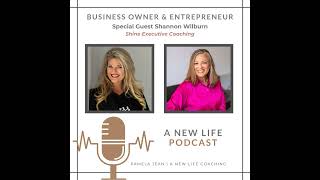
Podcast interview (A New Life) hosted by Pamela Jean featuring Shannon Wilburn. Shannon recounts founding Just Between Friends Tulsa in 1997 (children's & maternity consignment pop-up), franchising the concept in 2003, reorganizing companies in 2011 (she retained the franchise system), running the franchisor business for ~20 years and selling it in December 2022. System-wide sales for the brand were $50 million (year referenced as 'last year'). Shannon also grew the Tulsa location to $1.4M and launched Coal Creek Farm (photography venue) in 2018. After selling she launched Shine Executive Coaching to help six-figure entrepreneurs scale. Themes: entrepreneurship, franchising, faith in business, failure-as-feedback, mentorship, work–life balance, focus and delegation.
Questions this video answers
1997
2003
2011
December 2022
$50 million
Chapters
Welcome to A New Life podcast with Pamela Jean, where it's all about empowering women to empower more women. Get ready, friends, to create a new life. And here is your host, Pamela Jean.
Hello, my friends, and welcome to this week's episode of A New Life podcast. I'm your host, Pamela Jean. Thank you so much, so much for being here. I know that time is valuable. Your time is very, very valuable and you have many choices of where to spend your time. I'm grateful that you are spending it with me. You are going to love today's podcast. I have an incredible special guest with me. She's inspiring. She is an entrepreneur. She is a woman of faith. She is a, a wife, a mother, a grandmother. She's an entrepreneur. She has done so many great things in. I can't wait for you to meet her. My friends, today I'm going to welcome Shannon Wilburn. Shannon, welcome to the podcast. I'm so glad you're here today.
Thank you so much for having me. This is going to be fun.
Shannon, tell my audience a little bit about you. You have, I've heard your story before and I'll be honest, I heard you speak somewhere. I don't remember where, I don't remember where it was, but I've heard your whole story and it, it so fascinating and so interesting. Your entrepreneurial journey is amazing. Your faith walk is amazing. There's so many things about you that many can learn from you. So tell us a little bit about yourself.
Thank you so much for having me. And who knows where that was? I, I, I get to tell my story often. And so I'm really tired of my story. But I will, I will absolutely tell it again so your listeners can kind of know who's on, who's on the podcast today. So I, I started my first business when I was 27 years old. And the name of that business was just between friends. Tulsa and I had a co founder. We started it's, it was basically a children's and maternity consignment event. So we provided a marketplace for families who needed to buy children's and maternity items, toys and baby equipment at a discount. And we, we also market it to people who wanted to sell those exact same things. And we provided a venue for that to happen. And so the shoppers would get very excited because they knew they were going to be saving 50 to 90% off retail because it was consignment. And, and the sellers knew that they were going to be making 60 to 70% on whatever they were selling. So they were equally excited. And then we had, we have a third prong to that, which is that the event would benefit a local nonprofit. And so started that business in Tulsa in 1997, grew it locally for six years with my co founder Devin. And then in 2003 we started franchising that business. And there's a whole long story, I think when I actually tell my just between friends part of my life. That usually takes me about 45 minutes. And I don't think that's what we're here to do today. But we, Devin and I started franchising in 2003. So we started selling the concept just between friends, the children's and maternity consignment concept, an event based pop up business. We started selling that concept to other people outside of Tulsa. And in 2011 we reorganized both companies. At that point, 2011, Devin and I were 50% partners in both businesses. And our focus was, it was very difficult to focus since we owned two businesses that were both by the way, thriving. And so we reorganized the company and my business partner, Devin took the Tulsa just between friends consignment pop up business and took that as her 100% business. And then I took the franchise System as my 100% business. And for people who aren't from the franchising space, basically as a franchisor, my job was to make sure that we had highly satisfied, profitable franchisees. And we did that through support, through supporting them with legal, with legislative, with marketing, with operations, with finance, with franchise development, with just about anything they needed help with that. That was kind of our goal. And so I ran that business for an additional 11 years, so a total of 20. And I actually sold that business in December of 2022. And I will tell you that I'm still helping that business as an advisor. They gave me the title brand ambassador because I have just a great love for the company and it shows and I love to tell people about it and how they can be a part of it, either as a franchise E or a shopper or a consigner. And that business last year, system wide sales were $50 million.
That is phenomenal.
Yeah, so really fun. We got the got the Tulsa business up to 1.4 million. And then I also started a third business in 2018. It's called Coal Creek Farm. It's 1515 acres in Jinx that we opened up for local photographies to do scenic outdoor shoots. So they, they come on the property. We have like a beautiful creek, we have a barn, we have a four foot Live, edge, swing. And so that's another business. And then finally when I sold my business, my large business, I started an executive coaching business where I coach founders, entrepreneurs and business owners typically who are six figure entrepreneurs and want to be seven figure entrepreneurs for more income and impact. And really that's where I am right now. And I'm sorry I took so long to tell you all that.
No, I thank you for telling us all of that because I have some questions for you. I mean, Shannon, it's amazing that this has been a 20 year journey for you. What I want to tap into is when you came up with a concept of your first business, the Just Between Friends, when you came up with that concept, what did that conceptionally look like? Because I know there are listeners that have had this dream in the back of their head, this thing that, gosh, I want to do that. I wish I could do that. I don't know how to do that. I don't have the money to do that. What advice could you give to that dreamer that, that person listening that has the idea but they just don't know how to start? How did you start? How did you find that courage? What did you do to get the first ball rolling?
Yeah. So I will say that at the time when Devin and I started the Tulsa, just between friends, it was really to feel fill a niche and the niche was me. I had a nine year old and a two year old and my husband at the time was a youth pastor. And that was not a vow of poverty, but kind of.
And it's kind of like when you become a teacher. Yeah, I mean you do it for the love of children and teaching, not because of the wealth.
I wanted to stay home and I, I was looking for, you know, a way to make a little bit of extra money. And so I thought, okay, I can sell my own stuff and I will get to shop first because I'm the owner of the company, I'll get to shop first. And so that was really why we did it. I don't think Devin, you know, my degree is elementary education. My, my previous business partner, Devin, her degree was journalism. So we did not have a business background. But I think also I have a high risk tolerance. And so I don't know that I was nervous or scared about doing it. I think I just was like, hey, let's try it. Because the worst thing that can happen is it doesn't work. Big deal, you know, like if it doesn't work. But what I have found is that, I mean, I've had many, many failures, Pam. I just got to share the fun stuff, right? The $50 million and the, and, but along, along the 26 years, I've had many, many failures. And one of the things that I tell other entrepreneurs is it's, it's only a failure if you don't learn something from it. If you. And it's not. Failure is not final, it's feedback. And so if you can learn something from the mistake that you made so that you don't do it again, then that's. That is every business, every entrepreneur. It's funny, I did a. I was given some recognition at the Just Between Friends annual conference a year ago right after I sold. And so I got to have, you know, a few minutes on stage unexpectedly. I was overwhelmed. I was just like, I was looking out on the sea of franchisees that were in the room, you know, listening to me as the former CEO of the business. And one of the things that I said to them was, I wish we could just normalize challenges because that is what business is. It's a series of challenges over and over again. So you might be in your business right now at a really low point, but don't worry because the high point is coming or you might be at a high point. Don't get too high on your horse.
The low point is coming.
Be humbled really quickly. Yeah. So I think if, I wish someone would have told me that, Pam, that, that challenges are normal. Business is a series of issues that you solve. And so I think you, you just, you have to be a problem solver. So that's what we were in that in the beginning we would just, we, we would. I didn't have anyone to reach out to. My mom was the only one who had been to an event like this. She was the one who gave me the idea, actually she hadn't been to it. Her friends had been to it. So it was not just so secondhand information, it was third, third hand information. And so she told me, she said, there's an event. This is all I know about it. If you think back to 1997, small business did not have a presence on the Internet. There was no Google, there was no.
Chat GPT and there weren't entrepreneur coach coaches, There weren't business coaches. Very few.
If there were, you just had to kind of figure it out. Yeah, and absolutely. I, absolutely. Nowadays we have all of these resources like, you know, the Internet and like ChatGPT and, you know, coaches. There's so many coaches out there that can help you and you also know what people are up to because of social media. You know, oh, this person did this, this person did this. We didn't. Your. It was very. Your sphere of influence was very limited by who you knew. And thankfully we went to a church where we had people that could say, oh, yeah, I want to come to that event. And then, you know, you just listen to feedback. So I don't know if that's what you were looking for, but so many different ways to learn in the early days, and I think so. I guess my piece of advice there is progress over perfection, and I take that step.
I love what you said. Failure is feedback. I'm a big believer in. In embracing failure and looking for the golden nugget through every failure. And I don't even think about it as being a failure. It's like, well, I tried that. It didn't work. I learned this.
Yes.
I'm going to take this with me. I'm going to leave the rest behind. And then you move forward. I don't really think of it as a failure. It's just part of the process.
Yeah. You know, do you know the gal who created Spanx? I can't think of her name. I think it's Sarah something.
Yeah, Blakely. Sarah Blakely.
Yes. She said, I've seen this a couple of times on social media. But when she's being interviewed, she talks about how her dad, every night at the dinner table, his question was, how did you fail today?
Oh, gosh. So good.
Percent normalized failure. So she would almost feel in trouble if she didn't have something that she failed at. You know, Dad, I tried out for cheerlead. I didn't make it. Good job.
Good for you for trying. What are you going to do next?
Instead of saying, oh, I'm sorry, you didn't make it. You know, it was. It was normalized in their household. And then of course, we know, you know, that she's just blown up the Spanx world and we're all very grateful for her.
Right, Right. We all owe her a little extra something, something. Oh, I love that. I love that so much. So I want to. So I guess it just really speaks into if you are someone sitting on the sidelines with an idea that solves your problem, a problem that you might be dealing with. There are other people that have the same problem. Yeah. Shannon's business development and Devin's of the first, Just between friends filled a void. A place to buy, a place to sell. And we all know when we have toddlers. Oh, my Gosh, they grow out of things. They outgrow things so quickly you can't replace it fast enough.
Right. And it gets expensive.
It does get expensive. And it's so lightly used, it's like brand new. So that is so awesome. So if you have that dream, friends, that is just that little idea that keeps gnawing at you in the back of your mind. Bring it to the forefront and explore it and don't be afraid of that failure. Failure is feedback that's so good, that's so rich. Do that and just move forward with it and get out of your own way. I think failure for a lot of people is. It's an ego hit. It's a hit to the pride and people don't want to feel that. But that's not what it is supposed to be anyway. Yep, okay, perfect. I'm going to ask you a question, if you don't mind. People make an impact in the world. I would like to know who inspired you to become who you are today.
Oh man, I would honestly, my mom is one of those. But I don't want to be cliche and just say my mom but she absolutely, she is very positive person and was a problem solver and she was committed and so. But other than my mom, there is a. A gal. Her name is Melanie Bergeron and Melanie is the daughter of the gal who started Two Men in a Truck. You're familiar with the movie? Yes, Me Two Men in a Trek. It's a franchise. And my business partner and I in 2007 we started going an associate association event called the International Franchise Association Event. And that's basically where franchisors and people who vend to the franchising space come together for four or five days at a large convention of three or four thousand people annually. And it was one of my first, might have been my second time to go to this International Franchise association convention. And I remember seeing her and finding out who she was because there, especially in 2007, there just were not a lot of women in leadership positions. And you know, I think as entrepreneurs or honestly just people, we try to find like minded people to surround ourselves with, you know. And she also was a Christian and I'm a Christian. And so she showed me what leadership looked like through just spending time with me and just me watching from afar. She became the chair of the International Franchise Association. I think she was the second woman chair in the history of the International Franchise Association. She talked about Jesus from the stage in front of 4,000 people, which just doesn't just had never happened before then, so. And she just was kind and encouraging. So I think just seeing someone in the space where I wanted to be so I would kind of have a guide, someone to follow who had already done what I hoped to do.
And that just makes sense if you are building a business right now, if you're in a process of that discovery of how to get to your next level, how to level up, look at those who have gone before you, reach out, make a connection, follow them and emulate. Does it mean it'll be exactly perfect for you? No, but they've, they've gone before you. They have wisdom. And don't be afraid to lean into that wisdom.
One of my friends, she was the president of my company before I sold it, she said, we want to learn from the mistakes of others. We don't want to be the others.
That's very, very wise. That's, that's an awesome statement. So true. So I know that you have two children and you, they were 1 and 2. As you said when you first started your first company, what was the biggest struggle you faced with being. Because you were a stay home mom is what I'm hearing you say. How did you become that working moment mom, building a business and balancing the life and your business aspirations? Because Shannon, as I've gotten to know you, you are like a serial entrepreneur. I've gotten to know that about you and I love it. I love it because not everyone thinks the way that an entrepreneur thinks. And it's, it's fun when you get to be in the space of someone that, that gets it and understands it. So I've just so enjoyed your entrepreneurial story because I can relate to it so well. But when you were in that building stage of beginning, you had babies, you had littles at home. How did you strike up that balance? And then a husband who worked, you know, as a youth pastor. How did you balance that little life and family along with your business aspirations?
You know, as I look back, I've always said, gosh, I didn't do it well because I'm a workaholic. And when, when people say I'm a workaholic, sometimes it has a negative connotation. I was a workaholic by choice and, and so tried to, tried to manage. And so just a little background back when we started, just between friends, I think it was easier to balance it when they were one and two because it was a baby business. It was not it. So it grew with me over time. So my children grew as my Business grew. So I will tell you in, in 2003, I told you that's when Devin and I started the franchise system. That was a different story because I think that would probably have been in my lifetime probably where I was very out of balance and, and I was complaining to someone about it. I was like, I'm, I have two children, I have two dogs. I'm married to a youth pastor, which we all know what that means. It means that I'm the girls youth minister, unpaid volunteer, right? And, and then I had the just between friends business and then I had. We, Devin and I had helped 10 people get started to doing just between friends. Remember? Elementary education degree, journalism degree. We didn't know that you shouldn't give away your name. We didn't know that we were proving the concept. There were so many business things that we did not know that we had to then correct later. But it, it worked out. But so I was spending, it felt like hours helping other people do what we were doing but not getting paid for it. And then I had a 30 hour a week sales job where I was selling, selling advertising. It was for a Christian pub, a local Christian publication that had just started and I was their only salesperson besides the owner of the business. And so it was just overwhelming. And I was complaining one day that you know, holy cow, I am, I'm so busy, my head is spinning. And that was the start of the franchise system. So I had to, I had to come back. Someone gave me the advice to franchise at that time the guy was complaining to. And I was like, well this sounds like a lot more work, but I needed to think about it, Pray, pray about it. And I did that. And what, what ended up happening was in order to start the franchise, I quit my 30 hour a week job because I was going to be starting something new. And I knew there's a, there's a saying that I share with people that there's only 24 hours in a day and people will try and take all 24. And when you say yes to something, you have to say no to something else. And I think what I had gotten into the habit because it was a habit. It was a habit of saying yes without counting the cost. And so if I could give any advice to your listeners, I would say, you know, when you're asked to do something was my go to, to just say, oh yeah, well I'll, I'll be happy to do that. Whether it's be the, you know, take on extra responsibilities at work or take on extra Responsibilities at church or be PTA president or be classroom mom or whatever it is. I just had a habit of saying yes without counting the cost. And so once I realized there's a cost to saying yes, I wanted to be very focused in what I said yes to, because there's lots of good things that we can do, but what are the great things that we can do where we want to spend our time? Because often, especially as if you're, you know, women, what typically happens is when we say yes to something, what we're saying no to is our children or our family.
And I. That has to come back to balance. I think you're. I'm not. I'm not the only one. You're not the only one. Because I can raise my hand and say, that is me too. I think women are such natural pleasers.
Anyway, this is a trick that I use for myself and I've given this advice to others, is when someone asks you to do something, they're standing right in front of you and they want you to say yes. Take a step back. Mentally take a step back. And you have a go to response of, let me pray about that. Let me talk to my husband about that. Let me talk to my executive team about that. Let me talk to my advisors about that. Your advisor could be your dog, but it gives you time to formulate the response that you should have versus your reactionary response of yes.
That's great advice. And I think reality is we. We say yes out of that pressure of that person being in front of us. But if we honor ourselves and honor our family because we don't want our families to get what's left of us, we want our families to have the best of us. So if we can step back and say, let. Let me think about that. Let me give that some thought. Check out the calendar, see what my available time is, and I will get back to you. I think that's a fair response. And you should not feel guilt about that. You should not feel guilt or shame because that is just simply allowing the best in your life. And if you're taking up another job, a volunteer position that really is meant for someone else, that's doing a disservice as well.
Well, I've never thought about that. That's very true.
Yeah, it really is, because I can say yes. But if there's that person that maybe is a little quieter waiting in the wings, that actually, that is their gift, that is their skill set that God gave them, we need to say no sometimes to give other People an opportunity to step into that space to say yes.
Wow. Really good. Really good.
So that's. That's kind of my perspective. So what do you think is the hardest thing you've experienced, Shannon, about being an entrepreneur?
I really. I'm an enneagram3. So for any of your listeners who are familiar with the Enneagram, it's a personality test, a personality assessment, if you will. And there's nine different types, personality types, and mine, I'm a three, which means I'm a builder, achiever, the type of person who's going to set a goal and go get it. And so I think I have all of these ideas, but I know that focusing on one thing instead of many things will help me thrive. And so I think it is, for me, it is figuring out where my focus should be.
I can agree with that. And I'm a three as well. So I fully understand, as an entrepreneur, you are a very visionary. Being visionary, people keep visualizing new things that they could possibly be doing.
I mean, I saw horrible at the same time, it's a blessing and a curse.
I saw this commercial the other day, and it was a beautiful space. I'm like, can you imagine what I could do in that space? You could do this and you could do that. I'm like, oh, my gosh. I pumped the brakes, right?
Yes.
But it never stops. It never, never stops.
Back to there being lots of good things, but you have to figure out what the great thing is.
Yes. Oh, my gosh. That's so great. Thank you for bringing that up. That is so perfect. So what is one thing that no one in the whole world knows about you? It could be like a quirky trade. It could be like a superpower. What is one thing that no one in the whole world knows about you?
Thank you for sending this question ahead of time, because I'm like, it gave.
You a little bit of time to think. Yeah.
I wrote what I. What I was thinking about is, wow, I'm super transparent to a fault. I think. I think there's. I can't think of anything out there that, you know, several people don't know, much less, like, if I have an issue or a problem or something, I'm just gonna. I'm just gonna tell people. I. I talk about. I mean, I have many. Most of the embarrassing moment stories multiple times. So I. What I. What I thought about was just. I think maybe. Maybe this is it, that I don't get intimidated by people.
So. And.
And I think I've just really had Some self awareness lately about, about that and I just thought that was typical. So I think how that plays out when I say I don't get intimidated by people is I'm not afraid to pick up the phone and shoot for the moon. I'm not afraid if there's a speaker at a 4,000 person convention. I'm not afraid to go up to them afterwards and say hello and ask them a question. If there's a famous person in the room. I don't get giddy excited. I'm just like oh yeah, they put their pants on this morning too. They had to brush their teeth with their hair ratty after they slept too. And so I'm not, there's very few people in my life that have intimidated me to the tune of getting nervous around them.
That's great.
I think it's helped me honestly Pam because I was, I'm able to have calm conversations just like they're my best friend when I meet them. And so how that's played out is we have a amazing like crazy amazing like totally of the Lord advisory board for just between friends and I and I need to get out of the habit of saying we because I don't own the company anymore. But it was my first, it was mine for two decades. So. And I'm not quite out of that habit and I'm still contractually working with the brand. But our advisory board is amazing. Just these men and women who have done ridiculously amazing things and they said yes to being on this. You know our brand is a large brand but in the grandson scheme of 50 million versus 500 million which you know or a billion or 4 billion, I'm thinking of some other brands that are just ridiculously large. We should not have had this, these people on our advisory board but they said yes. So I think that's, I, I, I guess that's it is that I don't get intimidated by people easily.
Well and that's obviously served you well because if you gave the people, the men and women that serve on your board, you gave them an opportunity. Yes. And because sometimes I believe that intimidation is a choice. People choose to be intimidated and I, that's a choice. I, I don't get intimidated either. But it's more out of people are people and we are, we're all made the same, we all came from the same place. You know, it's like we're all God. God created and God made us all so unique and special with different gifts. And if a person is intimidated you're choosing that, that emotion and that feeling of insecurity, really. And I don't really buy into that either, but you gave those incredible men and women on your board the opportunity to say yes because you were not intimidated. And that's such a gift. That's an awesome gift. So what is your life mission? What do you.
I know.
I know that you're doing what you're doing because you are an entrepreneur. That is just how you're wired and made. Because we are. We are wired differently. But what is your mission and where do you hope to make the biggest impact in the world?
Well, you know, I'm a Christ follower because I've already. I've already told you, I'm married to. Well, he's a senior pastor now. He did youth ministry. We did youth ministry back in our 20s, and now he's senior pastor of our church. So it's very easy for me to support things that point people to Christ and to try to figure out ways to point people to Christ. And I think in the business world, Pamela, sometimes that's more difficult because you want to be. You want to be true to yourself, but you also want to try not to offend others. And so I think that's. That's kind of been a little bit of a tightrope that I've walked. Is figuring out when it is. I don't want to say appropriate, but when I can be super intentional about it, where the Lord has led me. And I'll just tell a quick story. My. When. When Devin and I started, just between friends, we knew that we wanted the mission of the business to help glorify God. And we did that by bringing families together in a welcoming, friendly venue to be good stewards of what they had been given. But we did not put that mission out there. We didn't talk about it on a daily basis. We just. It was on our website. If you saw it, great. If you didn't, that's okay. And it took a really, really. And of course, everyone knew that I was a Christian because I'm married to a pastor, but I did not actively walk my faith out in my business for a really long time. I think it was. I've told you, I started my. The franchise system in 2003. In 2015, we really picked up the. Honestly, I was inspired by another person. This is. This guy's name is Josh Wall, and he was. He was in a chief role. I don't know. I think he was chief development officer at Christian Brothers Automotive at the time. And now he's gone on to help another brand called Unleashed Brands. But he was. He just sat down and told me what they were doing at Christian Brothers Automotive and what they would do at their conference and how they would get people to pray and how they would lead a prayer from the stage and how they would. All of this stuff. And I'm like, oh, my gosh. Like, that was inspiring to me, but I was nervous about it. Like, how do I bring Christ into my company without offending people? And I just decided I have to do it. And baby steps. That's how I did it. I took baby steps. And so I announced not to get too much into the story, but the. The very first time we did it is at one of our conventions, one of our conferences, where we bring all the franchisees and their team together. Before the. Before that conference happened, I. In an email to all the franchisees, I said, hey, if you want to be on the prayer team for our conference, let me know. And we're going to meet in my suite. We're going to pray for a couple of hours before the conference starts. So that was kind of where it started. Then I got on stage and I led a prayer as the opening, which was. I mean, I had been used to saying prayers, of course, but not in front of people who I didn't know, believe the same thing about, you know, what I believed or not. And then just walking out my faith in front of franchisees and being very deliberate about figuring out how I can point people to Jesus. So I think that's it. That's it.
Yeah. No, that's so good. I love that. And I think what's so interesting is, really, I feel the best way to bring people to the Lord or the Lord to people, whichever way you're going, is just to be authentic.
Yes.
And walk the walk, talk the talk. You know, I'm not here to push my belief system on anyone, but if anyone asks me, why are you so happy all the time? Why are you so centered? Why is life so good to you? That's my reason.
Yeah. Yeah.
You know, to wake up every morning knowing that it's a gift to open your eyes that today God chose me to wake up. Not everybody got to wake up today. And if you think of every day like that, it just changes your decisions, it changes your thoughts. It just puts your. Your eyes on something much bigger than yourself.
Have a posture of gratitude.
Absolutely. Absolutely. Well, thank you for sharing that. That's a fantastic mission. And I think more and more that's going to be true. Into the marketplace for sure. So I want to wind down our time together and just ask you a few rapid fire questions and then we'll have some final thoughts. First question, what advice would you give the younger you?
I think it would be to seek mentorship. And I'm, I'm actually writing a blog on this right now, so it's very heavily on my mind. And just if we don't, you know, back to seeing other people who are doing. Back to my conversation about Melanie with two men in a truck. It's. She was someone who I aspired to be and so I asked her to mentor me. And it's amazing what you can get through mentorship. And I think some of sometimes we think it's very difficult to find a mentor, but they're all around us and you don't have to know them. And I should have this blog up on my website in the next couple of weeks. And so if you want to know how to seek mentorship, you can go check out my blog.
Perfect. Well, while we're on that topic, would you share with the listeners? The best way to connect with you is it social media, your website, your blog? Just share that information if you will.
Yeah, absolutely. So I'm Fairly active on LinkedIn. So if you're on LinkedIn, that's a good way to connect with me. You can follow me and then try to connect with me and send me a message. But you can also email me Shannon shinexecutivecoaching.com and then I have the website Shine executive coaching dot com.
Okay, perfect. Thank you so much for sharing that. So what is your favorite thing to do when you're not being a crazy serial entrepreneur?
It's really to spend time with my husband. So we've been married for 33 years and we're in the phase of life where our kids and grandkids, they don't live here locally and our, our kid, my son is 29, his wife is 31. They have a two and a half year old and a nine month old and then my daughter and her husband are about to be 28 next, next month and they have a 17 month old and so, but neither of them live here. So I think my downtime, I love to spend time with my husband and we, we love to date each other still after 33 years. So he's my, he's my best friend and supporter.
I love that. And I have to tell people if you are a photographer listening to this podcast, you all know that I'm a photographer as well, that was my first business. I started 34 years ago. I been out to Coal Creek Farms, where they have developed this amazing, amazing space. It is so serene and so peaceful. It is a phenomenal place to photograph, to take a walk. I mean, it's just so great with the creek, the barn, the swings, the wildflowers, the trellises.
It's like half of the property is pasture and half of it's wooded. And we have trails back there. And so thank you for that. Like, that was actually my husband's idea to start that business.
Oh, I love it. Well, you. You both have done such an amazing job with it, and I love how you're adding little vignettes here and there that, you know, a couple of years ago, you added the evergreen, so your Christmas shoots look so beautiful. And then you've added the wildflowers, and you've added the zinnias. And it's just so fun to see what you guys are doing there. And it's. I think. I mean, it's such a gift to the community in a bigger way than I think you realize. I know it's a business, but it really is a gift to the community. So if you're a photographer locally in Tulsa, you have to check out Coal Creek Farms because it is just a phenomenal place to visit and photograph. I've done many family portraits out there. High school seniors, children. It really, truly is. It's like an escape from the city. Yes. In the middle of. You know, you're in the country, but you're in the city. So it's such a beautiful balance. It. I.
When you get back on the property and can't see the road, of course, it feel. It's like, I cannot believe that this 15 acres is in the middle of the city. Right.
The road is right there.
You don't. You don't feel like it when you get back on the property, you're like, oh, my gosh. You know, I'm out in nature. It's awesome.
It's a little slice of heaven. I absolutely agree with you there. So, so good. Okay, final thoughts. What advice would you give entrepreneurs or dreamers that are standing in their way of getting started, living out their life's purpose and following their dreams?
I thought a lot about this question, because first off, it's. We don't ever want to get in the way of our dreams, but we do it all the time, constantly. I would say my best piece of advice is to surround yourself with smart people. And it's. I think there's an innate heaviness when we think we want to start something because we start, we get in our own mind. We have limiting beliefs. We, we think, well, I'm not good enough. I'm not smart enough, I'm not rich enough, I'm not good looking enough. I'm not whatever. And you don't have to be all, you know, or I don't know how to do a website or I don't know how to price my product or service or I don't know, I mean, there's so many questions and decisions that have to be made. And so if I could give any advice, it would be to surround yourself with smart people because you, you don't have to do it all on your own. And so that is 100% how I have grown my companies. Is there's a, there's a book recommendation I'll give. It's written by Dan Sullivan and Ben Hardy, I think are the authors and I read all the time. And this one is called who not how. And it really gives you permission to hire your weaknesses. So know your strengths and hire your weaknesses and to surround yourself with smart people.
Oh, that's perfect. That's excellent advice. Excellent advice. Shannon, my goodness, thank you so much for being here. Thank you for being my friend. Yeah, I just, I have enjoyed the friendship that we've developed over especially I would say the last couple of years. We've connected on some really fun levels through coaching and just, you know, throwing ideas back and forth and having some really good, deep conversations. I really, really appreciate the friendship. I think you're such a bright light. Your name for your coaching business, Shine. Executive coaching. Absolutely. Makes sense because you shine and you attract people that want to shine as well and it couldn't be more. More appropriate.
Well, the feeling is mutual. I will just say that.
Oh, awesome. Well, thank you so much for being here. And friends, thank you for listening to this episode of A New Life podcast. I invite you to share this with your friends who need this inspiration like and subscribe to this podcast so more and more people can, can tap in. My friends, have an amazing week and I will see you next time.
Thank you for joining us today on A New Life podcast. We will see you next time.
More from Pamela
Great Things Happen When You Forgive_An Interview With Lisa Bain | A New Life Podcast with...