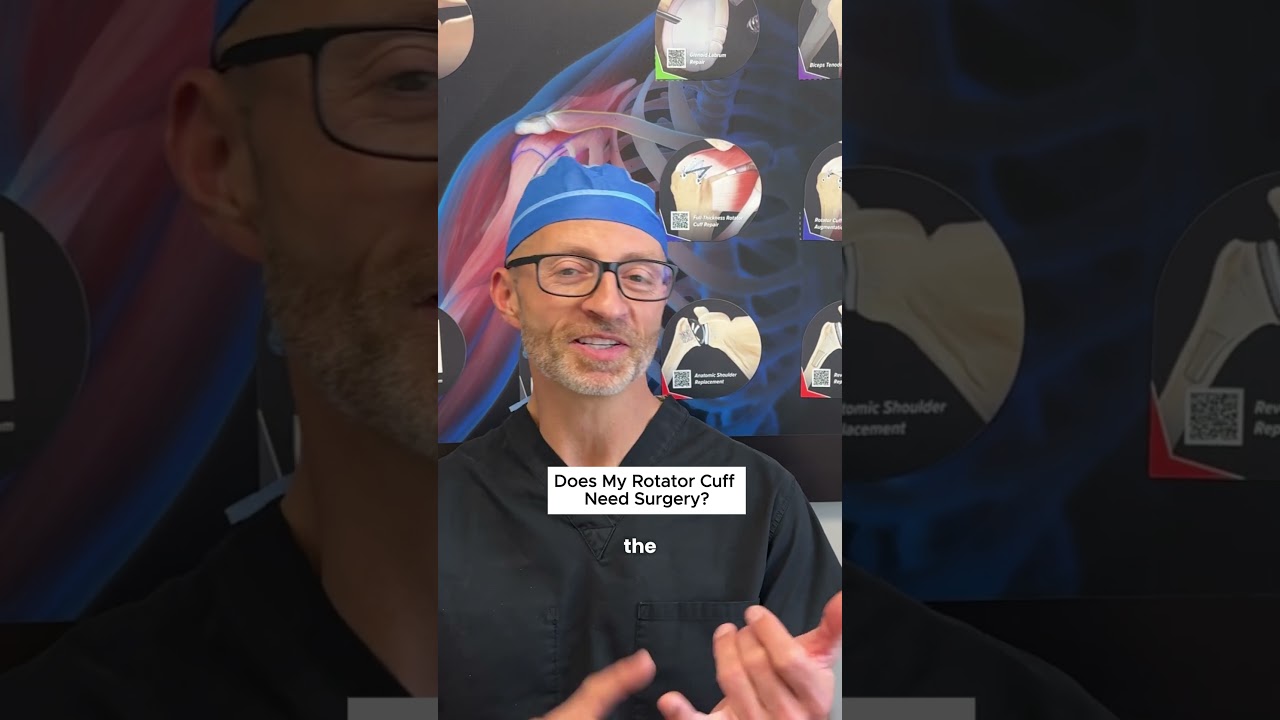
A surgeon explains four factors that determine whether a rotator cuff tear needs surgery: tear type, your age and health, whether physical therapy has been tried, and tendon quality. About 70% of patients improve with physical therapy alone, especially older adults. The decision is individual.
Chapters
Most people who have a rotator cuff tear on MRI don't actually know if surgery is really necessary. Here are 4 things that I look at to help guide people. In each case, it's an individual discussion with a surgeon. Number 1, the tear itself. So most partial tears we treat conservatively, at least to start. Full thickness tears, on the other hand, that go all the way through the tendon have a higher risk of progressing over time. Number 2, the age and health of the patient. So if somebody has a full thickness tear and they're less than 60, for instance, and we know that it's going to get larger over time, we may have an earlier idea of intervening and repairing the rotator cuff compared to somebody who's older who maybe also be in less good of health. Number 3, what they've done. So if they've done physical therapy already and, and/or tried injections and gone through conservative treatment, we may go to surgery. On the other hand, data shows if somebody's not done therapy, approximately 70% of people will get better with physical therapy alone. So especially in that older category, I will always start with physical therapy. And Number 4, what is the quality of the rotator cuff? We have to look at the tendon quality and the muscle quality because there's a big difference if a tear is repairable compared to if we have a low chance of success with repair. And especially if it's not a high chance of success of repair, we may say, let's try more conservative things because the ultimate solution might be a shoulder replacement. Whereas if it's a very repairable tear in a younger person, we may want to intervene earlier to prevent that tear from getting to be larger over time. So hopefully Hopefully those 4 things that we look at help you understand how we decide who needs surgery for a rotator cuff tear.