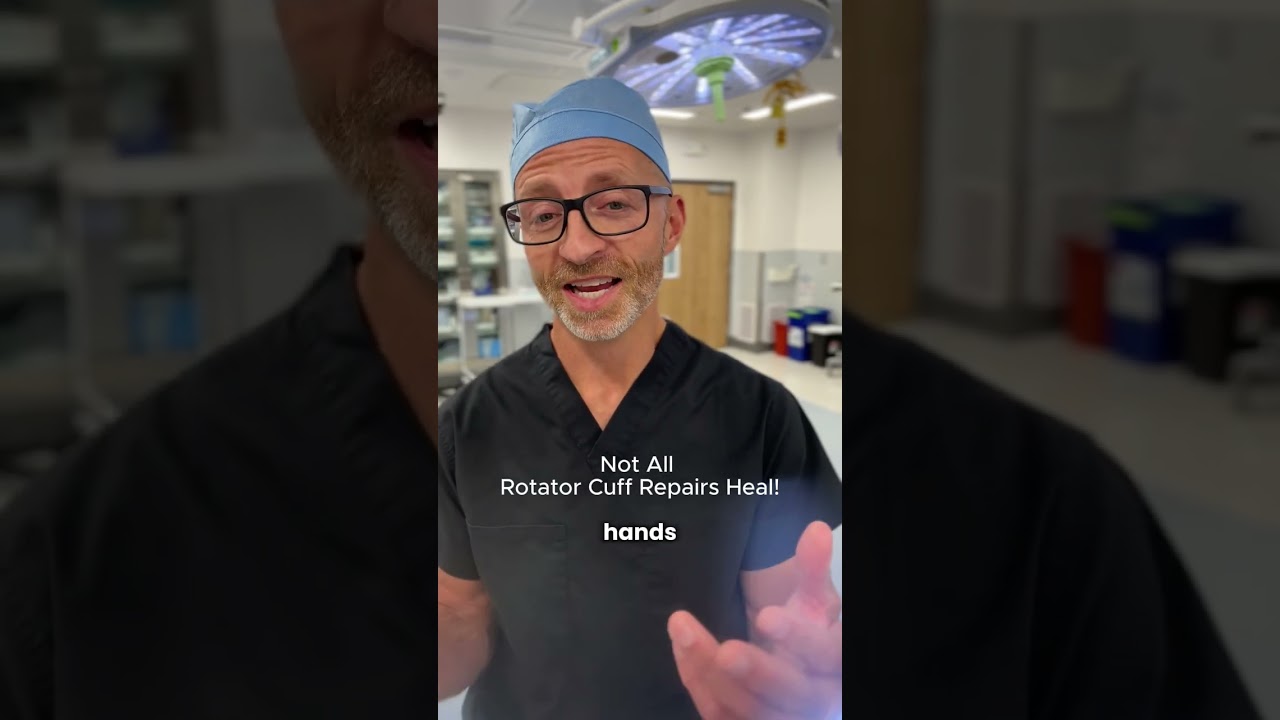
Rotator cuff repairs don't always fully heal, but outcomes depend on age, tear size, and surgeon experience. About 90% of small tears and 80% of large tears avoid needing more surgery over ten years. Optimize nutrition with vitamin D, protein, and vitamin C, and choose a surgeon who does many of these repairs.
Chapters
Here's the honest truth: not all rotator cuff tears heal even when you repair them. It's due to a variety of factors. There's patient factors— age, overall health— and there's tear size, and then there's the repair that the surgeon's doing. So what can you do to optimize your outcome? Well, I advise that all my patients control what they can control, which is optimize their nutrition— vitamin D, protein, vitamin C, etc. Secondly, make sure they're in the hands of a good surgeon who does a lot of it. The good news is, is even though we don't get complete healing in all cases. The vast majority of patients do well. For instance, with a small tear, 90% of people are not going to have a further surgery over the next 10 years. And even with a large tear, it's about 80%. So the success rate is very good if it comes to surgery, but there's still many things you can do, optimize or increase your chances of having a good outcome.