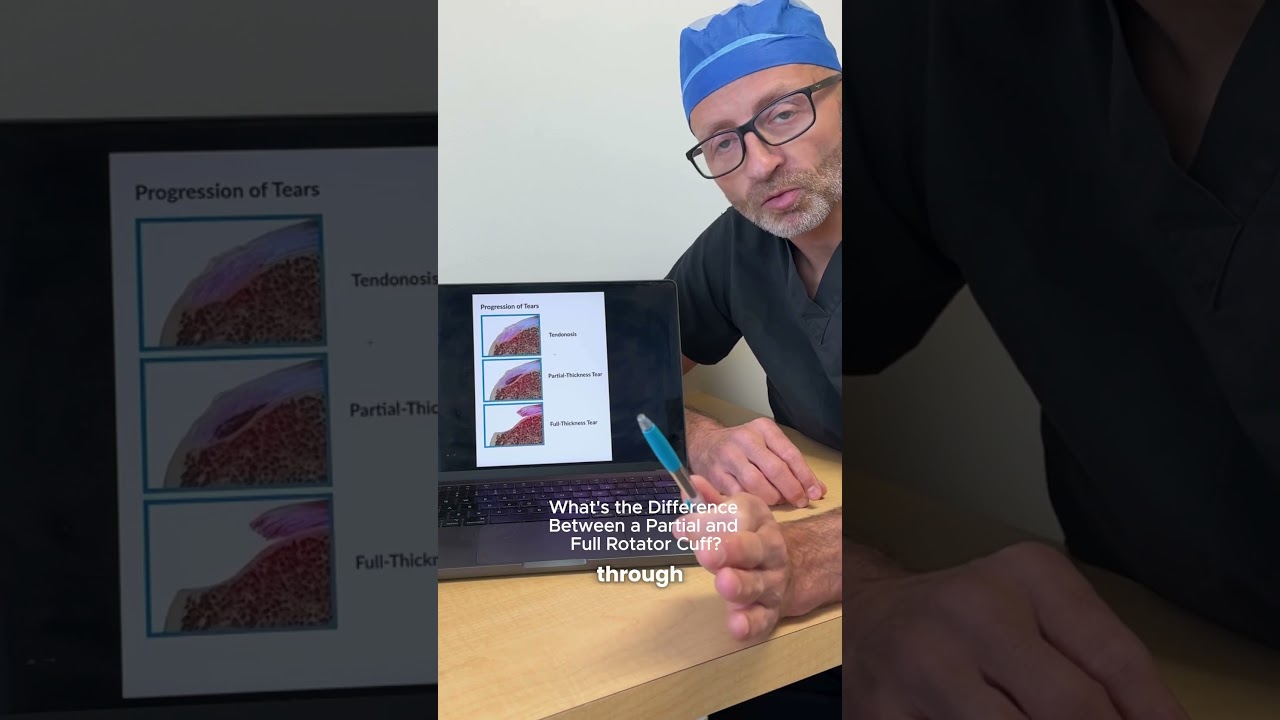
Patrick Denard breaks down what radiologists actually mean by tendinosis, partial tears, and full-thickness rotator cuff tears. Learn the difference between low-grade and high-grade partial tears, and what each finding means for your shoulder.
Chapters
Have you gotten your MRI of your shoulder and you're not really sure what the report means? Let's talk about some of the different terminology of how we talk about rotator cuff tears. Some common terms: tendinosis is typically when you have change within the tendon itself. This is just something that occurs with age. The next step up from there is a partial rotator cuff tear. That means it goes partway through the tendon but not all the way through. That can be low-grade, which is typically nothing to worry about, or high-grade, which is more than 50% and can be more likely to need surgery. And then finally, we full thickness tears, which means, which means you have a section of the tendon anywhere where it goes all the way through the tendon, where the tendon is pulled off of the bone. So those are kind of the 3 broad categories: tendinosis, partial rotator cuff tear, and full thickness rotator cuff tear that you may see on your MRI report. And hopefully that helps you understand what the radiologist, the surgeon is talking about.