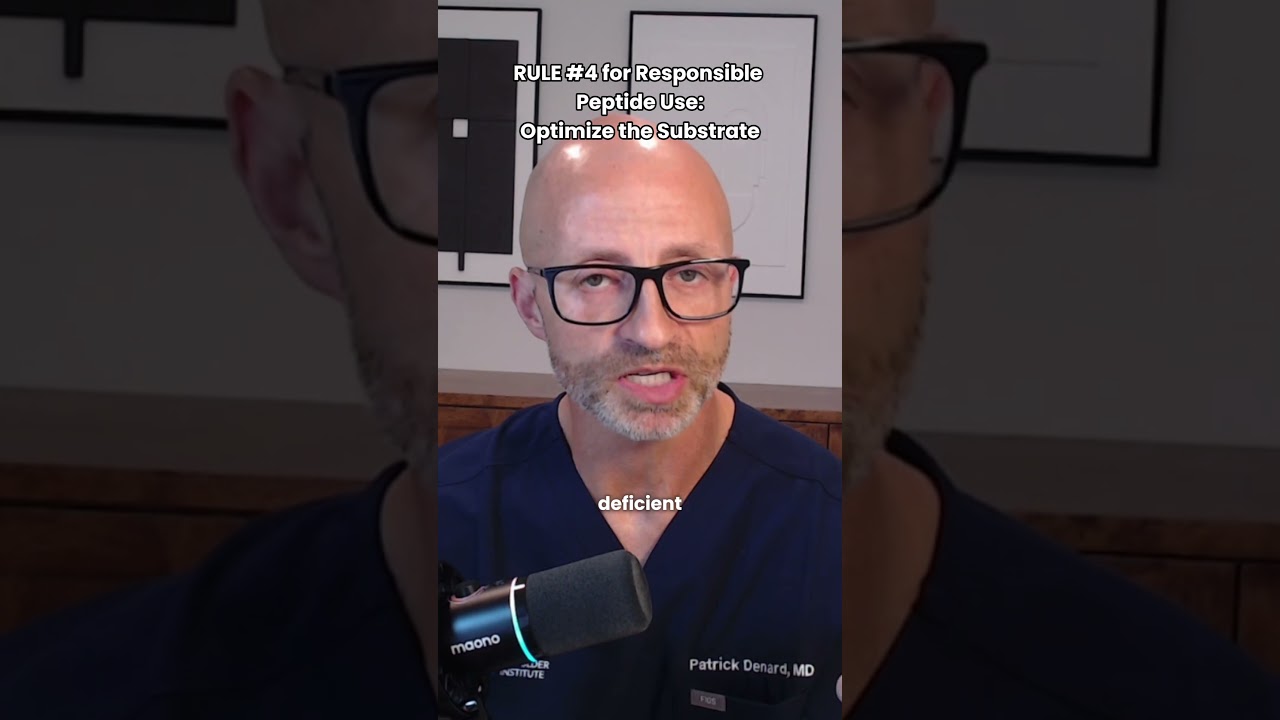
Peptides signal tissue repair while nutrition supplies the building materials. Double your protein intake, ensure adequate vitamin D (deficiency triples re-tear risk), and add collagen and vitamin C to maximize healing after tendon or rotator cuff repair.
Chapters
Now, when you think about this, peptides are the construction crew, but nutrition is the building materials. So you need both. In other words, if you're going to try to approach healing and maximize your healing potential, yes, you want to have the signals, but you also want to have the fuel for your body. So I think anybody who's seriously thinking about peptides should be taking high levels of protein. That typically means doubling their amount of protein on a daily basis, considering things like vitamin D, which play a role in bone and tendon health. We know, for instance, that those people who are vitamin D deficient have 3 times the retear substrate after a rotator cuff repair. And then also collagen, vitamin C. Both of these have been shown to improve tendon. Vitamin C in particular has been shown to improve rotator cuff tendon healing because essentially it plays a role in collagen formation. So when you think about this, you have the signal, which is the peptide, that is the direction of what things are going to go, but you need the substrate, and that's nutrition. So you need the fuel, and then you need the direction for which that will go. Now, if you have put those together, that's where you can potentially get your best result or output, and that's really what we are looking for.