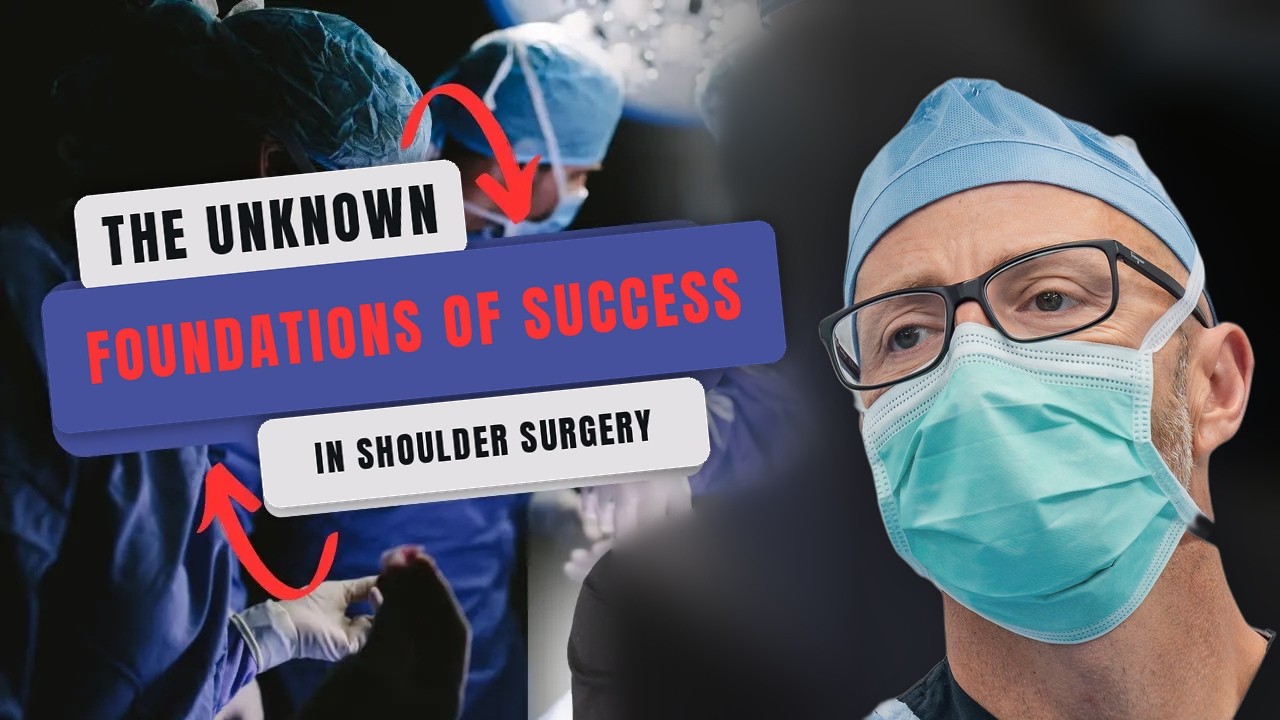
In this video, surgeons and clinicians discuss a comprehensive model for optimizing shoulder surgery outcomes that goes beyond the operative technique. They argue that success depends on three inter‑related pillars: (1) a high‑volume, specialty‑focused surgeon; (2) evidence‑based, individualized rehabilitation; and (3) proactive patient optimization. Patient optimization includes pre‑habilitation exercise, targeted nutrition (increased protein intake before and up to three months after surgery, medical‑grade carbohydrate loading the night before, and correction of common vitamin deficiencies such as vitamin D, C, and magnesium), glucose management via continuous glucose monitoring to blunt peri‑operative spikes, and psychological preparation through guided meditation and music to reduce anxiety. The speakers cite data showing that surgeon volume correlates with outcomes, that nutritional deficiencies dramatically lower rotator‑cuff healing rates, and that glucose spikes are linked to complications. By integrating these strategies, they propose that patients can achieve faster recovery, stronger long‑term function, and lower complication rates.
Chapters
A lot of surgeons when they think about surgery just think about the surgery itself. But what makes up a successful surgery? And I like to think about this and from a holistic or comprehensive approach. You have the surgeon, you have rehabilitation, and then you have the patient. And again, most surgeons are just gonna focus on the surgery and a little bit on the rehab. But I like to think about all three because if you can maximize all three, you're gonna most likely have the best outcome. Now the surgeon is important because loads of data show that volume or experience correlates with outcomes. So if a surgery is done by somebody who specializes in that particular area, whether it's in shoulder surgery or across other specialties, the data is very clear that the most likely scenario of having a good outcome is in the hands of somebody who specializes in that area and does a lot of it. When it comes to rehabilitation, we try to use an evidence-based protocol to really match the individual patient needs. But the biggest thing that's overlooked is what's happening with the patient. So there are several factors that we can control or try to modify to help ensure the best outcome possible. Now, I like to think surgery as not beginning at the time of when the actual knife to skin occurs, but beginning earlier by preparing or prehabilitation. And there are studies that demonstrate that if somebody increases their physical activity, if they are paying attention to their diet and they have stress-based reduction ahead of time, they're more likely going to have a good outcome. So how do we do this? Well, specifically with regard to the shoulder, I like to encourage prehabilitation exercises, rotation exercises involving the rotator cuff, strengthening the deltoid because that's going to help maintain bone density and muscle that helps improve outcomes over time. The big one that I think surgeons really, really miss the boat on in many cases is nutrition. And there's a lot of things that we can do in nutrition aspect to help improve outcome. For instance, once you have surgery, your stress response results in the need for protein increasing by 50% after surgery. So what I encourage my patients to do is to increase their protein intake prior to surgery and then maintain that afterwards for at least a couple weeks, but up to 3 months. If we look at data in this regard, those who consume high protein amino acids prior to surgery and continue that afterwards have a quicker recovery and they have better maintenance of strength. They even tend to have better outcomes later on because they've met this critical period. So it's really important that we have higher protein intake prior to surgery. I recommend a couple of weeks, but certainly afterwards up to 3 months. In addition with this, there is a benefit of having a carbohydrate load the night prior to surgery. The data shows, for instance, that individuals who undergo surgery are going through a long period where they're essentially starved. And again, surgery is a stressful event. You have a need for energy. So if you're not eating for 16, 18 hours prior to surgery, you actually have metabolic consequences. So I encourage my patients, just like an athlete would prior to going to running a race, to have a carbohydrate load the night prior to surgery. The key, though, is having a medical-grade carbohydrate load that does not have a high sugar content so you don't drive your glucose levels high. Another study that's interesting on this topic looked at patients undergoing rotator cuff tears for repair and found that those who had nutritional deficiencies, which was again, was 50%, had a much lower healing rate. In fact, it was much larger than age, or tear size, which is really speaking to the fact that biology of the individual is very important. So we want to try to optimize that biology to ensure the best outcome later.
One step further, what I like to do for my patients is to think about vitamin intake and glucose. So how do we do that? Well, one thing we do is we measure vitamin D levels because vitamin D deficiency is present in 30% of individuals. In the United States, vitamin D is linked to higher rates of infection if people are deficient. It's also related to lower healing of the rotator cuff. So if we can identify those people in advance by preparing the 1 to 2 months in advance, I'll recommend everybody at the minimum take 800 international units of vitamin D prior to surgery. But if we can recognize or identify those people who are deficient, we can treat them with higher doses of vitamin D so they can be in line to have normalized levels going into surgery and then supplement afterwards. There's some additional things like vitamin C is very beneficial in reducing pain. Magnesium can help with sleep and pain. Another consideration is glucose control. Now, one way to do this that I will help support my patients do is use a glucose monitor. So a continuous glucose monitor, because there's lots of data that shows that even in non-diabetic individuals, glucose levels spike after surgery, and the duration of those spikes is correlated with complication. So if we can reduce those spikes— we're not going to eliminate them, but if we can reduce those spikes, we can perhaps have a benefit of patients having quicker recovery and a lower risk of complication. So I recommend that my patients do continuous glucose monitoring prior to surgery and after surgery for a couple of weeks. They can identify factors that help elevate or will elevate their glucose levels so that they can modify their intake and then afterwards have a better chance of reducing those glucose spikes after surgery and perhaps have a quicker recovery as a result. The last thing that I like to consider along with these patient factors is the psychology, because surgery really is not just a surgery itself, it's a journey. It is a stressful event. It's a period where people are gonna be down for a while and there's a lot that goes on there in the recovery. So one of the things that I like to recommend to people that I provide for my patients is some tips to help reduce their overall anxiety. For instance, using meditation and music as a pathway, specifically with guided meditation as a way to reduce anxiety going into the surgery and afterwards. Because there's a huge connection between the mind and the body. So if we can control these factors as much as possible, we're gonna hopefully have the best outcome later.
So again, the best outcome in surgery is really combined with having a high-volume experienced surgeon with evidence-based rehabilitation and optimizing nutrition of the patient. And if you control those factors, you're most likely gonna have a good result. And this is why for my patients, we put a big emphasis on looking at the holistic approach, not just thinking about surgery and rehab, but really putting a large emphasis on the patient, so that we can help them get back to life.