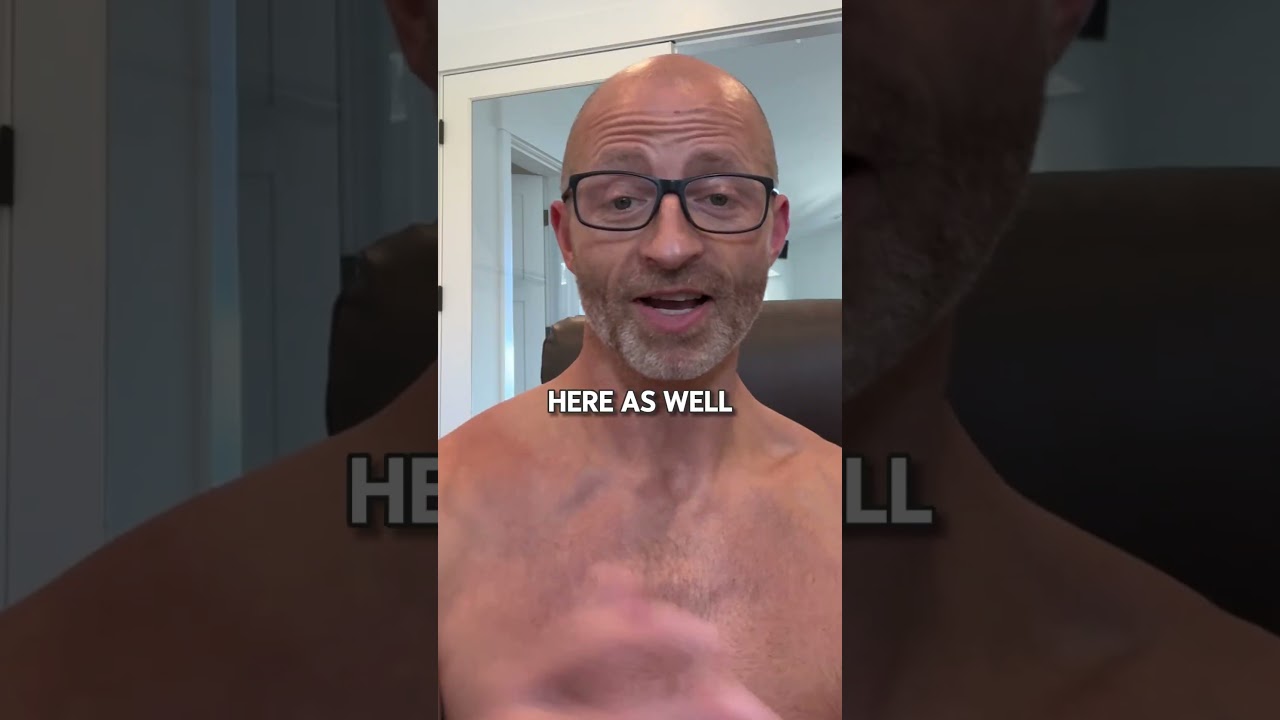
A doctor explains low-grade AC joint separations, injuries from falling directly onto the shoulder that cause localized swelling but no lateral instability. Pain with overhead activity typically resolves in weeks with NSAIDs, rest, and scapular exercises. The key sign: you can gently reduce the joint and the clavicle doesn't move.
Chapters
This is what a low-grade AC separation looks like. What is AC separation? That stands for acromioclavicular joint. We typically grade the sprains 1 to 5. 1 to 2 are low-grade injuries. This is a low-grade injury on my left shoulder involving primarily the acromioclavicular joint ligaments. More severe injuries involve the coracoclavicular ligaments. You see swelling of the shoulder compared to the opposite side, and typically this will happen from a fall directly onto the shoulder, like it happened to me falling off of a bike. Usually get abrasions like I got my elbow here as well. Other type of injury you can get is a clavicle fracture. That's usually more of a direct impaction. This is falling straight down onto the top of the shoulder. And when you have a low-grade injury, what you see is swelling. You'll typically see that you can reduce a little bit as I pull back. So the early treatment is nonsteroidal anti-inflammatories, rest. Typically have pain with overhead activity. Uh, that'll go away over a couple of weeks. You want to do early mobility with doing scapular retraction to encourage the position of the shoulder. Shoulder. And then the last thing is you can see I do not have instability to the side, which helps distinguish that it's a low-grade injury. So when I come across, I don't see the clavicle and the acromion moving. In high-grade injuries, you'll see the clavicle kind of move toward the back or translate. So low-grade injury, it'll get better with time.