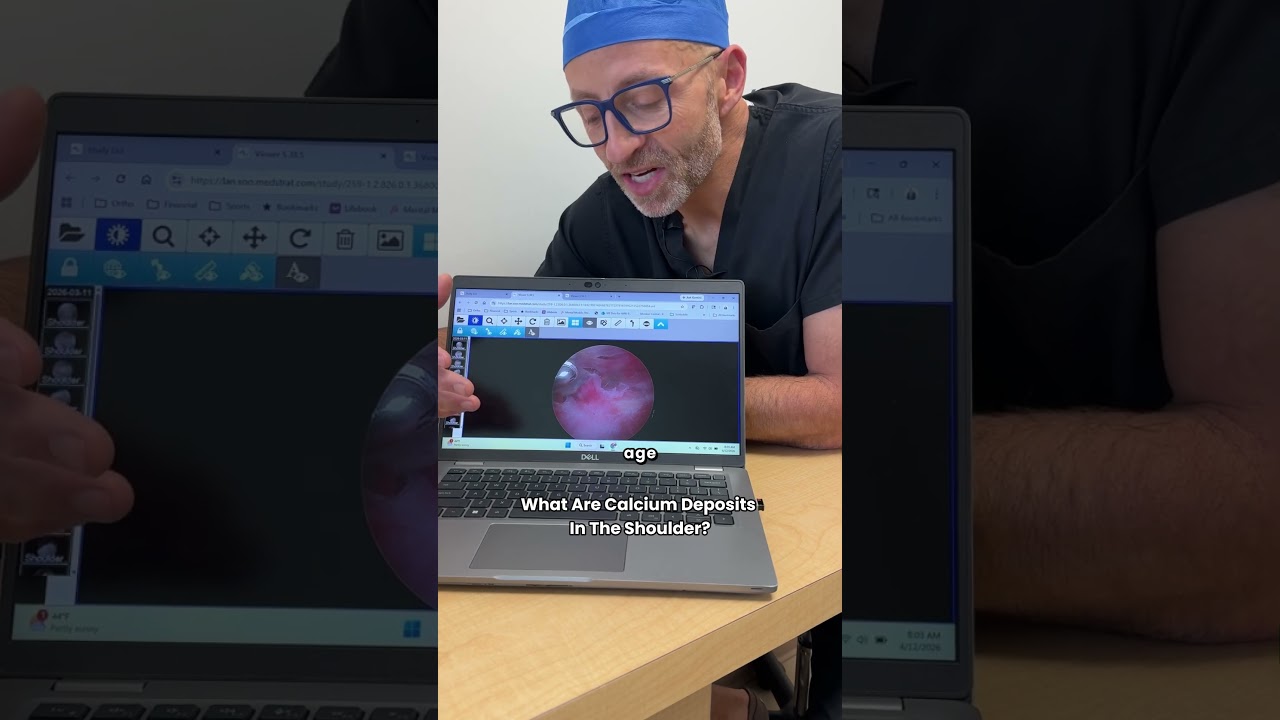
Calcium deposits in the shoulder cause severe pain and sleep loss, especially in middle-aged people. Anti-inflammatories and injections often fail. Arthroscopic surgery to remove the deposits and repair the tendon shows better outcomes than continuing conservative treatment.
Chapters
Have you been told you have a calcium deposit in your shoulder and wondering what that's all about? This is what a calcium deposit looks like on an X-ray. We see a joint here where there's the ball and the socket, and there's this cloudy density, which is inside the rotator cuff. This causes quite a bit of pain for people. So this is the inside of one individual's shoulder. This is a lady in mid-age, and we tried the simple things like injection, anti-inflammatories. She didn't get better. She's in a lot of pain, can't sleep. We look inside her shoulder with a camera or scope, very red and angry, explaining why she has all this pain. This is typical with calcific tendonitis. I remove all that inflammation and then remove the calcium from inside the tendon as well. That involves elevating the tendon, taking the calcium out, and then sealing it back down. That does involve a recovery period, but then the calcific tendonitis is resolved. And there's actually some data showing that people do better with that than with conservative treatment. So start conservative first. If it resolves that way, fantastic. If not, debridement or removal of the calcium deposit is an option for the shoulder to get rid of your pain with calcific tendinitis.