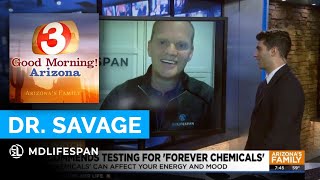
A TV interview with longevity expert Dr. Paul Savage discussing "forever chemicals" (PFAS and related fluorinated industrial compounds). Dr. Savage defines them as persistent, industrially produced chemicals now widespread in the environment and links them to chronic diseases (obesity, heart disease, Alzheimer’s, cancer). He cites rising detection rates (regional and national figures), explains current testing limits, recommends avoidance measures (reverse osmosis water filtration, cleaning/peeling produce, replacing household cleaners), and mentions an experimental protocol called "plasma change" reported to reduce body burdens of multiple toxins.
Questions this video answers
January 29, 2024.
98% of Americans now have these forever chemicals (as stated).
About 4,000.
About 20 to 25.
He said roughly 6 years ago ~20% had detectable levels, 3 years ago ~80%, and recently over 100% (statement in interview).
Chapters
Well, the CDC has been recommending that people get tested for forever chemicals in their body. And after the break, we'll talk to a doctor that explains the side effects of what he's calling a silent health crisis. That's next. Hey, welcome back. The CDC recommends that you get tested for the presence of forever chemicals. A new report calls the chemicals a silent health crisis. To explain how it can affect you, we have longevity expert Dr. Paul Savage here with us this morning. Hey, good morning, Dr. Savage. How you doing?
Good, David, thanks. Nice and cold here in Chicago.
Oh, yeah, I'm sure it is. Hey, Dr. Savage, can you explain to the people what these forever chemicals are and where they're found?
Sure. Forever chemicals is a subset of a type of toxin that's in our environment. Along with heavy metals and pesticides and herbicides. Forever chemicals are made from industry in the production of many different things, including plastics and bowls and dry cleaning. And they're fluorinated chemicals have been getting into our environment for about 40 years now. So about even six years ago when we started testing for these, we started noticing that only about 20% of people had these toxins. Three years ago, it got up to 80, and recently is over 100%, at least in the Chicago land area. And that's exactly the warning that the CDC put out was that 98% of Americans now have these forever chemicals in their system. The reason we call them forever chemicals is they never break down, and they're also very resistant to get them out of the body. But the overall problem with the forever chemicals is the long term problem that comes from them, because they're related to almost every different type of chronic disease that you want to look at, whether it's obesity, heart disease, Alzheimer's, and even cancer.
Is it important to get tested for this? If we know that, you know, most of the population probably has it in.
Their system, it is, because right now we only can test for about 20 to 25 of these different parebrochemicals, and there's 4,000 of them in our environment. But why it's important is we can start to see the degree of toxicity each person holds. Because it's not just about which ones you have, because that does matter, but it's how much do you have of each one of those. And one of the things that we worry about at our clinic, and we've tested everybody in our clinic for the last three years for forever chemicals is that what can we do to keep these forever chemicals from getting into your body?
The CDC says right now there is no approved treatment of removing these forever chemicals from your body. So what can people really do if they do test for that high of a level?
Well, the first thing that everybody should do, whether they test at a high level or not, is start avoiding certain things. Now you want to make sure your food supply is very good and your water. So putting a triple osmosis, triple filter, reverse osmosis filter for you to get your drinking water out of is very important because PFAS are transmitted very much through water. Also, when you buy your fruits and vegetables, you really need to make sure that you clean the fruits and vegetables well. Even though the skin of a lot of vegetables contains a lot of fiber, we're really recommending that people peel the skins away from their fruits and vegetables prior to ingesting them. And finally, we want to make sure that everybody understands that there's chemicals under your sink, there's chemicals in dry cleaning, there's chemicals, even detergent. And you really want to look at all the household cleaners and, and start taking them out and replacing them with good old fashioned home remedies like vinegar and bleach and ammonia. Things that don't contain these forever chemicals do.
Doctor, do you really think that these little changes can make a difference? It feels like we're just surrounded by these PFAs and they're in there really anywhere. We're really making that much of a difference by those small changes?
Well, it does, it does slow down the amount that you get into your body. The problem is getting them out again has been somewhat of a challenge. Now recently team which is including a lot of international researchers and physicians has put together a protocol around something called plasma change that does very well at removing not only the forever chemicals, but heavy metals, pesticides, herbicides. In fact, what we see with our protocol is this the only therapy that's been put into action at this point that removes all toxins from the human body. Even if we can't stop the government from allowing these toxins into our environment, we, we now have a potential solution to getting them out of the body.
We'll definitely have to look into that. Dr. Paul Savage, thank you so much for joining us this morning from Chicago. Stay warm, my friend.