How Functional Medicine & Therapeutic Plasma Exchange Are Changing Lives | TPE Blueprint #11
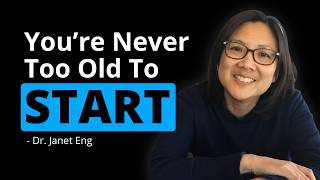
This YouTube podcast (TPE Blueprint #11, uploaded June 24, 2025) features Dr. Janet Ng describing her transition from ~30 years in emergency medicine (plus a fellowship in medical toxicology) into functional medicine with MD Lifespan. She uses a car/engine analogy to explain cellular/mitochondrial work and outlines adjunct therapies she employs—PEMF (pulse electromagnetic field), photobiomodulation (red/infrared light), microcurrent/frequency therapies, and methylene blue—to reduce inflammation and improve cellular function. Dr. Ng discusses therapeutic plasma exchange (TPE) as an "oil change" that reduced her chronic hives and inflammation (she reports three TPE sessions starting in January). The episode also covers household toxin risks (medication safety, storing chemicals in original containers), parasympathetic-rest practices (phone-off, breathwork), lifestyle advice (sleep, movement, community), and where to find MD Lifespan and her practice (MDLifespan, wellnessalternatives.com).
Questions this video answers
About 30 years.
Fellowship in medical toxicology.
Around age 40.
Three TPE treatments.
She said they started in January (year not explicitly stated in the chunk).
Chapters
Have you ever wondered why, despite healthy habits, that your body still feels like it's stuck in neutral? So could there be some overlooked toxins that are hiding in plain sight in your home? In this episode, I invited Dr. Janet Ng to expose what the everyday risks are that we all face that are probably derailing your health. Let's dive in.
All right, Dr. Janet Ng, it's off. Awesome to have you here on the TBE Blueprint podcast. Thank you. How are you doing today?
Thank you. Thank you for having me. Doing good.
Yeah. So you. I've been wanting to chat with you for a while. MD lifespan team, you know, that's, of course, what Dr. Paul Savage has been heading up. You're now part of it as well, right?
Yes. Yes. So I came on board. I started in emergency medicine. I call myself a recovering emergency physician. Been in the department for 30 years. Also did a fellowship in medical toxicology. And so I learned in toxicology all the ways that things can mess up your body. And so I learned to switch over. I switched over to functional medicine to learn how I can help the body. And so doing that, I came onto MD Lifespan with that background. Yeah.
I mean, 30 years in ER that's kind of like Dr. Paul Savage. I mean, very similar story. Right. Seeing how that works to where you're working now. I mean, I guess how does that. How do you think about that? And it's so different, it seems like. And I'm sure you've seen so many changes, too.
It is. So emergency medicine is very much what we call a young person's profession. It's very hard on the body. It's a big adrenaline rush. It's like, what can I do? How can I fix it? It's that, go, go, go. But then what you really learn is that after, you know, 20, 30 years, we're not go, go, going anymore because we feel horrible. Our sleep is disrupted. I remember one night I was working a night shift, and I thought, oh, my gosh, my kidneys are killing me. And I realized it was my adrenals probably squeezing all the last that they could to keep me going for this trauma. And so it made me realize that, you know, my health was failing, and so I had to get out of emergency medicine and let the younger people carry on the torch.
Wow. So that was a realization. And you're like, I'm literally burning myself out.
I am. And I used to have hives, and I was. You know, I had the weight gain and sleep disorders and everything, and I wasn't getting any Better. And I remember being told that, you know, how you live at 40 will determine how you live at 50 and then at 60, and I wasn't doing very well at all. I had hormone disruption and endocrine disruption and my cortisol was off. And I thought, you know what, if I don't do something now, I don't think I'm going to live to see my kids graduate from college.
What, what? How old were you at that point when you kind of made that big old shift?
I was probably 40.
I feel like that's a pretty common age where people are starting to start to realize, oh, wow. Yeah, like you said, it's how you do things in your 50s. And then that's when things kind of start peeking, you know, popping up. Right, right.
And you know, in my 20s and 30s, I was pretty active and I used to do triathlons and I ran marathons and ultramarathons and I real. I can't keep doing that anymore.
So what's the. I guess. Yeah. On your track? Because of course, just kind of bringing in you into the picture here because you've seen a lot, but also just for yourself, it sounds like you made this shift to, well, you understand toxicology, so you know how that kind of plays in then functional medicine. Was that pretty immediate, that shift that you did from the ER space?
No. You know what? It took me a while in the emergency department. I kept seeing people coming in with diabetes and hypertension. I think the big realization was when they started listing me as their primary care provider. I was like, whoa, wait a minute, I don't know that. And we're on emergency medicine. How can I be your primary care provider? And that made me realize I'm seeing all these people and they're not getting any better. And so that's why I learned about functional medicine. And I started off with diets and supplements. It was a good place to start. Right. And I got some of those patients better that I was seeing, but I couldn't either get them across the finish line or get them to stay over the finish line. It was like putting premium gas into broken down engines. And so I started working post Covid. Of course, during COVID I went back into the emergency department. Post Covid, I came out and I started looking at, quote unquote, the engine work of a patient. So I looked at the cells and the mitochondria, which is the powerhouse of the cells. I was looking at different things like red light or photobiomodulation and PEMF and Methylene blue, all these things energetically to get the cell, the engine to work better. And then it was a nice segue because when Dr. Savage asked me to come on board here at MD Lifespan, we're the oil changers of the car, I said, well, it makes sense. I've been working with gas, I've been working with the engine of the car. Why not work at the oil change?
I want you to break down this whole, like how you visualize it and see it and communicate it, this whole car analogy, because it's so. Yeah, Dr. Savage, he has said on this podcast numerous times, it's, you know, tpe therapeutic plasma exchange is like an oil change for your body. And the way he describes it makes perfect sense, but it goes even deeper than that.
It does, because you know, you can get the best premium gas out there, right? But if your cells can't take it in, if you can't get rid of the toxins at the cellular level, if you can't metabolize and use that gasoline, you know, it's like putting all that gasoline in a car. It's not going to go anywhere, anywhere. So and so, you know, I figured like the engine work that I do, I'm doing the old fashioned spark plugs and those types of things.
Well, mitochondria, right? Like, yeah, they have to, they're being fed what, oxygen, Right, Right. Yeah. So I guess what's, what's happening with a dirty engine or the engines that aren't being maintained? Like you, you would like to.
Well, like if you don't have the engines maintained, you're going to have chronic fatigue, you're going to have increased aging, you're going to have more inflammation, joint pain broken down, you know, and that's going to lead to more diabetes, heart disease, strokes, those types of things. And it's just, it's just that vicious cycle. And people always go, well, what came first, the chicken or the egg? Sometimes we don't really know, but we got to break the cycle somewhere.
And when you describe this to folks, is it, I guess, when is the moment when you, Is it when they're just asking about how this all works or is it after a certain kind of test or just kind of curious how this fits in?
Well, when patients come to me, they go, well, I don't feel very well. And you know, of course I get the history and go, okay, why don't you feel well? And then so I start looking at the ways and like, I start with some of the basic things. I look at is body composition because you don't know where you're going to go if you don't know where you're at. And looking at resting metabolic rate, which is what is your metabolism. And then I, you know, people, they want to be able to do things. And a lot of people think I just deal with athletes. And I said, well, I started with athletes because my kids were athletes. But really, if you think about everybody's an athlete, it doesn't matter what you want to do, whether you want to play hockey or lacrosse or do that, or if you just want to get up off the floor after playing with your kids on the ground, or here's one. If you want to put your suitcase in that overhead bin on the airplane. We're all athletes. We have to do that. And so I started looking at, you know, how can we function and what do we need to do and what's our metabolism and what's our heart rate and how well can we adjust? And then the other thing too, I like to look at is we're all in this fight or flight sympathetic overdrive. And part of healing is you need to be in what we call parasympathetics or the rest, digest and heal. Well, in today's society, we don't get to do that. We're on our cell phones, we don't turn off. We, we drive in traffic, someone cuts you off and the phone's always, you know, something's always happening, and we're constantly in sympathetic overdrive. And so some of the things that I do looks at, how can I look and get people back into the parasympathetic mode so that they can start to rest, digest and heal?
Yeah, that's huge. What are some of the, I guess the things that you would recommend folks to do to get into that parasympathetic state?
Well, if they want to just do some basic things, it would be get off your phone. You know, don't use your phone like several hours before bed so you can sleep. The calming, the meditational, the breathing, those things. And then there's things that I do in my practice, so I'm really big into certain PEMF machines. So that way I can help with microcirculation and get the parasympathetics going. I also use microcurrent machines and use frequencies to help calm the sympathetics. So and then also photobiomodulation or red light machines. So I, in my practice, I do some other techniques to kind of help get the parasympathetics Involved.
Interesting. Can you like maybe overview without going super. Because I'm sure it's like a full episode or two in themselves. Because I'm very curious. Just like on the red light. That's something I'm starting to research more. But like what you just said with the PEMF machine frequency red light. I guess maybe just a quick overview just so we're all kind of knowledgeable so we can at least explore more after the episode here.
Right. So one of the best things that I like to talk about is the frequencies. And you know, our cells are all based on a frequency and people go, what are frequencies? Well, if you think about a car fob, right. And you want to go, and you click that car fob, it's not going to open every door on that lot. There's certain cars that it's going to like. You're hopefully your car, only that it opens and unlocks that car. So it's a certain frequency. So our cells have certain frequencies are. There's. I guess I don't. The best thing to say is like conditions that affect the cells. And so with those frequencies you can calm down inflammation, you can calm down scarring, you can calm down that overdrive. So that way you put it back into a neutral type of state. So that's. I really like doing that treatment modality and actually that was the first thing I really learned and got into when I started doing more functional medicine.
Interesting. And how does that. Is that all from hearing? Like actually listening and then that.
No, it's actually like you send frequencies through parts of your body. So you have electrodes like at one area to another and then you. It's like, it's almost like a TENS unit.
Oh yeah.
You know how TENS unit work. But this is actually not stimulating the muscle in that regard. It's actually working on the different frequencies of the cells and everything like that.
Okay, I like that a lot. And yeah, everything is frequency energy.
Mm.
So that's great. Anything on the PEMF or red light that we should be aware of?
Yeah, PEMF. Everybody goes, well, what is PEMF? Is it. We know about EMF? Like that's bad for you, right? That's the 5G, that's the phone. That's all. Well, PEMF is pulse electromagnetic field versus like the emf. And so with those pulses they pulse at certain frequencies or hertz and there's calming hertz and. And then there's more like anti inflammatory hurts. So the way you think about it, because not all pemf is created equal. So we use a lot of PEMF in healing. Like, the orthopedic surgeons want to use it for, like, say, a shoulder. Well, would they want the power that. Going in the shoulder to be the same power coming out of the shoulder for. To make sure it heals all the way through? But when I'm using PEMF is a lot lower frequency because I want to relax the nervous system. I want to relax the blood vessels. I want to relax something called. If this is a whole nother story, but the glymphatics, the lymphatic system. Right. So we're calming all of that down. If I use that. That frequency that we use on shoulder repair, I'd be blasting out the blood vessels. And so there's different PEMFs that are used to help calm things down versus heal.
I see.
Yep. And then the light or the photobiomodulation, we all, you know, light the sun. That's huge out there. And we know about different waves. Well, we also talk about irradiance and the power of light. So it's light and different frequencies that work on the body in different ways. Like red light versus infrared. Infrared is deeper. It causes more heat and those types of things. And then, like, blue is better for skin. And, you know, it just. It's kind of like that whole science of light and using it appropriately.
Interesting. Yeah. And I know a lot more studies are coming out, too, about red light, and just. Yeah, you see a lot of these people out there starting to use it, and machines offered and correct me if I'm wrong, but, yeah, I think of the car analogy that you said, and even what you're saying here with the PEMF and frequencies is it's targeting inflammation. Right. Like, it's trying to chill things out in mitochondria.
Yep. It's trying to calm down, calm things down, help with inflammation, and then getting the mitochondria working better.
Mm. I mean, and then that's where, what, you have more. The clean engine. Right. Like, so it sounds like you're kind of attacking it from all these different angles, right?
Yes.
In a good way. Clean.
In a good way. Right. Yep. And then. And then the nutrients and the supplements that I've been using will hopefully be more effective, because now I have a better engine. And now, you know, instead of. I think about, like, when my dad made me help on the old carburetor engines and we had to change the spark plugs, and you had to check the. The distance in between the plugs and you know, and to make sure it fired. So now I feel like we're firing better because the plugs are, are good on you.
They're cleaned out. Yeah. And they're firing at the right frequency or whatever it is, the spark. Yeah, yeah.
Hello, my name is Kerry Stewart and I did the brain protocol for the MD lifespan. I was struggling to recall names of couples and so I shared this with the doctor. That's when he introduced me and said, I think you're ready and let me explain to you a tpe because this is going to help your memory, your focus, your clarity. And I truly believe you'll be a wonderful candidate for this. I have had five TPE protocols and each table time I have improved. And it's not until this last one that I honestly, I am feeling so back on top of my game. Like my brain fog is gone. I am focused more, I have more clarity. This was life changing for me and I feel so much better for it.
Yeah, this is something that I know we talked about, but it seems like these are a lot of alternative type therapies. But like, what are your thoughts on that? Because a lot of what you're saying here isn't the mass public knowledge of how you would aid one of these ailments you might have or yeah, if I'm tired, I'm going to go do something else or take this supplement or medication even.
So they call this alternative medicine or new, or people think it's new, but it's really not. If you really start really looking at the history of the different things like red light, obviously that's not new. Looking at frequency specific microcurrent, that's not new. That's actually been around quite a while. And even back in the 1920s, 1910s, they started using it in Europe with the frequencies. But then what happened was, and you've probably heard this, the Flexner Report came out in around 1910, 1920 ish. And then McPharma came and so they got pushed to the side because we started using other things. Now there is a time and a place for medicine. Don't get me wrong, I am trained in emergency medicine. So if you have a heart attack or a car accident, don't come looking for my alternative, quote unquote, alternative therapy or other modalities. But these things were actually used in medicine and then they got pushed back. And then the other one is using red light in blood and they called it ultraviolet blood irradiation. And people would think, well, that's crazy out there. Well, no, actually, that was the way they traded sepsis for so long. And then if you look at some of the literature in Russia and Germany, they still use that quite a bit. We have adopted antibiotics, but there is a reason why you use light and treat the blood that way. And the UV light. And in the hospitals, we actually are using more UV light. We use it to sterilize our hospital equipment and different things. And even during COVID we were using a little bit more UV light to see if it would help sterilize some of our things and our. Our masks and whatnot. So there is a purpose for it. So it's not new.
Wow, that's pretty cool. I didn't realize that was being used in. Or it's starting to be used now in hospitals and whatnot.
In fact, in our emergency department, we had a little UV light machine. And so when, you know, N95s were really hard to get at the very beginning, we would actually take our N95s and put it in a UV light machine. Did we have good evidence to show that it worked? Not really, because we had never encountered a pandemic like this before. But it's like we thought, well, there's UV light. We should at least try it. And so, like I said, it's not anything new, right?
Yeah, it's not new at all. It's just how it's applied, Right. I mean, similar to tpe, you know, therapeutic plasma exchange. It's been around for a while, but it's just the application of it and how it's, I guess, angled right. What's. And I'm thinking of, well, I think. I don't know, like, toxins in my mind, you know, equate to inflammation. And that's pretty much what you're. You're focused on here with the different therapies as well. How does. How do you see toxins at play with everything here?
So you're right. Toxins are at play. They do affect everything. We just don't know and are still learning how much the toxins actually affect us. And I think that's where I really like this tpe. The next part of my journey is because we're starting to see how cleaning out patients with plasma exchange is really helping their inflammation. And if I may share my story. So I've had tpe. I've had three treatments, and prior to my three treatments, I used to break out in hives all the time, no matter what I ate. And I lived on steroids, and I lived on antihistamines. And since I've had my three TPEs, I haven't had that problem. So I just know that cleaning out the toxins has been a huge benefit for me.
And that was for. How long before were you. Were you in that cycle?
Oh, gosh. Well, since COVID Okay. Even before COVID a little bit. So quite a while. And I just had my tpes just starting January.
Oh. So, yeah, that was a good 5ish years or whatever it is. Yeah. Wow. So you had three sessions. Yeah, because it's always kind of multiple.
That's fascinating. What other takeaways? I guess from your perspective, things that you can share here. I mean, that's a huge takeaway.
Yeah. And not to totally violate HIPAA or anything like that, but there's people that I love talking to my patients and talking to people who've had TPE and just their testimonials of how well they feel. And one saying that it was the best conversation they've had with their spouse, you know, in a long time. After that spouse had tpe, the energy, the people who, quote, unquote, slept through breakfast and couldn't get up till noon. They're now up early in the morning. So just hearing how their quality of life has improved, I think that's huge. That makes a huge difference. And I think that's what, in medicine, that's what we want to do, is make that difference in a patient, improve their quality of life, and then however we figure out how to do it, I think that's incredible.
Absolutely. The fact that the technology is here now and, you know, it's. It's going to be a lot more widely used. It's going to take some time, of course, costs or whatever it is, situationally. Yeah, it's. It's the fact that it's here and that there's, you know, we were talking about toxin testing earlier, Dr. Savage and I. It's. It's fascinating now that we can see the data, what's happening to us specifically, so it becomes personalized everything.
Right. And, you know, that intoxic. Well, so my fellowship was in medical toxicology, so I learned how all these things hurt you. So that's. That was really good, you know.
I guess segue into coming into tpe, because I worked with people were poisoned with pesticides. I worked with, you know, all these heavy metals. I saw kids who were being chelated for lead toxicity. So I saw that as a toxicologist. I remember that so well. And now to be able to say, okay, now I have the next step with plasma exchange and we could really help these people and get them through is like, it's like the whole next chapter for me.
That's so cool. And that's like what Dr. Savage says too. It's like, wow, I could see all these things that were not possible just a couple years ago.
Right.
From your experience working in ER for so long, what say? I'm thinking of toxins and exposure at home, because that's what Dr. Savage says. It's one of the most dangerous places, the most exposure you get from toxins. What's a surprise, household exposure that could land someone in the er. That's an easy fix or easier fix?
Well, I think one of the big things is, you know, I used to teach and give lectures all over to residencies and the new physicians coming up. One of the lectures that I always gave was one pill can kill. And it was all the medicines that are potentially out there that were on like high blood pressure medicines and certain medicines for blood sugar. If a 10 kilogram kid or a 2 year old got into one pill, they could potentially die from that. So I think that was like a huge, like, oh gosh, there's so much out there. And just being mindful of your medicines and not putting them in like easy pill bottles or don't call, don't tell your kids that something is candy for them to take that medicine because then they won't know is it really a bad pill or is it candy? So that's one of the big things and then the other big surprise, and one thing that we always saw in the emergency department is you always want to try to keep everything in its original container. So I actually had somebody who put antifreeze in a Mountain Dew bottle and the person came and didn't realize it was antifreeze and drank it and ended up in their emergency department because they had ethylene glycol toxicity. So you always want to be careful and mindful how you store your household chemicals.
That's a big deal with kids. I mean, I have two little ones, five and almost two years. So it's. Yeah, kids are curious and they don't know better and. But yeah, I think the big one, actually my big takeaway is keep things in the bottle, their original bottles, you know, clearly marked and of course prevent them from getting into them.
Right. And you know, the other thing too is kids are, oh my gosh, kids are quick. They can move and climb up and get into cabinets faster than like I probably could. So that was the other thing is like not only should you put those medications and stuff up high, but they should also be locked. And there's a false sense of security about those child resistant caps, you know, the ones that none of us can open as adults, but kids could get into easily. And really how that came about is it was just enough of a resistance so that it took longer for kids to get into them, so hopefully you could catch them. It's not child. So the thing that people say, oh, it's a childproof cap, is not childproof.
It's just a time. It's just giving you more time.
Yeah. Wow.
That's a heck of a reframe, too. I've never heard it say that way, but thank you.
Man. Well, I'm thinking of just from your perspective of an ER to where you're at now, even deeper in toxicology, but functional medicine, is there anything.
That stands out that you think we should know about or cover here that maybe that you're focused on more so now because you have this whole spectrum of experience and also, like, what are you excited about now that, you know, this technology is growing?
Well, I think I want people to realize that health is not easy. If it was easy, we'd all be healthy. It does take work. But think about it in the long run is that if you do the little simple things every day to stay healthy, whether it's eating right, whether it's getting enough sleep, whether it's getting enough sunshine, those types of things, then actually those little things will keep you from that disease state where now you're taking a ton of medications for xyz, you're in the hospital, you're at this doctor's office, you're at that doctor's office. So one thing I just want people to realize is that it's not easy. It takes some work, but the outcome and the benefit will be so much better. And I'm excited about that because that's what we're working on, is helping people get better.
That's right. Yeah. No, I love what you guys are doing. I love that you're working with Dr. Savage and the rest of the whole network that he's creating with MD lifespan. It's exciting. Yeah. I think technology, how fast it's moving. I'm in the AI world as well, so I see how it pairs up with personalized medicine and yada, yada, yada. So it's. Yeah, but we still need to take the steps to do it ourselves, right?
We do. It's not going to be there. And, you know, even for Me. So I had a little bit of setback in my health and. And I'm back at it again and. And I actually started to do CrossFit again. Yeah. After running marathons and ultramarathons, I had to take a break, but now I'm back at it and it wasn't easy. And in fact, I work out at 5:00 in the morning, so, you know, getting up early and doing it, there's so many times you want to just hit that snooze, Alar, go back to sleep. But now that I'm in the groove and doing, it's like, oh, this really feels good. I feel so much better. It wasn't easy, and there are still days it's not easy, but you just got to keep doing it because the alternative, that's a lot worse.
It's easy to hit the snooze and then you just keep it and snooze through life. And I think the big thing, because I've done CrossFit as well, the community, anytime. I mean, that's what a lot of us lose or we're not sharing or, you know, putting ourself out there, you know, but there's other people out there doing the same thing. So find your people, you know.
Right.
I do Jiu jitsu now, and for about a year, and I just turned 40 and I was like, oh, am I too old for this? But it's like, no, you're never like the best thing I've ever done.
And I think that's the big. That you just hit on it. You're never too old to start, and you don't have to be in great condition to even start.
No.
And, you know, and some people may find these, like, for me going into jiu jitsu or somebody coming in across it, they might find it very intimidating, but it's not. It's a very welcoming world. And I think if you give it a chance and find the right group, they will take you at whatever stage, nurture you, and then you will be surprised in a year. Don't ever look back except to see how far you've come.
That's right. That's right. Don't ever quit either. Just keep moving. What other choice do you have?
Right, Exactly. Because if you're not moving, then, you know, someone's walking on you there.
Something will stop you. Yeah, exactly. Well, Janet, this is. This is incredible. Anything else that you want to leave us with? I mean, you did. You opened my mind to a lot of things. I'm going to explore deeper now. But before we wrap up, and also I want to point, you know, point me to where people can follow you along with and, you know, explore more about what you have too.
Well, you can follow well, obviously MD lifespan@md lifespan.com then you can look at my page@wellnessalternatives.com and see all the crazy things that I do and just learn about it. But I think what I want to tell patients is that or tell your listeners is don't ever stop learning. And just because something's not for you doesn't mean it's bad. It's just not for you. Right. And it might be good for somebody else and vice versa. What's good for them might not be good for you. So just keep learning. And I think being a lifelong learner is going to be super important no matter where you are in whatever stage you are in life. And just keep your mind open because the day that you close your mind to something is a day that you never see past it.
That's true. Yeah. And we all have access to the most information we ever have, ever, I think, on this planet, with the accessibility of AI and whatnot to helping out. But.
Yeah, I would echo exactly what you said. So thank you so much.
Yes. Thank you for having me.
Awesome. Yes. Well, have a good one and we'll talk soon.
All right. Thanks. Bye. Bye. Bye. Bye.
More from Paul


A Woman’s Journey with MTHFR, Chronic Inflammation, and Therapeutic Plasma Exchange

Ask Dr. Paul Savage: A Live AMA on Toxins, Detox & Advanced TPE Your Questions. Answered Live.


A Cardiologists Take on Toxins, Heart Disease, and Therapeutic Plasma Exchange



Advanced Serial TPE: The Science, The Evidence, and The Opportunity for Your Patients

Your Clean Beauty Guide To Avoiding Parabens, Fragrance Loopholes, and Forever Chemicals

