How Toxins Have Become Our Silent Killers and What We Can Do About It | TPE Blueprint #1
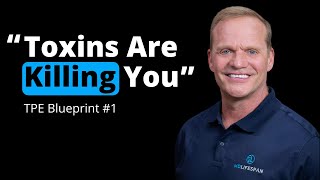
A conversational YouTube episode (TPE Blueprint #1) featuring Joe and Dr. Paul Savage that introduces the problem of modern chemical pollution and outlines responses. Dr. Savage traces toxin exposure from natural toxins through the Industrial Revolution to a rapid expansion of synthetic chemicals since the late 1950s (e.g., atrazine, PFAS, microplastics), claims that detectable man-made toxins number ~150,000 and that toxin burdens have doubled every five years, and argues that widespread, multi-chemical exposures underlie rising chronic diseases. The episode introduces Therapeutic Plasma Exchange (TPE) as a method to remove circulating toxins (an “oil change” analogy), highlights the role of multivariate data and AI in measuring and managing exposures, and previews practical, at-home mitigation steps and future expert episodes from MD Lifespan.
Chapters
So where does the story start? You know, this is, this is our first episode here, the TVE blueprint. Dr. Savage, Dr. Paul Savage. I'm happy that we're doing this. Tell me why.
Yeah, yeah. I mean, the interesting thing about toxins is as long as there's been life, there's been toxins because life, a lot of organisms produce toxins as a defensive mechanism against their predators. So whether like scorpion venom or snake venom or spider venom, or there's plants that are deadly if you eat them. So there's always been. In life in general, toxins have existed even when man came onto the scene in the world and we started doing things like smoking tobacco and we started using arsenic, we started using hemlock, we started using all these herbs and stuff. The Greeks used them to cure disease, but also it caused disease because they really weren't sure what they were doing. So this. But it was a minor part of everyday life and health. It really had no significant impact on the vast majority of people in the world. Now, that change with the Industrial Revolution, with all the pollution, with all the smokestacks, I mean, there were times in London you couldn't even see. And, you know, there was. There was all these black lung diseases from the coal mines, but there was also all this disease in London. And these cities would be so covered in smog, but they called it fog, but it was really just pollutants that made so many people sick. And even back then they could recognize that these bigger cities had a problem with toxins. But again, it still wasn't something that overall affected the world as per se, but some, you know, but I would say somewhere in the 60s, early, early 60s, late 50s, we changed the universe because we started developing chemicals that weren't known to the planet. They weren't all the way before that. These were chemicals that we were part of nature and we, you know, the burning of the wood, I mean, even those chemicals were still part of nature. But in the late 50s, early 60s, we started developing chemicals to treat herbs and herbicides and pesticides. And the first toxin was introduced was atrazine. And that was, I think, 1958. And we started using it in all these agricultural places, mostly around the Mississippi Basin and then the Ohio Basin. What's really interesting is if you map out the use of atrazine and then go forward 10 years and map out the onset of obesity in America, and it's the same map. Wow. And that's the part that really got me when I saw that for the first time in the presentation and that was about 40 years ago. It really got my attention. Like, this is the connection that convinced me that we were in trouble. Now move forward a little bit more in time, and the electronic age starts coming on. And we start digging in the earth for all the precious metals and all the heavy metals. And we're unearthing all these metals and we're using them in our pipes, we're using it in our factories, we're using it in our food products. And then you keep moving forward. Now we have cars on the road. Now we're burning petroleum. And, you know, so we got all this. All this extra pollutants that are coming into the air. And then we just go even further and we start developing other chemicals for processing, like the forever chemicals and finally plastics. Hey, let's use plastics to seal everything and keep everything fresh. And all this has been. All these problems with toxins in our universe is because of us.
It hasn't been that long. It's such a new problem.
It's been less than 60 years that this whole thing has evolved. Now, interestingly, if you look at the toxin levels, they double every five years. So by 65 to 70, from 75 to 80, so we're about 250 times the amount of toxins that we had before when we first started. And that's kind of. Kind of a number for you. Hard to wrap your head around. Look at it this way. Currently in the world, there are 150,000 toxins man made that exist in our environment to levels substantial enough that we can detect them in people. Now that's the change that I think that everybody doesn't understand, because 60 years ago, even 30 years ago, when I was first started practicing and we were seeing people had toxins, it was an isolated toxin. This was somebody who had mercury toxicity or, or they had gadolinium toxicity, or they had a pesticide or they had a, you know, a chemical, an industrial chemical. But we were limited and that they had a mold toxin. But we were limited by. It was just one or another. And we had protocols that we could use on these people. But what happened in the 30 years of my practice and measuring toxins is we started not just seeing one, but then two, and then three, and then four, and then five, and then six. I mean, 30 years ago, I would see rare. I would see anybody with intoxins.
Wow.
Just 30 years, 20 years ago, everybody had a couple 10 years ago, three or four, five years ago, six to eight. Now we're at 13 to 15. And Joe, that's the average number of critical toxins in the healthy people on the street of an urban city like New York, Chicago, Louisiana. We haven't even looked at the suburbs yet or the rural areas, but we know that they're toxic, too, just with different chemicals.
That's right. And I. I know it. You know, this. This pollutes in what, groundwater? The water piping into our house. I mean, our homes, in general offices that we're always in.
Thirty years ago, people would say, where did I get the mercury? And I could say, fish. 30 years ago, people would say, where to get the PFOAs, the forever chemicals. That also is fish. Now I have lead that's in your pipes. Now I have mold. It's in your cereal, and it's in your wood. I can't do that anymore. You know why?
Why is that?
Because all the toxins are everywhere now.
The mercury's in the water, it's in the air, it's in the food, it's in our products, it's in our homes. And that's the thing is that makes it scarier, but also easier because now there's just general rules that you have to follow because the toxins are everywhere, which makes it easier instead of just saying, I can't have these things because I have mercury, toxic, and I can't have these things because I have. Now it's like, here's what everybody has to do for air, here's what everybody has to do for water, here's what everybody has to do for food. Chemicals in the home, Consumer products, which we need to talk about a lot about consumer products, especially in the. And then products for our children. These are all separate categories that I want people to start thinking about, because the most dangerous place on the planet for you and toxins is inside your own home.
Lovely.
That's where you get 500 times more exposure to toxins than anywhere else.
500 times.
Yes.
That's. So that's. Yeah, we're talking air water. You said cosmetics. Is a big one. And we'll definitely deep dive on another episode, specifically in all of these. So we can really understand what it is and how to. How to actually do something about it.
There have been physicians, there's been researchers, there's been groups for 40 years. Matter of fact, when we started using toxins in the early 60s, by the late 60s and the early 70s, there was the crying Indian ad. You probably never saw that one. Heard of it. I'm old enough that I remember this. An Indian canoeing up a river and it was pristine and it was clear. And then all of a sudden it's not. And there's trash in the water, there's trash on the beach, and there's tires on the beach. And he gets up on the shore and he turns toward the camera and he has this one tear coming down his face. It was very. Even then, we knew that pollution was our problem, and if we didn't take care of it, it was going to be a bigger problem. And interestingly enough, Stephen Hawking, who could be arguably called the smartest man ever born before, one month before he died, said, when asked, what's the existential threat? What's going to kill us as humans? Is it nuclear war? No. Is it climate change? No. Is it AI? No, he said, it's pollution and our stupidity to it. And we already passed that mile marker 10 years ago.
Geez. Wow.
So, I mean, you know, this has not been unknown. And now in the media, thankfully, for the last three years, you start seeing more about microplastics and forever chemicals and the chemicals that are in our food. And we're now banning Perc from dry cleaning because we've been talking about this. But we have such a long ways to go. We have such a long ways to go. But here's the good news is you can do a lot yourself to protect you, your family and your friends, because we're not so bad that you can't put up your defenses and keep these invaders out. And that's what we're going to talk about.
Yeah, we're going to talk about that. Is there a way to. And I know this is a deeper topic, so that's why we even made this podcast, is to talk about this. It's not theoretically, hey, here's the issues and, you know, keep it heady, but it's actually. Let's make it practical.
Absolutely. I'm the doctor who's always been known for doing the nuts and the bolts. Here's how you do these things, here's how you get these things done. Because it doesn't do you any good to come up with solutions if people can't enact them.
That's right. And you mentioned something about data. You're very much a driven by data kind of guy. And we'll get in your history and what you've done over the years in future episodes as well. But speak about how you think of data and how you can measure better now than ever before and what to do with it.
I think the most interesting thing, the way I think about data that might be different than most doctors or maybe most people is. I don't look at one point of data, I look at the picture it makes. It's the data picture. There's just certain combinations of numbers that if one, if certain numbers are going to go one way, the other numbers are going to go this way. And if you start looking at those pictures of numbers instead of just looking at this one isolated number, you step back and you see the forest instead of seeing the tree. And that's kind of what I, I'm known for because I'm actually an abstract algebrist. So I think multivariate people, like what does that mean? I consider all the points at once, but it's really not hard for people to do once you start learning how the mechanism works. Yeah, because we are a machine. We're a biochemical machine. We have levers and pulleys, switches and dials, an onboard computer, a combustion engine. We have an air pump, a water pump, all this stuff. We are just a very sophisticated machine, but we're a machine no less.
And us machines have done things to this bigger machine, the whole world, the ecosystem around us, and we get affected. We're all part of this machine. So that's. And yeah, just like with technology, it speeds up, it gets faster, it gets more powerful and it seems like it's doing something similar with toxins as well with where we live.
That's a great analogy and I absolutely correct. Technology doubles every four years and it's getting even faster as we talk about this that the knowledge set of the human experience is gigantic at this point, in just a few years it's going to be imperceptible how much changes, I mean all the, I'm 62 and all the changes I've seen in my life. A 30 year old is going to see four times as many changes in their life, which is just, I'm like looking back going, I remember when we had a party phone and you had to pick up and the neighbor's like get off the phone and you had to hang up because it was the wrong ring. I mean cell ph were like what? We got this big brick that you can talk and they can take the phone with you. All what I mean, it's like. And computers never existed until I was well into high school.
It's wild. Yeah. And with like you mentioned AI, you know, I'm very involved in the tech space and I see that as well. So this convergence of data and technology, which this is what you're spearheading with, you know, this bigger issue of toxins, but also what we can do with this issue. That's where your story is so fascinating. Right when I met you and how coming out of retirement because you saw this big problem, you're like, I can do something about it now.
Well, I've seen the problem and my colleagues and I have seen the problems for 30 years. I saw a solution that wasn't present before. And that's what brought me back out of retirement. Because of all the things that I've looked at throughout my entire life of medicine, and I've been very grateful and privy to watch a lot of amazing changes occur with medicine, like the invention of a new antibiotic called the cephalosporin. Before that we only had PET penicillin, erythromycin and sulfa. And then people don't even remember. Before we had cat scans and MRIs, we only had the two view x rays to look at. And then moving even further, now we have the antivirals that are taking out HIV and Covid, which we didn't have before either, vaccines included. Then we go even further ahead forward and then we start looking at things like thrombolytics that break up the clot so we don't have heart attacks that causing that much damage. Because I remember the time we used to sit there with nitroglycerin, Lasix and morphine, just praying that the muscle was going to die.
Oh, yeah, wow.
But this thing that we have now with the toxins is by far the worst compared to all of them. Because if you understand everything I just talked about with illnesses and heart disease and cancer and all the ways of finding these things, the toxins are the root cause of all of them. And we've caused an acceleration in Alzheimer's, we've got an acceleration in cancer. Isn't everybody just looking around wondering why these 40 and 50 year olds are getting these terminal stage four cancers which we've never seen before?
Yeah.
So there's just all this stuff is connected into the toxins. And the toxins are now connected into plasma exchange as a way to get them out.
That's it. So, yeah, and I'm sure those of us, you know, listening, watching, we've all been affected somehow by someone in our lives. I can think of a couple people in their 40s taken out by cancer far too early. And just how, who knows? But yeah, this is not a problem that stops. So I guess give us a little bit of some hope here, Dr. Savage. Yeah, like tell us Give us a preview of, you know, what the solution is, what you're working on, and maybe some next steps of what we'll dive into in future episodes too.
Hope number one, the toxins are no longer a silent killer. What I mean by that is blood pressure was a silent killer until we learned how to measure it. Diabetes was a silent killer until we learned how to measure it. Toxins have been the ultimate silent killer. But we now know how to measure it. And we, and not only that, but we knew. We learned how to treat blood pressure, we learned how to treat diabetes, we now know how to treat multiple toxic exposures, people, chronic exposures. So the good news is the answers are there. Number two, AI is advancing and with that advancement, we will have better knowledge of how to break down these toxins, how to get them out of our environment, and how to convince people to stop putting them in our environment. I don't think that's an argument with anyone except for how do we do it. So AI is going to provide us tools and methodologies to fix that problem as well. And finally, the third thing is you don't need to be afraid because there are things that you can do at home right now that can start making significant changes in you and your family and your friends, health and wellness. You don't have to be surrounded by people that are unaware. This podcast is going to show you how to simple ways of increasing your awareness to keep you and your environment safe.
I'm excited for it. I'm happy we're doing this. I'm very honored. That or I'm just grateful actually that you're are doing this for. It's not for yourself, it's for everybody else.
But you know, just like our company that we started, MD Lifespan, the purpose that we say MD Lifespan is because we've pulled on experts from all over the country. We have 27 people on our medical advisory board, including cardiologists at maitre universities, toxicologists who are the top of their field, neurologists. And we're going to bring all of them on this show to start talking about how toxins are affecting all of these chronic diseases and, and making them worse and more susceptible in people. Because it's not just the toxins, it's the toxins acting on your genes. So you have to start realizing people are like, what is this going to do to me? Look at your gene set. We're going to show you how to look at your gene set to see exactly why you want to start eliminating the toxins. We're going to make it very personal for every person.
And I've had a glimpse of this for my own self, and it's interesting when I start seeing how it all connects. And that's a big one right there that you just said. So, yeah, I'm excited to dive deeper into future episodes. And for everyone listening, watching, please make sure you're following along with this. This will develop, and it's so timely. That's exactly why we rushed this out, to be the first and to start talking about this.
You know, Joe, we should talk for a brief minute about what's in our title. Right. TPE Blueprint. Right. What is tpe? For those people that they may have not heard about this process, A lot of doctors are unaware of tpe, which, by the way, stands for Therapeutic Plasma Exchange. We're taking your plasma, we're exchanging it with another liquid for a therapeutic reason. Now, this whole process of therapeutic plasma change, it's been around for 50 years. It's been used on 167 different disease states. It's been very well known in medicine. It's been well studied, and the machines that perform it are incredibly well, well thought out at this point. But if people are like, I've never heard of it before, that's because you probably haven't been involved with people who've had to use it, which is mostly around the world of neurologic diseases such as Guillain Barre or multiple sclerosis, or people who've had autoimmune issues and serious autoimmune issues. That. This is a. This is what we used to help dilute out all the inflammation. Because what is plasma change? It literally is an oil change for the human body. And for some of the younger generation, I'm going to have to have them use their imagination. But back in the day, we used to bring old cars in. We used to put it up on the skits. You go underneath, open up the oil crank, drop all the old bad oil out, put in the plug, go to the top of the car, put in new oil, and then you'd run it around the block for about three weeks and you'd bring it back again and you drain the oil and it's dirty again, but not quite so dirty. And. And then you put new oil on the top and you do it again. And you keep doing that until the oil is running clean. And now you've gotten the car cleaned out. That's exactly the same thing that plasma exchanges. We hook you up to a machine, we take out your blood we separate the plasma, which is the liquid part, from the solids, which is the cell part. We throw the plasma away just like we do the dirty oil. Then we take your cells, we put it back into your body with a solution, and then within the next 24 hours, you make fresh, new, non toxic, non cancer, non inflamed, non oxidized baby fresh plasma. And then we let you go around for about four weeks while everything just kind of equilibrates and all the toxins seep into the plasma from the tissues. And then we do it again and again and again, about four weeks apart. And basically at some point down the line, your plasma is running clear, and we've gotten it to clear out. And now when your plasma runs clear, the toxins are gone. Wow. That's the whole thing. That's the whole trick.
I mean, it's a perfect analogy right there, the oil change. And I know you have some really cool visuals as well over an empty lifespan. I've seen Ed. I mean, it just makes a lot of sense, that process of ridding out. Because there's no other way to really get rid of these toxins, right?
There isn't. I mean, there isn't. We used to have ways, like if you had a couple of heavy metals, but a few of them you can chelate, which is something we give people that grabs a heavy metal and pulls it out. But that's only 6 out of 35 of the chemical of the heavy metals react to chelator.
Wow.
And then there's hundreds and thousands of mold toxins all over the place. We used to get those out by giving people what we call binders, which is kind of like a sticky solution that you drink. And when it grabs a mycotoxin, it holds onto it and you poop it out. So it binds it in your intestinal tract and then you end up defecating and all this stuff comes out that way. Or we used to put people in saunas. You heat them up enough, they sweat enough, and some of these chemicals and toxins come out in the sweat. But if you add up all these therapies together, you can't do it on people anymore because there's just too many toxins and it's just too goofed up in there. And it's. You might get out 20, 30, maybe on a good day. And then some of the toxins, you might get out 50%, but you'll never get out enough of the toxins to make a difference. That's the problem between yesterday of 60 years ago. And today is people are so impacted with toxins that it literally freezes their body from being able to excrete them. And until you take out the majority of the toxins, then the body can take a breath, it can start organizing its mechanisms, and it can start detoxing again. But the vast majority of people don't just have toxins. The vast majority of people have critical levels of toxins. And, I mean, in our study, we looked at groups of people, 500 people out of 100 of the most serious toxins in the high critical ranges. The average was 13 per person. And that's compared to 20 years ago when it was 2.
And it's only rising, you know, and.
It'S doubling every five years.
My gosh. Okay, so where do we go from here? Yeah.
So let's start at the beginning with the next episode, talking about more about plasma change and how you get these things out. But then every episode, let's keep giving people what you can do today.
Yes.
Because there are amazing important things that you can do every day to start protecting yourself and your family. You don't need to get to the point where you're so impacted with all those toxins that you start getting ill. And which is what's happening with so many people. And the problem about these toxins, Joe, is the first presenting symptom is cancer or heart disease.
And you mentioned sometimes even stage four right off the bat.
Right? Correct. The first thing you find out is, I got stage four cancer. Up to that point, you might have felt a little off. You might have felt a little tired, but you're like, it's life. I'm running around. I'm doing something else. And you're like, I have cancer. And we never seen this many cancer in the 30 and the 40 years old. It's up to so many times over what it's ever been before. And it's the microplastics, it's the pesticides, it's the pfas, and it's all of them working together. Because if one of them is bad, imagine what it is if you have 30,000 of them in your body. Wow.
So I think this is a good plan is for the next episode, many more to come. What we should do is keep bring in the awareness, because I think that's a big thing for every anytime. You got to start with, like, what's happening? And most of us have no clue. And you mentioned even a lot of people in medicine who are working and folks still don't have the awareness. So this is for everybody.
It is, it is. It's for clinicians, it's for executive of corporation. It's for the mom, it's for the kids who love their moms. It's for everybody.
Yeah, yeah. So the awareness and I think where, you know, what can you do right now practically, you know, myself, family in my own home, which is the most toxic place. But then also, what are some of these massive advancements that are happening which you're leading the, the forefront on that.
Thank you. There's a whole bunch of us out there, but yeah, of course we found a solution. It works. It's incredibly effective and it's very exciting.
Yeah, yeah. And we'll bring, of course, other. Other folks in here to share what they're seeing and doing as well. So this is gonna be a fun ride. I mean, I don't know if it's the right word. It's. It's just something that's needed right now.
Well, I mean, I. I think it is fun, Joe. I think it is fun because whenever you put knowledge in front of fear, it can be fun.
True.
Right? Because. Because it's like, you don't need to be overwhelmed. You don't need to be there and be consumed by the fear, because I'm going to give you actions to do, and the best way out of fear is to move. Do something.
That's what we're doing. So. Okay. Until the next episode. Appreciate you, Dr. Paul Savage, and thank you all for listening. Watching. Make sure to subscribe. Follow along wherever you're listening or watching. Make sure to hit the like button. Subscribe and leave a review as well with your thoughts and questions.
More from Paul


A Woman’s Journey with MTHFR, Chronic Inflammation, and Therapeutic Plasma Exchange

Ask Dr. Paul Savage: A Live AMA on Toxins, Detox & Advanced TPE Your Questions. Answered Live.


A Cardiologists Take on Toxins, Heart Disease, and Therapeutic Plasma Exchange



Advanced Serial TPE: The Science, The Evidence, and The Opportunity for Your Patients

Your Clean Beauty Guide To Avoiding Parabens, Fragrance Loopholes, and Forever Chemicals

