How Toxins Impact Testosterone, Mood, and Longevity with Dr. Anne Truong | TPE Blueprint #9
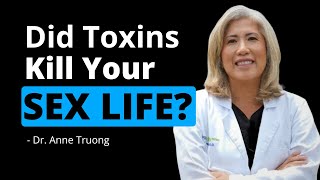
This is a YouTube interview (TPE Blueprint #9) between Speaker A and Dr. Anne Truong about how environmental and internal toxins drive inflammation, endothelial damage, hormonal imbalance (especially testosterone), and downstream effects on sexual function, mood, and longevity. Dr. Truong explains how toxins damage the endothelium reducing blood flow (linking erectile dysfunction to broader cardiovascular and cerebrovascular risk), outlines four lifestyle pillars (diet, exercise, sleep, stress reduction), contrasts male vs female hormone concerns, and advocates testing and interventions — from multi-month liver-detox regimens (3–9 months, often many supplements/pills) to plasma exchange as a faster method to remove circulating toxins. She also shares practical resources (trungrehab.com; goodmorningwoodsmoothie.com) and personal anecdotes (she required ~9 months to detox historically; reports physiological age 8 years younger than biological age).
Questions this video answers
June 10, 2025.
About 3–9 months (she reported her own detox took nine months).
About 20–25 pills per day for months.
trungrehab.com and goodmorningwoodsmoothie.com.
Eight years younger.
Chapters
Feeling off no matter how well you eat or train. So you might be optimized on the outside, but what's actually happening in your blood. So in this episode I have Dr. Anne Truong here talking about how toxins impact your testosterone, your mood and longevity and how you can take back control. Let's dive in.
Doctor Anne Truong, how are you and happy? We're chatting here. You know, we're already having a great pre chat. So you have a lot of, lot of thoughts and so many, so many. You have a really cool background with Dr. Savage. Actually I want to start there because he is my host slash co host, you know, here. But tell me how that all kind of started, you know, that, that relationship. What do you learn?
He is really my mentor. When I first started learning about hormones, I was like in2011 or so when I started learning about sexual health, I know I needed to, I needed, I know I need to learn about hormones. And I attended the anti aging conference and he was on the big stage talking about it and he had a workshop. I signed up with him. He taught me everything I know about hormone and anti aging at that time. And so I really owe it to him a lot. And he remembered me and we reconnected again. So and I even thought by his office actually when he was in Chicago, practicing in Chicago and thought by his office and see how he runs the office and really mirror my practice similar to how he runs his practice as well. So he's a pioneer and anti aging and hormones and certainly in toxins because when we learn about anti aging we have to learn about toxin and it all goes together, you know. And now, you know, with plasma exchange, it's just the next sensible step for him and I'm hoping to learn that from him as well too.
Yeah, well now you're, you're working with men on their vitality of people with ed, you know, their sexual performance just, I think it's just their well being as well. But I guess like talk about how like what you learned there with hormones, what you're learning now. Obviously the topic of toxins is everywhere. It's bubbling up even more I think for good reason because they are everywhere. And then how does it relate to what you're doing? I guess give us like the kind of the overview, your thoughts and then.
We'Ll start diving in, you know, is toxins everywhere? Unfortunately we can't avoid it. Even the air we breathe, the food we eat and the drinks in the water we drink, you know, as well and you're gonna have to live in a bubble if you can avoid that certainly. I mean, I love to eat fish. And I think it was like maybe 10, 10 years ago I found out I had, I had a lot of toxin like silver, you know, because I like to eat fish, but it wasn't wild caught. I just like to eat a lot of fish. And so I had to detoxify myself for at least like nine months. Liver detoxification, where I took a bunch of supplements and to cleanse my liver deeply. That was the only way you can detoxify your liver in your body is the filter of the toxin.
Because our body is made of organic material, meaning that it's made out of carbon organic. So toxin is something that your body different than your body and your body senses it and it sends it to the liver and say liver, convert it to some form that I can work with in the body and, and whatever is left, I'm just going to go to the kidney and then get rid of it. Or go to your intestine and get rid of that through your stool. The liver does a lot of work. That's why a lot of us end up with fatty liver. And you hear about cirrhosis, but cirrhosis mainly more with alcohol.
Or, you know, I guess scarred liver. But fatty liver is very, very common.
Is that, is that like a toxin driven thing or is like overworking, you.
Know, the whole fatty overworking toxin and overworking.
Diabetics have fatty liver and obese obesity will have you prone to getting fatty liver as well. High cholesterol, you will have fatty liver. And in fact, I would tell you this because I do regenerative medicine. So we harvest your own stem cells in your body to put in an area to restore blood flow. And we can tell who has high cholesterol in their blood. But when we draw their blood out, so we draw their blood out, we put in a centrifuge and we spin it so we can separate out the red blood cell from the white blood cell from the platelets. And we can tell by the consistency of the blood and their plasma, the color, the consistency, the viscosity of the blood, whether they have high cholesterol or not. Those that have high cholesterol, their color of their blood is not as red and that the color of their plasma, which is without the red blood cell, is kind of like a very dark yellow. There are certainly blood difference in your blood if you have high cholesterol and, or high blood sugar, which is diabetes as well. Because when you draw, when you draw. When you draw it out, you can literally sometimes see a fatty layer in the blood.
Oh, my God. Okay, wow. Well, so you're. Yeah, you're focused there. And I'm curious because you, you said you learned a lot about hormones from Dr. Savage, but also just your own work with what you're doing, you're doing a lot there with hormones.
You mentioned toxins. How do those kind of play together? Is there any relationship, some themes that you're seeing that things we should just be aware of and maybe there's action steps.
Yeah. So toxins create an inflammatory state in your body. So what does inflammatory mean? Inflammation means that I describe it as like the body's on fire. It's not balanced, it's on fire. And what it does is that it creates.
Imbalance. So what it does is that it damages the lining of the blood vessel called the endothelium. So the endothelium is a one cell layer lining that line your blood vessels. We have five miles of blood vessels in our body. Okay. And so imagine the lining, it's just a thin film that's like a pipe. Your blood vessel is like a pipe and it has a thin film. That thin film is lined by the cells called endothelial cells. And those cells are what keep the toxin out from seeping in through the artery and then through the cells. But however, inflammation.
Anotoxin will damage that layer, which then create like a hole. So that way the toxins seep in through your artery and then eventually to your cells. So your blood vessel is the one that protect you from getting toxin, but the toxin itself damage that cell layer, which then it's almost like you have a wall and you have a hole. And you know, the toxins just go through the hole and seep in through our cells. And that's what damages the DNA, damages, you know, the mitochondria and the whole working of the cell. So that's what toxins do. Now, how does that relate to sexual health? Well.
Sexual health for a man, in order for a man to get firm enough for activity, he needs to increase 40 times more blood flow down there compared to a flaccid state. So what that means is that he needs those blood vessels.
To be good and intact, so that way there's more blood flowing through. So if he has toxin, then those blood vessels will be damaged by the toxin. So. So it's not going to have enough blood flow flowing through the sexual organ in order for it to be functional. And that's how it affects sexual health because it affects blood flow. It affects the amount of blood that goes to the end organ. And it's not just a sexual organ. We're talking about our organ as well. So the cumulative over time and what you care about is those endothelial cells. Because those endothelial cells, if they're damaged, you're prone to getting blood clots. You're prone to getting heart attack, which is blood clot in the heart. Right.
And you get less decreased blood flow when you have decreased blood flow. I mean, blood is life to any organ.
Right. I would imagine your brain too. Does it affect.
Yeah, yeah. Well, it will contribute to dementia, strokes. Strokes is essentially a blood clot in the artery of the brain as well. So it always. But interestingly for a man, you know, when he has ed, it's a warning sign because the blood vessels and in his sexual organ is the smallest in the body compared to anything else. So when, when, yet it takes the.
40 times still.
Yes.
Right.
Yeah.
It's a precursor, right? Like, yes, that's not work.
So it's a precurs. A warning sign that he has toxin or inflammation.
In his body. So it's really mother nature's way of saying, hey guys, you're not functioning well, let's take a look. What's going on with you? So there are four things that affect sexual function. Diet, what type of foods. Eating. Processed foods. Eating. Yeah. Carb or fatty food. And then second is exercise, if you're not exercising at least three times a week. And the third is sleep, adequate sleep, because when you sleep, your body heal physically and mentally. And then the fourth one is stress reduction. And stress, stress also is like a toxin itself because stress also induces endothelial dysfunction and it also lower testosterone as well. So it's almost like if you have toxins, it kind of affect every aspect of your body, as in blood flow, hormone level and the functioning of the organs.
Well, that's what. Yeah, it seems like in relating back to inflammation. Cause that's kind of where you started. Like that's the body on fire. Right. So like, it can't be good for everything inside there. If things are hot, I mean, they're. They're burning, literally, they're probably bigger, right, Than normal. Not in a good way, the way that.
But yeah, like how. Is there any repairing that lining that you described? Like, is there any kind of going back or reversing? Have you. Have you seen.
Absolutely. We know that you can do that. You can actually repair that by. First of all, you know, removing the toxin. Yeah, because, you know, as we know, there, there are tests that can be done, blood tests, saliva tests, even stool tests that can measure the toxin that we have in our body. And we can have a lot of toxins. So. And so that's objective data. And then the third part, the good part, is that you can get rid of that. And that is plasma exchange. It's just essentially taking all the. Exchanging your plasma, taking all the toxin out, and then putting your good plasma back into you again. So it's all the same thing. It's your blood, it's nobody else's blood. It's just kind of like a filter pushing it through a filter, taking out the toxin out and giving the. Your good blood back into you. That's the fastest way and probably more comprehensive way. Now you can do it naturally yourself. It would take a long time. You would have to detoxify your liver and that would take supplements and also laxative to really cleanse and detoxify.
Yeah, it takes about three to nine months. I had to detoxify myself and it took me nine months and with testing to get back to homeostasis again.
But you can also do it by diet. You know, eating a clean, healthy diet, no processed food. You can eat carb, but I call it mother Nature's diet with eat everything. The. The eat everything the earth gave you. Don't eat anything in a box or bag. And whatever the mother Earth gave you, eat that and then get it. Exercise. You know, even just walking, you know, 30 minutes, three or four times a week is adequate enough because when you exercise it increase your, your testosterone hormone. You know, for women, same thing, increase your hormone. But when you exercise, you. It actually start to heal that endothelial because your heart starts to beat faster. More blood flow.
Right?
More blood flow. You're inducing more blood flow.
As well. And then also, you know, sleep, because sleep is so critical because when you sleep, that's when the body kind of clean itself. It start to clean itself and it start to heal itself. So physical healing starts from 10pm to 2am where your body kind of goes in, clean the dirt, and then starts a renewal and then mental healing from 2am to 6am so the latter part of the sleep. Yeah. So you ever notice when you don't have good sleep, especially around early morning hours, you're foggy, you're not as clear in thought. Yeah, you're not as clear in thought. The mental clarity is that between the 2 to 6am wow. Yeah.
I wonder if that's a survival thing. It's like, okay, protect the body first, you know, like the functions, our heart and all that. But then the brain comes kind of second.
Yeah. Because you know, most people can kind of function when they have poor sleep, but they can still function. But if you don't have, you don't sleep at all, then you're just like, you know, you're out of it. You know, you're confused. Right? Yeah. So you have to sleep. That's why sleep is important. And then the stress reduction like I mentioned earlier. Yeah, yeah. So the, with the stress reduction, it will also. You reduce the stress. That will reduce cortisol. Then if cortisol is reduced, thyroid hormone increases.
Testosterone increase and all the sex hormone increase and the body is less inflamed.
Okay. So just naturally. Yeah. Reducing the cortisol, you know, and all these other better things are happening. Yeah. Testosterone increases. Yeah.
And that goes from testosterone increase. Yep. And so thyroid kind of like the cortisol is a big driver. It kind of controls the other hormone as well. And, and the other hormone kind of reaction to. It's a. Hormones, it's a seesaw. It's a balancing act in your body. And it's also a feedback loop. And.
Just those four things that I mentioned, you can work on it, but get testing so you know what's working or not. Or just get plasma exchange. It's a faster way of getting those toxin out and getting the, and getting your. And then, you know, re infusing your good plasma back into your body and it can stay for years on end.
After this whole journey. What I really learned here is like there are a lot of health conscious people. I think I'm considering myself one as well. But no, there's a lot of things, no matter what you do, you, how much you pay attention to it, how much you avoid it, and sometimes it just got in. And I think TPE gave me a good opportunity to restart my body again.
So let's talk about that because, you know, you've obviously done some detoxing yourself and you've, you've done the toxin testing as well, at least multiple times. It sounds like, like I've done that as well. So it's like, you know, your baseline. Right. And you say, you know, you work with a lot of. Lot of men on helping with the hormones and all these other things, but it's almost like if you don't get rid of the toxins, that piece in the middle there, then you're never going to get the perfect results. Right. That you're really looking for at the end. So addressing the toxin burden in our bodies, however level that is, seems like like target that, but, like, figure out a strategy there and then optimize, Right?
Absolutely. You know, that's why I'm really excited about plasma exchange, because, you know, we're good at optimizing with hormones and with peptides and with diet and with, you know, exercise. We're good at putting the good stuff in, but we're not that great at taking out the bad stuff other than watching what we eat. Right. I mean, that's about it. You know, watching what we eat and, you know, sleep and exercise, that's really all we have. And supplement that, all the stuff the detox supplement does is really cleanse the liver. It goes in, cleanse. So it just dumps stuff out, you know, through, you know, through your kidney, you urinate or through your intestine. So. So that's the only way you can kind of get things out. But sometimes that's not 100% either. And that's all depends upon how your liver is working. And I would tell you the toxin. I mean, the detoxification regimen is a lot of pills.
Yeah, I've seen that.
Yeah, it's about 20, 25 pills a day that you have to take for months on end. But, you know, that was years ago I did that, and there wasn't any other option.
And so, but now, you know, we have options now. And the key is this. The key is that the more toxin you have, the more inflammation you have, and that's going to affect longevity, going to affect your health. Because now we're living longer, and we want to live with better quality of life.
And better quality of life, better even sexual health. I believe that you can have sexual health the day you die by controlling toxin, by optimizing your diet, your exercise and your hormones. And, you know, by doing that, then you can really have true wellness and health and longevity.
Like, you know, I know what you see. Men primarily, or I think exclusively. But a lot of this, like you said, translates to women as well. Right. Like, I mean, women have testosterone as well. We're all dealing with toxins, inflammation. So, like, is there anything that you would say to women specifically that might be different potentially?
Yeah, well, you know, interestingly, yes. Yes, I would have to say, you know, out of the women, we have to worry about three different hormones. Men, you have to worry about one Testosterone. Okay. Women, we. We have testosterone, we have estrogen and we have progesterone. Three Hormones and estrogen and progesterone is responsible for, for a pregnancy. Right. The balance between those pregnancy and a menstrual cycle. Testosterone help with sexual drive, muscle, bone health. But believe it or not, women have more testosterone in their body than estrogen. Right. But Women only have 1100 of the amount of testosterone compared to a man. Man has 100 times more testosterone than a woman.
And Conversely, women have 100 times more estrogen than a man. But out of the three, testosterone is more than estrogen. I want to clarify that. All right. And so whatever we talked about for men is applicable for women as well too. It's just that women, you just have to be concerned between balancing the three hormones together. And then sometimes when you're working with women that still have the uterus and balancing the hormones is tricky because if you do too much, they may have their menstrual cycle again or mess up their menstrual cycle. Right. So it can be kind of challenging. Like that is easier if a woman has a hysterectomy in controlling her hormones. But everything that we talk about is applicable for women as well too. And one of the things I wanted to say is that estrogen is actually considered a catabolic hormone.
What's that?
So what do you mean by catabolic? That it's inflammatory. Is it inflammatory? And that testosterone is considered anabolic. Anabolic means growth, regeneration. A catabolic means breakdown, degradation.
And so between the two, that's why when you want to optimize more of the testosterone, most women will come and see me for hormones. They go, oh, I don't care about testosterone. I don't care about libido. We're not doing henky panky anyway because my husband got issues. But I said, no, you need your testosterone, you need your testosterone. Protect your bone, protect your muscle. It's not just about sex as well too. You need it as an anabolic, meaning it's protective. It help you help growth, it help renewal, it help rejuvenation. So I'm all about maximizing that for women. It's not about sex. When I explain that to them, they go, okay, that makes sense why I need all three.
Maybe sex isn't the thing that people are like, oh, I need to optimize for that. But so what would you say to those folks? And, you know, let's maybe the men. Yeah, as it goes to, I think of blood flow and all the other good things that we all need. But like, what do you, what do you help people optimize for. Let's just say that because, you know, like, you're doing a lot of different protocols. I know.
Yeah. Well, I help them optimize for living the best quality of life you can as you age. And so because now we have the technology now and the medication to keep people alive longer and longer. But do you want to, as you get older, you want to be able to maintain your physiological health, to even be better than your biological health, your age? And so you want your physiological health to be. To be younger than your biological age. And there is actually a test for that. Actually.
What's that called?
Yeah, there is a test for that. There is a test for that to look at. Blood test and also.
A test. You can mess with your hand. I attended a conference and there is a test for that. Luckily, I'm eight years. My physiological age is eight years younger than my biological age.
Good.
I must be doing something right. But to my point is that it's not about just, you know, sexual wellness. It's about wellness and health. There are two things for sure in life. Going to be born and we're going to die. You may fall in love, may not fall in love, but you're going to be born and you're going to die. So we want to be able to have longevity, a longer lifespan with good health. So that way, you know, what did your way, what we all want to do is, you know, you can control how you die by how well you live. Because people that are healthy, when they pass away, they pass away very quickly. They pass away in their sleep. They don't pass away.
Yeah. So if you are healthy, you may just go to sleep and 100 years old and just pass away. If you get sick, you pass away very quickly, within a few weeks or within a month. There's no lingering over months, two years. There's no nursing home. There's no any of that. And I see that all the time because I used to work in a nursing home as well in my early years. And I can tell you, the one that are in nursing home, the one that didn't really take care of themselves when they were younger and.
Their body is slowly dying but not gone. But when you are healthy and you take care of yourself, your body is just gonna go, well, you know, I think I've reached my maximum. I'm gonna go. But you go quickly, and I see that all the time. So you can control how you die, but one thing you can't control is that whether you have cancer or not. Right. So. So the Cancer is a totally different thing. But again, if you are healthy, you are more resilient to cancer, you're more resilient to treatment and be able to bounce back or be able to tolerate more treatment as well, too. So that's a tip that I tell my patient, is that you can control how you die by how you live.
That's impactful right there. I've never heard that, but it makes sense.
Yeah, yeah, yeah. I see it all the time. Yeah. I have a patient right now that's 98 years old. She's very healthy. She's very healthy, cognitively, very sharp. Just, you know, her bones are wearing down a little bit. And she still live by herself, still drive her car, still go grocery shopping by herself.
Wow. Wow. Good for her. That's incredible. And that's the thing. I mean, it's. And I'm sure genetics play into this as well. There's like. Like we were talking about everyone's different. Right. At the DNA level as well. But at the same time, I do.
Want to preface it that genetic. It's only. It's. It's only the bullet is loaded in the gun. What you do with your lifestyle is what's going to pull that trigger. So genetic doesn't mean that you're stuck in it. You may have a family history of Alzheimer's, you have a family history of stroke, a family history of heart disease, but however genetic combined with lifestyle, then that create, you know, the outcome. So it's just a bullet and a gun, but what you do with your life will actually change. That expression.
Yeah, that's. I mean, that's so metaphoric for so many things. Like, we all have the bullet, but it's like, what do you choose to do? You know, it's really our choice because all the way to, like, what you said, the four, you know, the sleep, the diet, the stress, the exercise, the toxins that we all know that are around us are in us. So what are we choosing to do with all that stuff? Hmm? Dr. Ann, is there anything that is maybe like something that surprised you recently with any of these topics that you feel like we haven't covered here that you just want to, like, you want to share? Maybe it's something that you're fascinated with, you're starting to tell your patients, well.
I'm really excited about plasma exchange. Really. I think this is going to be a game changer, honestly, because there's never been a way for us to totally detoxify our blood.
You never seen any other?
No, I haven't seen anything like that at all. When I met, when I met, when I saw Dr. Chapman, he was telling me about it makes perfect sense. And if you're in the anti aging world for a long time, you are very familiar with toxin or inflammation and it just makes sense to me how it work and I just hope that it become more available, more accessible. And I really, truly believe once that it is, we'll probably live up to 200 years if that is the case. I think that longevity, you know, living a couple hundred years, even beyond really depends upon how we get rid of toxins in our body. Because it's an invisible infection. Almost like an infection, it's invisible, we don't feel it, you know, like sometimes even getting a headache, it's a sign that you have toxin. Right? Anxiety, depression as well, right. Obesity, even trouble, get losing weight, it's a sign that you have toxin. Insomnia, inability to sleep, to sign that you have toxin as well. All of us have toxins. And that's not even counting the modes, you know, that you're exposed to and all that. All of us are. It will, you would literally have to live in a bubble for the rest of your life. And you don't have toxin, we just don't know how much it is.
And then on top of that, adding lifestyle, your diet, your exercise and sleep and your stress, on top of that, it's just a boiling pot that just keep on creating this negative inflammatory supply, systemic effect in your body.
Yeah, it just makes sense if we just keep up with the same habits or lifestyle, whatever it is that we're so used to, if we're not feeling what's actually happening inside of us or have the data from doing a test, however you do the test, then yeah, you really don't know what's going to happen. It's just going to spill over, you know, something's going to creep up on you in some way. Who knows what it could in so many different forms, but it makes perfect sense. And I mean when I had my test done, I was like, oh, wow, this is enlightening. You know, it was almost like a. Okay, now I know I could do something about it, you know, whereas I know before, like a lot of times it was not possible, you know, like tpe, not being around or just any other procedures that, you know, protocols.
But yeah, no, I think that once we know, once we know what we need to do, I think that that's going to be a game changer.
For how we live our life and for you, you already know that you need to get plasma exchange, you know.
Scheduled. Yeah, it's true. Well, doctor, so, like, I want to point people to what you're doing because I know you're always up to really fun stuff, cool stuff. I mean, you're. We've chatted a lot, you know, personally, but your YouTube channel is awesome. Can you point people to some of the places they could follow along and reach out to you?
Sure, sure. So you can find me on YouTube at Trung Rehabilitation Center. My last name is T R U O N G where I teach you everything you need to know about sexual health and how to have sexual longevity. And honestly, if you watch all those video, you're going to have to step by step on how to do that. And we have seen comments that people are seeing a difference with just instituting one or two things that we recommended. They have seen like a difference and save many, many marriages. And also, you know, our website is at trungrehab.com T R U O N G R e h a b.com is where you can find out all the services that we have to help with sexual health. But we not only work with men, we also work with women as well. Because I feel that sexual health, integral to general health and integral for relationship, which are the three most important thing in this world for us at this point. And also I think I have. Yeah. I like to give viewers.
A recipe for our Good morning wood smoothie. Yes.
Let's do it.
Good morning wood smoothie is full of antioxidants. It's actually.
Actually detoxify. Full of antioxidant as well. Very easy to make. And you can go to URL good morningwoodsmoothie.com to get the recipe. And you can buy that in the grocery store, put it in a blender, you can add your favorite liquid. But we have seen this work in men and women in just giving more energy, increasing blood flow and, and even just mental focus as well, too. So check that out.
I will. And that's great to hear. Women can benefit from it too. So good morningwoodsmoothie.com awesome. Thank you so much. I mean, I always have a blast chatting with you and this was like a whole nother angle here. So appreciate you. And I'm going to go dive into some more of your YouTube videos because always learn something new.
Thank you so much for having me on this podcast.
More from Paul


A Woman’s Journey with MTHFR, Chronic Inflammation, and Therapeutic Plasma Exchange

Ask Dr. Paul Savage: A Live AMA on Toxins, Detox & Advanced TPE Your Questions. Answered Live.


A Cardiologists Take on Toxins, Heart Disease, and Therapeutic Plasma Exchange



Advanced Serial TPE: The Science, The Evidence, and The Opportunity for Your Patients

Your Clean Beauty Guide To Avoiding Parabens, Fragrance Loopholes, and Forever Chemicals

