Microplastics in Air and Water: Dr. Anne Marie Fine’s Guide to Toxic Avoidance | TPE Blueprint #23
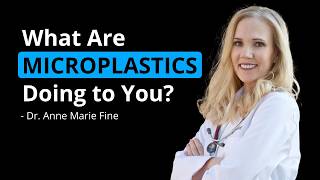
This content was created by Paul Savage MD. This content was uploaded by Paul Savage MD. This is a YouTube video titled "Microplastics in Air and Water: Dr. Anne Marie Fine’s Guide to Toxic Avoidance | TPE Blueprint #23" created on September 16, 2025. It features a conversation between Joe and Dr. Anne Marie Fine discussing the impact of microplastics and nanoplastics on health, the lack of awareness among medical professionals, and strategies for toxic avoidance. Dr. Fine also mentions her collaboration with Dr. Paul Savage MD, who is a recurring guest on the podcast.
Chapters
Did you know that you're literally breathing in plastic all the time and your house is your biggest culprit and there's things you can do about it, which is great, but it's also very frightening. But today I have someone here that is in the trenches and educating medical professionals and also the general public alike. Her name is Dr. Ann Marie Fine and she's here to break down how nanoplastics and microplastics are silently invading all of our bodies. But she's going to give us a roadmap on what to do about it and also just tell you how this is affecting us right now. So I think it's very interesting. Let's dive into it.
Doctor Ann Marie Fine, thank you for joining me today. How are you doing?
I'm doing great. Thanks for having me.
Of course. Well, we've been doing a little pre chat and you're a fierce advocate when it comes to all the interesting, well, a lot of toxins, but I know specifically like the microplastics, nanoplastics and so many things that not only the general population is kind of unaware, but you were saying a lot of the professionals in the medical spaces in whole are just not totally knowledgeable about. So I think that's what we'll dive into. And of course you have a relationship like you know Dr. Savage really well, you've worked together and he's also been on this podcast many times. He's technically a co host kind of, he comes in and out. But I'm curious, how do you, how do your guys world collide and how do you sync up?
How did we come to the same conclusion? Well, we come from different worlds and Dr. Savage is an MD. He comes from the conventional MD space. I'm a naturopathic medical doctor. I, I come from the naturopathic world, but we came to the same place that environmental body burden of chemicals is very important for total health and getting more important every day. And in fact I would say that we have both arrived where we believe that detoxification or deprivation or whatever you want to call it, environmental medicine is the missing link in both allopathic medicine and integrative or functional medicine because they don't really get trained in this as well. And the naturopathic medical doctors are the only ones who get environmental medicine in their medical school. And I know this because I'm the one who's teaching it with them. And so we do have one school of thought, thought that has some background in this. But the other doctors are rapidly catching on that the same things that they used to do to create health isn't working as well. And they've come to the conclusion that environmental toxins and body burden is likely the culprit. But they've never been trained in it. They don't know how to assess, test or treat. And so that's why they come to our company, EMEI Global, and we teach through a one year postdoc program, we train doctors to become experts in environmental medicine.
Why is it the fact that there's so much of this. It's kind of a mystery to most doctors, this whole thing about toxins in general. But the body burden, like you mentioned.
Why is it a mystery? That's such a good question. Why is it. Because they, if you talk to them about it, they say things like, well, that's the liver's job to take care of that, or the kidney's job. And it's true the liver and the kidneys are organs of detoxification. However, just with the rapid onset of industrialization over the last 75 years, we've seen the creation of over 100,000 new chemicals that we didn't have before in our environment. And they are showing up inside of us and they are wreaking havoc on our bodies, on our physiology, on our immune system, on our endocrine system. So many people have trouble with hormones and, and fatigue. People are super tired. That's probably the top complaint. I'm so tired.
Yeah.
And one of the things that toxins do is they are mitochondrial poisons and mitochondria is where you create your ATP, your energy. And so people are just guzzling coffees and energy drinks and you know, trying to overcome at that rate. But that's why they didn't get the training. That's all it is. They didn't get the training. And basically they were trained to treat symptoms. And so they may look at some of these symptoms and just try to go right there instead of getting to the root cause, which is body burden of toxins. Yeah.
Do you think it's. I guess. What's your take on it? Are they receptive as a whole to the idea or the, the evidence? I mean, I know there's a lot of evidence and, and stats and just the sheer number of various law.
We spend so much evidence. But guess what? Doctors are not reading the literature. They're not staying current. They are so busy in their practices. They don't, you don't keep up. The evidence has been there for decades. That's how we learned about it. And Found out what to do. But I have great hope. I recently spoke to a conventional neurologist within the last six months and he said when he found out what I did, he said, do you know that pesticides are one of the top causes of Parkinson's disease? I was like, why? Yes, I do know that. Why surprised you though? So it's coming over to that side. They are coming around to the idea that there are things in our environment that are making us ill. Some of these things like Alzheimer's. And Alzheimer's has only been around for a little over 100 years.
It was named by Dr. Alzheimer in 1904. Before then, it really wasn't a thing. And so we just have all this, all these toxins and the fat loving toxins can cross the blood brain barrier, get in your brain and they cause neuroinflammation and other, you know, undesirable things to happen. And then we go down, then we go down the gamut. So I do think they're more open to it now and that's why they are registering for our class, so they can get training in it. They are.
Just because you're doing the teaching of. Yeah, that's what's so interesting.
They are coming on board and they are flabbergasted that they didn't get this in medical school. And they start applying it to their patients and they start getting really good results. That's really the key thing in a clinical setting. Can you get results?
What is. Yeah, that's true. I mean, that's especially in their role. They're, they're solving the now problem, I'm assuming most of the time. Right where. And that's probably why they've been so busy not thinking about the, the root cause because they have all the symptoms. Right. That are popping up. What's the, I'm curious of like, what's, where do you start with the education? I know you educate both, both medical professionals and the public. So I don't know if you start in the same place, but how do you get them turned on?
In our professional training program for physicians, we have 40 hours of archived didactic information and then we have live grand rounds every month for six hours. And when I say live, I mean live on zoom. And we, we have our doctors present case studies and then we invite in guest experts like Dr. Savage. And so that's a, that's the time to integrate all of the things that we've learned in our online courses. And then we also have weekly mentorship program on Wednesday Night where in real time, doctors can show up and say, you know, I got these lab results. I don't really know what they mean. Can you, can you tell what's my next step with my patient? You know, so we have, we're capturing it all, we're getting the didactic information, and, you know, we also offer continuing education credits, which all doctors need. And then we're doing the day to day, maybe they're seeing the patient on Thursday and Wednesday night. They can have this live time with us. And then on the first Saturday of every month, we are introducing them to the global experts who are doing really innovative stuff, like Dr. Savage and, and then also doing case studies so everybody can see. How do you integrate all of this information and make it work? Now for consumers, we have a separate program called how to Thrive in a Toxic World. And it's different. It really is predicated on avoidance. How do you set. You are the EPA director of your own home. And so how do you, instead of driving defensively, how do you live defensively? How do you set up your home so that you are avoiding a lot of these things? Anything that you avoid, you never have to detox.
True. Yeah. So avoidance is really the biggest piece is to really know.
Especially the number one rule in environmental mountains then is avoidance. And it's not, you know, it's not very sexy. You know, storing your plastic, is that very sexy. But yeah, it's very, very crucial to the whole defensive living aspect when it.
Comes to dangerous sources in our home. Like, where do you like to look? Is it food, air, water, packaging like you mentioned?
Oh, wow. All of them. All of them. But, you know, surprisingly, and this is not well known, your air is maybe the top source of microplastics, both indoor and outdoor air. And that's something that most people are. If you look at the media, they're concentrating on microplastics in beer or salt. It's like, don't worry about that. We have bigger things to worry about, but they can be found in all of them. And for the microplastics in the air, I always recommend a really good air filter air filtration system for the home. It's kind of a must. You know, 25 years ago, when I started practicing medicine, I would only recommend that for people who are asthmatic or had copd, they had some breathing problems already. And now because our indoor air is so much more toxic than our outdoor air, I think everyone really needs one. So that, that would solve that.
I want to pause for that moment because yeah, I'm a bit big fan of air filtration. Are you saying like a unit in every room? And like, I guess, like how does that, how do you recommend how people would go about the filtration?
I would love to see people have it in every room, but sometimes that's not economically feasible. So what I do recommend is at least in the bedrooms, right. And then in the, the main living area is good. And then often, or at least the one that I recommend, it comes on wheels and so you can wheel it into a different room and.
Okay, cool.
So you can put one on each. If you have a two story house, you can put one on the top floor, one on the bottom floor and just kind of wheel it as you need it. So. But one in every room is good.
And I knew air was a big deal, but I didn't know microplastics in air. Like, I think that my head is just not wrapping around that concept.
Yes, absolutely. And you know, we're getting. You're breathing them in. They are definitely in our lungs and this has already been shown. And we're seeing what kind of damage it does. And we're seeing that the macrophages, which are the pacman of our immune system in our lungs, they are engulfing these microplastics and then they can't digest them, the lysosomes can't digest them. And so you're creating at best, some inflammation, which is never good, or the macrophages are just dying. And so, yeah, lung, you spray them in and your, your lungs are kind of the first place that is going to hit them. And then if you're getting. The problem with the nanoplastics, which are less than 1 micron, is whether you're eating them, drinking them, breathing them, they're so darn small, they can breach through the alveoli in your lungs, it can breach through your gut, intestinal wall, and they go systemically. And microplastics have been found in every single organ in our bodies now, including the brain, including blood, including placenta, the babies. And what's even more frightening is they've codified it in the brain. And the brain levels of microplastics have increased 50% over the last eight years.
Oh, my gosh.
And they found more in only from 2016 to 2024. And they found more microplastics in the brains of those with dementia.
The number one microplastic that they're finding in the brain is polyethylene. And it just kind of, I mean, it is the most popular plastic use. We can't forget that, like, across the board. But I do want to point out that a lot of people, because they're so tired, they're going to Starbucks or other to go coffee places, and they're buying a coffee in a to go paper cup, which, by the way, is in paper. If it was paper, the hot coffee would just, you know, dissolve the paper and fall out. So they're lined with plastic. Those paper cups are lined with plastics. And guess what kind it is, Joe?
That one.
Polyethylene. It's polyethylene.
Well, then you have the lid right.
On top, BPA in it.
Polyethylene. You're getting 25,000 microplastic particles with every cup of hot drink that you drink. And you're getting BPA from the lid as well.
I love coffee, but yeah, I'm not gonna.
Well, you know, that's easily solvable. You can still go there. Just bring your own stainless steel cup. And believe me, Starbucks would be thrilled not. Not to have to use their own cup. Yeah, they're saving money. So they just pour the same amount in, whatever you give them, and they don't care. So it's good for you. Good for you. Good for the environment.
I mean, that's a common. Are there any other common things that.
You would just bottle bottled water that comes in plastic bottles? Well, one bottle of plastic water has 250,000 microplastics and nanoplastics. 250,000. And I see these people at Costco just loading up their carts with crates.
You know, where the single serving. Yeah, yeah, yeah.
And it's like, you know, that they think, you know, I'm paying a little extra to get the good purified water. And. And you know what? That water might have been purified, but, you know, being stored in a plastic bottle with a plastic lid negates any benefit that you would get that you think you would get from that purified water. So that's a huge source right there. So I would say drinking water out of plastic bottles is maybe one of the top sources air. One of the top sources, the cups at, you know, Starbucks and the other, the other coffee places. Starbucks is just, you know, really popular, easy to pick. Those are all top, top, top. But then, you know, another one is that luxury vinyl flooring, that sandwood and everything.
They got rid of the real wood, and now this luxury vinyl floor, it's plastic and it's off dusting phthalates into your indoor air. Another reason to an air filter does.
It would it be, let's say if you're standing on it, you know, walking throughout your house barefoot, like is. Or is it more of an air issue more than anything?
Yeah, yeah. That you're really digging down deep there. And I don't know the technical answer to getting it through your feet because they do off dust into the air. Your vinyl shower curtain has phthalates in it too. It's prostate dust into the air too.
Especially with hot water hitting it. Then it's just, I mean, a big thing I know we did is in home is not put any plastic. Not like we have a lot, but like kid bowls and whatnot. Don't. Don't put them in the hot water. Don't. Don't run them through the dishwasher. Just hand wash cold and. Yeah, we're pretty ruthless on that.
Store food in glass.
It's a lot of changes to make. But obviously we are the EPA directors of our household and our family, so we.
No one else is gonna do it for you. No one else is really gonna what to do. And that's why we all have. That's why, that's why we created the home course for our consumers. Because we could see there's no good. There's tons of information on the Internet. It's not all good though, right?
Yeah.
And. And so that's why we put together a program. We just wanted to educate and empower people to have good knowledge to make the right kind of changes in their home.
It's needed and hopefully more people are talking about it. And of course that puts pressure on the. The companies making things not always fast, but at least having the education out there is a start.
And I agree.
It's hopefully what we're. That's what we're trying to do here too. But.
After this whole journey, what I really learned here is like there are a lot of health conscious people. I think I'm considering myself one as well. But there's a lot of things, no matter what you do, how much you pay attention to it, how much you avoid it, and sometimes it just got in. And I think TPE give me a good opportunity to restart my body again.
So let's talk about the effect that our bodies feel over time. You know, that we're this consistent, these constant exposures. I'm kind of curious, like, where do you see the chronic illnesses popping up? What are the ones you mentioned?
Dementia, you know, the mechanisms of toxicity are. That inflammatory response that I talked about, the macrophage activation, the generation of reactive oxygen Species, oxidative stress, immune dysregulation. You know, the other thing that we haven't touched on yet is these plastics. It's not just bits of hard plastic or soft plastic getting into our bodies, but the plastics have the ability to adsorb toxins. Other toxins in our environment, like polycyclic aromatic hydrocarbons, metals, pesticides.
Bpa, phthalates, they also have the ability to absorb other toxins. And so when they get into your body, they can desorb these toxins. So you're also not just getting plastics, you're getting a load of other chemicals that you don't want. And some of these are endocrine disruptors, like BPA and phthalates. They are absolutely leaching from your microplastics. And then you're getting the immune dysregulation, microbiome alteration. Because when you eat the microplastics, some of the microplastic bits are kind of have sharp edges and they can, like, nick, you know, the corner of your intestines and cause some damage there. They can the anoplastics and maybe you nick a little hole, they can just go right through your intestines and that's how they get systemic. And of course, your microbiome is important for metabolic health and immunity.
Absolutely.
And then, of course, there's carcinogenic potential. You know, chronic inflammation is contributory to cancer, right?
Yep.
And so some of the things that we're seeing are it crosses all the different systems in the bodies from respiratory, like asthma, chronic bronchitis, gastrointestinal, irritable bowel, leaky gut, inflammatory bowel disease. There's actually quite a bit of research on inflammatory bowel disease in microplastics. They actually do worse with the microplastics that they're exposed to then cardiovascular. There was recently a study where.
They did antarterectomies and they took carotid plaque and they divided the participants in two groups. Those who had microplastics in their carotid plaque and those who didn't. And they followed them for like, 34 months. And at the end of that time, the ones who had microplastics in their plaque had almost four times as many heart attacks, cardiovascular events and death.
So 34 months.
Yeah, 34 months. So that's cardiovascular and then reproductive. We've got reduced fertility, developmental impacts. I mean, if it's in the placenta, we can. We can see how that would impact the fetus.
That's right.
And then the immune system autoimmunity and allergies.
So it's everywhere and it shows up in all sorts of ways. And one of the things I thought about too as you were saying that is kids, you said it's in placentas and Dr. Savage has said this as well. And one of the episodes I think we'll do pretty soon is actually about kids and even before kids are born. But I guess how do microplastics and toxins in general, how is that especially concerning for kids and little bodies?
Because they're still developing their organs and their, and their immune system. The blood brain barrier doesn't really form till about six months and so anything that they're exposed to more easily can cross and get into the brain. They eat and drink more relative to their body weight because they're growing so fast. They, the babies and kids, they play on the floor. So if they're on a luxury vinyl floor, they're literally sitting in the valleys and they have hand to mouth behavior with their toys. And so that's another way. But you know, children are one of the vulnerable populations for microplastic exposure.
Yeah, I mean just the amount of toys too, like plastic toys that are available and things like that. And like it said hand to mouth, they put everything in their mouth. Like I have an almost two year old so I see that happening. Luckily we don't have a lot of those plastics. But are there any suggestions for parents that you top of mind that you would, you would throw out there when it comes to avoidance for, for little ones?
Yeah, I would say be very careful with the plastic toys and you know, all the plastic feeding wear. And I would say if you do, you know, carpets have plastic in them too. I would say.
If you have carpets, I would say really thorough. Good vacuuming with a HEPA filter is good. I would say if you have luxury vinyl floors, I would say wet mopping twice a week would be really important to keep that. If you wet mop it, it can't go up into the air so cuts down on what your kids or you can breathe. I also want to point out that I, I actually have never done this but I know there is a non toxic sealer that you can put of her floor.
Vinyl floor.
Yes, yes.
Okay, that's good. Yeah, search that up and see which one.
Yes, yes, yes. And you know it's clear probably can't do it if you're renting but if you own your own place you can do it. So those are some of the ways that I would suggest it in terms of actual Babies, Glass. Oh, my gosh. The first talk I ever did on microplastics was at Harvard in 2022. And it was a very interesting audience. And in the audience was like a junior minister of health from Denmark, let's say one of those countries. And he was kind of young, kind of like in his 30s. And so when I was talking about, you know, baby bottles are notorious for dumping thousands and thousands per bottle of polypropylene into the babies. And so he raised his hand and he said, well, what do you do about that? And I said, well, you use glass bottles. And he was like. Because he was so young and hadn't seen them.
He was like, do they exist? I said, before plastic bottles came up, that's all any mothers had was glass bottles. And you had to sterilize them on the stove and boiling water, you know, and he was just. His eyes were so big, I thought they were going to fall out of his head. I said, yes, it used to be that's all you had. And so that would be really important, the polypropylene.
Release or leaching into. Because, you know, you have the. You have the plastic bottle and then do you warm up your mouth? Yes, we do.
So even more is leeching out.
So you get even more. So that would be a really big one as well.
Yeah, we actually. And I think it would be good if you pass your test. It's stainless steel bottles. We. We've had those for. For a couple little ones for. And they're reusable, which is nice. Just like glass.
Well, yes. And then it's good for the environment, too.
That too, yeah. So stainless steel everything is what we use for their little tough.
I do like stainless steel, too. Well, actually, I will admit that I do love. I think I love glass the best, but I will also admit I've broken glass bottles.
And they're too heavy to take on a hike. They just are.
Right, right, right.
So then, you know, then I have all of my stainless steel water bottles lined them. Yeah.
So there's a couple options, you know, with no plastic baby bottles or even just cups in general. Yeah. Get rid of them. So let's talk about. I want to transition now to testing and actually doing something about this. So, like, how would you recommend testing for these plastics toxins in our bodies?
Yeah, well, there are a couple of different choices. And.
I like the one. I like the one from Finland. I like the lab from Finland. I think they have the highest accuracy. I do know there's one in the US that is billed as something easy that you can do at home, but it doesn't have the same certification, it doesn't use the same methodology, and I think it's subject or more prone to contamination at home. So I like, I like the lab in Finland. I like measure labs in Finland for measure labs. Microplastic testing.
Yeah, I got it.
Well, you know, there are limitations to those kinds. Since they're going to look at microplastics, they're not going to look at nanoplastics. You need Raman spectroscopy to do that. And that's something that I haven't seen as available in microplastic testing for the consumer yet. Certainly it's probably available in research labs. That's how they found. Okay, I have to say this. I mentioned earlier the plastic bottles, liter bottles with 250,000 microplastic. Okay. Before they did Raman spectroscopy, they, which can measure nanoplastics, they could only measure microplastics. So of the 250,000 microfiber, it's about, it's maybe 90% of that is nanoplastics. That's why the number jumps so much, because the early research used to show maybe 10,000, maybe 8,000 instead of 250,000 microplastic pieces. But then they got this really fancy.
More specific testing, and then they could measure the nanoplastic. Well, the nanoplastics kind of scare me more.
Why is that?
Well, because of the microplastic. If you're getting like pieces of plastic, if you're, let's say you're eating them. We see microplastics come out in the stool. That's what you hope to see. It comes in and it goes out. That's the ideal. Right. And if it's big enough, it can't get out of the intestines. Right. But with the nanoplastics, these are the ones that can breach the biological barriers and get into the bloodstream or cross the blood brain barrier.
Blood brain.
Yeah, yeah. So the nanoplastics are worrisome to me.
I could see that. And so do you anticipate more and more talk about nanoplastics as time goes on with this better testing and more research?
I think this whole field is evolving because when I first started talking about it, a lot of the research focused on, oh, did you know the oceans are full of plastics? Yes. Did you know that? And then it became, did you know the fish and the shellfish were full of plastics? Oh, that's not good. Yes. And then finally, microplastics breach the final frontier. Now they're inside of us.
Yeah. So I guess what. I mean, you've Obviously, you know Dr. Savage and you've talked to him a lot. I'm just gonna say the obvious, like, therapeutic plasma exchange. Cause we brought that up a lot on Episodes. It's the title, the podcast. But, like, do you see that as a viable way or. I guess, how do you recommend for people to detox?
I think it's a really exciting, major step in detoxification is the ability to just go in there and, you know, get rid of it. Filter. Filter it out. Not really filter it out, but just get rid of a lot of it. And I'm really looking forward. I've seen Dr. Savage's published research, and I'm looking forward to seeing more of his published research. I think this is a really. I mean, this could really change the face of what we do. And, you know, there are some barriers to access in terms of financial considerations. Does insurance cover it or not? But I think, you know, considering how incredibly ill people are and how most people. Most people, including children, have a chronic disease, with the adults, there's a significant portion that have two or more chronic diseases. And the toxic body burden is just driving so many. Not just microplastics, but the whole toxic burden of metals and pesticides and flame returns and PFAs, which we didn't even talk about all of that. PFAS are. So they're immunosuppressive. And we're starting to see people not respond appropriately to vaccines because of the level of PFAS in their body and chronic infections. They've done a study looking at chronic infections in adolescents and adults, and they compared it to how much PFAS the adolescents and adults had. And they saw in both groups, the people who had more PFAS had a higher chronic infection burden. And this is not being really considered an infectious disease. And of course, in Covid, we saw that the people with higher amounts of a particular PFAS had worse outcomes in their COVID infection and were sent to the hospital more. So this is. I mean, I've seen the research because, you know, I look for it and he has looked for. But I don't think it's really. I don't think it's really out there, but it's really becoming concerning.
Yeah, we covered a lot. I'm just thinking of, wow, every. Every. I mean, this episode specifically, I'm like, wow. It's just. You gotta take action, especially in the microplastics. I'm just. I don't Know, I guess where do you see things going now with more education out there? Hopefully the general public catches on too, you know, as consumers. But of course we chemicals are still being made, you know, it's almost like you're battling what's out there.
Oh, I know, I know. That's why you have to be the EPA of your own home, no one else.
That's right.
The policies are not going to reflect this. You have to, you know.
Yeah.
You have to be the boss in your own home and say that we do not allow over the threshold of our front door.
That's right.
Where do I see it go? You know, our motto at EMEI Global.
It'S pretty much changing healthcare one doctor at a time. If we could just educate these doctors on how important this is, like the missing key to getting their patients better. But also we've also seen, because we have created the consumer course, I also feel the regular public is going to become more educated and start. You vote with your pocketbook, you know.
That's right.
And they're just gonna stop buying these plastic things and start really buying more stainless steel baby bottles and whatnot, wooden toys for example. And so I feel like we're gonna see it. I hope to see a groundswell of support for this, both from the doctors, but also from the consumers. And I think together I see just this incredible awareness coming to fruition where we now understand that it's not just like germs that make us sick, it's our environment, it's our exposome. There's some really great articles that came out recently on, you know, the anti aging arena is really big right now. Right. And you know, there's all this biohacking, you know, you can do. And a couple of articles have come out very recently showing that, you know, it's really aging you. It's your environment, it's your exposome. The chemicals, you know, it's the air.
Pollution, you know, I don't know if I want to say it's a great way to end it or wrap this one up, but we are, we are the ones in control at the end of the day, right? So I mean, at least we have that. And there are tools. Of course the cost varies depending on what you choose. And ideally what I hope for in the future is that the cost for these things can become accessible to all. But at the same time it will take time and we can all make those micro actions to combat the other micro and nano things we've talked about here.
So to wrap this up, I guess, tell people where they should follow you, what you're putting out there. I know you mentioned the course. You also have a podcast and yes.
Our website is E m e I global.com and we have a variety of courses that we offer. We, we have the one year training program for the, the healthcare professionals. We have the consumer course called how to Thrive in a Toxic World. And we have a podcast where we go over. We really dive deep into the research every month on, you know, what's new and what we like to say for our podcast is we know doctors don't have the time to read the research, so we're reading the research so that you don't have to.
That's good.
That's, you know, we summarize it, right? We don't read it word for word. We summarize it and give it to you.
Yeah, that's great. Well, Dr. Fine, I appreciate your work and thanks for sharing, not only here, but just with everyone, the professionals, the public. Keep it up. We'll be rooting for you and. Yeah, and maybe we'll have you back on, you know, as time goes on because there's always new stuff.
Yeah, there is. Yeah. Thanks for having me on.
You're very welcome. Thank you.
More from Paul


A Woman’s Journey with MTHFR, Chronic Inflammation, and Therapeutic Plasma Exchange

Ask Dr. Paul Savage: A Live AMA on Toxins, Detox & Advanced TPE Your Questions. Answered Live.


A Cardiologists Take on Toxins, Heart Disease, and Therapeutic Plasma Exchange



Advanced Serial TPE: The Science, The Evidence, and The Opportunity for Your Patients

Your Clean Beauty Guide To Avoiding Parabens, Fragrance Loopholes, and Forever Chemicals

