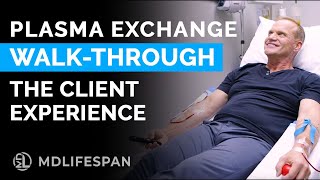
Dr. Paul Savage walks through a plasma exchange procedure from the patient's perspective. The machine separates and removes plasma, replacing it with albumin, taking about 1.5 to 2 hours. Common side effects include low blood sugar, so patients eat beforehand and get juice during the procedure.
Questions this video answers
About 1.5–2 hours.
Albumin.
IVs are established in both arms.
No — the machine uses a disposable plastic cassette which is removed and discarded after each patient.
Chapters
I'm Dr. Paul Savage, and this is MD Lifespan. And today we're going to walk through the whole process of getting a therapeutic plasma exchange with me as a patient. After 35 years in the field of longevity, there's never been one single thing that we offered here in the office that I didn't do first, that I didn't secure the safety and the procedure that for every client. But let's be clear, therapeutic plasma exchange has been around for 50 years. And matter of fact, I used it in the emergency room when you had people come in for drug overdose. So this is not a new procedure to medicine. It's just a new application to longevity medicine. I'm going to walk you through the signing in process. I'm going to walk you through getting the vitals and we're getting the testing that we need to do to walk us into the procedure. I'm going to talk to you about the machine. I'm going to talk to you about the risks and the benefits and some of the myths and the facts about plasma change. And at the very end, we're going to watch me get a vitamin infusion that makes you feel great and encourage everybody that watching this video lowers your anxiety over this procedure by showing you exactly what happens to the doctor. So we're going to start out by taking your vitals, doing your weight, checking your hematocrit level so it can calculate your plasma volume and know how much to exchange plasma for albumin. We're going to have you sit in a very comfortable chair in one of our plasma rooms where you can be entertained by the television. Or we have virtual reality goggles that can help you meditate. But the first thing that you're going to be going through in that room is we're going to be putting in the IVs, because what we're going to be doing is we're going to be taking your blood out, spinning it to separate the cells from the liquid, throwing the liquid away, giving you back a replacement liquid, and re infusing the blood back into you. So the IV is the important part of this procedure. And they do establish an IV in both arms because remember, when it comes out and when it goes back in one of the myths associated with plasma change, or I should say at least fear, is that you're going to get tainted with somebody else's blood who was on the machine before you. Not possible. Not possible at all. Because this machine, the blood never touches it, it actually leaves your vein through the tubing, it goes into the machine. Which has a plastic cassette that actually sits on the machine and has a bunch of little whirly dials that push the blood through the cassettes as it does its procedure. And once we're done, we take off the cassette, we throw it away, and we put a new cassette on for the next patient. So there is absolutely zero risk that you're going to get contaminated with anybody's blood, because that's not the type of machine we're looking at. Patient comfort is the most important thing at MD lifespan during this process. So if you do experience any anxiety and you wish, we can give you some Valium to help settle your nerves. It's kind of like having a cocktail. If you're concerned about the needle pokes or you're sensitive to needle pokes, we can use ice or topical creams or sprays to anesthetize the area to make you more comfortable during the insertion of the needles. At MD lifespan, your comfort is number one. The vast majority of the time with the plasma exchange procedure is just sitting in the chair with your arms out and letting the machine, which is a little noisy, by the way, go through the procedure, which takes about an hour and a half to two hours. But during that time, my staff is there to entertain you. We have television you can watch, you can listen to music, you can listen to a podcast, or we even have virtual reality goggles so you can enjoy yourself with meditation and games. The side effects of this procedure are quite limited. Actually, one of them that can happen is that because we're taking your plasma out, we're taking everything in the plasma, including your blood sugar. And people can get low blood sugar. So that's why we ask people to eat before they come in. And frequently during the procedure, we ask people to bring food with them. Or we may give you some apple juice or some orange juice or even some protein powder, whatever you prefer, because we want to make sure that you keep your strength going and keep your sugars up so that we don't run into any issues with the blood sugar. One thing of note with the therapeutic plasma exchange is it really depends on what fluid you exchange it with. Now, at MD lifespan, we don't use plasma. For plasma, that has a pretty high risk of complications. And if you Google the Internet on plasma exchange, you may come across those kind of situations more commonly than not. What we replace it with is albumin. Albumin has none of those associated side effects. It's simply a replacement fluid to keep your intravascular space open until you make more of your own plasma the next day. Here at MD Lifespan, after you finish your plasma change, we give you a vitamin infusion that increases your energy and your ability for your body to detox. It's part of the procedure that makes MB lifespan unique.