A clinician-led webinar describing clinical homeopathic and functional medicine approaches to acne. The speaker (a family physician and senior teacher at CEDH) reviews acne causes (hormonal, liver detoxification, gut infections/antibiotic damage, medications, environment), prevention (diet, cosmetics, hydration), IV nutrition and integrative treatments, and details specific homeopathic remedies with indications and modalities (natrum muriaticum, sepia, arnica montana, selenium metallicum, potassium bromatum, eugenia gambosa, silicea). Advice emphasizes individualized, multi-remedy prescriptions and lifestyle/detox support.
Chapters
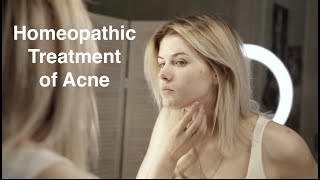
Foreign. Everything that I'm going to talk about today is based on my experiences with my patients, my practice. It's what I've tried and what has worked has continued in my practice. What didn't work, obviously we stopped. I am one of the senior teachers for cedh, which is center for Education and Development of Clinical Homeopathy. And I do webinars for boron as well. I'm a family physician by training. I've done emergency room urgent cares and eventually found myself into the world of integrative and functional medicine. So I practice functional medicine, which is obviously about preventing as well as anti aging hormones and everything else that functional medicine physicians work with. Elimination, detoxification, chelation, anti inflammation is what I do with IV nutrition supplements. And then obviously I practice clinical homeopathy, which is a little bit different than classical homeopathy. Clinical homeopathy is based on medications which have toxicology and pharmacology. Acne affects a lot of people. It's a most prevalent chronic skin disease in the United States. 75% of teenagers and young adults will have acne. Acne usually is, you know, in the ages of 30 to 40. And then obviously sometimes it extends a little bit longer due to certain conditions. Conditions can be hormonal, it can be liver detoxifications issues, it can be food sensitivities and allergies. So there are different conditions, digestive issues that can actually cause acne. Issue with pilosebaceous follicles, sebum production, bacterial colonization, inflammation, excessive androgen hormones. And it can be on chest, face, upper back, or there might be a genetic component to it. There might be food and drink, tobacco smoke, cosmetics, and obviously iatrogenic. We can cause it by these certain medications that we give you, specifically oral contraceptives. One of them we can say, let's give someone homeopathic medication, all the sulfur medications and we're going to cure acne? No, they have to stay with a specific diet and hormonal balancing. And what I do a lot, which is looking at their food sensitivities and allergies and looking at their digestive system, is the acne coming from the digestive system? And sometimes we find it's an infection in the digestive system or overgrowth of a bacteria. Is there liver detox? Do we feel that they've used so much medications in the past that the liver is not able to detoxify the blood properly and that's where the acne is coming from? Is there a problem with their probiotics because they had so much antibiotics that they killed their good bacteria in their gut. And obviously, as part of our treatments, we have IV nutrition treatment as well. The first medication we're going to talk about is natrum muriaticum. Natrum muriaticum is sodium chloride or basically sea salt. The pharmacology of natrum iriaticum is based on obviously sodium and chloride. So where sodium and chloride work in the body is where natromriaticum works. And we know the effects of those on the skin are either greasy, oily skin or dry skin. Natriumuriaticum has a specific pattern that is in the T zone. So a lot of the little tiny bumps that happen around the hairline are going to get natramuriaticum or the little tiny bumps that are in the creases, papulovesicular, vesicular or postular. Even on a natramuriaticum patient, location can be forehead, hairline, skin folds and around the lips. Next one is sepia of its pharmacology. Based on sepia melanin. It has amino acids, tiny tyrosine, dopamine, taurine and cysteine and trace minerals, magnesium, copper. With sepia, the acne varies in intensity throughout the menstrual cycle. So you'll see the acne sort of getting a little worse and then it gets better, and then it gets worse, and then it gets better. So there seems to be some hormonal component to the acne. And here I've shown it. The location is around the mouth, on the chin and on the flexion fold. Again, just like what we saw with Natrum myriadicum. Let's talk about arnica. Arnica, which is mountain arnica, has its pharmacology because it has flavonoids, carotenoids, phenolic acid, this word that I can never pronounce, as well as caffeic acid and chlorogenic acid, which are antibiotic. And that's part of the reason that I use arnica with treatment of acne. Sensation of arnica Montana is bruising. And with a lot of your acnes, you actually see or your patients will tell you that there is a sensation of bruising. Modalities. Arnica is worse with touch. So your patients will tell you, I can't even. I can't even touch it because it's bruised up. Next medication that's really good is selenium metallicum. Selenium, Its pharmacology is because of essential trace elements, coenzyme of glutathione reductase and peroxidase and it's a major antioxidant. Selenium, very important in comedones and small sebaceous cysts. And acne punctata, basically an acne that has a black head. So it can be sort of an acne that has a little bit of. It feels like it's either just a black head or a pus almost formation with a blackhead on top. That's where you can make use. Selenium metallicum. The next medication is calum bromatum or potassium bromide. Potassium bromide has been used historically. It was used as a sedative, anaphrodisiac, hypnotic anticonvulsant. Abandoned later on because of the fact that it had some iatrogenic effects. And obviously one of the iatrogenic effects was that the skin of these patients who were taking potassium bromide was getting worse and they were getting acne. It has an impressive toxicology in high and low doses. You can sort of research on this one yourself if you wish. In toxic doses, it causes papulo pustular eruptions, acne, sebaceous glands, seborrhea, pustular indurated acne on back phase one chest. In clinical homeopathy, we use medications based on either the pathology, the pathophysiology, or the way lesion is presenting itself. So based on what it looks like, we use the homeopathic medication for it. One of the medications you can use that's mainly related to acne in homeopathy, Eugenia gambosa is used for this specific acne with little almost tiny dots that are pink, pinkish red, usually on the face. It can be anywhere on the face but around the chin. And this is an acne that gets worse with periods and then gets better. And gets worse with periods and gets better. Or if it has a sort of a cyclical pattern, you usually get some of your teenagers who start having these little bumps. This medication you might be able to combine with natramuriaticum because of the sort of the look of the lesions as well as where it can affect patients as well. A lot of my homeopathic treatments of acne are composed of three or four different medications. The next medication is Silesia. Silesia is silicone dioxide and it's pharmacology toxic doses. It's toxic to the macrophages. We use Silesia for deep seated infections, for recurring and chronic infections, even ENT infections. But this is a medication that's used for, if you can see here, homeopathic experimentation has shown suppuration and chronic or recurrent infections. And a patient can also have adenopathy. So you can actually have a patient that has an acne. And due to the acne, their cervical adenopathy is also inflamed. Silesia is used for suppurative acne. It's for that acne that you feel you want to push out. The sensation is sharp, stabbing neuralgic pain with inflammation sensation, as if there is needles going inside the lesion. So a little bit worse than, I don't want to say a little bit worse than, but different than arnica, which is a sensation of bruising. Silesia is actually a sensation of a needle or a thorn stuck in the areas that they're acting. The acne that you see is almost not coming out. You see a group of your patients who have an acne, but these acnes never find their way out. It feels like there's cysts, almost cystic acne. So to recap, acne affects a lot of people, is limiting and debilitating. Certain medications help. Most medications to treat acne have side effects. Changes in environment, diet, cosmetics, and everything else that your patients will do in their environment, basically of acne needs to be treated as well. This is a prevention that I give my. My patients. It's pretty basic. Avoid alcohol, exposure to chemicals, nutrisweets, juices, and these are probably everything that you all know. I suggest looking at their cosmetics, and I suggest that they increase water as much as they can. Remember, it's a way of washing away or washing the body. If you have any questions, we are on Facebook, Instagram, Twitter, and our YouTube channel is growing now based on the information that we're putting out. So I thank you again, Sam.