Can LDN Boost Your Health Naturally?
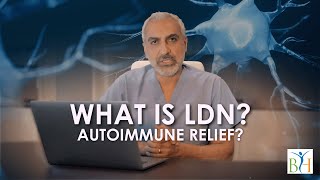
A YouTube-sourced clinician presentation (Dr. Payon Hakimi, Body of Harmony) describing low dose naltrexone (LDN): its proposed mechanism (opioid receptor antagonism leading to endorphin upregulation), common compounded dosages (1.5, 3, 4.5 mg), recommended once-nightly administration (2–3 hours before bed), and clinical experience using LDN for inflammatory and autoimmune conditions (fibromyalgia, MS, Crohn's/colitis, psoriasis, Hashimoto's, certain cancers, Lyme, depression). The speaker reports biochemical/clinical improvements (lower ANA, ESR, CRP; reduced thyroid antibodies and decreased thyroid medication needs), an initial one-week adjustment period of sleep/energy changes, observation timelines (noticeable by 3 months, clearer by 6 months, progressive to 1–2 years), and no known drug interactions at low doses. The talk is experience- and patient-facing, with references to LDN resources and historical research (Dr. Bukhari).
Questions this video answers
50 milligrams per day
1.5 mg, 3 mg, and 4.5 mg per day
Once daily at night, about 2–3 hours before bedtime
About one week (transient sleep or energy changes)
Around three months, with larger improvements at six months and more at one to two years
Chapters
Hello, I'm Dr. Payon Hakimi from Body of Harmony. We are your source for integrative and functional medicine information. If you like our videos, please like us and subscribe to our channel so that we can bring more information to you. Today, I'd like to talk to you about low dose naltrexone, or LDN. Naltrexone is a medication that at higher doses, 50 milligrams per day has been used for treatment of opioid and alcohol addiction. Low dose naltrexone is a compounded form of naltrexone and instead of 50 milligrams per day, it's used from 1.5 milligrams, 3 milligrams and 4.5 milligrams per day, which is a almost less than a 9% or less than 10% of this medication. This medication has been used a lot with a lot of the inflammatory processes. And I'll tell you a little bit more about how it's used for those specific reasons. One note is that it's an off label use of this medication. Off label use means this medication has been used for drug and alcohol addiction because of what it does. And the smaller doses of it is now being used for other conditions. So it's not necessarily a treatment for anything, but it's actually a help for a lot of our patients and we've had great success with it in our practice. The way naltrexone works is just like SSRIs work. That SSRIs work by binding to the receptor so that there is more serotonin in the area. And that's why they create this euphoric feeling or an antidepressant feeling based on the amount of serotonin that's sort of in the area in the nerve cells. Low dose naltrexone works the same way. What it does is it basically blocks the opioid receptors. It's a competitive antagonist of opioid receptors, and it also blocks dopamine release. So basically it decreases at high doses, it decreases the euphoria, the good energy that comes with using drugs and alcohol. So by using naltrexone, higher doses, it takes away that feeling. Now by using it in lower doses, what happens is it works exactly the same way, but in a very shorter period of time. So it blocks these receptors. And what happens is body feels that there's not enough endorphins in the area, so it upregulates endorphin production. And we all know how endorphins help us. So LDN works by decreasing inflammation, increasing immunity, and increasing endorphins in our body. Now, once we increase endorphins, the results are different. We get reduced pain, we get increased pleasure, we get decreased anxiety, stress and depression. And we get sort of a euphoric, not completely euphoric, but our mood gets uplifted and there is a sense of calmness. And we're going to talk about how it helps with sleep as well. Just a side note, to increase your endorphins naturally, you can do it by exercise, by certain foods like chocolate, spicy food and ginseng. You can increase it by certain smells like lavender perfumes. We all know that once you smell something, it actually gives you a euphoric sensation. I like bergamot. It's a great sense. Massage, acupuncture, sex, or feeling loved and connected to someone will also increase endorphins. Meditation, laughter, and the most important thing, smile. Once we smile, as the muscles of facial expression change, we actually produce endorphins and serotonin and dopamine in our body. That makes us happy. But back to LDN again. So I came across LDN in 2006. This was a research by Dr. Buhari who had been working with HIV and AIDS patients. And he noticed that he can increase their immunity by giving them low dose naltrexone. And back then I didn't know better. So I basically got the research, walked up to the trash can and dumped it in trash can because I didn't believe in it. It came across my my desk a couple more times with from some of my patients and some of my colleagues. So in 2008, 2007, 2008, I started using it with a lot of my patients, a lot of my patients who had inflammation and autoimmune diseases. And I had great success with it. If you look at the LDN homepage, if you type LDN or low dose naltrexone homepage, because there are other pages that have a lot of information. But this was the original place where you could get all of your information for ldn. And as we scroll down, we see a lot of different information. One of the important things is how it changed a crohn's a colitis case and how good it looks from how it was. It was very inflamed and red and hot to a normal colon. As we scroll down, we see that LDN has been used to help with certain cancers like bladder cancer and breast cancer, multiple myeloma, ovarian cancer, HIV and AIDS, which was the original place where Dr. Buhari actually used it. Lyme's disease, depression. And then we have autoimmune issues like als, Alzheimer's, autism, multiple sclerosis, Parkinson's, post traumatic stress disorder, and other autoimmune diseases like ankylosing, spondylitis, celiac disease, Crohn's disease, fibromyalgia, endometriosis. Hashimoto's thyroiditis is a great place that I use it for a lot of my patients. Psoriasis, rheumatoid arthritis, sarcoidosis, Sjogren's syndrome, and the list goes on. And you can basically read all this yourself as well. Important thing about LDN is that at the beginning, there was not a lot of research behind it, but now there is a lot more research behind it. And once you go to the LDN homepage, you see that it seems that FDA might have approved it as well. At least that's the banner that's on top of the page. But it seems that a lot of doctors are using it now, and hence the making of this video, because I want you guys to see exactly what it does. There's a lot of research, then there's a lot more research that's coming out. There are actually conferences on LDN where a lot of people show their research. There's a disclaimer here. It's going to sound, this medication sounds great. And you're going to notice that a lot of people swear by it. You have to appreciate that certain people get a lot of benefit out of this and other people don't get a lot of benefit out of this. And I'll explain that to you as well. The type of patients that I use this, I use LDN with are patients who have any inflammatory issues like autoimmune diseases or any vague symptoms of autoimmune and inflammation. And there are a lot of people who come in with, you know, these symptoms of a little bit of congestion here and a little bit of pain there and a little bit of GI problem. And so that's the time that we use ldn. But mainly I have used it with a lot of good success with fibromyalgia, multiple sclerosis, colitis, Crohn's, ibs, skin conditions that are inflammatory in nature, like psoriasis, mood issues, sleep disorders, inflammatory conditions, autoimmune conditions, including thyroiditis, Hashimoto's thyroiditis. And it has been actually amazing for thyroiditis. We noticed that patients thyroglobulin antibody and TPO drops And we need less and less thyroid medication. As their antibodies drop and the inflammation around thyroid goes away, they need less and less of their own thyroid medication. And that's an adjustment period that we have. And that's something that has baffled the endocrinologists around me because they cannot understand how they had someone on high doses of thyroid medication for a while, and we're slowly decreasing it, bring it back to normal. As the thyroid gland becomes better, it has changed ana. For those of you who have autoimmune disease, you know that ANA antinuclear antibody is a indication of how severe the inflammation is in the body. And we have turned ANA in certain cases from a high number to even a negative ana. Not in all cases, but it definitely happens. It decreases esr, which is another marker of inflammation and crp. So I've seen it work amazingly in my practice. And the reason for this video is once I start a patient, I want them to actually listen to this video, look at this video and listen to everything, and see how we're going to manage it. The dosage are, As I mentioned, 1.5, 3, and 4.5 milligrams. It's important to know that some of the other doctors are using this not based on functional medicine and not based on Dr. Buhari's plan and research. There's some doctors, I've had patients who come in from ucla. They've seen doctors at UCLA who use this medication twice a day. This medication was never intended to be used twice a day. It's a medication that you use once a day, and you use it at night. So basically, 1.5 milligrams, 3 or 4.5, depending on the person. And we decide with our patient what's important. And sometimes I start them low and then slowly, gradually bring them up, because you want to have that sort of endorphin release you want to have. You want the patient to feel the energy to have this sleep, good sleep that the medication gives. So what happens is our patients, as they start taking the medication, as they start taking ldn, there's one week of period where they either don't sleep well and they have more energy during the day, or they sleep really good, really deep, and they have dreams and. And they're also tired during the day. That's an adjustment period. And it usually happens for one week, and right after that, they're all fine. How long does it take until you see a change? We've noticed that three months has been a good period of time for you to see a Change, six months, you see a better change. And then eventually once you get to one and two years, you actually see a really good effect. And what do I mean by change? The first thing that our patients notice is they look a little bit younger, the skin looks a little bit better, the wrinkles around the face go away, they trim out a little bit because this medication is helping them sleep better. As we said, endorphins make us feel better, so we get more active. Sometimes when our serotonin, endorphin and dopamine get better, what happens is we don't need, you know, we sort of, our appetite is curbed a little bit and we actually eat less, exercise more, and then the inflammation overall in the body goes away. The pains get better, the movements and mobility gets better. And what that does is a total body makeover or a feeling better in the body. And I have patients that they say, you know, after they started using it for two, three months, once they go out, their friends say, you know, have you had Botox or are you doing anything anti aging because, you know, because of the change that they have. And some people are talking about LDN as an anti aging molecule as well. We recommend that you take it every night around the same time. So Shiva, my wife, takes it around 9:30 at night. You can take it at 10, at 11, it doesn't matter. As long as you have a specific time that you're going to take it. It has to be at night, two to three hours before going to bed. This also helps a lot of my patients who travel. So once you travel, you still take it where you land. You still take it at 9:30, let's say, of the time, of the place that you're in. So as we get your blood work and we look at everything else, we see how your markers are getting better and we start managing you. Sometimes I add other supplements to the mix as well, and nutritional changes and everything else. But there comes a time where there's a plateau that means, you know, you get better, you get better, and then there's a plateau at that time. And we know that we can usually keep you on LDN for a while. Some of some doctors like to stop LDN for like three to six months and reintroduce it again to, to see if there is a better inflammatory control that is possible as well. And we've done that in the past as well with really good success. So those are the things that might be coming up. Are there any side effects? And that's why I said LDN is not necessarily for everyone and does not necessarily work for everyone. The side effect, the first side effect that I told you is that for one week the sleep is going to be off. So the energy is going to be off. But after that everyone goes back to normal. A group of people, including myself, don't respond well to ldn. So what happens is I've tried LDN multiple times, even with very minimal doses. And what happens is it makes me feel tired during the day and no matter where I take it, it still makes me tired. So I still try to take it from time to time, but then I have to stop it just because I don't like that feeling of tiredness. So it is a great medication, but you have to see who it works with for. And there are certain cases where unfortunately it's not your medication. Are there any precautions? Not necessarily, you know, just that one week where either the sleep is off, you have to just be a little bit more careful. But other than that there is no precautions. Is there any drug drug interactions with. We have not heard of and there's nothing in the literature that says there's a drug drug interaction with the dosages of naltrexone that's used at those low dosages. So we haven't heard of any interactions yet. How can I get it? There are a lot of physicians who are treating their patients with low dose naltrexone. A lot of us find functional medicine and integrative medical doctors are helping you out. It needs a quick evaluation, some blood work. We need to obviously as doctors make sure that, you know, we're not doing any harm first. So it's an evaluation and then we figure out exactly what's needed for you. And totally understanding because remember, it's a personalized medicine. We have to sort of make sure that it actually works for you. So there is an evaluation going on. I hope that this video has helped you about the and increase your knowledge about ldn. I want to hear from you guys if there is anything that you're using for inflammation or for autoimmune diseases that are helping you or you've used it with your doctors, with your natural physicians, natural doctors. Please write it down in the comments for us so that we actually aware of that and the rest of our patients are aware of that as well. And please like and subscribe our channel and if you have any other questions, please write it down and we'll get back to you and answer all those questions.
More from Payam










At Body of Harmony, your health journey is never one-size-fits-all, it’s deeply personal.