Headaches and Osteopathy
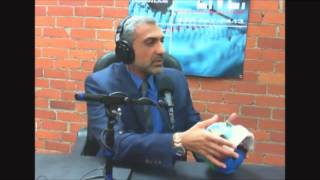
Dr. Payam Hakimi, an osteopath and family physician, explains how to distinguish migraines, tension headaches, and nerve entrapment, then treats them with osteopathic cranial techniques and homeopathic remedies like Kali bichromicum. He emphasizes longer consultations to find what's actually causing each person's pain.
Chapters
We're back.
And now, host of here's to youo Health, registered pharmacist, educator for Boiron homeopathic medicines, Raphael Cohen Bakker.
Good afternoon. Once again, this is Rafael and my guest today. I'm very happy to welcome Dr. Payam Hakimi. Hi, how are you today?
Great.
So, Dr. Hakimi, you're osteopath by training and you're also a board certified family physician and you have a practice, integrative medical practice in Beverly Hills, on Beverly Drive. Beautiful, by the way. So you've come on the show before.
Yes.
And you explained what you were doing and I think also maybe you want to give your website because it's a great resource and we can read all your credentials and everything you're doing in your practice.
Sure. Thank you very much for having me back again on your show. I think that's what we talked about last time. I'm just going to introduce myself quickly so that when we talk about our treatment segment today, we know why we're sort of going there. I am a family physician by training and I have worked in urgent cares and emergency rooms and regular offices as well as having the osteopathic background, basically treating the body manually. And as you know, I also do a lot of homeopathy and I teach for the homeopathic course here with cedh. And a lot of what I do is combination of medical aspect as well as what we can do with osteopathy, homeopathy and supplements to take care of issues in the body. My website is and practice name is Body of Harmony.
There's a lot, right.
And we. It tells a lot. And There is the YouTube channel for it, there is the Facebook, there's the Twitter. They're all body of harmony and your audience can follow us on either of those.
I think your website is just bodyofharmony, one word dot com. Right?
Exactly.
It's a very interesting, very resourceful website and I think one of your something that's important to you is to educate and inform your patients and to tailor a specific plan to each of your patients, which is kind of unique.
Yes. It's looking at each, at each person as an individual and not treating all. And today we're going to talk about headache and not treating everything exactly the same way or as a cookbook of we're going to do certain things first and then we're going to follow with something else and then the next thing it's more of looking at each individual and see what's exactly going on. With them and managing them rather than managing just the symptoms.
And that's why I imagine the consultation.
Takes longer, only an hour and a half.
That's fine. It makes sense because you have to ask a lot more questions and really look back in the history of the patient.
Yeah. And I'll give you an example. I had a patient that came into the office to be evaluated for headaches, and he's had headaches for two years. He's had CT scans, MRIs, the workup, neurology workup, and no one could figure out what's going on. And literally during that hour and a half, and you obviously ask all the other questions, how much caffeine they drink, are they dehydrated or not? Are they getting. Are they anemic or not? So obviously all of that had been worked up. And eventually after figuring it out, it was a complete puzzle. We figured out that he has been taking showers at night and with wet hair, he sleeps sort of under a window that was cracked open, which was causing the headaches in the morning. And no one could figure out why. So just asking all that question, we sort of got to the. So a lot of it is asking. In medical school, they teach us, they say, you know, your patients are jukebox. You just put your 25 cents in and they'll tell you everything as long.
As you're, you know how to listen and how to trigger an answer. Yes, that's a great story. So it doesn't do that anymore, right?
No. So that has become one of my questions now. Do you take a shower and sleep with as part of the headache questioning?
So it just, it went away.
The headaches are gone. All we have to do is just change that habit. That was it.
Well, when we prepared this segment last week, we talked about what we could tell the listeners today, and we picked headaches because I guess it's very common. A lot of people suffer from headaches. And are they all the same or do you distinguish, I don't know, migraines or allergies or how do you. How do you start with someone who comes and tells you, I have a headache?
We. And the question is, is it a headache related to the vessels? Is it related to arteries or veins, which is what we call the migraine. Okay, the migraine type headaches, Is it related to an infection, which is the ear infections and sinus infections that happens in the face? Is the headache related to a nerve entrapment or a nerve problem, which is. We get trigeminal neuralgia and certain Headaches, like even tension headache is sort of a nerve nervous reaction or congestion and spasm of the muscles which causes this headache. And then the other thing is, is it any structural problem? Is it, is it because of a deformity in the face? Let's say, is it tmj? TMJ we know is an issue related to the joint not fitting properly or being misplaced a little bit, which is causing the pain. And I have.
Yes, tell us about it.
I have brought my cranium to show you and tell you a little bit more about it. So first we have to figure out and see why this is happening. Exactly why is it happening? And this is after doing a complete medical evaluation. And as we talked about, is it dehydration, is it having too much caffeine, having too little caffeine or changes in habits that actually cause headaches. So after we look at all that, we rule all that out, then we have to go back and see, okay, well now where is the headache actually coming from? And as we find the origins of the headache, then we can start treating it afterwards. Headache, as you said, is a lot of people have headaches and it can be one sided headache, two sided headache, migraine headaches, headaches with tension.
Would you mind? I'm sorry. Because migraines, it's a topic that really interests me because there are so many migraine sufferers in my background, my family and I remember my dad specifically would tell a friend I cannot come, I have a migraine. And they would say, oh, me too, I have that very off. But it's not a migraine. They usually have headaches and they think it's. How would you distinguish, how can you know if you're having a migraine or just a bad headache?
We have to go back to the classic definition of a migraine, which is the having the aura, having visual changes, being sensitive to light, sensitive to noise, having the nausea or the vomiting and needing to sleep for the headache to go away. That is the classic definition of migraine. However, again, a lot of people use migraine synonym as a headache. So whenever they want to say headache, they say they have a migraine. That makes it sometimes tough on us because once they come and see us as a first consult, we really have to figure out and see if it's a migraine or is it just a headache that we're dealing with. And for migraines we use a lot of.
I'm trying to get a free consultation.
Of course, but you're more than welcome to come anytime.
No I was thinking of my dad.
I get it. So the migraines, actually, if you want to go straight to the treatment of it, is a relationship of the vessels and the arteries are sort of the veins that are closing and opening. And as they sort of shrink, that causes a little bit of issues in the brain, which causes some symptoms, the eye symptoms and everything else. And then as they open up and the oxygen gets to the brain, that's.
When the pain really.
Exactly. Another physiology starts in the brain, which actually causes the headaches. And we know that there are osteopathic treatments that we use and the treatment is actually, or the treatment of headache is basically to make sure that the cranium is balanced. That means to make sure that all these joints are actually working properly. As we grow, we have, you know, let's say we come out of the birth canal and then our head goes through a specific situation where it's being squeezed and opened up. And we know that some kids get what we call craniosynostosis, which is these sutures sort of overriding each other and causing a misshapen of the head. And then as we sort of age, we sort of fall and we have traumas and we have accidents. And so all of these issues that happen can actually move the structure of the head and the cranial bones.
Because even as an adult, the cranium isn't one piece. Right. It can still move.
And okay, the cranium is not one piece until we're 70, 75 years old. So until then, and not that it's a one piece, it's much tighter. Everything as we age sort of gets tighter and less flexible. And so until then, it's. It's very easy to move things around in the head. And then as we age, it actually gets. So I like to get them very young. I have a lot of patients who are in the 3, 4, 5 month period, 5 month old that come in because of the craniosynostosis. And then usually I tell my patients, as soon as there is a trauma, always come back. Getting a dental treatment on its own causes a little bit of issues because, you know, you're opening the jaw for a long period of time and then there is. There's a lot of pressure that's going on one side of the jaw, so it's actually turning and moving the joints around and these bones around. And we have a lot.
So you recommend the patients to come and see you after long dental procedure.
After the treatment, any kind of dental treatment, because it shifts the little Tiny bones in the mouth and sort of around the, around the mouth, around. And also sometimes we get muscle spasm in the area which actually causes a little bit of twist in the cranial bones. And that can. And we have a lot of people that come in and say, you know, after I had this dental procedure I started having headache and no one can figure out if it's related to the nerve. If someone, if the doctor hit the nerve has nothing to do. Well, sometimes it might be the nerve, but most of the time it's not the nerve itself, it's just the fact that the cranium has, has shifted. So all we have to do is obviously go inside the mouth and sort of open up these bones and balance them out and make sure that they're all moving properly and there's nothing that's sort of one sided.
And Dr. Hakimi, you can just feel that with your hands. You don't need any X ray or at that point when you do the.
You know what osteopath's hands are X rays. These are, it is our three, it's our MRIs actually. We have, we actually can get inside and feel everything in the body sometimes better than an MRI or an X ray because X ray and MRI show you things in a two dimensional aspect, but they don't show the functionality because once you look, once you touch someone's body, you see the functionality. You see where things get stuck and where things are moving better and you also have this really reaction and you know where they have pain. And these are the things that you cannot ever see on MRIs and X rays.
Do you remember from one consultation to the other, do you see an improvement you recognize just by touching if there has been an improvement?
Yes, it's because once you again you touch someone's body and you sort of remember a pattern that they had. It's a pattern that has, that's in the body. So it's remembering that pattern and seeing how that pattern changes and shifts over time.
Very interesting. So TMJ and the jaw, it's one issue, very common.
So TMJ jaw is one issue. The other thing is sinus infections as well as ear infections. And we know that as kids grow, like some of the two, three year old kids, one and a half year old, they get a lot of ear infections and they might need surgery for ear tube insertion so that the infection can drain at all times. And we've been very successful with moving these bones because what happens is the eustachian tube is slanted A little bit differently in a child than in an adult. So there's more backflow, there's more congestion, more fluid can stay in there. And where we have fluid and then our body has a lot of food anyways, so bacteria can. Can start growing. So one of the things that we.
Do, that's why kids get more ear infection than adults. Right?
So one of the things we can do is by releasing the cranial bones, opening up the eustachian tube, we can take away that issue, that congestion that's causing the. Or the lack of flow that gets the ear to get the middle ear to get filled up with fluid and then causing a subsequent infection. So as we remove that, their ear infections get much less. And we've been successful with a group of our patients to getting them to a point where they don't need to have surgery anymore.
That's great.
The other thing is sinus infections. Again, sinus infections are a lack of movement in the cranial bones. And we literally have patients that right after treatment, they get up and they say, I feel much better. I felt something draining, dripping in the back of my throat, and now I feel much more open and clear. And that helps out with their time of recovery because the more of the infection you can actually drain or clear from the area, the faster one person will get better.
So you need to see them several times, I guess. And every time it gets better, right?
Sometimes two or three times. There's not a lot of. Because, you know, we see them every two or three days or three or four days. And we'll help out with clearing of the sinus infection. And obviously, you know, I use homeopathic medication alongside with my osteopathic treatments, so a way of encouraging the physiology of the body to actually start functioning on that infection and increasing the immunity so that we can actually clear the.
I think that's what makes your practice great. It's combination of everything, you know, and today we're talking about osteopathy and homeopathy. But to me, it's like you're giving the treatment, the physical treatment, and then you're supporting it with homeopathy until the next time. It's just ideal.
It's the understanding that everything is limited. Medicine is limited and acupuncture is limited, and osteopathy is limited and homeopathy is limited. But as soon as you combine this group together, you actually get a better. A better change in physiology. That physiology is going to change much faster than it would if you just use one of them.
Yes, and do you also sometimes use what's called Western or conventional medicines?
Yes, if someone is there with sinus infection or which has been there for a while, and every time the sinus infection turns out to a bronchitis, I definitely use an antibiotic first just to clear. We don't want to mistreat our patients. We want to treat our patients. So first we get the infection out, and then the question is, why does this person get a sinus infection every year? Or why do they get a sinus infection every six months? And how much can we give them antibiotics? Because at a certain point they're going to start having resistance to these antibiotics.
It's a big issue nowadays.
Right. So it's figuring that out and then figuring if it's because of the structure, is it because of their physiology, is it because their immune system is not functioning properly? Is it because they're overworking themselves? So it's first getting rid of the infection, second phase is, why does this happen? Let's figure that out and deal with that so that you don't get it anymore. Because what's the point of giving you an antibiotic every six months or every year and sometimes four times a year. Right. And we've seen that before. So that's a lot of what I do, as you said, is supporting them with a treatment, then supporting them with a homeopathic medication that is specific for the issue that they're going through. And you know this better than I do, Rafael, but homeopathic medications are very specific. So if someone has a sinus infection of the sinus cavities, the frontal cavities, the maxillary cavities, and they have a green discharge and they have this pain that's going around the eye socket, we use one medication for that, which is Calum bichromicum. And that has been. I've been very successful with using that medication with my patients. A lot of my patients at this point are using homeopathy more than I would say 80% of my patients are now using homeopathic medications of some sort because of the specificity. And again, we have that medication. We have another one that is also used. I use it for headaches, but that's more sinus infection with a feeling that the teeth are a little bit longer or the teeth hurt. And that would be mezarium and other homeopathic medication, which are, again, all specific, because if you use Calum bichromicum for a mesarium pain, it's not going to work. And so it is very important no.
I'm glad you're explaining that because it's always difficult for me to make, especially physicians who don't know about homeopathy, when I try to tell them, it's not like I have a headache. I'm going to take Advil. Advil. It's different. Everybody reacts to the headache differently. Like you're saying, there are different causes and you're not going to give the same answer to different problems. But you said it very well. It's very specific. And if you don't use the right one, it's not going to be dangerous. But it's not going to do anything.
It's not going to do it. It's not going to work.
Yeah, it's not going to work.
I think that was the problem with. Part of the problem with homeopathy back in the day in our country was that sort of the same medication we're given without asking enough specific questions to figure out what's going on with the patient. And if we don't have enough specific questions, we can't figure out what's going on. And as you said, we'll give you the wrong. Not that you give the wrong medication. You give a medication that's not going to have an effect on that person.
And then people are going to think, well, homeopathy doesn't work.
Exactly. So as you've seen so far, we've covered two medications for headache and sinus infection at the same time. There was another medication that I wanted to talk about the. And since we talked about migraine headaches specifically, it's sikali.
Oh, yeah, very important.
One of the medications. And APIs, one of the medications that we use for migraine headaches. I've been very successful with migraine headaches in my practice with combining osteopathy and those couple homeopathic medications, Sikali and APIs.
Use them as soon as they feel the pain is coming. Right.
Again, it's a treatment for each patient. So I figured out exactly when they get their headache. Is this something that is chronic and recurring at the same time of every day or every week, or is it something that is just randomly? So we figure that out and as soon as the medication is given, related to that effect. So it's going to be different in each person. It's not going to be exactly the same thing. But I've been very successful with getting patients off of their Vicodins, their neurontins, their gabapentins, and regular.
Fantastic. Because when you think of all the side effects you cannot even drive a car when you're taking those medicines. So yes, you're getting less pain, but you still have to stay home. So it's a lot of work days, a lot of pain, a lot of money. So I think it's a great option.
Yes, the combination of the two has been very, very successful so far in our practice.
And it's like again, I like to remember to remind people that it's like $8 or $10 for one tube. That's going to go a long way too. So it's something people should look into. Do you get people who have tried other things? A lot of your patients have tried other things before they come to you or they come to you?
I have two groups of them. Group of patients. The first group is the group that's specifically looking for an osteopath or homeopath and for an integrative medical doctor that sort of look me up and find me and come there. So we start the treatment from osteopathy and homeopathy. And I have another group who have basically tried different medical options. And at a certain point they were sitting at dinner sort of complaining to one of their friends that they have this headache that's not going away. And then my card was given away and that's how they come in and see me. So depending on what each person is.
Looking for and Dr. Hakimi, we have a few minutes. I'd like you maybe to tell us about what you do as a teacher. And also I've read that great article you put in Pero magazine, which is a fantastic new magazine if you're a columnist now for the magazine, if you want to tell us, because people can look you up and learn more about all this.
Of course, Homeopathy Workshops is another Facebook page, but also a website I'm working on. But it's basically Homeopathy Made Easy. It's explanation of what homeopathy is. And that article that you wrote was you read was the introduction to homeopathy and where did it originate and how it works and why we feel that way and eventually to what it covers. And again, I like this other part. What doesn't it cover? Because if we say homeopathy can treat everything or osteopathy can treat everything, or medicine can treat everything, we know that that is not true. So a lot of what I have done is also tell, sort of write in there what homeopathy cannot.
The limitations.
The limitations are very important because once we start with something, we need to know what our limitations Are it's going to be monthly on Perot. I'm writing the second one which is on Herring and Lachesis and I'm calling it Herring, Herring and His Snake, which is basically the father of American homeopathy and the different medications and the way he. And there's a long story about it. I'm just going to give a teaser how he was sort of recruited to write an article against homeopathy as a physician. And then as he started doing more research and treating himself, he figured out that homeopathy actually works and he sort of.
That's a great story.
Then he became a full fledged homeopath and the father of American homeopathy and the founder of one of the biggest homeopathic schools in the world and the United States.
Yeah, we refer to him all the time. And what's the. Do you know the website? It's a digital magazine.
It's a digital magazine. It's a Perot magazine. I believe it's P E R R E a u l t-magazine.com or if you Google my name or go to come up the Facebook pages. Body of Harmony is going to be on there as well. But the second one is coming up.
Yeah, it's a great magazine. It looks really good.
Looks great.
Congratulations on that. And what about all the teaching you do? It's for physicians mainly, right?
The teachings are for physicians because again, we like to understand the limitations. We believe that physicians know where they can help someone and where they should draw the line and say, you know, I'm going to refer you to somebody else. And they understand the pathophysiology of the body. So we basically, I teach with CEDH and we teach physicians and we're all over the country this year. I've been to San Francisco and Fort Lauderdale and here and we're also in Philadelphia and New York and starting in Canada and Texas. And so we're growing and we are teaching a lot more physicians than what CDH started with. And we're happy about that.
Yeah, it's amazing to see the transformation, especially when you teach to physicians who didn't know much about it. And they're very. I talk to them afterwards. They're overwhelmed the first, the first day and they think they will never make it with all those Latin names. And you see them at the end and they're like, it's already finished. So it's a great course. It's very important to do it.
Yes.
Dr. Hakimi paya hakimi. Give us again your website. Maybe an address or phone number, whatever you want to leave us with.
Website is bodyofharmony.com and my name is Payam Hakimi. And we can answer all your questions and refer us for anything. There's the Facebook page, the YouTube page, the Twitter. They're all body of harmony.
And you accept new patients?
Always.
Always. Thank you so much for being here, doctor.
Thank you very much for having me.
We'll leave you with some important messages, and Josh will be right.
We know there are many choices in Internet radio, and the staff and hosts of LA Talk Live would like to thank you for choosing the Internet's hottest destination for the most eclectic sound and invigorating talk. This is LA Talk Live. We are more than just talking.
More from Payam





At Body of Harmony, your health journey is never one-size-fits-all, it’s deeply personal.