Osteopathic Treatment of Low Back Pain
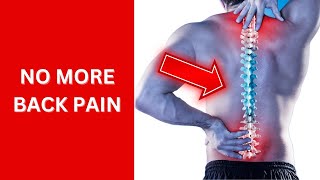
A clinician-led instructional video by Payam Hakimi explaining an osteopathic approach to low back pain. The presenter frames the low back as a load-bearing platform (sacrum, ilia, sacroiliac joints, lumbar spine) and demonstrates a stepwise evaluation and treatment: assess ilia and sacral mobility, compare left/right, release tight myofascial structures (psoas, iliacus, diaphragm, IT band, shins/ankles/feet), then re-check alignment. Causes discussed include acute trauma and habitual postures or compensations from other joints; emphasis is placed on treating both joints and myofascia to prevent recurrence and advising posture, stretching, sleep position, and seeking osteopathic care early.
Chapters
Low back pain happens not only because of the anatomy of the low back, but if we think of the low back as a platform, as a platform where there is the sacrum, there's the ilia, and then the hip bones. And if we can treat all of that, we can actually treat low back pain. Because. Because the vertebral column, the lumbar spine, actually sits on the sacrum. So if we can treat the platform, we can actually treat everything else. It becomes much easier to treat the platform. Obviously, we have to look at the feet, the ankle, the knees, and I'm going to do another video to talk about those, but I want to specifically concentrate on the low back itself, on the sacrum, the sacroiliac joints, and the lumbar spine. Why is the treatment of low back pain hard? And why does low back pain come back and recurs and then we suffer with it? It's because treatment of low back has a specific pattern, specific finesse. I even want, call it an art to treat low back pain. If we imagine low back as the vertebral column, that goes up here, the lumbar spine, and then we have the sacrum that's right here, we have the sacroiliac joints, and then we have the hip bones as well. And if we consider this a platform where everything else on the upper body is actually sitting on, this makes it very important and very critical because any twist, any abnormal twist, any abnormal torsion would actually cause issues. So obviously, the first thing to do is to evaluate the low back. And we do that by checking the ilia as well as by checking the mobility of the sacrum in between the sacroiliac joints in top and the bottom. Because sacrum is actually this structure that connects on four corners. So we have to make sure that all those corners are moving properly, and in between the iliac, they're moving proper. If this sacrum is moving off, obviously what's going to happen is L5 is going to move off or its function is going to be off. And basically what happens is, as we start moving around, the disc can go off. So now, after the treat, take a deep breath. In, out, deep breath. So what do we get? Why do we get distortions and abnormalities in the sacrum? A lot of it is either an acute fall or falling off a horse or a ladder or having a car accident or something, a force or a trauma that will actually move this sacrum. Or it can be with a lot of our patients, behavioral, that means you like to sit a certain way and cross Your legs, let's say always right over left as opposed to switching it around. Or you like to sit at a corner of the couch as you're watching TV and you're twisted to one side, or as you're working during the day in your office, you have the computer monitor on one side, so you completely twisted to that side. And then it can also be related to, let's say pregnant women have to sleep on the left side. So they basically start creating this twist. The most important thing to remember is that we can create these ourselves as well as we are exercising. Let's say if we have a knee, let's say on the right side, our knee is a little bit painful and the body's guarding it. And what we're doing is doing squats. So as we're doing our squat, we're going to put a little bit of pressure. But because the brain knows that the right knee is going to have pain, it's going to take away the amount of force on the right knee. So we're going to be slightly twisted. So a lot of the times I get patients who say the workout, they start having the pain. It's very important if you get issues with your workouts, with yoga, with your stretches, to see an osteopath, because there's probably something off that needs to be treated. And if that thing is not treated and stays there, obviously your body is going to learn ways around it, it's going to compensate. And then at a certain point, a disc is going to go out and then there's going to be issues with that. As you can see, I'm doing sort of rele the sacrum because the sacrum is really tight and all the tendons around it are really tight. So I'm going to release all the tendons that are tight and then we get to release and relax the sacroiliac joint itself. And then after that, I'm going to work on. It seems like the left psoas muscle and the low back muscles as a group are really tight. So I'm going to release those as well. We always compare and we have to make sure that the body is balanced on both sides. So it's important to make sure this is structured, especially going all the way up to the thorax, because remember, the diaphragm muscle sort of attaches to the lower part of the the ribcage and the muscles of the psoas and the muscles of low back almost merge with the diaphragm. So you're going to notice after I'm done with the low back and releasing the muscles and my treatment. Then I'm going to turn the patient over and treat the psoas from front as well as release the diaphragm from front as well, because that's where we hold a lot of the tension. So we already opened one of the twists, we're opening second twist. First I released the sacroiliac joint. Now we're releasing the L4, L5 area and L3 area at the same time, stretching some of the muscles. It's important to do a myofascial release as we treat the joints as well, because if muscles and tendons stay the same way and keep the memory of the trauma, what happens is after we put the joint back, they're going to pull out the joint. And that's why the recurrence of low back pain and the recurrence of treatment. The whole point is to be able to open things up with minimal amount of treatments so that they don't need treatments. Because remember, at a certain point we can get the over treatment syndrome when we treat the joints too much. We already treated her from the back and as I promised, obviously the psoas needs to be also treated. And we find this same thing we found when she was laying down where the psoas on this time, this side, and the muscles on this side are actually tighter. So I'm going to do a myofascial release on the psoas to release the psoas itself. And you see as I'm doing that, my hand ends up in the area of diaphragm and the diaphragm on this side is tight as well and needs to be treated again. This is important because it's easy to crack the low back and move the joints. But if we're not treating the myofascia and if we're not treating all the other elements that are holding the low back and not letting it open, the patient will always come back and that back pain will never completely go away. So as you can see, it's important to release all of these structures. We're going to be a little bit more careful around this area because these are the floating ribs and they're not connected to anything. So we have to make sure they can be painful. This muscle tension goes inside the pelvic area. So as you can see, I'm going around the ilium and releasing not only sort of the psoas muscle, but also iliacus and the rest of the muscles that attach in this area. To make sure that the platform I was talking about stays balanced. Because if it's tighter on this side and the ilium is being pulled up, what happens is the pipe platform is going to be off. We have released the low back area. We moved the joints, did some myofascial release, the diaphragm is released. Now we have to make sure, obviously the hips balance out and they are lined up properly. And then we have to make sure that the it bands are relaxed and balanced out on both sides. Because again, if there is any tension on one side, that side is going to be off. Then it's important to look at the knees, the structure of the knee and the patella, and make sure that the knee functions properly on both sides and is balanced and equal. And the other thing I look at are the shins. There are tendons in between these two bones, the tibia and fibula. And these tendons and fascia can be tight. And we see on this patient, on, on this side, they're tight. And what happens is it moves the knee a little bit. It moves the, it puts pressure on one side. So as she does her exercises, she's going to be doing them a little bit off. And then after I release that, I make sure that the ankles are balanced as well. And then look at the feet as well, making sure the bones, the ankle mortis are actually working properly. And then we see a little bit abnormality on this side, which gets treated. After I treat all that, then I look at the upper part of the body, I look at the chest, the ribcage, and everything that's on the ribcage and make sure we treat that as well. Because if there is any issue in the ribcage in the upper or mid back, the patient will still be a little bit slanted to one side. And that slant will create a low back issue. Because remember, if we look at the low back and think of it as a platform, everything on top of it has to be balanced as well. Because if it's not balanced, then there's going to be torsions which lead to low back pain. Number one, obviously, be mindful of your posture. A lot of people walk and sit abnormally. You need to make sure that you have the curvature in the back as you sit down, you stand up, you exercise. Driving is very important because remember, we have one leg forward and the other one is sort of in the air. And this pulls down a lot on that sacroiliac joint that we were talking about, causes a little bit of a torsion in the back. Make sure you don't twist, turn and bend at the same time. Remember, the function of grabbing something from the trunk of your car is, is a very complex twist for the back. And if you are turn, grab something and now you load it and you turn around and put that somewhere else. Obviously you're causing an abnormality in the area. There's too much forces that go around which can move joints out of their places. So it's important to make sure you're mindful of your posture all the time. Make sure that you have a good pillow as well as a good mattress. Because a lot of low back pain is actually caused by a mattress that has aged, which has this curvature and, and you're sleeping on a lot of the time. It's important to make sure you don't lift heavy. You know, we get into the act of actually lifting something and moving that thing without thinking about it sometimes. Make sure you stretch. Stretching is probably the most important thing because all the tendons and all the fascia that we talked about, the aponeurosis in the area actually needs a lot of stretching. And if we don't stretch, stretch. As we age and as we work and as we sit down, everything starts getting tighter. So it's very important to actually stretch the body, if you can. Two minutes as soon as you wake up and two minutes right before you go to bed. It doesn't take a long time, but it will save your back and it will help you a lot in the future. The best sleeping position is to lay on your sides, but you have to make sure that you. You rotate. So if one night you're sleeping on your right side, you want to also sleep on your left side. Make sure you never lay down, face down. A lot of people have this habit of laying down facing down. And remember, you're turning your neck and the whole anatomy of upper back and lower back is off to one side, no matter which side you're off to. And that is going to cause a lot of disc abnormalities, disc damage in the future. The most important thing, as soon as you feel like you have back pain, stop what you're doing. See an osteopath. Let us get this anatomy back into a normal position so it can function properly for you. I hope you like this video and this has helped you. Please leave us your comments, questions, or anything else that we can help you with or any other videos that you like to see, and we'll post those regularly. Thank you very much.
More from Payam






At Body of Harmony, your health journey is never one-size-fits-all, it’s deeply personal.