Treating Low Back Pain with combining Osteopathy and Homeopathy
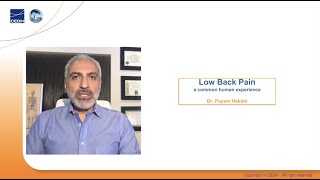
Dr. Payam Hakimi combines osteopathic manipulation and homeopathy to treat low back pain. A 2-year study showed marked improvement in chronic cases with reduced medication use. He covers anatomy, conventional evidence for yoga and physical therapy, and homeopathic remedies like Ruta and Arnica montana.
Chapters
Foreign. Hello, I'm Dr. Payam Hakimi, the medical director of Body of Harmony in Beverly Hills and Miami. I introduce to you today the combination of using osteopathy and homeopathy together in the treatment of low back pain, which is something that I see a lot in my practice. I'm going to talk a little bit about low back pain first. Then I'm going to talk about osteopathy and the human body, the anatomy and then we'll talk about the homeopathic medications that I use for low back pain. I see a lot of people who turn, twist, bend, lift, doing all that at the same time. It's like lifting something out of your trunk. Make sure you're balanced always and you're using proper technique when you're lifting anything and doing too much force and turns is going to cause problem for us. This article specifically from American Family Physicians, American Academy of Family Physicians titled Mechanical Low Back Pain. There is moderate evidence supporting that non steroidal anti inflammatory drugs opioids and topiramate in short term will help with mechanical low back pain. Opioids are all already out of the system obviously because there are so many abnormalities and adverse reactions with it. And then nonsteroidal anti inflammatories have their own issues, but again they can only be used in the short term. There's a strong evidence for effectiveness of yoga and in the sort of short term as well as a long term treatment of low back pain. Various spinal manipulations have had mixed results and physical therapy such as McKinsey Method has helped. When a person gets low back pain once, chances are, and we see here estimated to from 24 to 80% of patients having a recurrence in one year. And then this usually happens more than once obviously in their lifetime. As you can see, there's a lot to the low back. There's the vertebral column that sits on the sacrum and then you have sacrum attaching to the ilia and the pubic bone. And then you have femur or the hip area that covers this whole area. The sacrum is covered by very strong tendons and muscles so that it sort of doesn't move because there's a lot of force on the sacrum itself. So it's very complex. And then we know that a lot of the nerves that come out of the sort of L3, 4, 5 area, S1 and then go down the leg. So we can appreciate that if there's any abnormality in the muscles, the tendons, the joints or Disc problems sort of stimulating the nerve. There's going to be a sort of severe pain either at the side or down the leg causing abnormalities. We see some of our patients who are fit, they're exercising all the time. But osteopathically speaking, they're not doing the correct exercises. And that means exercises that have or sports that have torsion sort of planted into them. Golf, tennis, horseback riding, prevention. And if you will remember anything from my lecture today, this is the slide that I like to remember because it's really important for all of us. We're sitting down a lot, we're doing certain, we're driving, there's a lot of force in our back. Don't become a yoga warrior. I see a lot of our patients who hurt themselves doing yoga. Remember, yoga is a relaxing meditating technique. It's not supposed, you're not practicing martial arts so you're not supposed to have any injury with yoga. So sort of stay with the performance of each sport. And yoga being more stretching and calming technique. Be mindful of your posture when you're sitting, when you're watching tv, when you're driving, as you're working. If you're usually one sided, you're creating a torque in your body and that's going to get you at a certain point, don't sleep face down. That that puts a lot of pressure on the low back pain means stop what you're doing. This article out of osteopathic American Osteopathic association guidelines for osteopathic manipulative treatment for patients with low back pain. This article tells us osteopathic manipulative treatment significantly reduces pain and improves functional status in patients. There's so many different muscles that are connected to the low back. All these muscles need to be looked at. We can see some of them, like psoas muscle that goes from low back to the sacrum and down to the lower extremity. When I treat someone, we look at not only the low back, it is looking at the structures that are below it, the joints that are above it, because all of those are important. Low back pain can come from the hip, can come from the knee or ankle. If a person is walking improperly or even flat feet can cause that. In essence, it can also come from upper part of the back. If someone is always twisted in one direction or they have ribs that are out and they're always sort of twisted in one direction, there's going to be a force on the sacrum and the sacroiliac joint. Now I want to Tell you about the homeopathic treatments of low back. Ruta is, is the medication that I use a lot because number one, it works with the aponeurosis, cartilage, tendons, periosteum, sensation of bruising, aching, stiffness, sprains, ligament and tendons or tears, pain from dislocations, subluxations and after reduction. Because a lot of what we do is balance out the joint and reduce it back to its point. So a lot of my patients will have ruta, one of their medications, as soon as they get a treatment from me. Even anywhere else in their body, their upper back, their neck or elbows, or anywhere else that we reduce, they're going to get root actions for sciatica and neuralgia. Obviously hypericum peripheratum, one of the major medications, it gets coccycodemia as well as nerve trauma and the shooting pains with unbearable stabs. Hypericum perforatum in the nerve injury model obviously showed that it helps the nerves regenerate faster. So really good to use in patients who've had either nerve trauma that caused their neuropathy, sciatica, like a car accident or a fall, or they've had a surgery and due to surgery they lost the functioning of that nerve. Other homeopathic medications. Ignatia is important. Calum iodatum is very important. Natrum muriaticum gets lumbar pains. Sepia gets sensation of pelvic heaviness spreading to the lumbosacral region. So these are the things that we need to have in mind. Dulcimera with an etiology of humidity causing low back pain. Arnica Montana, obviously a major medication for pain, bruising and sort of inflammation. And also use pre and post op for patients who have had or are going to have a surgery. At this point, I want to show you some of the research that has been done with homeopathy. This one is homeopathic treatment of patients with chronic low back pain. A prospective observational study with 2 years follow up and if you look at the results that are highlighted, the severity of the diagnosis and complaints showed marked and sustained improvement. With using homeopathy, the quality of life improved accordingly. The use of conventional treatment and health services decreased markedly. The number of patients using low back pain related drugs was half of the baseline. So you see how homeopathy can help with low back pain. Medicine has a limit. Obviously medicine cannot treat low back pain properly. You know, it's either medications, NSAIDs, steroids or surgery. But also we have to appreciate that osteopathy, homeopathy we all have our limits as well, so there's only so much we can do for our patients. The reason I wanted to give this specific topic is because we have used osteopathy and homeopathy together and have helped a lot of patients in our practice. And the use of these specific medications with some osteopathic treatments help us a lot. So understanding our limitations, but also understanding there's a lot we can do for our patients.
More from Payam


At Body of Harmony, your health journey is never one-size-fits-all, it’s deeply personal.