Dr. Payam Hakimi trained in family medicine at USC and now runs Body of Harmony in Beverly Hills, combining conventional medicine with osteopathy, homeopathy, and detoxification. He spends long intake visits understanding each patient's full picture, then pairs conventional and natural therapies with lifestyle changes to solve what he calls their health puzzle.
Chapters
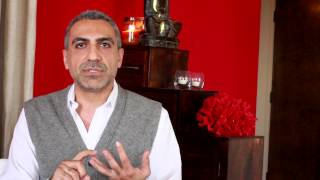
Hi, I'm Dr. Peya Mekhimi, and I'm an integrative generalist. I practice family medicine, osteopathy, homeopathy, anti aging, chelation, detoxification, weight loss, and hormone balancing. I went to high school in Los Angeles, and from there I went to Santa Monica College and transferred to UCLA with a double major degree in biology and Iranian studies, which actually deepened my understanding of human being. From ucla, I went to a medical school, an osteopathic school up north in San Francisco called Tour University, and then I transferred to Western University of Health Sciences in Pomona. I got my Doctor of osteopathy degree from Western University and I got accepted to a family medicine residency program at usc. I did my internship and residency, and then I was elected one of the chief residents of my program, and I started teaching at USC Keck School of Medicine as well. At the same time, I started attending homeopathic lectures and started learning about homeopathy and started adding that to my practice of medicine. By the time I was done with my residency at usc, I started working as a family physician, as a per diem doctor, basically working on a daily basis in different locations. And at night I used to work at urgent cares and emergency rooms. I started my private practice as one day a week, sort of renting a room in another doctor's office. And as I was working the family medicine and internal medicine offices and urgent cares and emergency rooms, I could eventually add a little bit more to my own practice and started growing the private practice, which was back then a combination of osteopathy, homeopathy, and supplements. And that practice grew on its own. And then I started doing more of my own private practice than anything else. And now I'm basically in my own practice, Body of Harmony in Beverly Hills, and I'm seeing patients for different reasons, ranging from headaches to sinus infections to GI problems, heartburns, sciatica, nerve pains, and everything else that is actually managed by a medical doctor. I come from a family of physicians, a lineage of physicians which are more natural therapeutics. And I wanted to go to medical school so that I can actually help my patients. But I always wanted to have this other side to my medicine, which was adding natural therapies. I figured out if we can add natural therapies to medical practices and we can combine the two, we can actually help our patients more than we would otherwise. My main goal in treating patients is to get them from where they are and turn them around and bring as much health in their body as I can in A short period of time with the least amount of toxins added to their body. To do that, I need to change their environment. And changing their environment is changing their diet, changing their habits, changing their exercise programs, even changing the way they sit down or sometimes the movies they see. Changing their emotions and changing their environment around them completely, along with figuring out specifically what's going on in their body and trying to address that in doing so. I try to use more natural therapies than medications. I mean, obviously medications come into play at a certain point, but for specific patients. But we try to use less medication and more natural therapies. And what eventually happens is we have a patient whose physiology actually gets encouraged and the body actually learns how to deal with the issue, and we can actually get them from where they are to being healthy in a shorter period of time. There's a little bit more to the body than just our blood pressure and our cholesterol level. We are more than that. Obviously, all the organs in the body have to function properly together so that we can function at our peak performance and be in a body of health. So body of harmony is basically my vision in life for my patients, which is bringing the structural integrity to their body, bringing physical integrity to their body, changing their physiology, changing their hormones, changing their mentality, their diet, their exercise program, and their emotions, and leading them towards where their body and their mentality and their emotions can function the best. And the whole point is to get them to be happy in life, to function energetically, to sleep good, to eat healthy and be powerful and energetic and decisive in life. Every patient that I see is basically solving a puzzle. It's figuring out what happened to someone when they were younger and how did this issue grew and how everything else that came, all their other experiences and. And their diseases or health issues actually got added to the original problem. And that made it actually bigger than what it is. So it's basically figuring out what's going on with the patient, which usually takes me an hour, an hour and a half to figure out what's going on with someone emotionally, physically, physiologically, and then go back and figure out where did things start. And then with my patients, we sit down, we have a long conversation, and we figure out where are we going to start and what's more important to them, and sometimes what's more important to me because I need to encourage the body's healthy mechanism to actually take over and take care of what's wrong. So it becomes a relationship, a partnership between the both of us to change their life. And bring him back. And obviously we need that partnership with patients. I have patients who have had issues with irritable bowel syndrome or headaches, sciatic problems. And the best way, the best case scenario is when we actually both have the same goal. And the goal is we're going to take away what's causing the problem. So for the patient who has irritable bowel syndrome, we're going to take away the part of the diet that's causing the problem and we're going to introduce a new diet. And if me and the patient are working together, obviously things happen much faster and we'll get there when we want to and we can actually help the patient, which usually happens in my treatments. I think every doctor wants to see their patients happy and healthy, wants to help their patients. The only way that most doctors get rewarded, and I get rewarded, is by actually seeing someone get better. So by figuring out this puzzle and putting it together or removing certain things from it and make them feel better, that's usually the reward that we get. And that's what encourages me to go forward and learn more so that I can understand more about my patients. And it's also having that relationship with them. And this relationship takes a little bit more time than 10, 15 minutes in the office. I usually spend an hour, an hour and a half the first time, and half an hour to 45 minutes with my follow up visits so that I can totally understand what's going on with the patient. And obviously the more we understand from a patient, the more we can help them. And the eventual goal is to get them from where they were to a healthy body to take away their problem, their pain, their infection, as fast as we can in the area that they can work with.