13 Tips To Master Video Marketing In 2024 - Chris Savage
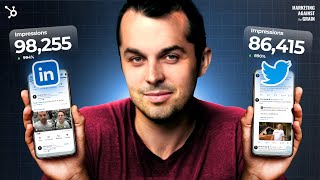
Chris Savage, Wistia CEO, shares 13 video marketing tips for 2024. Start with product pages, match video length to funnel stage, and use whatever camera you have. On LinkedIn, lean into personal hooks and captions; on Twitter, go real-time and controversial.
Chapters
Hey everyone. On today's show we're going all things video. The Internet has shifted hugely to video and we have a special guest. Chris Savage, who's the CEO over at Wistia, is breaking down the tips, the tricks, the hacks on how you get the most out of video on your website, on LinkedIn, on Twitter and on advertising. You're going to want to stick around because we're also talking about the best apps you can use for editing, captioning and a great equipment setup. Let's get into today's show. Okay, Chris, welcome to marketing. It's the Grain. Thanks for joining me today on this special episode where we are going to deep dive into all things video and really companies need to do today to be really successful in video marketing. The reason I wanted to have you on is because this is a question I am getting from everyone with ChatGPT, Claude, Google, AI search overviews, all disrupting search. A lot of companies are seeing traffic from search engines go down, down, down and they're like, hey, I want to get more into, I want to get awareness and leads from other, other channels beyond just search. I know video has a big opportunity there, but I, I kind of don't know where to start. I kind of don't know where to go. And so maybe like for folks who don't know like you live, eat, sleep, breathe video, like video has, has been your existence on this planet. And so maybe you can maybe you could just like give us the lay of the land, the cultural update of like what is happening in video and like consumers expectation of what they want for video these days.
Awesome. Well first, thanks for having me. It's exciting to be here. It's good to see you, Kip.
Good to see you.
So yeah, I mean video. I've been in the video space for 18 years and have watched number of huge technological changes that have basically democratized more people using video. And it started with the DSLR was the first huge shift forward where they started adding video. And then I think it was like the iPhone3s maybe or iPhone4 that has added video. And that was like another huge shift. And we are going through a huge shift right now that really started in 2020 which was everyone seeing their computer as a camera and the idea that if I need you to explain something to me, like you can make a video, right? Like you can make a video to explain it or if you're on a startup and someone says hey, we need to launch this product. There is actually now a belief that this product marketer has never made a video before, is going to be asked to make a video. And so what's happened culture is we're all used to the fact that, that now we have choice, especially as consumers, we have choice. Do you want to read how something works? Do you want to listen to it, or do you want to watch an explanation? And everybody learns differently, everybody communicates differently. And so I think the shift has been one of expectations. Like our audiences want the ability to watch, and if you don't have that, you're missing out. If you do have that, then that's a great first step. But then it turns out that the game is really different depending on if you're talking about an audience on your website or an audience who's using your product, or if you're talking about all the social networks who all work very differently. But one thing that is clear is that video is showing up everywhere. And it is a way to build a relationship with your customer, potential customer, and it's something that you. You really have to invest in and think a lot about.
All right, well, the great thing about this show, everyone, is we're going to go deep into all of the different video channels because I know that's what you're going to want. We've Talked some about YouTube, some about TikTok and stuff in the past, but we're going to cover them all. And Chris, where I'd love to start is one of the video channels that gets forgotten most of the time. I think most people go directly to the social networks when it comes to video. And websites are just a huge, huge opportunity for video to both increase the conversion rate of people coming to your website, as well as to help bring new visitors to your website. So talk to me about, like, what does great look like for using video on your website today? And like, how do you do that?
Yeah. So obviously, Wistia video marketing platform. For a very long time, we've been focused just on hosting, helping you with the videos on your website, helping you get them to convert better, helping you understand who's watching them, what. What interest is there, and how to make your content really, really work. So I come with a lot of experience in this area and the thing I would say is, yeah, those expectations have changed. So if you have something where you're talking about a product, a product page, you have images, you have screenshots, you're showing the product, examples of it like people want, there's gonna be a percentage of your audience that wants to see that product in action. They're gonna wanna see the details, they're gonna wanna see the explanation or the story. I think about it kind of as if you find in your funnel that if you actually sit down and talk with somebody, it gets them through to the next stage or you explain something, it gets them through. But you're actually having trouble on your website or in your app. That's probably a place where video works because a human being involved there is probably gonna help. The things you wanna focus on is I, I kind of think of it as, I think of the whole spectrum, honestly, as like you wanna look at the connection that someone has to your brand and, and if they don't have much of a connection yet, that's going to be where shorter videos are going to work. And if they have a much deeper connection, they'll spend much more time with you. Like a shockingly huge amount of time.
You're like, I have all the data. The view duration is long, right.
Basically people are watching much longer content. And it's interesting when you think about, you know, in a world, and I'm really talking a lot about subscriptions here and software, it's applicable to other places, but this is where I think it makes a lot of sense is you're making, you know, if you're going and you're buying HubSpot, you're not buying HubSpot just for today. No, you're buying what HubSpot will become, right. And you're buying a platform that you're going to use for all these different parts of your business. And so that's actually a big decision. If you get it wrong, it could be painful. And so people want to get these decisions right. And I think we forget that like someone is working, they might be a director on a marketing team, they might be the head of marketing ops, they might be the VP of marketing, whatever, head of sales. And they're, they're trying to pick the tool that's going to help them do their job better. And so if they can do a little bit extra research and understanding about where that company's going and what things are going to deliver, that can help them make a better decision. And it turns out that video really works there. So you want to make videos as you get deeper in the funnel, you have basically permission to make longer form video and you want to hit them. It's kind of like, I think of it as like journalistic, where you want to make it so that because we know that the viewership is going to drop off, drop off over time, you Want to hit them with the main point up front. You want to say like you don't want to surprise them. You're not making like a surprising twist ending in these things. Like you're trying to make it really crystal clear what it is that you're going to help them with what's important. Like you don't bury the lead and then as someone is more interested, you can kind of over time in your script have more of the details of the thing for someone who's like really committed and engaged. Yeah, yeah.
So to follow up on that. So we'll get to social video and stuff in a little bit. But most video on the Internet today is about the hook, right? It's about those first two to five seconds getting somebody interested, telling them what the value they're going to get. And what you're saying is like your website is no different from that. Like the hook is still going to exist. What's going to happen is you're just going to go far deeper on the far end of that video, right? Because you are going to have folks who are more aware of your company. And like I know for the brands that I really love or, and I'm a deep customer of like I will sit there and watch a 20 minute video. Like that does not bother me, right? Like I was like, no, I want to, I want to learn, I want to hear what they have to say about this. And that's the value. And not saying that Everybody should make 20 minute videos on their website, but that people will stick around if the information is compelling, if they know who your brand, know your brand and know who you are, which I really like your heuristic there.
I think it's also like on your website and then if you have a software in the app like you have permission at that exact moment, like someone just took a risk and they signed up. You have permission to have onboarding videos that are long that explain exactly what someone should be doing, what the best next action someone should take is. And we see that that works. We also see that webinars work really well at this part of the funnel. And you might not have a huge percentage of video of viewers that show up. I think it's on average like 35% of folks who register actually show up. But those people are engaged often trying to either make an upgrade decision or a buying decision and that's why they're there. And then actually the other 70ish percent that didn't show up, like how you help those folks is really important. That's something we focused on recently at Wista because we've seen that just there's so much value in those people who register and show up. But even the people who don't show up, they're basically raising their hand saying, like, please give me whatever this topic is. And I think the other piece of the puzzle is, you know, you want to look at a platform like us, you want to look at all the analytics, but you also need to take that data and put it in the context of the rest of your marketing. So, you know, we integrate deeply with you all at HubSpot. I think that's another really important piece if you're investing a lot in website videos to actually understand, hey, which of my audiences should I be re engaging? Who are the, you know, how should I be scoring based off of this? Like, there's a lot of really valuable interest data that you can get that I actually think is often representative of the content you have in other places. But it's almost impossible to get on the social platforms.
I completely agree with that. Okay, a few more website questions before we move on to some of the other platforms. Let's say I don't have much or any video on my website. Where do I start? Is it pro? Is it. Is it my product pages or is it someplace else?
The product pages is the probably the best place to start.
That's the game.
Yeah. You would look at what, what is your sales team talking about? So I think that's. That's where you're going to find your answers is what is the sales team talking about? And always saying again and again. And you can productize those conversations in by putting them in video.
Video on the homepage. Yes or no.
Depends on the context. We do see very often low play rates on homepages.
Yep.
But we do see that the people who engage with the videos on a homepage are often more interested. And so that's like a key indicator. I think it's especially helpful if you are introducing big new things. It's a, it's an opportunity. It's your own billboard to reposition what you do in your words to an audience that's already very deep in your funnel.
I love the repositioning angle where it's like, hey, we're evolving and we need to tell a bigger story than just like a static image can. Can tell on our homepage.
Yeah. I think Apple does this really well. Right? They totally do. You can't miss it. And they know that they have to get people to understand what's the next part of the ecosystem and that they use video to do it.
All right, before we move on, last question. On websites and video, is there an underrated part of a website where video is really awesome that people just don't talk about enough or as much doesn't get the credit that it should?
I mean there, I honestly, I think there's a bunch, but I'll go with, I think in B2B I often see people under, underestimate, undervalue brand. And there's a lot of fun spots where, where you could add video that feels pretty low risk about your team or your ethos or your values, your culture, what it's like to work in your company that those things can really add up. Like I've seen a lot of companies make a video of what it's like to work there and then they tell me it's like their favorite video because it changes. Again, you're selling employment and it's something that like a recruiter doesn't have to do or maybe even can't do the same way because they can't show the team. So that's another spot. And I'm just going to give you one more which is customer testimonials. Customer testimonials we see for people who are deep in the funnel, really trying to evaluate should I pick this or not. Like, if you have a great customer testimonial, you can take your existing customer, basically put them in front of any new prospective one and there's. That's incredibly valuable scaling people's time and it can really move the needle on conversion.
Hey everyone. You know we're always getting requests on the show for more recommendations on how you grow with AI. Well, we're bringing you another one. We've got this free guide from HubSpot on how you can use AI to completely change the way you create content. This guide, it's got it all. Prompts to assist you writing and editing, steps to incorporate AI into your marketing plan and guidance on how to roll out AI across your team. It is the guidebook on how to integrate AI into your content creation. I've dropped the link in the description below. You're going to want to check it out. Now back to today's show. I think it is also good when people to kind of change the perspective of, of experience in a website like the 404 page for example. Like, oh, you went to some broken page. Well, here's a video that we're at least gonna like tell you what we are and what we're about. Cause you had some level of interest even though we couldn't actually get you to that page cause it's outdated or we mess something up or what have you. Right?
Yeah. And those are moments where you know someone would be feeling bummed or pissed. Right. So a lot of those moments are like really video is such, it's the most emotional medium. You can change how someone feels if you get it right. And that is really powerful because if you run into a problem, your app comes down what? And you have that funny thing. We did a video, we had to change our terms of service as everybody does and we did a video where we launched the new terms of service in the style of like the Star wars crawl. And it's like a 10 minute video of just the Star wars crawl of our terms of service change. It was so, honestly so easy to make. We thought it was really funny. Instead of people being annoyed by this, they were like oh my God, this is so amazing. This is so great. I can't believe you did this. Wistia. And, and it's like exactly that example of like just taking something that would be maybe painful usually and turning into a positive moment.
We're going to move on to some other networks but I know I'm going to address this now before I have 20 YouTube comments because I know we're going to get questions around like what camera should I use and what equipment, what software, what tools should I use to make my video? Chris, there's so many out there I don't know. So like obviously we're starting with websites but you're going to use you know, kind of similar equipment across all the videos you're making. So give me, give me your little kind of two minute cheat sheet here. For everybody watching today, the first thing.
I would say is the best camera you have is the best one. The best camera is the one you have. So that's your computer. You can make amazing videos with your computer. Now webcams are good enough if you have an Apple. You know I get a lot of shit for talking too positively about Apple but I'm gonna keep doing it.
I love Apple, I don't care. I've been team Apple for like 20 some years at this point I'm not gonn change.
I don't know why but this particular thing for sufferings gets Android users. But the Mac webcams are pretty good. They have continuity camera so you can take your phone and use it as the camera on your webcam. You can buy a $30 little thing, little dongle that like magnetically holds your phone above the webcam and you can and you because the iPhone camera is so amazing, you can make something that looks really great.
The iPhone camera makes sick unbelievable.
And it's going to just keep getting better. It's that it's. They know, right. Like if you break your camera and you go to the Apple store and the rest of your phone is good, they will often take care of it and fix your phone for you for like very low price or free. Because they know if your camera actually breaks early in the cycle, it's one of the only times people actually switch.
That's wild.
In any case then if you have a mobile phone, that is the other thing. If you're going to be shooting people in person, just shoot it with your phone. Obviously we're useless. We're looking for authentic content and the cameras are amazing. I think in terms of editing there's a lot of different editors out there. We have one at Wistia that's just designed for marketers. Very simple text based editing. Descript is an amazing editor. Premiere is an amazing editor. VEED. There's a lot out there and I think you should go and find the one that feels like you can understand it the best. And there's a, there's kind of a spectrum from you're getting started, you're not in video every day. Something like Wistia or Loom is going to be better. As you work towards more being more of a pro level, you're going to want to look for final cut, Premiere, Descript, something like that.
I will also say, you know, you know we love AI here on marketing. Yes. The game we, we've been testing Capsule internally.
Capsule is good. Yeah.
And have, have, have for folks who are non video editors. So somebody who's maybe more of a content creator doesn't know that much about video editing. Capsule is, you know, along with descriptions and the other is a really good tool to kind of increase quality and quantity of video that we found.
And then I would say if you are, if you're looking at what equipment to like level up these things. We have a series at Wistia called Fix My Setup where we take people's setups and transform them and basically go through like all the different, you know, contexts of like should you actually just paint the background color for somebody? We've used a bunch of Elgato products have been really great. I don't know if you've seen their teleprompter. That's very simple and easy that basically you plug into your laptop and then you can see yourself or see the screen of the person that you're talking to. I'm using a teleprompter right now, so I can see you kip, like, over my camera. And the elgato mics are really good. And I think the thing you'll see is the key thing is you actually, like, audiences are forgiving. It's starting is the hard part. And so once you start, the truth of it is, you'll probably change your setups a lot over time as you gain more confidence or see different cases where you want to use, you know, more lights, less lights, better cameras, all that kind of stuff.
You've been really nice. I call it the. I call it the equipment crunch crutch, you know, like, people use. I don't have the right equipment, and so because I don't have the right equipment, I won't get started. Right? It's my crutch to, like, not put myself out there, not be vulnerable, not do the hard thing of, like, having to rerecord myself five times and feel super embarrassed. Like, that's the hard part of video. That's why people don't like doing it. And it's the people that start and kind of work through that. What I will tell you, and I'll be interested if you agree, is that all the people I know who get started with video, it's painful for, like, days, not weeks, right? Like, it's not, like, comfort level builds pretty quickly.
I agree with that completely. And I think it is. It is about starting. It is about getting over the crutch of the fear. And it's natural, right? Like, public speaking is one of. I think it's. What is it people's like. I think on average, it's, like, the most popular fear that people have is, like, public speaking. And it's funny because, like, you're walking around your world, you're talking to your friends, you're talking to coworkers. Like, people see you, they respect you. Like, and there's something about putting a lens in front of it that ups the ante. And actually, anyone who does a lot will tell you our goal is to try to forget the lens is there. Like, that's. It's just trying to be as natural as we possibly can be. And that is. That is what people connect with, is, like, who we really are. And so I think, yeah, it's starting as a hard part. And actually, on that piece, I'd also Say, you know, we talked about a little bit of this, the low risk videos on your site. So like a team page video or we actually see sometimes blog posts. Blogs still work. You and I know that. Not exactly the way they used to, but they still work. And putting in a video explaining the topic is like another way to try this. And it might not get a huge number of views by itself, but it is a way to play around and start to gain some more comfort that you can make something that is actually compelling. And so I think it's really just looking for that. I think also people making videos internally has been the other big thing that changes someone's confidence level is once you start making a lot of videos internally, suddenly, wait a second, like I'm sending this to my co workers. My boss saw this, they liked it. Maybe I can, you know, make a video that I sent to a customer or prospect or put out in the world.
Loom is the prime example. There are a lot of people using Loom to, to make internal videos and share videos with small audiences. Totally agree with all of that. I think you are setting people up for success to say, like, just get started. The other thing, Chris, that I know we've done a lot and I know you've done a lot is like just like you update, you said you'll update your setup a lot. You get to videos a lot too. Like, you know, if you have a video on your About Us page or a specific product page and it really resonates. But like you're like, oh, I need to change the messaging or oh, people are dropping off like 30 seconds in and I want to change it so they don't like, yeah, you just update it the next week. Like there's a lot of just like updating and uploading videos in the background. Some. Sometimes I talk to people and it's like, oh, I just published this video and I, I'm so scared because it's like, feels so permanent and it's like, it's not permanent. It's actually just like completely within your control.
And I think there's, there's, there's a lot of people replacing videos that exist and constantly improving them and it does make it much less scary.
Let's go into the networks because I know people are going to hear about the networks. I wanted to start on the stuff that I thought people and everybody watching was really leaving behind, which is the website and, and by extension any kind of in app video work. Let's talk about, I want to start with LinkedIn LinkedIn is going to be coming out with its own shorts product soon. So you're going to see video be a bigger and bigger part of LinkedIn. LinkedIn is classically getting made fun of constantly right now for all of the cringe, like LinkedIn posts for people trying to go viral, but kind of demystify video on LinkedIn for us. Like, tell us what really works when it comes to LinkedIn today.
Well, I think you said before, and I think this holds true here, you need a hook. So the first thing is, what is the topic that you're uniquely positioned to talk about, have an opinion about? You know, I think you have to remember these platforms are all changing constantly. And like, there was a huge change that started about a year ago, which basically was like, hey, if we. They had to change the platforms, that we just see nothing but AI content, right? So they. We want unique pieces of research, we want unique opinions, we want things from real people that are actually authentic. And that's my experience of what works on LinkedIn is you need to start with that, that kind of focus. Right now, what's working on LinkedIn is stuff that's different, just like always, right? So this stuff, I think it's funny because, like, I think people complain about the cringe stuff because that's what they see because it works. It's like, oh, man, it's so cringy that this person showed this picture of them and their kid, like, you know, at a hockey game and it's like, no, that's endearing and that's sweet. And that's actually, you're not getting that another place you're not friends with the person on Facebook. So it is actually unique and it is showing more of the whole person. And so of course it works. Um, so I, I think the, the most important thing with LinkedIn is get over the cringe. Like, cringe is in, baby. Like, let's go.
Cringey books is what I'm hearing.
Cringy books. And, and then I think it's, I think like anything, it's consistency. And LinkedIn does not have great video analytics yet. So you're, you're gonna have to rely on doing it video in other places and kind of having a sense of what works. You're gonna have to rely a lot on the comments. Like, that is one of the really interesting things about LinkedIn for me is every single person on LinkedIn is named and comments are attached to their resume. It is inherently positive because of this.
Right?
And so it's very different than Twitter. It's very different than like TikTok. Like, it's like these are people who are saying, like, if you go to my profile on LinkedIn, you see all the places I worked, you saw where I went to school, and you can click a thing that says comments and you can see the comments I've made on posts, like, if you're a dick, like, it's not going to work. So I think that's really changed things. And then just like a lot of those social platforms, a lot of these videos start muted. So you have to have captions. You're going to need to upload Captions separately to LinkedIn. You need to upload the thumbnail separately. So you want to think about that up front. What is that? But most people in the feed today are going to see an autoplay muted video. And so having things that visually are interesting at the, as a hook, basically, not just like what someone's saying, but having an interesting visual at the, at the beginning, I think matters in any of those contexts where it's starting like this. So LinkedIn is another one. And then I think people are in more of a mindset on LinkedIn to learn. And you know, we're looking for tips for our careers. We're looking for marketing channels that are new. We're looking to, to learn from others. And so I think you, you want to take more of like a learning bent, but it, it definitely should be authentic, attached to a person, and ideally entertaining.
What's your recommended tools slash workflow for captions? I know people are gonna drop a comment and be like, hey, what's the best way to do captions?
I mean, captions is a great product. Descript does this well. You can do this in VEED, you can do it with Capcut. So it's a lot of this is about finding captions that fit your brand, either the brand or the business, or the brand of the person who is representing the business. I think the key thing is you want to have them. And what we found recently in our own testing, promoting my podcast has been we take clips from the video podcast, we pull them specifically for LinkedIn and then we've started adding like animations to help explain topics that we're discussing. And you're not seeing a lot of stuff like that on LinkedIn. And I think that's why for us it's working. Another, another thing that we've done that's been interesting is when we've done in person events. My co founder and I will do selfie video that's uncut. So we'll walk around for like three minutes with a take on like what's happening and showing like real world stuff. And it's funny because it's like the easiest thing you could ever possibly make in the world. It doesn't seem possible, three minutes. It doesn't seem fair like it to me. Like we spend so much time in these animations, all this other stuff and working hard. And then I'll walk and Brett and I will like talk about some topic and I put up there. And that does unbelievably well. And I don't know if this type of thing will continue to do unbelievably well. But right now, these very authentic moments that are about work and learning, that's like, also has a lot of entertainment and it seems to me to be what's working well on LinkedIn, some personal.
Connection, some behind the scenes because it's differentiated. Right. Like that's your. One of your points for all of this is like you need to show up in a way that's interesting, but it's also different and not the same way everybody's showing up.
So I know, I know you and I just recorded for my podcast Talking to Loud, which is coming out in a few weeks, but one of the things that was, I loved about our conversation that feels really relevant here is basically just talking about where, where is marketing going in general in the next 10 years. And I thought your take is like really interesting on that because to me, a lot of what we're talking about fits like so cleanly into that.
Look, we've talked about it some on the podcast here on marketing into the green, but marketing is going to be less measurable. It's going to become more personal. Not because what AI is going to make it more personal, oddly enough, because it's going to generate personalization at scale, but it's also AI is going to be automation 2.0. And with that level of automation, we're going to have this deeper in person need for connection. And we're going to get that through in person events, but we're also going to get that through videos of real people. Right. Like one of the things we're not probably going to talk about a lot today, maybe on a future show if you come back, is probably like ar, AI avatars and like videos that do a lot of the work we're talking about, but don't have like the personal representation of like somebody you can go and connect with. Right. And I think part of the advice you're giving people on the LinkedIn stuff is more durable because it's hard for an AI avatar to do the three minute behind the scenes in a, in an, at an event like you and Brendan can do. Right?
Exactly. And yeah, I think we should probably save. Save that for another episode.
I think there's, hopefully, there's way, way too much there.
Right. But I, but I think what you're saying, it really to me is I keep thinking about this, like, brand is becoming more important. Diversifying out of other channels is becoming more important as you're talking about. And then this connection with a person as a way in to build the brand. It's already what we're trained for. Like, it's. I watch tons of podcasts and I consume all these things and I build up people that I trust on different topics. So it's like, oh, this is the person who I trust on like, weightlifting and this is the person I trust on marketing, and this is the person I trust on whatever. And you start to do that and you filter information, those people, and that's how we get our news, that's how we consume content. And so it makes complete sense. And I think this is weird for B2B because it feels very different, but, like, it makes complete sense that that's coming to B2B. And basically it's like, yeah, I want to connect with Kip. I trust Kip. Oh, I saw Kip gave give a talk and you're great and you're engaging, you're smart and you're really nice at the end. And then you keep sharing this information and it's like, oh, I, I can trust the feed from Kit. And I think that when you think about it from that perspective, a lot of the, A lot of the video you're gonna make on every platform is trying to figure out who are those people who are inside your business who are really. You could call them the influencers. You could just call them the trusted people. You could call them the SMEs or subject matter experts. But who are those people? And how do you make sure you get their messages consistently out? Because that those channels are going to get much more important over time.
I couldn't agree more with you. It's like any time, like my body feels like any less than 100%, like, feel a little tight or something, I'm like, I immediately go to knees over toes guy and I'm like, oh, he's got a video from some stretch of like, it's going to like, make My hip flexor feel better or my hamstring feel better or whatever. Right? And so you're just like, you want to be in that consideration, set that when so. But that's indicative of marketing. Instead of going to Google or even ChatGPT or Claude or whatever in the future, people are going to more and more say, like, cool, I have my 10, 20 people that I really care about and the things that I care about. And when I have a question, I'm just gonna go straight to the person who I think is the ultimate filter of all that stuff for me. And that is why the showing up consistently in video, consistently across channels, matters so, so much. Okay, we talked about LinkedIn, we've talked about captioning. There's so much. I wanna go to Twitter next. Let's, let's talk about Twitter because Twitter kind of feels like the wild Twitter slash X. I'm sorry, I was an original Twitter user. I'm probably never going to call it X, even though I know that's technically the name. It seems like the wild, wild west on X these days. Are you doing much on video there? What have you learned?
We are doing some stuff on video there. It does seem like the wild west, I think they're pushing hard to. It really does in every respect. It's funny, like, this isn't a. There are certain conversations that are still only happening there and I think that's like, that makes it an important place to be. There's a lot of conversations that are happening about AI that are basically only happening there. There's a lot of like bleeding edge tech stuff is happening on Twitter. So I do think it's worth looking at the channel and finding the way to have your voice in it. They've changed a lot about how videos work on that platform. They are trying to. They're trying to go head to head with everybody, but they're trying to go more head to head with YouTube on Twitter. I know they're trying to strike deals specifically to bring creators over to that platform. I also discovered a couple of weeks ago they actually changed how they handle third party video players on Twitter. It used to be basically, if you were to take a link to a Wistia video and you put it on Twitter, just be the link. And now they're actually opening those up. So you can put any form of any video player, which means you can have your own calls to action, your own controls, your own analytics, like all that kind of stuff. So I think that's like a really interesting change that I think is designed to try to get people just sharing more content there in general. And I mean, I'll say all the platforms are constantly changing. Who knows if it stays like this? But that, that, I think that's like an interesting piece, but it's similar in the sense that unlike similar in the sense that the videos are going to start autoplaying and muted. You need the captions, you need the visual hooks, you need the hooks in the script to get someone to pay attention. Authentic content is going to work better. A huge difference is that people are unnamed and they are not. It's not attached to their resume. Comments are extremely different. I think we see much more controversial stuff working on Twitter. Basically things where someone can have a hotter take against each other. Things that people can disagree in the comments. That is the. That's the stuff that I see working there. And memes obviously. So like there's, there's way more. There's a lot more memes very actively being created and shared and published on Twitter. And so if you're going into that world, like, I think you have to be ready for that. And I think you can see the difference. You know, if we look at the biggest B2C brands that are on Twitter, they're making jokes and they're trying to be part of the culture.
Yes.
In a way that fast reaction time.
Extremely happening in the Zeitgeist. Right.
If you are late, it doesn't work. That's the other thing I think it's like if you are, if you are, you have to be on it in real time to get the biggest bang for the buck. And that can be just commenting. So that's the other interesting thing is you'll. You'll see people who are. Have a great video and they just shared it. And if you're in there with something in more like funny, insightful or your own video responses like that stuff can work incredibly well, but it has to be fast. And so it's. It's just not going to be as planned. It's going to be and it's. And it's less about you and much more about the culture.
I think that's great. I think my, my other thing is anytime you're thinking about your video strategy, you want to align it to the platforms who are leaning in. Right. Like, one of the reasons I wanted to start with LinkedIn and Twitter today is those are two platforms that are leaning into video, obviously YouTube and TikTok. We could talk about those all day. But LinkedIn is making a huge push into video waiting it more. Twitter is trying to do the same because video is becoming the entire cultural form of communication of the Internet now. And in a way that a lot of businesses, especially B2B businesses just quite frankly aren't yet comfortable with. And that's why we wanted to do today's show is trying to kind of bring that to life and bring some very tactical ways to get there to life for everybody watching.
There's also it's interesting because like if you look at YouTube on I know a lot of the viewing is now happening on TVs. Yes, tons and so and so a lot of the decisions and they've been making for the last like six or seven years have been all about that. Like you could have links in the description but you can't put links over the video that click off to things that aren't YouTube because if you're watching on a TV it doesn't make sense. And so, and they have become a powerhouse in terms of watch time advertising. Like YouTube is becoming the new TV. Right. But Twitter is not least not yet. LinkedIn is not. And so I think it is they're, they're, they're playing different games and just recognizing that is important because when you look at the details on the like basically on the edges of the decisions of like why are they making the decisions the way that they are? And you look at like this, like this is the thing that people look at while they're at work. This is a thing that people look at to learn throughout the day. So the content that you make it can be fun and irreverent and whatever but it has to fit more in with it that and you know that's would just be my advice. It's like pay attention to the business model and pay attention to the like on the borders decisions that don't seem like big. And if you can try to figure out how those add up, you'll have a better sense of where they're going and what should work there.
So Chris, recently Kira and I did a whole breakdown of kind of underrated places to do advertising. And we covered marketplaces, Wi Fi, sponsorships out of home, all kinds of things. One of our big underrated advertising opportunities is video. Most Companies, especially in B2B are still way, way, way too focused on text based Google and Facebook ads and not video ads. Talk to me about what video ad channels would you recommend for a company maybe getting started in video ads and what have you seen both at Wisti and from your customers of what makes A really attractive video ad.
I mean the most obvious place to start is YouTube and from a video ads perspective, they have such a diversity of content. You can know that it's like a generally safe place to advertise. You can get pretty granular with your targeting. And Facebook is actually still quite relevant here. Which is funny because I'm not on Facebook myself really at all anymore. But it is, it is another good place to advertise.
I'm not on it ever, but I understand.
I still go to every once while just to check and like there's the same. People are still posting and it's, you know, to each their own. Like everybody should do something. But I think the easiest place to start but is. Is YouTube and I think the stuff that works in ads is. Must have a great hook or it must be entertaining. I think about what it. Like what are movie studios doing, what works for them and is there anything we could learn? And there's been this trend that's been happening the last few years of like they put the trailer before the trailer. Have you seen this? Where there'll be like whatever, some, some new movies coming out and then it's like there's a three second version of the trailer at the beginning of the trailer. So you know, to get you hooked. Yeah. You're like, oh man, man, that's gonna be like twisters. There's just gonna be a Twister sequel. And you're like twisters.
Now I'm in, baby.
Yeah, exactly, exactly. You see it and you're like, okay, I watched the trailer and I think it's funny because that's like such a discreet way of showing you the hook. It's literally like the hook is, this is so exciting. You can't, can't believe we've done it and then like now stick with us. So I would try to. I, I think you just have to give yourself permission to really experiment here and also watch the numbers pretty closely. And if you're not getting people to continue to watch like you should try something else. But the beautiful thing is that you can, you can really iterate quickly. That that's probably like my main advice is like if you're paying to get the audience versus earning the audience over a long time, you can, you can test much more rapidly. It can be expensive. So you want to believe that the things you're sharing are at least on brand or on message. But the speed that you can learn and iterate is just like very, very fast. And I think it is highly under leveraged. In B2B. I think yeah, it's just like many brand oriented things. This is another example.
Tell me if you agree with the following statement. This is going to be controversial. I think the vast majority of B2B companies and most companies quite frankly are better off starting on YouTube with advertising than with organic videos.
I think that's true. I think you can.
It's a lower bar to get started, right?
It's a lower bar to get started. There's also a really nice strategy which is you start doing paid to have an idea of what works and the types of videos that your ads work on. And then you go to organic. When you have more confidence that the right type that you're attracting, you have an idea what the right type of audience is. But if you're going to go the organic route, it is also hard and takes. It takes a long time when you create it though, it's unbelievably valuable. It's like crazy how valuable that thing is. And so it's that that challenge, right, is people moving between those things. But for most people they're going to be better off with the ads.
And what's interesting is you touched on it and again could make another full episode with like the videos you decide to make. The topic is incredibly, incredibly important. We've talked about like the post topic part on today's show. Like how do you actually, once you know what you need to communicate, how do you actually get it out there and do that in an effective way? Most of the success of that video is actually going to be determined by the topic you select and the relevancy to the audience. And then the remainder is yes, how you package it, how you format it to make sure it actually shows up up in the way you intended and everything obviously. But I want to make sure before we close out today's show that folks know how you pick is incredibly important. I love your hack to use ads to see what topics and areas your audience is really interested in as a lead in for organic ads. And takes a lot of the guesswork out. The other is search. Right. Like you can look at YouTube search data to know what folks in your industry are searching for on YouTube. Create, create topic. Create content around those topics. Those are the two initial ways to get started until you have kind of a more sophisticated understanding of what your audience might be looking for.
Yeah, nailed it.
Okay, Chris, we are unfortunately at time. I feel like we did all this, we kind of intentionally left off YouTube and TikTok for today because I feel like they're like a whole different show and their own kind of rabbit hole in both good and bad ways. We covered websites, LinkedIn, Twitter, video ads, production, setups, tools, editing, apps. We covered a lot of ground. I really appreciate you coming on the show today. I hope that everybody watching is now inspired to go get started in video or up level in video, depending on where you are with video in your marketing. And Chris, thanks for joining us on Marketing Instagram.
Thank you for having me. This was a delight.
Awesome, man. Thank you. This data is wrong every freaking time.
Have you heard of HubSpot?
HubSpot is a CRM platform where everything is fully integrated. Whoa.
I can see the client's whole history.
Calls, support, tickets, emails. And here's a task from three days ago.
I totally missed HubSpot grow better.
More from Patrick



A NEW BREED OF PARTNER: The Partnership Ecosystem Model Journey of Patrick Biddiscombe, Part 1








Customer Success Workspace: Never Lose Sight Of What Matters Most | HubSpot Spotlight