16 Years Of Marketing Lessons In 54 Minutes - ft. CMO Of Wix.com
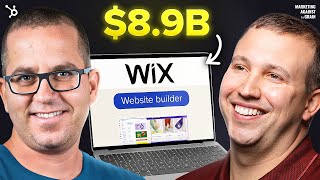
Conversation with Omer Shai (CMO of Wix) and Kipp Bodnar covering 16+ years of marketing at Wix. Core themes: growth from underpriced traffic arbitrage to mature data-driven acquisition, building long-term teams and trust, measuring brand via long-horizon signals (brand searches/cohorts/time-to-return), influencer and Super Bowl brand investments, and early-stage thinking about AI’s future impact on search and marketing. Practical lessons emphasize rapid experimentation, cohort-based ROI, and balancing brand vs. performance spend.
Chapters
Hey everyone, we have an extra special guest. We're joined with Omar Shai. He's the CMO of wix. He is one of the most data driven and successful marketers in technology history. And he is here to give us the secrets to investing in brand and actually reporting on it. Right? To building a world class marketing team. To finding the arbitrage in your marketing and channels. He's going to tell us how he built WIX from the very beginning and how he's scaling it now. This is a great conversation. Let's get into today's show. One of the places I want to start because I think it's going to be real. There's a lot of founders, there's a lot of marketers that obviously and marketing leaders who listen to this show. You've been running marketing at Wix for over 16 years. But Wix is a company I really admire. I think Wix Zoho. There's a handful of companies that have figured out how to really make a great software business at kind of the low end of the business buying market. And to do that you have to be remarkably, remarkably great at acquiring customers. And you know Kieran and I on the show are always like hey, distribution is undefeated. If you get the distribution right you can kind of figure out everything else when it comes to SaaS, especially at the low end of a market. And you have gotten distribution right more than most folks. You've been really great at performance marketing. Some of your former colleagues have gone on to replicate that at Monday and other places to great for fame. Tell me how you did it. You were starting in the early days. How do you actually get millions of people to care about your business and come sign up? This is like that's a founder's dream. How did, how do you actually do it?
But I will take you back to 2008 right like please. So the, the, the web is totally different than it was what it used. What is now and everyone like today is very a closed garden Google search. And I'm sure that we'll talk about AI later on the, on the, on the talk and the opportunity. On the opportunity that, that we can get from there. But back then I'm sitting in 2008 and first we have a great product. Okay, let's start with that. Okay, so when you have an amazing product we first a product company and not a marketing company. We have a product, amazing product and great product company that a decent marketing department. So I was thinking about what users that can use a solution like us what they're searching for. And back then I was start playing with, you know, free flesh website. I was searching in Google and I was start buying links or SEO. This is how I started the market in atwix.
Love it.
And I bought it simple, yeah, definitely bottom up. And I bought links and I'm also data driven person and had huge passion to numbers. And I was browsing on Google Analytics on a daily basis. And then one day I figured out that this one link that I bought that jumped from 35 clicks to my site to 75. And then I understood that while I bought those links for SEO there is different opportunity in those links. And I created the mediavine opportunity of wix. So what I did back then, all those sites, the templates, website creation website, all the blogs, they didn't know how to monetize their site. And then come came a company like that ass that with a great product knew how to do it. So what I did, I search again for example website templates and I took all the advertisement areas on those websites and then I did links backs okay to those sites. And eventually I created a chain of, let's say a media buying company that bought tons of traffic to our site and that gave us a lot, a lot of cheap traffic that converted amazingly well. And this is eventually the philosophy of our marketing department till today. We have a great product that fulfilled the needs of a lot of users. So what are they searching on on YouTube? What are the content that they are looking for? What kind of content they need to watch in social? What the content that they are consuming everywhere. So eventually this is the methodologic today it's much more robust than what we did in 2008, but more or less is to give an amazing solution for the intent that users have. Back then it was to create something beautiful today, create something amazing for the business, to run their business, to fulfill their dreams, to be winners. And so first I'm very proud about the users, right? This is where I, I did a lot of goosebumps when I'm seeing my users success.
But what you did there, which was interesting is credit to having a great product. Credit to getting the people in who actually needed that product. Right. But you found an inefficiency in the market, right? What you're telling, what you're essentially telling me and everybody watching, which I think is a very important point, is that the founding marketing strategy of Wix was about finding underpriced sources of traffic and that you basically scaled that for the last 16 years that you've continually been able to do that, I guess for folks who are maybe not a marketing master like yourself and some of the folks out there. How do you find those inefficiencies?
Unintentionally?
Where do you actually. Well, tell me what that means. Tell me how you find them unintentionally.
When I'm talking, okay, I like to say that I don't like to think too much. Okay. I'm thinking a lot. Okay. But I don't like to think too much inside rooms with people and talking about stuff. I prefer to do and I prefer to sell. I prefer to learn to. From my seller. I would like to understand what others are doing and what other companies thought that they. When they initiate a project, some kind of project. So I prefer to do and to do and to do and to do. And when you are doing a lot, eventually you are finding the thing that can push the company to the next level. A lot of time I don't remember my success, okay. Because I get bored by that and I don't really care about that because I learn the Diablo to be successful long time before others understand that. So when everybody would like to celebrate, I was already in the next project. It's very tough to work with me. Okay.
Well, you know what? I've never. I've never, like, felt. I feel like we're. I've never. This first time we've chatted, obviously, but I feel so, so much of a kindred spirit to you where, like, I've often described myself as, like, my life is just running one long marathon with no celebration. You know, where you're like, you're working, you're working, you might. You might hit a milestone, you wave at it and you keep going, right? Because there's always something else, right? There's always something else to do and to learn, and there's always ways to be better, which I think is what you're saying. I think you're saying, like, hey, my success rate might not be that much better than everybody else's, but what I'm actually really good at is the amount of repetitions and attempts to learn. I can just have these really rapid learning loops that kind of never stop. And most people, like, celebrate a lot. They get too. They think too much before they get started and they just waste a lot of time. And are you telling me that, like, you're just focused on wasting less time and really having way more attempts at learning? It seems like.
Correct. And I feel like I'm celebrating. Okay. But I am.
Well, you're doing better than me then.
No, but I think that I'm celebrating most of the time before of everyone because I, I think that I understand Daka very good. And I'm trying to create a. The shorter, the shortest, a cohort that I can in order to understand trends and what happened. And then when I understand it, I would like to go as fast as I can or to stop the. Stop things as fast as I can. So I think that the combination of data running a marathon is amazing. You know, I'm a huge sports fan. Huge one. And when I'm thinking about, let's say NFL or the champion league, I'm thinking about myself as a coach or as a gm, My dream job. Gm.
You would be a great GM by the way.
I'm not sure. I'm not sure. I'm still waiting to confirm Eric da Costa to work for the Ravens and. But think about that. Like they have the first game of the season or preseason, okay. And they have a team and they are pushing themselves so hard for like say 60 games soccer or 18 regular season of the NFL and then the season is over and then their will win or they won or lost and then they are getting 80% of their team back a year later and they need to run for the same trophies again. But we don't have those trophies. Okay. But we don't have the huge failures or winnings. Okay. So this is how I'm looking at that compared to sports that I'm learning a lot of how people are building teams and how they run run games every week, the strengths, the weaknesses to think about the competitors. So it's fascinating. Yeah, definitely. You know, I'm going back to the marathon analogic that you gave and I'm connected to it, you know.
Well, okay, so you, you've talked a lot about being data driven.
Yeah.
And everybody says they're data driven. But in all honesty, like, I back channel a lot of people and you are the number one person that I have ever been connected with where everybody's unanimously that he is the most data driven person that I know. I've heard from folks across Tel Aviv and the US and other folks that, wow, Omer is, he's the real deal and he is exceptionally data driven. And I'm always like, well, what does that mean? And they're like, oh, well, he's built this great like bi and performance marketing and all of this stuff. But I want to know what it means to you. Like, you're much better at simplifying it down when you say data driven, what do you actually mean? Hey everyone, you know we're always getting requests on the show for more recommendations on how you grow with AI. Well, we're bringing you another one. We've got this free guide from HubSpot on how you can use AI to completely change the way you create content. This guide, it's got it all. Prompts to assist you writing and editing steps to incorporate AI into your marketing plan and guidance on how to roll out AI across your it is the guidebook on how to integrate AI into your content creation. I've dropped the link in the description below. You're going to want to check it out. Now back to today's show.
Sitting in a room in February 2009. And you know, back then we are as you mentioned, we were from Israel. None of us did what we did in the journey of weeks before. So I'm not sure exactly 2008, 2009, what are the methodologies that people in the US are using. But I don't think that a lot of us back then use methodology. As you see, my English is not perfect and I like to introduce some terminologic. So I was sitting there in the room and I understood and watching the data, I understood that when we are getting users, the free users, the amount of collection that eventually I will get from here. Okay. And this is like in a second that we decided to multiple our marketing marketing budget in 5x. Okay. And again this is when we created the shorter period of time. Now we can call it cohorts. Back then we called it by creation. That means when the free users created and how much time is taking them to become a premium users. When everyone worked back then on lifetime value, we introduced something else. We called it Troy time to return on investment because we said we don't want to predict how much the users eventually is going to pay us. We are okay with building a company when we're getting a fully return of our money after period of time, let's say eight months. And it help us to be much more aggressive in the way that we are managing our budgets. So one example, the second one is when Facebook, I think it was 12 when they launched the pace first back then that we understood that these things can be a huge traffic source to our company. Again we saw it and we moved all in YouTube I think 17 we saw opportunity and then we made a lot of people angry, you know, with the Cali cloth commercial that they were stunned too much with that.
So I love a ton of ad rotation My friend, I love it. Like, we, we had this, we had this partnership with Facebook back in the day where we were doing co marketing with them and they would give us tons of ad credits. And so we were spending like the equivalent of like tens of millions of dollars on Facebook in a month. And people get so angry that they saw our ads so much. And it's this totally the same thing where it's like, no, I just want to see a different ad.
Exactly. And you know, I remember sitting with YouTube and Google back then and I told him, guys, please give me cut. Okay, I would like that. And then, you know, yeah, but we don't used to advertise like you're like you. We are more like no direct response or I don't know how they call them, like the brand advertisements that. I really don't know what that means. So we cannot give you cap, but I think that today the system are much more mature, you know, to give exactly the amount of caps that you need. Target audiences and more. Every time. I just get you like 3, 4 examples now it's every time to try to find the opportunity to find the arbitrage, to find the arbitrage that really works for you and then to go all in, to find the next arbitrage, to go all in and to be the first one who finds the new arbitrage.
All right, so there's a couple things. One, you really understood the value of your customer. So that allowed. That made you easy. It made it easier for you to go all in. Right. You had a very unique way of looking at the business and you aligned with, I'm sure your head of finance and your CEO and everything to look at that business that way so that you could actually be aggressive. And then you actually had conviction to go and spend the money and scale. I know that there are thousands of marketers that are going to listen to this conversation and be like, well, that all sounds great, but like, how did you get everybody to be that aggressive and to agree with these non traditional metrics. My CEO or my CFO or whatever just they want to use the industry standard metrics and like that's what they want to do.
It's a great question. A friendship and amazing colleagues running with me. And I'm running with them for so long time. So I just want to mention, you know, my CEO of Ishai Avrahami and the CEO and president Neil Zor and the CFO Leo Shemesh, that we, we don't call marketing marketing spends. We are calling it marketing Investment and.
Love that bookmark that everybody.
So you know what?
To your cfo.
Yeah. Lior is amazing because he doesn't like to. To. To change me. He tried to understand the decision that one would like us to take and when he can realize what I'm doing to go with me all in. And we all, as a team, we are running together for so long, so we already trust each other. You know, we need to show each other. You know, I'm seeing something like that and. And we are educating each other about the things that we are seeing or listening. I believe that we are one of our strengths and that we are very good listeners. And being listeners is all to be humble and to understand what you're good at, what you're not good at, what you need to improve and whatever. Great friendship, amazing team for so long and trying all the time again. I think that we are sharing the. The spirit of we good at now, but we can be better. Okay, so how can we be better? Okay, so it's content improvements.
It's that shared mindset and the intellectual honesty behind it, which I think is really interesting. But you said something there that's really important. And I'm. This is a selfish, selfish thing for me because I believe. Believe something you just said, which I sometimes have conversations with people and they're like, oh, why? Why? Why are you doing this job for so long? And my answer to them is always the same. I was like, one of my best realizations in life is it takes a long time to do something remarkable. It takes a long time to have the context, to have the relationships, to have the perspective and the knowledge and the failure to do something really, really well. And I think we live in a culture where people are just switching jobs every couple of years and they're missing out on the opportunity to do something truly, truly remarkable. And I got that kind of from your answer where you're like, it's not that I was actually that much of a better marketer than everybody else. It's like I had the relationships and the. And the historical knowledge and the perspective with this group of people to actually get there. And I had the trust and the ability to take these risks and to do things differently in a way that if you or I or anybody was brand new, probably wouldn't have the chance to. Right.
Correct. And it's like the support system almost. Okay. And it's not only. It's not only my colleagues, it's also my team members. Okay. I have super talented team members that working with me for so long. I have chief of staff that with me for 11 years.
Wow.
The first. The people who are running the marketing of weeks and Weeks Studio today with me are people who are running. I'm working with one of. From 2008 and one for 10 years. It's almost that I don't, I don't need to speak and because, you know, I'm not a good speaker and I'm most of the time behind the scene and I just, you know, we are in such a chemistry is amazing. And to be on the same page is amazing. And not to be afraid to challenge yourself is, is one of, I believe, one of the. My strengths. So I, I believe that in the freedom to express whatever I want. Because you know that I think that you're a winner. Okay. Because if I'm working with someone for so long and he knows that I think that he's one of the best marketer in the, in the, in the sphere and I telling him, I think you did a crappy job here. Okay. Or I think that you don't need to invest here, you don't need to invest there, you need to invest in the other place. And then to have a conversation of that, but not to be afraid and not to think about all the time how to say it in a nice way, in a polite way. No, I'm talking with you like a friend and I think that you did a crappy job. Now let's fix it together because they know that I'm with them and they know that I'm going to fix it with them. So to have a great colleague then to have great people that work with you on the challenges.
I always tell people that I work with, I was like, look, I think you make the best choice. I think you made the best choice that you possibly could knowing the information you had at the time. Now it's time to make a better, different choice. Right? Like we have to get better. We're not going to litigate the past. We're not going to place blame in the past. But I can give you feedback on what I think was bad about it and we can do it better this time. Right. And I love how you're framing that. When you have like the relationship and trust with people, you can do that much easier and much faster.
Keeper, it seems that you are much more polar than me.
I think, I think, I don't know if that's actually true. I actually don't know if that's true. I don't know if the people I worked with would tell you that actually.
You know, I talk with my hr, the person who's running Agile weeks yesterday and we talked about in conflict and she mentioned to me, you know, only in good relationship you can, you know how to fight. And I, you know, I believe in that. I believe that when we are fighting, we are getting better and we are challenging each other and it's fun. And when you're doing it, you are fighting a minute after you drink beer with or wine with or talking about sports later like a minute later. This is the strengths of relationship that eventually you can achieve the goals and winning the marketing and whatever we need to achieve.
Yeah, conflict is where the magic happens. Right. Because that, that friction creates new things that most other teams are too comfortable to ever get to figure out and do. Right. And, and speaking of new and uncomfortable things, I want to talk about artificial intelligence. Something we talk about here on the show a lot. Something I spend a bunch of time working on at HubSpot but also talking with, with marketing leaders. I have to imagine because you're under the radar but very data driven. You're doing some pretty, you have some interesting perspectives and you're doing some interesting stuff. On the AI front. I'd love to kind of hear from you how AI has shaped this chapter of WIX marketing. Like what has it changed about how you're doing marketing now?
Currently in every project that we are doing, we are doing some use of with AI in certain amounts. Okay, but I'm not, I don't think that we are there yet. I think that when you mentioned how they shift the widening of weeks till now, it didn't shift in us, but it will. Because I think that the way that currently we are running the marketing and the way that we will run in two years is totally different. We are not aware of everything. And it's not only the marketing area, it's also the product part because we have so many AI tools integrated in our solutions that eventually utilize the marketing also like we are playing more with the product right now on the AI potential that we have. But it's going back to not to be afraid and think about how difficult it used to be to create video. How difficult was for celebrities or the opportunity for celebrities. We are going back to sport, let's say NBA. Think about when Shaquille played for LA or Boston or Cleveland or Orlando. How many advertising he could do in a year. Not a lot. Now when he retired, you can see it all the time. And he, he what he built like is, is amazing, amazing economy around his brand. But think about that. If AI was when Shaquille play the way that he could utilize his brand through the years when he's in the top was much more. Because suddenly instead of just doing one shoot in a year or two shoot in a year, suddenly can be on 16 different spots without being in even one shooting day. And we didn't talk about search. What like how search.
No, I want to talk about that.
Like as intent. Intent based person. How search is going to look like, how comparison website are going to look like, how a blog traffic is going to look like and what are the contents that we need to create for AI. We don't know those things. Okay. So it's like I feel like currently we are utilizing all the tools that we can in order to make our work much more efficient. But I feel like we're on the edge.
Okay.
It's like did you see that? Did you see that? How is this going to change the way that people are coming to that? How this going to change the way that people consume the content? So you say be on alert all the time because the biggest change ahead of us yet we didn't get everything yet.
What's going to happen to search?
I don't know.
I was on my list to talk about. Let's break it down for everybody. I have some thoughts. I know you got some thoughts. Share what's going to happen?
You know, I really don't know. I used. We grow up as we are our era. We are Google people. Okay? Google search, truth, SEO, links, whatever. A lot of love, hate relationship with Google. Right? I hate when people advertise on my brand name. Okay. I feel like it.
I love that it just makes you so angry. It makes me angry too.
You know, it's like I feel like Google roll it's much bigger than what they're playing in our life. Because if I did a decent job in building a brand around wix and someone else just using the term WIX and advertising themselves and I can eventually will be the fourth result. It's almost not fair, right? Because Google has much bigger role in our sphere when they have such a huge market share in share in search and also comparison website. Right? What is real and what's not real? People assume everything is real. But there is a lot of economy around. I think early adopters will move to other solution. I think that Google will give a great fight. We don't know what is going to be the fight yet. We don't know what the business model of search for Google is going to be we don't know if open and I are going to give let's say I'm giving search for free and going to be monetized only on B2B. How to search on OpenAI is going to be what is the role for search for small businesses? What mean open an eye on FL devices in the next devices. Okay, so many things. I believe that we are going to be in much more fragmented markets.
That's the point. That's the point right there. That's what everybody needs to understand and.
It'S going to be better for the people are doing a good job to shine and to react first and to understand first the trends that happen in but you need to be on so many areas and it's not enough to be on one place but you know, keep something that's going to take time and it's funny for me because people will say okay, we thought it's going to be a game changer but eventually only x percent of the market are using it. It's something that will take time. So I'm not assumed that we will see tons of changes at the fragmented sphere in the next year and a half, two years. But after that I don't know. I, I think it's going to be super, super, super interesting.
I, I would actually, I'd actually pause it to you that we've already seen a lot of fragmentation. It just hasn't been caused by artificial intelligence. Right. The, the world of search has greatly fragmented. I mean there were. There was a period of time where search meant Google. That's all it meant. Right? You've seen Bing, Bing's market share go up in a material way. YouTube search growing crazy TikTok search, Reddit, you've got a vast change to how people research and discover information even outside of the LLMs and outside of the AI apps. And so we're starting to see that already. And you're right. At some point when we get over the tipping point, it's going to be even more diverse and more fragmented because the world unbundles and then it bundles back. Right. Like we'll become real fragmented and then we'll figure out the real use cases and then there'll be a couple of big winners again in the future. I guess if we're saying that we're in this fragmented period and we're going to be in that fragmented period for a while. If you're a founder out there and you're just like man, I'm just trying to sell my product I'm just trying to build a real business. What do you think are the underrated marketing channels in this fragmented world? Like if you were out there doing it all over again today, where would you say oh, you know what, there's real value in this channel or this channel is really underrated relative to what most people spend like their time and money against today.
So I think it really depends on the products that you're selling. Okay, it really depends because there are some, I believe that there are some areas that still the competition is low and the searches are high, but you can play the SEO role. But I believe that eventually if I would like, if I would look broader on the sphere, I believe that influencer marketers and when I look at it, I believe that maybe LinkedIn it's much better place for opportunities than it used to be.
I agree with that.
I think that something happened to us. Okay. And even conversation lacks we are having right now. I'm not sure that I will, I will do it like five years ago.
Oh yeah, I agree with that.
It's like currently we are much willingness to share information to shell from our experience for my winning and losing then it used to be because it's like my secret, I don't want others to copy. But then we know that it's much more difficult to copy what we are doing or philosophy or whatever. There are so many elements like we talk, right? Like the relationship with my cohort, with my team, with my partners. So many things that we have much more willingness to share on LinkedIn and if we will keep the content there real and honest. I think there is a lot of opportunity for stock leadership and advertisement with influencers on, on LinkedIn. I believe that this is huge opportunity maybe untouched right now.
Okay, couple, couple, couple questions on that topic of secrets. What's been the biggest change in the WIX marketing strategy in terms of time and money you spent? Like what's been the biggest delta over the last year of like oh wow, we were, we were doing this but now we're like really, really doing this thing. Like what has been one of the big, big shifts in strategy that's worked well for you? I'd love to love.
It's. It's two years, it's a positive three years. It's not exactly one year. And it's like understand the margin, marginal cost of, of a search advertisement better and the percentage of this, the, the strength of our brand in the overall traffic and what it can bring us and eventually the users that convert and we built a New product, the WIX Studio one. This currently we're running actually two different brand but contain WIX on both of them. And it's very interesting because it help us to focus on the more professionals. Users. When I say professional, it's web professionals, users own studio and the selfie. Those professionals on wix, the. The reasons I'm used professionals to those users because we have some users. Right. They're like top of the line in the way that they're running the business, like the top trainer in the world. But they are not web professionals.
Yeah, they're not web pros. Yeah.
But we would like to call them professional as well. So we've changed the terminology from DIY to stealth theatre because it gives them the area to be professional. So those are the first two things that were huge and meaningful. And the third one is stock leadership and working with. I forgot the name. Right. I said it before. Help me keep and interested.
Sorry. Influencers. Yeah. So influencers has been like one of the big, big channel shifts for you.
Yeah, yeah.
Why? Why? How's it working? Tell us more.
Because currently we have studio. Okay.
Yeah.
It's like as I told you, we are first a product company. And when we have a product like studios that actually agencies and web creators and enterprise can build in very efficient way exactly what they want. And we are talking in professional ways with them. Other influencers are very easy for them to connect to the product and to recommend it to other. And if it used to be, you know, Weeks, I'm not sure I saw some free website on you. It's not professional. I don't agree with them, by the way, but it's a cookie cutter, a website creation. I totally don't agree with them. They don't understand the product, our product. But now with WIX Studio, they understand that we are going after professionals and we are talking their language. It's easy for us because this is our language, because we are talking their language as well. So it's very easy to execute. So influencer marketing are definitely the thing that we shift more of that.
And by influencer marketing, you're talking about kind of paid partnerships with influencers to generate signups, is that right?
To create content.
To create content that's driving signups and brand awareness or mostly signups.
Mostly the brand awareness. Okay, let's sign up.
This is why I want to get into this. Because this is gonna be the part of the show that the marketers love the best because they're gonna be able to share this with their cfo because we've already established that you are one of the most data driven people marketers out there and most people who are very data driven like brand. Meh, I don't want to do brand. I'm a reformed performance marketer who now is like I think brand is so important but it took me it was a journey to get there. I would love to hear one how you think about brand in your marketing mix and then how you actually like think about the return of it. Like give us the masterclass in how and how you went from being super data driven to being like really brand is deeply important.
First I did five suitables. Of course you know, fire. I don't think a lot of CMOs did fires super bowling in the same company. So again, I believe in the in Super bowl and the reason for that because the day after super bowl everyone are talking about the commercial is the only place in the time of the year that people are not skipping commercial. They are talking about commercial. The day after Oscar people are talking about the dress in the tuxedos. The day after super bowl they don't even remember the score unless the Ravens are winning and they're talking only about the advertising. So again we will go back to data. So when you understand the data and you understand that people are coming to you because they're searching wix because something that you did, you know that you need to create a balance between acquisition, between direct response and between the brand and people are asking me so how do you know that it works? Eventually every activity that we're doing we would like something that will happen in the future and this something that will happen. It's searches on our brand people that will come directly to our brand, chats, chatter on social and eventually those people need to come to our solution. It's very simple. When people are searching for how to create my next website to bridge them to wix, it's more difficult that people that think about how they need to build their next website will come directly to weeks. Okay. And those are the things that eventually you need to do at the same time. And again Zen with partnership, with learning how much you need to spend what is you're comfortable with, how much you understand the impact of the future, how.
Comfortable, how do you understand the impact of the future? Because how do you report out on brand or you're like what metrics are you looking for when you're making super bowl buys? Maybe very focused brand activation or brand media buys. How are you knowing that that's an.
Effective use of Those eventually we created a metrics that our data and analyze that is comfortable with us. So I'm checking cohort by seven 7 days, 14 years, 28 days by specific location. I'm checking year over year, months over month, year over two years. I'm measuring how many people are searching our brand. Eventually if we will do the most brilliant brand activities that in eight months or 12 months we won't see increase of the blend surge. We said.
So the time horizon is very important there. And I think that's a super important thing for everybody listening and watching to understand is you're not measuring it just on seven days. You're getting some value in those seven days but the total value is over a much longer time horizon because you're trying to get those unaware people.
Exactly. And. And we because again because the foundation of the way that we are doing we are so comfortable with. We know that maybe not that one thing, maybe we did super bowl and we did an amazing online campaign to support the Super Bowl. And two months later they saw a lot of influencer marketing that we did. And four months later they saw something that they trust that use our solution. And all of them together eventually will bring them to search for our solution or will come to us directly. But if they won't come to us directly, we fail. So if we invested in lot of the brands and we don't keep it the same ratio of direct acquisition brand search or we change that more people are searching for exactly two weeks or coming directly we fail. But we need to succeed.
A couple follow up questions to that. You said you did the five the Super bowl five times. Yeah, that's why not 16? You know like you know why why why not every year?
So first on the first three times we invested heavily the creation of of the the spots. Year four I felt like we okay with the people understand currently our valuable position and and what we are doing and we not have exactly and you see to say. But then opportunity came two days before Super Bowl. So I shipped the same spot that I ran on YouTube for the Super bowl and number four and five or something like that were the same. And after that we felt like we okay we are going more after professional people with other places and area to tell the story. But currently when we are created this shift between WIX Studio and Wix and we are so proud about our current offering and the user maybe next year.
So this is why, this is why I asked that question. Because I think it's very important. It's is if you were Just very data driven. And you did the raw math on those years that you did the Super Bowl. Like you and I could have come up with a way to get the same amount of impressions and visits and everything in a, in a cheaper way. Like we could have saved money in some way to get that, to get the same raw metrics. But it would have missed on exactly what you said. You would have missed on the ability to, to inform and educate an audience that in a way that addresses the core problem or gap you have with your target audience. Right. Like it's not just oh, I want people to know about wix. I want people to think about WIX in a very specific way in which I want them to kind of define and think about us. And you only get that to those big touch point brand moments. You don't get that through just buying a bunch of decentralized advertisements. Right.
This is correct. And it also open opportunities in terms of a partnership. I will tell you a funny story. So we did so, so we did the first super bowl commercial with the five the NFL legends, breadfire and to and more. And day after we got email from DreamWorks we saw the commercial is amazingly, amazingly done. It was so funny. We would like to, to work with you on your next super bowl commercial and that's awesome. No one answered that. Okay. Because DreamWorks, you know who cares about them and like 10 days kids actually.
But that's about it.
No, he said like the company, we don't care about that. We're on beat. No, I'm joking. It was, we were, we got so many emails back the day after.
That's awesome.
And they didn't have even a direct connection to us. They sent the email to biz devs.com and so I think like two weeks later they sent us another email. We are not sure that but that you got this measure but we really would like to work with you. And then we, we answer them and like 30 days later I think that I, I, I came to, to New York and I already closed the agreement with them on the second super bowl on the with Kung Fu Panda.
That's so cool.
And without doing the first commercial I couldn't do the second one second with such a huge brand, amazing execution, very cost effective way to create co branding activities. So there are so many unknown and again it's going back to be coffee and understand the business, understand the product, understand the user, be proud of the user, be comfortable with the partners and go and do okay.
All right. I got two final questions as we wrap up here. The first one is you've talked about brand and you've talked about kind of performance, direct response. Marketing and performance. Direct response being like capturing the people that know about you and brand. Kind of creating the next wave of people who are going to know, be informed and eventually want to come in. How do you know how much money to spend in each of those buckets? Like every company, no matter the bigger size has money that they could spend in those buckets. How do you figure out the right balance between the two?
It's from the eventually go back to the TI metrics. Okay. And it's also the depend of the cash flow of the companies. So for example, it was one time when, when when Facebook launched the the page for us that we. We found a new way to bring new user to the company but we didn't have enough cash flow to invest index. Okay. So you need to understand again the financial of the company. How much the TLI is it eight months is okay with you? What do you mean eight months? Is it fully blended eight months or the direct acquisition eight months? Because if it's eight months and fully blended you have all the SEO. It's like the zero money, the zero money traffic that you are getting that help you to be much more aggressive in the, in the acquisition asset. So it's really depending so many things and it's what is the cost that of the product and how. How was the cost of. Of the clicks? Okay. So eventually create the metrics and when you create the mandate, challenge the metrics all the time. And don't be afraid to say something different today. Even those that two days ago you advocate for something else because you figure.
It out something today strong opinions loosely held is the way. It's the only way forward. Yeah.
Because you know I was.
More from Patrick



A NEW BREED OF PARTNER: The Partnership Ecosystem Model Journey of Patrick Biddiscombe, Part 1








Customer Success Workspace: Never Lose Sight Of What Matters Most | HubSpot Spotlight