22 Minutes Of Marketing Tips To 10X Growth In 2024 Shaan Puri, Gary Vee & More
This YouTube panel compilation features rapid marketing advice from Kieran Flanagan, Gary Vee, Rand Fishkin and other guests. Key themes: the interplay of quantity and quality in content; platform-specific "first second" video mechanics; micro-segmentation (many narrow cohorts) for content planning; pragmatic product-marketing advice (most early founders don’t need formal product marketing; focus on simple messaging, great emails/webinars); the three canonical growth levers (acquisition, retention, monetization) and the need for clear north-star and input metrics; using high-performing organic posts as briefs for paid amplification or broader campaigns; and the importance of cultural relevance and customer voice. The episode also cites concrete stats/examples (HubSpot revenue and new-customer growth) and offers actionable practices for founders and marketers.
Questions this video answers
Acquire more users, retain them longer, or monetize them better.
$2.4 billion in revenue and 23% new customer acquisition.
21% of founders think they need to take a stand; 86% of consumers expect brands to take a stand.
95% of founders "don't need to know what product marketing is" (speaker claim).
Chapters
Welcome to Marketing Instagram. This week Kieran and I are taking maybe some well deserved R and R. We're taking a little breather, but don't worry, we have something special lined up for you. We're diving into the archives and bringing you a few highlights from some of our favorite episodes. Whether you're a new listener or a longtime fan, this is definitely one you won't want to miss. We're back next week with fresh content, but for now, let's get into today's show. Listen, Gary, this show is listened to by hundreds of thousands of marketers and founders every month. You have the floor. What do you want them to change about how they think about marketing?
Here are many things that need to be digested which are hard to digest. Number one, quantity does not come at the expense of quality.
Hell yes.
Number two, if you do not understand how the first second of a video works per platform, you cannot be successful at social media. AKA how the first second of your video shows up in a TikTok versus how it shows up in an Instagram reel is is already different and I'm watching many of you not succeed in one or the other or both platforms because you have not understood the science of the art of the first second of a video. Number three, A comment on a social media post today. That's clever. What I call Cassie comments as creative is a more effective marketing execution than almost every banner ad, billboard, radio spot and print ad in in the world. Duolingo.
Duolingo's killing your content as creative shit man.
That's right. Number four, if you do not market to 40 different 30 different, I'll let you get away with 20 different micro consumer segmentations every day. 19 to 23 year old Hispanic males that live in California, that are into skateboarding, 40 to 45 year old moms in middle America that have teenage boys, 4060 to 70 year old men who are in the last five years of their career, that live in Florida, that work in B2B SaaS. If you do not think in the way that I just talked about and have many of them for your coffee, for your SaaS business, for your automotive company, for your makeup brand, for your fortune 5005000 or local flower shop. If you do not think in cohorts and then those cohorts are how you wake up in the morning and think about the 10 to 20 pieces of content you're gonna put out on social media. You already are on your back foot and are losing market share without even realizing it.
And so I Wanna get your take? Where does product marketing sit and how should people prioritize product marketing?
How does the customer know about the product marketing?
That's the problem.
Exactly.
You don't. Here's my tip to founders. You don't need product marketing until you're big enough that you don't need to know about it. Because when you need product marketing, Kip or Kieran will figure it out for you.
So.
So I literally mean 95% of founders don't need to know what product marketing is and are wasting precious energy building assets that no one will ever see and no one will ever read that are too sophisticated and are wrong. Figure out who your target buyer is. Figure out a simple message that you would buy from. Write an email that is so good you would take the meeting. Do a webinar that is so good you're confident it would add value to every marketer on planet earth. And do that. And then you can figure out all the segmentation and the differentiation and how to compete with. With Zapier through a tear sheet. And like. Or you know, there's exceptions. I think the best growth teams are really good at this stuff really early. Right.
There's.
But, but, but let the people figure it out. I think I'm fine if founders know nothing about product marketing ever.
That is the best a lot of minute that's ever been said on this podcast. I just like to go on record.
But listen, you want the secrets to growth? Here's my. And I've worked at Reforge. I think I've worked with some of the best growth leaders out there. I think they're rem know so much more than I do. There's only three ways to grow a company. Acquire more people in, retain them longer or monetize them better. And all three of those have.
Exactly.
All three of them have. You should have a North Star metric and input metrics and every one of those input input metrics should have loops or channels behind them like there's a system to growth. The real challenge is aligning around those things. Teams don't know what business model they run. They don't know what their North Star metrics are. They don't have the data to track well or they don't believe the data. So they misalign and they fight internally. And there's drama and politics and that's what kills growth. But growth itself is actually fairly simple if you treat it as a system and you work through the levers. So I, I'm, I'm, I'm on team growth is easier if you think about it than brand like brand is complex and often subjective. But I think growth is easier but it's harder because of the internal reasons. It's harder for all the internal drama.
When you post organically 20 times a day, 15 times a day, 12 times a day across five to seven platforms. When you, when you do that, when the content reaches an over indexing number or a viral number, the data is so strong, the algorithm is so strong that there is 100% affirmation that there's something there there for consumers. So what do you do next as a marketer? You then take that individual piece of content and you slightly tweak it in three different ways. Number one, if you sell direct to consumer or on Amazon or Walmart.com, you take that video and you slightly tweak it and make it a brand form and said so it was brand at first, but now you're post, you take back the asset, you may add a headline at the bottom that it didn't have before saying on sale. You may turn it into a selling ad. You know how meta that little thing will pop up at the bottom and you can click to the shop, you may close with a code, you may say go to the click the link in my bio to buy. You turn it into performance, not just brand. Okay, that's one thing. Second thing you can do with it. And this is becoming one of the most advanced practices of the biggest direct to consumer brands and it works for everyone. You can spend an ungodly amount of money amplifying that individual ad. A video that is a minute or 30 seconds or 50 seconds that is seen by 9 million people on social media is the best commercial on tv. And so instead of just letting it die after it's done organically, we are seeing advanced startups, call them the hundreds of millions in revenue still private, haven't sold or IPO'd. Spend one to five million dollars amplifying that individual post. Could you imagine a Fortune 500? Could you imagine telling Coca Cola no? Or they got their money all tied up already.
They don't even have the agility to do it.
Doesn't even cross their mind. Wendy's would never take a viral TikTok and then spend $3 million the way they spend on their national TV ad. It's inconceivable that's a practice that will become normal in the next five years. Or number three, one of my favorite things to do, we did this with Jimmy John's you Take it that piece of content and that becomes the brief to a campaign. What we call sex. Socially informed campaigns. So you take an individual piece of content or you do a couple more social media ads that are thematically the same and then you're like, wow, all of our grandma granddaughter videos crush. Now that's the brief. Let's go make a commercial for super bowl or for pre roll YouTube long form video. That would be our preference over regular television. That's marketing.
Now Kieran and I have a big belief that you know, culture and business are on, are closer together now than they've ever been before.
Yep.
Right. And if your business is not relevant in culture and doesn't understand culture, it's basically impossible to build a real brand today. Right. But practically, like I agree with, I agree with everything you just said. If you're a startup founder or you're an established business CEO and you, you know, you've got some ad agencies pitching you, you've got a head of brand kind of chirping in your ear like what are the actual things you start to do to get to make some of those things happen? Like the principles are right. Like what are some examples of things you do or have seen people do to actually get there?
I love that you said chirping. I sometimes feel, I often chirp. I'm quite the chirper. And I, I do, I think that there is a lot of noise when you're trying to think about being, especially for a CEO or founder of a startup that is no exposure to brand. Like I actually have very high empathy for that. They know it's important, they have no idea where to start and it's never like malicious. I know I no longer hear brand is useless. I now hear, I know it's important, but I don't know where to start. So like real tactically I'll, I'll run through all three. Just like the one or two things I do, what you stand for, you're a founder, one page doc that says what you believe the future should look like in your category and why it's different and what you're going to do to get there, that's unique. And I would probably sit down on the two or three top social issues or economic issues around that category and, and ask yourself where do we stand on them? And I think I'll throw out this stat cause it always blows my mind. 21% of founders think they need to take a stand on social or economical issues. 86% of consumers expect you to. So like there's a massive disconnect. Founders don't want to touch it, consumers expect it. And so like just a one page, spend three hours on it and ride that for two years if you need to. On the second one for customer voice.
Oh, totally.
Yeah. It's like you end up, you end up, you can get a lot for a little. When it comes to customer voice, I think customer research is one thing. I think having a customer advisory board, bringing the voice of the customer into every meeting, going and sitting with your customers in their real life experiences, like shopping amongst them, with them, sitting with them at their desks. Like there's a different level of understanding your customer and what they need, but asking them questions like what's keeping you up at night? What are you scared about? Versus what, what did you pay us for? Like, these are really different questions that I think I'd ask. And then on the, on the zeitgeist one, this one actually, it's just, it's being a student of, of the, of the market. It's reading news in the morning, it's watching social media, following hashtags, finding five to 10 people that talk about your industry in any capacity with differing opinions and reading what they're saying. Like it's having your thumb on the pulse. And I think a lot of founders and CEOs skip that. I think a lot of them cut that from their day because they get too busy and it's the exact wrong thing to cut.
Hey everyone. You know we're always getting requests on the show for more recommendations on how you grow with AI. Well, we're bringing you another one. We've got this free guide from HubSpot on how you can use AI to completely change the way you create content. This guide, it's got it all. Prompts to assist you, writing and editing steps to incorporate AI into your marketing plan and guidance on how to roll out AI across your team. It is the guidebook on how to integrate AI into your content creation. I've dropped the link in the description below. You're going to want to check it out. Now back to today's show. The other thing around podcasts, which is like interesting is I suspect like a podcast audience. If you have quarter million monthly listeners in the podcast, it's like a million.
People reading your blog.
Like the, the actual level of engagement, the quality of the audience is much, much better than like some of the other kind of mediums you could grow.
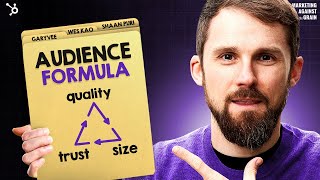
I have a formula for this that I use for my businesses. I basically it has nothing to like, basically, everybody else measures on size. And again, ask yourself a better question. Like, why do I actually think that this audience is valuable? I think this audience is valuable because two reasons. Typically, it's the quality of the person. So, like, who is the audience matters? It's not like one view is not one view. One listen is not one listen. Like, who is the listener matters a lot. Who is the viewer matters a lot. And the second thing is, how much trust do I have with them, which is proportionate to your. To your influence over them? So I call it the trust equation. So for me, when I build audience, I am trying to maximize my trust equation. So it's basically. The trust equation is basically the following three variables. It's the quality of the. Of the. It's the who. It's the quality of the audience times the size, the number of those people, times the amount that they trust me, like, how much trust I can build through this thing. So, for example, TikTok, you can get huge numbers, but your numbers are going to be, you know, maybe not your. Not the actual people who you think are your tribe, your. Your. Your demographic, you know, like a teenage kid is not the same viewer as, like, you know, CEO of some company. And third, like, you know, how much trust am I going to be able to build through this? Well, like, no, I'm just going to get, like, random views. I'm going to get seven seconds of their attention, then they're going to swipe versus a podcast versus whatever. And I think this is the great arb for both creators and marketers. So the great arb for creators is once you realize it's about the trust equation, you will choose a different strategy. You'll be like, I don't care if I get 100,000 or 10,000. I'd care that I get the right 10,000 and that they trust me a lot. And then I'll stack the number slowly. That's fine.
There are a lot of people who use excuses to not just go and do something right, like, oh, I want it to be perfect, or where is this going to publish it? You're just like, oh, I actually just feel really passionate that this campaign could be better. So I'm just going to, like, publish on the Internet what I think a better version of this would be. And literally anybody can do that and do it pretty quickly. Most people just choose not to do it.
I think there's also a big difference between writing online and trying to grow your audience. I think a lot of people conflate the two for the first 10 years of writing online, no one read my shit. Exactly the truth, you know, like, and I was still doing it because it was an amazing way to sharpen my own thinking, to clarify my thoughts, to explore things that I thought were intellectually stimulating and interesting, you know, share my observations. So I think a lot of people get discouraged with, with doing anything because they think that, well, if I only get 5 likes on it, you know, then, then that's going to be embarrassing, but who cares? Just do it. But I actually feel like there's a lot of strategic thinking in the day to day execution. Once you've decided that macro strategy, when you are executing that thing, whether it's a project, an initiative, a task, every level of detail and concreteness, there's strategy involved. And I wonder if useful to separate out strategy versus strategic thinking because not everyone is responsible for crafting a high level strategy, but I would say that everyone is responsible for strategic thinking. No matter how well scoped something is, by the time it arrives on your desk. Like, you know, I was working with the client the other day and they said that they had asked their direct report to brainstorm a list of clients to do a case study on, right? So like that's like a fairly defined task already, but there are still, there's still a spectrum of how strategic you can be when you're doing that. Because that person came back and gave a really quick list of customers off the top of their head that they had a good relationship with, right? So like that's one dimension of many variables that you should consider, you know, and so that person, you know, my client had to coach their direct report on. Well, you know, the reason, the goal of what we're, why we're doing case studies is to attract more customers of the kind that we want, right? To like celebrate the kind of customer we want to attract more of. We want to drive revenue with these, we want to use them as sales collateral. Thinking about making sure there's representation of your case studies with the clients you work with within different industries, right? We have clients in beauty, in entertainment, in finance and tech. Like not having all the case study brands be from one industry because you happen to have good relationships with the person there, right? So I think that's just such a good example of needing to think strategically and how there is judgment involved really in every aspect of what you're doing when you're executing that. I think we do ourselves a disservice when we don't acknowledge that, you know, when we only Celebrate people who do strategy with a big square and consider everything else execution.
If you're a digital marketer today and you're like, well, I actually want to.
Have a good time in the next.
Three to five years, like you all had a good time in the open web, what do you think a marketer.
Needs to excel at?
All right, this is the, this is the question.
This is the question. But I. Okay, I'm going to say something that I'm worried it's going to come off as sounding self serving. So I'm going to try not to mention SparkToro as part of this.
Don't wait, don't worry.
Just talking about self serving. Well, so this is what I really believe. I believe that in 1965, imagine we all work for Don Draper's ad agency and a customer comes to us, right? I don't know, Adidas comes to us and they say, hey, we want to break into the US Market. We're a German shoe company. We want to break into the US Market. Maybe they're Spanish, I can't remember. And they say, where should we go with our message and what message should we send to consumers of shoes and apparel in the US and so we would do a bunch of market research and audience research to try and understand who buys sports equipment and sporting equipment and what do they buy it for, what problems they trying to solve, what emotional attachments they have. We'd probably do a bunch of interviews. We'd do focus groups and sessions. We'd learn a lot about the audience we were trying to market to. And then we would craft messaging that we knew resonated with the people in those focus groups and interviews and research studies. And we would put those messages in places where we knew they pay attention. The TV shows they watch, the billboards that they drove by, the radio stations that they listened to, the magazines that they read. Direct mail maybe, if we wanted to do that. And that's. I know this is insane, but I think that's where digital marketing is going to go. I totally agree. I believe that if you want to have success in the long term future, you need a deep understanding of your audience's demographics, behaviors and attitudes, their preferences, the messages that resonate with them. And then you need to go find the places where they're already paying attention. The right social networks, the right websites, the right podcasts, the right YouTube channels, the right webinars, the right events, all the things in places where they consume content and the people that they follow in the publications they subscribed in the email newsletters and you need to be present in those places with messaging that you know resonates and you have to measure it based on time series or geographic based lift. You cannot rely on attribution and click data to tell you oh, this person came exactly from here this many times to this content and then they bought. That's what I believe the future is. And this is why we created SparkToro, right? Like, because I think that's the future. I was like, oh, a whole bunch of people are going to need to know what their audience reads, watches, listens to, visits. We should make that.
Folks are saying there's a downturn today. You hear this all the time. It's not a downturn, it's just a side turn HubSpot has. You know HubSpot's public like we see some macro headwinds like, like people are managing budgets, but they're still doing pretty good at 2.4 billion in revenue and new customer acquisition 23%. What I mean by that is, is not that there aren't challenges in the world. Right. It's even for HubSpot it's harder than 2021. Right. But the, the question founders are still not today is do you have the product market fit you used to have in today's world? The world has changed for a lot of reasons and too many folks are blaming, saying there's a downturn or macro headwinds. HubSpot added 23% new customers at. It has two. It has 200,000 customers Score new customers 23% what HubSpot may have a bunch of challenges, but people want to, it has a lot of product market fit like and so too many founders got an excuse in 2022, 2023 because the markets were down. Right. Just get lean, get profitable. Right. Don't spend too much money. But if you didn't innovate the last two years and this ties to the beginning of the conversation around AI. If you're not, if you're not innovating, maybe HubSpot, you know, maybe three years ago the Hubs HubSpot CRM, maybe you weren't sure. Today, like every startup I talked to 40, 50, 60, 80 million in revenue using HubSpot CRM. They're not, they're not switching. HubSpot CRM is so much better than it was two years ago that if you competing, I'm just picking an example. If you're competing there, you sure better be much better than you were a couple years ago. Much, much better. Right.
So yeah, you have to do much better on the product side and much better on the distribution against any incumbent in any category. In any category.
Do you, if you, if you're having challenging times going to Karen's point, does the market still need your product as much? If not, give yourself a kick in the rear and go build it. Go build it. Because too many founders are hiding in in decaying product market fit today and decaying product market fit too many.
More from Patrick



A NEW BREED OF PARTNER: The Partnership Ecosystem Model Journey of Patrick Biddiscombe, Part 1








Customer Success Workspace: Never Lose Sight Of What Matters Most | HubSpot Spotlight