3 Marketing Rules This 19-Year-Old Used To Get 11 Million Views
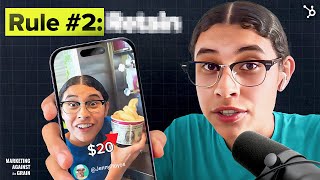
Jenny Hoyos, 19, grew her YouTube Shorts to 11 million views by treating each video as a disciplined experiment. She tested one variable per short, analyzed what kept people watching, and applied blue ocean strategy to stand out. Her viral $1 flavor challenge hit 11 million views in four days by nailing the hook, visual pacing, and mid-video call-to-action.
Questions this video answers
19 years old; 3.7 million subscribers.
About 11 million views in four days.
"How many flavors can you get with $1?"
About 30 hours combined.
During learning: daily if possible, sometimes twice a day; after learning: about two shorts per week.
Chapters
On this episode, we're going to show you how to get millions of subscribers on YouTube. We talked to Jenny Hoyos. She's an Incredible creator. She's 19. She's got 3.7 million subscribers on YouTube. Better yet, Kip, and I think she is the next Mr. Beast. She is going to give you all of her secrets that she's acquired over two years of testing and iteration for free. She's going to give you the complete walkthrough of her Most successful short, 11 million views in canon, and tell you about every input that goes into that successful video and why she made it the way she did. That is all. All of that and more on this episode of Marketing against the Grain. I'm Kieran Flanagan, your co host here, as always with Kip Bodna. We should talk a little bit about YouTube and shorts, because Kip and I are trying to get better at YouTube shorts, all forms of video. I think we believe that video is like the centerpiece of how businesses grow online, creators grow online. We're going to be with a very, very much like a video first, Internet, especially with the influx of the AI tools. And we want to talk about things that maybe in a different way than you may have talked about on all the other podcasts, but we should start with the start, which is like, we would just love to hear your story. Right. Like, you blew up on YouTube shorts. Like, you are the person to go to to learn how to do these things. But how did you end up in video? Like, what was the kind of thing that got you into YouTube? What was the aha moment when you were like, oh, I can make a pretty incredible life for myself mastering these crafts.
Yeah. So I've always been passionate about entertainment. I mean, I started my YouTube channel when I was eight years old. Everyone in my family were, like, making videos, and my cousins, we were all, like, trying to be YouTubers because, you know, we looked up to, like, all these, you know, big YouTubers. Like, if that was such a long time ago, I mean, for context, YouTube started in 2005, and I was also born 2005, so it was like, perfect timing. Like, I was just like, born into YouTube.
You've never born without it.
Yeah.
Yeah. You've never, never knowed a world without YouTube.
Yeah, I know, exactly. That's what I'm trying to say. I never knew a world without YouTube. Like, it's always just like, it probably sounds like. Makes me sound like very young, but I am. But yeah, I was like, I've never. I don't know what it's like to not have YouTube, basically. So I've always been passionate about, you know, making videos. However, about, like, when I was, like, 14 years old, I was really starting to think about, like, my future, like, what am I going to do going into college? And I was talking to my parents a lot like, oh, like, what do you guys do? What do you think I should do? And that's when I got into, like, business and entrepreneurship and finance, because I was like, that's 14.
I just want to say, America, everybody.
Listening now feels real bad about themselves.
If you are a European, you do not understand what is happening right now. I was in I. When I was 14, all the way till now. I was 20. I was a total idiot. I wasn't doing any of this stuff. So please, yeah, please make sure you can, like, educate the Europeans. Why? At 14, you should get into this stuff.
Yeah, so it's. It's actually just a pretty funny short story. I essentially skipped a grade and I took a bunch of college classes when I was, like, 13. So already when I was 14, I had to start thinking about what, like, degree I wanted to get because I was already ahead in school, if that makes sense.
It's the nicest way anybody's ever told us that there.
I'm intelligent.
Way that you could be like, well, I'm just really intelligent.
Yeah, Yeah, I just really intelligent. So I'm trying to tell you guys.
It'S definitely working hard. I mean, harder than smarter. I mean, I tried to skip a grade, like, when I was much younger. Like, I want. I initially wanted to skip a grade when I was, like, 12 years old. I took an IQ test, and I believe I was, like, below average, slightly. I was like, what? I was like, apparently, Apparently. But I think if you work hard enough and you study a lot and you just, like, put your mind to it, like, it really doesn't matter, to be honest. So I wouldn't say I'm necessarily. I think I'm a hard worker is what I'm trying to say.
All right, but, but, but, but you. But you started videos when you were 8.
Yes.
You're like, 14. You're like, I'm figuring out what I'm going to do with life.
Yes.
And I'm gonna. And you're like, I'm gonna learn finance and entrepreneurship. And then like, how does that and video come together to where, like, you are. Have gotten so successful at basically being a video entrepreneur?
Yes, correct. So from there, when I knew I liked entrepreneurship, I was like, I want to be a billionaire, and I need to document my story of becoming a billionaire.
Yes.
So it started with me, like, actually trying, like, a bunch of different businesses or, like, figuring out what I actually want to do. And I was just documenting it. I wasn't even trying to get views or subscribers or make money off video. I was just trying a bunch of different side hustles and things and documenting that journey. And while doing so, I ended up becoming more passionate about video creation than I was about finance. I mean, nonetheless, I still like finance.
Yeah. But it's not the most interesting thing in the whole world.
Yeah, exactly. So from there, I decided to pivot and focus on actually trying to make money doing videos. At this point, like, my videos weren't blowing up. I just found that I was, like, more passionate about this. And I knew if I did something that I was most passionate about, that I would spend more time doing it. I would spend more time obsessing over it, thus making more money doing it.
Very cool.
Yeah. I didn't start because of purely just making money.
You enjoy the craft, like, you started to make the videos and just enjoyed the, like, the process, the entire thing, like the, like just the craft of making video.
Yeah, I. I became very passionate about it. Yeah. And I was even, like, at the time, even video editing for other creators and like, like trying to help other creators. And now I still do. I still consult for creators. I just loved, like, I just found that I always just love entertainment.
How intentful. This one thing I'm always interested in on YouTubers who are real stars on that platform. So I. Maybe this is really true for your generation. Like, I spend a lot of time in YouTube, Kip. And I feel like for the generation probably coming up today, like the younger generations, YouTube is really TV. Like, probably will displace TV. And so I spend a lot of time on YouTube and love to watch, like, different channels. And I always think about, like, this style or how intentful people are about the style they choose and why they choose that style. And so, like, one of the channels I discovered recently, and I don't know if any of you know this, it's kind of a really wacky channel. It's called, like, Top Notch Idiots. And I think I'm behind the curve because all my brothers knew about this. But, like, it's. These guys go into, like, the meanest hoods in the states and play pranks on, like, people that are take those things seriously. Right.
So they like.
So they had, like, they're kind of like they were pretty intentful about, like, taking humor and applying it in a place where no one else would have the guts to apply that humor. Because they have guns pulled out in them, knives pulled out in them. Right. So they. That's their. That's their secret sauce. Right. So they've taken something that has been done multiple times on YouTube, which is pranks, and just applied it in a very different place, which. And, like, the results are intense. And I'm wondering, like, did you. Were you from the outset pretty intentful about how you differentiated, or do you kind of, like, find your. Your space as you started to do more and more iteration?
Yeah. So when I knew I wanted to go all into YouTube, I started applying a bunch of business strategies that I learned for context. I am in college studying business and finance, so I'm learning a lot on that side. So I was applying a lot of the things that I knew about business, and one of which was the blue ocean strategy, which is essentially what you're referring to, which is. I'll just, like, quickly explain what that is. A red ocean is one that has blood in the ocean because there are a lot of fishermen and it's hard to catch fish because there's so much competition, versus a blue ocean is one that still has a lot of fish, but you're the only fisherman. And I learned about that strategy, like, oh, like, so long ago. Like, even before, like, I knew I wanted to do YouTube. This was like, when I wanted to do a business, I knew that I needed to have something so unique that no one else was doing. And going into YouTube, I tried to find my unique value prop so that people have no choice but to watch me. So that's exactly what I did, what you just explained.
Hey, guys, real quick. We've gotten a ton of requests in the comments, and they're all about prompts. You all want the prompts we're talking about on that show. We see you, we hear you, and now we are ready to share the goods. Click the link in the description below to access our new AI prompt library. This resource features real AI prompts that Kieran and I have covered on this show. We broke them down by category and templatized them so you can fill in the blanks and make them your own. Now you have the frameworks you need to use AI, analyze ads, create brand campaigns, develop product stories, just to name a few of our favorites. Keep telling us what you need in the comments, and we'll see what we can do to whip up more for you in the future. Now back to the show.
I experimented with a bunch of different things to see. Like, you know, there's a lot of different things that are unique but people don't actually care about. So it does take, like, a lot of experimentation. So what I mean by that is I was trying to do like, fun finance videos or, like, try to make like, saving stuff, like, more fun. But like, and the reality is, like, when it comes to especially like educational content, people want the education. They, you know, people, they think they want to be entertained while getting the education. But, you know, people who want educational content really just want that, that value education.
Yes.
So I started by trying, like to do edutainment, but that didn't really work out for me until I eventually pivoted to doing a model that's completely opposite of what everyone is doing on YouTube, which is essentially Mr. Beast on a budget. You know, you see a lot of creators flexing how much money they have and bragging about spending $10,000 on a video and making other creators discouraged or even people discouraged that you can't have these fun experiences, but unless you have a lot of money. And my whole channel was actually, you can have these fun experiences even if you aren't spending that much money. And there's no1 on YouTube who I think has, you know, I think people are kind of easing into it now, but not like at the time. Like, no one had the guts to actually show that they don't have a lot of money. And they're like, they're actually like, I was bragging about not having money when I, like, started my content. I think a lot of people are screwed to do that. And that made me stand out.
Two quick follow ups to that. One is you just perfectly explained the why people end up fishing in a red ocean, right? Because you get results faster when you are trying to be differentiated and do something very different. It takes longer to get those results because people aren't conditioned to be interested and care about it and be looking for it. But over time, you get much higher, bigger results because you're differentiated. And that's like basically the path you took. And it's was probably much slower in the first six, 12, 18 months, but now you're growing much faster than you would have if you would have gone and just done what everybody else is doing 1,000%.
You know, there's a lot of video ideas and strategies that will give you instant views, but that won't assure viewership across the rest of your videos versus being unique if you Get a bunch of views on a video where you're unique, it has a better chance of viewership across your other videos, especially if you get them to watch your videos because of that value prop.
One other follow up question then, Kieran, I'll kick it over to you. YouTube specifically and video specifically are the. Is the number one place I hear excuses. It's too expensive, it's too hard. I don't have a studio, I don't have a camera. It is like excuse palooza. Like everybody will figure out some way to justify not doing it. Tell everybody why they're wrong and they should stop making excuses. And how you can actually get started in a way that is not super expensive or super crazy time consuming.
Yeah. So the perfect thing about YouTube, TikTok, Instagram, like the perfect thing about these, you know, social platforms where people are watching, you know, free videos essentially is people want authentic, relatable videos. So nowadays you don't even need a camera. I mean, all my videos are filmed on my phone, not because I can't afford a camera, but because I found that's what people actually prefer. So when it comes to social media, people actually prefer raw and authentic. And that actually unironically makes it even cheaper for you.
Yeah, there's three lessons. I was actually just jotting them down that you taught that I. You've just, you just thought taught marketers here that they would be. I think it's a really important thing for them to do. So the first is like the blue ocean, like you actually blue ocean versus red ocean, which is a business strategy. But too often, like, I don't even think content marketers or creators in general think about that, which is like, how is the content I'm doing differentiated? How is the content I'm doing going to stand out? The other thing you said, which I think is really important, which is the education and entertainment, you cannot dictate what consumers want. You like, there's certain, like if a consumer wants to be educated, your ability to also entertain within that is going to be really difficult because they came for the education.
Right.
And so you're actually distracting them for the thing they came from by trying to incorporate entertainment in that. And then the third is you only have to be. If you figure out a differentiated angle and do that better than anyone else, you only have to be truly great at one thing to be incredibly successful. Right. I'm not saying that you won't go on and do many different types of angles, but you find like the one place that you can excel at and create differentiated content, and you can grow really fast. Like, your numbers are incredibly impressive. Off the back of that, hey, I do this one thing. My audience love that, and I can continue to, like, scale that. Whereas I think most people are like, oh, I have to find a multitude of different things that I can be great at at any one time. So, like, there's three lessons in there that I think any marketer should actually really listen to and make sure they incorporate into their. Into their work. The other question I kind of wanted to ask is, what's your playbook for getting better? Right. It sounds like, you know, you probably. Mr. Beast is the, you know, iteration. Hundreds of headlines, all of these different things. He has a huge team behind him. What was your playbook from when you were just starting out to when you started to scale up in terms of how you got better over time?
Yeah. So it all started with a competition, as funny as it sounds. So I had another. Yeah, I actually, like, I don't know. It motivates me. I had another creator friend who at the time, we both had a thousand subscribers, and we knew we wanted to, like, grow as fast as possible. So we decided that we were going to race to 100,000 subscribers. But we were doing it in a friendly way where whenever we learned something, like, we would share it with each other, and I would try to master one thing and he would try to master the other, and then we would, like, come together and be like, oh, I found this and you found that. Now let's both apply that. And you learn twice as fast when you do something like that. And, you know, within three months, we both hit 100,000 subscribers within a few hours of each other. Which just goes to show that, like, three months we had the same information, and it worked on two different channels, and it's two different, completely, like, different niches. So that's. That's how I learned, like, so quickly. But what did that iteration process actually look like was I would post a bunch of series videos, and it would all start from an initial video where I will. It's kind of. I'm trying to, like, simplify it, but I'll have a video that, like, they're all the same, like, similar idea. So it's going to hit the same target audience. So theoretically, it should have similar audience behavior. And from there I will follow the exact same format. Like, I'm talking the exact same, like, amount of lines, same video duration. Like, all the videos would be fairly similar and just, like, replace certain words depending on, like, what the topic is about, But I would only change one thing in the different videos. So I would test like, one form of a hook and another form of a hook in the other video, but the rest of the video is all, like, pretty much similar. So then from there I would figure out what's the best hooks and then what's the best endings, what's the best middles, what's the best transitional statements. And I would figure out what is actually the best by checking my analytics and my data to see which. Which videos had the highest retention or, like, the best retention graph behavior.
Were these shorts or Shorts? Yeah. Okay, so you would. You would basically take a topic and then do a variety of videos, but you would change, like, one element of the video and keep everything else. So you're basically doing like ABC testing on shorts, but you're releasing them all in your channel and changing, like, one element of that short.
Correct, correct. And I did not post. The reason why I did not do it for the same video, like, I didn't repost the same video with a different hook, is because if a viewer has seen a video already, and especially even just from the hook, they sense like, oh, I already seen this video, they're just going to automatically scroll and that's going to, you know, ruin your data, which is why they all had to be different videos with the same format.
Yeah.
Okay, so let's talk about publishing frequency, because that's the other limiting factor. And how much you can learn. Did you fought, like, we want to learn all the lessons you learned. We're going to get there in a second. But, like, how much did you determine you could actually publish on shorts to actually get those learning cycles?
Yeah. So when I was in the learning stage, like, for the longest time, by the way, like, my goal was not to get views. My goal was to get data so then I can figure out how to get views. And it sounds crazy, but I was in this, like, get data cycle for, like, two years. I wasn't even trying to get views, like, for two years. Like, at first it started I told myself, like, at the start of, I believe, 2023, I said, this year I'm just going to get data so that in 2024 I can take off. So I think it all starts with, like, just focusing on data. Oh, my goodness. What was your question? I was about to answer.
And then how much could you post on shorts?
Oh, sorry, sorry, sorry, sorry.
Yes.
Because I was just trying to get data.
Yeah.
So I was not trying to make good videos. I Was just trying to get data, which is why I was posting as much as possible, like daily if possible, two times a day. Like as much as possible to get data. But once I got out of, you know, the data phase, you know, then I toned it down to two shorts a week.
Some other. Can I just recap a couple of lessons in here as well? Cause I think there are some things you said that are really important, which is like, you really need to blend the craft, the craft with the science. Like, you're an incredible craftsperson, you're incredible at craft and video. And I do want to get on at some point to we can leave it for a little bit, but like the taste element, like, can you really teach someone to have taste and we can get onto that, but like, and you want to blend it with the science and the data and you want to understand what data matters. And that's the other thing I want to quickly ask when I finish. This is like when you did all those kind of different videos, what were, what elements of the video did you figure out mattered most? Like the hook, the end, like, what was the parts that you figured out had the biggest upside. And then the other thing is like the grind. Like you said something really important. Normal people who are of average results would have given up on trying to be successful in 12 months. They would have been like, ah, this is not for me. I'm grinding away here. I'm not having success. You're like, I committed to two years just to get the data I needed to figure out how I'm going to be successful. Because probably your goals are much bigger than the average person. You're not thinking about how do I be like average success. You're thinking about how do I be a billionaire. So you're like embracing the grind because you're on that longer path, longer time horizon.
But it does show you if you're.
Going to commit to being like great at something, you have to really embrace the grind over a long period of time. And I think that's a really important lessons. But I would love to kick it back over Jenny and just ask, like, what were the most important elements you found that make a short successful through that testing?
Yeah, it's a combination of factors, but if I were to say the order of importance, I would say it's definitely tied between the hook, like how powerful your hook is. On your YouTube data that is referred to as view versus swipe away. So yeah, number one would definitely be the hook, but a close runner up would be overall viewer retention. So what was the percentage viewed or what was the percentage that people would watch your video? So in play with that as well, following that would even be rewatch ability. So I would say those are definitely the three most important things.
How do you retain a viewer? What's your tricks to retain to like that second one? Is it like teasing something that happens at the end? Like how do you keep someone engaged throughout the. The short form video?
Yeah. So I unironically the. The. We found like through data and trialing that to have the highest re watches. Like we always thought about that. Like, oh, is it. Is it like loops? Is it having Easter eggs? And yes, those things help. What actually helps the most is just having as many people as possible get to the end of the video because the video is automatically going to loop. So it's actually just very similar to viewer retention in general. So I'll explain how to like mainly retain a viewer, which would be video progression. That's the number one way to retain a viewer. But to have video, video progression means every line needs to have new context, establish something brand new. Because sometimes people will say something and then explain what they just said or say that in another way. But you know, people do not like repetitive. They want you to get straight to the point and feel like the video is constantly changing. But along with like the video constantly changing, it can't just be changing, leading to nothing. The viewer needs to know that by the end of the video this person is going to tell me the secret to whatever. This person is going to tell me the answer to this. I am going to get a free gift card. You know, you need to have something at the end of the video that is we're constantly moving towards and the viewer needs to know where in the video we are to how close are we to getting there.
Do you tease that in the hook? Is that what makes a great hook is there's a teaser about the payoff, Correct?
Yeah, correct. Yeah. So usually a great hook is teasing the payoff. And the rest of the video, like needs to have some sort of mechanism, which basically means giving the viewer a concept of how close we are to the end. An easy example of that is like sometimes people will have like a progress bar that gives you a concept of how close we are to there. Or if you say here's three steps to do something, if you're on step number two, the viewer is going to know we're two of three. So. Yeah.
Yeah. I just. I sent Darren some shorts today because I was feeling I had Some things to say, and I just slacked him to say that I need to redo them all. Oh, no, no, this is good. This is what we want.
No, I think people. I think people watching are going to walk us through, like, just a tactical example of, like, maybe a recent video you did around, like, here's the topic. Here's kind of the hook and the word choices I use. Here's how I showed progress through it so that people could really, like, internalize maybe what that would look like for them and the topic that they care about.
You can bring it up on screen and play it.
Amazing. Okay, so my most. Right now, I have a video that is. Are your viewers. I will probably explain it. Like, Basically, it's a 1 of 10 right now, but not only is it A 1 of 10, it's a 1 of infinity, or so we call it, which is like, it is perform. It's my highest performing that it's ever been in my channel.
Okay.
In four days, it has 11 million views.
Wow.
So that's legit.
I would love to share my screen. So first things first. The hook is how many flavors can you get with $1? So I'm very intentional with my word choices. Even though this is ice cream or froyo, whatever you want to call it, I do not need to waste the words saying that when you can visually see it. So that's like, first things first. We do not want to waste anywhere. It's not even just in the hook in the entire video. I do not. Things that you see visually, you do not need to say because we see it visually. Okay, so how many flavors can you get with a dollar? And the hook is already starting in the action. That's super important because you want the video, again, to feel like we are progressing. Like, not only am I establishing the challenge, but I'm already doing the challenge when I established it. So that's exactly what the hook is. How many flavors can you get with a dollar? That's going to be like $20, and it's just vanilla. So basically, we just established conflict and stakes. So I already said, how many flavors can we get with a dollar? But, like, what does that mean? Like, what. What is. How much is like a dollar look like? Because it's like, oh, maybe it's a lot, maybe it's a little. By saying that this is $20, we're establishing to the viewer, like, context that they need to know to watch the rest of the video. That's essentially is what I did. So following that. So I Brought a tiny cup to get every flavor without spending more than a dollar.
What are these?
Leverage. I explained, while I'm visually showing, like, notice how, like, I give more context. Like, okay, so I explained what the challenge is and how I'm going to do the challenge. I'm not, like, standing there and just, like, saying what we're going to do. Like, I'm explaining it while I'm already doing the challenge. And we are having the video visually progress by having this little ticker to remind the viewer throughout the video that the goal is to get as many flavors as possible. So so far, basically what we're doing, and you'll see for the rest of the video, is I am answering any questions the viewer may have in the most concise form and not having any repetitive information and having different visuals from what I'm actually saying. So let me continue. Every flavor without spending more than a dollar. What do these levers do? They're going to teach you up. That was more. So what do these levers do? Giving more context on what the video actually is and then adding my mom to give conflict to make the viewer have more reasons to care. So typically, you want to give the viewer as many reasons to care so that they have more reasons to watch until the end. So, like, if, like, let's say you're a doctor making videos. Like, if you're making a video on, like, weight loss, you could even mention, like, it's a super healthy lifestyle that prevents you from getting a certain disease, helps you lose weight. It gives you multiple reasons, and it gives you multiple audiences. To be interested in the content is basically the thought process more concerned that the more flavors I added, the less face I had in my cup. Oh, my goodness. I put the same flavor twice on accident to make extra room. So basically what I did was because this video is, like, very. There's nothing going on. I have to add extra conflict, basically, to make a viewer more invested and show different strategies. So this is one strategy. Eating the ice cream as I'm going and we'll get to. And then I'm going to say another one afterwards to make the video. Basically, what we're doing right now is like, I'm extending the video as much as possible to get extra watch time. Essentially, what I'm doing here without it being too boring. Cheating.
They're gonna call the cops on you.
All this for one more conflict. Oh, I love this. This is very. This is very, like, huge. All this for one subscriber. So typically, a lot of people put CTAs at the end of their video. But that is one of the worst things that you can do because rewatchability is like third most important thing. And when you put a CTA at the end of your video, people are not going to loop the video. They are going to leave and your video gets killed because you, you have to have rewatch ability for a video to do well. Which is why whenever we have CTAs, we always put them in the middle and we have it make sense and in line with the content. Because right now that it's in the middle, people haven't gotten the payoff. So they're going to sit through the cta. But if you do the payoff, then the CTA people are going to scroll. So we put it in the middle of the video because, you know, we don't lose retention when we do that. And people still rewatch.
Very cool.
One subscriber. So I hurry through the final flavors by pressing a special button that adds two flavors at once. That's more than a dollar. Hurry up, let's go. How am I gonna fit it on here? 14 ice cream flavors. Is it gonna be a dollar? And this is basically. This is important too. So some. There's this concept called primacy recency effect, where viewers or anyone like really will like forget a list. Okay, so there's this concept called Percy recency effect, where typically people remember the beginning and the end of a list or sometimes like, you know, people who just can't remember a list to begin with because it's just so many things that you just took in. So right now the viewer just took in so much information that you don't want, you don't. You want to avoid them forgetting why they're even watching to begin with. So we have to rehook them and remind them why they just watched. So typically at the end of my videos, when we're about to get to the payoff, I will restate the hook and a different wording. So the hook was, how many ice cream flavors can you get with a dollar? But here I said 14 ice cream flavors. How much is it going to cost? Basically you want to like reaffirm what the concept is, just so the viewer knows before we get to the payoff. Is it going to be a dollar? No, I don't think so. Another thing I want to mention is I. I'm a big fan of not wasting time. And people often say, like, why do you extend your endings? Like right now there was no talking. It was just violence playing. It's because the payoff is what people care about the most.
Right?
So like you want to keep everything as concise as possible that people don't care about or even cut it out if possible and, and extend the things that people do care about. Which is why this asp like which why this ending is actually so extended. $2.48. No ice cream for you again. And basically reason why we said no ice cream for you again was to get people to watch the first version. Because if they're saying again, we link the original video and it just like drives more traffic. That is literally the strategy. Every line has to have a reason, it has to progress the video, it has to answer every question the viewer has and add a lot of conflict, mistakes. Basically.
I would say that for people listening to this, that is a 44 second video. You have put more thought into every element of that video than I think some marketers put into their annual editorial plan.
That's totally true.
I'm being serious. Like and the way that you have incorporated all of your learnings into every element, like you can, you can basically stop that video at any point within that 44 second. And you could probably tell us why that screenshot is the way it is. Like you could like tell us like why every element of that video. And it's like just so impressive to see someone who is a true like master of their craft explain how they have perfected their art. And I think it's like a truly great lesson for people. Listening is like you have to put in the reps to be able to describe why you're doing the things you're doing and that kind of detail. If you want to be truly great at something.
Oh, 1,000%. And I think another thing like people often miss is like, yes, it's like a lot, but that's what it's going to be like for your first 100 videos. But after you do that, like it's going to be intuitive, it's going to be a habit, especially if you're recreating formats like I just stated. Actually there was another video before this that was in the same format and we just repeated it and now we're going to do the same format again. So it takes less and less thought, especially when you already find a winning format and just keep rinsing and repeating.
Yeah, a couple of follow up questions. Once you have that winning format once it's a habit, like how long does something like that take you? Like somebody sees that 44 second video, they're probably like oh, that took her like no time. What's the actual truth behind it?
So much time.
Exactly.
The actual truth behind it was about 30 hours combined with like pre production, production editing. But of course I have my team who helps me.
So yeah, what I was saying is like, I think for people who are non native video creators, the hardest thing is one of the things you said, which is like, you don't want to waste a moment between the talk track and the video. And if the video is showing you something, you don't need a word to represent that. I think most people who come from text or audio is like, oh, I need a word for everything. And I think if you're watching this show today, one of the things I'm personally taking away is like, oh gosh, I have to be very clear about how the video and the audio are lining up to tell the story, you know?
Oh yeah, 1000%. Because you want the video to constantly be progressing. So we do that by making multiple things happen at the same time.
I would love to end on a question for the three of us to quickly answer, which is okay, like you, like you, you perfected your art through iteration and you're obviously incredibly intelligent. Like you understand the data, you understand how to apply them to all of your videos and like how to perfect that art. Because like, let's say there's like a thousand people who listen to this and they all kind of replicate your process. I still suspect like a small number of them would have like to success you have because you have something called taste. Right. And I would love to figure out like what I mean by taste is there's just a, like you have all the data, you know how to do the videos, but there's still a craft to how you put all of that together to create that video in a way that like separates itself from everything else. And I think of that as taste. Like taste is being able to create something of value to your audience, whether that's entertainment interest and education that really sits above the noise because you have a special thing that you can bring to it which you really get the audience better than anyone else. And you have your own kind of little bit of magic to make yourself differentiated from anyone else. Like, do we think that can be taught? Like, this is coming back to our co founder, Brian Halligan had a really great tweet that I thought was one of the best tweets. Like there's marketing with analytics. Skill sets are overrated. Marketers with taste is underrated. And I was really thinking through like, can you teach taste? Or you think you just. It's just something you have. I don't know if you have a. Like, I'm sure you look at a bunch of other people for inspiration. Jenny, do you. How do you think about that? Do you think you. That can be a. A teachable skill or you think it's just something you have?
Yeah, that's actually quite interesting because I'm. I'm personally trying to figure that out myself now that I am hiring. And I will say that it could be trainable. However, everyone has a natural different taste. So I feel like someone can. Can naturally find some things funny. But I still do think someone, like, let's say if they want to work on my team, I'm sure they could over time understand what we like. But it. When. When it comes as far as, you know, someone having that. That, like, for themselves, like, assuming they're not gonna work for anyone, like, I think people should just, like, have their. Their. Their own. I think everyone has their own taste.
Yeah, but you think it's. It's more like maybe. I don't think I asked it incredibly well because taste is hard to define. But it's really like the unders. Like the way that you interjected humor with the kind of the, you know, you had the angle, which is, how do I do things on a budget? Or how do I do the maximum. Get the maximum amount for my money? And then you brought in kind of the way. You brought in the humor, like your personality, the way you understood how the customers would react to that, the way you understood how to put the video together. Like the sequencing of the video. Is that all based upon data? Like, can someone learn that? Or you think that you just have a skill set that is unique to you that is very hard to replicate. Right? Like, can someone be. I think it's hard to be Mr. Beast because Mr. Beast had a. He front run everyone else. Right. He was one of the. He was one of the first to do what he did. But can you teach that skill? Like, if you have the data, can you be successful? Or do. Do people who really separate themselves from the pack, they just have a special something about the way that they craft their video that's just better than anyone else, and it's not teachable.
Okay, okay, okay. I think I understand the question a bit better. I think that it is most definitely. I believe it's most definitely teachable because transparently I create content that I like. Don't get me wrong, but I don't always like the videos that I post, you know, and it's not like it's because they're bad videos, but because it's not my taste. But I understand what my viewers like, so I create what they like. So you know what my videos are to this day are, are not really completely my taste. It's like 50% my taste, but primarily the focus. Actually I'm going to say it's 40% my taste and 60% what the data is saying. And I just keep doing what the data is telling me.
Yeah, no, I think that's right. I think taste is an output, you know, it's not a learned thing. It is taste is an output of the data you have and the things you learn. Right. Like all the people I know that have great taste, it's like, yeah, they have a method of learning things every day where they get deeper and deeper and more pattern recognition around whatever that thing may be, a skill, a lifestyle, a design aesthetic, whatever it may be. And I think what you're looking for out there, if you're a marketer, you're an entrepreneur who's trying to build a presence like this, is you need to set up a mechanism to get enough inputs to actually have taste on something. You know, like Jenny, that goes back to you saying like I, I for two years just did a lot of repetitions to get data and all that data is actually a huge impact to like the taste and credibility you have now and the audience that you're able to build now.
The other thing you did that I do think is a real good lesson for people is you surrounded like you had a person that you surrounded yourself with like an accountability buddy that was also trying to get better. So I think if you have a real goal and you surround yourself with people who are also aspiring to the same goal, you can develop that taste much quicker. Because you're not just learning from your own iteration, you're learning from like you've now to extra iteration. Right. Because you have someone else iterating in the same way. And so if you can have like three, four people who are all aspiring towards the same goal and you form a little partnership now you have 4x the amount of learnings you can get in the same amount of time. And I think that feedback loop is what actually helps develop that taste much, much quicker.
Most definitely, yeah. I mean if I had so many creator friends in the come up and if I didn't have them, I think it really would have taken me twice as long.
Very cool. This, this has been incredible. I would have. Our listeners are incredibly lucky. I would have paid for this information. The fact that you actually went through step by step of your short film video and give us like your how you actually think about crafting that video is just incredibly valuable for, for us, for our listeners. So we really appreciate it. Jenny, we wish you all of the best on your path to a billion. We are rooting for you to be a billionaire. More billionaires coming. Coming on the marketing against screen show.
Amazing. Yes.
Soon.
Maybe not soon because I. I'm a long term thinker. I will be there by 50.
It's a journey that's fun, but.
Right?
Yeah, exactly.
And it's not even so if I don't do it, it doesn't matter as long as I'm having fun.
You're right. Exactly.
At the end of the day, I love that attitude.
Very cool. Awesome. Cool.
Jenny, thank you so much for joining us on today's show. Appreciate your help.
Yes, of course. And if the listeners would like to work directly with me, feel free to email me@teamhoyos.com I would love to help you grow and I'm super obsessed about this. So yeah, let's do it.
If you want to. I like if you want to be the best, work with the best. So really, if you want to be a creator, go apply. Like that is a huge opportunity for people. This data is wrong every freaking time. Have you heard of HubSpot?
HubSpot is a CRM platform where everything is fully integrated.
Whoa. I can see the client's whole history. Calls, support tickets, emails. And here's a task from three days ago. I totally missed Hotspot Grow better.
More from Patrick



A NEW BREED OF PARTNER: The Partnership Ecosystem Model Journey of Patrick Biddiscombe, Part 1








Customer Success Workspace: Never Lose Sight Of What Matters Most | HubSpot Spotlight