3 Marketing Tactics He Used To Scale Chess.com To $150M
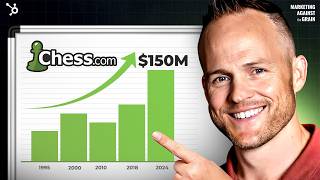
Eric built Chess.com to $150M in annual revenue over 18 years without outside funding. He won the chess.com domain at a bankruptcy auction with just one other bidder, controls roughly 80% of the daily chess market, and scaled through SEO content, product quality, and partnerships with streamers on Twitch and YouTube.
Chapters
Okay.
One of my favorite pastimes is playing chess. I am an incredibly competitive Chess.com player. I have broken a laptop playing Chess.com because I've become so frustrated. And so I wanted to get the founder of Chess.com, eric all the Best on this show, to talk about his journey to $150 million in AR. Now, he did that over the course of 18 years, they haven't taken any funding, and he has made some incredible marketing decisions that have helped him get in there. His brand search, influencer marketing, and many more things. We talk about all of that on this show. You're gonna love it. You're gonna want to play chess afterwards. That's Ericolubesh.com I'm marketing against the grain. How did your passion for chess originate? Where did it originate from?
I've always been a gamer. It's just like, part of me whether, you know, my mom taught me chess when I was 8. We played a lot of games around the house. And as I got older, I just really gravitated toward games. And, you know, chess is kind of the granddaddy of them all. But I really didn't play a lot until kind of later in high school. And then I really only played with my grandpa. You know, I played a lot of other board games and video games, and chess just kind of emerged late and really grabbed me. I mean, it was. It was the game where suddenly I realized there were, you know, hundreds of books written about a game. Well, that must be something interesting and complex. And then I started buying one book and then another, and then just like, it was really just a rabbit hole to fall into. And I've never, you know, hit the bottom. So still falling to that.
But a chess, when someone beats you, it's because they're smarter. I always find, like, it's like they're smarter than you. That's like, irritates me beyond anything else. It's like that person isn't. It's just like, literally smart, right? They're just smarter. Smarter at me. But it's also a great foundational game for poker. Like, do you play poker at all?
Oh, yeah, I do. Yeah, I agree with you. I will say, though, hang. Let me. Let me say, I think when someone wins at chess, what they have demonstrated is that they have a better understanding of these types of positions than they've seen. Chess is really a pattern recognition, pattern matching. And so it's not like, are they raw smarter? Like, it's just, have they experienced this more? It's the Accumulation of all the things you've seen and experienced, which is really just analogous to so much of life. I mean, even business, even marketing, when you see these problems over and over again, you see the solutions and you see the things. And so I think I understand that people are like, well, I'm just, you know, that person's smart. I get it. But it's really.
This is the way me.
It's really just the accumulation of experiences. So. And I have to say, I. I don't play tennis. I'm going to say something horrible. You're going to hate it. But I play pickleball, which is a. Which is a childish version of tennis. I get it. But every match, Every. Every match. But every point feels like a chess game. You know, every. Because you're moving pieces and you're seeing patterns and you're recognizing and you're setting up. And it's not the one shot that wins usually it's, you know, a setup that makes it hard and does the thing. And so that's really. I like to bring that skill set of strategy and tactics and openings and end games, which is all present in chess, to my pickleball game, or in your case, your tennis game. It's very. It's very similar and there's a lot there.
So let's finish the story first. I was playing so much chess that I was in a hotel. I think I was coming back from speaking at a conference, and I nearly missed my flight because this. I was like playing this person on my phone and I could see how I could checkmate them. And they were trolling me in the, you know, the back and forth. Not many people do that. But, like, it's. I like it. You sometimes you have a bit of, you know, trolling each other, and I'm like, oh, I'm going to get this person. And nearly missed my flight. The other thing I figured out from playing a lot of chess.com and I don't think you're going to like this, so apologies in advance, but I am a systems. I'm a systems thinker. I try to think about, like, how I can shortcut systems. And I realized, you know, if you have above a thousand, it means you have a winning record in chess. If you have a below a thousand, it means you have a, you know, a losing record in chess. And it's actually really hard to have a winning record in chess because chess.com is so awesome. It continually matches, matches you with people who are, you know, slightly better, you are slightly worse than you but what I realized is if my score gets too far below a thousand, it's going to take me for a long time to catch back up, to get back to a thousand, you know, start from the start again. And I'm getting better all the time, right? I'm improving, I'm improving. So I should just start new accounts. So I'm like a year's into chess and I'm a much better player. So I start a new account, I can start at a thousand again and like work my way up. Now. That's a terrible thing to do. It's like not in the spirit of being a good chess player, but that's how much I want to win.
That's how much you want to win. And people really do value their rating, you know, almost like a self worth wrapped up in the rating a little bit. I get it. I understand. And it is really interesting psychology around that.
So, yeah, I remember listening to the all them podcast and they were all sharing their Chess.com scores. All right, we should talk about some marketing. I honestly could talk about chess forever. Again. I'm a huge fan of yours, huge fan of the company. So I want to start with one of the interesting. I don't know, this is a good comparison, so hopefully don't take offense to it. But one of the ways when I was trying to tee this up, this conversation was when genius.com came out. There was a bunch of other sites that did lyrics and genius.com figured out how to do that better and different than anyone else. Even though at the end of the day it's lyrics, right? And Chess.com, i think of it a little similarly, right? There's, there's probably lots of when you, when you started and maybe there wasn't lots of sites like chess is a game, right? Lots of sites that help you play chess want you to play chess, but for some reason, you by far the biggest and best one out there. And I wanted to figure out, like, what are one or two things that you did that you think was the reason that Chess.com became the premier place to go play chess versus any other company or site that was out there.
There's really, I think, three things that contribute to that. Number one, especially if you're in a bit of a commoditized product area, like, you know, lyrics, as you mentioned, with Genius, you know, chess, you know, anyone can really code up a, you know, a chess, you know, playing place now it can get really complex, but anyone can do it. So why did Chess.com win. I mean, there were doz of other chess sites at the time, and there still are many places you can play chess and many apps you can download, but Chess.com is by far the biggest one. Now, you know, I think we've got close to 80%, you know, market share of people playing games every day. I think there's three reasons. Number one is brand. I mean, brand matters a lot, and you have to have a good one. And chess.com is, you know, first of all, it was. It's the word chess. And, you know, of course, this is a bit in the kind of earlier web days, but the dot com. And then also it's just kind of easy to say it's three. You know, chess.com these days, people say chess.com but they're playing on an app. It doesn't even have a dot com. You know, it's just. It's an easy thing to say.
So how did you get that domain name, Eric? Was there any competition or you just grabbed that? There was no competition.
There's really only one other competition because it was a bankruptcy auction and there was only one other person there.
Wow, that is awesome.
Yeah. So the first thing was brand. The second thing was a customer acquisition strategy that was sustainable. And for us, that was SEO, that was search engine optimization. And people would come every day, they would search for chess, our content would be there, and they would find it and they would arrive. And that was our strategy from the beginning. And it's evolved over time. But SEO remains a massive part of our strategy. So we had a clear customer acquisition strategy from the start. And then third is the product. You have to have a great product. It has to feel good, it has to look good, it has to come together, it has to be seamless, reduce the friction, and do all those things. So really with those three things, that's how we got Chess.com in a sea of many places to play. You know, that's how we rose and just continued to rise.
Yeah. So the brand, the search, and then obviously the product, you know, you are. You are the founder. So you were kind of the pseudo CMO. I think you're maybe 600 plus people now. Is that around the right number of employees?
Yeah. And we still don't have a cmo. We just hired a VP of marketing. She started, you know, like a month ago. And so, yeah, I've been the cmo. Danny, my partner, has been the CMO because he's our cco, our Chief Chess Content officer, you know, chief Chess officer. So that's you know, we've kind of had that duties and we've really created an interesting organization where marketing just runs through everything that we do, even if we don't have like one top down person. So it's, it's kind of unusual how we've done it.
Hey everyone, from one marketer to another, I want to help you out. It's tough keeping up with the content demands each year, especially across a variety of content channels. Balancing the workload while still maintaining quality can be a real challenge for everyone. We've got a free guide from HubSpot on how to use AI to make that all easier. It walks you through how to integrate AI tools into your content workflows so that you can come up with more ideas and spend less time implementing them. This is going to save you a ton of time and a ton of money. I don't know what else I have to say. I've dropped the link in the description below. You're going to want to go check it out. Now back to today's show.
Yeah, and even when you have a think Kip and I always talk about is even when there is a cmo, the founder really is the CMO because they would want to have strong points of view of marketing. It's their product, they know the audience so well. They're going to have tons of like ideas and points of view of what they want marketing to do. What you mentioned search. So like what, what were some of the playbooks that worked and even maybe today, like at least the things that still work today for Chess.com the things.
That we do now that, that are successful for marketing are again, we continue on the brand side and our brand voice has evolved so much and that's been a huge part of our success. You know, starting like you said with COVID where you got deeply into chess. You know, we really tried to. We saw that a whole new generation of people were playing chess and they were having a different relationship with it. And as you, as you said, it's frustrating at times. And so we really wanted to do two things. Number one is lower and it changed the definition to be more inclusive of what it means to be a chess player. It didn't just mean be, you know, one like an old white guy who's really good at chess. Well, that's what a chess player is, right? It was all genders, it was all races, it was all nationalities and, and it was all skill levels, even people who are under a thousand. You are a chess player. That's okay. That's great. And then the other thing we did is we leaned in to losing, because losing is 50, you know, almost 50% of your games. And so that's okay. So we kind of leaned into the humor and depressurized it. We celebrated our mistakes and our frustrations, and that that's just a part of the journey rather than focusing on winning, winning, winning, winning only. And so these were things we did to kind of change the relationship of people with chess itself and our brand, by extension, and had a very kind of humorous and accepting tone to our social media and how we presented our brand. So that was a big part of how we've evolved over time.
One of the things that I love that you've done. You didn't mention it there, is you do these incredible influencer things where you have a ton of influencers playing chess. I think I sent it around to a bunch of people, these kind of tournaments, and they're all different levels and they're playing against each other, and I think they stream it. I think Mr. Beast has done it. A whole ton of people have done it. Can you maybe talk about that as a market employee and how that came together and how it's worked out for you? Yeah.
One of the phases of our kind of marketing journey was we did the SEO and the content and then on the brand and the product. But then we saw that, like, there were new platforms emerging where people were spending their time. And it wasn't just, you know, YouTube. It's, you know, there was like this Justin TV thing, which is like the precursor to Twitch. And then Twitch launched, and then we saw that people were playing games, and then we started to kind of stream our own little games on Twitch. And then we saw that other people were. And then we, you know, it started to grow, and people were playing more chess on Twitch, live streaming, and then even Twitch, you know, we got a connection there. And they're like, oh, this is a really interesting thing. Like, people are sticking here and watching. And we're like, great, this is going to be good. And Danny, our chief justice officer, he saw this early and he's like, this is going to be big, guys. This is going to be big. We're like, I don't know. But he was like, no, this is going to be big. And so we started to go that direction a lot, and we started to, you know, bring people who were reluctant. They were chess players, but they're like, oh, what is the streaming thing? We're like, no, no, you trust me, you want to do this people like, you know, Hikaru Nakamura and Levy Rosman and the Botez sisters, you know, we said, you got it, you're really going to want to lean in here. And they did. And we worked together and that just exploded. And we were at the early start, so it wasn't like we caught at the tail. We were at the very beginning. And now we have a streamer program and we have helped and promoted people and they have gone on to become major, you know, self sustaining streamers in this ecosystem. So it's good for them. And they're all streaming on chess.com so it's good for chess.com and for the game of chess overall. And so we've really, in the last, since kind of 2017, really just leaned in here and seen this channel really, really explode across Twitch and YouTube.
Yeah, it really works. Because to your point, one of the, I think one of the barriers to entry for chess back in the day would have been, hey, this is just too complex. It requires like you to be a scientist. And I feel over, I just feel I can't like participate. But like when you watch these streams, people are just having fun with their friends. They're not great, they're making mistakes, having a ton of fun, you know, riffing with each other and those mistakes. But it makes it as you said, like, oh, like this is just a fun thing to do. Like, I can just hang out with my friends. I can do it. What does maybe the team look like? Like, have you built a team around that, you know, that stream and that influencer? Like what, what, how have you set that up to be successful?
Yeah, I mean, we have a program internally, you know, that runs the streamer program and that handles both, you know, the, the top end of our streamers that, you know, the major ones and everybody, you know, on down from there all to, you know, the self. We've built tools on our site where if you, you connect your chess.com to your, you know, your Twitch account or your YouTube account and then when you're streaming it lists you in the streamer thing and you know, so, so we've kind of built tools from our side to connect to the platforms. And then we've promoted and we have our own chess.com, you know,/tv, which is our own kind of TV internal channel that we basically rotate embeds, you know, so we have a schedule where people can just go there and watch and be like, oh, well, I didn't know that, you know, this, this woman.
More from Patrick



A NEW BREED OF PARTNER: The Partnership Ecosystem Model Journey of Patrick Biddiscombe, Part 1








Customer Success Workspace: Never Lose Sight Of What Matters Most | HubSpot Spotlight