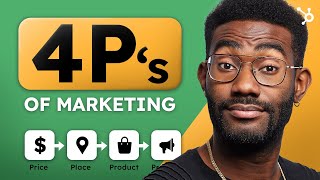
This YouTube explainer (by Patrick Biddiscombe, uploaded April 4, 2023) introduces the marketing mix — the four Ps: Product, Price, Place, and Promotion — and gives practical guidance for applying each to campaigns. Product: define what you sell (physical or service), identify the problem solved, strengths, audience and differentiation. Price: emphasizes profitability and describes four pricing strategies (cost-plus, competitive, value-based, penetration) with use-cases and trade-offs. Place: expands from physical channels to digital platforms and stresses choosing channels based on customer habits (audience-specific examples include millennials vs Gen Z). Promotion: covers messaging, brand awareness and lead-generation tactics tailored to buyer personas. The video closes with a CTA to a 4Ps template and a brief HubSpot sponsor mention.
Questions this video answers
April 4, 2023
31%
Chapters
Whether you've been using the four Ps of marketing, aka the marketing mix, your entire career, or you're just hearing about them for the first time, one thing is for sure, this framework is way more than a textbook concept. The four Ps are at the core of marketing any product or service in any sector. So what are they? Product, price, place and promotion. And the fifth P, if you're feeling lucky, might be pizza. These four elements can inform everything from the best channels for your marketing right through to the positioning of your overall brand. So let's unpack those 4Ps and give you everything you need to know to take your marketing to the next level. This year, introducing P number one Product. This might sound simple, but when you're marketing a product, you really need to think about that product and what makes it so special. When I say product, I mean anything you're taking to market and trying to sell it can be a physical product or a service. For example. Once you interrogate that product, all kinds of things can come into focus. You'll be able to identify the problem, it solves the strengths, what kind of audience would find it most valuable, and what differentiates it from other products on the market. For example, if you know your product is the go to trustworthy option that will inform your marketing, or at the very least, it certainly should. And that approach should be very different to another business with a disruptive new kid on the block product. Knowing your product is the cornerstone of marketing success. The the second P is a really big one. It's price. First things first. Price is not just about how much money you want to make, but equally your product needs to be profitable. After costs, marketing and sales are taken into account. So how can you strike the right balance? Well, here are four strategies that can help. Cost plus pricing, Competitive pricing, Value based pricing and penetration pricing. Let's talk about cost plus pricing. Cost plus pricing AKA market pricing and is a method where businesses add a fixed percentage on top of the cost it takes them to produce one unit of their product. Hmm. Simply put, you work out the cost and then you add the plus bit. The number you end up with is the selling price of the product. This can be really useful for businesses that want a quick and simple way to price their product without getting bogged down with complex calculations. Cost plus pricing is also easier for customers to understand, which if used right, can aid transparency and which boosts customer trust. All good things. But as you'll see in some situations, a more detailed pricing strategy is way more useful. So next up is competitive pricing. This strategy focuses on the existing market rate, sometimes called the going rate for the product or service you sell. Rather than basing your pricing on the cost it takes to make your product or the customer demand for it. Competition based pricing uses your rivals as a benchmark. Most likely, your business will then price itself in one of three ways, slightly less than the same as or slightly more than your competitors. What's the best approach? Well, depends on your product. Say you're in the distribution sector and you offer delivery services for low cost non perishable goods to retail stores. Pricing yourself just below your competitors could make your business super attractive to customers. But what if your distribution company delivers luxury seafood ingredients to Michelin starred restaurants? In that scenario, pressing yourself just above competitors could be more attractive as it signifies a more trustworthy or elite service. Then we have value based pricing. With this strategy, a company prices its products or services based on what the customer is willing to pay. So even if the company could charge more for a product, it establishes its price based on customer interest and data. Value based pricing can boost customer sentiment and loyalty because it's reflective of their needs. The caveat here is is that you need to stay up to date with those needs and how they develop like a beautiful butterfly. Otherwise you can quickly lose sight of how valuable your product is to your customers and your pricing will reflect that. Finally, we have penetration pricing. This is where the company enters the market with a super low price to try and draw attention and revenue away from higher priced competitors. Remember that new kid on the block product we mentioned earlier? This could be a great strategy for that because it's best suited for breaking into an existing competitive market. However, penetration pricing isn't suitable in the long run because you need your product to be profitable at some point, right? So this is a short term strategy that will often be used in conjunction with one of the other strategies we've outlined. And if you want to find out more about any of those strategies, check out our video on that very topic. Now it's time to take a look at P Number three Place. In the old school days of marketing, place used to be all about physical locations, billboards, subway ads, print ads, etc. And while those are also part of the conversation, place is now a much more complex topic because it includes a host of digital channels too. Finding the right place for your marketing involves getting forensic on your customer habits, preferences and needs. For example, say your product mainly appeals to a millennial audience. Instagram ads would get you way more of a return than TikTok ads because TikTok appeals to a younger audience and as millennials have been dubbed the Generation Mute owing to their reluctance to speak on the phone. Who wants to be doing that these days? Your sales enablement should probably lean towards chatbots and a self serve website rather than to call representatives. But all that's going to be a completely different story if your target market is Gen Z, 31% of whom say they prefer to shop in app or directly through social media rather than using a traditional website. Remember, place isn't just about where you want people to see your products, is about where your customers want to see them. And just like that, it's time to talk about the final P promotion. Promotion is where your marketing actually comes alive. It's where you think about how to publicize and advertise your product. And that involves all the fun brand building stuff like messaging, brand awareness and lead generation strategies. Once again, how well you know your product and your target audience will determine your success. That new Kid on the Block product we've been talking about suits a very different kind of messaging to that tried and tested alternative. And then you have to match it to your target audience. In fact, take a moment and picture a key buyer of your product. What sort of message is going to appeal to that person? What's likely to put them off, and how can you articulate the obstacle they're facing in a way that actually feels genuine? Getting detailed in your promotion strategy is how you can turn your marketing from meh to mo my. And that's it. If you want to take your marketing to the next level, get yourself acquainted with the four Ps product price, place and promotion. And the first step that I would take? Well, I'd probably check out our marketing mix 4Ps template using the link down in the description below. Want to see more videos on this topic or share how you've been making moves with the 4PS? Let us know down in the comments below. And of course, don't forget to subscribe and like this video. Now if you'll excuse me, I'm going to be looking for that fifth P. You know what I'm saying? I think I got some of the other I'll see you next time. I can't find this client info.
Have you heard of HubSpot? HubSpot is a CRM platform so it shares its data across every application. Every team can stay aligned. No out of sync spreadsheets or dueling databases.