5 Marketing Strategies To Grow Your Startup In 2024
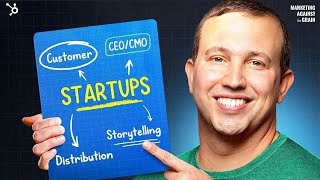
This content was created by Patrick Biddiscombe. This content was uploaded by Patrick Biddiscombe. This is a YouTube video titled "5 Marketing Strategies To Grow Your Startup In 2024" created on July 25, 2024. It features a discussion between two speakers, including Kieran, about startup marketing strategies. They cover topics such as hiring the right marketing team, understanding the role of a CEO in marketing, and the importance of advisors in the hiring process.
Chapters
Hey, everyone. On today's show, we're giving you part one of our masterclass in startup marketing. We're going to talk to you about how you hire your team, how you tell the right story, how you pick your customer Persona, how you get distribution for your product. We're covering some of the key lessons to building a business, all on today's show. Let's get to today's episode. On today's show, what we want to talk to you all about is we get endless, endless questions around how do I actually think about building and organizing and doing marketing for my company? And we wanted to try to create the masterclass episode on, like, the core essential advice that we basically give everybody. And it's in, you know, it's in looms and zooms and emails. And we want to bring it together all in one place on the pod.
Because.
Because if you like it and this gets good reception, we thought about maybe maybe making a little book that would kind of be the startup marketing bible if this gets good reception. So this is a little bit of a test balloon for everybody listening and watching today's show around this advice. So I think it's gonna be fun. Kieran, anything else you want to add before we get into it?
No. We've got a cool name for the book. We've got a cool idea for the book. So I think this is a good precursor to potentially becoming bug writers, although I do hear it's an absolute grind.
Well, we'd also have a third co writer, which is AI. So don't think that we have forgotten our AI passion and love in all of this. We're just taking a quick break from all things AI and going deep into marketing advice today.
Okay.
The number one area. So to kind of map out today's show, we're going to talk to you all about the things that we think are the most important that we have learned over the last couple of decades that really are critical in marketing. The first thing is people like, if you have a bad marketing leader or a bad team, you will fail at marketing. And Kieran, what I would love for you is to give the advice of if the company's just getting started, what type of marketer do they need? And subsequently how do they find and identify that person?
First of all, what marketer should a startup. Let's say that we're going to speak to startup, maybe series B and beyond. A and B beyond. Because I think it changes probably who you want to hire, like a startup, a startup in a kind of preced C stage is going to hire a jack of all trades, as they should. A really good growth person. Not like, no, I don't want to say growth marketer because I think that it just gets tossed about that word. But like just someone who can like really figure out some initial plays to get you some traction and then you have to get into more forecastable, predictable channels as you get into series A and definitely B and beyond. So on the people side of things, the founder is always trying to figure out, should they hire a seasoned CMO first of all, or someone who can grow into a cmo? Like that's one of the over the things they continue to think about. I think part of how they should think about that is just how rapidly you're going to grow. If you're not going to grow very rapidly, a seasoned CMO will probably get bored by some of the work that you have to do for a certain period of time. But how you hire. I've come to the conclusion that I think what a CEO should do here is. So most great, most good companies do have. Do try to utilize advisors.
Yes.
And I think they utilize advisors in a very mixed way. Right. Like that. It's kind of, I think in a lot of cases they probably don't get a ton of value for the amount of equity or other things they give those advisors because the challenge is they don't have the ability to instrument the advice the advisor has given them because they're limited in resources. I do think on the people side of things, I'm going to get into like the type of people, but I do think on the people, on the people side for marketing, because marketing can be so subjective. That is where an advisor can play a crucial role for the founder. I think they can actually help them understand the problems to solve in the next two to three years. They can help them understand the right type of marketing leader that can go after those and the kind of background, they can be part of the interview panel to make sure that that person can. Can actually do the work. And it's just not talking about the work in a way whether their team did, their team did it all or someone else did it all and they were just part of the work. And they can actually set up the right expectations between both of those people. So the CEO has the right expectations from that person and where that person is going to show up really well and where that person is not going to show up as well because that's not their area of expertise. So I'd kick it back to you there. That's what I would start with because I think that's the most. What I see going wrong at this part for startups is they probably don't understand the right problems they should solve through marketing in the next couple of years. They don't understand how to kind of map that to the right type of marketer and then the interview process. They can meet someone who just is an incredible talker and they really can't uncover whether that person is truly great at that kind of work or not.
Yeah. So let me add to what you were just saying. Most startup founders at all stages that I talk to are over index on experience that that person has. Not that experience isn't important, but they look at experience as the end all and be all. And what instead I would encourage everyone to do is to say this is the specific type of company I run. This is the business strategy for my company based on those things. Here's the list of five things that I three to five things that I need my marketing team to be great at. I need just for this business to work, I need these three to five things. And there'll be some mix of brand awareness, product marketing, new customer acquisition, sales enablement, all of these things. Right. But you got to get very crystal clear on what those things are. Do not get caught up on level, don't get caught up on anything. Once you're clear on what those list is, when that list is the one or two, put it in priority order and the one or two things that are at the top that are like the essential things to making this business work, you need to go and talk to five people who are the best in the world at those things. And so if you're saying like hey, I want to new customer acquisition, like I need to acquire hundreds of thousands of customers a month to make my business work, then you need to go talk to Kira and you need to go talk to some E Commerce folks. You need to talk to a bunch of folks and see what good looks like and pick the best one of those folks to be an advisor for your company and help them identify this back to what you were saying Kieran, the type of person and vet that candidate. And what you want is to talk to the best people with those skills. I don't care if they're a director or a vp, a cmo, what have you. And then, then once you get to the last handful of candidates, you can determine the best like level and fit for this particular role. But you want to be obsessed about the skills More than the experience and the title of that role, that is the, that is the foundational advice we would give you around the marketing team and people side of what you're trying to do.
Because if you think about hiring like the founder, if they have done, if the top three things, they've actually done them prior, so they do have experience and the founder probably can identify pattern match and see is that person truly good at that thing or not. But that's what the advisor in that space can do. Like to your point, if they've done, if that person is really an expert within that space, they can pattern match across all of these potential candidates and see what good really looks like. Like I was helping a portfolio company hire someone recently and one of the candidates was probably in the top, you know, percentile, couple of percent of people I've ever talked to for that. And I have the experience, enough experience and done enough interviews to be able to see that pretty quickly. And I think that's like one of the ways that you can, a founder, an early stage founder can try to not do the thing that a lot of early stage founders do is like get the first couple of hires wrong and that sets them way, way back.
Well, this goes into our second piece of advice is that if you're the founder, if you're the CEO of this business, you are actually the cmo. You are driving the marketing strategy. This is something our friend of the pod, Jason Lemkin, always says, that the CEO is really the cmo. And what that means is if you are running a company and you're like, I don't know really what my marketing strategy should be and I'm going to hire a seasoned marketer, come in and tell me what that is. You have failed. You failed like you might as well just quit that business. What you have to actually do is say I understand my business strategy because of this, I understand what I need marketing to do and do very well. And normally the CEO is the best product marketer in the company, they're the best brand marketer in the company and they have some understanding of like the acquisition demand generation model and what's required for that business. Right. And because of that, and they're the best at that, not because they're great at marketing, it's because they have the most intimate understanding of the customer, the problem and the strategy and your number one job, and I see this a lot with technical founders, Kieran, is that they don't want to embrace the marketing side of their business. They want to fall in love with the technology. I'm here to tell you that embracing the core understanding of marketing and then making sure you get somebody on board who can then take that understanding and scale it out into a real strategy and build a real business that is worth the time and effort just as much as writing, writing lines of code or interviewing engineers or other work is. Do you agree?
Yeah. The CEO. Because then you can actually set the right expectations. So kind of following along from the people. If you are working for a founder, you want to understand what good looks like for that founder. And if they are not sure, then I can guarantee what will happen is you will not meet their expectations, because those expectations will be formed along the way. And you might not have the skills to.
More from Patrick



A NEW BREED OF PARTNER: The Partnership Ecosystem Model Journey of Patrick Biddiscombe, Part 1








Customer Success Workspace: Never Lose Sight Of What Matters Most | HubSpot Spotlight