5 Of The MOST Effective Marketing Strategies For 2024 ($100,000 Advice)
Kip and Kieran break down five marketing strategies for 2024, emphasizing avoiding mediocrity, taking risks, and staying customer-centric. They pull examples from different industries and stress the need for creativity and high standards in your work.
Chapters
On today's show, we are breaking down our playbook for how to transform your marketing career and business in 2024. We're going to give you a few things you have to stop doing right now. Then we're going to tell you a couple things that you need to immediately start doing because they're going to transform how you grow. And we're going to give you a breakdown of some amazing tactics that we're using in our businesses today that are going to bring this all to life and going to make it easy for you to get started asap. Let's get into today's episode. All right, we are back with part two of the marketing skills you need to win in 2024. This is our two part masterclass on if you're a marketer, you're really trying to uplevel this year, what you need to focus on. And these aren't like, send better email or write better copy. These are like the core strategy skills you need to evaluate and use in any marketing decision you're making. Right. And so, Kieran, you built a lovely deck that we went through the first five principles of last time.
So we covered five in our very first part. Five first principles, how to be a better marketer. 2024. We're gonna cut back in for the second part and we are gonna start with something truly important, Kip, and that is you should avoid being average. No one wants to be average. No one wants to be the ChatGPT output, which averages everything it sees on the Internet and gives you the average of most things you want to really AV an average in the places that matter. So that doesn't mean you cannot be table stakes everywhere. It means you need to understand where are the most important parts of your marketing and go to market funnel or just your business in general. Where are the most important parts that you need to be much better than the competition that you need to level up. Right. And I think I have a great, great story here, Kip. But first of all, what are your thoughts on this as a way to kick off the second part of the show?
So, first of all, if you're a marketer, if you're average, you've lost. Because in the game of marketing, all the upside comes from taking risks. Now, you can't take 100% of the risk 100% of the time because you'll fail. You'll take too much risk. But if you take no risk and you just play it safe in the middle, you will fail because you'll never get those Big upsides of being an early adopter of search engine optimization, of being a pioneer in influencer marketing, whatever strategy that may be. If you're not taking risks and being out on the edge, you're going to fail. And Kieran, I think I've said on the show a couple times, I've really enjoyed Shane Parrish's book, Clear Thinking. If you haven't read it, you're going to have to read it. There's a great quote in there. One of the things he talks about in that book is like the inertia that stops us from doing and thinking clearly. And he says the zone of average is a dangerous place when it comes to inertia. It's the point where things are working well enough that we don't feel the need to make it any changes. Of course, they rarely do. For example, staying in a relationship that is too good to leave and too bad to stay is a perfect example of the zone of average. If things were much worse, we would act. But since they're not terrible, we stay and hope things get better.
Right.
And it's like you get in this place of safety and that's where too many marketers stay and live. And I know you've got a big story around this, so I want to kick it over to you for that.
Yeah, I've got two, actually, because you reminded me of a story from one of the NLP conferences I went to.
When he says, nlp, it's not Natural Language Processing, Neuro Linguistic program, actually.
So actually I did take away a lot from this €10,000, my last cent that I had to my name seminar.
I love that. Like, you've totally glossed over this for people that not only did you go to this Neuro Linguistic programming conference, but it cost $10,000 and it was the last $10,000 you've ever had.
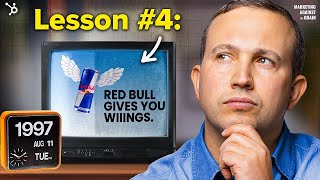
I was broke. I decided to not be an engineer anymore. Left my career, didn't know what I was going to do next, and decided to spend my last 10,000 on my only €10,000 on a. On a seminar, which I remember vividly, my mom having some sort of breakdown on the call when I was telling her I was going to do this. But they did have this kind of cool graph around people who are successful and they call it very similar, which is there's like the things you push away from and the things you pull towards and so the things you push away from if you were. If you grew up working class, if you grew up without very much money, like all of These things resonate with you. You remember that. So you kind of push away from that and that actually causes you to have some success in your career. And like part of. And you have some sort of outcome you're striving towards. So there's part push, part pull. But you get at some point happy with your results. Like you're in the middle, like very similar. You get to like a point where maybe it's kind of average, but average for you, makes you feel comfortable. Whereas the most successful people, for the most part only focus on a large outcome, like something that they're actually striving towards. And so they never get comfortable. Right. So they never get comfortable because the outcome they're striving towards is so large. Now, the example I want to give is one of my. My new favorite founder of all time. So I'm he's taught. He has a great new podcast around the founder of Red Bull. And what's amazing about Red Bull, I know there's been so many case studies done on Red Bull and we're going to do a show, but it's going to have a different twist. But it was really just a marketing company. Like Red Bull originated from a drink that was sold in Thailand. They an uncarbonated drink. He carbonated it and then actually brought it to the western world. But he was a marketer. He actually left Unilever at the age of 40, which I love, to start his own company. He was a marketer and Unilever. But this is incredible example of why you should have such a high quality bar if you're a marketer. So there's a great kind of example of him working with a friend in an agency to come up with the first strap line for Red Bull. He has no money. Red Bull is very new. He's actually at this time working as an intern for his friend in the agency to pay for the agency to do this work. Doesn't have a cent. So what do you think he does when they come up with their first campaign? Now what would most of us do? Well, I don't have money.
You ship it.
You ship it. Right? And actually maybe this slide here should be. I need to recreate this slide because you should ship things. But there's a quality bar. He does not do that. He's not happy with the first iteration, he's not happy with the second iteration. He's not happy with the third iterations, he's not happy with the 30th iterations, he's not happy with THE 40th iteration. Oh my God. Until he gets one and a half years into working on this first campaign for Red Bull. And the friend who's in the agency rings him up one night and says, I know what it is. It's Red Bull gives you wings. He goes, that's it. Ship it. Change the trajectory of the entire business. And it really resonated with me. Right. Like I do, I do believe in ship fast and iterate, but boy, you really. There's some things you have to get right. And if you can get that positioning.
Taglines are one of them.
Right. And so I think that's a good example of knowing when you really have to have a high quality bar. And this thing is truly monumental or truly critical to our success.
Yeah. One last Shane Parrish quote on this point, which is few people realize that exceptional outcomes are almost always achieved by people with higher than average standards.
Right, exactly right.
Like you have to have this really high standard. And if you have that really high standard, then the work will eventually rise to meet that standard and you will be inherently well above average.
Right. There's a great example of that in soccer that you all call it, but football. There's a coach called Pep Guardiola. Now, I dislike him because he manages Man City. I'm a Liverpool sporter. But he is notorious for having an incredibly high bar for his players. So much so that players actually burn out when a certain number of years because they cannot continue to operate at this high level. But he's probably well regarded as one of the best coaches in the world. And I think that's an example of like, great, great people have incredibly high bars. Do you want to take this one, Kip? Because I think this is one of the ones that you said this year that really resonated with me.
This is for me, one of my marketing first principles, which is apathy is the worst outcome of marketing. The worst thing you can possibly ever achieve with marketing is that no one cares. And that is very, very counterintuitive. The reason is because the input to apathy, how you get apathy is by doing safe, non differentiated things. And by the way, safe, non differentiated, comfortable things are what people do all the time. It's what marketers do all of the time. And they do it because, well, you know, this isn't controversial. My CEO, my board, they're not going to care about this. It's going to be totally fine. My customers will kind of think this is okay. So this offends nobody. So I will do it. And what we're essentially saying here is you have to take a stand to be for somebody. You are not for somebody else. And that is the hardest part of marketing to understand. Right. And I think there are a couple of examples here, Kieran. Like, we just did this thing recently with Alex Lieberman where we partnered with him to send him and some friends to this college football game. We generated like millions of impressions online for less than $50,000. We might do a full, full rundown episode on that. But like, if you were going to just play the average marketer game, you would have said, all right, well, I can't send a bunch of white dudes to a football game. That's not going to come off good. You'd be too bro y. You're going to be like, well, I can't. I'm not sure exactly what I would get for this money. So because I'm not clear on the roi, maybe I'm not going to do that. And then you'd be like, well, all right, I'll just go put this $50,000 into Facebook ads and call it a day.
Exactly right.
Like that's, that's like, like There are like 10 other rationalizations, but for the sake of time on the pod, those are just, those are just a couple. And you just, you would, you would just never do it. What instead you have to say is what will have people talk about me? One of the best things that Brian Halligan, who's co founder of HubSpot, ever said to me is like the definition of remarkable is to be remarked on like, people have to talk about you. If people do not talk about you, you are not remarkable.
Right.
Like, that is actually the definition of the word. And so you instead have to apply this binary of, oh, I don't care about the safe choice. Will people talk about this and do. I think there's a good chance that the majority of that conversation is going to be positive. If yes to those two things, you should do it. If you have the time and money to do it, you should do it. Right. And that is how you avoid the trap of apathy. This to me is something I see literally every day. I would argue like 95% of marketing falls into this bucket. That is just completely apathetic, completely boring, completely non differentiated.
Yeah, yeah. You could look at the, the what, what you did to sponsor that crew going to that college football game and some people might look at that and go, ah, that's dumb. Do that. I think it's because they don't understand how the Internet works. Like, they would not understand that's going to become a story on the social platforms. They don't understand. Alex has a huge amount of audience.
Do you know how many do you have views? Just the announcement post got.
Just on LinkedIn. You made your money back. Like, just on the one LinkedIn post, you would have made your money back. Not. Never mind the whole. It's turned into like a. I knew as soon as I saw you do that. The thing he was going to be incredible at was documenting the entire thing on the Internet, because that is what he is.
It wasn't about the game, it was about the Internet.
It's all the pre. Things like, it's not the game, it's the whole lead up. Like the photos of him dressing up in the costumes like his friend. Like, it's. It's basically plugs into the. The Internet, right? Like, it's how the Internet works today. So I think that's a great example.
The.
The other example. So you want to cut in the grip?
No, I was, I was just going to let people know. It's like the initial announcement post, I think the Twitter post, Twitter slash, expost, whatever we're calling it these days, got almost a million views. And the LinkedIn post is not that far behind, right?
For 50,000.
It's bananas. And then that doesn't count all the other work and results that happened after the actual announcement, right?
Shout out to the HubSpot crew who built those, who created those T shirts.
So, yeah, shout out to the brand team. They killed it.
I think April done, like, if you want to learn how to go pitch your product, which is one of the hardest things to do, but one of the most important things for marketers and salespeople to do. You should listen to the April Dunford episode that we just did. Gives a great masterclass on that. And one of the things that she said that really resonated was you have to be for someone within your pitch, right? Too many, too often. And the example she used is too often. What we do is we construct the pitch around whatever the person wants to hear, right? We construct the pitch around whatever the person wants to hear. That's not how you become a large successful company. You need to craft the pitch around your differentiated value and make that person really care about that differentiated value and see why that is the thing that they should actually care about. And I think that's the kind of example, I think that's why it's so important is like, if you are for no one, then during even a Pitch the simplistic thing of trying to pitch your product, it gets lost while you're for that person. Right. Because you're trying to be for every person. How many marketers do you know that just don't talk to, don't listen to even just listen to customer calls or talk to customers. The nuance in what a customer tells you. So this, this slide is basically Jeff Bezos very famous for saying that Amazon was going to be the most customer centric company of all time. That was what they aspired to be. And so everyone, everything is predicated on like being close to the customer and truly understanding the customer. And in my experience as a marketer, there have been times where I have undervalued this, looked at data and tried to build the aggregate version of what I think the data is telling me. And then you listen to a customer call explain the problem that you're trying to solve in their words and you're like, huh, I actually didn't understand anything about the intricacies of this problem. I just didn't understand because I didn't listen to how that customer was experiencing it. And I think there's a case to be made that if you have monthly goals or quarter quarterly goals or whatever they may be for your marketing team, it is a non negotiable that one of those goals is clock in a certain amount of hours on customer calls. Like, and it's a non negotiable like top of the list is you actually have to do this work. Because I feel like Dharmesh says this all the time and Wade says this all the time. The customer that are the, the company that is closest to the customer and truly understands those problems will likely always win. And I think it's the same for marketing because marketing are extension of really how do I create customer value.
I completely agree. And so let's talk real quick about some very tangible ways that you can do this. Because I get asked this a lot because I'm on board some investor, different things, this almost always comes up. One of my biggest notes for companies is like, oh, you are not customer centric enough. You are too internal centric versus customer centric, right? And so there's some quick like for example, later today we have our monthly customer council call where we have five customers come in and they talk about a specific topic, might be an area of our product, might be a trend in the market, what have you. And we listen to them for like an hour and then we debrief for 30 minutes. Like that is a Foolproof cheat sheet of like anybody can go and do that. And you can get a really good insight to your customer base if you are using HubSpot call intelligence Gong anything that records your calls with customers, searching those transcripts, listening to those calls, doing all of that great support shadowing like Amazon, what every, everybody in Amazon has to do two days in support every two years. And like that's like that's how they do it. There's, you need to have a couple of clear rules and systems that kind of mandates that customer interaction because then all that input from the customers just permeates your culture and builds this customer centricity that you're outlining here.
Right? Yeah. It should be like you shouldn't even have to tell marketers that they should be listening to sales and customer support calls. Especially today when those things are recorded on Gong. You can.
No, but people get distracted, people are busy. There's a lot of work that they're trying to execute on. You just need to make sure that supplemented with customer knowledge and all that work is based on the right.
But that's why it should be an OKR and it's the, so it's non negotiable. Like you actually if you don't do that, if you don't complete that goal, you have failed that quarter, failed that month. I think that's one of the ways you can instrument it. Now I, I, I like that's the extreme version of that, but there's some version of that that should work for each company.
So I completely agree with that. All right.
Customer centricity, simplify and repeat.
So the magic of this is the repeat part, but simplify is equally important. But break this down for everybody.
So the most powerful marketing story you can tell is a simple one, right? Like people do not have time to read your entire hero's journey. Simple really is not enough. Like you are just going to be surprised by how many times you have to repeat something for it to stick within a consumer's mind. I think the data would say it's like 20 plus times. But you actually, again that's based upon you actually having an incredibly simplistic story. So the simplistic story is why us? I always think like that's the thing you have to nail.
Yeah.
Why us?
Why pick us?
Why pick us? And again, coming back to the April Dunford interview we did. Your customers are choosing you for a reason. You just have to make sure you can understand it and articulate it. But then the repetition really matters. Like you could probably have the same simplistic story for 24 months and repeat that on a multitude of different channels. And it's still. And you. And you internally are sick. Like, I think one of the, one of the reasons that people change is because internally they're bored of it, but externally, your customer doesn't even. Still does not know about it or it still has not.
Well, I think, I think you have to be explicit about this. I want to be explicit about what you're telling people is like you need to be sick and tired of the story you're telling. We get way. We get much more tired of our story much faster than our customers do because we hear it 10 times more frequently than they hear it. Right. What you're really, you know what you're really breaking down. And again, this does tie back to our conversation with April Dunford. You should go check out that pod, which is like you have to pick the right thing to feature about your product, your company, whatever, whatever you're marketing, right. Then you have to distill it in a simple way and then you need to repeat the hell out of it. Right? Like that. That's. That's what, what I think you're arguing here. And so I think that it is clear to me that there is one example of this that is the greatest example of all time is the original ipod.
Yeah. Yeah.
The original ipod is. I've got compare the original iPad pod for anybody who forgets was they were. They were differentiating on how much music that you could hold. And the tagline was a thousand songs in your pocket.
The best tagline of all time.
Every which to me is probably the best tagline ever. A thousand songs in your pocket at that moment in time when people were still using CDs. Like it is hard in today's age to realize how transformative and how game changing that was. And then if you go back and look at that creative, the website, the billboards, everything they ran, all it was was a picture of the ipod and a thousand songs in your pocket.
Right.
And it was just repeated to all hell.
Right.
And that was the magic of simplifying her.
It's a very David Ogilvie ask line because it's exact. What. What he was phenomenal at. What great ad creator, ad copy creators are phenomenal at is actually the ad copy is something a customer says, it's not something a marketer interprets. Yes. Oh, I love that it's like literally that a customer would literally say that. And that's the best. Like that's why that copy really resonates with a customer because they, that's something they would literally tell their friend, right? Wow, I've got this ipod. I get a thousand, I get a thousand songs in my pocket. The example I was going to use because like this is me all over, right. I get obsessed with something, I know everything about it and then the next thing. So I have to use Red Bull again because how many years that it's the same example? That example I give you was 1980. So 84. I think the strap line was maybe 1986. 87. Now if you look at a Red Bull commercial today, what's, what's, what are they advertising? Red Bull gives same strap line gives you wings. And I think that is an example of a company 40 years later who woke up one night in the middle of the night, chose their strap line and that's how we sell this product. And I'm sure internally you get the VP of market and then the CMO comes in and goes, let's rebrand, let's get a new strap line, let's get a new website. And luckily the founder said, we sell energy drinks. Our energy drinks give you wings. I want everyone to know this.
Well, you are making a brilliant point here that is implied in this one, but not explicit, which is when you simplify something, you make it very durable.
Right?
Right. The more simplistic something is, the more durable and long lasting is like Nike, just do it. Just do it just means whatever you what ethics on whatever meaning you want to apply to it. Right. And because it's that simple, you can use it in an infinite number of ways for, you know, hundreds of years. And if you're at a company that's changing their tagline every year or every two years, it's because it's very specific to what they're doing in the here and now. And it hasn't been simplified to be durable and long lasting.
Right. It is. I think that's probably one of the hardest things to do in marketing is to take a broad term like just do it and make it, attach it to your brand like that. That is the, that is the genius behind ad copy writers.
Because when marketers get it wrong, they think the tagline is going to do all the work for them. And what the inverse is true, that the marketers have to do all the work to make the promise of the tagline true.
You know, one of the books I'm reading right now, actually, maybe we, I don't know if we would do a show on this, but it reminds me a little of this. And you're gonna be surprised when I tell you the book. It's like on the Sackler family, which is probably one of the worst families of all time, but like the original horrible human beings.
But they had a brilliant business approach.
Arthur Sackler, the original Arthur Sackler, not the one that is in all of the documentaries. His, like his. I think he was one of the original, built the business. He verticalized the entire pharma media industry. And he was actually an ad copy. He grew from copywriting because he was the first person to discover, well, I'm going to create advertisements for pharmaceuticals and sell them to the consumer and have really simplistic messages and how this could actually make your lives better. Now, if you go back, one of the other things he managed to do was own the relationship with the fda, own media, public or medical journals that he didn't put his name to anything. So he owned the full verticalization of it. But it does show you, like, the power of this. He changed an entire industry with ad copy. Right. And it's. And it's simplifying what these medical things could do for, like, consumers. And yeah, I think this is just an incredibly important skill to be able to learn. Not. But not in a way where you should then go and destroy the.
Do evil things. No, use your powers for good. Everyone, use your powers for good. But simplify and repeat is man. If it's not the most important, it's up there. Isn't the most important one the hardest?
And this one is just have fun.
Well, no, it sounds. It sounds silly because you're like, oh, have fun. But the reality is your customer knows when you're having a good time or not. Your customer knows when you believe what you're telling them or not. Right. If you've got a team of people and they're just unexcited and they're just drudgingly figuring out stuff that's going to come through to the customer. The customer is going to feel that, right, you're going to do boring things that are kind of lame, and that's how you're gonna come off. Even if you have the best tagline in the whole world back to the last point, it's still gonna fall flat if you don't have a team that's executing with ambition and fun and cooperation. Right?
Right. I think that, like, creativity comes from people being passionate about what they do, truly wanting to serve the customer. And if, and we say, I do think part of one of the core skills you need to have to make an attack is to be able to grind. But that doesn't mean you grind in a way where it makes your. That that's reflected in your marketing. Right. Grind just means that you're able to persevere, that you're able to, like, hustle to make things happen. But really, I think great marketing comes from inspiration. Creativity comes from inspiration and truly being inspired to, like, serve customers. And so I do think that we should always take time to reflect. And marketing is a great job. You get to help tons and tons of companies or people if you're in consumer, in B2C. And you have to have some of that fun and creativity appear in your work because that's what resonates with people.
You know what makes marketing so hard is that it's so less structured than everything.
Yeah.
And because it's so less structured, people put false barriers on themselves. Right. Like they. They create structure because it's inherently unstructured. Right. And that structure often takes a lot of the fun out. Like, sometimes you just have to say, oh, like we need to do this because it is just going to be fun and set the tempo for.
More from Patrick



A NEW BREED OF PARTNER: The Partnership Ecosystem Model Journey of Patrick Biddiscombe, Part 1








Customer Success Workspace: Never Lose Sight Of What Matters Most | HubSpot Spotlight