AI Ethics (AVOID Legal Trouble with THESE Tips)
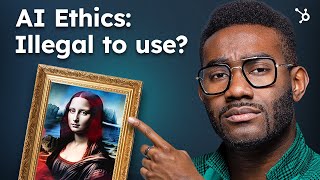
Jamal covers four ethical risks when using AI in marketing: text generators fabricate sources, training data can embed bias, AI-generated images may violate copyright, and customer data gets misused. Verify citations, audit datasets, use licensed models like Adobe Firefly, and get explicit consent before collecting data.
Chapters
Generative AI has taken the global market by storm, and as marketers and businesses with limited budgets and teams, we've leaned into these tools to make our lives easier and save us money. But is that blog post you generated really okay to publish? Is that research actually accurate? And are the sources credible? And what are the copyright rules around that AI generated image? In this video, we're going to take a closer look at this complex topic and the ethical issues surrounding it. Let you know how your business can navigate these concerns. What's up? It's Jamal and welcome back to the Channel. So what are AI ethics? AI ethics are moral guidelines for responsible artificial intelligence usage and development that combines safety, security and human concerns to serve people better while minimizing negative consequences. Some real life examples of this could be a popular online service that uses streams of data from IP addresses, social media pages, mobile phones and other devices to teach and improve their AI algorithms, which includes personal and sensitive information. A small business post AI generated art on its website, or social media which turns out to be created from copyrighted materials. So why does this matter for your business? AI copyright infringement and the spread of harmful misinformation through AI are new issues with very little legal precedent. By making a commitment to AI ethics, you can build trust with your audience, stay out of legal trouble, and possibly even prevent a global calamity. I think we can all agree that unleashing Ultron or Terminator upon this mort coil would be devastating for your brand image. Don't think you'd be able to recover? So let's break down some of the biggest concerns of what you can do to prioritize AI ethics in your marketing practices. One of the most controversial issues surrounding AI in marketing is the potential for inaccuracies and misleading information. Generative AI systems leverage different learning approaches, including unsupervised or semi supervised learning for training, and refine their responses accordingly. This means that if it's exposed to false information within large amounts of unlabeled data sets, it can potentially cause harmful results with widespread impact. This is especially concerning when trying to build brand awareness and trust with your audience. So how can you be sure your marketing is accurate? Always check source material mentioned in the output when using an AI text generator. If the sources exist, are they presented fairly and accurately? Were there important details omitted? ChatGPT can generate fake sources if you ask it to. For example, if you prompted to write a blog post that includes a bibliography and source links. The bibliography may contain fake page numbers, dead links, and sources that don't actually exist. No AI tool currently can accurately cite its sources. Check for factual errors. If it's written text you're unsure about, does the writing style and content match what you'd expect from the source? For example, if a chatbot makes a claim, the only way to know if it's false is to research and to get an expert opinion. That requires a significant commitment, and at that point, using AI tools becomes less convenient than researching on your own. An easy way to prevent inadvertently creating or sharing misinformation is to develop a plan for how potential inaccuracies will be managed and how you you'll be transparent about the AI content you create. Text generation tools are trained on data from the Internet. A quick Google search can give you an idea of sources making similar claims. The trustworthiness of the sites repeating the claim is a strong indicator of the trustworthiness of the claim itself. Misinformation can be inherent in AI because AI systems can be built with human biases or programmed to learn from existing prejudices. For example, if the data is biased towards a specific race, gender, or socioeconomic group, then the system will be less accurate in making predictions for other groups and lead to discriminatory outcomes. Consequences could result in negative customer experiences, reduced sales and revenue, unfair or possibly illegal actions, and damage to your brand's reputation. So what can you do to make sure your marketing is inclusive? Keep an eye out for anything that comes across as biased, while also sticking to tools based on reputable AI platforms. For example, any chat tool based on ChatGPT will be much less likely to have bias issues than a chat tool totally built from scratch. For any groups you want to include in your marketing, verify that your training data is representative of the communities it can impact. Evaluate all vendors to confirm that they've taken the proper steps to get accurate samples that include diverse voices in the data definition and collection process. Where does it come from? How often is it updated? The strength of the training data is more dependent on quality rather than quantity. Compare human decisions to model decisions. Dig into any differences or patterns you can find, and don't commit too early to a set. And forget automation. Use case regularly Check in to confirm that the algorithm is working the way you want. There are also several concerns curly on everyone's mind when looking at the plagiarism and copyright issues that AI has created. Generative AI models have all been trained on large data sets, as well as content from websites, social networks, Wikipedia, and platforms such as Flickr and Reddit, among others. There's growing debate over the use of credited works, both text and images that are used in the training data sets that create these large language models for AI, especially from applications that use stable Diffusion, an open source deep learning model which draws from a database of art scraped from the Internet regardless of whether not their copyright protected works. So how can you implement best practices in your marketing materials so that it's fair use? Always credit the original creators of any existing works that were used as reference material. Even if an AI generated work is made in a way that does not infringe on copyright, this acknowledges the original creator's work and helps to avoid confusion about its origin. Reverse search tools like Google Lens or Google Reverse Image can sometimes verify outcomes to reveal if the image was copied from someone else's work. However, reverse image search doesn't always work with AI generated content. Use AI to assist in the creative process rather than replacing it. This can be done for idea generation and inspiration, but relying on AI for the entire creative process is a recipe for misinformation or copyright infringement. As AI tools continue to improve, this will likely become less of a problem, but in the meantime it's best to leave the proofreading, fact checking and final decision making up to you. Use tools that train their own models based on a clean data set that includes license content, opt in content and public domain imagery to avoid some of these ethical issues. For example Adobe's Firefly or stability plugin for Photoshop. Adobe is also introducing a do not train tag that artists can embed in their digital works metadata which could be a step towards better ethical practices, especially as adopted and honored by everyone else who's training AI. Privacy is another big issue when it comes to AI in marketing, as there's a fine line between useful targeted ads and the ones that are are downright creepy. That's pretty nice. Hey, wait a second. Many of us appreciate the technology that makes our lives easier and more entertaining, and data sharing often saves us time and money. It can also pose major concerns though, especially when your audience isn't made aware of how their data is being used. So what can you do to make sure your privacy policies are transparent and build trust? Define and implement a clear data usage and privacy policy. Communicate it to your audience. The policy should state how your company collects, stores, uses and protects customers data. If you make changes to the policy policy make sure to keep everyone in the loop. Your data privacy policy should specify that you'll only store the data you need. Always ask for permission to use your audience's personal data to receive better content or product recommendations and keep it safe and secure in a CRM database. This way, AI can't access this information unknowingly, even if the intent is to improve the customer experience. And for AI that's customer facing a less backend. Segment your audience based on sales and behavior information. There's no need to ask for demographic information. Anyone would be a little bit freaked out by an AI customer service chatbot that knows their location, family, and their regular schedule. To evaluate what data is vital to your marketing team, ask yourself, if you didn't collect this data, would it drastically change the way you operate? By limiting the personal information you collect, you'll be less vulnerable to hacks, increase customer confidence, and deliver more value. The use of generative AI has the potential to bring many benefits, but it's up to us to be aware of the moral implications surrounding it. By taking a responsible and ethical approach to how we use it, we can ensure that it's done in a way that's responsible, transparent, and fair. If you're interested in learning more about integrating artificial intelligence tools into your content workflows, check out our very own content assistant tool. It streamlines content creation with features like generating marketing, email copy, creating social posts based on user prompts, editing CTAs, and much more. Click the link below to get started. Have you experimented with AI tools in your marketing? How has that worked out for you? Let us know in the comments below. And don't forget to subscribe to the channel if you want to see more videos on this topic. Now, if you'll excuse me, I gotta go keep Ultron at bay. The only person working on this. It's up to me to keep the galaxy safe until then. I'll see you next time. I can't find this client info.
Have you heard of HubSpot? HubSpot is a CRM platform, so it shares its data across every application. Every team can stay aligned. No out of sync spreadsheets or dueling databases.
HubSpot grow better.
More from Patrick



A NEW BREED OF PARTNER: The Partnership Ecosystem Model Journey of Patrick Biddiscombe, Part 1








Customer Success Workspace: Never Lose Sight Of What Matters Most | HubSpot Spotlight