AI Growth Secrets That Are 10x’ing Traffic and Leads
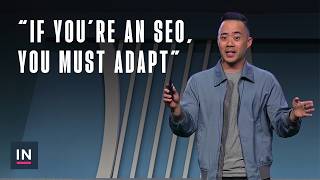
Eric Hsu from Single Grain shares how to use AI for marketing at scale. A test of 200 programmatic landing pages doubled clicks. He covers repurposing podcasts into short-form content, using AI-customized CTAs to boost conversions 20%, and automating SEO tasks with agent workflows.
Chapters
My name is Eric Hsu and main company is an ad agency called Single Grain. And I do two podcasts. One's called Leveling up and the other one's called Marketing School. And I did a couple Marketing school sessions this morning with my co host. He has now since left. He's flying back home. These are examples of what we do with the podcast, and I'll be talking about how we leverage the podcast as well and how we actually combine AI from an SEO standpoint and also from a repurposing standpoint. There's also a free thing that you can use there that I think will help you with repurposing. So maybe for starters, I do want to talk about how this one quote from Sam Altman, and He said that 95% of marketing work or creative work is AI, is going to handle most of it. I don't know if I agree with 95%, but I think a good chunk of it's going to be handled by AI. But he does say another thing. He does think that in person, communities such as this, right, you guys are all inbound, will become way more valuable in the next five to ten years or so. Right? And I tend to agree with that. And there's also an SEO angle with that, too. One thing I've been talking about quite a bit for Maybe the last 12 months or so is this whole concept of programmatic SEO. And a lot of people that have been doing it, you know, they got torched, meaning that they lost their traffic, they went a little too aggressively. They created a lot of these pages for SEO purposes, and Google caught on and they torched their websites, Right? They lost all that traffic. Sites that would go from like 00 to millions or hundreds of thousands of visitors per month. They weren't paying attention to. To the quality, right? And that's why everything fell apart. So this right here, if you look at the top, right, this is TripAdvisor. So they get about 131 million visitors per month, give or take, just from SEO. They would be paying Google about $66 million a month for that traffic, Right? That's according to Ahrefs. And they rank for 24 million organic keywords. Now, am I saying that's possible for you? I don't think we need to go for 24 million keywords. I think even if you rank for a thousand or a hundred thousand or so, you'll probably be in a good spot. I think what's worth calling out is the whole idea of programmatic SEO. Right? So you Know they rank for things to do in Seattle, things to do in Japan, fun attractions in Kyoto. Right. I'm going to Japan in two weeks. So I'm thinking about it quite a bit. They have a lot of these location based or geographically based pages. But if you're an agency here, how many of you are agencies over here? A good chunk of you, right? So you can create agency pages. Boston Digital Marketing Agency, Boston SEO Agency. Right. You have a lot of permutations that you can create. So if you have a lot, if you're a location based company or if you have a lot of different products or services, then you can create a lot of programmatic content. But the problem with it, if you see this graph over here, is we shot up into the right initially, this is just for one section on our website. We shot up and we didn't push as hard as we could have. And you can see towards the end of this that the graph starts to, it starts to stagnate, right? And if we go a little more in detail here, like it's like, oh well, in the very beginning, it's like we should have bet harder, we should have pressed harder when we had the advantage, right? So if I go over here, you can see that we got hit by Google Core Update because we published too many pages that weren't high quality. And I'm going to talk about how we recovered too. And now everything is just kind of shooting up into the right. Now some of you that are SEOs can argue that it's just all coming from that recent Google algorithm update and everyone's shooting up into the right. That could be the case. But we like to think that we focus a lot on content quality and that's one of the reasons why we shot up right? So when it comes to content, yes, you need to update your content. Yes, you need to prune your content, yes, you need to consolidate your content. But you can see here like on the left side, slow start and then a Google Update happens, we start moving down into the right. I'm like, oh my God, is the site going to get torched? Right? And then recovers. It recovers because we deleted a lot of low quality pages and we focused a lot on the, on the quality of the pages that we're putting out, right? So instead of volume and instead of quantity, it's more so quality. And it's still, even to this day, even. We're talking two years into this ChatGPT push. Too many people are focused on just, hey, let's just use AI and autopilot it. Right. Even today. And I think that's just us being lazy people and we need to, if we can just go the extra mile a little bit, we're going to do a lot better than most people. Right? We're going to do a lot better than our competitors. So just on this little experiment over here, this is about a 300% ROI campaign. We invest about 26 grand or so. And basically maybe the first, I don't know, call it 6ish months or so, 26k invested $105,000 in revenue out the gate. Right. So it's not bad for our initial test and now we're pressing harder on it and we're trying to figure out what else we can do. So this is really just the first arc of the story, right? Yes. Like, you know, a year ago or so we started doing programmatic SEO. Right. But in a moment I'm going to talk about agentic workflows. I'm going to talk about programmatic CRO as well. These are all things that everyone here can do. As long as you have, hopefully you have an engineer on your team, you can do all this stuff. It's not that complex. I'm going to show you a customer example. So this is one of our clients over here. They're in the wine business originally, you know, they want to rank for like pinot Grigio under $10. Right. Or Chardonnay under $50. There's a lot of programmatic opportunity here. So their average click through rate was less than 1%. That's one initial stat. Right. So our goal here was to scale content production while increasing conversions. And so what we did was we didn't go hardcore here. We just created 200 new pages for them programmatically. Keep in mind, this is a very small test. I'm not going to give you numbers in the millions. I'm trying to make this that anybody can do this. Right. So 200 new pages that we created, all we did, topics wise, look, best wine type under price point, that's all we did for them. And those of you that like numbers, here are some numbers over here. So previously they were averaging about 3400 clicks or so. And when we added these programmatic pages for that specific section, now they're getting 6,300 page clicks per month and then 184,000 impressions before they're getting 100,000 impressions. Right. Pretty significant. We're just talking basically double ish. Right. The click through rate, instead of 0.8% shot up to 3.4%. It's simple. Because these are high intent keywords, it makes a lot of sense for the click through rate to go a lot higher. We added about 1,123 new keywords. Keep in mind, again, small test, about 111 of them are in the top three positions, right? These are pretty good stats for just adding 200 pages. It's actually kind of insane, right? So again, I think, at least for me, I was trapped in the beginning saying, oh, TripAdvisor is doing millions of pages. I need to do millions of pages too. It's not the reality. In fact, 200 pages, look what you get. For us, we added, we added some agency pages. I think we went a little too aggressively in the beginning, but it does really well for us now. And you can do the same thing too. When we think about our content pillars, we think about how are we going to take all the content from the long form podcast we do for marketing school, for leveling up, which are the two that I do. The reason why we, we record video all the time is I look at social media as like a slot machine, right? You never know what's going to take off. And sometimes the stupidest things take off. Like I remember Neil and I were kind of talking about this shake shack offer where you can get like a coupon off, like you get free Shake shack on Sunday or something. And that got like 3 million views, right? Or another one where I talked about this discount store in Italy and I got like 6 million views or something. So. So you just, you don't know what's gonna take off. And some of you might be saying, okay, Eric's creating this top of funnel content. Does it drive roi? From that one Italy discount store video that I made, I got five texts and one of the texts was from a CMO of a multi billion dollar company, right? And these were like all marketing execs and founders that were texting me. So you never know what's gonna hit sometimes. That's why you do top of the funnel content. We do this, I mean there's views of like 900k views, 2 million views, 140, 142k views. And I don't say this to brag. I mean we're getting a decent amount of views per month as a B2B company. So this is about 11 million per month. The point here, and earlier this morning we talked about SEO being search everything optimization, not just search engine optimization, because it's not just Google anymore. People are searching on TikTok, people are searching on YouTube, people are searching on Amazon. Right. So it's evolving quite a bit. If you're an SEO, you must adapt. I think the problem, you know, coming from an SEO background is we always think everything's about SEO. No, you. You gotta branch out. Gotta branch out or else the business is gonna be in trouble. Right? You can't put all your eggs into one basket. Our goal this year with the podcast. Okay, we have the long form. Let's chop it up into short form. TikTok, Instagram Reels. Right? YouTube shorts. Okay. What else can we do from that? We need to pump out more content. I talked to a guy, we had lunch, and for his business partner, they're getting 200 million views per month. Per month. So that's 2.4 billion views a year. And they get all their leads, all their traffic just comes from organic social. Right. Now, how does this apply to SEO? Well, I'm glad you asked. This screenshot is actually a little dated. Our traffic is actually moving up into the. Right. I think it's probably tripled since this graph. And this is only a very small section on our website. Right. And all we're doing from this is we're taking the transcript. We use Riverside fm, we're taking a transcript, and we're just dumping it in ChatGPT. And then we have a human in a loop that takes on the last 40%, the last mile. Right. So we're not just letting AI do everything, but this is what's happening. Initially, when we started this experiment, it wasn't really doing much, but now it's really moving up into the Right. It's driving more leads, it's driving more email signups. For us, it works well for us. And I would say for my business at least, word of mouth is probably the number one marketing channel. Number two would be SEO. Number three would be webinars. Right. So your mileage may vary, but that's what works for us. Initially with this setup, we're paying about $100 per post, which is pretty expensive. And that was five posts per week originally. Before that, maybe a couple hundred dollars per post because it was a fully human writer. Right now, we're paying about 25 bucks per post, and we're doing 25 posts per week. And we're trying to make it more efficient. And what we do right now, just so our writers can't go haywire, is we're actively in our internal marketing meeting every week. We're rating the post. Right. Is this above at least 8 out of 10. Ideally it's a 9 out of 10. Right. And if not, like, why isn't it? And then we take that feedback and we try to carry it over into all the AI assisted content that we put out. So there's a certain quality bar to it. We need to talk about how you can continue to find more efficiency when it comes to your short form content. This is a product or a tool, whatever you want to call it. I found it, found this about two, three weeks ago. It's called overlap and it's completely free. And they're not paying me to say this. I have no equity in the company. Just go to joinoverlap.com and you can sign up for this. Again, completely free right now. And I've used tools like Opus AI. Our team has tried a lot of different things, but this is great. You can just take any YouTube video, it could be a YouTube video you made. You can take one of those videos, dump it in here and it'll find all the clippable moments, the right moments. And it'll also give you the right title tags as well. Right? Pretty good title tags. It makes me want to click too. We've just been randomly throwing this on my YouTube channel and some of these videos will get a good chunk of views. And so you can see I did this interview with Gary Vee over here and it. What do we pull? I can't even read that. My eyes are so bad. I think they're pretty good. We posted a couple of them. And so if you're looking. One of the biggest challenges we have when it comes to producing short form content or just clips in general, is finding a clip coordinator, finding someone that has tastes, that understands the right moments. Right. It's really hard to outsource that. You have to find someone that's cultured, that has taste. Well, thankfully, this AI is getting a little closer to it. And I've been talking to the founder and they've been talking about, hey, actually helping you with that component. Right. Again, completely free right now. So that's a little bonus. So far we've talked about pseo, we've talked about short form content, we've talked about AI assisted content. And then if I talked about pseo, I should probably talk about PCRO as well. If you're going to produce hundreds of pages or thousands of pages, probably should be optimizing them for conversions. Right. In the little orange Call to action over there, it says get quality leads. Usually on our website, the Call to Action, it Says work with us. What we do is we basically scan the context of every page and we customize the call to action. And you don't need to be a genius to this. I'm going to share the prompt with you in a minute. You guys can just take a picture of it and just have your developer deploy it. And you just need OpenAI's API. It's not that difficult to do this. We also customize the little the pop ups too, right? So it says gain better ROI instead of work with us. Gain better roi. Or like right below it says, you know, get more help with Google Ads because the page is about Google Ads just by doing this. The lift that we saw just to the clicks was about 50%, so 47.5% on the clicks. For these call to actions, the conversion rate went up by about 20% or so. So give or take 50 plus 50% and then plus 20% on conversion rates, right? That's pretty good. We're just using a prompt that I'm about to share with you. A little disclaimer for you before, you know, if you guys want to hit me up, that's, that's fine. But like, just FYI, if you don't have strong domain authority, you cannot do pseo, right? Because there's no votes of confidence going to your website. Your website's not strong enough. Just because you publish thousands of pages doesn't mean you deserve to rank for those. The good news is if you have some resources, you can go out there and you can go acquire a website that's in your space, that's definitely not free, but at least that's something you can do. That's something that's available, it's not completely shut off from you, versus having to spend years and years building up links and building up your domain authority from scratch. And the link building thing's a whole nother conversation, right? A lot of SEOs are now saying that link building is not as effective, right? So that's a whole other conversation. Here's an example of a prompt that you can use. And this prompt over here improves the headline, the call to action, and the form subtitle. This is a prompt for that. The next part that I want to talk about might get a little complex, but I don't think it should be too crazy. Mark Zuckerberg's talking about agents all the time, right? Satya Nadella is talking about agents all the time. Everyone's big on agents, right? Agents are going to become a lot bigger. The one thing I tell My team, every single week is, guys, we can only afford to hire the top 5 to 10% of talent. We need to have an unreasonably high talent bar, because in five, 10 years, you're going to have 10,000, 100,000, maybe millions of agents working for you and implementing your strategies because you're really smart and there's no time to be held back. Right? And that's scary for some people to hear, but it actually, I see it motivating the team. We got to think about the jobs to be done for an SEO manager. An SEO manager has to do keyword research. They you have to figure out the right titles to update, internal linking. They also have to figure out technical SEO. There's all these things that they figure out. It's a thankless job, right? And I think most jobs are pretty tough to do and there's a lot of tedious work to be done. So our first thing here, before we build an agent or agentic workflow, is we need to figure out what are all the jobs to be done and which one should we prioritize first? So there's a method to this. The second thing we need to do is, okay, earlier I talked about, you need to update your content, you need to delete your content, you need to consolidate your content. This is a consolidation agent. And what it does, if you start from the top left and you go, you work your way to the bottom right. What does it say? It says, okay, first it goes into Google Search Console. And then as it continues on, it's like, okay, let's figure out the vectors that are similar. Let's figure out what we need to consolidate. Let's. Let's remove the other URLs. Right? There's a process for all this. And once this finishes, we're saying, hey, we're not just going to let the AI do its thing. We still need a human in the loop to check these things, right? So when we do this work for clients, we're constantly checking this work and making sure that it's good before we push it live. Then it's like, okay, which agent should be running next? And you can daisy chain these agents together if you want. If this, then that, and then these agents are doing a lot of the tedious work for you and you're able to accomplish more at scale. When I talk to my SEO team, I'm like, how much faster do you feel? They're like, they feel like they're 10 times faster. Might be a little bit of an exaggeration. But that's how they feel. When I talk to my developers, they're like, I'm like, how faster do you feel now? He's like, well I feel three times faster with ChatGPT. And now that they've added a cursor AI, he's like, I feel two times faster. Right? He said one workflow I had was taking five hours, now it's taking me two and a half hours. So we're cutting down the time it takes to get things done. I was in a group chat with a couple of friends this week and they shared a new tool Kyle called try profound dot com. So T R Y the word profound P-R-O-F-O-U-N-D dot com and what it does is it helps you with generative engine optimization. So optimizing for gemini, optimizing for ChatGPT. And it shows you brand sentiment, it shows you how your brands just scored overall on these, these generative engines. If you're not technical, by the way, you can use Replit. Anybody here can code a version of Angry Birds or Flappy Birds, right? So people that are non technical can now code and I think they just, they raise quite a bit of money. I was just talking to Neil about it this morning. Sky's the limit with what you can do. I think there's no excuses now. Even if you don't have any resources, you should be playing with replit, right? And here are some examples. There's another product that we use for agentic workflows. We use airops. So that's a I R O P s dot com. These are a couple of workflows that we built inside of Air Ops. So once you're aware of this, I think you have a one to two year head start before everyone starts doing this stuff. It's not just for SEO, it's for really anything that you want to figure out that you really want to automate. Here's another example. This is not exactly a prompt, but the example that my team wanted to show here was that when we update meta information at scale so title tags and meta descriptions, when it comes to SEO, you're gonna get a higher click through rate, right? Because if you have a really good title that hooks them in, they're bound to click. And marketing is all about bringing people to the point of sale. At the end of the day, if you're an SEO, you don't wanna spend all that time. But it's really important to me. It's like conversion rate optimization for the Search engine result pages. But someone needs to be doing it, and that someone should be a robot doing it for you. Here's a prompt for programmatic SEO. So this is again what TripAdvisor does. Fun things to do in Japan. Fun things to do in Rome. Digital agency in Boston. This is another example of what we're doing with pcro. We have a page called what CRO services. You can see it says optimize your conversions. It doesn't say work with us. Optimize your conversions. If it says E Commerce CRO services, all those logos that you see below will change the E Commerce logos that we've worked with. If it's SaaS, CRO services, they will all change the SaaS logos. And so that should help a little bit with conversion rates. Whatever we can do. Can we add a relevant marketing school podcast that's related to the topic on the page? That helps with internal linking, that helps with building trust, because it shows that we're creating content around that. So all these things come together. And so I might have started this conversation with pseo and I went into social, I went into pcro, I went into agentic workflows. But all this stuff comes together and I think we're really just scratching the surface of it right now. I think, yes, it's cool that people talk about mid journey. It's cool that people are talking about, you know, this suno. Like these are all cool things. But what's actually gonna drive revenue for your business? At the end of the day, it's the boring stuff. It's the boring blocking and tackling stuff that you're already doing, but you haven't quite figured out how to, how to automate. Right? This is a prompt for pcro. This is pseo. So going back to the SEO components, these are landing pages being created at scale. The copy is not necessarily the best copy in the world. It maximize shopify store sales with the right CRO efforts. But it's pretty good. I'd say it's maybe like a 7 out of 10 or so. What we're doing now is we're focusing on leveling up the quality on all these pages right on these landing pages. Now let's change the logos, let's change the call to actions, let's change the other internal links, related content. We want to bridge everything together there. The final thing I want to talk about is this graph over here. Those of you that were in the session this morning, I want to continue on this conversation because you hear a lot of people talking about community, Community, community. You see a lot more results with Reddit, right? You see on the search engine result pages, going back to SEO, when you search for things, you see a lot more Quora, you see a lot more Reddit. In fact, Reddit added about 700 million visitors per month. They went from about 1.6 billion to about 2.3 billion. Some can argue, oh, they did a deal, you know, and it was a deal with Google. I don't think that's the reason. It's because UGC content is even more valuable now in a world where we're seeing a lot more robotically generated content. This is a community, right? We're here at an in person community, but online community. So if you can't do an in person community, you can at least do an online community. And you can use a platform like School, that's S K O O L or you can use a platform like Circle. So. And not only are you going to drive way more organic traffic, this is, we got Shopify in the blue, we got HubSpot, we're at a HubSpot event, they're in the black. And then Zapier, who I just saw wait a couple of minutes ago, they're at the bottom. But I don't think they focus a lot on their community. But it's all moving up into the right and so, okay, great, you want more, you want more SEO traffic community, right? Oh, but how do I start a community? There are a lot of hungry community managers out there that work at companies that will gladly. I think they're all heavily underpaid. I think that's good to. That's going to correct in the next couple of years. Community to me is also, it's a retention mechanism. It keeps people together. So people might buy from you, but people ultimately stay for the community. They stay for each other. And then within the community, you'll have people that will be ambassadors for you. The work really, they just love working for free, basically. Right? You should probably compensate them. But you find those people that are engaging all the time and those are the people that you want to hire as your ambassadors. And then they'll keep the retention, they'll keep the party going. It'll be a good thing, right? And that's how a community like this becomes so big over time. I think this is the future of SEO. It's going to be a component of SEO because I don't think they're going to roll back that Reddit change and that Quora change. And to be honest, I get a lot of value from reading Reddit. Satya Nadella says this too, right? He's like, the future of AI is in agents, which I talked about earlier. Mark Zuckerberg has said the same thing. If there's any key takeaway from this talk, get out there to explore and to understand that you're actually not that far behind. But if you don't get on this stuff in the next year or two, I think you'll be pretty far behind. So I think it's worth talking to people in your space. You know, maybe getting a little AI working group going with your founder friends. I certainly do that as well. And we talk about all the new stuff that we're doing. We try to get, we, we, we do an in person meeting once a year, but we'll, we'll get on Zoom calls every now and then, but get your peer groups together and talk about this stuff and then you'll be, you'll be ahead of the curve. So that being said, this is all my information here. You can scan that barcode again if you want. But thank you so much for your time and hope you have a good rest of your inbound.
More from Patrick



A NEW BREED OF PARTNER: The Partnership Ecosystem Model Journey of Patrick Biddiscombe, Part 1








Customer Success Workspace: Never Lose Sight Of What Matters Most | HubSpot Spotlight