Airbnb CMO Breaks Down Their $86 Billion Marketing Playbook
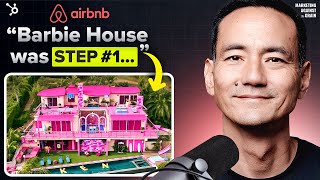
Hiroki Asai, Airbnb's CMO, walks through how the company keeps marketing, product, and design tightly aligned. They print mockups together for shared perspective, protect early ideation from metrics, and sync releases twice a year. The Icons program and recent Co-host Network launch show the result.
Chapters
We just make sure that we're always looking at everything through the eyes of a customer. And it sounds super cliche and super simple, but it's actually really, really hard.
We're joined by Hiroki asai, who leads marketing over Airbnb, and he's taken us behind the scenes. What's the Airbnb creative process like? How do you lead and organize and manage teams to get amazing design and product releases done? How do you actually come up and bring ideas like the iconic Barbie House or the Purple Rainhouse to life? And then how do you actually just operate teams so that they can be both really creative and really fast? We're breaking that all down today. Let's get to today's show. All right, welcome, Hiroki, to marketing. It's the Grain. Thank you so much for being here. And I want to kick us off right away with a little breakdown of how work actually happens at Airbnb. I'm blown away by the level of quality and velocity of work. Can you take us behind the scenes and help us understand that we're a.
Very unconventional marketing team in that we're organized functionally to begin with. And so we have the creative team, marketing team, product team, and design team, all of which the heads of those are all peers. And so we all work together. That's kind of what I call the primary team is the head of all the functions. That primary team actually works really, really closely together on the product work and the marketing. And what we've done is it's. We found it super, super important to make sure that the creatives are sitting right next to the product people. We're sitting right next to the marketing people who are sitting right next to the designers. And the way we work physically, you know, we're all together in one room, and the way we work on one product roadmap together, the team is really thinking about all functions of how we bring something out into the world at the same time.
And it sounds like one of the reason you do that, because we just talked about this off mic where you were talking about how Airbnb has kind of different spaces for the way teams collaborate. But one of the things I kind of picked up on is you actually print out the designs, put them on the wall, and try to experience it like a customer. And a lot of organizations, what happens is there's separation between functions, and so your customer experience is more representation of how your team is structured. Like, you kind of ship your team Org versus shipping a great customer experience. Could you maybe talk about that is that at the heart of the, why you work that way is because you're really customer obsessed and what it means to be thinking about the customer experience in that way.
Yeah, that's exactly why we do it. The way we think about it is a lot of our teams touch different parts of the marketing and the product. But the reality is that there's one person, the customer at the end of it that has to be an audience to the marketing, be an audience to the digital work, show up at the site, book something, go through it. And that experience, end to end, needs to feel like it's coming from one person, from one voice. And the tighter it is, and the more cohesive that experience feels, the more the customer, I think, actually remembers it and the more resonant it is for that person, you know, and also too, it's, it's, it's very easy, I think, when you're in a big company or an organization just to start to think more and more narrowly about your fiefdom, your team and the success of your team. And I think it's really natural to, you know, if you lead a team to start to look out for the benefit of that team and make sure that team is really, you know, busy and doing all the work. And you start to forget that the person that's on the other end of all that work, the product and the marketing, they don't experience you in silos, they experience you and your company across the entire gamut, right? And so what we've created and what we employ here is just this idea that, you know, we have functions and we have team leads, and those team leads are really the primary team, the peer set, right? Because marketing needs to work really hand in hand with design and product, who needs to work really hand in hand with creative, which is the ad agency. And so all of these things are aligned together and so they're aligned conceptually, right? So the customer feels the experience and the design work as if it's coming from one voice, but it also needs to be aligned tactically on one calendar, you know. And so what we try and do with these releases, like our most recent release, is make sure that everything that we're doing, we call it stacking the bricks from the product to the creative to the marketing to the performance marketing, the brand marketing, all of that stuff aligns on one moment, the release moment. When we put the software out in our most recent release, that's a really good example where we launched the co host network, we had the product ready on the same day. We had all the host communications done on the same day. We brought in the host, pre briefed them and then talk to the broader host network on one day. We released all the marketing on one day. We're doing all the press at one time. And so by aligning all these functions and activities together on the same calendar on the same day, you really get a lot of impact.
Two things I would love to get your input on here. So this model, I think at a certain size of a company, these cross functional, we call them pods in HubSpot, but these kind of cross functional teams where you try to get alignment on a single mission across these cross functional teams and try to have speed of momentum and have them execute still as if they're acting as a smaller autonomous team is really hard because there's two parts that are hard. Who plays tiebreak? So when you have cross functional teams trying to work in this situation and if they disagree with each other, who actually is the person that can actually play tiebreak and say no, like we're going to go in this direction or that direction if there's disagreement. And the other thing is if you kind of say that to someone, they'll say, well, that sounds amazing, but it's going to slow us down. Right. The reason that a lot of companies have small autonomous teams is because they believe that will actually speed them up. And I would love maybe to start with the second one which is like, do you sacrifice speed of execution to have such alignment across all of these different groups?
Yeah, it's a little unintuitive, but no, we don't sacrifice speed of execution at all. I mean, with the amount of work that, you know, we just shipped 50 new customer feature enhancements on the guest side and that totals over 400 in the last year that we've shipped. And so the velocity of our software that we're shipping and the velocity of marketing that we're creating is really the fastest we've ever been in Airbnb history. And I, I think the way that works is, you know, we, you talk about these smaller pods that are working on, you know, smaller ideas and baking them, that's happening here as well, as well as the larger cross functional teams that are working together to get the whole of the software and Airbnb over the finish line. How we make it work is these functions, design, marketing, product and creative. Those heads are spending a lot of time together. They really are in the same room. We spend a lot of time together and we're also very lucky because we have a creative CEO. And I think that's one thing I haven't talked about yet is you really do need to have a single decision maker that's a champion of this process and, and is both left and right brained to be able to make this work. And because as we're working together, there is an ideation process and there is a point in the process that's very delicate, like all creative processes. And it needs a little bit of space and a little bit of protection before it gets into implementation. And so you do need a leader that knows how to provide that space and knows what's actually happening in that process before it gets, you know, crushed with repetition bias or negativity bias.
You just reminded me of one of my favorite adages, which is like your first job as a Chief Marketing Officer is to understand that the CEO is actually the Chief Marketing Officer. Yeah, right. The CEO understands what the vision is, what the brand needs to be, who the customer is. And your job is to bring that to life. And what it seems like is that's, that's exactly what's happening in the work that you're doing where you have a great champion in Brian and I'm sure the broader executive team, but it's your job to then kind of bring that work to, to life at the kind of level of fidelity and quality and velocity that needs to happen.
Yeah, yeah. And there really is, you know, when you talk about the, these roles like CMO or Chief Marketing Officer or head of this or head of that, the way that we work is so, is so tightly integrated that we are really just connecting dots between these functions and there really aren't traditional silos.
And why is that the case? What is different about the incentives or the goals or the way of working that makes those silos go away? Because I think in most organizations, Even smaller organizations, 100 people, 200 people, those silos exist.
Yeah. I think it's really, really easy to get lost in your own division, your own team, your own silo. It's. And before you know it, you're speaking a language that only you understand. You're creating acronyms and ways of working that are separate from other teams. And it happens really, really quickly. And so what we try and do is we just make sure that we're always looking at everything through the eyes of a customer. And it sounds super cliche and super dopey and super simple, but it's actually really, really hard because, you know, even through the course of a day, through the course of conversation, you could find yourself using internal language and internal speak and going off on a little bit of a vector that no one would really understand outside the walls of our building. And so, you know, to combat that, what we do is we print out everything on the walls. It's a little bit old school, but we print out all the digital, all the surfaces of the product that we're working on, the marketing, the comms work, the influencers that we're working with, the timelines. And so we create this representation of what the customer sees, and we always talk to that so we don't start residing in our own heads. Does that make sense? It's very easy, I think, if everyone's on a screen, everyone's on a computer, and even if they're in the same room, you could be talking about the same thing, but the picture you have in your head is going to be just 2 degrees off from the picture in someone else's head. Right? And those two degrees make a big difference when you get further down the project or further down the campaign or further down the initiative. And so it's really important just to have something physical. You know, it sounds really dopey and naive, but it sounds. It's really, really important to have a picture and a visual of exactly what we're talking about and a common language and customer words, exactly what we're talking about. And we need to use customer language, not our own language, not our own internal language, just to keep us all honest and keep us all thinking along that same track. And it's really. It's hard. It's really a challenge. It's, you know, we find ourselves in every conversation and every discussion, every conflict, you know, every compromise that we're making in all these meetings. And, like, working week to week and month to month, we're always checking ourselves saying, well, wait, wait a minute, wait a minute. You know, no one's really going to see this. Like, is anyone really going to understand this? You know, are they really going to have time to think about this? Do people really care about that? You know, and so it's a constant debate that happens. But the thing that makes it work in all my experience, is it's really simple. It's just having a picture for every. The same picture for everyone to speak to, to get out of our own heads.
I agree with that. I think that teams create their own little kingdoms, and they have different sets of rules and different languages, and you could literally be speaking together in the same room, but. And talking about the same subject matter, but Talking about it very differently, or someone has a completely different perception of how you perceive that thing. I love that the obsession is with the customer. And even you're printing out the customer experience and asking yourself, like, how would the customer actually go through this process and experience in the thing that we're creating? What are the feedback loops to know if you're all being successful? Like, you can look at it and you're a very design led culture, or you have a very design led, critical led CEO, so you can esthetically see things getting better. You can go through the process and say, well, there's less friction as the user needs to go through and do this thing. But are there, what are the kind of feedback loops for that team to know that the things that we are doing are being successful for the company, being successful for the customer?
You know, we have all the same feedback loops that you would expect. You know, we monitor how people are going through the funnel, who's coming in, who's coming out, what the falloff points are, what the conversion looks like, what the sentiment is before they come, what the social chatter is before they come. So, you know, when it comes to the analytics of measuring all of that, from, you know, before they arrive to when they book and when they book the next time, and what happens between the moments that they book, we track all of that and all of that is shared, you know, equally through all the teams as well as all of the customer country kind of qualitative insights that we're gathering at the same time. So we're very good about gathering all that information, tracking exactly what's happening with our customers and with what we call the supply side, which is the homes and the hosts, and what's happening through all the different funnels. We mix that, though, with the work that we're doing. We'll take a look at that quantitative data, but then we'll step back and look at the work with kind of a qualitative customer eye. And a lot of times, you know, it's unintuitive. Like, the data does not speak to what you think a customer would be doing, but when you understand it, understand what's going on, it actually gives you some insight, like, oh, that's right. You know, this person at this time is not really thinking about that. They're thinking about this other thing. And we may think it's important, but the reality is they're in a totally different mindset, and that's why this behavior is happening. So you kind of have to put those two things together to really put yourself in the seat of the customer to understand what's going on.
How does the team do that part, the qualitative part? Because I think that's the part that people struggle with. What I think most marketing teams do is they just deviate to analytics and look at everything through binary numbers. But how do you put yourself in this? How do you, like if you were trying to teach a marketing team or give them some advice on like, how do they get into the mind frame of the customer? What are the best ways, like just go speak to customers or what's the ways that you've kind of encouraged teams to have that mindset?
Our leaders have to have the ability to step back and raise the altitude on their own perspective a little bit and add some healthy skepticism to how they're thinking. But really you just need a lot of qualitative insights from people outside the company. You know, we have a great research team that goes out and gathers constantly samples of people to get that data, you know, and some of it is, some of it is flat, a lot of it is video, which actually helps a lot, you know, but we're digesting as much of that stuff as possible. But you know, our leaders, we all think in that way. I think where we love what we do, we get into what we do, we identify when we're getting a little too far into it. And I think our leaders are pretty talented in that they can step back and trust their instincts a little bit and be skeptical of their own thinking and not be shy to interrogate it and litigate it a little bit.
There's so much hype around AI right now. We talk about it on the show all the time. And so many people are going to use AI in the wrong ways. The smart people and the smart marketers are going to use it in the best ways. At HubSpot, AI is transforming so much of our marketing. It's helping us clean up our data, transcribe our videos and content from one language to multilingual, boosting our conversion rates with personalized emails and landing page. And that is just the tip of what we are doing. And if you're a smart marketer and you want to transform your work with AI, we have just published an amazing 12 page AI prompt guide that goes through some of the best AI prompts for marketers right now. So if you're maybe uncertain of use cases or how to get started with a prompt, this is the perfect guide for you. We have linked it in the description below. So go and Click that link. Check that guide out. Now back to today's show. One of the things I wanted to talk about is like, I'm always interested to talk to people around, especially with creative work. How do you know when that work is done? And you all are doing this product release calendar where you do two big product releases. I'd love to know, like, are you just sprinting for six months and the deadline is the deadline and like that's when you're shipping stuff or do you actually have moments where you're like, no, I think this work is, is done and I know it's done because of.
You know, in order to go every six months, we do have multiple teams that are leapfrogging each other and, and we're getting very good with resource management around, peeling people off and putting people on. But really that, that, you know, six 12 month plan, there is a two year and a three year plan behind all of that. And there is an ambition even for further out that everything is pointed towards. And so the closer you are into now, the more visibility we have into what we're shipping six months from now. A year from now, it's pretty clear. And a year from now, a lot of this work, there's a lot of, you know, foundational engineering work and design work that has to happen to lead up to, you know, what we want to do a year from now. You know, it is a constant balance to be able to make sure that, you know, this is going to lead to, this is going to lead to that in order to get here. And so you need to think about where you want to be in two years. Step it back to 18 months, step it back to 12 months, step it back to six months. And what foundations do you need to build there? Not only in like the product and the engineering and the design work, but also how do we take our audiences on a journey lily pad to lily pad to lily pad to take them on that journey, you know, two years from now. Now that's all happening. And you can imagine you have to leapfrog teams to make that happen every six months. In addition, there are teams that are thinking about the everyday, you know, the performance of the everyday. And they're looking at the performance of every piece of the funnel and every, and every page as it's happening every day and tuning and tweaking and doing the marketing to support that as well, you know, the performance marketing. So there's, you know, we're working at different altitudes simultaneously and then at the higher altitude work we're leapfrogging to get to a much further vision.
I think one of the mistakes a lot of teams make is they have the same people who do the everyday work to also do the long term kind of campaign work. And there's too much overlap. And then the short term always takes precedent over the long term, and you never kind of make that long term progress. And it seems like you're saying you kind of really need those teams staggered. Even if you have a really small team, you still have to find a way to stagger the work and make sure that the long term campaign work actually gets done.
Right. Right. And, you know, you really have to be well coordinated and those, those teams really have to be integrated because you don't want to start doing a bunch of short term optimizations on something that's ultimately going to get redesigned six months from now. Yeah, right. And so you have to make sure those things are balanced and have the priority conversations of what's more important and then really be able to say, you know, in order to get to where we want to be, what's more important, should we just accelerate getting this piece of it done, or do we want to continue to optimize it, put off that piece until we do another piece? You know, so it's this constant juggling. And then at the same time, the marketing teams need to be coordinated with that process as well, because they need to know that they're taking the customer on a journey, lily pad by lily pad to lily pad, to get them to think about, you know, a different offering or a different way that we're talking about something. And so they need to really understand the progress of, of our software and where that's going.
Talking of campaigns, we would love to talk about one of our favorite campaigns. I think we did an entire episode on it, a podcast episode on it, which was the Barbie House, which you did as part of the movie release. And I think it's become part of your, you know, you have an entire category called Icons. But the Barbie release is one of the, I think, best marketing campaigns that I've ever seen. I thought it was super cool what you all did. Can you just talk about the story, like give us behind the scenes?
Sure.
How did you come up with the idea? Was it hard to get sign off to do that idea? Just. Yeah, just give us like the backstory of it.
So the icons, what ultimately we now call the Icons campaign, has been living at Airbnb for quite a long time, and we have an incredibly talented comms team that came up with this idea with Brian a long time ago. And it's a brilliant way to go out. And, you know, it enriches this idea that you can Airbnb anything. And it also, it also allows like fans of Barbie or fans of whatever movie to, to participate more in that world, you know. And so it's this perfect combination of like, you have a cultural moment with Barbie, you have a lot of fans, you have this natural connection because there's a Barbie house and then you have Airbnb and then the ability to participate by booking that house and, you know, reinforces us doing kind of being able to, to list crazy things, have hosts list crazy things. And so that concept was developed by the comms team a while back. And as they started to do these things, they got bigger and bigger and bigger. And the Barbie house was kind of the, you know, the apex of this thing. And so at that point everyone is like, we gotta do something with this. This is amazing. And it sounds really simple, but we're all in the same room, you know, we're all talking about the same thing. And so it's, it's really hard to know how that decision making process happens. It just kind of happens. Yeah. So it became a no brainer to, to create a program out of this. And the comms team, you know, said like, well, why don't we. This is so visible. It's so big. We have categories that are doing well. It helps people comprehend our supply. Why don't we create an icons category? And we were like, of course, you know, brilliant, let's do it. And then we got behind the software teams jumped on board and we, you know, that was launched last May and we've been doing them consistently throughout the year. And recently we just did the Prince house.
I was just about to say this is what I was going to get.
Into next, which was, yeah, that really struck a chord. That really struck a chord with people. It was really exciting. But I'm sure you're asking like, how do you measure it? How do you know it's successful? And the way we look at it is it brings a tremendous amount of visitors to. A tremendous amount of visitors to the site. But most importantly, it keeps Airbnb top of mind throughout the year. I mean, we are associated to travel. Most people travel once a year, maybe once every two years, especially on a big trip. And so we don't really come into their consciousness until they're traveling. And so we need to stay relevant. We need to be top of mind all throughout the other 11 months. And so this is just another great way for us to be part of culture, part of things that people care about. And, you know, not in a top down kind of way, but I love Icons because it really feels like we're celebrating something like Prince together and our memories of Prince and the Prince house and that album and who he was and, you know, we're celebrating Barbie together.
It. I think it's one of the best examples of a brand that has done something that is both, like, it brings their product, your product, to life. Like the. I don't know that I don't get the strap line wrong, but the Airbnb strap line I know is like, belong anywhere. And this literally, like brings that to life because it's belong anywhere. Even things that you could never imagine, right? You have the inside out coup house for. For their release of their movie. So you could literally like belong anywhere inclusive in movies. My one would be if I could stay in Princess House, I would be probably top of my bucket list, a incredibly huge Prince fan. So I, I love this campaign. Do you all build the houses? Because it does blur the lines between, like, there's a little bit of being a Universal Studios about this. Like, do. Do you all build these as attractions or how do they come to be the houses?
Yeah, they, the teams, the design teams working with the comms teams actually go out and build these things.
Wow.
Wow.
Yeah. I mean, if, if you go back last year to the up house with what we launched with, I mean, the amount of detail that they put into it is unbelievable. Down to the pill bottles and the pills in the pill bottles. And it's really unbelievable. You know, the fireplace has ropes in it that you can play like a harpsichord. Just like in the movie, the Prince house, the same thing. They went, you know, frame by frame through the movie and replicated or brought in all the exact details that were in the movie. You know, from the sheet music to the scribbles on the wall and the lighting in his bedroom and the actual guitar. And it's all, it's all been painstakingly done.
Just so people know, you cannot book the princess right now. It is, not surprisingly, totally booked out. It does blur the lines. Like, it really has, you know, Airbnb. You can rent someone else's house, but it's also like in a. I don't know, like an experiential platform now, right? You can. It's like going to Disney World or Universal Studios. You can actually stay in these houses that are for, you know, incredible movies. Or incredible pop stars or whatever else direction you may go. It's such a clever way of bringing the brand of Airbnb to life.
Yeah. Because, you know, at the end of the day, Airbnb is really about connection. It's about human connection, and it's about people connecting together, or you connecting with ideas, or you connecting with and celebrating iconic films and moments like the Purple Rainhouse. And so in the coming year, you'll be seeing a lot more from us in that world of connection. That'll be very exciting.
Stuff like, that's kind of crazy. It's kind of out there. I think it's very hard for any marketer, regardless of the size and scale of the company, to do something new, to do something that isn't tried and true. It's like, oh, my competitors are doing this, so I'll do it. Or I know this is an industry best practice, so I'll do it. You know, creating a whole category of experiences to drive brand and publicity and excitement is not something that's out of, you know, the marketer's catalog. So, Hiroki, you know, we're talking a lot about kind of the twice a year product launch calendar. I know you just had a big launch, maybe break down. What'd you launch? How did you get it out in the world? I'd love to kind of learn a little bit more. Your Airbnb winter release.
Sure. So we're just coming off of shipping the Co host network, plus 50 new consumer upgrades for our guests. Now, the Co Host Network is pretty unbelievable. We found that whether you're a new host that you're just starting to host on Airbnb, or you're an existing host that wants to add more availability or more homes, we found that hosting could feel like a lot of work for people and could be intimidating. Now, we also found that there's a lot of hosts out there that don't actually have a property they're hosting. They're actually helping other hosts. And so we've created this network and a marketplace where we can connect the two. So if you're a new host, you want to get into it, but you're a little bit intimidated about the customer communication and the time it takes and all of that, or how to set it up, we can connect you with a co host, and that co host can handle all the customer communication, that co host can set up your place for you, that co host can let the guest in. And so it's almost like having a partner, you know, and these co hosts they're amazing. I mean, they're, they're. Some of our highest rated co hosts are actually co hosts. Some of them have properties of their own and they're very highly rated and they're guest favorites. And so it's a way to create a community of hosts that can work together to invite more guests in.
Yeah, it's really like you had a marketplace and now you're adding like a network on top of the marketplace because you, you realize that you needed it because you could deliver a better customer experience that way.
Exactly, exactly. You know, and, and the host needed it. And it's, it's a, it's a program that we've been piloting for quite some time and it's been really successful. And so we're super excited to roll it out. We're starting with 10 countries, 10,000 posts, and, you know, I'm sure it's going to get a lot of momentum and velocity and go big very quickly. So we're super excited about it.
That's very cool.
Congrats. How do you decide to do something new? How do you get everybody on board with doing something new? Whether it's an extension of something like Icons, which is great, but I'm sure there are things in the next year that you're doing that we don't know about yet that are going to be brand new things for Airbnb. And it's like, how do you get everybody on board that it's a good idea?
Yeah. And I think that's something that we're very, very lucky with in that we have a creative CEO. We have a CEO that and founders that studied design. You know, they went to design school and so they give us permission and, you know, our CEO gives us permission and gives us the space for that kind of ideation to happen and those kinds of ideas to percolate. And he is also, you know, not afraid of risk in these situations and just wants to do something that's great and wants to do something that we all enjoy and love doing. Now we also need to be responsible and we need to do it right. And we need to make sure that it's healthy for the business, which we, you know, which we definitely do. But we're just lucky in that we have a creative culture and a company that's equally right brained and left brained. And that culture and that environment, you know, gives the creatives the space. And when I mean creatives, I don't think it's not just designers and, you know, art directors and advertising Creatives, it's actually our comms people are very creative. Our product people are incredibly creative, our marketers are incredibly creative. But it gives them the space and the permission to ask these kinds of questions and do these kinds of what ifs and come up with these ideas and then really interrogate them and just make sure that they work. And then he is also not afraid of risk and will give it a shot.
Quick follow up to that. I think people are always interested in the creative process. Do you all have a set creative process that everybody follows or are you more decentralized in like, hey, we know the big tent pole things we're working on. We let people kind of run their own individual creative processes on the, on the route to getting there. Like, how do you think about that?
We know when we're working on something, whether it's a piece of marketing, a piece of design work, we all acknowledge and we all know that there's this creative process and there is this delicate moment of ideation, right? And I think the thing that we do really well is we protect that ideation. And we know that, you know, creatives can't run unconstrained. So they need to understand what the constraints are, they need to understand what the budget is, they need to understand what the, the timing, the framework, the goal, the problem is that we're trying to solve. But then you need to give them some space and you need to extract as much pattern bias and negativity bias as possible for a fixed amount of time to make sure that those ideas can flourish and those ideas can grow. And we're just really lucky in that the people that we've hired, even though they are creatives, understand that process and understand where the creative thinking is at and understand how to nurture it and grow it versus shut it down. And so I guess the answer to your question is it is kind of built into the leadership here. And I think people intuitively know where we're at and people intuitively know when to ask questions and when things are still percolating and not to push too hard on it.
Talking about Brian, like, he's a very, you know, he's talked about the fact that he's a very design led CEO. I'm sure there are like pros and cons for a CMO working with a CEO like that.
I'm probably oversimplifying it and it may sound a little naive, but the way we work here together is really just like a team. You know, I'm, I don't have a title I'm just Hiroki. It's, it's, you know, it's Judd or Tayo or Scott, Eric, Nancy, Brian. And we're in a room and we just talk through what we have to do. You know, we know what our functions are. We know what we're responsible for. We are very clear on what each of us are accountable for, and we're very clear on what the other person is accountable for. And we're also very clear on when our spheres overlap and where we're allowed to ask questions and when it's kind of none of our business. And so we just work really well together as a team. And so, you know, the role that he plays is ultimately of the decision maker and the editor. But, you know, we also need to kind of work through the problem together with the whole team and understand what works, what doesn't work, and then we kind of arrive at a solution. And more often than not, when you work through it together, it's not a surprise what the answer is.
And a lot of companies were founders have pivoted back to founder mode, and they want to be in the weeds. The team obviously will divert to their opinion, Right. If they share their opinion first, it kind of sways everyone towards one Direction. And so I was talking to a founder recently who talked a lot about the. They're switching back into the work and they. One of the tips they gave was that they go last, right? So they, you know, they want everyone to kind of share their opinion and then they'll go last so they don't kind of sway everyone towards one direction. Is there anything, any kind of tips or anything, anything that Brian does that kind of helps a founder and a CEO integrate into that team mode a little bit more, where people don't just kind of continually like sway towards what they believe or that he kind of influences people, even if he doesn't mean to, because he is the founder, he is the CEO.
I think the thing that helps us all work together is really this idea of focusing on who is the customer to this. And if, you know, this goes back to that earlier conversation of everyone having one thing that we're speaking to versus speaking from our opinion or what's in our head. But if we're all speaking to one thing that's tangible, it's a different dynamic and a different kind of conversation. And if we all hold ourselves to the fact that who is this for? It's like, who's going to be at the other end of this? And when I say customer, it doesn't necessarily have to be a consumer. It could be a host, it could be another company, it could be a partner. It's who is at the other end of the work that we're doing. And then we always look at it from that perspective. And so that keeps the conversations aligned and the ideas flowing. So it becomes less about opinion and it becomes less subjective and it becomes much, much more objective.
I think that makes a ton of sense. You know, Hiroki, we're getting close to time here. I want to be respectful of that. But we don't want to let you go without talking a little bit about the future. You know, anybody in marketing right now is getting bombarded with AI, with creators, with the evolution of storytelling through all new mediums. Like, for you, in your mind, as you think about the future of marketing, what do you think is going to happen? Like, where do you see things going?
Good question. Who knows?
That's how I feel most of the days. But you still got to talk about it, you know. Yeah, we're all making our best guesses.
I guess the short answer is, the way I think about it is at the end of the day, people make decisions in two ways, emotionally and rationally. And you have to appeal to both. And there's different ways to contact people. There's always going to be new channels. There's new behaviors. People will use different channels differently. Some channels will disappear, but at the end of the day, people will make a decision that's part rational and part emotional, and you have to appeal to both. And for, you know, what I hope to see is that for other brands that are consumer brands, that they really start to embrace more of the emotional and not focus completely on the rational. And, you know, there's always place, whatever channel it is, or however narrow that channel may seem that we're working within, there's always a place for surprise and humor and serendipity and connecting with customers in a human way and getting on the emotional side of their decision making.
I think that's the perfect endnote. Hiroki, congrats on an amazing product release at Airbnb. I'm sure you're still recovering from the sprint to get all that out the door, but thanks for coming on the show today, sharing a little bit about how you work and how people can do marketing maybe a little bit better. Really, really, really appreciate your time.
You're welcome. You're welcome. This data is wrong every freaking time.
Have you heard of HubSpot? HubSpot is a CRM platform where everything is fully integrated.
Whoa. I can see the client's whole history. Calls, support tickets, emails. And here's a task from three days ago. I totally missed HubSpot.
Grow better.
More from Patrick



A NEW BREED OF PARTNER: The Partnership Ecosystem Model Journey of Patrick Biddiscombe, Part 1








Customer Success Workspace: Never Lose Sight Of What Matters Most | HubSpot Spotlight