Andy Cohen on Who Inspires Him
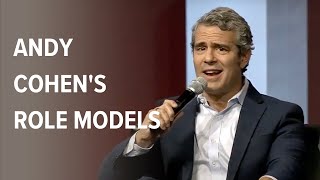
A live, informal interview with Andy Cohen covering his path from Boston University broadcast-journalism student and CBS internships to becoming a Bravo executive and then an on-air personality. He describes launching 'Andy’s Blog' (the first daily blog by a network exec), segueing into the online show Watch What Happens and hosting reunion specials that evolved into Watch What Happens Live. The transcript details his role producing and developing Bravo staples (Project Runway, Top Chef, Millionaire Matchmaker, Rachel Zoe Project, Flipping Out, Million Dollar Listing, The Real Housewives, Being Bobby Brown), his philosophy on authenticity and live TV, how the Housewives franchise endures, his interview style (live, minimal pre-interviewing, occasional agreed parameters), social-media use and concerns (Twitter/Instagram), and creators who inspire him (Jimmy Fallon, Howard Stern, Conan, David Letterman, Graham Norton).
Questions this video answers
Boston University.
He wrote "Andy's Blog" on BravoTV.com and said he was the first network executive to have a daily blog.
Miss Universe pageant in Brazil.
Project Runway; Queer Eye (as EP work early); Top Chef; Millionaire Matchmaker; Rachel Zoe Project; Flipping Out; Million Dollar Listing; The Real Housewives; Being Bobby Brown.
Chapters
It's a Runway. I had to do it.
What a ham.
I know, I know.
Andy and I just hit three more tequila shots backstage. No, not true, not true. We didn't.
We didn't.
Stone cold sober for this one. It's good to see you, Andy. I'm such a fan of your work as. I know. I don't know. 12,000 of your closest friends are here today. So what did you want to be when you grew up?
I wanted to be myself on tv.
And what did that play out?
That's what I am doing.
I know this is what I was going to say. I cannot think of anybody in the pop culture or landscape that seems to enjoy and embrace what they do on a day to day basis or. You're the best actor. You're Daniel Day Lewis of talk show host. I can't tell as much as you how much does what you do mirror what you dreamed of as a child?
I mean, it completely does. It's almost kind of. It's amazing how it all worked out, I have to say. I mean, I loved it. Soap operas growing up and the fact that I'm now one of the producers of the greatest reality soap opera going is incredible to me. And that I, you know, I was always a shit stirrer growing up and the fact that I'm now getting. I'm a very high paid shit stirrer is incredible. And you know, I wanted to be in front of the camera. When I was growing up, I studied broadcast journalism here at Boston University. And I, My plan was to move from small market to small market and be a local TV news guy. And. But my last internship of many internships was at CBS News in New York. And I, I spent a little time there and I was like, oh, man, I'm gonna, I'm not gonna do the thing of going to all these towns. I'm just gonna move to New York and work behind the scenes. So the idea that all these years later I got to be in front of the camera is really as much of a surprise to me as it is any of my kind of former colleagues from years ago.
Yeah, I mean, I was gonna say like back in the day, like if we go back like 20 years, this never happened in terms of that transition from producer. And I relate, frankly, in my time at mtv, I was a producer at first, before they decided to put this in front of a camera. And it shocks me, as it sounds like it still shocks you to a degree that you have the opportunities you do. But when you started to make the transition There must have been a point when you were at Bravo where you had to kind of like, put your cards down and say, I think I can be a good on air host.
There really wasn't. It happened really organically. I started writing a blog on Bravo TV.com called Andy's Blog. And I was the first network executive to have a blog every day. And I wrote about not only the shows on Bravo, but what I was watching and also kind of how the sauce was made and also what I did the night before. And then out of that, I started getting interviewed on. I just became kind of a pop culture pundit on whatever show that would have me. And I loved it. And I was a ham. And my boss saw that. And then she gave me an online talk show to follow, Top Chef, and that was called Watch what Happens. And then we needed someone to host a Housewives reunion, season two, Orange County. And she said, would you want to do it? I said, I would love to. And then that's how that happened. I mean, one thing led to another. If I had. And by the way, if I had ever. I was in charge of programming, I was in charge of production and development at the channel. If I had ever said to them, I want to be the face of the channel, or I think I'm worth this much money as an on air guy, they never. They would have said, that's actually not your job. So I knew it was always my extracurricular kind of activity, and it was, to me, a reward because I was. Every opportunity I viewed as not. I viewed it as an opportunity and something that I was getting to do in my head. I knew I wasn't worth any of them, anything to them as an on air person they could hire, you know, Brian Dunkelman. Does anyone get that reference? He was the guy that was fired from American Idol. Anyway, so, you know, I. So yeah, I don't know. I feel like I went in a rabbit hole.
Well, and it's interesting because when you think of most talk show hosts, let alone late night talk show hosts, the template, if there is one, is comedian, actor. Yeah, you're neither of those.
I'm not. And it's one of the reasons that I relate to Conan is that Conan started as a writer and behind the scenes, and then they said, wow, you could do this. And so. And there aren't many people that have gone from behind the scenes to this, which is why, you know, I'm still a very active executive producer of the Housewives and my own show. And I'll Never stop producing television.
Can we talk a little bit about the behind the scenes stuff at Bravo before you made the transition? Cause I'm curious, like, I'm trying to remember myself. Where was Bravo at when you came to them? What was the identity of that channel and how tough was the transition?
When I came, actually, people thought I kind of gave up Bravo. But Bravo was gayer than me. Before I joined the channel, they had a show, I think it was called Gay Weddings before gay marriage was legal. So I don't know how that went. And then they had Queer Eye and Boy Meets Boy, if you remember that. And then I.
Inside the Actors Studio. Super gay.
Exactly. And, you know, I interviewed for a job as head of Logo, which was just starting. And I thought, you know what? There's no one gayer in television than me, so I should get this job. And they didn't hire me, which I still kind of can't get over. But I'm so glad that they didn't because I went to Bravo. And so Project Runway was in production, and Queer Eye, I started eping, I think I paid with the group, around 50 or 75 episodes of that. And then after that, we. We developed, you know, you know, the first five seasons of Runway. And then it was Top Chef and Millionaire Matchmaker and Rachel Zoe Project and Flipping out and Million Dollar Listing and the Real Housewives and being Bobby Brown, if you remember that train wreck, and on and on.
I mean, are you surprised yourself at the shelf life, for instance, of Housewives?
You know, kind of. No, because it's this. It's an ensemble show. And what is brilliant is, first of all, every city or iteration of it really has its own identity, yet they're all about the same thing, which is friendship and being a wife and being a parent and being a sister. And, you know, we love judging human behavior, good and bad. And they're all funny, and I think they all have heart in some level. And if. If it was all flipping tables, I think it wouldn't still be on the air. There is humanity in the show, and I think that's what people come back for. The casting is really unique. And so getting back to the longevity it is, you can take someone out and put someone in, and it just can somehow revitalize the show and take it to a place where you didn't think it would go. I mean, you know, we've lost in some cities, real big stars, and we've been okay. You know, you take out anini leakes and you bring in, you know, Kenya And Porsche and suddenly, whoa, what's happening here? Or Dorinda comes in to New York or Erika Jayne in Beverly Hills, or, you know, Shannon Beador in Orange County. So it's. It's. You know, there's a way that. And truth is stranger than fiction. This is a. We don't write this show.
We.
Actually, there's. I am a major pot smoker, but there is not enough dope for me to come up with this stuff.
Has the play, although you're willing to try.
I was just gonna say I challenged myself.
Hmm. Plans for this evening? No. I'm curious. You know, the place of something like Housewives in the cultural landscape today. You're someone that's politically outspoken. You're not shy about talking about politics and sort of the state of the world. And you've had to, like, deal with your detractors in terms of Housewives in particular and sort of how it contributes to whatever. I mean, just give me a sense into your own mind. Like, does something like Housewives or even your show, do you feel it's incumbent on you as a producer, as a performer, et cetera, to contribute to the dialogue or help society, or is it fine to have disposable popcorn?
Well, I think it is. I think people accuse daytime soap operas. When I was growing up, once every year and a half, there would be a Time magazine or a TV Guide cover story, our daytime soap operas ruining everything. And I think the great thing about Bravo is it's always been high, low. Bravo, you know, Top Chef has won an Emmy, and they're inside the Actors Studio. There's high and there's low. And I love the Housewives. And I don't really think it's low. I just think it's a great soap opera, frankly. And you don't have to watch. And, you know, we don't editorialize on the show. People say things and people. I get tweets every day saying, why don't you stop them from saying X, Y or Z? And I say, it's not up to us to stop them as viewers. We can kind of figure out what's right and what's wrong. And there's retribution for a lot of them. You know, sometimes when you do something bad, then bad things happen to you. And we see this happening time and time again. But you talk about politics. I mean, it so happens that we have a president who behaves like a first season real Housewife, desperate to stay on the show, who will do or say anything to stay on the show. And so I have been tweeting a lot, and, I mean, part of me is trying to troll him to get. I want him to block me kind of on Twitter. I mean, I just feel like it would be exciting because then also I wouldn't have to say, see his tweets. So it would kind of be a double fantasy. But I have been comparing his tweets over the last year to Real Housewives. I've been doing this thing called Real Housewives Playbook where I take a tweet of him and I say, well, this is exactly how Brandy Glanville behaved in season two. You're behaving this way. And I just think it's an interesting comparison and sad somewhat.
I believe in you. I think you'll get blocked. I think before you're all said and done, you'll get blocked.
Yeah.
Talk to me a little bit about. I'm curious about, like, branding of a channel and a personality. Because, like, Bravo, you know, has a very distinct brand. And in a changing cultural landscape where I feel like TV channels, a lot of people are watching content not even knowing what channel they're watching.
Absolutely. Well, the content has become the brand it used to. And I think, by the way, part of the reason that we were so successful in those years creating all those shows is we really knew what the Bravo brand was. And Lorenzo Laznick and Frances Barrick, who ran the channel, we all figured out what this brand was and we developed into it. And if you know your brand, then you know you can have great success, hopefully. And we learned from our mistakes. But now it seems like the content is the brand. So it's like, people. The Real Housewives is the brand of its own brand. And I'm kind of my own brand. So that's changed. But I do think that Bravo is one of the few channels that has been consistent in their programming, and their brand means something to viewers. It's fun, it's often aspirational, it's funny, it's addictive, it's high end, hopefully.
What's your brand? How would you define it?
You know, I don't know. And I hate to, you know, look, we're. Brand is the buzzword. And I kind of hate the term brand, to tell you the truth, because when I got the talk show, they made me go on Twitter, and Twitter was kind of. This was eight and a half years ago or something. And it was kind of the beginning. And I was like, but I have my blog. You know, everybody's gonna be blogging forever. That didn't happen. But, you know, so you. But. So I kind of backed into creating whatever my voice was on Twitter, and what it was was me. And I don't. I don't know. I think, what is my brand? I think that I'm. I think my brand is very close to what the brand of Watch what Happens Live is, which is fun, maybe unpredictable or unexpected. I think I ask questions. I went to the Howard Stern School of Broadcasting, where I ask exactly what hopefully everyone wants to know. So I go there, in a way, I try to, and I guess that's my brand. I don't know. I mean, maybe we'll do a marketing study, and then I'll find out.
As important a buzzword as branding is, I think. I think the real word that always strikes me, and it comes up a lot when it comes to media and hosts, is authenticity. And I think you. To your credit, what you see is what you get. It seems. Well, that's.
Well, that's true, and that's very important to me. People can smell bullshit from a mile away. And the Bravo audience, specifically Bravo, outside of all the news channels and maybe the Golf Channel, But I could be wrong. Bravo has the most educated and affluent audience on cable television. And so what that also means is that people can smell, you know, bullshit and fakery. And there are so many shiny floor shows where, you know, it's always perfect. And one of the things I love about Watch what Happens Live is, you know, when we fuck something up, it's even more exciting than when it goes great. And I think that's fun for the viewers. And, you know, the show is live. We don't pre interview our guests, which is unlike any other show, almost any other talk show, I think, on television.
People have to know that. I mean, from the perspective of someone that's been doing something similar to you over the years, that always just boggles my mind that you're able to get the level of talent you are to agree to come on and do crazy shit without knowing it.
And weirdly, people, even though I go there and I have this reputation, they kind of trust me or they're excited about going along for the ride. So last night, Fergie was on, and I knew that. I knew that she had been asked everywhere about Josh Duhamel, and she was maybe not that psyched about talking about that for half an hour. And so I just turned to her, I go, look, I have a question in my head that I'm definitely gonna ask you, and then I'm gonna leave it alone. I just want you to know that she was so grateful that I told her. But on the other hand, you know, I asked her about her bisexuality, and, I mean, there were other things that I was able to talk about. But, you know, the fact that it's live and you don't know what's gonna happen is the most authentic thing, I think, going.
Do you accept parameters on an interview beforehand?
Within reason. A lot of times. A lot of times they'll say. If they say, look, you cannot. I'm trying to think what a great example is, well, you know what? Kris Jenner was gonna be on recently, and she said she was kind of over talking about Caitlyn at that moment. And I was like, you know what? There were a couple things. And I said, you know what? I love you. And I do. I really like her. And I go, let's do this interview later when you're more into it. Because I also think people will call bullshit on me on Twitter if they see something and they're like, wait a minute, that person was on and you didn't ask them this, this and this. So within reason, sometimes I'll say, look, what if I mention it? And in a way that at least addresses it without addressing it.
How often do you get in the live scenario where you ask something and you see the gaze of hell and evil glaring back at you and you hear the publicist muttering in the background? How often does that happen?
They'll sometimes in my ear, my executive producer, Deirdre Connolly, will say, the publicist is having a shit fit. Get off it. Get off it. And sometimes I'll dig in a little bit, and sometimes I'll, you know. But, you know, look, I don't want anyone to leave mad. And there are some things I can control and there are some things I can't control, but I really am codependent. I don't want someone to leave an interview pissed at me. I want them to come back to the show, obviously. But there was one example that I just had that was really good. Damn it. The question was, it's okay.
We're here for 25 more minutes, so let's talk a little bit about. It's going to come to him.
But wait, what was the question?
What was I asking him about? It was, oh, the publicist getting angry at you and the star giving you an evil glare.
Oh, see, you're going to be glad I remembered. I asked Oprah if she had ever swum in the lady pond. And by the way, the hilarity was I was 27 minutes into a half hour show. Like, I was like. And I was really feeling it because it was going great. And it is a question that I've asked a lot of people. And she was like, the question hung. And then she goes, no. And I was like, okay. And then Gail emailed me the next day and said, said she didn't know what you. What the lady pond was. And I was like, well, would that have changed her answer? Gail.
Sounds like you have a follow up next time she's on.
Yeah. So trust me, I have thought so many times. Dare I follow up? Gail said you didn't know what this meant. So I'm going to ask you again.
So is there anything on the show that doesn't necessarily reflect what you're into? I guess my question is like, if you do a game or something that becomes popular with the audience, would you continue with that if you just weren't.
Into it, or is it not really? There was a game called the Pokey that my staff was really into that we did a few times where you would stand up with your back to the other guest and the guest would poke you in the back with things, ridiculous things, you know, I don't know, a dildo, you know, a piece of paper mache. And they would have to guess what. And this really tickled my guess. I mean, in a galaxy of stupid games, this was really stupid. And I'm like, they're like, we could play the pokey again. I'm like, I am not playing the pokey.
I worked at CBS News. I can't play Pokey.
Oh, no. I mean, the stupider the better, trust me. And sometimes I pick a game because just of the title. Well, yeah.
Was there a turning point for the show that you can pinpoint? Because it certainly has evolved, especially when you look at the guest list. Obviously it's now a home to every conceivable A list star. They feel comfortable there. And it probably took a little while to gain their trust.
It did. And there are still a lot who won't do the show. Who we go to time and time again who say, it's not a fit, it's not a fit. And that makes me sad anyway, but I digress. The turning point. There were a few, but Meryl Streep was a huge turning point for us. It was, I think about three years in and she wanted to sell a movie that she had made to women. And a lot of women watch, Watch what happens live. And when she came on, that was a turning point. For a lot of studios to see. You know what? Wait a minute. They're on on Sunday through Thursday. Thursday night. Our movies open Friday. This is, you know, so that, that was a big turning point. Oprah was a big turning point. We've had a lot of small victories. Yeah.
Do you have a go to question that you feel like. I mean, some of.
Have you swum in the lady pond?
That is pretty good because most of your stuff is so specific to their career. You know the right angle in. But is there a general.
Not really. Just not, I don't think. I do have a general question for Radio Andy, which is my channel on Sirius. I can do longer interviews and I always like to ask people what is there one event or one moment in their lives where that made them the most nervous? Because oftentimes I'm interviewing people who've performed at the super bowl or for presidents or the Pope. And it's always interesting for me to hear when people in their lives have been nervous.
Is there one moment or event in your life that made you the most nervous?
Yes, a couple. I was really nervous. I hosted the Miss Universe pageant from Brazil. And it was just. It was wild because I was doing it in front of an audience of Brazilians who had no idea who I was. And it was live on NBC, which was somewhere else in the state. I mean, it was just. I was a little nervous. I was a little shaky. But man, when you get into the groove of screaming out country names as women walk down, it is so. It is Colombia. Like, it is amazing. It's Brazil. And then everyone goes crazy. It's really fun. And there have been others, but I can't remember.
Well, it sounds like you. There is a cost kids, but it sounds like you get off in a way on the uncomfortable moments in a way you were talking about.
I love awkward moments in life. I love creating awkward moments. I love awkward moments on the Housewives are my favorite thing. And I love awkward moments on Watch what Happens live. It's awesome. It's real. That's. You just can't make it up. It's amazing.
What. What's the ceiling for? Watch what Happens live. I mean, because, you know, it's again, it started out as pretty. A niche kind of show for Bravo enthusiasts and.
Well, I mean, I hope it's more than a niche show.
Well, I'm saying. I'm saying it started.
Oh, okay.
That's where you.
Okay, good.
No, this is what. Don't worry. Like, only the hardcore guys look at it. No, of course now what I'm saying is that it's. It's broadened out significantly.
Okay, thank you. But how.
I mean, is there another level that you could see it going to?
What.
What defines success for you at this point?
I. It's. For me, it's successful. It's going on eight years. I just want to keep getting new people. Every time there's someone who's. Now. I mean, Fergie had never been on, so last night I was like, oh, this is cool. I mean, and that keeps me really engaged and excited when someone new is on who's never been on the show.
Do you have, like, a career aspiration that would surprise me in terms of, like, something that doesn't necessarily feel true to what I think of Andy Cohen?
Not really. I mean, I always wanted to host a game show, and which I think is not surprising if you know who I am. Easily excitable. I like a lot of lights. And so when Fox offered me Love Connection, that was. And I had loved Love Connection growing up, and so. And it's the perfect show for me because I kind of stir it. You know, I stir the pot with these people who've been on first dates. So it's kind of the great. It was a bullseye for me.
Do you. Do you watch the competition or does that cloud your own other late night talk shows?
Yeah, you know, sometimes I. Jimmy Fallon's a good buddy of mine, and I watched Madonna on the show the other night. I'm a Madonna fan, and so sometimes. But, you know, thing is, I don't watch a ton of tv, believe it or not, I am so busy with the Housewives and watch what happens live that I'm kind of in my own zone with it.
So how much time are you spending on. I mean, I don't need a number, but, like, in terms of, like, how active are you on Housewives at this point? What is your key contribution? If you can pinpoint it, you know, what it's.
It really is. It comes in waves. I mean, I do notes on every episode of every Real House. I do notes on every Real Housewives episode, period. Dallas, Potomac, O.C. beverly Hills, New York, everything. So. And it depends what we're in production on. So yesterday I screened first episode of Atlanta and a Jersey episode. And then. But, you know, sometimes crises will break out in certain cities. So Atlanta things are happening. And I was. I spoke to three Atlanta housewives yesterday at length about some serious issues that they were having and had a long talk with Vicki Gunvalson yesterday about Something. But again, like, I hadn't spoken to Vicki on the phone in a really long time. So it just really depends. But I'm always in touch with producers. I get hot sheets of what they're shooting in the field. And I'm, you know, if I have a thought about. Well, it doesn't sound like you're kind of addressing something that happened. I'll email. But these guys know what they're doing. I mean, they're, they're. This has been going on for a while.
Does every housewife now have your direct aisle? I feel like your brain would melt.
At a certain someone was asking me this the other day. They do the Dallas and Potomac. I haven't known that long. And they haven't really asked. So they don't necessarily DM or email more.
Yeah, it's levels in a relationship.
Levels in a relationship.
How often does Jennifer Lawrence text you with notes, thoughts on Housewives? What was the last thought contributor?
We have not. Oh, we did. We interacted the day that she was on Fallon and she said, I am going to tell him basically that I'm a producer of the Housewives. And then I text you. She goes, can I read some of our texts? And I said, no. Like, I don't know about that. And then it was fine. But she texts me. She's really into New York and has strong opinions. And then I'll get a Marco Polo from her every. So I just got a Marco Polo from her saying, why is blank on my TV screen? And I Marco Polo'd her back and said, you know what? She's a great housewife and you don't get it.
Who responds more quickly via text? Anderson or Kelly Ripa?
They equal. But Anderson and I are in constant text communication. And by the way, we've been on tour for two and a half years. We do this weird show called AC2. And I just want to say it starts. Started in Boston over two and a half years ago and we're coming back to Boston next year. So I just want to say I think in February. Yeah.
So what percentage of your close friends are public personalities?
Would you not. You know about all of my friends that are public personalities? Because they're public personalities. And it's more fun for me to Instagram a picture with John Mayer than my high school roommate.
Like, more.
I'm trying to play to my audience a little bit. So, yeah, speak.
Okay. Speaking of social media, so what's you talked about sort of the. The infancy of it when you were kind of maybe not had to be dragged. But you were. You were a blogger, not a tweeter at the time. Somehow you. You got the Andy handle, which props to you for that. On Twitter. That. That's amazing. Yeah. How. I mean, how do you score that?
There was a guy who had. I just cajoled it out of this.
Guy who had money.
The most ridiculously small amount of money that you could believe. So I feel bad he didn't know it was me, and I was barely famous at the time, so. But anyway, I kind of wish. My fantasy is that, you know, Twitter has become such a bully. Pit bully. Bullpit. How would you say?
Pulpits.
Yeah. Yeah. But, you know, Melania Trump is gonna solve that. And so it's become, you know, that a lot of the fun of it is gone. And I find myself becoming really angry on Twitter, and I don't like that. And so I think it would be great to be able to bring the fun back to Twitter. I'm all for that, but, you know, then again, it's where I go to get my news, you know, a few times a day, and I'll. I'll just see what's trending to see what the fuck has happened now. And so it's. I think I have a love hate relationship with Twitter right now. And, you know, I wish. I really love Instagram because I think it's just a lot of fun, just for the obvious reasons. But, yeah, I want to. I want to be able to relax on Twitter again because it can be super fun.
There's a bit of negativity out there, to say the least. So, yeah, let's accentuate the positive, folks. So talk to me a little bit about. Okay, we talked a little bit about the many, many hats that. That you wear. I mean, are they. Is there diminishing returns at a certain point? Do you want to scale back on something? I mean, what do you like when you're checking in through customs? What do you say you do? I'm just curious what you view yourself.
When I check into customs. I now say TV host because it just tickles me to be able to say that, because I wasn't a TV host for most of my life, and I feel like, wow, you're a TV host. Like, you're a broadcaster, so. But you know what? I only do things that I love to do. I am offered things that sound horrible to me, and I say no, believe it or not. And I also feel like I don't take for granted any of my eight jobs. So if everything else went away, And I only was an EP on the Housewives and did reunions. I would love my job. Or if I only wrote books or if I only did programmed radio. Andy. It was on it. So I just feel like I want to plan for the future a little bit.
What do you say to folks that you're going somewhere? What's going on?
No, I just noticed that my shoe was untied, so. Okay, I tied it.
Always, always be together.
Yeah.
You never know where you might have to run off to.
Yes.
For those out there, I mean, in terms of aspirations, if someone out there wants to be a producer or a writer or a host.
Yeah.
Are there different set of advice you would give to each of those or are there some applicable pieces of advice to quote unquote, like all encompassing content creators out there in 2017?
That's a good question. I, for me, how I got where I am, how I got my start, my family was from the food business in St. Louis, Missouri. I didn't know anyone in television, not a soul. Nor did I know anyone in New York. So I just moved to New York hoping to get a job at CBS News because that's where my last internship was. And I had kept in touch with a lot of people at CBS after my internship for that one year of college. And so I said, I'm gonna wait tables until I got a job at cbs. And I. It is so. It's. So this never happens like this, but I got a job at CBS two weeks later as a desk assistant. So, I mean, someone was looking down on me, but I, you know, my thing was just getting as many internships as possible. And that helped me figure out what I wanted and didn't want to do. I worked at radio stations. I worked at wzlx, which was a classic rock radio station in Boston. It was so fun. And I was actually waitering. I was a great waiter, by the way, on Boylston street. And I got fired. Fired for taking a shift drink at the end of the drink. I was not 21 yet. And then WZLX took pity on me and made me their receptionist for the summer. So. Which is hilarious to think of. But what was the question? How do people start get internships?
Don't drink on your shifts.
But also, I mean, you know, there are so many avenues to establish yourself right now, you know, as a personality on YouTube or writing. You know, even if you're someone who is just the most clever person and you write the funniest tweets ever and you start, you know, and somehow Judd Apatow starts following you and then someone, you know. I mean, it seems like there are a lot more ways to get noticed today and a lot more avenues for success. There were a lot less channels when I grew up or availabilities.
I asked something along these lines to Issa Rae and Britt Marling. I'm curious, like, for you, as a, as a creator of content, do you think about sort of where the industry is headed and where the audience consumption's heading? I mean, you're, you know, you make a 22 minute show every, every day and you. But as we know, there are many different kind of forms of different lengths. How cognizant are you of that and how, what do you think, like, your role is in that? Or is it just about.
I just, I do not, at this point. I do not. I'm just kind of riding the wave wherever it takes me because I'm a little terrified because I, you know, I'm, I'm kind of an analog guy, you know, I'm a dusty VHS tape.
You don't have a VCR still, do you? No, I'm just checking.
I don't. No, I don't. No, I don't. I have a lot of old VHS porn somewhere, but I don't have anywhere to play it.
Pity the person that has to convert that for you to.
It's not gonna happen anyway.
Anywho, we got porn in there. Yes. Those drinking at home, we got it done. So for you is the. I'm just like, who do you take inspiration from? You said you don't consume a lot of television. Like, is there a common denominator for you among actors, creators, producers of people that you find intellectually and creatively stimulating?
Jimmy Fallon is someone who, I think I've been amazed by his creative output and how he has completely redefined the Tonight Show. Howard Stern, someone who has always inspired me in a lot of ways. And you know, Conan I mentioned, and David Letterman just in terms of, in terms of late night. And I think, you know, without realizing it, Graham Norton in the uk, who I kind of realized a few years ago, I was like, wow, watch what happens live. Owes a great debt of thanks to the Graham Norton Show. He's got a few people out there at once and he does crazy things and I think he's incredible.
I mean, and again, I think that the common denominator I see in the folks that you're saying is always sort of like, there's less of a sheen on it. I mean, I Think back to when I was a kid watching David Letterman. I think that was part of the appeal of Dave. It felt like DIY talk shows, and you really bring that back in a different kind of way.
I love that. And that's why I love this Team Teeny Studio that we're in. I mean, we moved to a slate. Our audience moved from 25 people to 35 people. So. And I'm like, oh, my God, listen to the thunderous applause of my audience. It's so amazing, but it's so great. Stephen Colbert did the show for the first time at the first week of this year, and he was really turned on by the simplicity of what we were doing and the amount that we were able to cram into a half hour. It's like. And to people who've never done the show, I just say to them, look, I hammer you for half an hour. I just kind of keep going. And there is an authenticity to the space that we're in. The clubhouse is really important, I think, to the success of the show. And speaking of Howard Stern, I view Watch what Happens Live. I like to look at Howard as a great influence because he has his whack pack, who are, you know, if you are Stern fans, his whack pack is, you know, the group. It was Eric the actor, and all these people, and they're kind of the backbone of what he does, along with the people that he works with. And then he can have Julia Roberts on his show or, you know, any huge actor and do a really strong, smart interview. And I view the Housewives as my whack pack on Watch what Happens Live. They are the bread and butter of Watch what Happens Live. It started as an after show for the Housewives, and, you know, it evolved into something bigger and better for us. But I'll never, you know, I could never deny that that is what, you know, is the backbone of the show. And that's why, you know, I'll put. I'll have Tamra Judge's implant behind me along with, you know, Julie Andrews teabag. There is pop culture history behind me. You guys don't believe it, but it's true. How do.
I mean, as someone that's achieved an astounding amount of success and the show.
Astounding.
No, it's true. I'm not just saying it.
I mean, how do you.
Do you think about, like, how I can improve? Do you look at, like, the show as really, this is what I can hone still, or.
I always think the way we can improve the show is just by continuing to get new guests. But I don't. I've never been so crazy.
You don't, like, watch over and over again and look at a facial tip that you hate or something?
I never watched the show, and Kelly Ripa told me something that she heard from Johnny Carson's producer, which was, when you leave a show and you think it went horribly, or if you think it was the greatest thing in the world, it's never as great as you thought it was, and it's never as horrible as you thought it was. It always kind of lies somewhere in the middle. Which isn't to say there have been some wonderful moments, tons of them, that I've been incredibly proud of and excited by. And, you know, I'll see the clip and say, I can't believe that happened. But in terms of myself and my. I have always. I've never done anything that I wasn't passionate about, and my passion has always led me to the next thing. And that's why I feel like if you're lucky enough in your life to find something to do that you love doing, there is no reason why you shouldn't be great at that thing and then get promoted and be the best at it because you love it. And I know that sounds really Oprah and Secret Y, but, you know, it's worked for me. And, you know. Yeah.
A couple quick things as we wrap up our time. Who's, you know, standard issue kind of questions, but like, favorite guests of all time, who's your go to? When you think back, there have been.
So many, you know, from Jeff Lewis and Nene to Jerry o' Connell and Oprah was incredible. And Cher and Elizabeth Moss and Sarah Paulson. I mean, it's. I also have a bad memory, so.
Least favorite guests?
Least favorite? Well, Scott Baio blocked me on Twitter, like, the second that he was done with the show, I think, because we played a game called Andy loves Crotchy, like, which was a takeoff of Joanie loves Chachi. So anyway, but he's one of our great political minds, so.
Right. Future cabinet member, I'm sure. But we're not going political, obviously. Speaking of that, like, is there any. You're not overtly political too much on the show?
I'm not. People say to me, I watch Bravo for entertainment. I don't watch for politics. And I say, they tweet me that. And I say, I totally get you my Twitter feed. Like many other people's Twitter feeds. I can't help it. And my mom always said to speak up for what I believe in. And I'm an American with a Twitter account. Sue me. You know, like so. And I try on Watch what Happens Live to be as apolitical as I can. But you know what? I'm the only gay guy in late night television. And so if something comes up that I really believe in or that where my rights are being threatened, I'm gonna speak up about it. And if there is something funny going on in politics, I. I'm going to make a joke about it.
Is there? Yes.
Thanks.
Is there a show that you've lost the most? Sleepover, like after the show that you. That's haunted you?
Oh, after Watch what Happens Live?
Yeah.
Oh, that's interesting. Yeah. But again, I can't remember. Yes, there have been.
Oh, good. Okay.
Yeah, definitely, definitely.
What's the question?
Only a couple.
What's the question you most often get on the street from?
Who's your favorite housewife? And I don't have one because they're kind of all my. There could be someone that I'm watching a cotton. I'm like, oh, my God, that was so great. What would she do? You know? So it just ebbs and flows.
We are sadly, basically out of time. Am I. Am I right? You obviously have, like, great ties here to Boston. Wasn't there some kind of a threesome action in Boston once? Are you. What's happening tonight here?
There was a male female couple that came to one of my book signings. And I write about it in Superficial, which is my last book, which is out in paperback, and I sign some copies out there at the store. And it's an incredible story about how I almost lost my gold star gay status. Anyway, I did communicate with the gentleman in that couple today.
To be continued.
I gotta write another book.
We'll come back next year and reevaluate what happened here tonight. Congratulations on all your. Thank you so much for staying and listening.
More from Patrick



A NEW BREED OF PARTNER: The Partnership Ecosystem Model Journey of Patrick Biddiscombe, Part 1








Customer Success Workspace: Never Lose Sight Of What Matters Most | HubSpot Spotlight