Apple Intelligence Just Disrupted A $780 Billion Industry (Overnight)
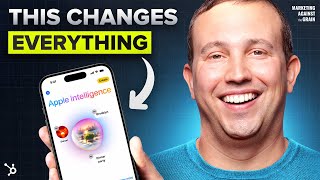
Kip Bodnar and Kieran Flanagan break down Apple's new on-device AI agents and what they mean for marketing. Apple's upgraded Siri can pull information across apps and handle tasks like retrieving emails and booking flights. The biggest threat to marketers: AI agents could filter out poor marketing entirely, forcing a shift in how brands reach people.
Chapters
We're covering everything that happened at wwdc, Apple's event this week. But we're not just going through the.
Highlights of what they released.
We are breaking down the implications of those releases on every business and every marketer out there.
The interweaving of some of these companies is mind boggling.
We're going to tell you how these releases are going to change consumer behavior.
Look, we are part cyborg.
And how they're going to change how you need to market your business.
Apple Intelligence can understand the content of the emails you receive.
We're going to break that all down on today's show. Let's get into today's episode. All right everyone. On today's show we are talking to you about a really important Apple Worldwide Developers Conference keynote. Apple ushered in the era of agents. They are shipping the most best working version of what an agent looks like. And from that it's very clear that the future of marketing is going to be much more marketing to agents and AI than it is to individuals. We are going to break down all the implications of these announcements and help you think about how you want to pivot your strategy and your tactics going forward to grow in the new world. I'm Kip Bodnar, CMO at HubSpot, joined as always by my friend and co host, Kieran Flanagan. Kieran, I would posit to you that this Apple Worldwide Developers Conference, five to ten years from now, we will look back and think it was monumental on par with the original iPhone keynote. Not because the flash of the keynote, but because it was the event that truly ushered in mass market AI adoption. Because Tim Cook is going to be shipping AI to all the Apple users in the world and that is going to be the biggest distribution of AI that has ever happened.
Exactly. I think they are late to the party but they own all of their real distribution. They own the hardware, devices that AI makes the most sense for. It's why that I could never really get on board with all of these secondary devices. Right. I always, for, for AI wearables I always thought the phone was the best place to integrate AI. Now there is a, there is a case for AI wearables because when you're trying to do something on your phone, you might need the wearable at the same time. Right. You can't use both devices at the same time. But I think they, they did three core things. Right? We're going to talk about it. They really demonstrated the AI agent use case in the best way that I have seen. They really ushered in or set the battleground for who owns the personal assistant space. And I think there's one owner, not many owners, and then there's some changes in there that are pretty monumental for how people will market to businesses and futures and consumers in future. So there's some real interest and takeaways. But really the thing that will, you know, overarching all of that is Distribution is undefeated.
Well, you look, you and I, we're going to get some T shirts made. Distribution is undefeated. It is our personal life motto. We what explain what you mean by that in this specific instance, Kieran, you.
Know, you think the battle is between OpenAI, Microsoft, Google and Apple, but who really? I think the battle in terms of who owns the most distribution is who owns their devices. AI is going to make the most sense and be most valuable the newer it gets to the hardware. So when you think about one of our points in a recent show, as AI gets more valuable, the more context it has. Context is data. Whether it's capturing data about you, when you're prompting it, right, you give it some context to be able to prompt it and ask it for certain things. There's a lot of AI apps have moved to the browser and they collect information about what you're doing on the browser. You obviously say they can do this and then it's able to actually use that context to provide better services for you. We believe. I believe the reason OpenAI released an app on the Mac is because at some point they can say, do you want to switch on data collection so we can start to automate a bunch of the stuff that you're doing day in, day out on the laptop. Well, the best place to be is actually just have it built into the laptop. We saw Microsoft are going to ship AI enabled PCs now Apple are going to ship AI enabled iPhones and Macs. And to me, it's going to be really hard for startups and for point solutions to compete on the same use cases for the companies who own the devices because the device experience with AI interweaved is always going to be much better than the point solution. And so AI, so Apple own all of the distribution, iPhone, Macs, all of these things. And so they can bring AI straight to the mass consumer and actually have it built into the tools they use each and every day and collect context and then start to provide much better use cases over time.
So I want us to take a little bit of a victory lap. Kieran, One of the things we've been saying on the show for quite a while is that one of the best implementations of AI is the most important is going to be a really small, large language model on an edge device like a mobile phone, very customized to the individual user. Right. Like we have been saying that for a while and Apple's brought that as part, as part of this event. Like we knew I think it was going to come for a long time. But it is actually here and the implications are pretty impressive. I want to show you and everybody watching kind of the quick 52nd demo of Apple bringing agents to life in, in the way that we've talked about. So we're gonna, we're gonna check this out.
Imagine that I'm planning to pick my mom up from the airport.
This is their Siri demo. So Siri is kind of going to.
Be the foundation for agents so easily.
Siri, when is my mom's flight landing? What's awesome is that Siri actually cross references flight details that my mom shared with me by email with real.
Here's the big thing to give me her updates. They are using information across apps and that information is unstructured. It's in emails, it's in text messages, it's not in like your calendar or some perfectly formed data. It is all natural language.
One quick thing to bring this to life for users is let me tell you the Kieran Flanagan use case of what is happening right now. So this is a really great example of where the mother is coming in on a flight. She sent the flight details, an email and you're able to just ask when will she arrive? What time did she say she will arrive? Then what's the status of her flight? It can go check the status of her flight and then like how long will it take me to pick her up? Because then it can go check, check Apple maps. Your point? It's like checking between the different apps, man. The amount of time I've gone to speak at conferences and I'm like, okay, number one, what time was I meant to be speaking at? Right. It's buried in my email because I tried to. Because I'm a person who is not good at like cold networking. I try to get there half an hour before my speech, do the speech and then talk to people afterwards. So I don't try to arrive too, too early. Then I have to because I'm in a different country usually and you know this about me, I don't know any directions. I then I have to ask where the hell am I? And so then it has to cross check the maps to say, Kieran, you Are here. Like, how far away am I from the place? What are the directions? And that's the beauty of this. Which is it again, way, way, way, way, way back when. I think actually in one of our very first episodes, I think it might have been the very. One of the very first episodes about AI. When Adept launched, we said, oh, boy, there's two things we were really right about. We talked about the blue links, decay of the blue links two years ago. And we talked about software getting pushed into the background because there's this agent layer on top of it. This is the best example of that. All of these apps in a world pre AI, you would have been clicking into the app. Now you don't do that. The AI, the apps are there to create the data for the assistant, but the assistant is actually the one retrieving the data on your behalf.
And by the way, just in addition to this, she says in this video that it's going to save you. It saves you minutes in a problem like this. Lie, bold face, lie. Saves you way more time. You know why? The worst feature in the entire Apple ecosystem is the search on the mail app on the iPhone. You cannot find anything there. And this fixes my biggest iPhone complaint. I am psyched.
I agree. It saves hours, like the amount of time I'm trying to retrieve things from all of these different apps. And this is what we're seeing, right? Like Google integrated across their apps. Apple. I think Apple's version is even better because the device is a part, like we are part cyborg, right? Humans are part cyborg. Look at me right now, like I'm attached to a device. Yeah, the phone is attached to me at all times to the point where I am trying to get much better about de attaching myself. Say phone. And like, I want to talk about.
That in a minute.
So I think the device, the phone was always the, you know this, it's part two of the human brain. So integrating AI into that is the best place for me, for the assistant. And we have all of the apps and everything on there. And so to me, I was looking at this and I was like, okay, we are now at the next level of path to personal assistant. Right? This is going to usher in tons of adoption. Much more adoption of AI, which means it's going to actually force companies to build net new use cases much more rapidly.
I agree with all this. I want to quickly talk about the second order effect. One of the things we try to do on the show talk about the different first, second, maybe sometimes third order Effects of things. The first order effect of Apple rolling out a really smart Siri working with OpenAI that is all part of that. Apple's gonna be using 4.4.0 in the background with Siri. It's gonna be, it's gonna get a lot better. That's gonna save a lot of time. What are we gonna do with that time, Karen and is that time good for marketers or bad for marketers? Are people just gonna scroll their phones more and see more ads and more content and that's good for marketers or people going to use their phones less because they're like, oh, I don't have to do as much manual work on my phone so I can kind of cast my phone aside more.
You know, it's curious when we've talked about this a bunch of times that Sam Altman kind of tapped Jony Ives to potentially build a new device. Although the kind of like I don't know what's the right word that is not going to get us cancelled. The interlink, the interweaving of some of these companies is mind boggling. The OpenAI, Microsoft, Apple kind of integration like OpenAI is powering a bunch of things in Microsoft. Microsoft basically said if OpenAI disappeared we'd be okay. We've got our own models coming. OpenAI is going to power Apple because they just have not done a great job in building their own large language model. But it's, it's not the best spot for OpenAI because over time I suspect Apple will be able to build a model that's better suited for their users, suited for their needs. And then OpenAI will be much better if they own hardware. And Sam Altman wants to build chips, but I suspect he wants to build phone, that's why he's tapped Johnny I so there's like weird dynamics between these companies. But the reason I'm talking about the Johnny is when I read the interview and I made the point before and the quote he had was the one thing he wanted to solve or the one thing he wanted to fix or his biggest regret in the iPhone is actually that he was too successful. In some ways he feels bad that people have the device planted in front of their face for all time. I think the only way around that is not that the device gets used less, it's that the device gets used more through voice. And I think that is a long habit to build, not a short term fix. So I don't think but it's starting.
With this announcement because of what they're doing. With Siri.
Yeah. So I think you can use. I think we have more usage, right? We have something in our ear at all times. We have something we're using at all times. The. But the usage becomes a little bit better for our work life balance because it's not in our face now does that happen? I don't know. Like the younger generation are more addicted to the phone than, than I think even we are. So it's a, it's a hard. Again, if you grew up with this device, you're part cyborg. Like it's part of who you are is having this device. So I don't know if you can actually get used to that.
We don't know. I think what you're. The point you're making is, what we do know is AI is probably going to change the modalities in which we interact with our devices. Not just like staring at a screen and tapping stuff, but voice, video, everything else. What we don't know is is that going to be a good or a bad thing? I think, we think it's going to be at least a better thing for everybody involved, marketers, people, but we don't know.
The other thing is there's. What is the UX experience of agents and what should it be? Right? How does it change when an app is. So in the use case, they showed the personal assistant, you never touch the app. So what is the function of the app? In, in, in that case, the function of the app is that like hold and create that data, but it loses, it loses some value because you're not going in and out of the app to do the things in the app yourself. Now in that case, in the example, they show the AI agent is retrieving data, not creating anything on their behalf, right? I don't think they said like create the email or go do.
They didn't. They didn't.
So there's two things I think about, which is like if you build an AI enabled phone, what's the function of apps or how does it disrupt apps in general? I think you get certain apps that will get much less usage. And I don't know what that, I don't know what happens there. I don't know how that changes the incentives, right? The incentives of app builders, all of these different things. The other thing is what's the, what should be the experience? What should be the UX experience of an agent itself? So when I said, hey, like, I see my mom's flight is coming in late, I need to actually email my brother and Sister who I'm meeting at the airport to like tell them that, can you craft the email, send it to them? Should I watch the agent do that? Should I get sign off on the email? Should I just know that it's done and get a sent email in my inbox? I actually don't know. I don't think that's a solved problem or it's a known pro. We don't know how users will want that experience to be.
I think what you are outlining here that is very smart is like, hey, Apple just ushered in a real working example of agents that are going to get shipped to hundreds of millions of people over time. And people are going to adopt that there's going to be limited use cases in the early days that are going to be probably more retrieval and then like the agents doing stuff on your behalf. It's going to be a massive behavior change amongst humans. Probably going to start with a couple very specific use cases like emails to family and stuff like that, and then expand from there. But I think the broader push here is that Apple is going to train consumers to use artificial intelligence without even realizing it's artificial intelligence, and then that those expectations are going to carry over to how they interact with every business.
Yeah, I think the way it works today, because email is a AI use case that people are using AI4 where it writes the email. But the way it has worked today is like people actually ask the, you know, you sign it off so the agent like reads it out. Is this okay to send? Yes, send. So I think the, the use cases will either be human in the loop or like human completely out of the loop. And I think that's a whole world of things to work out.
Okay, I want, Kieran, I want to go through for our audience today the big worldwide developer conference announcements as they relate to AI. And there is one that I think is especially important to marketers. You're going to want to listen and stick around and watch here in just a few minutes because we're going to dive into, I think, what is the most important for marketers. So friend of the show, Rowan Chung, runs a great newsletter called the Rundown. I think Rowan's going to be on the show soon. He did a great thread breaking things down. Obviously, the hit of this announcement was the calculator app. Kieran, I assume you've seen the calculator app. Everybody's seen the calculator app. You can just write out a problem and it helps you solve it. All of those things. It is super magical. It's not that important to marketers other than it shows you kind of what collaboration with artificial intelligence is going to look like in the future.
Yeah, it was pretty similar. Again, the interweavement of all these companies. It's pretty similar to the use case that OpenAI showed with their model. Like being able to solve things on the iPad again. The device maker is always going to have a better version of that.
Yeah. And what we didn't say at the start of the show is Apple is branding all their AI features Apple intelligence, which is the most Apple thing ever. To take AI and make it a brand for them versus just saying artificial intelligence, most Apple thing ever. But when you have the leverage of the market, you can do that. And that's what they're doing. So that's. I actually think it's a brilliant, brilliant thing for them to do. And if I was in their position, I would. ChatGPT and OpenAI is going to get integrated into the Apple ecosystem. Like this is big, big news, Huge distribution for them. Hey guys, real quick. We've gotten a ton of requests in the comments and they're all about prompts. You all want the prompts we're talking about on that show. We see you, we hear you, and now we are ready to share the goods. Click the link in the description below to access our new AI prompt library. This resource features real AI prompts that Kieran and I have covered on this show. We broke them down by category and templatized them so you can fill in the blanks and make them your own. Now you have the frameworks you need to use AI, analyze ads, create brand campaigns, develop product stories, just to name a few of our favorites. Keep telling us what you need in the comments and we'll see what we can do to whip up more for you in the future. Now back to the show. Can you, can you talk about what this means to OpenAI, Apple and consumers? Real quick?
Karen Wallet. Part of the reason that Google became the search engine it did is because they did a partnership with Apple. Right. They became, I think, one of the default engines. OpenAI is following that playbook. So OpenAI, I think this is great deal making, right? Part of how OpenAI are going to win is make great deals with these kind of companies and have distribution through these platforms. So all of the Apple AI use cases you see are running on OpenAI. The thing I cannot wrap my head around is like, I still don't know what OpenAI strategy is because there's a lot of use cases there that are being shown. I can imagine OpenAI wanting to own themselves. Right? Like OpenAI fundamentally want to be the personal assistant. Like Sam Outman is on record as saying, look, I want to OpenAI. Where we are going is we are going to build AGI and we're going to build a personal assistant for humankind.
Right?
And he said it on a podcast recently. Now, if you play this out, can OpenAI truly do that if they don't own the device? Or are they happy with being the personal assistant as a partner with Apple versus owning that use case? If I have taken one thing from getting to know Sam Altman through his interviews, a little bit better since he became, since he was CEO of OpenAI and that company got put into the spotlight, he doesn't seem like the kind of person he wants to share.
No.
So I think it's great for OpenAI. It's still a precarious position because I still don't understand why Apple can't create their own LLM that better is a better fit for their own hardware. Why they need to rely on a third party. I think LLMs are being monetized in LLMs. How? I just don't understand how they're so far behind. I just, I. That part I can't wrap my head around is how they have not been.
Able to build it. Kieran, you are not being realistic. You and I both know in, in organizations, every organization has things that it's good at. Apple is great at hardware and software and very, very rigorous process. They're not great at most things outside of that. And artificial intelligence and LLMs are outside of this. And they didn't make any huge acquisitions or do anything to bring people into the organization that had that expertise. And because of that they fell behind.
They do have some version of the LLM actually, because what's happening, I think, and look, this is not to get into technicalities, but it does seem like that they are sending, they have their own like LLM or something in between the data being sent and the OpenAI large language model. We would have to come back and actually go through the ins and outs of the back end of what Apple are doing. But let's say you were Tim Cook and you were saying, well like, and they've done a great release. Like these features are awesome. I think they are going to have a huge role to play in the future adoption of AI because of these announcements. But if I was sitting down at my desk and I had like a couple of options, wouldn't I just Go buy Entropic or I don't know that.
They can get it past regulators.
Candidly that's okay, but they're not and.
A large regulator would conflate that with them getting into the search market. It may be a whole thing. I think they were a little behind and they need to do this partnership and they'll either build and then wind down the partnership or do something else and we'll see what happens. We just talked about the Siri demo and the kind of agents on screen intelligence. I will say the. I don't know, I don't think this is really very AI, but the tap, like payments by tapping your phone is pretty sweet. All right, I want to play. Kieran, this is going to be the 14 seconds of the show that if you're a marketer, that's going to make your head hurt a little bit. You ready for this, Kieran?
Let's do it.
We're also elevating priority messages. Apple Intelligence can understand the content of the emails you receive, determine what's most urgent and surface it right at the top. And deep understanding of language extends beyond your inbox.
Apple is going to use their new Apple intelligence and artificial intelligence and partnership with OpenAI to look at all of your emails and reprioritize your inbox. And so if you're a marketer and you're sending a marketing email and it's not good or the AI thinks it's bad, it's going to be down at the bottom of the list. And you know what's going to happen. Your opens, your clicks, all those things are going to go down. And I tell you what, AI, one of the things AI is going to be a great filter for is bad marketing. AI is probably going to be the best filter for bad marketing that has ever existed.
Yeah. Or you can imagine the future world, which I also have said in the past where, and this is sad, but AI is going to create the marketing for AI to review the marketing and prioritize what marketing people see. Because on the opposite end, like who's creating the emails? I think a lot of those emails are going to be created by AI. And then AI is prioritizing the emails and then we actually get to see only the things that AI want us to see. The only the thing I would. There's a couple of points about this. So Gmail has done this, right? Like, so we have some, we have some version of this where they have the primary tab, promotions tab and the other tab. And when you, if you go back and look at when that was launched and the data around that. It actually was pretty substantially impactful to email. And this is another example of something we talked about, which is what happens when agents are the ones making the decisions in terms of, like, going through your email flows, distilling all that information, going into your app and doing the trial, going to your website and breaking apart all of that information and basically coming back to the user and saying, look, here's the summary of this brand. Here's the summary of this brand. This is specifically in B2B, really. But, like, here's the summary of all these different tools, here's what they can do, can't do. Here's what I found. You don't really have to go through that yourself. Right. It really fundamentally changes marketing to be much more focused on the places where humans are still very much in the loop. And then how do you construct a path or funnel that it's easy for an AI agent to digest and find what it's looking for?
Look, we are going to be marketing just as much, if not more, to agents and AI as we are to humans. That's. That's the theme of the show today. That's been the theme of our show many days. It's going to take a long time.
For people to understand that marketing to AI agents feels like glorified data entry.
I bet in the early days it is. And then I think what's going to happen is that true generative AI is going to create new forms of marketing. I'm gonna, like, I'm gonna make a wild prediction right now. Kieran, did you see the Ginmoji yet?
Yeah, yeah. This was the thing that people were most excited by.
This is my favorite feature of the whole thing isn't so much, oh, my.
God, you're not on. The emoji is the best thing.
It's incredible. So basically what they're doing is you're going to be able to generate emojis with AI. Isn't that amazing? You're going to provide a description. So they're basically using image generation, but specifically for emojis. If you do not think that there are going to be five companies within the first six months of this feature launching that do some amazing marketing around Genmoji and create some Genmoji that takes off. You don't even know anything about marketing, like that is going to happen. Like, I would. I bet any amount of money that is like a lock that is going to happen in this world.
Yeah, like, we should see. We're not Going to cover all the features, but they have integrated imagery tools like a Mid Journey v1, so you can create images really easily within your app, within your phone. They've created the ability to do image editing really easily. And then this is an example of as well, they have like an image tool that allows you to create emojis in really simplistic terms. I suspect this is the one that's going to get the widest adoption. I do, I do. When I saw the kind of setup for the Apple Intelligence conference or the Apple Conference, like, people were like, oh, basically the only thing people knew they were launching was the emoji thing. They're like, oh, like all of this work to launch an emoji tool. But as part of all of the AI features, it is kind of cool. But I think they're, you know, it'll probably get the most adoption.
It's that and then image generation is what you were just talking about, Kieran. I'm showing it on the screen for people here who are on YouTube where you're going, they're going to basically have a. All the nerds are using Dall E3 and Mid Journey and everything. You know what the biggest image generation tool in the world is going to be this. It is. It's going to be the most adopted image generation tool in the world and we are going to see some wild things come out and the really good, really smart marketers are going to capitalize.
Yeah.
On this. If you don't think. I'm already thinking about what the HubSpot Genmoji options are. I am, I'm excited. I'm going to use them all the time. It's going to be sick. But that's where we're at, you know.
In the funnest things you can do. So first of all, I think the reason this is going to work better than any of those tools, again, because it's built into the device. And where do we use images? We use them on WhatsApp, we use them in email, we use them in SMS. Right. So you actually have them front and center of the core distribution channel. You know what's a fun thing to do? If you're listening to this, you want to do this as a fun, like, AI thing. You should go to ChatGPT and say, hey, like, give. Here's my website. Create a. If this was a human, what it would look like.
So you can put in like, oh, that's good.
Put in, put in HubSpot and say, if this was a human, what would it look like it's. You get, you get something like we should do a. We should, we should come back and do some of this.
Oh, that should be a whole episode. That'll be a blast.
I did it for Zapier and we did for Zapier and it was like an intense human. The human looked very like intense, nerdy. But it's a fun exercise to see how it interprets things and then creates visuals on them.
So those are the big Apple AI announcements. What I expect you're going to see is iOS 18 is going to be, when it launches in a few months, will be the big push forward in artificial intelligence. It seems like we are in a cycle, at least in the short term, where the fall is like the biggest time of year for innovation and adoption of artificial intelligence. And I think Apple is going to lead the way here and I think by the end of this year we're going to be looking at AI tools and adoption in a very, very different way. And the expectations of consumers are going to start changing pretty dramatically. And I think that's if you are a marketer. You're watching today's show. I think you have to think about, oh, how I get my message to the right person. That's going to change. New marketing channels and opportunities are going to change through things like generative emojis, image playground and the ways to collaborate with my audience on content creation and campaigns. And work that we're doing is going to be very new and very different. And then three agents are going to become a meaningful part of day to day life. And an agent is going to become a gatekeeper to getting your marketing to your customer. What else would you add to that?
Kieran? I think that's a perfect summarization. We are moving to the agent layer. Agents are going to be the thing that sits on top of software. I think that is fundamentally going to change all of our lives. AI is going to help distill down what the user sees. That is going to change how we do marketing. I would like to say two quick things, apologize to the Siri team. I went on a rant recently and said they have.
You said they were terrible.
They're eating tofu and leaving the office at three o' clock every day. Now I will still say that Siri is actually coming back to the thing I did say. So Apple does have its own large language model, but it seems like when ChatGPT is a better. ChatGPT has better use cases. When the use case better fits ChatGPT, it will use ChatGPT when it fits Apple, it will fit Apple. So I still think over time Siri should have built a model for their software. But it's also a good example. I know this is slight tangent, but it is really important. I do think in the future companies will actually have software that will allow them to switch between models for the best use case because that's why open source become much more prevalent. But yes. So Siri. So the team has done really good. Siri looks like it's going to actually be good AI, a personal assistant. And I think this is a good launch. Right. And the way that the litmus test for, for me is I haven't upgraded my iPhone in three years and like what is the point? I don't really want to do it and I'm going to upgrade my iPhone.
I was just thinking the same thing.
Yeah. So when the new iOS comes I can just download it. I've got a new phone, I've got the new AI enabled assistant. So we are biased.
I'm going to order the iPhone 16 or whichever one is coming out this fall. I'll update it, update the OS to the most recent and it's going to be awesome. And we'll probably do a whole show on that and give some thoughts and everything. As a follow up to this, we are going to see a lot of transformation in AI and in marketing over the next six months. I hope today we were able to paint a very clear picture of that for you and we'll see you next time on Marketing against the Grain.
This data is wrong every freaking time.
Have you heard of HubSpot?
HubSpot is a CRM platform where everything is fully integrated.
Whoa.
I can see the client's whole history. Calls, support, tickets, emails. And here's a task from three days ago. I totally missed HubSpot grow better.
More from Patrick



A NEW BREED OF PARTNER: The Partnership Ecosystem Model Journey of Patrick Biddiscombe, Part 1








Customer Success Workspace: Never Lose Sight Of What Matters Most | HubSpot Spotlight